
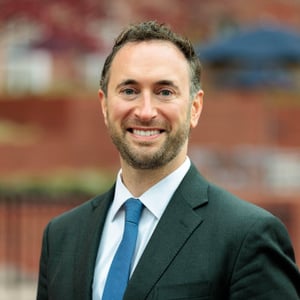
Associate Dean for Academic Affairs, The George Washington University Law School
Aram A. Gavoor is the Associate Dean for Academic Affairs and an internationally recognized scholar in American administrative law, national security, and federal courts. His co-authored work was cited by the U.S. Supreme Court in Department of Commerce v. New York (2019). His scholarship has earned placement in the Florida Law Review, Indiana Law Journal, Ohio State Law Journal, and other law journals. He has briefed and argued over a dozen high-profile public law cases before a majority of the U.S. Courts of Appeals and numerous cases before almost a third of the 94 U.S. District Courts. Associate Dean Gavoor frequently shares his national security, artificial intelligence policy, and federal courts expertise with international news media, including CNN, BBC World News, Wall Street Journal, NBC News, and ABC (Australia) World News. In 2021, the National Law Journal named Associate Dean Gavoor a Rising Star (top 40 under 40) honoree.
Earlier in his career, Associate Dean Gavoor served as Senior Counsel for National Security in the Civil Division of the U.S. Department of Justice, as third-in-rank Counselor to the Administrator of the Office of Information and Regulatory Affairs in the White House Office of Management and Budget, and in private practice. He received the Attorney General's Award for Distinguished Service in 2019, the Civil Division Special Commendation Award in 2020, 2019, and 2018, and a Commendation from the Human Rights and Special Prosecutions Section of the Criminal Division in 2018.
Associate Dean Gavoor previously served on the law school’s part-time faculty from 2008-2017 before accepting a term-limited position as Visiting Associate Professor from 2017-2019. He received GW Law’s Distinguished Adjunct Faculty Teaching Award from the 2020 and 2017 graduating classes. He currently teaches Constitutional Law II, Administrative Law, National Security Law, and Federal Courts.

Partner, BakerHostetler, Adjunct Fellow, The Manhattan Institute
Andrew Grossman leads BakerHostetler’s Appellate and Major Motion team. He has appeared before the U.S. Supreme Court, nearly all the federal courts of appeals, as well as some state appellate courts, litigating high-profile and complex commercial, administrative and constitutional issues.
Andrew works with practice groups across BakerHostetler to identify and tackle complex issues, advise on administrative law and strategy, tee up issues for appeal and tackle appeals. He has developed and implemented litigation and administrative strategies for clients in several fields and industries.
In addition to his practice, Andrew advises members of Congress on matters of constitutional and administrative law, having testified more than a dozen times before the House and Senate Judiciary Committees. He has been a frequent legal commentator on radio and television, having appeared on Fox News, CNN, MSNBC, CNBC, NPR and its affiliates, CBN and elsewhere. His legal commentary has also appeared in dozens of magazines and newspapers, including The Wall Street Journal, USA Today, The Washington Post, The Washington Times and many others.
Andrew is a Senior Legal Fellow at the Buckeye Institute, an Adjunct Fellow the Manhattan Institute and a member of the leadership of the Federalist Society. He previously served as an adjunct scholar at the Cato Institute’s Robert A. Levy Center for Constitutional Studies and a legal fellow at the Heritage Foundation’s Meese Center for Legal and Judicial Studies. He clerked for Judge Edith H. Jones on the U.S. Court of Appeals for the Fifth Circuit.

Associate Dean for Research and Intellectual Life, McKnight Presidential Professor in Law, Distinguished McKnight University Professor, Harlan Albert Rogers Professor in Law, Associate Director, Corporate Institute, University of Minnesota Law School
Professor Kristin E. Hickman is the McKnight Presidential Professor in Law, a Distinguished McKnight University Professor, and Harlan Albert Rogers Professor in Law at the University of Minnesota Law School. She also has taught at Harvard Law School and Northwestern University School of Law. Professor Hickman teaches and writes primarily in the areas of administrative law, tax administration, and statutory interpretation. Her articles on these topics have appeared in the Columbia Law Review, Cornell Law Review, Virginia Law Review, Duke Law Journal, and other publications. She also co-authors the Administrative Law Treatise with Richard J. Pierce, Jr., and a casebook on federal administrative law with Pierce and Christopher J. Walker. Her scholarly work has been cited several times in opinions of the United States Supreme Court as well as regularly in lower court judicial opinions and court briefs.
In 2018-19, Professor Hickman served as Special Adviser to the Administrator of the Office of Information and Regulatory Affairs in Washington, D.C. She presently serves as a Senior Fellow, and previously served as a public member and chair of the judicial review committee, for the Administrative Conference of the United States. She also is a Fellow of the American College of Tax Counsel.
Professor Hickman received her B.S. degree in business administration with a concentration in accounting and a secondary major in history from Trinity University in San Antonio, Texas. After practicing for several years as a certified public accountant, Professor Hickman earned her J.D. degree, magna cum laude, from Northwestern University School of Law, where she was awarded the Raoul Berger Prize and the Lowden Wigmore Prize for her scholarly writings. Following law school, Professor Hickman clerked for The Honorable David B. Sentelle of the United States Court of Appeals for the District of Columbia Circuit and practiced law as an associate with the Chicago office of Skadden, Arps, Slate, Meagher & Flom, concentrating on corporate and international tax transactions and matters.
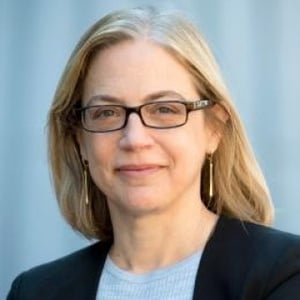
Harlan Fiske Stone Professor of Constitutional Law, Columbia Law School
A leading administrative and constitutional law scholar, Gillian Metzger ’96 writes and teaches in the areas of administrative law, constitutional law, and federal courts, with an emphasis on federalism and privatization. In 2023-2024, she served as Acting Assistant Attorney General and Deputy Assistant Attorney General in the Office of Legal Counsel in the Department of Justice.
Metzger's recent work covers topics ranging from constitutional attacks on the administrative state to appropriations, administrative law under the Roberts Court, and the role of administrative agencies in a polarized world. In 2015, Metzger won the American Bar Association Administrative Law Section Annual Scholarship Award for “The Constitutional Duty to Supervise,” which examined presidential control and oversight of the modern administrative state. She is a co-editor of Gellhorn & Byse’s Administrative Law: Cases and Comments, 13th ed. (Foundation Press, 2023), a seminal administrative law casebook.
Professor Metzger was recently elected to the American Academy of Arts & Sciences and is a Senior Fellow of the Administrative Conference of the United States. In 2020, she was awarded Columbia University's Faculty Mentorship Award and in 2014, the Law School’s graduating class awarded Metzger the Willis L.M. Reese Prize for Excellence in Teaching, recognizing, among many other accomplishments, her commitment to mentoring new generations of law students.
In 2012, Metzger helped launch Columbia Law School’s Center for Constitutional Governance (CCG)—where she now serves as faculty director—a nonpartisan legal and policy organization devoted to the study of constitutional structure and authority. CCG brings together a diverse group of constitutional scholars to explore policy areas such as health care, civil rights, immigration, financial regulation, and national security.
Metzger also has co-authored and filed numerous amicus briefs in major constitutional and administrative law challenges before the Supreme Court and other courts. Most recently, Metzger filed a brief in Seila Law Center v. CFPB, a separation of powers challenge, and in Kisor v. Wilkie, a case involving judicial deference to agencies. She has also filed briefs in cases involving reproductive rights and the Affordable Care Act, among others.
Previously, Metzger served as vice dean of intellectual life at Columbia Law School. Before joining the Law School, she worked as an attorney with the Brennan Center for Justice. Metzger also clerked for U.S. Supreme Court Justice Ruth Bader Ginsburg ’59 and Judge Patricia M. Wald of the U.S. Circuit Court of Appeals for the District of Columbia. In 2018, Metzger moderated a panel discussion with Justice Ginsburg on impact litigation at Columbia Law School.
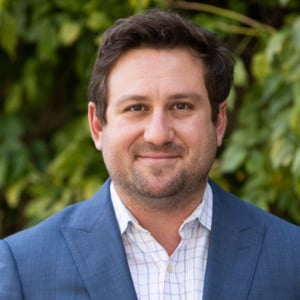
Legal Director, Institute for Policy Integrity, New York University School of Law
Max Sarinsky is the Legal Director at Policy Integrity and an adjunct clinical professor at New York University School of Law. Since joining Policy Integrity in 2019, Max has testified before Congress on the climate impacts of the oil and gas leasing program, submitted amicus briefs in the U.S. Supreme Court and numerous federal courts of appeals, and published articles in the Yale Journal on Regulation, Harvard Environmental Law Review Online, New York Times, Science, and elsewhere. He also teaches the Regulatory Policy Clinic at NYU School of Law. From May 2024 to January 2025, Max took leave from Policy Integrity to serve as a senior advisor in the Office of Information and Regulatory Affairs in White House Office of Management and Budget.
Prior to joining Policy Integrity, Max clerked for the Honorable Pamela A. Harris of the U.S. Court of Appeals for the Fourth Circuit Court. He also previously served as an Assistant Corporation Counsel with the Administrative Law Division of the New York City Law Department, where he defended City health, labor-rights, and consumer-protection regulations. Max received his J.D. magna cum laude from the New York University School of Law, and his B.A. cum laude from Georgetown University.

Professor of Law, University of Michigan Law School
Christopher J. Walker is a Professor of Law at the University of Michigan. Prior to joining Michigan law faculty in 2022, he spent a decade teaching at The Ohio State University Moritz College of Law. He previously clerked for Justice Anthony Kennedy of the U.S. Supreme Court, worked on the Civil Appellate Staff at the U.S. Department of Justice, and served on the Senate Judiciary Committee staff for the Gorsuch Supreme Court confirmation. Professor Walker’s research focuses on administrative law, regulation, and law and policy at the agency level. Outside the law school, he chaired the American Bar Association’s Section of Administrative Law and Regulatory Practice in 2020-21 and served as one of forty Public Members of the Administrative Conference of the United States from 2016-2022, and he continues to serve in both organizations in various capacities. He also works of counsel at the U.S. Chamber Litigation Center. In 2022, he received the Federalist Society’s Joseph Story Award.
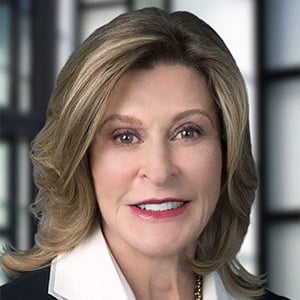
Managing Partner - Washington, D.C., Lewis Brisbois Bisgaard & Smith LLP
Jane Luxton is the Managing Partner of Lewis Brisbois’ Washington, D.C. office, co-chair of the Government Investigations & White Collar Defense Practice, co-chair of the Government Relations Group Leadership, co-chair of the Environmental and Administrative Law Practice, and vice-chair of the Consumer Financial Services Practice. Jane has extensive experience in environmental as well as other federal regulatory, policy, and litigation matters. She advises businesses, associations, and coalitions in navigating all levels of the federal regulatory process, including appellate advocacy.
Recent matters include:
Jane’s knowledge of environmental and administrative law gained key insights from her experience serving in several prominent positions in the U.S. government. From 2007-2009, she served as general counsel of the National Oceanic and Atmospheric Administration, advising the Undersecretary of Commerce for Oceans and Atmosphere on legal and policy issues related to natural resource damages, coastal zone and fisheries management, endangered species and marine mammal protection, and weather and climate change science. In this role, in which she held a top secret/SCI security clearance, Jane was appointed by the President to head the U.S. delegation to the 2008 Western and Central Pacific Fisheries Commission. She also received the U.S. Department of Commerce Gold Medal Award in 2008 and 2009.
Jane’s experience includes “first chair” prosecution of antitrust and other criminal cases at the U.S. Department of Justice and U.S. Attorneys office, Eastern District of Virginia. In private practice, Jane has represented clients in grand jury and other government investigations.
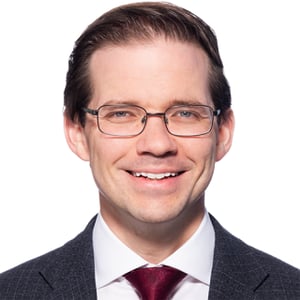
Of Counsel, Covington & Burling LLP
The Honorable Paul J. Ray is currently Of Counsel at Covington & Burling LLP where he advises clients on regulatory opportunities and challenges and helps them formulate and execute advocacy strategies for their regulatory policy priorities before the executive branch and Congress.
During the first Trump Administration, Paul held various senior positions at the Office of Information and Regulatory Affairs (OIRA) within the White House’s Office of Management and Budget, including as acting, and then Senate-confirmed, head of the office. As OIRA Administrator (the "regulations czar"), Paul supervised the review of hundreds of regulations from across the government, drafted numerous executive orders governing the regulatory process, and led the Administration’s regulatory reform effort. As a result of this experience, Paul is well-positioned to help clients understand and achieve regulatory policy priorities in the context of the government’s regulatory agenda and ongoing reform efforts.
Most recently, Paul was also the Director of the Roe Institute for Economic Policy Studies at The Heritage Foundation. In that role, he supervised the formulation of the Foundation’s economic and regulatory policy recommendations and provided technical assistance to congressional committees and staff regarding legislative changes to the regulatory process. In addition to his role at The Heritage Foundation, Paul also served as a Senior Advisor at a strategic advisory firm. Before his time in government, Paul practiced law at a law firm in Washington, specializing in administrative law matters.
Prior to his role at the White House, Paul was Counselor to the Secretary at the U.S. Department of Labor. There he led departmental efforts in high-profile rulemakings and helped formulate the Department’s legal positions and strategy.
Paul served as a law clerk to Supreme Court Justice Samuel Alito and as a law clerk to the Honorable Debra Livingston of the U.S. Court of Appeals for the Second Circuit.
Paul is a thought leader in the conservative legal movement and is a frequent commentator and speaker on regulatory policy and reform matters, including at law schools, professional gatherings, and other venues. He is the Chairman of Innovations in Peacebuilding International and the Regulatory Process Working Group of the Federalist Society’s Regulatory Transparency Project and a public member of the Administrative Conference of the United States. Paul is also an adjunct lecturer at the Hillsdale College School of Government.
Professor of Law, University of Michigan Law School
Christopher J. Walker is a Professor of Law at the University of Michigan. Prior to joining Michigan law faculty in 2022, he spent a decade teaching at The Ohio State University Moritz College of Law. He previously clerked for Justice Anthony Kennedy of the U.S. Supreme Court, worked on the Civil Appellate Staff at the U.S. Department of Justice, and served on the Senate Judiciary Committee staff for the Gorsuch Supreme Court confirmation. Professor Walker’s research focuses on administrative law, regulation, and law and policy at the agency level. Outside the law school, he chaired the American Bar Association’s Section of Administrative Law and Regulatory Practice in 2020-21 and served as one of forty Public Members of the Administrative Conference of the United States from 2016-2022, and he continues to serve in both organizations in various capacities. He also works of counsel at the U.S. Chamber Litigation Center. In 2022, he received the Federalist Society’s Joseph Story Award.
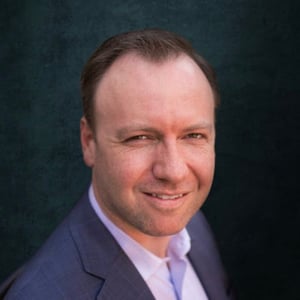
Chief Legal Officer and Policy Director, Cicero Institute
Jonathan Wolfson is the Chief Legal Officer and Policy Director at the Cicero Institute. Before joining Cicero, he led the Policy Office at the U.S. Department of Labor where he managed DOL's deregulatory efforts and oversaw DOL's internal policy development think tank. He previously was a litigator and regulatory attorney at an international law firm representing clients before state and federal courts across the country. Following law school he served as a law clerk to The Honorable Edith Brown Clement of the U.S. Court of Appeals for the Fifth Circuit. Before law school, Jonathan was a policy analyst at the White House Council of Economic Advisers.
Jonathan received an A.B. in Economics from Washington University in St. Louis and a J.D. from the University of Virginia School of Law, where he was an Olin Law and Economic Fellow and won the John M. Olin Prize for best original law and economics research.
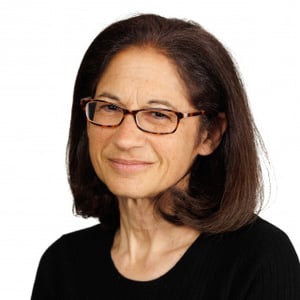
Senior Fellow, Governance Studies, Brookings Institution
Sarah Binder is senior fellow in Governance Studies at the Brookings Institution and professor of political science at George Washington University, where she specializes in Congress and legislative politics. Binder’s current research explores the historical and contemporary relationship between Congress and the Federal Reserve, and she is the co-author with Mark Spindel of The Myth of Independence: How Congress Governs the Federal Reserve (Princeton University Press, 2017). She is also an associate editor of The Washington Post’s Monkey Cage blog.
Binder is a former co-editor of Legislative Studies Quarterly, a co-author with Forrest Maltzman of Advice and Dissent: The Struggle to Shape the Federal Judiciary (Brookings, 2009), author of Stalemate: Causes and Consequences of Legislative Gridlock (Brookings, 2003), Minority Rights, Majority Rule: Partisanship and the Development of Congress (Cambridge University Press, 1997), and co-author with Steven S. Smith of Politics or Principle? Filibustering in the United States Senate (Brookings, 1997). Her other work on Congressional politics has appeared in the American Political Science Review, American Journal of Political Science, and elsewhere.
Her book on legislative gridlock was awarded the 2003 Richard F. Fenno, Jr. Prize by the American Political Science Association for the best book published on legislative politics, and she was elected to the American Academy of Arts and Sciences in 2015.
Binder received her Ph.D. in political science from the University of Minnesota in 1995 and B.A. from Yale University in 1986. She joined Brookings in 1995 and George Washington University in 1999. Between 1986 and 1990, she served as legislative aide and press secretary to Rep. Lee Hamilton (D-Indiana).
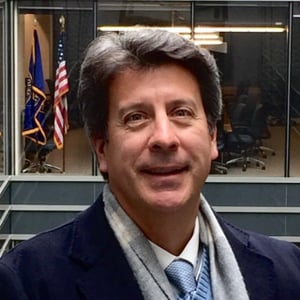
Senior Counsel, Committee on Oversight and Government Reform, U.S. House of Representatives
Daniel Flores is a Senior Counsel on the Republican staff of the Committee on Oversight and Government Reform, U.S. House of Representatives. Prior to his current position, he served in the House as Chief Counsel for the House Judiciary Committee's Subcommittee on Regulatory Reform, Commercial and Antitrust Law. Before coming to the House, he served as an Acting Associate Deputy General Counsel for the U.S. Environmental Protection Agency and in other roles in EPA's Office of General Counsel, as a Senior Trial Attorney for the U.S. Department of Justice, Environment and Natural Resources Division, and as an attorney in private practice in Washington, D.C. He serves as a House liaison to the Administrative Conference of the United States and has served on the Council of the American Bar Association’s Section on Administrative Law & Regulatory Practice.
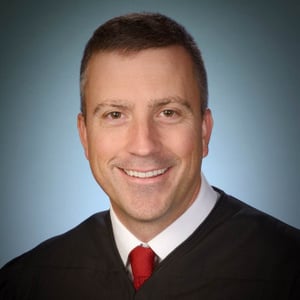
Judge, United States District Court, District of Columbia
Judge Trevor N. McFadden was appointed to the United States District Court for the District of Columbia in 2017. He received his B.A. in 2001 from Wheaton College, IL, magna cum laude. In 2006, he received his J.D. from the University of Virginia School of Law, where he graduated Order of the Coif and was an editor for the Virginia Law Review.
Following graduation from law school, Judge McFadden clerked for Judge Steven Colloton, U.S. Court of Appeals for the Eighth Circuit. He then joined the U.S. Department of Justice, where he served as Counsel to the Deputy Attorney General and as Assistant U.S. Attorney in the District of Columbia. Judge McFadden subsequently became a partner at Baker & McKenzie LLP in Washington, DC, where he focused on white collar investigations. He is also co-author of a treatise, Corporate Settlement Tools: DPAs, NPAs, and Cooperation Agreements.
After four years in private practice, Judge McFadden returned to the U.S. Department of Justice, where he was Deputy Assistant Attorney General and acted as the second-in-command of the Department's Criminal Division. As Deputy Assistant Attorney General, he managed the Division's Fraud and Appellate Sections.
Judge McFadden also has extensive experience in law enforcement. He served as an officer with the Fairfax County, VA, Police Department and as a deputy sheriff in Madison County, VA.

Associate, Latham & Watkins LLP
Charlie Beller is an associate in the Washington, D.C. office of Latham & Watkins.
Mr. Beller represents companies in antitrust and competition matters, including merger clearance, antitrust litigation, government investigations, and corporate counseling.
He advises clients on a variety of antitrust issues, with specific experience in the defense, aviation, chemicals, and music and book publishing industries.
Mr. Beller maintains an active pro bono practice, providing tax-exempt counseling to non-profit institutions. He has also supported successful litigation to overturn state occupational licensing restrictions.
Mr. Beller serves as a Young Lawyer Representative on the American Bar Association (ABA) Antitrust Section’s Pricing Conduct Committee, and as a co-editor of the Section’s forthcoming Price Discrimination Handbook. He authored updates to the Air Transportation chapter of Antitrust Law Developments.
Mr. Beller was previously a management consultant in Germany supporting companies with pricing strategy.

President, Cass & Associates, PC
Ronald A. Cass is Dean Emeritus of Boston University School of Law (where he was Dean from 1990-2004), President of Cass & Associates, PC, former Vice-Chairman and Commissioner of the U.S. International Trade Commission, former faculty member at Boston University School of Law and the University of Virginia Law School, and Distinguished Senior Fellow at the C. Boyden Gray Center for the Study of the Administrative State. Dean Cass also sits as an arbitrator for commercial, international, and intellectual property rights disputes, and is a former United States member of the Panel of Conciliators of the International Centre for Settlement of Investment Disputes. He is a member of the Council of the Administrative Conference of the United States and has received seven presidential appointments, spanning Presidents Ronald Reagan to Donald J. Trump.
As a law professor, lecturer, and scholar, Dean Cass has been teaching and writing about a wide array of legal issues on topics such as administrative law and regulation, antitrust, constitutional law, communications, intellectual property, international trade, separation of powers, and legal process. He has published more than 160 scholarly books, chapters, articles, and papers, including a leading casebook on administrative law. Dean Cass has taught judges as well as students in schools of law, economics, business, and public policy and has held academic appointments in the United States, Europe, and Latin America.
In addition to his academic work, Dean Cass has participated in numerous important legal cases as an amicus, consultant, or expert, and has advised businesses, law firms, investment funds, and government agencies on a range of trade, antitrust, intellectual property, and regulatory issues. He has a broad range of affiliations with professional groups, and has received numerous honors, fellowships and awards.
Dean Cass is a graduate of the University of Virginia and the University of Chicago Law School.

Special Counsel, Hunton Andrews Kurth
After serving on the United State Court of Appeals for the D. C. Circuit from 2005, Judge Griffith stepped down from the bench in 2020. Currently he is a Lecturer on Law at Harvard Law School, a Fellow at the Wheatley Institute at Brigham Young University, and Special Counsel in the Washington, DC office of the law firm of Hunton Andrews Kurth. Most recently, he was a member of President Biden's Commission on the Supreme Court. He is the author of Civic Charity and the Constitution , and the co-author, along with former judges Michael Luttig and Michael McConnell, of Lost, Not Stolen: The Conservative Case that Trump Lost and Biden Won the 2020 Presidential Election. https://lostnotstolen.org/ . Before being appointed to the D. C. Circuit, Judge Griffith was the General Counsel at BYU; Senate Legal Counsel, the non-partisan chief legal officer of the U. S. Senate; and a partner at Wiley, Rein & Fielding. Long active in rule-of-law programs in former communist nations, Judge Griffith is a member of the international advisory board of the CEELI Institute in Prague. He is a graduate of BYU and the University of Virginia School of Law and is a member of the American Law Institute.

George C. Dix Professor in Constitutional Law, Northwestern University Pritzker School of Law
John O. McGinnis is a graduate of Harvard College and Harvard Law School where he was an editor of the Harvard Law Review. He also has an MA degree from Balliol College, Oxford, in philosophy and theology. Professor McGinnis clerked on the U.S. Court of Appeals for the District of Columbia. From 1987 to 1991, he was deputy assistant attorney general in the Office of Legal Counsel at the Department of Justice. He is the author of Accelerating Democracy: Transforming Government Through Technology (Princeton 2013) and Originalism and the Good Constitution (Harvard 2013) (with M. Rappaport). He is a past winner of the Paul Bator award given by the Federalist Society to an outstanding academic under 40. He has been listed by the United States on the roster of panelists who may be called upon to decide World Trade Organization Disputes.
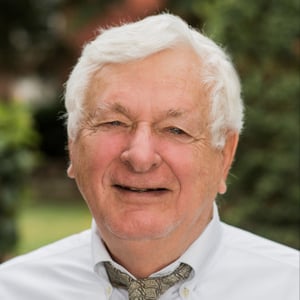
Lyle T. Alverson Professor of Law, George Washington University Law School
Professor Pierce is author of over twenty books and 130 articles on administrative law, government regulation, and the effects of various forms of government intervention on the performance of markets. His books and articles have been cited in hundreds of judicial opinions, including over a dozen opinions of the U.S. Supreme Court.

Distinguished Senior Fellow and Antonin Scalia Chair in Constitutional Studies, Ethics and Public Policy Center
Edward Whelan is a Distinguished Senior Fellow of the Ethics and Public Policy Center and holds EPPC’s Antonin Scalia Chair in Constitutional Studies. He is the longest-serving President in EPPC’s history, having held that position from March 2004 through January 2021.
Mr. Whelan directs EPPC’s program on The Constitution, the Courts, and the Culture. His areas of expertise include constitutional law and the judicial confirmation process. As a contributor to National Review Online’s Bench Memos blog, he has been a leading commentator on nominations to the Supreme Court and the lower courts and on issues of constitutional law. He has written essays and op-eds for leading newspapers—including the Wall Street Journal, the New York Times, and the Washington Post—opinion journals, and academic symposia and law reviews. The National Law Journal has named Mr. Whelan among its “Champions and Visionaries” in the practice of law in D.C.
Mr. Whelan is co-editor of three volumes of Supreme Court Justice Antonin Scalia’s work: Scalia Speaks: Reflections on Law, Faith, and Life Well Lived (Crown Forum, 2017), a New York Times bestselling collection of speeches by Justice Scalia; On Faith: Lessons from an American Believer (Crown Forum, 2019), a collection of Justice Scalia’s writings on faith and religion; and The Essential Scalia: On the Constitution, the Courts, and the Rule of Law (Crown Forum, 2020), a collection of Justice Scalia’s views on legal issues.
Mr. Whelan, a lawyer and a former law clerk to Justice Scalia, has served in positions of responsibility in all three branches of the federal government. From just before the terrorist attacks of September 11, 2001, until joining EPPC in 2004, Mr. Whelan was the Principal Deputy Assistant Attorney General for the Office of Legal Counsel in the U.S. Department of Justice. In that capacity, he advised the White House Counsel’s Office, the Attorney General and other senior DOJ officials, and departments and agencies throughout the executive branch on difficult and sensitive legal questions. Mr. Whelan previously served on Capitol Hill as General Counsel to the U.S. Senate Committee on the Judiciary. In addition to clerking for Justice Scalia, he was a law clerk to Judge J. Clifford Wallace of the U.S. Court of Appeals for the Ninth Circuit.
In 1981 Mr. Whelan graduated with honors from Harvard College and was inducted into Phi Beta Kappa. He received his J.D. magna cum laude in 1985 from Harvard Law School, where he was a member of the Board of Editors of the Harvard Law Review.
For more on Mr. Whelan’s background, see this interview.
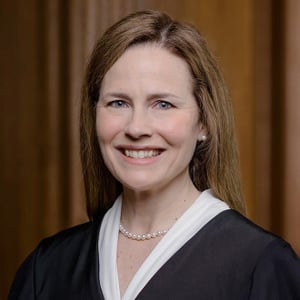
Associate Justice, United States Supreme Court
The Honorable Amy Coney Barrett is an Associate Justice of the Supreme Court of the United States. She was nominated by President Donald Trump and was confirmed on October 27, 2020. She is the fifth woman to serve on the Court.
Justice Barrett earned her J.D., summa cum laude, from Notre Dame, where she was a Kiley Fellow, earned the Hoynes Prize, the Law School’s highest honor, and served as executive editor of the Notre Dame Law Review. She clerked for Judge Laurence H. Silberman of the U.S. Court of Appeals for the D.C. Circuit and for Associate Justice Antonin Scalia of the U.S. Supreme Court. As an associate at Miller, Cassidy, Larroca & Lewin in Washington, D.C., she litigated constitutional, criminal, and commercial cases in both trial and appellate courts.
In 2002, Justice Barrett joined the faculty of Notre Dame Law School. She continued to teach following her appointment to the U.S. Court of Appeals for the Seventh Circuit in November 2017. Justice Barrett also served by appointment of the Chief Justice on the Advisory Committee for the Federal Rules of Appellate Procedure from 2010 to 2016.
Justice Barrett has published widely in the areas of federal courts, constitutional law, and statutory interpretation. Her scholarship in these fields has been published in leading journals, including the Columbia, Virginia, and Texas Law Reviews.

Laurence A. Tisch Professor of Law and Director, Classical Liberal Institute, New York University School of Law; Senior Fellow, The Civitas Institute, University of Texas at Austin
Richard A. Epstein is the inaugural Laurence A. Tisch Professor of Law at NYU School of Law. Prior to his joining the faculty, he was a visiting law professor at NYU from 2007 through 2009. He served as the Peter and Kirstin Bedford Senior Fellow at the Hoover Institution from 2000 to 2024. Since 2024 to the present he is a senior lecturer at the Civitas Institute at the University of Texas—Austin. Epstein is also the James Parker Hall Distinguished Service Professor of Law Emeritus and a senior lecturer at the University of Chicago. His initial law school appointment was at the University of Southern California from 1968 to 1972. Epstein received an LL.D., h.c. from the University of Ghent, 2003. He has been a member of the American Academy of Arts and Sciences since 1985 and was a Senior Fellow of the Center for Clinical Medical Ethics at the University of Chicago Division of Biological Sciences, also from 1983. to 2022 He served as editor of the Journal of Legal Studies from 1981 to 1991, and of the Journal of Law and Economics from 1991-2001. From 2001 to 2010 he was a director of the John M. Olin Program in Law and Economics at the University of Chicago.
His newest book, The Myth of Birthright Citizenship: What the Fourteenth Amendment Really Says was published in 2026 (Encounter Books). Prior to that he has published many books including, The Dubious Morality of the Modern Administrative State (Roman & Littlefield 2020).Earlier he published th Classical Liberal Constitution: The Uncertain Quest for Limited Government (Harvard 2014) iHis previous books include Design for Liberty: Private Property, Public Administration and the Rule of Law (Harvard 2011); The Case Against the Employee Free Choice Act (Hoover 2009); Supreme Neglect: How to Revive the Constitutional Protection of Property Rights (Oxford 2008); Antitrust Decrees in Theory and Practice: Why Less is More (AEI 2007); Overdose: How Excessive Government Regulation Stifles Pharmaceutical Innovation (Yale University Press. 2006); How Progressives Rewrote the Constitution (Cato 2006); Cases and Materials on Torts (Aspen Law & Business; 8th ed. 2004); Skepticism and Freedom: A Modern Case for Classical Liberalism (University of Chicago, 2003); Torts (Aspen Law & Business 1999); Principles for a Free Society: Reconciling Individual Liberty with the Common Good (Perseus Books, 1998): Mortal Peril: Our Inalienable Rights to Health Care (Addison-Wesley, 1997); Simple Rules for a Complex World (Harvard, 1995); Bargaining With the State (Princeton, 1993); Forbidden Grounds: The Case Against Employment Discrimination Laws (Harvard , 1992); Takings: Private Property and the Power of Eminent Domain (Harvard, 1985); and Modern Products Liability Law (Greenwood Press, 1980). He has also edited(with Catherine M. Sharkey) Cases and Materials on the Law of Torts (10th edition 2012).
Professor Epstein has written numerous articles on a wide range of legal and interdisciplinary subjects. He has taught courses in administrative law, antitrust law, civil procedure, communications, constitutional law, contracts, corporations, criminal law, employment discrimination law, environmental law, food and drug law health law and policy, legal history, labor law, property, real estate development and finance, jurisprudence, labor law; land use planning, patents, individual, estate and corporate taxation, Roman Law; torts, and workers' compensation.
Professor Epstein also writes a regular column for Civitas Institute, which also sponsors his podcast, The Libertarian with Charles C.W. Cooke, and Law Talk, with Cooke and John Yoo. He also does a podcast with John Batchelor. And appears regularly on the Freedom File with Judge Andrew Napolitano.
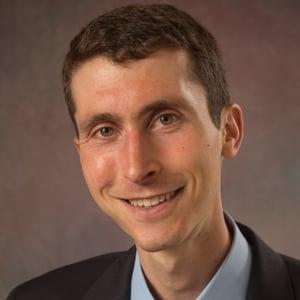
Professor of Law, University of Chicago Law School
Daniel Hemel’s research focuses on taxation, nonprofit organizations, administrative law, and federal courts. His academic work has appeared in the California Law Review, Cornell Law Review, Columbia Law Review, Georgetown Law Journal, Journal of Legal Analysis, National Tax Journal, NYU Law Review, Supreme Court Review, Tax Law Review, Texas Law Review, University of Chicago Law Review, and Yale Law Journal, and has been cited by the US Supreme Court as well as the Ninth Circuit and Federal Circuit Courts of Appeals. His op-eds and other writing have appeared in the New York Times, Washington Post, Wall Street Journal, Atlantic, Politico, Slate, TIME Magazine, and Vox. He also has provided on-air legal analysis for CNN, MSNBC, and NPR.
Daniel graduated summa cum laude from Harvard College and received an MPhil with distinction from Oxford University, where he was a Marshall Scholar. He then earned his JD from Yale Law School, where he was editor-in-chief of the Yale Law Journal. Before joining the University of Chicago Law School faculty, he was a law clerk to Associate Justice Elena Kagan on the US Supreme Court. He also clerked for Judge Michael Boudin on the US Court of Appeals for the First Circuit and Judge Sri Srinivasan on the US Court of Appeals for the District of Columbia Circuit, and served as visiting counsel at the Joint Committee on Taxation. He has held visiting professorships at Harvard Law School and Stanford Law School.
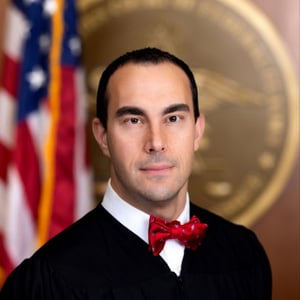
U.S. Court of Federal Claims and Jurist-In-Residence Professor of Law, The University of Akron School of Law
Judge Ryan T. Holte was sworn in as a judge on the United States Court of Federal Claims in July 2019. Prior to confirmation he served as the David L. Brennan Professor of Law and Director of the Center for Intellectual Property Law and Technology at The University of Akron School of Law (2017-2019) and an assistant professor of law at Southern Illinois University School of Law (2013-2017). Judge Holte has written and presented widely on patent law subjects and empirical legal studies of Federal Circuit and district court patent law cases. His most recent articles were published in the Iowa Law Review (2019), George Mason Law Review (2018), and Washington Law Review (2017).
In practice, Judge Holte served for six years as general counsel and partner of an electrical engineering technology company and is co-inventor of multiple patents related to Systems and Methods for Countering Satellite-Navigated Munitions. Prior to entering academia, Judge Holte practiced as a litigation attorney at the Federal Trade Commission and an associate in the Intellectual Property Practice Group at Jones Day. Prior to practice, he served as a law clerk to Judge Stanley F. Birch, Jr. on the United States Court of Appeals for the Eleventh Circuit and as a law clerk to Judge Loren A. Smith on the United States Court of Federal Claims.
Judge Holte received his JD from the University of California Davis School of Law and his BS, magna cum laude, in engineering from the California Maritime Academy where he was a First Class graduate of the Corps of Cadets Third Engineering Division and sailed as a U.S. Merchant Marine oiler.
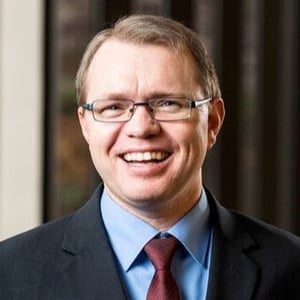
Charles I. Francis Professorship in Law, University of Texas at Austin School of Law
Professor Aaron Nielson lectures and writes in the areas of administrative law, civil procedure, and federal courts. Before joining the faculty, he served as Solicitor General of Texas and represented Texas before the U.S. Supreme Court and the Texas Supreme Court, as well as overseeing all appellate litigation for the State. Earlier in his career, he was a professor at Brigham Young University and an appellate and antitrust partner in the Washington, D.C. office of Kirkland & Ellis LLP. He also clerked for Justice Samuel A. Alito, Jr. of the U.S. Supreme Court, Judge Janice Rogers Brown of the U.S. Court of Appeals for the D.C. Circuit, and Judge Jerry E. Smith of the U.S. Court of Appeals for the Fifth Circuit.
As Solicitor General, Professor Nielson successfully defended against a First Amendment challenge Texas’s law requiring online pornographers to institute age verification. In 2020, the U.S. Supreme Court appointed him to defend the constitutionality of a federal agency. He currently serves as a Senior Fellow of the Administrative Conference of the United States after completing a six-year term as an appointed public member and chair of the Conference’s Administration & Management Committee.
Nielson’s research focuses on administrative law, federal litigation, and the separation of powers. He has published (or soon will publish) in the Harvard Law Review, Columbia Law Review, University of Chicago Law Review, University of Pennsylvania Law Review, Duke Law Journal, Georgetown Law Journal, Cornell Law Review, and Northwestern University Law Review, among others. Nielson has been recognized for teaching for teaching and scholarship and in 2021 received the Federalist Society’s Joseph Story Award, which recognizes a young academic for excellence in legal scholarship, a commitment to teaching, and a concern for students, and who has made a significant public impact in a manner that advances the rule of law in a free society. He is also an elected member of the American Law Institute.
Professor Nielson received his J.D. magna cum laude from Harvard Law School and an LL.M from the University of Cambridge, where he focused his studies on the institutions that regulate global competition and commerce. He received his undergraduate degree summa cum laude from the University of Pennsylvania, majoring in economics and political science.

Antonin Scalia Professor of Law, Harvard Law School
Stephen E. Sachs is the Antonin Scalia Professor of Law at Harvard Law School, where he teaches civil procedure, conflict of laws, and seminars on constitutional law. His research focuses on the law and theory of constitutional interpretation, the jurisdiction of state and federal courts, the history of procedure and private law, and the role of the general common law in the U.S. legal system.
Sachs has authored numerous articles, essays, and book chapters. He is an elected member of the American Law Institute, an adviser to the ALI’s project on the Restatement of the Law (Third), Conflict of Laws, a former member of the Judicial Conference’s Advisory Committee on Appellate Rules, and a founding member of the Academic Freedom Alliance.
In 2020, Sachs received the Federalist Society’s Joseph Story Award, which recognizes a young academic who has demonstrated excellence in legal scholarship, a commitment to teaching, a concern for students, and who has made a significant public impact in a manner that advances the rule of law in a free society.
Sachs previously taught at Duke University School of Law and as a visiting professor at the University of Chicago Law School. Before entering academia, he practiced in the Washington, D.C., litigation group of Mayer Brown LLP, and he clerked for Chief Justice John G. Roberts Jr. as well as for Judge Stephen F. Williams of the U.S. Court of Appeals for the D.C. Circuit.
Sachs received his J.D. from Yale Law School, where he was executive editor of the Yale Law Journal and served both as executive editor and articles editor of the Yale Law & Policy Review. A Rhodes Scholar, he graduated from Oxford University with a first-class BA (Hons) degree in philosophy, politics, and economics. He received his A.B. degree summa cum laude in history from Harvard University, earning the Sophia Freund Prize.
Sachs is a licensed attorney in Massachusetts and the District of Columbia, and he is authorized to practice before the D.C. Circuit, the Second Circuit, the Seventh Circuit, and the Supreme Court of the United States.
Associate Professor of Law, Washington and Lee University School of Law
Christopher B. Seaman joined the Washington and Lee law faculty in 2012. His research and teaching interests include intellectual property, property, and civil procedure, with a particular focus on intellectual property litigation and remedies for the violation of intellectual property rights.
Professor Seaman’s intellectual property-related scholarship has appeared or is forthcoming in a variety of law reviews and journals, including the Virginia Law Review, the Iowa Law Review, the BYU Law Review, the Harvard Journal of Law and Technology, and the Yale Journal of Law and Technology. His empirical study of willful patent infringement and enhanced damages was selected as a winner of the Samsung-Stanford Patent Prize competition for outstanding new scholarship related to patent remedies.
In addition, Professor Seaman has an interest in voting rights and election law, having written several works on the history, constitutionality, and potential future of Section 5 of the Voting Rights Act.
Professor Seaman was selected by the Student Bar Association as Faculty Member of the Year for 2013-2014. He received the John W. Elrod Law Alumni Faculty Fellowship for Teaching in 2014 and was named an Ethan Allen Faculty Fellow for scholarship in 2015.
Professor Seaman received his B.A. in 2000 from Swarthmore College and his J.D. in 2004 from the University of Pennsylvania Law School, where he was an Executive Editor of the University of Pennsylvania Law Review and a recipient of the Edwin R. Keedy Award. After a judicial clerkship with the Honorable R. Barclay Surrick of the U.S. District Court of the Eastern District of Pennsylvania, he practiced intellectual property law at Sidley Austin LLP in Chicago from 2005-2009, where he represented clients in patent, copyright, trademark and trade secret litigation in federal and state courts. Prior to joining Washington and Lee’s faculty, Professor Seaman was a Visiting Assistant Professor at IIT Chicago-Kent College of Law and an adjunct professor at Loyola University Chicago School of Law.
Professor of Law, University of Michigan Law School
Christopher J. Walker is a Professor of Law at the University of Michigan. Prior to joining Michigan law faculty in 2022, he spent a decade teaching at The Ohio State University Moritz College of Law. He previously clerked for Justice Anthony Kennedy of the U.S. Supreme Court, worked on the Civil Appellate Staff at the U.S. Department of Justice, and served on the Senate Judiciary Committee staff for the Gorsuch Supreme Court confirmation. Professor Walker’s research focuses on administrative law, regulation, and law and policy at the agency level. Outside the law school, he chaired the American Bar Association’s Section of Administrative Law and Regulatory Practice in 2020-21 and served as one of forty Public Members of the Administrative Conference of the United States from 2016-2022, and he continues to serve in both organizations in various capacities. He also works of counsel at the U.S. Chamber Litigation Center. In 2022, he received the Federalist Society’s Joseph Story Award.

Julius E. Davis Professor of Law, University of Minnesota Law School
Ilan Wurman is the Julius E. Davis Professor of Law at the University of Minnesota, where he teaches administrative law and constitutional law. He previously taught at Arizona State University. He writes primarily on the Fourteenth Amendment, administrative law, separation of powers, and constitutionalism. His academic writing has appeared in the Yale Law Journal, the Stanford Law Review, the University of Chicago Law Review, the University of Pennsylvania Law Review, the Virginia Law Review, the Duke Law Journal, the Minnesota Law Review, the Notre Dame Law Review, and the Texas Law Review among other journals.
Professor Wurman is the author of the new book The Constitution of 1789: A New Introduction (Cambridge 2026). His previous books include A Debt Against the Living: An Introduction to Originalism (Cambridge 2017), and The Second Founding: An Introduction to the Fourteenth Amendment (Cambridge 2020). He is also the author of the casebook, Administrative Law Theory and Fundamentals: An Integrated Approach (Foundation Press 3d ed. 2025).
Professor Wurman practices law with the firm Tully Bailey. He has litigated a variety of administrative law and constitutional law cases, including cases involving COVID-19 restrictions, transmission lines, and Appointments Clause challenges. He also devised winning public nuisance theories to force city governments to address the increasingly challenging public camping crises throughout the country.
President, Cass & Associates, PC
Ronald A. Cass is Dean Emeritus of Boston University School of Law (where he was Dean from 1990-2004), President of Cass & Associates, PC, former Vice-Chairman and Commissioner of the U.S. International Trade Commission, former faculty member at Boston University School of Law and the University of Virginia Law School, and Distinguished Senior Fellow at the C. Boyden Gray Center for the Study of the Administrative State. Dean Cass also sits as an arbitrator for commercial, international, and intellectual property rights disputes, and is a former United States member of the Panel of Conciliators of the International Centre for Settlement of Investment Disputes. He is a member of the Council of the Administrative Conference of the United States and has received seven presidential appointments, spanning Presidents Ronald Reagan to Donald J. Trump.
As a law professor, lecturer, and scholar, Dean Cass has been teaching and writing about a wide array of legal issues on topics such as administrative law and regulation, antitrust, constitutional law, communications, intellectual property, international trade, separation of powers, and legal process. He has published more than 160 scholarly books, chapters, articles, and papers, including a leading casebook on administrative law. Dean Cass has taught judges as well as students in schools of law, economics, business, and public policy and has held academic appointments in the United States, Europe, and Latin America.
In addition to his academic work, Dean Cass has participated in numerous important legal cases as an amicus, consultant, or expert, and has advised businesses, law firms, investment funds, and government agencies on a range of trade, antitrust, intellectual property, and regulatory issues. He has a broad range of affiliations with professional groups, and has received numerous honors, fellowships and awards.
Dean Cass is a graduate of the University of Virginia and the University of Chicago Law School.

Partner, Clement & Murphy, PLLC
Paul served as the 43rd Solicitor General of the United States from June 2005 until June 2008. Before his confirmation as Solicitor General, he served as Acting Solicitor General for nearly a year and as Principal Deputy Solicitor General for over three years.
Paul has argued over 100 cases before the United States Supreme Court, including McConnell v. FEC, Tennessee v. Lane, United States v. Booker, MGM v. Grokster, Hobby Lobby v. Burwell, Epic Systems Corp. v. Lewis, Rucho v. Common Cause, Facebook v. Duguid, and TransUnion v. Ramirez. Paul has argued more Supreme Court cases since 2000 than any lawyer in or out of government. He has also argued many important cases in the lower courts, including Walker v. Cheney, United States v. Moussaoui and NFL v. Brady.
Paul’s practice focuses on appellate matters, constitutional litigation and strategic counseling. He represents a broad array of clients in the Supreme Court and in federal and state appellate courts. Last year, for example, he successfully argued Supreme Court cases involving significant issues of energy regulation, statutory interpretation, state sovereign immunity and Article III standing, and successfully argued a trademark appeal in the Fourth Circuit, and a constitutional appeal before the en banc Eleventh Circuit.
Paul focuses on high-stakes appeals. In recent years, he successfully defended a $1.2 billion jury verdict for clients in a Tenth Circuit case, while securing the reversal of an over $2 billion jury verdict for another client in the Seventh Circuit and the approval of a nearly $1 billion dollar class action settlement in the Third Circuit. He has initiated major administrative law challenges and constitutional litigation against the federal government, such as the successful challenge to the HHS drug-pricing rule and threatened challenges that led to the withdrawal of the Treasury Department’s proposed cryptocurrency regulations. He also counsels clients on a variety of strategic legal questions, whether arising from pending legislation, government inquiries or ongoing litigation.
Paul has undertaken substantial pro bono engagements in the Supreme Court, such as twice successfully representing the defendant in Bond v. United States and successfully representing the Omaha Tribe in Nebraska v. Parker, the guardian ad litem in Adoptive Couple v. Baby Girl, the defendant in Sekhar v. United States, a high school football coach in Kennedy v. Bremerton, and the Little Sisters of the Poor. Paul’s pro bono representation also precipitated the federal government’s confession of error in United States v. Rojas.
Following law school, Paul clerked for Judge Laurence H. Silberman of the U.S. Court of Appeals for the D.C. Circuit and for Associate Justice Antonin Scalia of the U.S. Supreme Court. After his clerkships, he went on to serve as Chief Counsel of the U.S. Senate Subcommittee on the Constitution, Federalism and Property Rights.
Paul is a Distinguished Lecturer in Law at the Georgetown University Law Center, where he has taught in various capacities since 1998. He also serves as a Senior Fellow of the Law Center’s Supreme Court Institute. He is the Justice Joseph Story Distinguished Practitioner in Residence at the Gray Center at Scalia Law School.
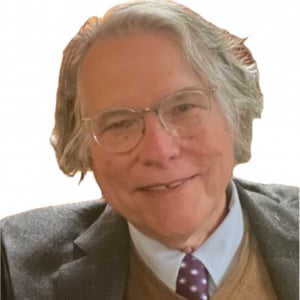
Partner, Earth and Water Law; retired Yale Law School professor (1981-2025), Yangtze River Distinguished Professor, Guangzhou Law School, ChinaDistinguished Adjunct Professor at Antonin Scalia Law School
E. Donald Elliott is a Florence Rogatz Visiting Professor of Law at Yale Law School and a leading academic scholar, as well as practitioner, in the fields of administrative and environmental law. He is “one of the most well-known, well-regarded environmental law professors in the nation,” according to John Cruden, former President of the Environmental Law Institute and Assistant Attorney General, Environment and Natural Resources Division, U.S. Department of Justice during the Obama administration. Elliott has been on the Yale Law faculty since 1981 and currently teaches courses in environmental law, energy law, administrative law and civil procedure. He is also senior of counsel in the Washington D.C. office of Covington & Burling LLP, and co-chair of the firm's Environmental Practice Group. From 2003 until he joined Covington in 2013, he was a partner in Willkie Farr & Gallagher LLP, chairing the firm’s worldwide Environment, Health and Safety Department.
From 1989 to 1991, Elliott served as Assistant Administrator and General Counsel of the U.S. Environmental Protection Agency (EPA). In 1993, he was named to the first endowed chair in environmental law and policy at any major American law school, the Julien and Virginia Cornell Chair in Environmental Law and Litigation at Yale Law School. From 2003-2009, he was a member of the National Academy of Sciences Board on Environmental Studies and Toxicology, which advises the federal government on environmental issues. Elliott also testifies frequently in Congress on environmental issues.
He has served as a consultant on improving the relationship of law and science to the Federal Courts Study Committee, which was chartered by Congress to make recommendations for improving the federal courts, and to the Carnegie Commission for Law, Science and Government. He co-chaired the National Environmental Policy Institute’s Committee on Improving Science at EPA.
Elliott is a Senior Fellow of the Administrative Conference of the United States (ACUS) and an elected member of the American College of Environmental Lawyers and the American Law Institute. He serves on the Board of the Connecticut Fund for the Environment and as chair of its legal committee, as well on the Advisory Board for NYU’s Institute for Policy Integrity. He is a former member of the boards of the Environmental Law Institute, and the Center for Clean Air Policy. He is the author or coauthor of seven books and has published more than 70 articles in professional journals. He was named one of the top 25 environmental attorneys in the United States by the National Law Journal and is highly ranked in Chambers USA: Leading Lawyers for Business; Best Lawyers in America; D.C. Super Lawyers; Who’s Who in American Law; and Who’s Who in the World.
He earned both his B.A., summa cum laude and Phi Beta Kappa, and his J.D. from Yale. Following graduation, he was a law clerk for Gerhard Gesell in the U.S. District Court for the District of Columbia, and for Chief Judge David Bazelon of the U.S. Court of Appeals for the District of Columbia Circuit.
Justice William J. Brennan, Jr., Professor of Law, Georgetown University Law Center
Lisa Heinzerling is the Justice William J. Brennan, Jr. Professor of Law at Georgetown University. Her primary specialties are administrative law and environmental law. She is the author of several books, including Priceless: On Knowing the Price of Everything and the Value of Nothing, a critique of the use of cost-benefit analysis in environmental policy. Professor Heinzerling has received the Georgetown University President's Award for Distinguished Scholar-Teachers, the faculty teaching award at Georgetown Law, and several awards related to her scholarship and advocacy in environmental law. She was the lead author of the winning briefs in Massachusetts v. EPA, in which the Supreme Court held that the Clean Air Act gives EPA the authority to regulate greenhouse gases. From January 2009 to July 2009, Heinzerling served as Senior Climate Policy Counsel to the Administrator of the Environmental Protection Agency and then, from July 2009 to December 2010, she served as Associate Administrator of EPA’s Office of Policy. She was a law clerk to Judge Richard A. Posner of the U.S. Court of Appeals for the Seventh Circuit and Justice William J. Brennan, Jr. of the U.S. Supreme Court.

Founder, Law Office of Eileen J. O'Connor PLLC
After nearly 30 years as a national tax specialist with the IRS and major accounting firms, Eileen J. O’Connor, now an attorney in private practice, was Assistant Attorney General for the Justice Department’s Tax Division for six years during the administration of President George W. Bush and a member of then-President-elect Trump’s Treasury Department Transition Team. She focuses on federal administrative and tax law.

Partner, Gibson, Dunn & Crutcher, and Former United States Secretary of Labor
Eugene Scalia is a partner in the Washington, D.C. office of Gibson, Dunn & Crutcher, co-chair of the firm’s Administrative Law and Regulatory Practice Group, and a senior member of the firm’s Labor and Employment Practice Group and Financial Institutions Practice Group. He returned to the firm after serving as U.S. Secretary of Labor from September 2019 to January 2021.
Mr. Scalia has a nationally-prominent practice in two areas: Labor and employment law, and advice and litigation regarding the regulatory obligations of federal administrative agencies. He also has extensive appellate experience. Federal regulatory actions he has challenged include the SEC’s “proxy access” rule; the CFTC’s “position limits’” rule; MetLife’s designation as “too big to fail” by the Financial Services Oversight Council; the Labor Department’s “fiduciary” rule; and OSHA’s “cooperative compliance program.”
As Labor Secretary, Mr. Scalia engaged at the highest level with national employment policy and matters affecting the financial services industry and international trade, overseeing the enforcement and administration of more than 180 federal employment laws covering more than 150 million workers and 10 million workplaces. He also served as Chair of the Board of Directors of the Pension Benefit Guaranty Corporation and as a member of the White House Coronavirus Task Force. He was closely involved in the drafting and implementation of the CARES Act and other coronavirus-related legislation. Laws administered by the Labor Department also include the workplace safety requirements of OSHA and the Mine Safety and Health Administration, federal minimum wage and overtime protections, the anti-discrimination requirements applicable to federal contractors, and ERISA’s protection of the more than $11 trillion held in employee retirement plans and health plans.
Mr. Scalia served from 2002 to 2003 as Solicitor of the U.S. Department of Labor, with responsibility for all Labor Department litigation and legal advice on rulemakings and administrative law. He is the only person to have served as both Solicitor and Secretary of Labor.
He also served at the U.S. Department of Justice as a Special Assistant to the Attorney General, receiving the Department’s Edmund J. Randolph Award in 1993.
In private practice, Mr. Scalia has represented employers in high-profile matters under the National Labor Relations Act and in class actions and collective actions under Title VII, the Americans with Disabilities Act, the Age Discrimination in Employment Act, ERISA, and federal and state wage hour laws. He has extensive experience in federal district court, the courts of appeals, and in the arbitration of employment disputes. He has been a leading authority on “whistleblower” investigations and litigation since the 2002 enactment of the Sarbanes-Oxley Act. Mr. Scalia also counsels employers on reductions-in-force and the proper conduct of harassment and discrimination investigations. He has provided pro bono representation to workers in discrimination matters, wrongful separation disputes, and other matters.
Mr. Scalia is a Senior Fellow of the Administrative Conference of the United States, a federal agency that makes recommendations to Congress and the Executive Branch on ways to improve the administrative process. He is the author of more than 30 articles and papers on labor and employment law, administrative law, and other subjects. Among other accolades, he has been named an “Employment MVP,” a “Securities MVP,” and an “Appellate MVP” by Law360. The National Law Journal recognized Mr. Scalia as a “Visionary” for his litigation against financial regulatory agencies, and the Nation magazine has called him a “fearsome litigator.” He has been a Lecturer in labor and employment law at the University of Chicago Law School.
Mr. Scalia graduated cum laude from the University of Chicago Law School, where he was editor-in-chief of the Law Review. He graduated With Distinction from the University of Virginia in 1985 and was a speechwriter for Education Secretary William J. Bennett before attending law school. Mr. Scalia and his wife Trish have seven children.
Professor of Law, Antonin Scalia Law School, George Mason University
Eric R. Claeys is Professor of Law at the Antonin Scalia Law School, George Mason University. He has written widely in the fields of property, private law, and constitutional law. Professor Claeys’s current research interests focus on flourishing- and labor-based natural rights justifications for property—in American property theory, in intellectual property, and in contemporary regulation of shale gas exploration and hydraulic fracturing. He is a member of the American Law Institute, he serves on the ALI’s Members’ Consultative Group for the first Restatement of Copyright, and he also serves as an adviser to the Restatement (Fourth) of the Law of Property.
Professor Claeys received his JD from the University of Southern California Gould School of Law. He received his AB from Princeton University, and he is a former visiting fellow and current member of Princeton’s Politics Department’s James Madison Program in American Ideals and Institutions. After law school, Professor Claeys clerked for the Hon. Melvin Brunetti, U.S. Court of Appeals for the Ninth Circuit, and the Hon. William H. Rehnquist, Chief Justice of the United States.
Professor Claeys’s main teaching interests include Property, Torts, Jurisprudence, and Intellectual Property. In recent years, he has also taught Water Law, Remedies, Estates and Trusts, Trade Secrecy, Constitutional Law, Torts, and Oil and Gas law. Spring 2018, he is teaching Torts and Jurisprudence as a Visiting Professor at Harvard Law School.
U.S. Court of Appeals, Eighth Circuit
Steven M. Colloton is a federal judge on the United States Court of Appeals for the Eighth Circuit. He joined the court in 2003 after being nominated by President George W. Bush.
Born in Iowa City, Iowa, Colloton received his bachelor's degree from Princeton University in 1985 and a J.D. from Yale Law School in 1988.
Policy Counsel on Energy, Environment, and Agriculture, U.S. Senate Republican Policy Committee
Matt Leggett serves as Policy Counsel for the U.S. Senate Republican Policy Committee. He provides in-depth analysis on energy, environment, and agriculture issues, policy solutions and alternatives, and strategic guidance for all Republican members of the U.S. Senate. He manages the committee's advancement of Republican energy, environment, and agriculture policies by providing positions on legislation, floor debate, and votes. Senator John Barrasso, an orthopedic surgeon from Wyoming, serves as chairman of the committee and is the fourth ranking member of Republican leadership in the U.S. Senate.
Mr. Leggett formerly served as Legislative Counsel in the U.S. House of Representatives where he managed a Republican Congressman's Energy & Commerce Committee assignment, co-chairmanship of the Congressional Natural Gas Caucus, and co-chairmanship of the Congressional Steel Caucus. Previously, he served as a legislative aide for the U.S. House Committee on Agriculture and for a senior U.S. Senator. He also practiced corporate law in Washington, DC for two years.
Mr. Leggett graduated from the University of Virginia and Vanderbilt University Law School. He is a member of the Virginia State Bar and the District of Columbia Bar. He is also a member of the Energy Bar Association.
University Professor on the Environment, and Kerlin Professor Em, Pace University School of Law
Nicholas A. Robinson is University Professor for the Environment at Pace University and the Gilbert & Sarah Kerlin Distinguished Professor of Environmental Law at Pace Law School, and since 2006 also holds an appointment as Professor Adjunct at the Yale University School of Forestry & Environmental Studies. He served from 1996-2004 as the Legal Advisor of the International Union for the Conservation of Nature and Natural Resources (IUCN), and chaired its Commission on Environmental Law. He served on the President’s Council on Environmental Quality’s Legal Advisory Committee from 1970-72, and pioneered the early practice of environmental law in New York with James Marshall and then David Sive. In 2012, IUCN’s World Conservation Congress conferred upon him IUCN’s Honorary Membership for his contributions to IUCN and its environmental law program. In 1978, he inaugurated Pace Law School’s degree programs in environmental legal studies, taking a leave to serve as the General Counsel of the NY State Department of Environmental Conservation (1983-85). He was an environmental law delegate to the bilateral USA-USSR negotiations on cooperation in the field of environmental protection under five presidents (1974-1996). He currently serves on the Environmental & Social Advisory Council to the European Bank for Reconstruction and Development (EBRD) in London. He has chaired both the Environmental Law and International Environmental Law Committees of the New York City Bar, and served on the Board of the Environmental Law Institute (2005-11). His publications including editing the annotated 5-volume edition of the traveaux préparatoires for the 1992 Rio Earth Summit’s Agenda 21 and the UNCED Proceedings, and two volumes on Capacity Building for Environmental Law in the Asia and Pacific Region for the Asian Development Bank. He co-edited the UN Environment Programme’s Manual on International Environmental Law (2006). He has been a draftsman for the UN World Charter for Nature (UNGA Res. 37/7) and international agreements, for New York’s wetlands legislation and wild birds law, and for environmental impact assessment rules, and other domestic environmental legislation. He is a graduate of Brown University (Phi Beta Kappa, 1967) and Columbia University School of Law (1970).
Trustee Professor of Law, New York Law School
From 1972-79, Schoenbrod served as one of the leaders of the Natural Resources Defense Council, where he campaigned to reduce lead in gasoline, resurrect the then-decrepit New York City subway, and protect the environment of Puerto Rico. Previously, he was Director of Program Development at the community development project that Senator Robert Kennedy established in Bedford Stuyvesant. He has also been a senior fellow at the Cato Institute and the American Enterprise Institute.
His books include
D.C. Confidential: Inside the Five Tricks of Washington (Encounter Books, 2017) with forewords by Governor Howard Dean and Senator Mike Lee;
Breaking the Logjam: Environmental Protection That Will Work (Yale University Press, 2010)(with Richard B. Stewart and Katrina M. Wyman);
Saving Our Environment from Washington: How Congress Grabs Power, Shirks Responsibility, and Shortchanges the People (Yale University Press, 2005);
Democracy by Decree: What Happens When Courts Run Government (Yale University Press, 2003) (with Ross Sandler); and
Power Without Responsibility: How Congress Abuses the People Through Delegation (Yale University Press, 1993).
In addition to writing scholarly articles, he has frequently contributed opinion pieces to the Wall Street Journal, The Hill, the New York Times, and other publications.
He has an undergraduate degree from Yale College, a graduate degree in economics from Oxford University, which he attended as a Marshall Scholar, and a law degree from Yale Law School.

Major Questions Doctrine: From West Virginia v. EPA to Learning Resources
Aram A. Gavoor, Andrew Grossman, Kristin E. Hickman, Gillian E. Metzger, Max Sarinsky
The Supreme Court's decision in Learning Resources, Inc. v. Trump produced at least four distinct visions of...
The Major Questions Doctrine: A Question or an Answer for Administrative Law?
Christopher J. Walker
Recent Supreme Court decisions have invoked what is being called the “Major Questions Doctrine.” In...
The SEC’s ESG Reporting Rule: Understanding the Debate over Climate-Risk Disclosure Requirements
Jane Luxton, Paul J. Ray
In March 2022, the Securities and Exchange Commission proposed a new rule that would establish...
The Major Questions Doctrine, Chevron Deference & the Future of the Regulatory State
Christopher J. Walker, Jonathan Wolfson
The University of Richmond chapter of the Federalist Society hosted this panel discussion on "The...
Creatures of Statute III: Congress’ Responsibility to Answer the Major Questions
Sarah Binder, Daniel M. Flores, Trevor N. McFadden
Join the Federalist Society’s Regulatory Transparency Project and Capitol Hill Chapter for the third in...
When Do Low Prices Hurt Competition?
Charlie Beller
Lower prices are generally assumed to benefit consumers. However, predatory pricing – which artificially lowers...
Judicial Deference and Congressional Action
Ronald A. Cass, Thomas B. Griffith, John O. McGinnis, Richard J. Pierce, Edward Whelan
The Fifth Annual Executive Branch Review Conference will examine the changing and often convoluted relationship...
Young Legal Scholars Paper Presentations
Amy Coney Barrett, Richard A. Epstein, Daniel Hemel, Ryan T. Holte, Aaron Nielson, Stephen E. Sachs, Christopher Seaman, Christopher J. Walker, Ilan Wurman
This panel was held on January 5, 2017 during the 19th Annual Faculty Conference in...
Administrative Law & Regulation: The Evolution of Justice Scalia's Views on Administrative Law
Ronald A. Cass, Paul D. Clement, E. Donald Elliott, Lisa Heinzerling, Eileen J. O'Connor, Eugene Scalia
For all of his many contributions to modern American jurisprudence, no area of law bears...
Environmental Law: The Role of Congress in Environmental Law
Eric R. Claeys, Steven Colloton, Matt Leggett, Nicholas A. Robinson, David S. Schoenbrod
Environmental law and policy raise profound questions about Congress's role and responsibilities. Many environmental regulatory...