Faithless Electors & the Electoral College [POLICYbrief]
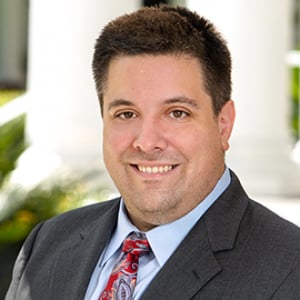
Short video featuring Michael Morley
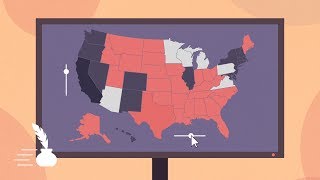
When people vote in a presidential election, they are selecting a representative who will cast a vote for a presidential candidate in the Electoral College. What happens if the elector decides to vote contrary to the results from the polls? Supporters of such “faithless electors” contend that the Constitution allows them to cast their vote according to their own discretion. Opponents argue that the role of an Elector is to represent the people and their wishes, despite their own personal preferences. In this episode of POLICYbrief, Professor Michael Morley outlines the arguments for both sides of the debate.
Learn more about Michael Morley:
https://law.fsu.edu/faculty-staff/michael-morley
* * * * *
As always, the Federalist Society takes no position on particular legal or public policy issues; all expressions of opinion are those of the speaker.
Related Links
“Faithless Electors” Won’t Affect Any Presidential Election
https://www.heritage.org/election-integrity/commentary/faithless-electors-wont-affect-any-presidential-election
Chiafolo v. Washington: The Decision
https://fedsoc.org/commentary/videos/chiafalo-v-washington-the-decision-scotusbrief
Electoral College Fast Facts
https://history.house.gov/Institution/Electoral-College/Electoral-College/
Originalism, Constitutional Construction, and the Problem of Faithless Electors
https://arizonalawreview.org/pdf/59-4/59arizlrev903.pdf
The National Popular Vote v. the Electoral College
https://fedsoc.org/commentary/videos/the-national-popular-vote-v-the-electoral-college-policybrief
Differing Views
Supreme Court’s “faithless electors” decision validates case for the National Popular Vote Interstate Compact
https://www.brookings.edu/blog/fixgov/2020/07/14/supreme-courts-faithless-electors-decision-validates-case-for-the-national-popular-vote-interstate-compact/
Faithless Electors
https://www.fairvote.org/faithless_electors
Myths about Faithless Electors
https://www.nationalpopularvote.com/section_9.10
“Faithless Electors” are Faithful to the Constitution
https://www.wsj.com/articles/faithless-electors-are-faithful-to-the-constitution-11589322552

Sheila M. McDevitt Professor of Law and Faculty Director of the Election Law Center, Florida State University College of Law
Professor Morley joined FSU Law in 2018, and teaches and writes in the areas of election law, constitutional law, remedies, and the federal courts. He is best known for his work on election emergencies and post-election litigation, nationwide and other defendant-oriented injunctions, the jurisdiction of the federal courts and their equitable powers more generally. He has testified before congressional committees, made presentations to election officials for the U.S. Election Assistance Commission and participated in bipartisan blue-ribbon groups to develop election reforms. The governor of Florida also appointed Professor Morley to the Criminal Punishment Code Task Force, to propose potential revisions to the legislature.
The U.S. Supreme Court has cited several of his articles, and he was counsel of record for the successful Petitioner in a landmark campaign finance case. Professor Morley has appeared on C-SPAN, Court TV, Fox News and numerous local news programs, and has been quoted in the Washington Post, Los Angeles Times, Roll Call, Politico, U.S. News and World Report, and a wide range of other national publications. His work has been published in many of the nation’s top law reviews, including the Georgetown Law Journal, Northwestern University Law Review, Boston University Law Review and Emory Law Journal.
Before joining FSU Law, Professor Morley was a Climenko Fellow and Lecturer in Law at Harvard Law School. Prior to his experience in academia, he served in government as special assistant to the General Counsel of the Army at the Pentagon, as well as a law clerk for Judge Gerald B. Tjoflat of the U.S. Court of Appeals for the Eleventh Circuit. During his tenure with the Army General Counsel’s office, he was awarded the Meritorious Civilian Service Award and the Army Staff Lapel Pin. He also worked as an associate at Williams & Connolly LLP and the Supreme Court & Appellate group of Winston & Strawn, LLP, both in Washington, D.C.
Professor Morley earned his J.D. from Yale Law School in 2003, where he was a senior editor on the Yale Law Journal; served on the moot court board; and received the Thurman Arnold Prize for Best Oralist in the Morris Tyler Moot Court of Appeals.