

Clinical Professor of Law, Dale E. Fowler School of Law, Chapman University

Founder, President, and General Counsel, Wisconsin Institute for Law & Liberty
Rick Esenberg is the founder and current President and General Counsel of the Wisconsin Institute for Law & Liberty, a rapidly expanding law and policy organization headquartered in Milwaukee. Under Rick’s leadership, WILL has grown into one of the more active state-based think tanks and litigation centers in the country. Rick is a frequent litigator in state and federal courts and nationally recognized scholar and commentator on constitutional law, particularly the First Amendment’s guarantees of freedom of speech and religion. He is one of the leading experts on the Wisconsin Constitution and a frequent advocate before the Wisconsin Supreme Court. Rick’s work seeks to advance the rule of law and individual liberty, formed by a robust civil society that forms individual and community character, preserving the wisdom of the past and an openness to the future.
Rick’s commentary has been featured in such outlets as the Wall Street Journal, National Review, Weekly Standard, Real Clear Politics, Milwaukee Journal Sentinel and Washington Examiner. Formerly on the faculty of Marquette University Law School, his scholarship has appeared in such publications as the Harvard Law Review, Harvard Journal of Law & Public Policy, Wake Forest Law Review and William & Mary Bill of Rights Journal. Back when they were a thing, he operated a blog called Shark and Shepherd where he tried to suggest something about the duality of man – “the Jungian thing.”
Rick holds a J.D., magna cum laude, from Harvard Law School, where he was an editor of the Harvard Law Review, and a B.A., summa cum laude, in political science from the University of Wisconsin-Milwaukee. In addition to service on the Marquette Faculty, he was formerly a litigation partner at Foley & Lardner and General Counsel of an international manufacturing firm headquartered in Wisconsin. He lives in Mequon Wisconsin with his wife Karen, golden retrievers Cooper and Riley and more books than he can find places for.

Deputy Assistant Attorney General, Office of Legal Policy, Department of Justice
GianCarlo Canaparo serves as Deputy Assistant Attorney General in the Office of Legal Policy at the Department of Justice. There, he oversees the Office's regulatory work and is the Department's liaison to the Office of Information and Regulatory Affairs. He also assists the White House in the process of selecting nominees for federal judgeships and advises Department leadership on policy and legal matters.
Before joining the Department, Canaparo was a senior legal fellow at The Heritage Foundation’s Edwin Meese III Center for Legal and Judicial Studies where he researched constitutional law, administrative law, and civil rights.
Canaparo’s scholarship has appeared in various law reviews including the Harvard Journal of Law and Public Policy, the Notre Dame Law Review, the Georgetown Journal of Law and Public Policy, the Texas Review of Law and Politics, and the Administrative Law Review. His research has been cited by Justice Neil Gorsuch and featured in the Wall Street Journal and Washington Post. His analysis has appeared in Law & Liberty, Civitas, Fox News, The National Review, Law 360, FedSoc Blog, and other outlets.
Canaparo co-hosted The Heritage Foundation’s SCOTUS 101 podcast, which follows the Supreme Court’s arguments and opinions and features interviews with judges, advocates, and scholars.
After graduating Georgetown law, Canaparo spent three years at the law firm of Skadden, Arps, Slate, Meagher & Flom and two years as a federal law clerk. He earned his bachelor’s degree in economics from the University of California at Davis.
Canaparo is a classical pianist and organist.

Partner, Holtzman Vogel Baran Torchinsky & Josefiak PLLC
Jason Torchinsky is a partner at Holtzman Vogel Josefiak PLLC, specializing in campaign finance, election law, lobbying disclosure and issue advocacy groups. Politico recently named him one of the “50 Politicos to Watch,” and in 2007, Campaigns and Elections Magazine named him a “Rising Star of Politics.”
In addition to his practice counseling clients on compliance with campaign finance, ethics laws, lobbying disclosure and election laws, Mr. Torchinsky has served as lead counsel in a number of litigation matters. Representative matters in the redistricting area include Louisiana House of Representatives v. Holder (D.D.C.) (Section 5 pre-clearance action), City of Sandy Springs v. Holder (D.D.C.) (Section 5 bailout action), and Fletcher v. Lamone (D. Md.) (challenging Maryland’s Congressional Districting map). In the campaign finance context, he is currently representing clients in Alliance for America’s Future v. State (Nevada Supreme Court) and Van Hollen v. Federal Election Commission (D.D.C.) (Representing intervenor defendants). He has also represented Virginia candidates in recounts and voter registration challenges before various Virginia Circuit Courts.
Mr. Torchinsky frequently lectures on campaign finance redistricting and ethics related subjects and provides commentary to the media on election related matters.
Prior to joining the firm, Mr. Torchinsky was Counsel to the Assistant Attorney General for the Civil Rights Division at the United States Department of Justice. During the 2004 election cycle, he served as Deputy General Counsel to Bush-Cheney ’04 and Deputy General Counsel to the 2005 Presidential Inaugural Committee.
He holds a B.A. in Government and Public Policy from the College of William and Mary and a J.D. from the College of William and Mary School of Law. He is a member of the Virginia Bar, the District of Columbia Bar, the Republican National Lawyers Association and the Federalist Society.
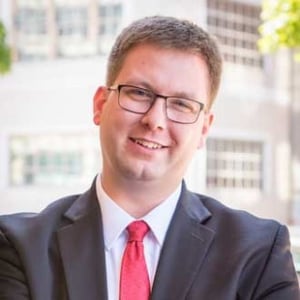
Senior Associate, Holtzman Vogel Josefiak Torchinsky PLLC
Drew Watkins is a senior associate with Holtzman Vogel Josefiak Torchinsky PLLC, providing counsel in the areas of campaign finance and election law, lobbying and ethics compliance, and tax-exempt organizations.
Prior to joining the firm, Drew served as a law clerk to the Honorable Joseph R. Goeke, Senior Judge of the United States Tax Court in Washington, D.C., and worked in the Office of General Counsel for the Governor of Kentucky, Matthew G. Bevin. While in law school, Drew served as a law clerk for the Kentucky Executive Branch Ethics Commission and interned for Senate Majority Leader Mitch McConnell in his office in Washington, D.C.
Drew graduated from the University of Louisville with a B.S. in Justice Administration. He earned his Juris Doctor, magna cum laude, from the University of Kentucky College of Law and was a member of the Order of the Coif. During law school, he served as a senior staff editor on the Kentucky Law Journal and authored a published student note on the Justice Against Sponsors of Terrorism Act. He is a member of the Kentucky, D.C. and Virginia bars and the Federalist Society.
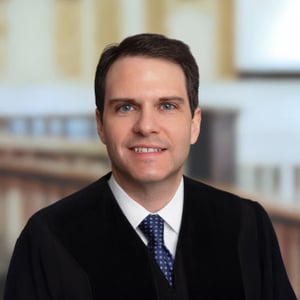
Associate Justice, Arkansas Supreme Court
Nicholas Bronni was appointed to the Arkansas Supreme Court by Governor Sarah Huckabee Sanders on December 20, 2024, and he began his service on January 1, 2025.
Before being appointed to the bench, Justice Bronni served as the Solicitor General of Arkansas. In that role, he successfully argued two cases in the United States Supreme Court: Delaware v. Pennsylvania, 598 U.S. 115 (2023), an original jurisdiction case concerning unclaimed property; and Rutledge v. PCMA, 592 U.S. 80 (2020), an ERISA preemption case. Justice Bronni also successfully argued numerous cases before federal and state appellate courts, including Arkansas Times v. Waldrip, 37 F.4th 1386 (8th Cir. 2022) (en banc), which upheld Arkansas's law barring state contractors from boycotting Israel; and Arkansas State Conf. NAACP v. Arkansas Bd. of Apportionment, 86 F.4th 1204 (8th Cir. 2023), a landmark case holding that Section 2 of the Voting Rights Act is not privately enforceable. As Solicitor General, Justice Bronni received the National Association of Attorneys General's 2024 Best Supreme Court Brief Award for his multistate amicus brief in Muldrow v. City of St. Louis, Missouri, 601 U.S. 346 (2024).
Justice Bronni received his law degree with magna cum laude honors from the University of Michigan Law School. At Michigan, he was an editor of the Michigan Law Review and was elected to the Order of the Coif. He received his undergraduate degree, summa cum laude, and with special departmental honors from the Elliott School of International Affairs at the George Washington University.
Prior to returning home to Arkansas, Justice Bronni was a Senior Litigation Counsel with the Appellate Litigation Group at the United States Securities and Exchange Commission. He was also an associate with Gibson Dunn and Crutcher LLP in Washington, DC. Justice Bronni clerked for the Honorable Jay S. Bybee of the United States Court of Appeals for the Ninth Circuit.

Attorney, Allen Harris Law
Samantha Harris is a nationally recognized attorney advising students and faculty on issues of campus due process, Title IX, free speech, and academic freedom. Drawing on more than 15 years at the Foundation for Individual Rights in Education (FIRE), where she served as Vice President for Policy Research, she guides students, faculty, administrators, and attorneys through complex disciplinary and constitutional issues involving free speech, fair hearings, and faculty-student rights.
A graduate of Princeton University and the University of Pennsylvania Law School (Articles Editor, Journal of Constitutional Law), Samantha clerked for the Hon. Jay C. Waldman in the U.S. District Court for the Eastern District of Pennsylvania and began her legal career at Pepper Hamilton LLP. At FIRE, she led efforts to reform campus policies and defended individuals in high-profile Title IX and free speech disputes.
Now at Allen Harris PLLC, a firm focused on Title IX and campus defense, Samantha represents students and professors in investigations, hearings, appeals, and related litigation. Samantha’s practice emphasizes strategic advocacy in campus disciplinary systems and litigation-ready defense in federal court. Her blend of policy experience, legal skill, and media visibility positions her as a leading resource for issues at the intersection of education law and constitutional rights.
Deputy Assistant Attorney General, Office of Legal Policy, Department of Justice
GianCarlo Canaparo serves as Deputy Assistant Attorney General in the Office of Legal Policy at the Department of Justice. There, he oversees the Office's regulatory work and is the Department's liaison to the Office of Information and Regulatory Affairs. He also assists the White House in the process of selecting nominees for federal judgeships and advises Department leadership on policy and legal matters.
Before joining the Department, Canaparo was a senior legal fellow at The Heritage Foundation’s Edwin Meese III Center for Legal and Judicial Studies where he researched constitutional law, administrative law, and civil rights.
Canaparo’s scholarship has appeared in various law reviews including the Harvard Journal of Law and Public Policy, the Notre Dame Law Review, the Georgetown Journal of Law and Public Policy, the Texas Review of Law and Politics, and the Administrative Law Review. His research has been cited by Justice Neil Gorsuch and featured in the Wall Street Journal and Washington Post. His analysis has appeared in Law & Liberty, Civitas, Fox News, The National Review, Law 360, FedSoc Blog, and other outlets.
Canaparo co-hosted The Heritage Foundation’s SCOTUS 101 podcast, which follows the Supreme Court’s arguments and opinions and features interviews with judges, advocates, and scholars.
After graduating Georgetown law, Canaparo spent three years at the law firm of Skadden, Arps, Slate, Meagher & Flom and two years as a federal law clerk. He earned his bachelor’s degree in economics from the University of California at Davis.
Canaparo is a classical pianist and organist.

Wayne A. Abernathy, Wild Bells
Wayne A. Abernathy is a former U.S. Treasury Assistant Secretary for Financial Institutions under President George W. Bush, receiving the Alexander Hamilton Award in recognition of his service. In that office he was also a member of the Board of Directors of the Securities Investor Protection Corporation. Prior to his work at the Treasury, Mr. Abernathy served as Staff Director of the Senate Banking Committee, under Chairman Phil Gramm.
Following his service at the Treasury, Mr. Abernathy worked for 15 years on the staff of the American Bankers Association, as Executive Vice President for Financial Institutions Policy and Regulatory Affairs.
Previous experience with the Senate Banking Committee includes serving as Staff Director of the Subcommittee on Securities during 1995-1998. From 1989 until 1994, Mr. Abernathy was a Republican economist for the committee. He previously worked as a senior legislative assistant for Senator Gramm during 1987-1989 and as an economist for the Banking Committee’s Subcommittee on International Finance and Monetary Policy during 1981-1986, under Chairman Jake Garn.
Mr. Abernathy earned his bachelor’s degree in International Studies from The Johns Hopkins University in 1978. In 1980, he received a master’s degree in International Studies from the School of Advanced International Studies of The Johns Hopkins University.
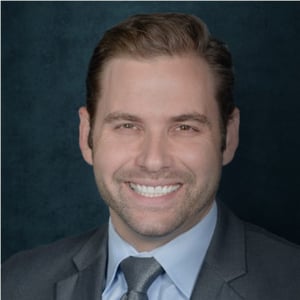
Vice President for the Program on Technology, Criminal Justice and Civil Liberties, Lincoln Network
Arthur Rizer is the Vice President for the Program on Technology, Criminal Justice and Civil Liberties at Lincoln Network. In addition to his work at Lincoln, Arthur is a visiting lecturer at University College London, and an adjunct professor at George Mason University’s Antonin Scalia Law School. Arthur is also a member of Columbia University Justice Lab’s Executive Session for the Future of Justice Policy, the Federalist Society’s Executive Committee of the Criminal Law Practice Group, the Virginia Advisory Committee to the U.S. Commission on Civil Rights, and other advisory bodies.
Before joining Lincoln, Arthur was founding director of the R Street Institute’s program on criminal justice and civil liberties. Prior to that, Arthur taught at West Virginia University’s College of Law, and was a visiting professor at Georgetown University Law Center. He also served as a trial attorney with the U.S. Justice Department, primarily as a federal prosecutor in the Criminal Division, where he targeted command-and-control drug cartel leaders and narco-terrorists. He also served as a prosecutor in the U.S. Attorney’s Office for the Southern District of California and in the civil division. Earlier in his career, Arthur served in the U.S. Army, originally enlisting as a private before later receiving a commission. He served as an armor officer, later becoming the commander of a military police company and a Reserve Officers’ Training Corps assistant professor. He deployed to Fallujah, Iraq, with the mission to train the Iraqi Infantry and served as an MP acting battalion commander and executive officer. He retired as a lieutenant colonel from the U.S. Army (WVNG). During his Army career, Arthur received the Bronze Star, Purple Heart, Meritorious Service and Iraq Campaign medals.
Arthur is the author of three books: Lincoln’s Counsel (2010); The National Security Implications of Immigration Law (2013); and Jefferson’s Pen: The Art of Persuasion (2016).
Arthur earned his bachelor’s degree in political science from Pacific Lutheran University; a master of laws, with distinction, from Georgetown University’s Law Center; and his JD, magna cum laude, from Gonzaga University School of Law. He is also a graduate of the U.S. Marine Corps’ Command Staff College. He is in the final stages of a doctorate at the University of Oxford, Faculty of Law, Centre of Criminology that focuses on policing.
Brett Tolman, the former U.S. Attorney for Utah and former chief counsel for crime and terrorism in the U.S. Senate Judiciary Committee, founded the Tolman Group and focuses on public policy and reforming government.
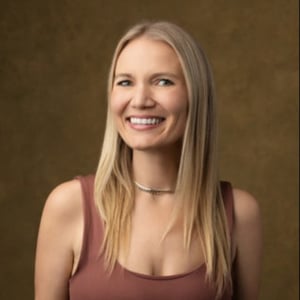
Constitutional Scholarship Director and Senior Legal Analyst, Pacific Legal Foundation
Anastasia Boden is Director of Constitutional Scholarship at Pacific Legal Foundation, where she leads the organization’s Supreme Court commentary and directs scholarly analysis in support of the firm’s litigation. She has represented entrepreneurs and small businesses nationwide in challenges to onerous licensing regimes, anti-competitive titling restrictions, Certificate of Need (“competitor’s veto”) laws, and other forms of unnecessary red tape that block economic opportunity.
Prior to this role, Anastasia developed nearly a dozen constitutional challenges to Certificate of Need laws across the country, helping spur legislative reform in Montana, Pennsylvania, and West Virginia. Her victories include a ruling invalidating Houston’s busking restrictions, multiple appellate decisions expanding access to the courts for civil rights plaintiffs, and the legislative repeal of Virginia’s happy-hour advertising ban.
Her writings on law and liberty have been featured in USA Today, The Washington Post, The Wall Street Journal, the Los Angeles Times, the Chicago Tribune, Forbes, and more, and she has appeared on Headline News, CBS News, Fox News, ReasonTV, Newsmax, and John Stossel. In 2020, she was featured on Libertarian Party presidential candidate Jo Jorgensen’s Supreme Court shortlist.
Anastasia earned her BA with dean’s honors from the University of California, Santa Barbara, and her JD from Georgetown University Law Center, where she was research assistant to Professor Randy E. Barnett—the “intellectual godfather” of the constitutional challenge to Obamacare. She is the co-creator of the podcast Dissed, about infamous Supreme Court dissents. She authors the biweekly newsletter SCOTUS Scoop and the column, “In Dissent” for SCOTUSblog.

State Court Docket Watch: People v. R.D.
Anthony (Tom) Caso
State Court Docket Watch: 2020 Edition
The U.S. Supreme Court has long acknowledged that “true threats” are not protected speech under...
State Court Docket Watch: Wisconsin Legislature v. Palm
Rick M. Esenberg
State Court Docket Watch: 2020 Edition
In May, Wisconsin became the only state to emerge from a gubernatorial “stay-at-home” order by...
State Docket Watch: Elkhorn Baptist Church v. Brown
GianCarlo Canaparo
State Court Docket Watch: 2020 Edition
On June 12, 2020, the Oregon Supreme Court struck down a preliminary injunction that had...
State Court Docket Watch: Bailey v. South Carolina State Election Commission
Jason Torchinsky, Andrew Watkins
State Court Docket Watch: 2020 Edition
In Bailey v. South Carolina State Election Commission, the Supreme Court of South Carolina, accepting...
State Court Docket Watch: Myers v. Yamato Kogyo Co.
Nicholas Bronni
State Court Docket Watch: 2020 Edition
When should courts defer to an agency’s interpretation of a statute? At the federal level,...
State Court Docket Watch: Mitchell v. Roberts
Samantha Harris
State Court Docket Watch: 2020 Edition
Mitchell v. Roberts came before the Utah Supreme Court on certification from the U.S. District...
State Court Docket Watch: The Effect of Ramos v. Louisiana
GianCarlo Canaparo
State Court Docket Watch: 2020 Edition
In April of this year, the Supreme Court decided Ramos v. Louisiana, holding that the...
The Resolution of Too Big to Fail
Wayne A. Abernathy
Federalist Society Review, Volume 21
Note from the Editor: The Federalist Society takes no positions on particular legal and public...
Seeking Success: Reforming America’s Community Supervision System
Arthur Rizer, Brett Tolman
Federalist Society Review, Volume 21
Note from the Editor: The Federalist Society takes no positions on particular legal and public...
State Court Docket Watch: Jackson v. Raffensberger
Anastasia P. Boden
State Court Docket Watch: 2020 Edition
A Georgia trial court recently held that the state constitution “does not recognize a right...