
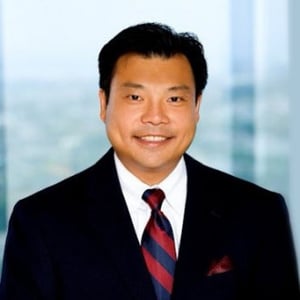
Attorney and Legal Commentator
John Shu is an attorney and legal commentator. His focus areas include constitutional law, securities & corporate law, antitrust law, administrative law, politics, and international affairs. Mr. Shu has lectured and published on a wide variety of issues.
Mr. Shu served President George H.W. Bush and President George W. Bush. He also served Judge Stanley Sporkin, U.S. District Court for the District of Columbia, who was Director of Enforcement at the U.S. Securities & Exchange Commission and General Counsel at the Central Intelligence Agency, and Judge Paul Roney, U.S. Court of Appeals for the Eleventh Circuit, who was Presiding Judge of the Foreign Intelligence Surveillance Court of Review.
Mr. Shu is a member of the National Committee on U.S. - China Relations, the Pacific Council on International Policy, and the Foreign Policy Association.
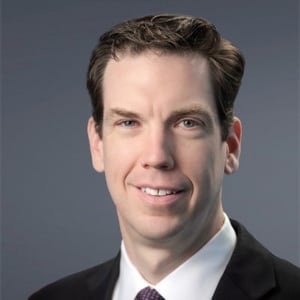
Partner, Fusion Law, PLLC
Paul is the founding partner of Fusion Law, PLLC. He has extensive experience with state, federal, and global regulators building coalitions and implementing policies to promote innovation in financial services. He is responsible for designing and implementing the first state (Arizona) and federal (CFPB) FinTech sandboxes in the United States. He also designed the CFPB no-action letter and trial disclosure policies. He helped found the first global regulatory innovation coalition (Global Financial Innovation Network) and led the founding of the first U.S. regulatory innovation coalition (American Consumer Financial Innovation Network). He served on the Financial Stability Oversight Council subcommittee on digital assets. He also has drafted state-level laws on blockchain and utility tokens.
Paul also has significant enforcement and litigation experience. He led many multi-state consumer protection enforcement matters as Civil Litigation Division Chief at the Arizona Attorney General’s Office.
Prior to his government service, Paul practiced law in the areas of securities litigation and transactional work for approximately six years at two well-known law firms. He also clerked on the U.S. Court of Appeals for the Fourth Circuit.
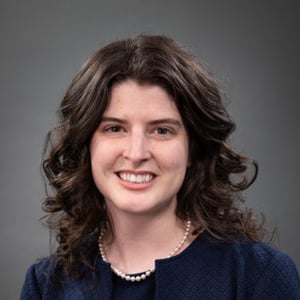
Legal Counsel, Alliance Defending Freedom
Kathleen Barceleau serves as legal counsel for Allied Legal Affairs and Advocacy Strategy at Alliance Defending Freedom. In that role, she works to coordinate and deploy network attorneys to further ADF’s mission and conducts research in support of ADF’s strategic plans.
Before joining ADF, Barceleau was Of Counsel at Fusion Law, where she focused on financial regulation and policy issues. Previously, she served as an Assistant Attorney General for the State of Kansas, where she represented Kansas and its officials in civil rights and constitutional litigation in both state and federal courts. She also served as a law clerk to the Hon. Robert H. Cleland on the U.S. District Court for the Eastern District of Michigan.
Barceleau received her J.D. summa cum laude from Ave Maria School of Law. She is a 2016 Blackstone Fellow. Before law school, Barceleau graduated summa cum laude from Ave Maria University with a Bachelor of Arts in Classics and Early Christian Literature and Economics. Barceleau is admitted to the state bar of Michigan.
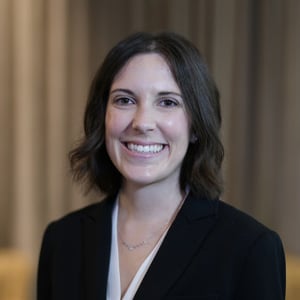
Director, Faculty Relations, The Federalist Society
Katie McClendon is the Director of Faculty Relations at the Federalist Society, where she has worked since 2015.
Katie holds a J.D. from the University of Pennsylvania Law School and a B.A. in Political Science from Biola University, where she was a member of the Torrey Honors Institute. She is a fellow of the John Jay Institute and the Blackstone Legal Fellowship. Katie is originally from Los Angeles, and she now lives with her husband and four children in Atlanta.
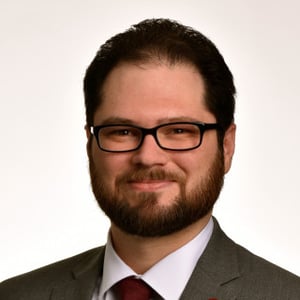
Senior Associate Legal Fellow, The Buckeye Institute
Alex M. Certo is a Senior Associate Legal Fellow at The Buckeye Institute. In this role, Certo advances Buckeye’s public policy efforts by litigating cases that protect individuals’ rights and by contributing to more than 75 amicus briefs filed with the U.S. Supreme Court, as well as dozens of amicus briefs in state and lower federal courts. Additionally, Certo supports Buckeye’s policy work by analyzing the legal implications of proposed and pending legislation and by testifying before Ohio legislative committees.
Certo has been a member of the Federalist Society since 2019 and currently serves on the board of the Columbus Lawyers chapter, where he is vice president.
Certo’s legal experience includes working as a judicial extern for the Supreme Court of Ohio and as a summer extern in the Investigations Division of the Allegheny County District Attorney’s Office. Certo also worked as a law clerk for Agee, Clymer, Mitchell & Portman in Columbus, Ohio, focusing on workers’ compensation litigation.
Certo received his bachelor’s degree from Slippery Rock University and his Juris Doctor (magna cum laude) from Capital University Law School. In law school, Certo served on the associate board of the Capital University Law Review and competed on the Child Welfare and Adoption Law Moot Court team. Certo was the president of Capital’s Federalist Society chapter and vice president of the Labor and Employment Law Association. Certo also served as a teaching assistant for Capital’s Second Amendment course and a research assistant for a pair of faculty-written articles on public safety. Certo was awarded the CALI Excellence for the Future Award in Patent Law and the Ronald I. Friedman Memorial Service Award, and he was inducted into The Order of Barristers.
Before law school, Certo worked as a staff accountant. His work focused on preparing individual and small business tax filings and assisting small business owners with daily accounting needs.
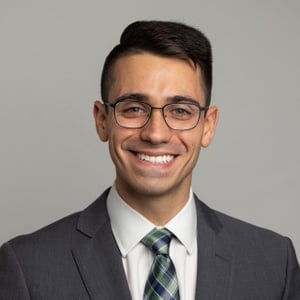
Litigation Fellow, Institute for Justice

Vice President for Legal Affairs, Goldwater Institute
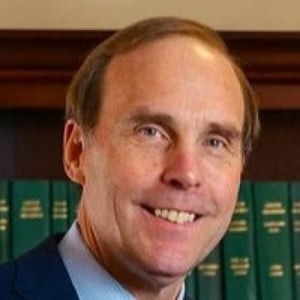
Distinguished Research Professor, Center for Citizenship and Constitutional Government, University of Notre Dame
Donald L. Drakeman is Distinguished Research Professor in the Center for Citizenship and Constitutional Government at the University of Notre Dame, and a Fellow of the Centre for Health Leadership and Enterprise at the University of Cambridge. His writings have been cited by the Supreme Courts of the United States and the Philippines. He has published seven books, including The Hollow Core of Constitutional Theory (Cambridge University Press, 2021), Why We Need the Humanities (Palgrave, 2016), and Church, State, and Original Intent (Cambridge University Press, 2010). He received an A.B. magna cum laude from Dartmouth College; a J.D. from Columbia Law School, where he was a Harlan Fiske Stone Scholar; and a Ph.D. from Princeton University. He is a Fellow of the Royal Historical Society, and he was the founding chair of the Advisory Council for the James Madison Program on American Ideals and Institutions at Princeton University.
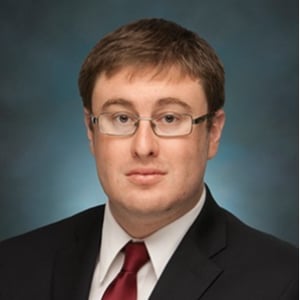
Staff Attorney, Goldwater Institute
John Thorpe is an attorney at the Goldwater Institute in Phoenix, Arizona, where he litigates in the areas of education, free speech, economic liberty, government transparency, regulatory reform, and property rights.
After graduating from the Sandra Day O’Connor College of Law at Arizona State University, John clerked for Judge Carolyn B. McHugh on the Tenth Circuit and for Judge Bridget S. Bade on the Ninth Circuit. John has also worked in private practice, focusing on appeals, complex commercial litigation, and Indian law. Prior to law school, John taught economics, Latin, and humanities at a charter school in Phoenix, where he saw first-hand how school choice can transform students’ lives. John is passionate about empowering families through school choice and academic transparency, as well as ensuring that schools are places for the pursuit of truth and the free exchange of ideas.
Appellate Unit Supervisor, Pima County Public Defender
David Euchner is the appellate unit supervisor and resource counsel of the Pima County Public Defender’s Office, professor of practice in criminal law and criminal procedure at the University of Arizona, and the co-author of the Arizona Criminal Practice Manual published by Thomson Reuters.
Dave currently and has previously served on several committees of the State Bar of Arizona and the Arizona Supreme Court tasked with rewriting court rules and jury instructions. In 2014 he was the president of Arizona Attorneys for Criminal Justice, the state affiliate of the National Association of Criminal Defense Lawyers, and he has served as chair or co-chair of AACJ’s amicus and rules committee since 2011. Dave has acted as counsel, for a party or for an amicus, in cases resulting in more than 100 published opinions, and he has participated in more than 80 oral arguments, evenly divided between the Arizona Supreme Court and Arizona Court of Appeals. He received the Outstanding Performance Award from the Arizona Public Defender Association in 2016, the Vanguard Leadership Award (now named the Larry Hammond Leadership Award) from AACJ in 2017, and the Jack Williams Appellate Achievement Award from AACJ in 2021.
Dave and his wife met in the Rutgers University Marching Band, where Dave earned his BA and JD degrees, and their three teenage sons all competed in high school marching band.

Legal Fellow, Edwin Meese III Center for Legal and Judicial Studies, The Heritage Foundation
Jack Fitzhenry is a Legal Fellow in the Edwin Meese III Center for Legal and Judicial Studies.
He previously served as a law clerk for the Hon. Madeline H. Haikala on the United States District Court for the Northern District of Alabama and for the Hon. Patrick E. Higginbotham on the United States Court of Appeals for the Fifth Circuit. Between clerkships, he litigated a variety of commercial disputes as an associate with Quinn Emanuel Urquhart & Sullivan LLP.
Fitzhenry received his law degree from the University of Michigan Law School and his bachelor’s degree in English Literature from Williams College.

California Supreme Court Holds That State Law Preempts County Anti-Fracking Ordinance
John Shu
The issue in Chevron U.S.A., Inc. v. County of Monterey, Calif. was whether California Public Resources Code § 3106 preempts a...
The 30-Year History of Diluting ERISA’s Fiduciary Duty
Paul N. Watkins, Kathleen Barceleau
Federalist Society Review, Volume 25
Under the Employee Retirement Income Security Act of 1974 (ERISA), fiduciaries have a strict duty...
Federalist Society Review, Volume 24
Katie McClendon
PDF The Federalist Society Review is the legal journal of the Federalist Society. The Review is published on the...
Ohio Law Allowing Judges to Impose Indefinite Sentences Upheld at State Supreme Court
Alex Certo
In State v. Hacker,[1] the Ohio Supreme Court upheld, by a 5-2 decision, the constitutionality...
Georgia Supreme Court Rejects Sex Offender Registration Challenge, Re-Affirms Originalism Commitment
Nicholas DeBenedetto
In May, the Supreme Court of Georgia unanimously rejected a facial and as-applied challenge to...
Dram-Shop Liability and the State Constitution at the Arizona Supreme Court
Timothy Sandefur
The Arizona Supreme Court made surprisingly quick work of what at first appeared to be...
Establishing an Agreement to Disagree About Church and State
Donald L. Drakeman
Federalist Society Review, Volume 24
A review of Nathan Chapman & Michael McConnell, Agreeing to Disagree: How the Establishment Clause...
Can a Respondeat Superior Claim Survive Dismissal of the Underlying Negligence Claim? Arizona Supreme Court Reverses Course.
John Thorpe
For nearly eighty years, Arizona courts have held that if a negligence claim against an...
Victim Rights in Arizona's Constitution Clash With Sixth Amendment at Arizona Supreme Court
David Euchner
In 1990, Arizona was the first state in the nation to adopt a Victim’s Bill...
Georgia Supreme Court Carves Its Own Path on Due Process to Strike Down Occupational Licensing Law
Jack Fitzhenry
A unanimous Georgia Supreme Court held in Raffensperger v. Jackson that an occupational licensing law...