

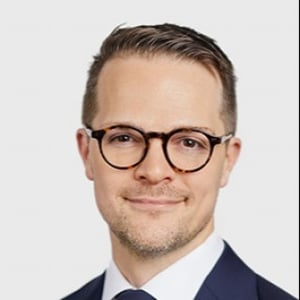



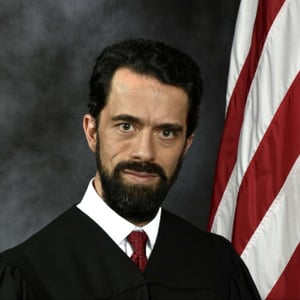







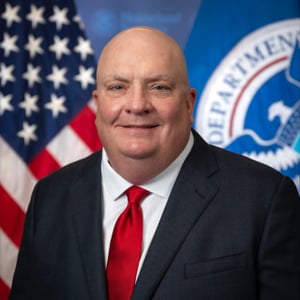

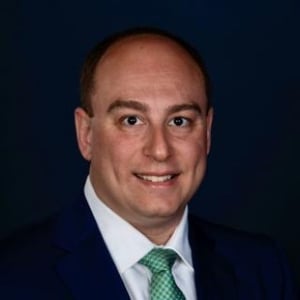
Partner, Patrick Doerr
Mr. Rando has represented clients in matters involving computer hardware and software, silicon chip manufacturing, biotechnology, medical devices, pharmaceuticals, chemical compounds, food additives, alternative energy, AI, autonomous vehicles, blockchain, consumer electronics, communications, internet, and e-commerce. He has appeared in courts across the country, including the Southern and Eastern Districts of New York and multiple U.S. Courts of Appeals.
As appellate counsel, Mr. Rando has served as counsel of record or co-counsel in more than 30 amicus briefs filed before the U.S. Supreme Court and Federal Circuit on issues of patent law, statutory interpretation, separation of powers, and constitutional law. Noteworthy filings include eBay Inc. v. MercExchange (2006), Oil States v. Greene’s Energy (2017), American Axle v. Neapco (2021), Amgen v. Sanofi (2023), and Cellect v. Vidal (2024).
Mr. Rando is a Fellow of the Academy of Court-Appointed Masters, having served by judicial appointment as Special Master in numerous complex patent cases, including multi-day Markman hearings and post-discovery proceedings. He also serves as a court-appointed Mediator and Neutral in both patent and commercial disputes.
He has played an active role in judicial and legislative engagement. Mr. Rando co-developed and conducted lecture series for the SDNY and EDNY Patent Pilot Program Judges and Clerks, covering the America Invents Act and Section 101 eligibility post-Alice and Mayo. He represented both the Federal Bar Association (FBA) and New York Intellectual Property Law Association (NYIPLA) at the Tillis/Coons Section 101 Patent Reform Roundtable, and submitted written testimony to the U.S. Senate Judiciary Committee in 2019.
Mr. Rando is a former president of the NYIPLA (2023–2024) and has held nearly every leadership position in the organization. He also served as Chair of the FBA’s Intellectual Property Law Section and was a founding member and president of the FBA’s EDNY Chapter. He is a founding member of the Association of Amicus Counsel, and an active contributor to the Federalist Society IP Practice Group Executive Committee.
He frequently lectures at CLE programs, universities, and legal associations on IP, constitutional law, and appellate advocacy. He has been quoted extensively in publications such as Law360, Bloomberg Law, WIPR, and National Law Journal. His scholarly publications include articles in The Federal Lawyer, Touro Law Review, and IPWatchdog.
David Boies Professor of Law, Yale Law School
Legal Director & General Counsel, Criminal Justice Legal Foundation
Kent S. Scheidegger has been the Legal Director of the Criminal Justice Legal Foundation since December 1986. He also served as Chairman of the Criminal Law Practice Group of the Federalist Society 2003 to 2005. His articles on criminal and constitutional law have been published in law reviews, national legal publications, and congressional reports. Legal arguments authored by Mr. Scheidegger have been cited and incorporated in several precedent-setting United States Supreme Court decisions.
After receiving a degree in physics with honors from New Mexico State University in 1976, Mr. Scheidegger served for six years in the United States Air Force as a Nuclear Research Officer. He took his law degree with distinction from the University of the Pacific, McGeorge School of Law in 1982 and practiced civil law in Northern California. He was general counsel of California Cooler, Inc. from 1984 until 1986, when he joined the Foundation.
Partner, Osborn Maledon
Eric Fraser regularly handles high-profile appeals and issue litigation. He has argued major cases before the Ninth Circuit, Arizona Supreme Court, and Arizona Court of Appeals. Benchmark Litigation named him to its 40 & Under Hot List (2018-2019) and Southwest Super Lawyers lists him as a Rising Star (2013-2019) for appeals.
Before joining private practice, Fraser clerked on the U.S. Court of Appeals for the D.C. Circuit. He currently serves as a Ninth Circuit Appellate Lawyer Representative and as Chair Elect for the Appellate Practice Section of the State Bar. He also regularly writes about appeals, including contributing to SCOTUSblog, co-editing the azapp.com blog, and coauthoring a monthly column in Arizona Attorney magazine covering civil appeals. The New York Times, Arizona Republic, Bloomberg Businessweek, Fox News, and many local media outlets have featured his discussion of his cases or legal analysis.
Judge, Arizona Court of Appeals, Division One
The Honorable Jennifer M. Perkins began service on the Arizona Court of Appeals, Division One, on October 30, 2017. At the time of her appointment by Governor Douglas Ducey, Judge Perkins was Assistant Solicitor General for the State of Arizona.
Judge Perkins was born in Portales, New Mexico, and primarily raised in Albuquerque. She attended the prestigious Albuquerque Academy from 1988-1995, before moving to Washington D.C. to attend the Elliott School of International Affairs at the George Washington University as a National Merit Scholar. Therafter, she relocated again to Dallas, Texas, and earned her juris doctor from the SMU Dedman School of Law, graduating cum laude in 2002.
Judge Perkins started her career at the law firm of Browning & Peifer (now Peifer, Hanson, Mullins, and Baker) in Albuquerque, New Mexico. While there, she litigated complex commercial matters including class action plaintiff and defense work, and assisted with employment and contract litigation. In 2003, the judge accompanied the Honorable James O. Browning in transitioning to the federal district court bench, serving as his first law clerk.
After her clerkship, Judge Perkins moved to Arizona to work for the Institute for Justice, Arizona Chapter, a public interest law firm. She spent five years with IJ-AZ litigating civil rights cases in Arizona and across the country. In 2009, the judge became Disciplinary Counsel for the Arizona Commission on Judicial Conduct, where she reviewed and prosecuted ethics complaints against state court judges throughout Arizona. After five years serving the state in this capacity, Judge Perkins entered private practice by joining an appellate law firm in Phoenix. While there, she worked on state and federal appeals involving a wide range of legal subjects, including complex business disputes, property rights, judicial ethics, and personal injury matters.
In January 2015, Judge Perkins joined the Office of the Arizona Attorney General to serve as the first Assistant Solicitor General; in that capacity, she was responsible for oversight of Attorney General Opinions and served as ethics counsel to the entire office. In addition to these two primary roles, the judge assisted on a variety of matters including trial and appellate litigation of election-related matters; federal appellate litigation with the Federalism Unit; state criminal appeals; and drafting amicus briefs on behalf of Arizona in state and federal courts.
Executive Director, Consumers’ Research
Will Hild is the Executive Director of Consumers’ Research. Will has a decade of non-profit, legal and public policy experience. Prior to joining CR, Will served as the Deputy Director of the Regulatory Transparency Project. Before that, he worked at the Philanthropy Roundtable as the Director of External Affairs for the Culture of Freedom Initiative, and as the Chief Operating Officer of that Initiative when it grew to become a separate organization. He helped co-found the public interest law firm, Cause of Action, and served as the firm’s acting communications director for nearly a year.
Will received his J.D. from Georgetown University Law Center, and a B.A. in Political Science from the University of Florida. He is licensed to practice law in the Commonwealth of Virginia.
Will resides in Bethesda, MD, with his wife Cheryl, a practicing OB/GYN, and their son Liam.
Former Congressman, VP and Dir., Center for Law and Government, Liberty University
Former Congressman Hurt is the Vice President and Director of the Center for Law and Government at Liberty University. From 2011 to 2017 he represented Virginia’s 5th Congressional District in the U.S. House of Representatives and served on the House Financial Services Committee.
Congressman Hurt began his time in public service in 2001 as a member of the Chatham Town Council. From 2002 to 2007, Hurt served in the Virginia House of Delegates, and from 2008 to 2010, he represented the 19th District in the Senate of Virginia for two years.
Congressman Hurt lives in Chatham, Virginia with his wife, Kathy, and their three sons, Charles, Clement and John.
Principal, Legis Matters
Karl T. Kurtz is principal of Legis Matters, a consulting firm that focuses on strengthening democratic institutions, especially legislatures, at home and abroad. He previously worked for the National Conference of State Legislatures (NCSL) from its founding in 1975 until his retirement in 2014.
Karl has written, consulted and lectured widely on American state legislatures, elections and public opinion. He is coauthor of Republic on Trial: The Case for Representative Democracy and coeditor of Institutional Change in American Politics: The Case of Term Limits. He has provided advice and assistance in the development of democratic institutions to legislators and legislative staff throughout the world. As a consultant to NCSL, Karl is currently leading a national study of how legislatures can overcome problems of political polarization and effectively reach settlements and negotiate differences on critical issues.
Before joining NCSL, Karl taught political science at the University of Georgia. He worked on the staff of the United States Congress as a Congressional Fellow of the American Political Science Association. He holds an AB degree from Oberlin College and a Ph.D. from Washington University (St. Louis).
Partner, Patrick Doerr
Mr. Rando has represented clients in matters involving computer hardware and software, silicon chip manufacturing, biotechnology, medical devices, pharmaceuticals, chemical compounds, food additives, alternative energy, AI, autonomous vehicles, blockchain, consumer electronics, communications, internet, and e-commerce. He has appeared in courts across the country, including the Southern and Eastern Districts of New York and multiple U.S. Courts of Appeals.
As appellate counsel, Mr. Rando has served as counsel of record or co-counsel in more than 30 amicus briefs filed before the U.S. Supreme Court and Federal Circuit on issues of patent law, statutory interpretation, separation of powers, and constitutional law. Noteworthy filings include eBay Inc. v. MercExchange (2006), Oil States v. Greene’s Energy (2017), American Axle v. Neapco (2021), Amgen v. Sanofi (2023), and Cellect v. Vidal (2024).
Mr. Rando is a Fellow of the Academy of Court-Appointed Masters, having served by judicial appointment as Special Master in numerous complex patent cases, including multi-day Markman hearings and post-discovery proceedings. He also serves as a court-appointed Mediator and Neutral in both patent and commercial disputes.
He has played an active role in judicial and legislative engagement. Mr. Rando co-developed and conducted lecture series for the SDNY and EDNY Patent Pilot Program Judges and Clerks, covering the America Invents Act and Section 101 eligibility post-Alice and Mayo. He represented both the Federal Bar Association (FBA) and New York Intellectual Property Law Association (NYIPLA) at the Tillis/Coons Section 101 Patent Reform Roundtable, and submitted written testimony to the U.S. Senate Judiciary Committee in 2019.
Mr. Rando is a former president of the NYIPLA (2023–2024) and has held nearly every leadership position in the organization. He also served as Chair of the FBA’s Intellectual Property Law Section and was a founding member and president of the FBA’s EDNY Chapter. He is a founding member of the Association of Amicus Counsel, and an active contributor to the Federalist Society IP Practice Group Executive Committee.
He frequently lectures at CLE programs, universities, and legal associations on IP, constitutional law, and appellate advocacy. He has been quoted extensively in publications such as Law360, Bloomberg Law, WIPR, and National Law Journal. His scholarly publications include articles in The Federal Lawyer, Touro Law Review, and IPWatchdog.
Solicitor, U.S. Department of Labor
Jonathan Berry is Solicitor at the U.S. Department of Labor, in service to President Trump’s agenda to put American workers first. He leads the Department’s lawyers in advising the Secretary and agency leadership on all aspects of law and in representing the Department in court. He was previously managing partner at Boyden Gray PLLC, where he provided strategic counsel and litigated on issues at the intersection of law, politics, and public policy. Earlier, he headed the regulatory office at Labor, and also served at the Department of Justice, in the first Trump Administration. Mr. Berry served as a law clerk to Judge Jerry E. Smith of the United States Court of Appeals for the Fifth Circuit, and to Associate Justice Samuel A. Alito, Jr., of the Supreme Court of the United States.
Partner, O'Melveny & Myers LLP
Gregory Jacob is a partner in O’Melveny’s Washington, D.C. office. Greg Jacob represents financial services companies including banks, investment managers, health care payors, and insurers, as well as other employers, in class action and other litigation concerning ERISA and other labor and employment matters. A former Solicitor of Labor, Greg has extensive knowledge on a wide variety of labor and employment issues including ERISA, FLSA, OFCCP, and whistleblower law. He regularly litigates in federal courts throughout the country, defends clients against Department of Labor investigations, and provides counseling to plans and plan sponsors.
Prior to rejoining O’Melveny in 2021, Greg served as Counsel to Vice President Pence and Deputy Assistant to the President. He directly advised the Vice President on all legal issues relating to the Office of the Vice President, and advised the White House Coronavirus Task Force concerning the Defense Production Act and other legal issues related to bolstering the domestic supply chain.
Chief Legal and Government Affairs Officer, BrightStar Care
Cheryl M. Stanton is Chief Legal and Government Affairs Officer at BrightStar Care. Prior to joining BrightStar Care, she served as Administrator of the Department of Labor’s Wage and Hour Division. She was sworn in as WHD’s Administrator by U.S. Secretary of Labor Alexander Acosta on April 29, 2019.
Stanton brought a wealth of experience to WHD, most recently having served as the Executive Director of the South Carolina Department of Employment and Workforce. Under her leadership, South Carolina’s jobless rate dropped to its lowest point in at least 50 years. During that time period, South Carolina’s workforce system helped place over 500,000 South Carolinians into jobs. Stanton also partnered with her colleague at the Department of Corrections to create a job re-entry program for ex-offenders, receiving national accolades. She also oversaw two major information technology modernization projects that improved customer service and increased efficiencies for employees.
Stanton served as the White House’s principal legal liaison to the DOL under President George W. Bush. She is a graduate of Williams College, and earned her law degree from the University of Chicago Law School.
Partner, Winston & Strawn LLP
Gordon Coffee is a litigation partner in the firm’s Washington, D.C. office. Coffee’s success in litigating multimillion-dollar claims by and against energy companies has led to his being repeatedly recommended for energy litigation by Legal 500. Among the energy companies for whom he has served as lead trial counsel are Midland Cogeneration Venture, Allegheny Energy Supply, and USGen New England. Coffee also has effectively represented several other businesses in complex commercial litigation at the trial and appellate levels.
Besides commercial litigation, Coffee has defended energy and health-care companies in battles with federal agencies in federal court and administrative proceedings. He recently won summary judgment for a company seeking a multimillion-dollar refund from a federal agency and assisted hydroelectric generators in challenging onerous license conditions imposed by another federal agency. In the health-care arena, he convinced the D.C. Circuit to overturn regulations issued by the Centers for Medicare and Medicaid Services that prohibited physicians from charging technical fees for surgical procedures on a per-use basis, and he secured an injunction barring the Department of Health and Human Services from enforcing Stark Act regulations against lithotripsy providers.
Moreover, Coffee has successfully represented several energy companies in federal agency investigations. Notably, he has secured nearly a dozen favorable resolutions of Federal Energy Regulatory Commission (FERC) and North American Electric Reliability Corporation (NERC) investigations and audits. In several cases, he persuaded FERC or NERC to take no adverse action against the company or to dismiss proposed notices of violations. In other instances, his efforts resulted in substantial reductions in penalties proposed by the agency and helped his clients avoid expensive mitigation and compliance plans.
Director, Electricity Law Initiative, Harvard Law School
Ari Peskoe is the Director of the Electricity Law Initiative at the Harvard Law School Environmental and Energy Law Program. He has written extensively about electricity regulation, on issues ranging from Constitutional challenges to states’ energy laws to federal regulation of distributed energy resources. Prior to the Environmental and Energy Law Program, Ari was an associate at a law firm in Washington, D.C. where he litigated before the Federal Energy Regulatory Commission about the Western Energy Crisis. Before that, Ari was a Peace Corps Volunteer in Ghana and spent two years trying to bring the 2012 Olympics to New York. He received his J.D. from Harvard Law School and graduated from the University of Pennsylvania with degrees in electrical engineering and business.
Director, GW Regulatory Studies Center & Distinguished Professor of Practice, Trachtenberg School of Public Policy & Public Administration, The George Washington University
Susan Dudley is the Founder and Director of the George Washington University Regulatory Studies Center, established in 2009 to raise awareness of regulations’ effects and improve regulatory policy through research, education, and outreach. She is also a distinguished professor of practice in the Trachtenberg School of Public Policy and Public Administration. She is past-president of the Society for Benefit Cost Analysis, a senior fellow of the Administrative Conference of the United States, and on the Regulatory Transparency Project Regulatory Practice Working Group. Her book, Regulation: A Primer, with Jerry Brito, is available on Amazon.com.
From April 2007 through January 2009, Professor Dudley served as the Presidentially-appointed Administrator of the Office of Information and Regulatory Affairs in the U.S. Office of Management and Budget and was responsible for the review of draft executive branch regulations under Executive Order 12866, the collection of federal-government-wide information under the Paperwork Reduction Act, the development and implementation of government-wide policies in the areas of information policy, privacy, and statistical policy, and international regulatory cooperation efforts.
Prior to OIRA, she directed the Regulatory Studies Program at the Mercatus Center at George Mason University, and taught courses on regulation at the George Mason University School of Law. Earlier in her career, Professor Dudley served as an economist at OIRA, as well as the Environmental Protection Agency and the Commodity Futures Trading Commission. She was also a consultant to government and private clients at Economists Incorporated. She holds a Master of Science degree from the Sloan School of Management at MIT and a Bachelor of Science degree (summa cum laude) in Resource Economics from the University of Massachusetts, Amherst.
Samuel Candler Dobbs Professor of Economics Emeritus, Emory University
Paul H. Rubin is the Samuel Candler Dobbs Professor of Economics Emeritus in the Economics Department of Emory University and a former Professor of Law and Economics at the School of Law. He served as editor-in-chief of Managerial and Decision Economics. In addition, he is associated with the Mont Peleron Society, the Independent Institute, and the American Enterprise Institute, and a Fellow of the Public Choice Society and former President of the Southern Economics Association. Professor Rubin was Senior Economist at the Council of Economic Advisers under President Reagan, Chief Economist at the U.S. Consumer Product Safety Commission, Director of Advertising Economics at the Federal Trade Commission, and Vice-President of Glassman-Oliver Economic Consultants, Inc., a litigation consulting firm in Washington. He has taught economics at the University of Georgia, City University of New York, VPI, and law and economics at George Washington University Law School. Professor Rubin has written or edited several books, and has published over one hundred articles and chapters on economics, law, and regulation.
Much of Professor Rubin's writing is in law and economics, with a focus on tort, crime and contract issues. His areas of research interest include law and economics, industrial organization, transaction cost economics, government and business, public choice, regulation and price theory, and evolution and economics. His work has been cited in the professional literature over 11,100 times. He has consulted widely on litigation related matters, and has addressed numerous business, professional, policy and academic audiences. He has testified three times before Congress, and has served as an advisor on tort issues to the Congressional Budget Office.
Professor Rubin is the author of the well known paper "Why Is the Common Law efficient?" Journal of Legal Studies, 1977, which has been reprinted eight times, in English, Spanish and French.
Senior Vice President, Spectrum Strategy & Technology Policy, Qualcomm
Dean Brenner is Senior Vice President, Government Affairs for Qualcomm Incorporated. He directs Qualcomm’s global spectrum acquisitions and strategy and is responsible for global technology policy. He represents Qualcomm before the Federal Communications Commission and other agencies of the United States and Canadian governments responsible for spectrum and telecommunications policy and interacts with spectrum regulators around the world. He also leads Qualcomm’s policy initiatives relating to mobile healthcare.
Mr. Brenner led Qualcomm’s bidding team in recent spectrum auctions in India (the 2.3 GHz band), the United States (the 700 MHz band), and the United Kingdom (the L Band). In addition, he was responsible for obtaining the regulatory approvals for Qualcomm’s sale of 700 MHz spectrum to AT&T in 2011. In 2006, he obtained the regulatory approvals to launch FLO TV, a mobile TV service. He has spoken at conferences on spectrum policy in the United States, Canada, South Korea, Belgium, Great Britain, and elsewhere around the world. He joined Qualcomm in November 2003.
Mr. Brenner received his A.B. degree, magna cum laude with distinction in public policy studies, from Duke in 1982. He won a prize for the best paper on communications policy, and he was a recipient for four years of a CBS Scholarship. He received his J.D., cum laude, from Georgetown University in 1985. He is admitted to the Bars of the District of Columbia, Maryland, and the U.S. Supreme Court, the U.S. Courts of Appeal for the D.C., Third, and Eleventh Circuits, and the U.S. District Court for the District of Columbia.
Mr. Brenner is a member of the Federal Advisory Board for Space-Based Positioning, Navigation, & Timing, which advises the Executive Branch on policy matters impacting the Global Positioning System. He is also a member of the Board of Governors of 4G Americas, the Board for Jewish Life at Duke University, and the Board of Trustees of the Field School. He lives in Washington, DC with his wife Robin Shaffert and their two sons, Michael and Steven.
Director (Group Manager), Technology and Innovation Policy, Toyota North America
Hilary Cain is Director of Technology and Innovation Policy for Toyota. In this position, she handles policy issues relating to connected and automated vehicle technology, including artificial intelligence, data privacy, cybersecurity, and telecommunications.
Prior to joining Toyota, Cain was on the staff of the U.S. House of Representatives’ Committee on Science, Space, and Technology. She served as Staff Director of the Subcommittee on Technology and Innovation with jurisdiction over matters relating to competitiveness, technology, standards, and innovation. Previously, as a Counsel to the Committee, she handled parliamentary, procedural, and jurisdictional matters and participated in the development and implementation of legislative strategy. Before joining the Committee staff, Cain served as Legislative Director and Ways and Means Counsel for individual Members of Congress.
She holds a J.D. and a M.A. in Public Affairs from the University of Texas, and a B.A. in Political Science with honors from the University of Washington.
Vice President & Associate General Counsel, NCTA- The Internet & Television Association
Danielle J. Piñeres is a Vice President & Associate General Counsel at NCTA – The Internet & Television Association, where she focuses on wireless spectrum policy issues. Prior to her employment at NCTA, Ms. Piñeres worked as an associate with the law firm of Harris, Wiltshire & Grannis LLP in Washington, D.C., where she practiced in the areas of telecommunications (including spectrum regulation), international trade and foreign investment, and appellate litigation. Before joining HWG, Ms. Piñeres clerked for the Honorable Emily C. Hewitt at the United States Court of Federal Claims. Ms. Piñeres received her J.D. magna cum laude from the Georgetown University Law Center.
Professor of Law, University of Michigan Law School
Christopher J. Walker is a Professor of Law at the University of Michigan. Prior to joining Michigan law faculty in 2022, he spent a decade teaching at The Ohio State University Moritz College of Law. He previously clerked for Justice Anthony Kennedy of the U.S. Supreme Court, worked on the Civil Appellate Staff at the U.S. Department of Justice, and served on the Senate Judiciary Committee staff for the Gorsuch Supreme Court confirmation. Professor Walker’s research focuses on administrative law, regulation, and law and policy at the agency level. Outside the law school, he chaired the American Bar Association’s Section of Administrative Law and Regulatory Practice in 2020-21 and served as one of forty Public Members of the Administrative Conference of the United States from 2016-2022, and he continues to serve in both organizations in various capacities. He also works of counsel at the U.S. Chamber Litigation Center. In 2022, he received the Federalist Society’s Joseph Story Award.
Peter v. NantKwest Inc. - Post Argument SCOTUScast
Robert J. Rando
featuring Robert J. Rando
On October 7, 2019, the Supreme Court heard oral argument in Peter v. NantKwest Inc.,...
Necessary & Proper Episode 49: What is an Impeachable Offense?
Keith E. Whittington
This episode was hosted and recorded on October 15, 2019 by the Temple University Beasley...
Courthouse Steps Oral Argument Teleforum: Mathena v. Malvo (D.C. Sniper Case)
Kent Scheidegger
Criminal Law Practice Group Teleforum
Lee Boyd Malvo and John Allen Muhammad killed 10 people in 2002. The attacks took...
Compelled Speech or Public Accommodation?
Eric M. Fraser, Jennifer Perkins
On September 16, 2019, the Arizona Supreme Court issued a 4-3 decision in Brush &...
Laboratories of Democracy, Part 2: Can Congress learn from State Legislatures?
Will Hild, Robert Hurt, Karl Kurtz
Article I Initiative
The concept of states serving as important test cases for national governance dates to the...
Courthouse Steps Oral Argument Teleforum: Peter v. NantKwest Inc.
Robert J. Rando
At issue is whether the phrase “[a]ll the expenses of the proceedings” in 35 U.S.C....
Deep Dive Episode 74 – A Discussion on Current Department of Labor Priorities
Jonathan Berry, Gregory Frederick Jacob, Cheryl M. Stanton
Regulatory Transparency Project's Fourth Branch Podcast
The Department of Labor administers and enforces more than 180 federal laws, with mandates and...
Deep Dive Episode 73 – Balancing Federal and State Authority in Energy Policy
Gordon Alan Coffee, Ari Peskoe
Regulatory Transparency Project's Fourth Branch Podcast
In statutes such as the Federal Power Act and Clean Water Act, Congress divided responsibility...
Book Review: The Capitalism Paradox: How Cooperation Enables Free Market Competition
Susan E. Dudley, Paul H. Rubin
In this teleforum, Paul Rubin, the world’s leading expert on cooperative capitalism, will discuss his...
Spectrum Wars
Dean Brenner, Hilary Cain, Danielle Piñeres, Christopher J. Walker
With the advent of mobile devices, ubiquitous home laptop, tablet and iPad computers, content streaming...