Facts of the Case
The Atlantic herring fishery is regulated by the Magnuson-Stevens Fishery Conservation and Management Act (MSA), aimed at preventing overfishing and promoting conservation. The MSA sets up regional councils, including the New England Fishery Management Council, which oversees the Atlantic herring fishery. These councils create fishery management plans (FMPs) to set conservation measures, which must align with ten National Standards and other laws.
The Secretary of Commerce, through the National Marine Fisheries Service (NMFS), reviews and publishes these plans for public comment. In 2000, the New England Council established an FMP for Atlantic herring, updated with an industry-funded monitoring program in 2020. The program partially shifts the cost of at-sea monitoring to vessel owners but aims for a 50% target of monitored herring trips, which will cause reduced profits for the fishing industry and communities.
Owners of two fishing vessels, Relentless Inc., Huntress Inc., and Seafreeze Fleet LLC, challenged the Rule, arguing that the monitoring requirement disproportionately burdens them because of their longer trips and inability to qualify for exemptions. The district court granted summary judgment in favor of the Agency, ruling that the MSA’s ambiguity on industry-paid monitors allows for agency interpretation under Chevron deference, that the Rule complies with the MSA’s National Standards and the Regulatory Flexibility Act, and does not violate the Commerce Clause. The U.S. Court of Appeals for the First Circuit affirmed.
Questions
Should Chevron v. Natural Resources Defense Council be overruled?
Does statutory silence concerning controversial powers expressly but narrowly granted elsewhere in the statute constitute an ambiguity requiring deference to the agency?
Conclusions
-
The Administrative Procedure Act requires courts to exercise their independent judgment in deciding whether an agency has acted within its statutory authority, and courts may not defer to an agency interpretation of the law simply because a statute is ambiguous. Chevron U.S.A. Inc. v. Natural Resources Defense Council, Inc., 467 U.S. 837, is overruled.
Chief Justice John Roberts authored the majority opinion of the Court (which also decided the consolidated case, Relentless, Inc. v. Department of Commerce, No. 22-1219).
The Administrative Procedure Act (APA) of 1946 requires courts to "decide all relevant questions of law" when reviewing agency actions. This means courts should use their own judgment to interpret laws, not defer to agencies' interpretations. The Chevron doctrine, established in the 1984 case Chevron U.S.A. v. Natural Resources Defense Council, Inc., 467 U.S. 837, contradicts this principle. Chevron required courts to defer to agency interpretations of ambiguous statutes if those interpretations were reasonable. Chevron was based on a flawed assumption that Congress intends to delegate interpretive authority to agencies whenever a law is ambiguous. This assumption doesn't reflect reality and goes against the traditional role of courts. Chevron has been difficult to apply consistently and has led to confusion in lower courts. It has also been gradually limited by subsequent Supreme Court decisions.
Thus, Chevron should be overruled because it contradicts the APA, is based on faulty reasoning, has proven unworkable in practice, and hasn't created the kind of settled expectations that would justify keeping it in place. However, this decision does not necessarily overturn the specific outcomes of past cases that used Chevron. Those outcomes would need to be challenged separately.
Justices Clarence Thomas and Neil Gorsuch each filed concurring opinions.
Justice Elena Kagan authored a dissenting opinion, in which Justice Sonia Sotomayor joined, and Justice Ketanji Brown Jackson joined as to No. 22-1219.
Justice Jackson took no part in the consideration or decision of No. 22-451.

Power to Persuade: The FCC’s Authority to Interpret Section 230 Post-Loper Bright
In a November 21 FedSoc Blog post, the Phoenix Center’s Lawrence J. Spiwak convincingly argued...

Will the Supreme Court Finally Address the Private Nondelegation Doctrine?
The Supreme Court is poised to tackle a key separation of powers issue this term:...
Environmental Law & Property Rights: Environmental Law in a Post-Chevron World— How Should Congress, Agencies, and States Respond?
2024 National Lawyers Convention
This year, in a pair of decisions known as Loper Bright, the Supreme Court overruled...
Environmental Law & Property Rights: Environmental Law in a Post-Chevron World— How Should Congress, Agencies, and States Respond?
2024 National Lawyers Convention
This year, in a pair of decisions known as Loper Bright, the Supreme Court overruled...
Federalism & Separation of Powers: A Revival of the Separation of Powers at the Supreme Court?
2024 National Lawyers Convention
The Supreme Court’s most recent term was one of significance with respect to the separation...
Federalism & Separation of Powers: A Revival of the Separation of Powers at the Supreme Court?
2024 National Lawyers Convention
The Supreme Court’s most recent term was one of significance with respect to the separation...

Another One Bites the Dust: Texas Court Invalidates EAP Salary Regs
On November 15, 2024, in Plano Chamber of Commerce v. U.S. Department of Labor, a...
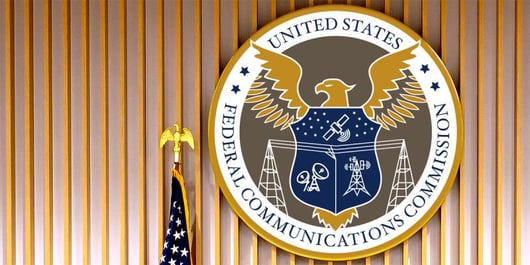
Sauce for the Goose: The FCC Lacks Authority to Interpret Section 230 Post-Loper Bright
Frustrated by a perceived political bias against their views, several conservatives have called for government...
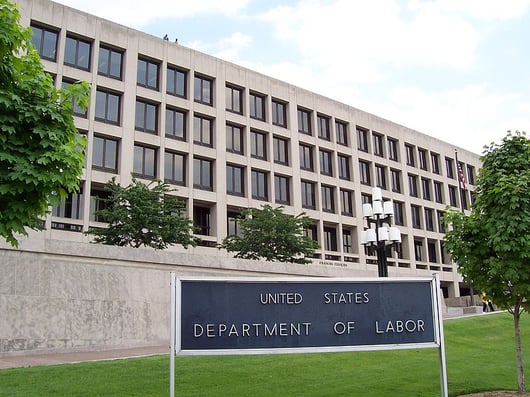
Agency Exuberance: A Flaw or Feature in Labor and Employment Law?
Ours are not the only authors to note that the substantive work of federal agencies has...

Murthy Provides a Teachable Moment About the “Vast Power” of the Administrative State
Digital platforms, as private entities, enjoy First Amendment protection. Indeed, the Supreme Court said last...

What Does "New" Mean? Agency Action Post-Chevron
Last term, the Supreme Court handed down its ruling in Loper Bright Enterprises v. Raimondo. ...
What Does "New" Mean? Agency Action Post-Chevron
Last term, the Supreme Court handed down its ruling in Loper Bright Enterprises v. Raimondo. ...

Explainer Episode 77 - State Regulatory Reform and Overcoming Regulatory Inertia
Tanner Jones and Jonathan Wolfson from the Cicero Institute discuss their co-authored paper titled "Restoring...

United States v. Pheasant: Oral Argument Held In Important Nondelegation Challenge
A Ninth Circuit panel (Judges Bea, Bennett, and Miller) recently heard oral argument in United...

Georgia Fruit and Vegetable Growers Association v. DOL: Post-Loper Bright Pushback on Agency Overreach
The long period of labor peace to which Americans are so accustomed is the product...
The Curtain Falls on Chevron: Will the Chevron Two-Step Give Way to a Simpler Loper Bright-Line Rule?
Federalist Society Review, Volume 25
Traditionally, administrative law cases don’t make news. Instead, they make snooze. They can be exciting...
“Tough Luck, Get a New Statute”
The Supreme Court’s decision in SEC v. Jarkesy essentially means that administrative agencies cannot directly...

In Restaurant Law Center v. DOL, the Fifth Circuit Invalidates DOL Tip Credit Rules Under New Loper Bright Standard
Loper Bright strikes again! In Restaurant Law Center v. DOL, decided August 23, 2024, the...

Texas District Court Sets Aside FTC's Ban on Non-Compete Agreements
In Ryan LLC v. FTC, decided on August 20, the U.S. District Court for the...
Loper Bright & Relentless - Post-Decision SCOTUScast
Kristin Hickman, Ronald Levin, John Vecchione
On June 28, 2024, the Supreme Court issued its 6-2 decision in Loper Bright Enterprises v....
After Chevron, a New Birth of Deference for the Administrative State?
For decades, the judicial doctrine called “Chevron deference” dominated American administrative law. In the aftermath...
The Concern for Human Flourishing at the Core of Antitrust Law
Antitrust law did not start in 1890. Though judges, scholars, and government officials often describe...
Jarkesy & the FCC’s ALJ Process
By all accounts, the closing days of the U.S. Supreme Court’s 2023 term resulted in...

Corner Post and Loper Bright: Only certain plaintiffs can challenge old regulations in the post-Chevron world
When we filed Corner Post’s lawsuit in 2021, we didn’t expect to end up at...
The Death of Deference: Supreme Court Overrules the Chevron Doctrine
In a move long anticipated by many court watchers, the Supreme Court on June 28,...
Starbucks v. McKinney: The Supreme Court Taps the Brakes on Injunctive Relief for the NLRB
Federal agencies such as the National Labor Relations Board (NLRB), Federal Trade Commission (FTC), and...
Loper Bright Enterprises v. Raimondo and Relentless, Inc. v. Department of Commerce - Post-Argument SCOTUScast
John Vecchione
On January 17, 2024 the Supreme Court heard oral arguments in Loper Bright Enterprises v. Raimondo...

Courthouse Steps Oral Argument: Loper Bright & Relentless
In two cases this term (Loper Bright Enterprises v. Raimondo and Relentless Inc. v. Department of...
Courthouse Steps Oral Argument: Loper Bright & Relentless
In two cases this term (Loper Bright Enterprises v. Raimondo and Relentless Inc. v. Department of...

The 30-Year History of Diluting ERISA’s Fiduciary Duty
Federalist Society Review, Volume 25
Under the Employee Retirement Income Security Act of 1974 (ERISA), fiduciaries have a strict duty...

Chevron Under Review: Courthouse Steps Preview: Loper Bright & Relentless
Chevron v. NRDC (1984) and subsequent precedents held that courts should defer to agency interpretations...
Chevron Under Review: Courthouse Steps Preview: Loper Bright & Relentless
Chevron v. NRDC (1984) and subsequent precedents held that courts should defer to agency interpretations...

A Seat at the Sitting - January 2024
The January Docket in 90 Minutes or Less
Each month, a panel of constitutional experts convenes to discuss the Court’s upcoming docket sitting...
A Seat at the Sitting - January 2024
The January Docket in 90 Minutes or Less
Each month, a panel of constitutional experts convenes to discuss the Court’s upcoming docket sitting...
Congress and the Future of Agency Authority: A Discussion of Three Major Administrative Law Cases and Their Implications for Congress
The Federalist Society's Capitol Hill Chapter and the Regulatory Transparency Project invite you to join...
Is the NLRB Unconstitutional? The Courts May Finally Decide.
This term, the U.S. Supreme Court is set to hear three major cases involving the...

Deep Dive Episode 285 - Loper Bright and the Next Steps for Chevron Deference at the Supreme Court
Regulatory Transparency Project's Fourth Branch Podcast
This Term, the Supreme Court will hear Loper Bright Enterprises v. Raimondo—a case concerning judicial...

Loper Bright and the Next Steps for Chevron Deference at the Supreme Court
This Term, the Supreme Court will hear Loper Bright Enterprises v. Raimondo—a case concerning judicial...
Loper Bright and the Next Steps for Chevron Deference at the Supreme Court
This Term, the Supreme Court will hear Loper Bright Enterprises v. Raimondo—a case concerning judicial...
The Labor Law Enigma: Article III, Judicial Power, and the National Labor Relations Board
Federalist Society Review, Volume 24
Axon Enterprises v. FTC[1] wasn’t supposed to be about labor law. In fact, it wasn’t...

Litigation Update: Loper Bright Enterprises v. Raimondo
A Regulatory Transparency Project Webinar
For the past thirty years, the Magnuson-Stevens Act (MSA) has given the National Marine Fisheries...
Litigation Update: Loper Bright Enterprises v. Raimondo
A Regulatory Transparency Project Webinar
For the past thirty years, the Magnuson-Stevens Act (MSA) has given the National Marine Fisheries...
Is the Administrative State Inevitable? Loper, Chevron, and the “Abnegation” of Law
Last month, the Supreme Court granted cert in Loper Bright Enterprises v. Raimondo. Though the case...

Congress Should Prepare to Lead on Regulation
The Supreme Court recently ended President Biden’s student loan forgiveness program, ruling that federal law...

Is Glacier Northwest the Tip of the Iceberg?
Glacier Northwest created no new doctrine. But it may still signal a new direction for labor law.
Nowadays, labor-law cases are a rare sight at the Supreme Court. The Court usually takes...

Chevron Is Dead, Long Live Chevron
The Supreme Court has agreed to revisit Chevron v. Natural Resources Defense Council (1984), the...

Necessary & Proper Episode 88: Loper Bright & Relentless
Chevron v. NRDC (1984) and subsequent precedents held that courts should defer to agency interpretations of...

How to Create a Landmark Supreme Court Case and What Comes After?
Minnesota Student Chapter
University of Minnesota Law School229 19th Ave S
Minneapolis, MN 55455

The Effects of Loper-Bright on Litigation Against Administrative Agencies
Cleveland Lawyers Chapter
One Cleveland Center, 2nd Floor1375 East Ninth Street
Cleveland, OH 44114

Administrative Law After Loper Bright
Dallas Lawyers Chapter
Arts District Mansion2101 Ross Avenue
Dallas, TX 75201

Administrative Law after Loper Bright
Michigan Student Chapter
132 Hutchins Hall625 S. State St.
Ann Arbor, MI 48104
Beyond Chevron: What Lies Ahead?
St. Mary's Student Chapter
Sarita Kenedy East Law Library - Law Alumni Room1 Camino Santa Maria
San Antonio , TN 78228