Facts of the Case
In 1994 Oregon enacted the Death with Dignity Act, the first state law authorizing physicians to prescribe lethal doses of controlled substances to terminally ill patients. Attorney General John Ashcroft declared in 2001 that physician-assisted suicide violated the Controlled Substances Act of 1970 (CSA). Ashcroft threatened to revoke the medical licenses of physicians who took part in the practice. Oregon sued Ashcroft in federal district court. That court and, later the Ninth Circuit, held Ashcroft''s directive illegal. The courts held that the CSA did not authorize the attorney general to regulate physician-assisted suicide, which was the sort of medical matter historically entrusted to the states.
Questions
Did the Controlled Substances Act authorize the attorney general to ban the use of controlled substances for physician-assisted suicide in Oregon?
Conclusions
-
No. In a 6-3 opinion delivered by Justice Anthony Kennedy, the Court held that Congress intended the CSA to prevent doctors only from engaging in illicit drug dealing, not to define general standards of state medical practice. Moreover, the CSA did not authorize Attorney General John Ashcroft to declare a medical practice authorized under state law to be illegitimate.
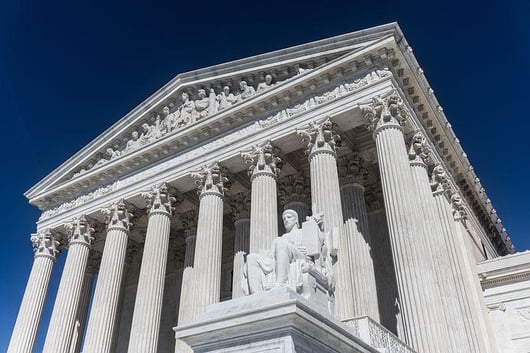
The Major Questions Doctrine Is Not About Delegation, but Usurpation—And That Matters
This post was originally published at the Yale Journal on Regulation’s Notice & Comment blog....
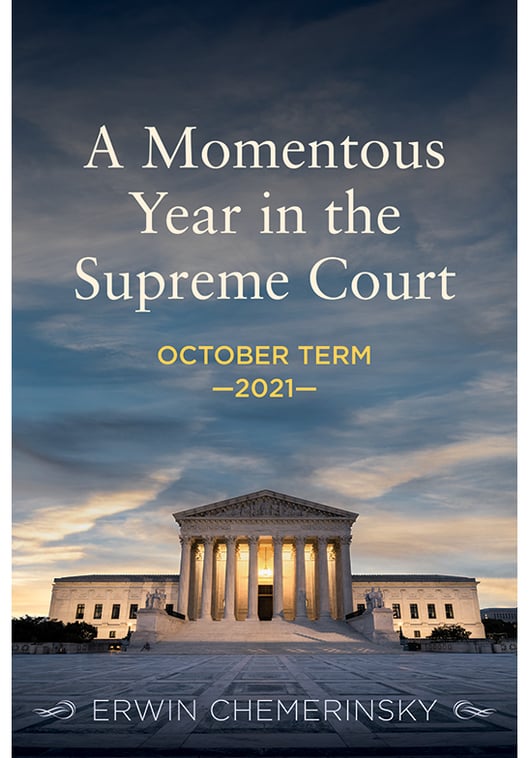
Originalism Carries On
Federalist Society Review, Volume 24
A review of Erwin Chemerinsky, A Momentous Year in the Supreme Court: October Term 2021...
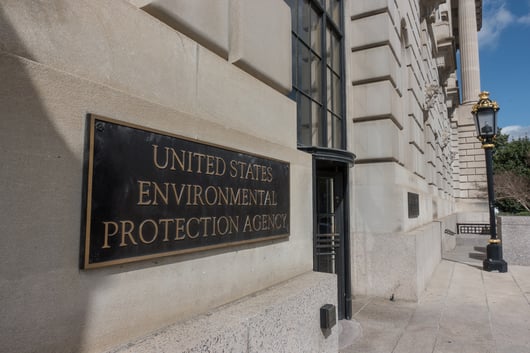
What May Be Lurking in the Future of Environmental Law After West Virginia v. EPA
In West Virginia v. EPA, decided in June, the Supreme Court struck down EPA’s attempt...

Yet Another Federal Court Rules Against the CDC Eviction Moratorium
Note: This blog was originally posted at the Volokh Conspiracy. Earlier today, the Judge...
Courthouse Steps: Gloucester County School Board v. G.G. - Podcast
Administrative Law & Regulation Practice Group Podcast
In late October the Supreme Court accepted a petition from the School Board of Gloucester County,...
Administrative Law & Regulation: The Evolution of Justice Scalia's Views on Administrative Law
2016 National Lawyers Convention
For all of his many contributions to modern American jurisprudence, no area of law bears...
Preserving Freedom: Federal vs. State Power
2016 Annual Western Chapters Conference
Sometimes federalism is invoked because we believe the best way to preserve freedom is to...
Panel: American Multiculturalism: Its Force and Limits From 1776 to Today
18th Annual Faculty Conference
Since before the Revolution, American legal and political traditions have supported many forms of multiculturalism,...
Panel: The New Chevron Skeptics
18th Annual Faculty Conference
When Chevron was first decided it was generally welcomed on the right side of the...
Luncheon Panel: Executive Power and the Role of the Coordinate Branches
Second Annual Executive Branch Review Conference
What are the duties and responsibilities of the Legislative and Judicial Branch in policing Executive...

Georgia Supreme Court Strikes Down Ban on Assisted Suicide Advertisements
State Court Docket Watch Spring 2012
In Final Exit Network, Inc. v. Georgia,1 the Georgia Supreme Court unanimously2 concluded that Georgia’s...
Administrative Law: The 25th Anniversary of Chevron
2008 National Lawyers Convention
Twenty-five years ago, in October Term 1983, the Supreme Court issued its opinion in Chevron...
Federalism: The Roberts Court and Federalism
2008 National Lawyers Convention
Hon. Paul D. Clement, Former United States Solicitor General Hon. Walter E. Dellinger III, Duke...
Fair-weather Federalism - Event Audio
Federalism & Separation of Powers Practice Group
There is a longstanding debate on the appropriate division of power between the Federal Government...