
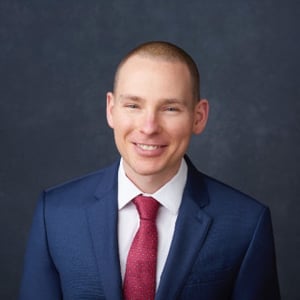
Shareholder & Co-Chair of the Workplace Policy Institute, Littler Mendelson P.C.
Alexander T. MacDonald advises employers on all aspects of the employment and labor landscape, focusing on emerging legislation and regulation. He has extensive experience advising businesses on worker classification, arbitration, the administrative and regulatory process, and the future of work. He frequently writes, publishes, and speaks on these subjects. His work has been cited by scholars and appellate courts. He is a recognized voice for the management perspective.
Alexander is a co-chair of the Workplace Policy Institute (WPI) team. With WPI, he advises employers on legislative, administrative, and regulatory developments at the state and federal level. He advocates for employers in the regulatory and administrative process. He also helps employers protect their businesses by understanding and anticipating cutting-edge legal developments.
Alexander also has extensive experience in traditional labor law. He represents management in all aspects of labor-management relations, including unfair labor practice charges, grievance arbitrations, representation elections, contract negotiations, and related litigation, including litigation in the U.S. courts of appeals.
Before joining Littler, Alexander served as the director, future of work, for a major technology company. He also worked in a national labor and employment law firm and a major public-sector general counsel’s office. He was a law clerk to the senior judges in the District of Columbia Court of Appeals.
He is also a veteran of the U.S. Air Force. He served in Operations Enduring Freedom and Iraqi Freedom. In law school, he graduated first in his class

President and Founder, International Center for Law & Economics
Geoffrey A. Manne is the president and founder of the International Center for Law and Economics (ICLE), a nonprofit, nonpartisan research center based in Portland, Oregon. He is also a distinguished fellow at Northwestern Law School’s Searle Center on Law, Regulation, & Economic Growth. In April 2017 he was appointed by FCC Chairman Ajit Pai to the FCC’s Broadband Deployment Advisory Committee, and he recently served for two years on the FCC’s Consumer Advisory Committee.
Mr. Manne earned his JD and AB degrees from the University of Chicago and is an expert in the economic analysis of law, specializing in competition, telecommunications, consumer protection, intellectual property, and technology policy.
Prior to founding ICLE, Manne was a law professor at Lewis & Clark Law School. From 2006-2009, he took a leave from teaching to develop Microsoft’s law and economics academic outreach program. Manne has also served as a lecturer in law at the University of Chicago Law School and the University of Virginia School of Law. He practiced antitrust law and appellate litigation at Latham & Watkins, clerked for Hon. Morris S. Arnold on the 8th Circuit Court of Appeals, and worked as a research assistant for Judge Richard Posner. He was also once (very briefly) employed by the FTC.
Mr. Manne’s publications have appeared in numerous journals including the Journal of Competition Law and Economics, the Harvard Journal of Law and Technology, the Supreme Court Economic Review, and the Arizona Law Review, among others. With former FTC Commissioner, Joshua Wright, Manne is the editor of a volume from Cambridge University Press entitled, Competition Policy and Intellectual Property Law Under Uncertainty: Regulating Innovation. Manne has also testified on several occasions before Congress and at the FCC and FTC, and he regularly files written comments and amicus briefs on key antitrust, IP, and telecommunications issues. His analysis is frequently published in popular print and broadcasting outlets such as the Wall Street Journal, Wired, Foreign Affairs, NPR, and Bloomberg, among others.
Manne is a member of the American Law and Economics Association, the Canadian Law and Economics Association, and the Society for Institutional & Organizational Economics. He blogs at Truth on the Market (www.truthonthemarket.com) (of which he is also the co-founder), is a contributor at WIRED, and tweets at @geoffmanne. His scholarly publications are available at http://ssrn.com/author=175541.
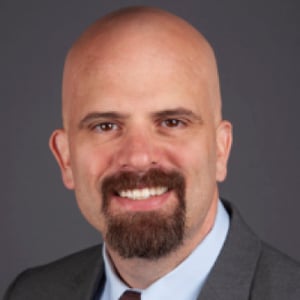
Director of Innovation Policy, International Center for Law & Economics
Kristian Stout, ICLE’s Director of Innovation Policy is an expert in intellectual property, antitrust, telecommunications, and Internet governance. Kristian has been a Fellow at the Internet Law & Policy Foundry, as well as the Eagleton Institute of Politics. Before practicing law, Kristian worked as a technology entrepreneur and a lecturer in the Computer Science Department at Rutgers University. Kristian served on the board of the New Jersey Leadership Program, and wasthe Chair of the Asset Forfeiture Working Group for the NJ State Advisory Committee to the United States Commission on Civil Rights. He has previously served on the Broadband Deployment Advisory Committee for the Federal Communications Commission. Kristian graduated magna cum laude from the Rutgers University School of law, and served on the editorial board of the Rutgers Journal of Law and Public Policy.
Senior Scholar, International Center for Law & Economics
Julian Morris is a Senior Scholar at the International Center for Law & Economics.
Senior Fellow for Law & Economics, International Center for Law & Economics
Dirk Auer is the Senior Fellow for Law & Economics at the International Center for Law & Economics.

Wayne A. Abernathy, Wild Bells
Wayne A. Abernathy is a former U.S. Treasury Assistant Secretary for Financial Institutions under President George W. Bush, receiving the Alexander Hamilton Award in recognition of his service. In that office he was also a member of the Board of Directors of the Securities Investor Protection Corporation. Prior to his work at the Treasury, Mr. Abernathy served as Staff Director of the Senate Banking Committee, under Chairman Phil Gramm.
Following his service at the Treasury, Mr. Abernathy worked for 15 years on the staff of the American Bankers Association, as Executive Vice President for Financial Institutions Policy and Regulatory Affairs.
Previous experience with the Senate Banking Committee includes serving as Staff Director of the Subcommittee on Securities during 1995-1998. From 1989 until 1994, Mr. Abernathy was a Republican economist for the committee. He previously worked as a senior legislative assistant for Senator Gramm during 1987-1989 and as an economist for the Banking Committee’s Subcommittee on International Finance and Monetary Policy during 1981-1986, under Chairman Jake Garn.
Mr. Abernathy earned his bachelor’s degree in International Studies from The Johns Hopkins University in 1978. In 1980, he received a master’s degree in International Studies from the School of Advanced International Studies of The Johns Hopkins University.

Mike Jayne is an attorney for the U.S. Department of Education. Previously, he worked for the Mercatus Center at George Mason University.

Senior Vice President, Strand Consult
Roslyn Layton, PhD is a leading international expert on technology policy. She is Senior Vice President of Strand Consult, an independent consultancy serving the global mobile telecom industry. She is also a Visiting Researcher at Aalborg University Copenhagen where she earned a doctoral thesis on network neutrality by measuring the outcome of the policy across 53 countries over 5 years. She served on the Presidential Transition Team for the Federal Communications Commission (FCC), and her work was critical to the FCC’s defense for the Restoring Internet Freedom Order. She has testified to the United States Senate and House on multiple topics including spectrum, broadband, mobile mergers, competition, and privacy. She founded the think tank China Tech Threat to study the problems of technology produced by the People’s Republic of China. She serves as the Program Chair for the Telecom Policy Research Conference, the leading interdisciplinary academic gathering. Her recent paper on rural broadband describes the empirical case for policy reform to recover network infrastructure costs from streaming video entertainment providers. She is a Senior Contributor to Forbes.
Senior Vice President, Strand Consult
Roslyn Layton, PhD is a leading international expert on technology policy. She is Senior Vice President of Strand Consult, an independent consultancy serving the global mobile telecom industry. She is also a Visiting Researcher at Aalborg University Copenhagen where she earned a doctoral thesis on network neutrality by measuring the outcome of the policy across 53 countries over 5 years. She served on the Presidential Transition Team for the Federal Communications Commission (FCC), and her work was critical to the FCC’s defense for the Restoring Internet Freedom Order. She has testified to the United States Senate and House on multiple topics including spectrum, broadband, mobile mergers, competition, and privacy. She founded the think tank China Tech Threat to study the problems of technology produced by the People’s Republic of China. She serves as the Program Chair for the Telecom Policy Research Conference, the leading interdisciplinary academic gathering. Her recent paper on rural broadband describes the empirical case for policy reform to recover network infrastructure costs from streaming video entertainment providers. She is a Senior Contributor to Forbes.
Technology Policy Manager, R Street Institute
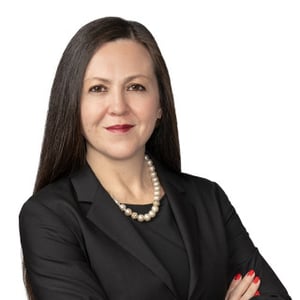
Partner, Axinn, Veltrop & Harkrider LLP
Koren Wong-Ervin is a recognized thought leader on competition issues who has testified before Congress on domestic and international issues in antitrust policy. She has more than eighteen years of experience in government, private practice, and as in-house counsel, including representing defendants and plaintiffs in high-stakes litigations and representing companies in domestic and foreign investigations. While at the Federal Trade Commission (FTC), Koren served as an Attorney Advisor to Commissioner Joshua Wright and Counsel for Intellectual Property & International Antitrust.
The combination of Koren's experience representing defendants—along with her experience at the FTC and as a former plaintiffs class action attorney—gives her insights into the thinking on both sides of cases, including complex multi-district litigations, allowing her to develop both effective offensive and defensive strategies. On top of this, her in-house experience as the Director of Antitrust Litigation & Policy at a major technology company gives her a first-hand understanding of how companies work and unique insight into the needs of clients. Koren also has a deep understanding of economics, as evidenced by the fact that she has trained over 500 foreign judges and enforcers on a variety of economic topics.
Koren’s scholarship has been cited by courts and the Department of Justice. She has authored over sixty articles, including on vertical mergers and restraints, acquisitions of potential competitors, consummated mergers, multisided platforms, the intersection of antitrust and intellectual property, incremental innovations or “product hopping,” optimal penalties, extraterritoriality, methodologies for calculating patent infringement damages, and international due process and convergence. She has spoken at over 200 domestic and international events.

Founding Partner, Lodestar Law and Economics PLLC
Josh is the founder of Lodestar Law and Economics, PLLC. On January 1, 2013, the U.S. Senate unanimously confirmed Wright as a Commissioner of the Federal Trade Commission (FTC). He is a leading scholar in antitrust law, economics, intellectual property, regulation, and consumer protection, and has published more than 100 articles and book chapters, co-authored a leading antitrust casebook, and edited several book volumes focusing on these issues. Commentators have recognized Wright as “widely considered his generation’s greatest mind on antitrust law,” and his academic work ranks him as one of the most cited antitrust academics in the world. Wright was also awarded the Paul M. Bator Award by the Federalist Society in 2014 to “an academic who demonstrated excellence in legal scholarship, a commitment to teaching, a concern for students, and who has made a significant public impact.” Wright also served as the Executive Director of the Global Antitrust Institute, the world’s premiere academic institute focused upon antitrust education for judges and regulators and has taught hundreds of judges and thousands of regulators from dozens of countries.
Wright’s practice focuses upon helping clients solve complex competition, consumer protection, and regulatory problems by providing legal and economic analysis, strategic advice and counseling, and economic expert testimony.
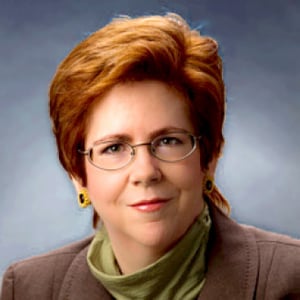
Partner, Wilkinson Barker Knauer LLP
Rosemary C. Harold joined the firm as a partner in 2011, specializing in media, broadband, and First Amendment issues. She advises a wide range of clients – including commercial and noncommercial broadcasters, cable operators, video programmers, wireless providers, and satellite operators – on legal, regulatory, and policy matters. Her work includes representation of clients in major rulemakings, transactions both large and small, and regulatory compliance counseling. Ms. Harold also regularly provides investors and others in the financial community with insights into developments at the FCC and on Capitol Hill, including the interplay between the agency and lawmakers, as well as inter-agency dealings among the FCC, the Department of Justice, and the Federal Trade Commission on competition issues.
From 2005 to 2011, Ms. Harold served at the Federal Communications Commission, most recently as Legal Advisor to FCC Commissioner Robert M. McDowell for media and broadband issues, with a particular focus on First Amendment concerns. She earlier served as Deputy Chief of the FCC’s Media Bureau, where she led the staff teams working on major rulemakings such as video franchising reform and media ownership, as well as on major transactional reviews such as the Sirius/XM merger.
Before her government service, Ms. Harold’s work in private practice included FCC regulatory proceedings in the media, satellite, and wireless areas, diversity and EEO matters at the FCC and EEOC, and First Amendment commercial speech matters before the FTC, FDA and federal appellate courts. She began her career as a journalist, including work as a reporter and bureau chief for the Miami Herald, an editor at C-SPAN and, during law school, a columnist for the ABA Student Lawyer magazine.
Ms. Harold frequently speaks at industry conferences and events on media and broadband issues. She currently serves as the co-chair of the Women in Communications Law subcommittee of the American Bar Association’s Forum Committee on Communications Law, an adjunct professor in the Communications Law Institute at Catholic University’s Columbus School of Law, and member of Board of Advisors for the Thomas Jefferson Public Policy Program at the College of William and Mary. An active member of the Federal Communications Bar Association, Ms. Harold has served on the FCBA’s Executive Committee and co-chaired the FCBA’s Mass Media Committee, Video Programming & Distribution Committee, and Professional Responsibility Committee.
J.D., Georgetown University Law Center, 1991, magna cum laude
M.A., University of Missouri, 1985
B.A., College of William and Mary, 1980
Justice, Supreme Court of Alabama (Retired); Professor of Law, Belmont University College of Law?

William Gardiner Hammond Professor of Law, Washington University Law
Professor Brian Z. Tamanaha is a renowned jurisprudence scholar and the author of eight books and numerous scholarly articles, including his groundbreaking book, Beyond the Formalist–Realist Divide: The Role of Politics in Judging. His articles have appeared in a variety of leading journals, and his publications have been translated into eight languages. Also an expert in law and society, he has delivered lectures in Brazil, Indonesia, Japan, France, the Netherlands, Colombia, Singapore, Australia, Canada, and the United Kingdom. He spent a year in residence as a Member of the Institute for Advanced Study in Princeton. Professor Tamanaha is the recipient of several book prizes and awards, including Professor of the Year, and a frequent speaker and lecturer at legal conferences throughout the United States and abroad. His professional affiliations include serving as a past member of the Board of Trustees of the Law and Society Association. Before becoming a law professor, he clerked for the Hon. Walter E. Hoffman, U.S. District Court for the Eastern District of Virginia. He also practiced law in Hawaii and Micronesia, where he served as legal counsel for the Micronesian Constitutional Convention, Assistant Attorney General for the Yap State, and Assistant Federal Public Defender for the District of Hawaii. He then earned a doctorate of juridical science at Harvard Law School.?
His latest book, Failing Law Schools, is available at http://www.amazon.com/Failing-Schools-Chicago-Series-Society/dp/0226923614. ?

Senior Faculty, Arthur and Toni Rembe Rock Center for Corporate Governance, Stanford Law School
Joseph A. Grundfest, JD ’78, is a nationally prominent expert on capital markets, corporate governance, and securities litigation. His scholarship has been published in the Harvard, Yale, and Stanford law reviews, and he has been recognized as one of the most influential attorneys in the United States. Professor Grundfest founded the award-winning Stanford Securities Class Action Clearinghouse, which provides detailed, online information about the prosecution, defense, and settlement of federal class action securities fraud litigation. He launched Stanford Law School’s executive education programs and continues to co-direct Directors’ College, the nation’s leading venue for the continuing professional education of directors of publicly traded corporations. He is also a senior faculty member with the Arthur and Toni Rembe Rock Center for Corporate Governance. Additionally, he is co-founder and director of Financial Engines and a director of Kohlberg, Kravis, Roberts & Co.
Before joining the Stanford Law School faculty in 1990, Professor Grundfest was a commissioner of the Securities and Exchange Commission, served on the staff of the President’s Council of Economic Advisors as counsel and senior economist for legal and regulatory matters, and was an associate at Wilmer, Cutler & Pickering. Early in his career he was a research associate at the Brookings Institution and an economist and consultant with the RAND Corporation.

Predistribution, Labor Standards, and Ideological Drift: Why Some Conservatives Are Embracing Labor Unions (and Why They Shouldn't)
Alexander T. MacDonald
Common ground isn’t always a good thing. For example, consider the growing popularity of “predistribution.”...
The Deterioration of Appropriate Remedies in Patent Disputes
Geoffrey A. Manne, Kristian Stout, Julian Morris, Dirk Auer
Note from the Editor: The Federalist Society takes no positions on particular legal and public...
The Resolution of Too Big to Fail
Wayne A. Abernathy
Note from the Editor: The Federalist Society takes no positions on particular legal and public...
As Far As Reasonably Practicable: Reimagining the Role of Congress in Agency Rulemaking
Mike Jayne
Note from the Editor: The Federalist Society takes no positions on particular legal and public...
The GDPR: What It Really Does and How the U.S. Can Chart a Better Course
Roslyn Layton, Julian McLendon
Note from the Editor: This article discusses the European Union’s new General Data Protection Rule...
Net Neutrality Without the FCC?: Why the FTC Can Regulate Broadband Effectively
Roslyn Layton, Tom W. Struble
Note from the Editor: This article argues that the FTC has jurisdiction over broadband and the...
Intellectual Property and Standard Setting
Koren Wong-Ervin, Joshua D. Wright
Note from the Editor: This article discusses the controversial topic of intellectual property in standard...
The FCC Forgot Something in Piecing Together Its Complex Proposal for Broadband Privacy Regulation: Consumers
Rosemary C. Harold
Note from the Editor: This article discusses the FCC’s proposed rules for broadband privacy, and...
Are American Law Schools Failing?: An Exchange Between Brian Tamanaha & Harold See
Harold F. See, Brian Z. Tamanaha
The Collapsing Economics of Legal Education Brian Z. Tamanaha* Introduction Many law schools around the...
Enron: Can We Craft an Efficient Disclosure-Based Policy Response?
Joseph A. Grundfest
Presentation to the Silicon Valley Chapter of The Federalist Society Joseph A. Grundfest*1. IntroductionThe President of...