

Tammy McCutchen is a leading authority on federal and state wage-hour laws and prevailing wage laws. She counsels businesses on wage-hour compliance, including conducting internal audits on independent contractor status, overtime exemptions, and other pay practices. She also represents employers during investigations by the U.S. Department of Labor and serves as an expert witness in wage-hour class actions. She was a founding officer of ComplianceHR, a law and technology company, where she created AI-based applications to evaluate independent contractor and overtime exempt status.
Ms. McCutchen served as Administrator of the U.S. Department of Labor’s Wage and Hour Division, appointed by President Bush and confirmed by the Senate in 2001. She was the primary architect of the 2004 revisions to the overtime exemption regulations, the first major changes to the regulations in 55 years.
Before joining DOL, she was senior counsel for the Hershey Company in Hershey, Pennsylvania.
Ms. McCutchen has been a volunteer leader of the Federalist Society since 1989. She served in leadership roles for the Northwestern Student Chapter and Chicago Lawyers Chapter. She currently serves in leadership for the Labor & Employment Practice Group, the Regulatory Transparency Project, and the Knoxville, TN Lawyers Chapter. She served on the Editorial Advisory Board of Law360, the Labor Committee of the U.S. Chamber of Commerce, the Small Business Legal Advisory Board of the National Federation of Independent Business, and a Policy Fellow at the ACU Foundation.
Ms. McCutchen is a graduate of Western Illinois University and Northwestern University School of Law. She clerked for the Hon. Daniel Manion on the U.S. Court of Appeals for the Seventh Circuit.
Shareholder & Co-Chair of the Workplace Policy Institute, Littler Mendelson P.C.
Alexander T. MacDonald advises employers on all aspects of the employment and labor landscape, focusing on emerging legislation and regulation. He has extensive experience advising businesses on worker classification, arbitration, the administrative and regulatory process, and the future of work. He frequently writes, publishes, and speaks on these subjects. His work has been cited by scholars and appellate courts. He is a recognized voice for the management perspective.
Alexander is a co-chair of the Workplace Policy Institute (WPI) team. With WPI, he advises employers on legislative, administrative, and regulatory developments at the state and federal level. He advocates for employers in the regulatory and administrative process. He also helps employers protect their businesses by understanding and anticipating cutting-edge legal developments.
Alexander also has extensive experience in traditional labor law. He represents management in all aspects of labor-management relations, including unfair labor practice charges, grievance arbitrations, representation elections, contract negotiations, and related litigation, including litigation in the U.S. courts of appeals.
Before joining Littler, Alexander served as the director, future of work, for a major technology company. He also worked in a national labor and employment law firm and a major public-sector general counsel’s office. He was a law clerk to the senior judges in the District of Columbia Court of Appeals.
He is also a veteran of the U.S. Air Force. He served in Operations Enduring Freedom and Iraqi Freedom. In law school, he graduated first in his class
Professor of Law, St. Mary's University Law School
Adam MacLeod is a Professor at St. Mary's University School of Law. He has been a visiting fellow in the James Madison Program in American Ideals and Institutions at Princeton University, a fellow of the Center for Religion, Culture and Democracy, and a Senior Scholar and Thomas Edison Fellow in the Center for Intellectual Property x Innovation Policy at George Mason University. He is co-editor of Christie & Martin's Jurisprudence (4th ed. West 2020) and author of Property and Practical Reason (Cambridge University Press 2015). He has written two other books, dozens of scholarly articles, and more than one hundred essays and book reviews.
Professor MacLeod received his B.A., summa cum laude, from Gordon College and his J.D., magna cum laude, from the University of Notre Dame Law School. After law school, he served as law clerk to Chief Justice Christopher Armstrong and Justice Benjamin Kaplan of the Massachusetts Appeals Court and to Chief Judge Lewis Babcock of the United States District Court for the District of Colorado. He practiced law in the Boston area and has held appointment as a special Deputy Attorney General of Alabama and a lecturer in the Alabama Judicial College. He also serves as an Operational Auxiliarist in the U.S. Coast Guard, advising and providing operational training to Auxiliary and active-duty personnel.
Managing Partner, Cramer Multhauf LLP
Attorney Matthew Fernholz focuses his practice on commercial litigation, trust and fiduciary disputes, business torts, trade secrets, non-compete agreements, defamation, and appellate work. In addition, he has developed one of the preeminent political and election law practices in the State of Wisconsin, and has handled several high-profile matters, from representing candidates for statewide office, successfully challenging the Governor’s emergency powers, arguing before the Wisconsin Elections Commission, and representing the Speaker of the Assembly.
Matthew frequently and successfully tries cases to verdict, and believes a lawyer unwilling to try a case should not take on a client in a litigation matter. In addition to this trial work, he has handled dozens of appeals, and countless dispositive motions.
His work has also been published in law review journals and newspapers alike.
Senior Partner, Pines Bach LLP
Lester Pines is a Senior Partner in the firm.
A Fellow of the American College of Trial Lawyers, he is a respected civil and criminal litigator and appellate advocate. In his over 40 years of practice, he has appeared in trial and appellate courts throughout Wisconsin, in numerous federal district courts, and before the federal 7th Circuit Court of Appeals. After a recent trial, one of Lester’s clients wrote:
"Seeing you in action was like watching an artist create a classic painting from a blank canvas but instead of paint you used facts, figures and, most importantly, words to achieve a masterpiece in the courtroom."
His wide-ranging civil trial practice encompasses commercial claims, employment disputes, constitutional and civil rights matters, personal injury and intellectual property cases. His criminal defense work has involved many high profile cases, especially involving teachers, police officers and other public employees. He is counsel to Madison Teachers Inc., which represents the employees of the Madison Metropolitan School District.
Recently, Lester was featured in a cover story in Isthmus, a Madison weekly newspaper, " Activist Attorney – Lester Pines draws on faith and family in his practice and beyond."
Recent challenges to the constitutionality of newly enacted laws that Lester brought on behalf of his clients include:
Previously, in cases in which he was appointed by former Wisconsin Governor Jim Doyle, Lester defended Wisconsin’s law creating domestic partnerships for same sex couples and stopped an attempt by then Attorney General J.B. Van Hollen to suppress voting in the 2008 Presidential election.
Among the many cases Lester has argued before the Wisconsin Supreme Court, two in particular have shaped Wisconsin law. In 2010 he represented the Zurich American Insurance Company inMiller v. Hanover Insurance, securing the reversal of a $2,000,000 default judgment against his client and achieving a significant change in Wisconsin law regarding relief from such judgments. In an original action in 1996, he successfully argued the case of Thompson v. Craney, which delineated the constitutionally vested powers of the State Superintendent of Public Instruction and protected them from being altered by the Legislature, which the Wisconsin Supreme Court reaffirmed in 2016 in Coyne v. Walker.
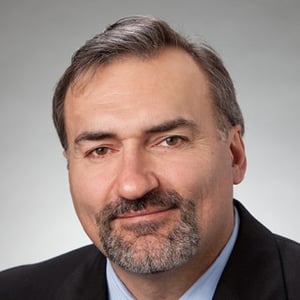
Judge, Waukesha County Circuit Court
Judge Michael J. Aprahamian serves as a judge on the Waukesha County Circuit Court. Prior to taking the bench in 2014, Judge Aprahamian was a partner at Foley & Lardner LLP, where he was a civil trial lawyer and the firm's partner in charge of ethics training. Prior to joining Foley, he clerked for the Honorable Richard D. Cudahy on the United States Court of Appeals for the Seventh Circuit. He received his J.D. from Yale Law School in 1992 and a B.S. from the University of Wisconsin in 1989.
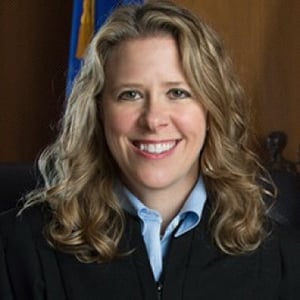
Justice, Wisconsin Supreme Court
Justice Rebecca Grassl Bradley, a Milwaukee native, was elected to the Supreme Court in 2016 after being appointed by Gov. Scott Walker in 2015. She is the first Wisconsin Supreme Court Justice to have served as an intermediate appellate court judge as well as a circuit court judge. Before joining the Supreme Court, Justice Bradley served as a District I Court of Appeals judge (appointed 2015), a Milwaukee County Circuit Court Judge (appointed 2012, elected 2013) and worked as an attorney in private practice (1996-2012), including serving as vice president of legal operations for a global software company.
Justice Bradley graduated from Marquette University in 1993 with an honors B.S. in Business Administration and Business Economics and received her juris doctor from the University of Wisconsin Law School in 1996.
Justice Bradley is a member of the Supreme Court Finance Committee and chairs the Supreme Court Legislative Committee as the Chief Justice's designee. She is a member of the Board of Advisors and past president of the Milwaukee Lawyers Chapter of the Federalist Society; serves on the Wisconsin State Advisory Committee of the U.S. Commission on Civil Rights; and is a member of the Bench and Bar Committee of the Wisconsin State Bar. She previously served on the Board of Governors of the St. Thomas More Lawyers Society; the Wisconsin Juvenile Jury Instructions Committee; the Wisconsin Juvenile Benchbook Committee; and as a member of the Milwaukee Trial Judges Association and the Wisconsin Trial Judges Association. While in private practice, Justice Bradley served as an American Arbitration Association Arbitrator and Chairman of the State Bar Business Law Section.
Justice Bradley's current term expires July 31, 2026.
Managing Partner, Cramer Multhauf LLP
Attorney Matthew Fernholz focuses his practice on commercial litigation, trust and fiduciary disputes, business torts, trade secrets, non-compete agreements, defamation, and appellate work. In addition, he has developed one of the preeminent political and election law practices in the State of Wisconsin, and has handled several high-profile matters, from representing candidates for statewide office, successfully challenging the Governor’s emergency powers, arguing before the Wisconsin Elections Commission, and representing the Speaker of the Assembly.
Matthew frequently and successfully tries cases to verdict, and believes a lawyer unwilling to try a case should not take on a client in a litigation matter. In addition to this trial work, he has handled dozens of appeals, and countless dispositive motions.
His work has also been published in law review journals and newspapers alike.
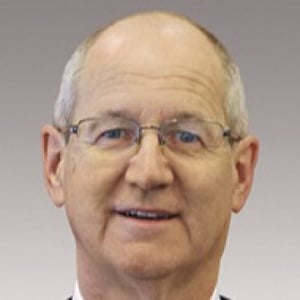
Senior District Judge, United States District Court, Eastern District of Wisconsin
Judge William C. Griesbach is Senior District Judge of the United States District Court for the Eastern District of Wisconsin. Born in Milwaukee, Judge Griesbach received his B.A. from Marquette University and his J.D. from Marquette University Law School. Before joining the bench Judge Griesbach worked as a law clerk for Justice Bruce Beilfuss of the Supreme Court of Wisconsin, a staff attorney for the U.S. Court of Appeals for the Seventh Circuit, in private practice, and as an assistant district attorney for Brown County. In 1995, Judge Griesbach was elected to the Brown County Circuit Court, where he served until he was nominated by President George W. Bush to the Eastern District, and confirmed by the Senate, in 2002. He served as Chief Judge of that court from 2012 to 2019, assuming senior status in 2019.
Judge, Waukesha County Circuit Court
Judge Michael J. Aprahamian serves as a judge on the Waukesha County Circuit Court. Prior to taking the bench in 2014, Judge Aprahamian was a partner at Foley & Lardner LLP, where he was a civil trial lawyer and the firm's partner in charge of ethics training. Prior to joining Foley, he clerked for the Honorable Richard D. Cudahy on the United States Court of Appeals for the Seventh Circuit. He received his J.D. from Yale Law School in 1992 and a B.S. from the University of Wisconsin in 1989.
Justice, Wisconsin Supreme Court
Justice Rebecca Grassl Bradley, a Milwaukee native, was elected to the Supreme Court in 2016 after being appointed by Gov. Scott Walker in 2015. She is the first Wisconsin Supreme Court Justice to have served as an intermediate appellate court judge as well as a circuit court judge. Before joining the Supreme Court, Justice Bradley served as a District I Court of Appeals judge (appointed 2015), a Milwaukee County Circuit Court Judge (appointed 2012, elected 2013) and worked as an attorney in private practice (1996-2012), including serving as vice president of legal operations for a global software company.
Justice Bradley graduated from Marquette University in 1993 with an honors B.S. in Business Administration and Business Economics and received her juris doctor from the University of Wisconsin Law School in 1996.
Justice Bradley is a member of the Supreme Court Finance Committee and chairs the Supreme Court Legislative Committee as the Chief Justice's designee. She is a member of the Board of Advisors and past president of the Milwaukee Lawyers Chapter of the Federalist Society; serves on the Wisconsin State Advisory Committee of the U.S. Commission on Civil Rights; and is a member of the Bench and Bar Committee of the Wisconsin State Bar. She previously served on the Board of Governors of the St. Thomas More Lawyers Society; the Wisconsin Juvenile Jury Instructions Committee; the Wisconsin Juvenile Benchbook Committee; and as a member of the Milwaukee Trial Judges Association and the Wisconsin Trial Judges Association. While in private practice, Justice Bradley served as an American Arbitration Association Arbitrator and Chairman of the State Bar Business Law Section.
Justice Bradley's current term expires July 31, 2026.
Managing Partner, Cramer Multhauf LLP
Attorney Matthew Fernholz focuses his practice on commercial litigation, trust and fiduciary disputes, business torts, trade secrets, non-compete agreements, defamation, and appellate work. In addition, he has developed one of the preeminent political and election law practices in the State of Wisconsin, and has handled several high-profile matters, from representing candidates for statewide office, successfully challenging the Governor’s emergency powers, arguing before the Wisconsin Elections Commission, and representing the Speaker of the Assembly.
Matthew frequently and successfully tries cases to verdict, and believes a lawyer unwilling to try a case should not take on a client in a litigation matter. In addition to this trial work, he has handled dozens of appeals, and countless dispositive motions.
His work has also been published in law review journals and newspapers alike.
Senior District Judge, United States District Court, Eastern District of Wisconsin
Judge William C. Griesbach is Senior District Judge of the United States District Court for the Eastern District of Wisconsin. Born in Milwaukee, Judge Griesbach received his B.A. from Marquette University and his J.D. from Marquette University Law School. Before joining the bench Judge Griesbach worked as a law clerk for Justice Bruce Beilfuss of the Supreme Court of Wisconsin, a staff attorney for the U.S. Court of Appeals for the Seventh Circuit, in private practice, and as an assistant district attorney for Brown County. In 1995, Judge Griesbach was elected to the Brown County Circuit Court, where he served until he was nominated by President George W. Bush to the Eastern District, and confirmed by the Senate, in 2002. He served as Chief Judge of that court from 2012 to 2019, assuming senior status in 2019.

Topics
The Georgia Fake Electors Scheme: What Does Legal and Political History Tell Us About These Charges?
Five of the 19 defendants indicted by Fulton County District Attorney Fani Willis are alleged...
Legislature v. Palm [The FedSoc Films Podcast]
In this episode of the FedSoc Films Podcast, Rick Esenberg, Founder & President of the...
The War on Independent Work: Why Some Regulators Want to Abolish Independent Contracting, Why They Keep Failing, & Why We Should Declare Peace
Tammy Dee McCutchen, Alexander T. MacDonald
There is a war on independent contracting. Martial metaphors are often overworked in the law....
Topics
Live and Let LIV?
This post was originally published at Lawfare. For more than a year, the most important...
Topics
The Northwest Ordinance: Historically Significant, Still Relevant
Happy birthday to the Northwest Ordinance, which the Articles of Confederation Congress enacted on July...
Topics
Pandemic Powers: What Happened in Wisconsin?
In March 2020, Wisconsin Governor Tony Evers, like many governors in America, declared a “state...
Delaware v. Pennsylvania and Wisconsin - Post-Decision SCOTUScast
Adam MacLeod
On February 28, 2023, the Supreme Court issued its ruling in Delaware v. Pennsylvania and...
Pandemic Powers: Wisconsin's State of Emergency
Matthew M. Fernholz, Lester A. Pines
The COVID-19 Pandemic renewed the debate over state powers and their limits, specifically state emergency...
Panel I: Path to the Judiciary in Wisconsin
Michael J. Aprahamian, Rebecca Bradley, Matthew M. Fernholz, William C. Griesbach
Although many lawyers spend their careers in front of judges, the process by which a...
Panel I: Path to the Judiciary in Wisconsin
Michael J. Aprahamian, Rebecca Bradley, Matthew M. Fernholz, William C. Griesbach
Although many lawyers spend their careers in front of judges, the process by which a...