
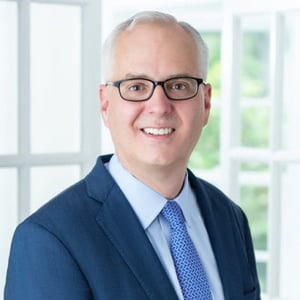
Principal, Clear IP, LLC
Joseph Matal is the Principal at Clear IP, LLC.
Joe has served as both the U.S. Patent and Trademark’s Acting Director and Acting Solicitor. As Acting Solicitor, he defended the agency in intellectual property cases before the U.S. Court of Appeals for the Federal Circuit and U.S. Supreme Court. In his role in the Solicitor’s Office, he participated in briefing almost every major case involving PTAB trials that has come before the Federal Circuit, including cases that have defined the Board’s powers and the evidence that it may consider, the content of final decisions, and the burdens and scope of motions to amend. Recent cases include Uniloc v. Hulu, Thryv v. Click-to-Call, and Aqua Products v. Matal. Previously, Joe served in senior legal roles for more than a decade for the U.S. Senate Judiciary Committee. In that capacity, he negotiated and drafted many of the key provisions of the America Invents Act.
In his roles at the USPTO, Joe briefed and argued numerous appeals of patent and trademark decisions before the Federal Circuit; oversaw the management of the USPTO and its 13,000 employees; and advised the U.S. Solicitor General’s Office in key IP cases before the Supreme Court.

Visiting Fellow, National Security Institute, George Mason University's Antonin Scalia Law School
Mr. Taylor was counsel and chief counsel of the House Subcommittee on the Constitution, Civil Rights, and Civil Liberties, for over 20 years, where he shepherded dozens of bills through committee to be signed into law by presidents of both political parties. He was also counsel to the House Oversight Committee, where he handled constitutional and civil rights issues. He is the author of over a dozen law review articles on legal reform, continuity in government, religious liberty, congressional powers, civil rights, and patent law. He is an elected member of the American Law Institute (the first active congressional staff person elected to that body in its 100-year history), a 1991 graduate of Yale University (BA, summa cum laude), and a 1994 graduate of Harvard Law School (JD, cum laude). He is a Visiting Fellow at the National Security Institute at George Mason University's Antonin Scalia Law School.
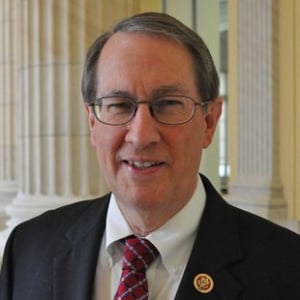
Former Congressman, United States House of Representatives
Bob Goodlatte served in the United States House of Representatives representing Virginia's 6th congressional district for 13 terms.
Goodlatte’s service to the people of the Sixth District began in 1977 when he became District Director for former Congressman Caldwell Butler. He served in this position for two years until 1979, and was responsible for helping folks across the District seeking assistance with or encountering problems from various federal agencies. In 1979, he founded his own private law practice in Roanoke. Later, he was a partner in the law firm of Bird, Kinder and Huffman, working there from 1981 until taking office.
Rep. Goodlatte was first elected to serve as Chairman of the House Judiciary Committee in the 113th Congress. He was the first Judiciary Committee Chairman from Virginia in the last 125 years. Rep. Goodlatte was an active Member of the Judiciary Committee since arriving in Congress, serving in a variety of leadership positions on the Committee including taking the lead on many intellectual property issues. During his time in Congress, Rep. Goodlatte made a name for himself as a leader on Internet and technology issues. He was Co-Chair of the Congressional Internet Caucus and the International Creativity and Theft-Prevention Caucus.
Rep. Goodlatte is a graduate of Washington and Lee University School of Law, and his undergraduate degree in Government was earned at Bates College in Lewiston, Maine.
Principal, Clear IP, LLC
Joseph Matal is the Principal at Clear IP, LLC.
Joe has served as both the U.S. Patent and Trademark’s Acting Director and Acting Solicitor. As Acting Solicitor, he defended the agency in intellectual property cases before the U.S. Court of Appeals for the Federal Circuit and U.S. Supreme Court. In his role in the Solicitor’s Office, he participated in briefing almost every major case involving PTAB trials that has come before the Federal Circuit, including cases that have defined the Board’s powers and the evidence that it may consider, the content of final decisions, and the burdens and scope of motions to amend. Recent cases include Uniloc v. Hulu, Thryv v. Click-to-Call, and Aqua Products v. Matal. Previously, Joe served in senior legal roles for more than a decade for the U.S. Senate Judiciary Committee. In that capacity, he negotiated and drafted many of the key provisions of the America Invents Act.
In his roles at the USPTO, Joe briefed and argued numerous appeals of patent and trademark decisions before the Federal Circuit; oversaw the management of the USPTO and its 13,000 employees; and advised the U.S. Solicitor General’s Office in key IP cases before the Supreme Court.
Visiting Fellow, National Security Institute, George Mason University's Antonin Scalia Law School
Mr. Taylor was counsel and chief counsel of the House Subcommittee on the Constitution, Civil Rights, and Civil Liberties, for over 20 years, where he shepherded dozens of bills through committee to be signed into law by presidents of both political parties. He was also counsel to the House Oversight Committee, where he handled constitutional and civil rights issues. He is the author of over a dozen law review articles on legal reform, continuity in government, religious liberty, congressional powers, civil rights, and patent law. He is an elected member of the American Law Institute (the first active congressional staff person elected to that body in its 100-year history), a 1991 graduate of Yale University (BA, summa cum laude), and a 1994 graduate of Harvard Law School (JD, cum laude). He is a Visiting Fellow at the National Security Institute at George Mason University's Antonin Scalia Law School.
Former Congressman, United States House of Representatives
Bob Goodlatte served in the United States House of Representatives representing Virginia's 6th congressional district for 13 terms.
Goodlatte’s service to the people of the Sixth District began in 1977 when he became District Director for former Congressman Caldwell Butler. He served in this position for two years until 1979, and was responsible for helping folks across the District seeking assistance with or encountering problems from various federal agencies. In 1979, he founded his own private law practice in Roanoke. Later, he was a partner in the law firm of Bird, Kinder and Huffman, working there from 1981 until taking office.
Rep. Goodlatte was first elected to serve as Chairman of the House Judiciary Committee in the 113th Congress. He was the first Judiciary Committee Chairman from Virginia in the last 125 years. Rep. Goodlatte was an active Member of the Judiciary Committee since arriving in Congress, serving in a variety of leadership positions on the Committee including taking the lead on many intellectual property issues. During his time in Congress, Rep. Goodlatte made a name for himself as a leader on Internet and technology issues. He was Co-Chair of the Congressional Internet Caucus and the International Creativity and Theft-Prevention Caucus.
Rep. Goodlatte is a graduate of Washington and Lee University School of Law, and his undergraduate degree in Government was earned at Bates College in Lewiston, Maine.
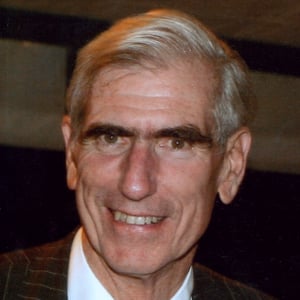
Founding Partner, Boyden Gray & Associates
Ambassador C. Boyden Gray is the founding partner of Boyden Gray & Associates, a law and strategy firm in Washington, D.C., focused on constitutional and regulatory issues.
Mr. Gray worked in the White House for twelve years, first as counsel to the Vice President during the Reagan administration and then as White House Counsel to President George H.W. Bush. In the Reagan administration, he was Counsel to the Presidential Task Force on Regulatory Relief, for which he wrote the original Executive Order 12291 requiring cost-benefit analysis and White House review of regulations (later renumbered as current EO 12866). In the George H.W. Bush Administration, Mr. Gray was in charge of judicial selection and was also instrumental in the enactment of the Clean Air Act Amendments of 1990, the Energy Policy Act of 1992, and a cap-and-trade system for acid rain emissions. In 1993, he received the Presidential Citizens Medal. Under President George W. Bush, Mr. Gray was U.S. Ambassador to the European Union and U.S. Special Envoy to Europe for Eurasian Energy.
Mr. Gray practiced law for 25 years at the law firm of Wilmer, Cutler & Pickering and was chairman of the Administrative Law and Regulatory Practice Section of the American Bar Association from 2000 to 2002. Early in his career, Mr. Gray helped to develop the Business Roundtable and served as its first counsel. He is an adjunct professor at Antonin Scalia Law School and a former adjunct professor at NYU Law School (teaching energy and environmental law). Mr. Gray is on the Board of Directors of the Atlantic Council, the Federalist Society, Reason Foundation, and the Trust for the National Mall.
Mr. Gray earned his A.B. magna cum laude from Harvard, where he was an editor of the Crimson, and his J.D. with high honors from the University of North Carolina at Chapel Hill, where he was editor-in-chief of the Law Review. Mr. Gray served in the United States Marine Corps, and after law school, he clerked for Earl Warren, Chief Justice of the United States Supreme Court.

Judge, United States Court of Appeals, District of Columbia Circuit
Judge Katsas was appointed to the D.C. Circuit in December 2017. He graduated from Princeton University and Harvard Law School, where he was an executive editor on the Harvard Law Review. Between 1989 and 1992, he served as a law clerk to Judge Edward Becker on the Third Circuit, to then-Judge Clarence Thomas on the D.C. Circuit, and to Justice Thomas on the Supreme Court. Between 1992 and 2001, he was an associate and then partner in the Washington office of Jones Day, where he specialized in appellate and complex civil litigation. Between 2001 and 2009, he served in many senior positions in the Department of Justice, including as Assistant Attorney General for the Civil Division and as Acting Associate Attorney General. In 2009, he returned to Jones Day. From January to December 2017, he served as Deputy Assistant to the President and Deputy Counsel to the President.
Before joining the bench, Judge Katsas argued more than 75 appeals, including three cases in the Supreme Court, 13 cases in the D.C. Circuit, and cases in every other federal court of appeals. By appointment of the Chief Justice, he served on the Advisory Committee on Appellate Rules from 2013 to 2017. In 2016, he was elected to membership in the American Academy of Appellate Lawyers.
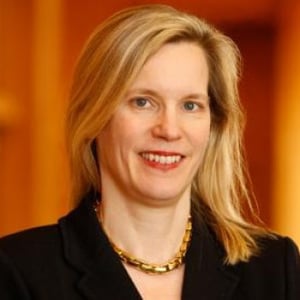
John S. Battle Professor of Law, University of Virginia School of Law
Julia D. Mahoney teaches courses in property, government finance, constitutional law and nonprofit organizations. A graduate of Yale Law School, she joined the University of Virginia faculty as an associate professor in 1999 and is now John S. Battle Professor of Law. She has also taught at the University of Southern California Law School and the University of Chicago Law School, and before entering the legal academy, practiced law at the New York firm Wachtell, Lipton, Rosen & Katz. Her scholarly articles include works on land preservation, eminent domain, health care reform and property rights in human biological materials.

Associate Professor of Legal Studies & Business Ethics; Co-Director, Wharton Initiative on Financial Policy and Regulation, The Wharton School, University of Pennsylvania
Christina Parajon Skinner is an expert on financial regulation. Her research focuses on central banking, the debt markets, separation of powers, corporate governance, and law and macroeconomics. Professor Skinner’s work is international and comparative in scope, drawing on her experience as an academic and central bank lawyer in the United Kingdom. Her research has been published or is forthcoming in the Columbia Law Review, the Duke Law Journal, the Vanderbilt Law Review, and the Georgetown Law Journal, among other leading academic journals. Professor Skinner has also contributed to financial regulatory policy working groups, including those convened by the Federal Reserve Bank of New York, the Financial Stability Board, and the U.K. Banking Standards Board.
Prior to joining the faculty at Wharton, Professor Skinner served as legal counsel at the Bank of England, in the Financial Stability Division of the Bank’s Legal Directorate. Her work there focused principally on matters of bank resolution, financial market infrastructure, and macroprudential policy. Previously, Professor Skinner was an Academic Visitor at the University of Oxford, Faculty of Law and a Visiting Fellow at the London School of Economics, Law Department. From 2014-2016, she was a post-doctoral fellow and lecturer in Law at Columbia Law School.
Professor Skinner received her J.D. from Yale Law School, and an A.B. from the School of Public and International Affairs at Princeton University, with a concentration in international economics. She received certificates of proficiency in European Politics and Society, and Spanish Language and Culture.
She is married with five children.

Director of Research, American Economic Liberties Project
Matt Stoller is a public intellectual who writes about the American anti-monopoly
tradition. He is the author of the Simon and Schuster book Goliath: The Hundred Year
War Between Monopoly Power and Democracy. Stoller is the Director of Research at
the American Economic Liberties Project. He publishes an email newsletter called BIG.
Stoller is a former policy advisor to the Senate Budget Committee, and worked in the House of Representatives on the Dodd–Frank Wall Street Reform Act.
He has lectured on competition policy and media at Columbia University, Harvard Law, Duke Law, Bertelsmann Foundation, Vrije Universiteit Brussel, West Point and the National Communications Commission of Taiwan. His writing has appeared in the Washington Post, the New York Times, Fast Company, Foreign Policy, the Guardian, Vice, The American Conservative, and the Baffler.
He has also produced for MSNBC and starred in a short-lived television show on FX called Brand X with Russell Brand.
Founding Partner, Boyden Gray & Associates
Ambassador C. Boyden Gray is the founding partner of Boyden Gray & Associates, a law and strategy firm in Washington, D.C., focused on constitutional and regulatory issues.
Mr. Gray worked in the White House for twelve years, first as counsel to the Vice President during the Reagan administration and then as White House Counsel to President George H.W. Bush. In the Reagan administration, he was Counsel to the Presidential Task Force on Regulatory Relief, for which he wrote the original Executive Order 12291 requiring cost-benefit analysis and White House review of regulations (later renumbered as current EO 12866). In the George H.W. Bush Administration, Mr. Gray was in charge of judicial selection and was also instrumental in the enactment of the Clean Air Act Amendments of 1990, the Energy Policy Act of 1992, and a cap-and-trade system for acid rain emissions. In 1993, he received the Presidential Citizens Medal. Under President George W. Bush, Mr. Gray was U.S. Ambassador to the European Union and U.S. Special Envoy to Europe for Eurasian Energy.
Mr. Gray practiced law for 25 years at the law firm of Wilmer, Cutler & Pickering and was chairman of the Administrative Law and Regulatory Practice Section of the American Bar Association from 2000 to 2002. Early in his career, Mr. Gray helped to develop the Business Roundtable and served as its first counsel. He is an adjunct professor at Antonin Scalia Law School and a former adjunct professor at NYU Law School (teaching energy and environmental law). Mr. Gray is on the Board of Directors of the Atlantic Council, the Federalist Society, Reason Foundation, and the Trust for the National Mall.
Mr. Gray earned his A.B. magna cum laude from Harvard, where he was an editor of the Crimson, and his J.D. with high honors from the University of North Carolina at Chapel Hill, where he was editor-in-chief of the Law Review. Mr. Gray served in the United States Marine Corps, and after law school, he clerked for Earl Warren, Chief Justice of the United States Supreme Court.
Judge, United States Court of Appeals, District of Columbia Circuit
Judge Katsas was appointed to the D.C. Circuit in December 2017. He graduated from Princeton University and Harvard Law School, where he was an executive editor on the Harvard Law Review. Between 1989 and 1992, he served as a law clerk to Judge Edward Becker on the Third Circuit, to then-Judge Clarence Thomas on the D.C. Circuit, and to Justice Thomas on the Supreme Court. Between 1992 and 2001, he was an associate and then partner in the Washington office of Jones Day, where he specialized in appellate and complex civil litigation. Between 2001 and 2009, he served in many senior positions in the Department of Justice, including as Assistant Attorney General for the Civil Division and as Acting Associate Attorney General. In 2009, he returned to Jones Day. From January to December 2017, he served as Deputy Assistant to the President and Deputy Counsel to the President.
Before joining the bench, Judge Katsas argued more than 75 appeals, including three cases in the Supreme Court, 13 cases in the D.C. Circuit, and cases in every other federal court of appeals. By appointment of the Chief Justice, he served on the Advisory Committee on Appellate Rules from 2013 to 2017. In 2016, he was elected to membership in the American Academy of Appellate Lawyers.
John S. Battle Professor of Law, University of Virginia School of Law
Julia D. Mahoney teaches courses in property, government finance, constitutional law and nonprofit organizations. A graduate of Yale Law School, she joined the University of Virginia faculty as an associate professor in 1999 and is now John S. Battle Professor of Law. She has also taught at the University of Southern California Law School and the University of Chicago Law School, and before entering the legal academy, practiced law at the New York firm Wachtell, Lipton, Rosen & Katz. Her scholarly articles include works on land preservation, eminent domain, health care reform and property rights in human biological materials.
Associate Professor of Legal Studies & Business Ethics; Co-Director, Wharton Initiative on Financial Policy and Regulation, The Wharton School, University of Pennsylvania
Christina Parajon Skinner is an expert on financial regulation. Her research focuses on central banking, the debt markets, separation of powers, corporate governance, and law and macroeconomics. Professor Skinner’s work is international and comparative in scope, drawing on her experience as an academic and central bank lawyer in the United Kingdom. Her research has been published or is forthcoming in the Columbia Law Review, the Duke Law Journal, the Vanderbilt Law Review, and the Georgetown Law Journal, among other leading academic journals. Professor Skinner has also contributed to financial regulatory policy working groups, including those convened by the Federal Reserve Bank of New York, the Financial Stability Board, and the U.K. Banking Standards Board.
Prior to joining the faculty at Wharton, Professor Skinner served as legal counsel at the Bank of England, in the Financial Stability Division of the Bank’s Legal Directorate. Her work there focused principally on matters of bank resolution, financial market infrastructure, and macroprudential policy. Previously, Professor Skinner was an Academic Visitor at the University of Oxford, Faculty of Law and a Visiting Fellow at the London School of Economics, Law Department. From 2014-2016, she was a post-doctoral fellow and lecturer in Law at Columbia Law School.
Professor Skinner received her J.D. from Yale Law School, and an A.B. from the School of Public and International Affairs at Princeton University, with a concentration in international economics. She received certificates of proficiency in European Politics and Society, and Spanish Language and Culture.
She is married with five children.
Director of Research, American Economic Liberties Project
Matt Stoller is a public intellectual who writes about the American anti-monopoly
tradition. He is the author of the Simon and Schuster book Goliath: The Hundred Year
War Between Monopoly Power and Democracy. Stoller is the Director of Research at
the American Economic Liberties Project. He publishes an email newsletter called BIG.
Stoller is a former policy advisor to the Senate Budget Committee, and worked in the House of Representatives on the Dodd–Frank Wall Street Reform Act.
He has lectured on competition policy and media at Columbia University, Harvard Law, Duke Law, Bertelsmann Foundation, Vrije Universiteit Brussel, West Point and the National Communications Commission of Taiwan. His writing has appeared in the Washington Post, the New York Times, Fast Company, Foreign Policy, the Guardian, Vice, The American Conservative, and the Baffler.
He has also produced for MSNBC and starred in a short-lived television show on FX called Brand X with Russell Brand.
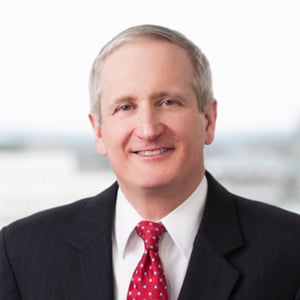
Judge, U.S. Court of International Trade
M. Miller Baker was appointed as a Judge of the United States Court of International Trade on December 18, 2019, by President Donald J. Trump. Judge Baker entered on duty on December 20, 2019.
A native of Terrebonne Parish, Louisiana, Judge Baker grew up in Louisiana and Wyoming and attended Louisiana State University. Judge Baker thereafter earned his J.D. from Tulane University Law School and was admitted to the Louisiana bar in 1984 at age 22. After graduating from Tulane, he served as a law clerk to Judge John Malcolm Duhé, Jr., of the United States District Court for the Western District of Louisiana and then for Judge Thomas Gibbs Gee of the United States Court of Appeals for the Fifth Circuit. Following his judicial clerkships, from 1986 until the end of the Reagan Administration on January 20, 1989, Judge Baker served in the Justice Department under Attorneys General Edwin Meese III and Richard Thornburgh, first as an attorney-advisor in the Office of Legal Policy, and later as a special assistant to the Assistant Attorney General for Civil Rights. Judge Baker then entered private practice in Washington, D.C., until 1991. From 1991 to 1993 he served as counsel to Senator Orrin G. Hatch on the staff of the Senate Judiciary Committee.
Following his service on the Judiciary Committee staff, Judge Baker returned to private practice in Washington, D.C., focusing on complex civil litigation involving a wide range of subjects at the law firms of Carr Goodson Warner (1993–2000) and McDermott Will & Emery LLP (2000–2019). At McDermott, Judge Baker co-chaired the firm’s appellate practice group.
When he was in private practice, Judge Baker argued before the Supreme Court, nine of the thirteen federal courts of appeals, and appellate courts in three states and the District of Columbia. In 2009, The American Lawyer named Judge Baker as “Litigator of the Week” for one of his Supreme Court wins. In addition to his appellate practice, Judge Baker litigated in state and federal trial courts in seventeen states and the District of Columbia.
From 1986 to 1995, Judge Baker served as a naval reserve intelligence officer and received an honorable discharge. His duties included serving with an anti-terrorist unit, on the battle staff of an admiral commanding a carrier battle group operating in the North Atlantic during a large NATO exercise in the Cold War, and as a watch officer in the Navy Command Center in the Pentagon during the Persian Gulf War.
In the aftermath of 9/11, Judge Baker testified before the House and Senate Judiciary Committees on constitutional and policy issues associated with continuity of government. He also testified before the Continuity of Government Commission, a bipartisan study commission established by the American Enterprise Institute and the Brookings Institution.
Judge Baker and his wife Margaret have five children, two of whom are active duty military officers.
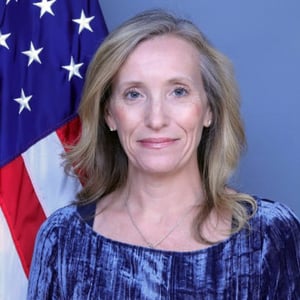
Adjunct Senior Fellow, Indo-Pacific Security Program, Center for New American Security; Senior Advisor, Krach Institute for Tech Diplomacy, Purdue University
Throughout her career in foreign policy, Ambassador Kelley E. Currie has specialized in human rights, political reform, development, and humanitarian issues, with a focus on the Indo-Pacific region. Ambassador Currie is currently an Adjunct Senior Fellow at the Center for a New American Security, a Washington D.C. think tank, and a Senior Advisor to the Krach Institute for Tech Diplomacy at Purdue University. She is a member of the board of directors of the National Endowment for Democray; the board of governors of the East-West Center; and the advisory boards of Spirit of America and the Vandenberg Coalition.
Ambassador Currie was unanimously confirmed in December 2019 as Ambassador-at-Large for Global Women's Issues and the U.S. Representative at the United Nations Commission on the Status of Women and served in that position until January 2021. Prior to that appointment, she served under Ambassador Nikki Haley as the U.S. Representative to the UN Economic and Social Council and Alternative Representative to the UN General Assembly (2017-2018). While awaiting confirmation between ambassadorial appointments, she was appointed interim senior official in the Department of State's Office of Global Criminal Justice. From 2009 until her appointment to the USUN leadership, she was a Senior Fellow with the Project 2049 Institute and the founding Director of the Institute's Burma Transition Initiative. Ambassador Currie also held senior policy positions with the U.S. Congress, international organizatons, and non-governmental organizations.
Ambassador Currie received a Juris Doctor from Georgetown University Law Center with a focus on International Human Rights Law, and an undergraduate degree cum laude in Political Science from the University of Georgia's School of Public and International Affairs.
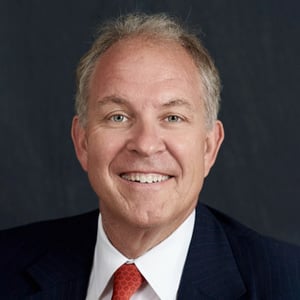
Partner, Zeughauser Group
Alex Dimitrief is a C-suite leader who has steered various global businesses through complex commercial, legal and organizational challenges. He is presently a Partner at Zeughauser Group, where he advises legal departments and law firms on a broad variety of strategic issue. He serves as a director of Eos Energy Enterprises (NASDAQ) and an Advisory Board member at Ethisphere and Cresset. He previously served as a director of Synchrony Financial (NYSE) and We Company. Alex teaches a new class at Harvard Law School on the “Corporation as a Citizen” and corporate law at New York Law School.
As President & CEO of General Electric’s Global Growth Organization, Alex was responsible for driving GE’s growth in 180+ countries. On Alex’s watch in 2018, GE landed $76 billion in international orders and secured billions in financing for many of GE’s emerging market customers. As GE’s General Counsel from 2015 - 2018, Alex served as the principal executive advisor to GE’s Board and led a global team of 5,000+ responsible for GE’s legal matters, compliance, SEC reporting, government affairs and environmental safety programs. In previous roles at GE, Alex was a leader of the transformation of GE Capital (including the IPO/split-off of Synchrony Financial) and spearheaded complex joint venture negotiations for GE Energy in China and Russia. In announcing Alex’s retirement from GE in January 2019, CEO Larry Culp described Alex as “one of the most respected leaders at GE” who “effectively represented GE before governments, regulators and customers throughout the world and is widely recognized as a compelling champion of integrity, transparency and the rule of law.”
Alex came to GE after 20 years as a trial lawyer at Kirkland & Ellis LLP, where he represented a broad variety of clients in securities, restructuring, intellectual property, product liability, environmental, governance and commercial disputes. Alex earned his B.A. from Yale College and his J.D. from Harvard Law School. He was selected out of law school as the youngest-ever White house Fellow and began his career in the Reagan Administration’s Office of Political and Intergovernmental Affairs
Senior Fellow - Foreign Policy, Global Economy and Development, John L. Thornton China Center, Brookings Institute
David Dollar is a senior fellow in the John L. Thornton China Center at the Brookings Institution and host of the Brookings trade podcast, Dollar&Sense. He is a leading expert on China's economy and U.S.-China economic relations. From 2009 to 2013, Dollar was the U.S. Treasury’s economic and financial emissary to China, based in Beijing, facilitating the macroeconomic and financial policy dialogue between the United States and China. Prior to joining Treasury, Dollar worked 20 years for the World Bank, serving as country director for China and Mongolia, based in Beijing (2004-2009). His other World Bank assignments focused on Asian economies, including South Korea, Vietnam, Cambodia, Thailand, Bangladesh, and India. Dollar also worked in the World Bank’s research department. His publications focus on economic reform in China, globalization, and economic growth. He also taught economics at University of California Los Angeles, during which time he spent a semester in Beijing at the Graduate School of the Chinese Academy of Social Sciences in 1986. He has a doctorate in economics from New York University and a bachelor's in Chinese history and language from Dartmouth College.
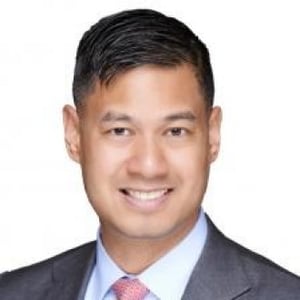
Senior Associate, Freeman Chair in China Studies, Center for Strategic & International Studies
From March 2018 to July 2021, Ivan Kanapathy served on the White House’s National Security Council staff as director for China, Taiwan, and Mongolia and deputy senior director for Asian affairs. In this capacity, he staffed and advised the president and national security advisor and led U.S. government interagency policy development and implementation on relations and engagement with China and Taiwan—including shepherding the most comprehensive and significant U.S. policy shift toward the People’s Republic of China in four decades. From 2014 to 2017, Ivan worked at the American Institute in Taiwan, representing U.S. interests and advising on military and security issues in Taipei. Earlier in his career, Ivan spent a year studying in Beijing and traveling throughout China, Taiwan, and Southeast Asia as a U.S. Marine Corps foreign area study fellow; he later led the development and implementation of the service’s global security cooperation strategy and policies at the Pentagon. As a naval flight officer, Ivan accumulated 2,500 flight hours, served three years as a F/A-18 weapons officer and tactics instructor at the U.S Navy Fighter Weapons School (better known as TOPGUN), and deployed to the Middle East and Western Pacific five times, earning several combat awards and decorations. He holds a MA (with distinction) in East Asia security studies from the Naval Postgraduate School, a BS in physics and economics from Carnegie Mellon University, and an AA and diploma (with highest honors) in Chinese – Mandarin from the Defense Language Institute.
Founding Partner, Boyden Gray & Associates
Ambassador C. Boyden Gray is the founding partner of Boyden Gray & Associates, a law and strategy firm in Washington, D.C., focused on constitutional and regulatory issues.
Mr. Gray worked in the White House for twelve years, first as counsel to the Vice President during the Reagan administration and then as White House Counsel to President George H.W. Bush. In the Reagan administration, he was Counsel to the Presidential Task Force on Regulatory Relief, for which he wrote the original Executive Order 12291 requiring cost-benefit analysis and White House review of regulations (later renumbered as current EO 12866). In the George H.W. Bush Administration, Mr. Gray was in charge of judicial selection and was also instrumental in the enactment of the Clean Air Act Amendments of 1990, the Energy Policy Act of 1992, and a cap-and-trade system for acid rain emissions. In 1993, he received the Presidential Citizens Medal. Under President George W. Bush, Mr. Gray was U.S. Ambassador to the European Union and U.S. Special Envoy to Europe for Eurasian Energy.
Mr. Gray practiced law for 25 years at the law firm of Wilmer, Cutler & Pickering and was chairman of the Administrative Law and Regulatory Practice Section of the American Bar Association from 2000 to 2002. Early in his career, Mr. Gray helped to develop the Business Roundtable and served as its first counsel. He is an adjunct professor at Antonin Scalia Law School and a former adjunct professor at NYU Law School (teaching energy and environmental law). Mr. Gray is on the Board of Directors of the Atlantic Council, the Federalist Society, Reason Foundation, and the Trust for the National Mall.
Mr. Gray earned his A.B. magna cum laude from Harvard, where he was an editor of the Crimson, and his J.D. with high honors from the University of North Carolina at Chapel Hill, where he was editor-in-chief of the Law Review. Mr. Gray served in the United States Marine Corps, and after law school, he clerked for Earl Warren, Chief Justice of the United States Supreme Court.
Judge, United States Court of Appeals, District of Columbia Circuit
Judge Katsas was appointed to the D.C. Circuit in December 2017. He graduated from Princeton University and Harvard Law School, where he was an executive editor on the Harvard Law Review. Between 1989 and 1992, he served as a law clerk to Judge Edward Becker on the Third Circuit, to then-Judge Clarence Thomas on the D.C. Circuit, and to Justice Thomas on the Supreme Court. Between 1992 and 2001, he was an associate and then partner in the Washington office of Jones Day, where he specialized in appellate and complex civil litigation. Between 2001 and 2009, he served in many senior positions in the Department of Justice, including as Assistant Attorney General for the Civil Division and as Acting Associate Attorney General. In 2009, he returned to Jones Day. From January to December 2017, he served as Deputy Assistant to the President and Deputy Counsel to the President.
Before joining the bench, Judge Katsas argued more than 75 appeals, including three cases in the Supreme Court, 13 cases in the D.C. Circuit, and cases in every other federal court of appeals. By appointment of the Chief Justice, he served on the Advisory Committee on Appellate Rules from 2013 to 2017. In 2016, he was elected to membership in the American Academy of Appellate Lawyers.
John S. Battle Professor of Law, University of Virginia School of Law
Julia D. Mahoney teaches courses in property, government finance, constitutional law and nonprofit organizations. A graduate of Yale Law School, she joined the University of Virginia faculty as an associate professor in 1999 and is now John S. Battle Professor of Law. She has also taught at the University of Southern California Law School and the University of Chicago Law School, and before entering the legal academy, practiced law at the New York firm Wachtell, Lipton, Rosen & Katz. Her scholarly articles include works on land preservation, eminent domain, health care reform and property rights in human biological materials.
Associate Professor of Legal Studies & Business Ethics; Co-Director, Wharton Initiative on Financial Policy and Regulation, The Wharton School, University of Pennsylvania
Christina Parajon Skinner is an expert on financial regulation. Her research focuses on central banking, the debt markets, separation of powers, corporate governance, and law and macroeconomics. Professor Skinner’s work is international and comparative in scope, drawing on her experience as an academic and central bank lawyer in the United Kingdom. Her research has been published or is forthcoming in the Columbia Law Review, the Duke Law Journal, the Vanderbilt Law Review, and the Georgetown Law Journal, among other leading academic journals. Professor Skinner has also contributed to financial regulatory policy working groups, including those convened by the Federal Reserve Bank of New York, the Financial Stability Board, and the U.K. Banking Standards Board.
Prior to joining the faculty at Wharton, Professor Skinner served as legal counsel at the Bank of England, in the Financial Stability Division of the Bank’s Legal Directorate. Her work there focused principally on matters of bank resolution, financial market infrastructure, and macroprudential policy. Previously, Professor Skinner was an Academic Visitor at the University of Oxford, Faculty of Law and a Visiting Fellow at the London School of Economics, Law Department. From 2014-2016, she was a post-doctoral fellow and lecturer in Law at Columbia Law School.
Professor Skinner received her J.D. from Yale Law School, and an A.B. from the School of Public and International Affairs at Princeton University, with a concentration in international economics. She received certificates of proficiency in European Politics and Society, and Spanish Language and Culture.
She is married with five children.
Director of Research, American Economic Liberties Project
Matt Stoller is a public intellectual who writes about the American anti-monopoly
tradition. He is the author of the Simon and Schuster book Goliath: The Hundred Year
War Between Monopoly Power and Democracy. Stoller is the Director of Research at
the American Economic Liberties Project. He publishes an email newsletter called BIG.
Stoller is a former policy advisor to the Senate Budget Committee, and worked in the House of Representatives on the Dodd–Frank Wall Street Reform Act.
He has lectured on competition policy and media at Columbia University, Harvard Law, Duke Law, Bertelsmann Foundation, Vrije Universiteit Brussel, West Point and the National Communications Commission of Taiwan. His writing has appeared in the Washington Post, the New York Times, Fast Company, Foreign Policy, the Guardian, Vice, The American Conservative, and the Baffler.
He has also produced for MSNBC and starred in a short-lived television show on FX called Brand X with Russell Brand.
Founding Partner, Boyden Gray & Associates
Ambassador C. Boyden Gray is the founding partner of Boyden Gray & Associates, a law and strategy firm in Washington, D.C., focused on constitutional and regulatory issues.
Mr. Gray worked in the White House for twelve years, first as counsel to the Vice President during the Reagan administration and then as White House Counsel to President George H.W. Bush. In the Reagan administration, he was Counsel to the Presidential Task Force on Regulatory Relief, for which he wrote the original Executive Order 12291 requiring cost-benefit analysis and White House review of regulations (later renumbered as current EO 12866). In the George H.W. Bush Administration, Mr. Gray was in charge of judicial selection and was also instrumental in the enactment of the Clean Air Act Amendments of 1990, the Energy Policy Act of 1992, and a cap-and-trade system for acid rain emissions. In 1993, he received the Presidential Citizens Medal. Under President George W. Bush, Mr. Gray was U.S. Ambassador to the European Union and U.S. Special Envoy to Europe for Eurasian Energy.
Mr. Gray practiced law for 25 years at the law firm of Wilmer, Cutler & Pickering and was chairman of the Administrative Law and Regulatory Practice Section of the American Bar Association from 2000 to 2002. Early in his career, Mr. Gray helped to develop the Business Roundtable and served as its first counsel. He is an adjunct professor at Antonin Scalia Law School and a former adjunct professor at NYU Law School (teaching energy and environmental law). Mr. Gray is on the Board of Directors of the Atlantic Council, the Federalist Society, Reason Foundation, and the Trust for the National Mall.
Mr. Gray earned his A.B. magna cum laude from Harvard, where he was an editor of the Crimson, and his J.D. with high honors from the University of North Carolina at Chapel Hill, where he was editor-in-chief of the Law Review. Mr. Gray served in the United States Marine Corps, and after law school, he clerked for Earl Warren, Chief Justice of the United States Supreme Court.
Judge, United States Court of Appeals, District of Columbia Circuit
Judge Katsas was appointed to the D.C. Circuit in December 2017. He graduated from Princeton University and Harvard Law School, where he was an executive editor on the Harvard Law Review. Between 1989 and 1992, he served as a law clerk to Judge Edward Becker on the Third Circuit, to then-Judge Clarence Thomas on the D.C. Circuit, and to Justice Thomas on the Supreme Court. Between 1992 and 2001, he was an associate and then partner in the Washington office of Jones Day, where he specialized in appellate and complex civil litigation. Between 2001 and 2009, he served in many senior positions in the Department of Justice, including as Assistant Attorney General for the Civil Division and as Acting Associate Attorney General. In 2009, he returned to Jones Day. From January to December 2017, he served as Deputy Assistant to the President and Deputy Counsel to the President.
Before joining the bench, Judge Katsas argued more than 75 appeals, including three cases in the Supreme Court, 13 cases in the D.C. Circuit, and cases in every other federal court of appeals. By appointment of the Chief Justice, he served on the Advisory Committee on Appellate Rules from 2013 to 2017. In 2016, he was elected to membership in the American Academy of Appellate Lawyers.
John S. Battle Professor of Law, University of Virginia School of Law
Julia D. Mahoney teaches courses in property, government finance, constitutional law and nonprofit organizations. A graduate of Yale Law School, she joined the University of Virginia faculty as an associate professor in 1999 and is now John S. Battle Professor of Law. She has also taught at the University of Southern California Law School and the University of Chicago Law School, and before entering the legal academy, practiced law at the New York firm Wachtell, Lipton, Rosen & Katz. Her scholarly articles include works on land preservation, eminent domain, health care reform and property rights in human biological materials.
Associate Professor of Legal Studies & Business Ethics; Co-Director, Wharton Initiative on Financial Policy and Regulation, The Wharton School, University of Pennsylvania
Christina Parajon Skinner is an expert on financial regulation. Her research focuses on central banking, the debt markets, separation of powers, corporate governance, and law and macroeconomics. Professor Skinner’s work is international and comparative in scope, drawing on her experience as an academic and central bank lawyer in the United Kingdom. Her research has been published or is forthcoming in the Columbia Law Review, the Duke Law Journal, the Vanderbilt Law Review, and the Georgetown Law Journal, among other leading academic journals. Professor Skinner has also contributed to financial regulatory policy working groups, including those convened by the Federal Reserve Bank of New York, the Financial Stability Board, and the U.K. Banking Standards Board.
Prior to joining the faculty at Wharton, Professor Skinner served as legal counsel at the Bank of England, in the Financial Stability Division of the Bank’s Legal Directorate. Her work there focused principally on matters of bank resolution, financial market infrastructure, and macroprudential policy. Previously, Professor Skinner was an Academic Visitor at the University of Oxford, Faculty of Law and a Visiting Fellow at the London School of Economics, Law Department. From 2014-2016, she was a post-doctoral fellow and lecturer in Law at Columbia Law School.
Professor Skinner received her J.D. from Yale Law School, and an A.B. from the School of Public and International Affairs at Princeton University, with a concentration in international economics. She received certificates of proficiency in European Politics and Society, and Spanish Language and Culture.
She is married with five children.
Director of Research, American Economic Liberties Project
Matt Stoller is a public intellectual who writes about the American anti-monopoly
tradition. He is the author of the Simon and Schuster book Goliath: The Hundred Year
War Between Monopoly Power and Democracy. Stoller is the Director of Research at
the American Economic Liberties Project. He publishes an email newsletter called BIG.
Stoller is a former policy advisor to the Senate Budget Committee, and worked in the House of Representatives on the Dodd–Frank Wall Street Reform Act.
He has lectured on competition policy and media at Columbia University, Harvard Law, Duke Law, Bertelsmann Foundation, Vrije Universiteit Brussel, West Point and the National Communications Commission of Taiwan. His writing has appeared in the Washington Post, the New York Times, Fast Company, Foreign Policy, the Guardian, Vice, The American Conservative, and the Baffler.
He has also produced for MSNBC and starred in a short-lived television show on FX called Brand X with Russell Brand.
Judge, U.S. Court of International Trade
M. Miller Baker was appointed as a Judge of the United States Court of International Trade on December 18, 2019, by President Donald J. Trump. Judge Baker entered on duty on December 20, 2019.
A native of Terrebonne Parish, Louisiana, Judge Baker grew up in Louisiana and Wyoming and attended Louisiana State University. Judge Baker thereafter earned his J.D. from Tulane University Law School and was admitted to the Louisiana bar in 1984 at age 22. After graduating from Tulane, he served as a law clerk to Judge John Malcolm Duhé, Jr., of the United States District Court for the Western District of Louisiana and then for Judge Thomas Gibbs Gee of the United States Court of Appeals for the Fifth Circuit. Following his judicial clerkships, from 1986 until the end of the Reagan Administration on January 20, 1989, Judge Baker served in the Justice Department under Attorneys General Edwin Meese III and Richard Thornburgh, first as an attorney-advisor in the Office of Legal Policy, and later as a special assistant to the Assistant Attorney General for Civil Rights. Judge Baker then entered private practice in Washington, D.C., until 1991. From 1991 to 1993 he served as counsel to Senator Orrin G. Hatch on the staff of the Senate Judiciary Committee.
Following his service on the Judiciary Committee staff, Judge Baker returned to private practice in Washington, D.C., focusing on complex civil litigation involving a wide range of subjects at the law firms of Carr Goodson Warner (1993–2000) and McDermott Will & Emery LLP (2000–2019). At McDermott, Judge Baker co-chaired the firm’s appellate practice group.
When he was in private practice, Judge Baker argued before the Supreme Court, nine of the thirteen federal courts of appeals, and appellate courts in three states and the District of Columbia. In 2009, The American Lawyer named Judge Baker as “Litigator of the Week” for one of his Supreme Court wins. In addition to his appellate practice, Judge Baker litigated in state and federal trial courts in seventeen states and the District of Columbia.
From 1986 to 1995, Judge Baker served as a naval reserve intelligence officer and received an honorable discharge. His duties included serving with an anti-terrorist unit, on the battle staff of an admiral commanding a carrier battle group operating in the North Atlantic during a large NATO exercise in the Cold War, and as a watch officer in the Navy Command Center in the Pentagon during the Persian Gulf War.
In the aftermath of 9/11, Judge Baker testified before the House and Senate Judiciary Committees on constitutional and policy issues associated with continuity of government. He also testified before the Continuity of Government Commission, a bipartisan study commission established by the American Enterprise Institute and the Brookings Institution.
Judge Baker and his wife Margaret have five children, two of whom are active duty military officers.
Adjunct Senior Fellow, Indo-Pacific Security Program, Center for New American Security; Senior Advisor, Krach Institute for Tech Diplomacy, Purdue University
Throughout her career in foreign policy, Ambassador Kelley E. Currie has specialized in human rights, political reform, development, and humanitarian issues, with a focus on the Indo-Pacific region. Ambassador Currie is currently an Adjunct Senior Fellow at the Center for a New American Security, a Washington D.C. think tank, and a Senior Advisor to the Krach Institute for Tech Diplomacy at Purdue University. She is a member of the board of directors of the National Endowment for Democray; the board of governors of the East-West Center; and the advisory boards of Spirit of America and the Vandenberg Coalition.
Ambassador Currie was unanimously confirmed in December 2019 as Ambassador-at-Large for Global Women's Issues and the U.S. Representative at the United Nations Commission on the Status of Women and served in that position until January 2021. Prior to that appointment, she served under Ambassador Nikki Haley as the U.S. Representative to the UN Economic and Social Council and Alternative Representative to the UN General Assembly (2017-2018). While awaiting confirmation between ambassadorial appointments, she was appointed interim senior official in the Department of State's Office of Global Criminal Justice. From 2009 until her appointment to the USUN leadership, she was a Senior Fellow with the Project 2049 Institute and the founding Director of the Institute's Burma Transition Initiative. Ambassador Currie also held senior policy positions with the U.S. Congress, international organizatons, and non-governmental organizations.
Ambassador Currie received a Juris Doctor from Georgetown University Law Center with a focus on International Human Rights Law, and an undergraduate degree cum laude in Political Science from the University of Georgia's School of Public and International Affairs.
Partner, Zeughauser Group
Alex Dimitrief is a C-suite leader who has steered various global businesses through complex commercial, legal and organizational challenges. He is presently a Partner at Zeughauser Group, where he advises legal departments and law firms on a broad variety of strategic issue. He serves as a director of Eos Energy Enterprises (NASDAQ) and an Advisory Board member at Ethisphere and Cresset. He previously served as a director of Synchrony Financial (NYSE) and We Company. Alex teaches a new class at Harvard Law School on the “Corporation as a Citizen” and corporate law at New York Law School.
As President & CEO of General Electric’s Global Growth Organization, Alex was responsible for driving GE’s growth in 180+ countries. On Alex’s watch in 2018, GE landed $76 billion in international orders and secured billions in financing for many of GE’s emerging market customers. As GE’s General Counsel from 2015 - 2018, Alex served as the principal executive advisor to GE’s Board and led a global team of 5,000+ responsible for GE’s legal matters, compliance, SEC reporting, government affairs and environmental safety programs. In previous roles at GE, Alex was a leader of the transformation of GE Capital (including the IPO/split-off of Synchrony Financial) and spearheaded complex joint venture negotiations for GE Energy in China and Russia. In announcing Alex’s retirement from GE in January 2019, CEO Larry Culp described Alex as “one of the most respected leaders at GE” who “effectively represented GE before governments, regulators and customers throughout the world and is widely recognized as a compelling champion of integrity, transparency and the rule of law.”
Alex came to GE after 20 years as a trial lawyer at Kirkland & Ellis LLP, where he represented a broad variety of clients in securities, restructuring, intellectual property, product liability, environmental, governance and commercial disputes. Alex earned his B.A. from Yale College and his J.D. from Harvard Law School. He was selected out of law school as the youngest-ever White house Fellow and began his career in the Reagan Administration’s Office of Political and Intergovernmental Affairs
Senior Fellow - Foreign Policy, Global Economy and Development, John L. Thornton China Center, Brookings Institute
David Dollar is a senior fellow in the John L. Thornton China Center at the Brookings Institution and host of the Brookings trade podcast, Dollar&Sense. He is a leading expert on China's economy and U.S.-China economic relations. From 2009 to 2013, Dollar was the U.S. Treasury’s economic and financial emissary to China, based in Beijing, facilitating the macroeconomic and financial policy dialogue between the United States and China. Prior to joining Treasury, Dollar worked 20 years for the World Bank, serving as country director for China and Mongolia, based in Beijing (2004-2009). His other World Bank assignments focused on Asian economies, including South Korea, Vietnam, Cambodia, Thailand, Bangladesh, and India. Dollar also worked in the World Bank’s research department. His publications focus on economic reform in China, globalization, and economic growth. He also taught economics at University of California Los Angeles, during which time he spent a semester in Beijing at the Graduate School of the Chinese Academy of Social Sciences in 1986. He has a doctorate in economics from New York University and a bachelor's in Chinese history and language from Dartmouth College.
Senior Associate, Freeman Chair in China Studies, Center for Strategic & International Studies
From March 2018 to July 2021, Ivan Kanapathy served on the White House’s National Security Council staff as director for China, Taiwan, and Mongolia and deputy senior director for Asian affairs. In this capacity, he staffed and advised the president and national security advisor and led U.S. government interagency policy development and implementation on relations and engagement with China and Taiwan—including shepherding the most comprehensive and significant U.S. policy shift toward the People’s Republic of China in four decades. From 2014 to 2017, Ivan worked at the American Institute in Taiwan, representing U.S. interests and advising on military and security issues in Taipei. Earlier in his career, Ivan spent a year studying in Beijing and traveling throughout China, Taiwan, and Southeast Asia as a U.S. Marine Corps foreign area study fellow; he later led the development and implementation of the service’s global security cooperation strategy and policies at the Pentagon. As a naval flight officer, Ivan accumulated 2,500 flight hours, served three years as a F/A-18 weapons officer and tactics instructor at the U.S Navy Fighter Weapons School (better known as TOPGUN), and deployed to the Middle East and Western Pacific five times, earning several combat awards and decorations. He holds a MA (with distinction) in East Asia security studies from the Naval Postgraduate School, a BS in physics and economics from Carnegie Mellon University, and an AA and diploma (with highest honors) in Chinese – Mandarin from the Defense Language Institute.

Breakout Sessions
Chicago, ILTopics
The Biden Administration’s Proposed Charter School Rules
Since 1994, federal grants offered to state education agencies and other qualified applicants through the...
Ten Years On: The America Invents Act and the role of the Patent Trial and Appeal Board in resolving patent disputes
Joseph Matal, Paul Brian Taylor, Bob Goodlatte
On September 16, 2011, President Obama signed the American Invents Act (AIA) into law. The...
Ten Years On: The America Invents Act and the role of the Patent Trial and Appeal Board in resolving patent disputes
Joseph Matal, Paul Brian Taylor, Bob Goodlatte
On September 16, 2011, President Obama signed the American Invents Act (AIA) into law. The...
Freedom of Thought Dinner & Panel
Public and Private Regulation: What's Driving ESG?
Washington, DCPublic and Private Regulation: What's Driving ESG?
C. Boyden Gray, Gregory G. Katsas, Julia D. Mahoney, Christina P. Skinner, Matt Stoller
We recognize the risks of agency overreach when rulemaking seeks to impose ESG considerations on...
Public and Private Regulation: What's Driving ESG?
C. Boyden Gray, Gregory G. Katsas, Julia D. Mahoney, Christina P. Skinner, Matt Stoller
We recognize the risks of agency overreach when rulemaking seeks to impose ESG considerations on...
Public and Private Regulation: What's Driving ESG?
A Dinner at the Mayflower Sponsored by the Freedom of Thought Project
Washington, DCBreakout Panel: American Investment in China
M. Miller Baker, Kelley Currie, Alex Dimitrief, David Dollar, Ivan Kanapathy
For many years, the “Washington consensus” was that investing in China—either directly by contracting for...
Breakout Panel: American Investment in China
Tenth Annual Executive Branch Review
Washington, DC