

General Counsel, The Center for Individual Rights
Michael E. Rosman is CIR’s General Counsel. He graduated summa cum laude from the University of Rochester in 1981, majoring in economics and political science. He received his J.D. in 1984 from Yale Law School. Mr. Rosman worked as an associate at Rosenman & Colin in New York City from 1984-93.
Mr. Rosman joined CIR in March 1994. Mr. Rosman is the author of several articles, including: “Ambiguity and the First Amendment: Some Thoughts On All-White Advertising,” 61 Tenn. L. Rev. 289 (1993); and “Standing Alone: Standing Under The Fair Housing Act,” 60 Mo. L. Rev. 547 (1995), “Thoughts on Bakke and Its Effect on Race- Conscious Decision-Making,” 2002 U. Chi. Legal F. 45 Book Review of Kent Greenawalt’s Fighting Words, 13 Constitutional Commentary 317 (1996)
Mr. Rosman has litigated throughout the federal court system, and has argued many times in the federal courts of appeals. He also successfully argued on behalf of CIR client Tony Morrison in the United States Supreme Court in the landmark case of United States v. Morrison, 529 U.S. 598 (2000).
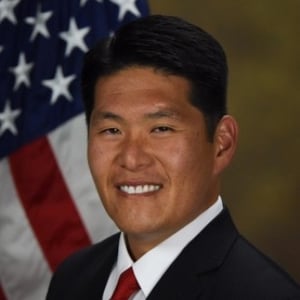
United States Attorney for the District of Maryland, U.S. Department of Justice
Robert K. Hur is the 48th United States Attorney for the District of Maryland. As U.S. Attorney, he is the chief federal law enforcement officer in the District of Maryland. Mr. Hur oversees the investigation and litigation of all criminal and civil cases brought on behalf of the United States in the District of Maryland. He supervises an office of approximately 88 Assistant U.S. Attorneys and 72 support personnel, who handle a high volume of matters including domestic and international terrorism, narcotics trafficking, organized crime, gang violence, public corruption, cybercrime, financial and healthcare fraud, and civil rights violations. He also serves as a member of the Attorney General’s Advisory Committee of United States Attorneys (“AGAC”), which provides advice and counsel to the Attorney General on matters of policy, procedure, and management impacting the Offices of the United States Attorneys.
Before taking office as U.S. Attorney on April 9, 2018, Mr. Hur served as Principal Associate Deputy Attorney General with the Department of Justice in Washington, DC. In that position, Mr. Hur was a member of the Department’s senior leadership team and the top aide to Deputy Attorney General Rod J. Rosenstein, assisting him with oversight of all components of the Department.
Mr. Hur served as an Assistant U.S. Attorney in the District of Maryland from 2007 to 2014, where he prosecuted gang violence, firearms offenses, and narcotics trafficking, as well as white-collar offenses including financial institutions fraud, public corruption, mortgage fraud, tax offenses, computer network intrusions, and intellectual property theft. He received the Attorney General’s Distinguished Service Award for superior performance and excellence as a lawyer.
Before joining the U.S. Attorney’s Office, Mr. Hur served as Special Assistant and later Counsel to the Assistant Attorney General in charge of the Criminal Division, where he handled counterterrorism, corporate fraud, and appellate matters.
In addition to his service with the Department of Justice, Mr. Hur was a litigation partner with a major law firm in Washington, D.C., where he represented companies and individuals facing criminal and regulatory enforcement actions before the Department of Justice, the Securities and Exchange Commission, and other federal agencies, as well as related civil litigation.
Mr. Hur began his legal career as a law clerk for the late William H. Rehnquist, Chief Justice of the United States, and Judge Alex Kozinski of the U.S. Court of Appeals for the Ninth Circuit.
Mr. Hur received his A.B. degree, magna cum laude with highest honors, from Harvard College. He received his J.D. from Stanford Law School, where he served as Executive Editor of the Stanford Law Review.
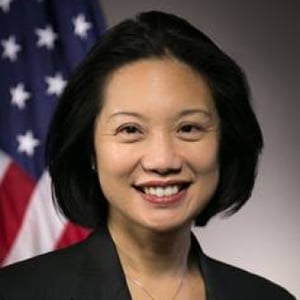
U.S. Attorney for the District of Columbia, U.S. Department of Justice
Jessie K. Liu was confirmed by the U.S. Senate on September 14, 2017, as the United States Attorney for the District of Columbia, and took office on September 24, 2017.
Ms. Liu was an Assistant United States Attorney in the District of Columbia from 2002 to 2006, prosecuting violent crime, drug trafficking, firearms, and fraud offenses in both the Superior Court and Criminal Divisions, and briefing and arguing appeals in the D.C. Court of Appeals and the U.S. District Court for the D.C. Circuit. She subsequently served in several senior positions in the U.S. Department of Justice, including as Deputy Assistant Attorney General in the Civil Rights Division, Counsel to the Deputy Attorney General for national security matters, and Deputy Chief of Staff for the National Security Division. Most recently, she was Deputy General Counsel at the U.S. Department of the Treasury, advising the Secretary of the Treasury and other senior Treasury officials on national security, law enforcement, and intelligence issues.
In addition, Ms. Liu has been a partner at the law firms of Morrison & Foerster LLP and Jenner & Block LLP, where her practice focused on litigation, investigations, and compliance.
Ms. Liu clerked for then-Chief Judge Carolyn Dineen King of the U.S. Court of Appeals for the Fifth Circuit in Houston, Texas. She received her A.B., summa cum laude, from Harvard University in 1995 and her J.D. from Yale Law School in 1998.

Executive Vice President, The Federalist Society
Dean Reuter is Executive Vice President at the Federalist Society for Law and Public Policy Studies. He has served in two federal government agency Offices of the Inspector General, as Counsel to the Inspector General and Deputy Inspector General, responsible for policing the use of federal funds granted and contracted through those agencies. As such, he helped conduct and oversee criminal investigations across the country. He is the principal author of the non-fiction book, The Hidden Nazi: The Untold Story of America's Deal with the Devil, and editor of Liberty’s Nemesis: The Unchecked Expansion of the State and Confronting Terror: 9/11 and the Future of American National Security. He was appointed by the President and served as Vice-Chairman of the Board of Directors of the Corporation for National and Community Service, and recently served as an appointee on the U.S. Commission on Presidential Scholars. He is a graduate of Hood College (BA with Honors) and the University of Maryland School of Law.
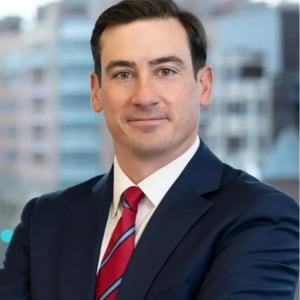
Partner, Vinson & Elkins, and former U.S. Attorney for the Eastern District of Virginia
Zachary (“Zach”) Terwilliger, the former Senate confirmed United States Attorney for the Eastern District of Virginia, has extensive experience in all manner of federal investigations and trials. Those frontline skills combine with his mastery of involved management roles overseeing operational programs, setting policy parameters, and managing teams to accomplish strategic objectives. He gained this experience over a decades-long career in public service where he advanced from an office intern to serve as the presidentially appointed and Senate confirmed United States Attorney. He rounds out his Washington experience by having served as Associate Deputy Attorney General and Chief of staff to the Deputy Attorney General, whose office manages the entire Department of Justice and its various agencies, and as counsel to the Chair of the Senate Judiciary Committee.
In a testament to his professionalism, he was the sole and unanimous recommendation of Virginia’s two Democratic Senators to serve as U.S. Attorney. Following this recommendation, the President’s nomination, and confirmation by the entire U.S. Senate, Zach was sworn in as the then youngest U.S. Attorney in the country.
Zach’s knowledge of how the Justice Department and federal enforcement agencies function in both civil and criminal matters, particularly in regards to discretionary decision making, provides him with unique insights necessary to effectively assist companies and individuals facing federal enforcement matters, including allegations of domestic and international criminal and civil violations. Zach is skilled in navigating internal and government investigations, allegations of bribery under the Foreign Corrupt Practices Act, complex criminal grand jury investigations, criminal antitrust matters, and Congressional inquiries and select committee investigations, among other complex white collar issues.
As U.S. Attorney for the Eastern District of Virginia, Zach supervised a team of over 300 lawyers and support staff. He also managed multiple key corporate resolutions, and significantly enhanced the District’s white-collar footprint through collaboration with DOJ’s Fraud Section, as well as with other enforcement entities like the newly created Special Inspector General for Pandemic Recovery and the Procurement Collusion Strike Force. He is also a veteran litigator with years of investigative and in-court experience in trials, pre-trial proceedings, and appeals.
United States Attorney for the District of Maryland, U.S. Department of Justice
Robert K. Hur is the 48th United States Attorney for the District of Maryland. As U.S. Attorney, he is the chief federal law enforcement officer in the District of Maryland. Mr. Hur oversees the investigation and litigation of all criminal and civil cases brought on behalf of the United States in the District of Maryland. He supervises an office of approximately 88 Assistant U.S. Attorneys and 72 support personnel, who handle a high volume of matters including domestic and international terrorism, narcotics trafficking, organized crime, gang violence, public corruption, cybercrime, financial and healthcare fraud, and civil rights violations. He also serves as a member of the Attorney General’s Advisory Committee of United States Attorneys (“AGAC”), which provides advice and counsel to the Attorney General on matters of policy, procedure, and management impacting the Offices of the United States Attorneys.
Before taking office as U.S. Attorney on April 9, 2018, Mr. Hur served as Principal Associate Deputy Attorney General with the Department of Justice in Washington, DC. In that position, Mr. Hur was a member of the Department’s senior leadership team and the top aide to Deputy Attorney General Rod J. Rosenstein, assisting him with oversight of all components of the Department.
Mr. Hur served as an Assistant U.S. Attorney in the District of Maryland from 2007 to 2014, where he prosecuted gang violence, firearms offenses, and narcotics trafficking, as well as white-collar offenses including financial institutions fraud, public corruption, mortgage fraud, tax offenses, computer network intrusions, and intellectual property theft. He received the Attorney General’s Distinguished Service Award for superior performance and excellence as a lawyer.
Before joining the U.S. Attorney’s Office, Mr. Hur served as Special Assistant and later Counsel to the Assistant Attorney General in charge of the Criminal Division, where he handled counterterrorism, corporate fraud, and appellate matters.
In addition to his service with the Department of Justice, Mr. Hur was a litigation partner with a major law firm in Washington, D.C., where he represented companies and individuals facing criminal and regulatory enforcement actions before the Department of Justice, the Securities and Exchange Commission, and other federal agencies, as well as related civil litigation.
Mr. Hur began his legal career as a law clerk for the late William H. Rehnquist, Chief Justice of the United States, and Judge Alex Kozinski of the U.S. Court of Appeals for the Ninth Circuit.
Mr. Hur received his A.B. degree, magna cum laude with highest honors, from Harvard College. He received his J.D. from Stanford Law School, where he served as Executive Editor of the Stanford Law Review.
U.S. Attorney for the District of Columbia, U.S. Department of Justice
Jessie K. Liu was confirmed by the U.S. Senate on September 14, 2017, as the United States Attorney for the District of Columbia, and took office on September 24, 2017.
Ms. Liu was an Assistant United States Attorney in the District of Columbia from 2002 to 2006, prosecuting violent crime, drug trafficking, firearms, and fraud offenses in both the Superior Court and Criminal Divisions, and briefing and arguing appeals in the D.C. Court of Appeals and the U.S. District Court for the D.C. Circuit. She subsequently served in several senior positions in the U.S. Department of Justice, including as Deputy Assistant Attorney General in the Civil Rights Division, Counsel to the Deputy Attorney General for national security matters, and Deputy Chief of Staff for the National Security Division. Most recently, she was Deputy General Counsel at the U.S. Department of the Treasury, advising the Secretary of the Treasury and other senior Treasury officials on national security, law enforcement, and intelligence issues.
In addition, Ms. Liu has been a partner at the law firms of Morrison & Foerster LLP and Jenner & Block LLP, where her practice focused on litigation, investigations, and compliance.
Ms. Liu clerked for then-Chief Judge Carolyn Dineen King of the U.S. Court of Appeals for the Fifth Circuit in Houston, Texas. She received her A.B., summa cum laude, from Harvard University in 1995 and her J.D. from Yale Law School in 1998.
Executive Vice President, The Federalist Society
Dean Reuter is Executive Vice President at the Federalist Society for Law and Public Policy Studies. He has served in two federal government agency Offices of the Inspector General, as Counsel to the Inspector General and Deputy Inspector General, responsible for policing the use of federal funds granted and contracted through those agencies. As such, he helped conduct and oversee criminal investigations across the country. He is the principal author of the non-fiction book, The Hidden Nazi: The Untold Story of America's Deal with the Devil, and editor of Liberty’s Nemesis: The Unchecked Expansion of the State and Confronting Terror: 9/11 and the Future of American National Security. He was appointed by the President and served as Vice-Chairman of the Board of Directors of the Corporation for National and Community Service, and recently served as an appointee on the U.S. Commission on Presidential Scholars. He is a graduate of Hood College (BA with Honors) and the University of Maryland School of Law.
Partner, Vinson & Elkins, and former U.S. Attorney for the Eastern District of Virginia
Zachary (“Zach”) Terwilliger, the former Senate confirmed United States Attorney for the Eastern District of Virginia, has extensive experience in all manner of federal investigations and trials. Those frontline skills combine with his mastery of involved management roles overseeing operational programs, setting policy parameters, and managing teams to accomplish strategic objectives. He gained this experience over a decades-long career in public service where he advanced from an office intern to serve as the presidentially appointed and Senate confirmed United States Attorney. He rounds out his Washington experience by having served as Associate Deputy Attorney General and Chief of staff to the Deputy Attorney General, whose office manages the entire Department of Justice and its various agencies, and as counsel to the Chair of the Senate Judiciary Committee.
In a testament to his professionalism, he was the sole and unanimous recommendation of Virginia’s two Democratic Senators to serve as U.S. Attorney. Following this recommendation, the President’s nomination, and confirmation by the entire U.S. Senate, Zach was sworn in as the then youngest U.S. Attorney in the country.
Zach’s knowledge of how the Justice Department and federal enforcement agencies function in both civil and criminal matters, particularly in regards to discretionary decision making, provides him with unique insights necessary to effectively assist companies and individuals facing federal enforcement matters, including allegations of domestic and international criminal and civil violations. Zach is skilled in navigating internal and government investigations, allegations of bribery under the Foreign Corrupt Practices Act, complex criminal grand jury investigations, criminal antitrust matters, and Congressional inquiries and select committee investigations, among other complex white collar issues.
As U.S. Attorney for the Eastern District of Virginia, Zach supervised a team of over 300 lawyers and support staff. He also managed multiple key corporate resolutions, and significantly enhanced the District’s white-collar footprint through collaboration with DOJ’s Fraud Section, as well as with other enforcement entities like the newly created Special Inspector General for Pandemic Recovery and the Procurement Collusion Strike Force. He is also a veteran litigator with years of investigative and in-court experience in trials, pre-trial proceedings, and appeals.

Former Deputy Attorney General for Virginia
Kennerly Davis has over forty years of experience in corporate management, public service, and the private practice of law. He has held senior executive positions in a Fortune 500 electric and gas company. He has served as Deputy Attorney General for the Commonwealth of Virginia, and as a legislative aide to a U.S. Senator and a U.S. Congressman. He practiced law for 25 years with Hunton Andrews Kurth LLP.
Davis is active in the Federalist Society as a member of the Regulatory Process Working Group of the Regulatory Transparency Project, and as a member of the Execuitve Committee of the Administrative Law and Regulation Practice Group. He is active in the national Alumni Free Speech Alliance, and involved in AFSA-chapter initiatives, including litigation, to publicize and correct the serious legal problems created by university Diversity, Equity, and Inclusion programs and the anonymous bias reporting systems used to enforce those DEI programs.
Davis writes and speaks on a wide variety of topics, including those related to the Founding of America, the natural rights foundation of our Republic, the constitutional rule of law, equal protection and free speech, DEI programs and bias reporting systems, capitalism, regulation and regulatory reform, and economic development. His articles have appeared in The Wall Street Journal, the Washington Examiner, the Richmond Times-Dispatch, The Federalist Society Review, the FedSoc Blog, Real Clear Energy, Townhall, the Daily Caller, reports of the Center for Strategic & International Studies, and other publications. He appears frequently on radio, podcasts, and television.
Davis graduated with honors from Cornell University with an A.B. degree in Government. He earned an M.A. degree from Pembroke College, Oxford, in Philosophy, Politics, and Economics. He was awarded a J.D. degree from Harvard Law School, and an M.B.A. degree from Virginia Commonwealth University.
Davis lives in Richmond, Virginia. He can be contacted by email: j.kendavis@verizon.net, and by phone: (804) 624-8525.
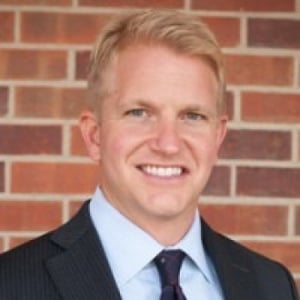
Wall Chair in Corporate Law and Governance and Professor of Law, University of Missouri School of Law
Thom Lambert holds the Wall Family Chair in Corporate Law and Governance at the University of Missouri Law School. He is co-author of a leading antitrust casebook and has published more than two dozen law review articles on antitrust, corporate, and regulatory matters. His most recent book, How to Regulate: A Guide for Policymakers was published by Cambridge University Press in 2017. He is a regular contributor to the law and economics blog, Truth on the Market (www.truthonthemarket.com) and is currently a visiting professor at Washington University Law School.
Professor, University of North Carolina at Wilmington
Mike Adams is a professor at the University of North Carolina at Wilmington (UNCW). He writes a weekly column for The Daily Wire and speaks frequently on First Amendment and pro-life issues. After graduating from Mississippi State University in 1993 with a PhD in Criminology, his research emphasized social psychological causes of crime and delinquency. He won the Faculty Member of the Year Award from the Office of the Dean of Students in 1998 and again in 2000. Later, after his involvement in a free speech controversy in the wake of the 9/11 attack his research emphasis shifted to threats to free speech, due process, and academic integrity in higher education. In 2006, he was denied a promotion full professor and filed suit in federal court alleging that UNCW retaliated against him for his criticism the diversity movement in general as well as his criticism of specific policies within his own university. The retaliation lawsuit set up a legal challenge concerning whether Garcetti v. Ceballos (2006), which denied First Amendment protection to public employees who were commenting about their “official duties,” applied to college professors. In Adams v. UNCW (2011), the 4th Circuit Court of Appeals unanimously ruled in his favor. The ruling set up a federal trial on the issue of retaliation, which he also won before a jury in federal district court in Greenville, North Carolina.

Professor of History, Brooklyn College and the CUNY Graduate Center
KC Johnson is professor of history at Brooklyn College and the CUNY Graduate Center, where he has taught since 1999. He has written 13 books on topics in U.S. political history, U.S. foreign policy, and legal and policy debates surrounding campus due process and civil liberties. His Duke lacrosse case blog, Durham-in-Wonderland, was named ABA Journal’s Best Ethics Blog in 2007; and he continues to blog on higher-ed matters at the blog Minding the Campus.
FIRE

Partner, Baker & Hostetler LLP
Richard Raile is a partner at Baker Hostetler, where he is a member of their Litigation team. He focuses his practice on appeals and major motions. He frequently plays the principal role in drafting briefs for clients and in delivering oral argument, including on dispositive motions, bench trials and appeals. He has represented parties and amici curiae at every level of the judiciary, from trial courts to merits litigation in the U.S. Supreme Court and state supreme courts.
His litigation experience runs the gamut of subject matters, including everything from commercial, civil rights, constitutional, campaign finance, voting rights, labor and bankruptcy law.

Topics
Love Terminal (Government Takings) Deserves its Day in Court
Below are remarks by political commentator George Will from the Federalist Society event on Government...
Is It Time to Revisit the Constitutionality of Unauthorized Practice of Law Rules?
Michael E. Rosman
Note from the Editor: The Federalist Society takes no positions on particular legal and public...
Examining 21st Century Law Enforcement
Robert Hur, Jessie K. Liu, Dean Reuter, G. Zachary Terwilliger
The law enforcement landscape is ever-changing, with modern issues such as the challenges associated with electronically...
Examining 21st Century Law Enforcement
Robert Hur, Jessie K. Liu, Dean Reuter, G. Zachary Terwilliger
The law enforcement landscape is ever-changing, with modern issues such as the challenges associated with electronically...
Can a New Establishment Clause Jurisprudence Succeed in Protecting Religious Minorities Where Lemon Has Failed?
Alexandra M. Lightfoot
Note from the Editor: The Federalist Society takes no positions on particular legal and public...
Topics
The Many Issues Raised by Senator Warren's Wealth Tax
Senator Warren, as a part of her presidential campaign, has proposed that a federal wealth...
Topics
On the Future of the Chevron Doctrine
Joel Nolette is a litigation attorney at Mintz Levin in Boston, and an active member...
Necessary & Proper Episode 23: Improving Regulation - Process vs. Substance
John Kennerly Davis, Thom Lambert
Recorded August 22, this podcast brings together two speakers well-versed in regulation and regulatory reform....
The Student Right to Counsel
Mike S. Adams, KC Johnson, Adam Kissell
Note from the Editor: This article argues that a student right to counsel in quasi-criminal...
Partisan Gerrymandering and Party Rights: Why Gill v. Whitford Undermines All Future Partisan-Gerrymandering Claims
Richard B. Raile
Note from the Editor: This article discusses the Supreme Court’s opinion in Gill v. Whitford...