

Director, Commercial Freedom; Senior Fellow, R Street Institute
C. Jarrett Dieterle researches and writes on regulatory affairs, alcohol policy, occupational licensing and other commercial freedom issues. He also oversees the Institute’s postal, labor and disintermediation policy programs.
Jarrett previously worked as a regulatory attorney at a Washington law firm. In that role, he advised private companies on how to navigate complex regulatory regimes and helped them challenge overreaching regulations. He also practiced appellate advocacy, co-authoring several Supreme Court amicus briefs. He previously clerked for a federal judge on the U.S. Court of Federal Claims, and has worked and written for numerous policy organizations and think tanks such as the Reason Foundation, Manhattan Institute, Mackinac Center, Federalist Society, Institute for Justice, Atlantic Legal Foundation and the Washington Legal Foundation.
Jarrett earned his bachelor’s from the University of Richmond, with a major in political science and minor in economics. He received his juris doctor from Georgetown University Law Center.
Jarrett currently lives in Richmond, Virginia with his wife, Maria, and their Australian shepherd, Pepper.

CEO and Master Distiller, Silverback Distillery
Christine Riggleman is the CEO and Master Distiller of Silverback Distillery. Born and raised in Manassas, Virginia, Christine married her high school sweetheart, Denver, at the age of 19. Shortly after, Denver joined the Air Force and their journey across the United States and far-off lands began. Christine earned a scholarship from Le Cordon Bleu Culinary School in 2000 but due to her husband's military career, she turned down the offer. Christine’s passion for culinary delights never wavered and eventually veered into the world of extraordinary spirits. She became fascinated with distilling on a tour of Ben Nevis Distillery in Scotland in 2012, and shortly after began researching distillation and maturation processes with Denver. In 2014, after a year and a half of strenuous planning, research and construction, Silverback Distillery opened its doors. Although Silverback has only been open since August of 2014, Christine’s spirits have racked up accolades, earning 16 international awards among numerous local and statewide awards. In 2014, she was named one of the top gin distillers in the United States through MSN.com, and in 2017 became the first person inducted into the ABV Network's Bourbon Hall of Fame.

Co-Owner, Silverback Distillery
Denver is co-owner of Silverback Distillery, husband to the indomitable Christine Riggleman and father to an extraordinary trio of daughters. Between splitting his time as a Department of Defense senior consultant and advocating for small business rights in his home state of Virginia, he assists in marketing and business practices for Silverback Distillery- and a touch of distilling. Despite rumors to the contrary, Denver has never been an exotic dancer or movie star. His occupations over the last twenty years include: USAF avionics technician, commissioned USAF Intelligence Officer and co-founder and former CEO of a successful federal contracting company. Denver's other Silverback responsibilities range from authoring pithy social media posts and creating wonderful, esoteric ideas for advertising videos to being the world's preeminent "taste-tester" for all Silverback products. Denver is also an aspiring author and space traveler.
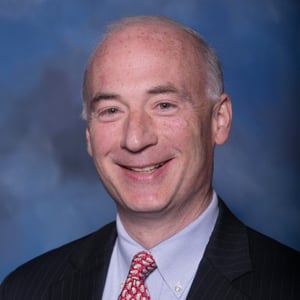
Senior Vice President, Industry Affairs and General Counsel, National Beer Wholesalers Association
Paul Pisano leads the association’s efforts in industry, legal and state governmental affairs and serves as a liaison to state distributor associations and outside groups.
Prior to joining NBWA, he served at the Department of Commerce, most recently as director of congressional affairs at the U.S. Census Bureau. He also spent six years working in senior positions on Capitol Hill.
Pisano holds a B.A. degree from Hampden-Sydney College and earned his J.D. from Catholic University’s Columbus School of Law.
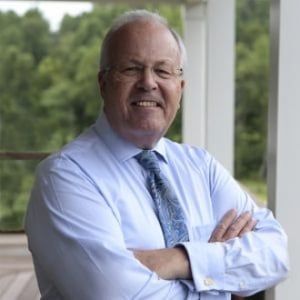
Government Relations, Virginia Distillers Association
Curtis served as the Chief Operating Officer of Virginia ABC for over 20 years. Prior to that Curtis was a Lieutenant for the Virginia State Police for nearly 10 years, and worked as the Commonwealth’s Attorney in Nottoway VA. In his downtime, Curtis enjoys singing in his church choir and spending time with his family.
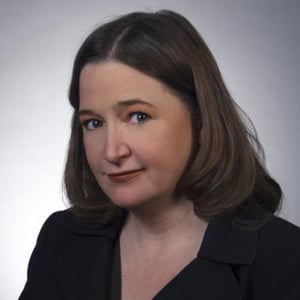
Senior Fellow, Competitive Enterprise Institute
Angela Logomasini is a senior fellow at the Competitive Enterprise Institute. Logomasini specializes in environmental risk, regulation and consumer freedom.
Since joining CEI in 1998, her work has appeared in Forbes, The Huffington Post, New York Post and The Wall Street Journal, among other publications. Logomasini was also the editor of CEI's book "The Environmental Source" (2008). Logomasini has appeared on television programs on CNN, CNBC, C-SPAN, Fox Business, and dozens of radio shows, including programs on NPR, CNN Radio, and Radio America.
Prior to joining CEI, Logomasini served as legislative assistant to U.S. Senator Sam Brownback of Kansas and was also environmental editor for the Research Institute of America.
In addition to her work with CEI, she manages SafeChemicalPolicy.org, is a senior fellow at Independent Women’s Forum, and is a wine educator and real estate investor.
She received her Ph.D. in American Government from The Catholic University of America.

Laurence A. Tisch Professor of Law and Director, Classical Liberal Institute, New York University School of Law; Director, Classical Liberal Institute, Civitas Institute University of Texas at Austin
Richard A. Epstein is the Laurence A. Tisch Professor of Law, at New York University, a senior research fellow at the Civitas Institute at the University of Texas Austin, and a senior Lecturer, the University of Chicago. He received an LL.D., h.c . from the University of Ghent, 2003 , and an LLD h.c . from the University of Siegen in 2018 and the Bradley Prize in 2011. He has been a member of the American Academy of Arts and Sciences since 1985. He has edited both the Journal of Legal Studies (1981-1991) and the Journal of Law and Economics (1991-2001). He is also a founder and director of the Classical Liberal Institute at NYU Law School. His most recent book is The Classical Liberal Constitution: The Uncertain Quest for Limited Government (2014). His other books include Takings: Private Property and the Power of Eminent Domain ( 1985); Bargaining with the State (1993); Simple Rules for a Complex World (1995); Principles for a Free Society: Reconciling Individual Liberty and the Common Good (1998); Skepticism and Freedom: A Modern Theory of Classical Liberalism (2003); Design for Liberty: Private Property, Public Administration and the Rule of Law (2011), and most recently, The Myth of Birthright citizenship—and Beyond (2026). He has taught courses in , administrative law, antitrust, constitutional, contracts, environmental law, land use planning; real property, torts and water law. He has written and spoken extensively on a wide range of topics, and is writes a regular column for Defining Ideas.
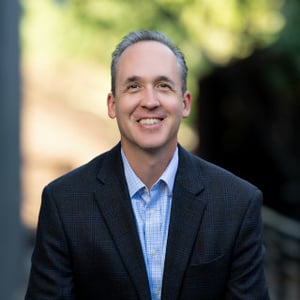
Legal Director, The Center for the Rights of Abused Children
Tim Keller is a lawyer who works to ensure all abused and abandoned children are safe and have access to their constitutionally guaranteed rights.
As senior vice president and legal director at the Center for the Rights of Abused Children, Tim’s public interest legal work seeks to defend the constitutional rights of children to be safe from abuse, to prompt timely placement with permanent parents, and to assure a child’s representation by legal counsel. In addition to constitutional litigation, Tim oversees the lawyers in the Center for the Rights of Abused Children’s one-of-a-kind pro bono Children’s Law Clinic and guides its policy initiatives.
When he and his wife, Lisa, hosted a teenage exchange student from Brazil several years ago, they realized how much they enjoyed helping a child thrive. The two felt called to help more kids. Over the following years, Tim and Lisa would become foster parents. Today, they enjoy offering respite care for children in foster care.
Intensely motivated by his time fostering children who’d been abused and neglected, Tim sees his work to ensure children have a constitutional right to counsel as a matter of life and death. As such, he’s particularly proud that in 2021 the Center for the Rights of Abused Children secured the rights of all children in Arizona’s foster system to be represented by legal counsel.
Before joining the Center for the Rights of Abused Children, Tim worked for nearly 20 years at the Institute for Justice. He served as lead counsel in Arizona Christian School Tuition Organization v. Winn, a U.S. Supreme Court victory that protected Arizona’s pioneering school scholarship program. Tim also led the team that secured a U.S. Supreme Court victory in Espinoza v. Montana Department of Revenue, which prevents states from discriminating against religious families and schools in educational choice programs. He has also litigated economic liberty and property rights cases in state and federal courts.
Tim earned his bachelor’s and law degrees from Arizona State University. He clerked for Robert D. Myers, at the time the presiding judge of the Maricopa County Superior Court, and for Ann A. Scott Timmer on the Arizona Court of Appeals.
Tim and Lisa live in Chandler, Ariz., with their four sons, Daniel, Benjamin, Ethan and Noah, and a miniature schnauzer named Gus who has more than 12,000 Instagram followers. The Kellers have traveled to 49 of the 50 United States, and are always looking for recommendations for new card or board games for family game nights.

Deputy District Attorney, Philadelphia District Attorney's Office
Ronald Eisenberg heads the Law Division of the Philadelphia District Attorney's Office. The 60 lawyers in the division handle appeals, habeas corpus and civil litigation, and legislative matters. Mr. Eisenberg has appeared at all levels of the state and federal court system, and has argued several cases in the United States Supreme Court.
Mr. Eisenberg is a member of the Pennsylvania Supreme Court Investigating Grand Jury Task Force and the Advisory Committee for the Pennsylvania Suggested Standard Criminal Jury Instructions. He has represented his office on the Pennsylvania Advisory Committee on Wrongful Convictions, was an adjunct professor at Temple University School of Law, teaching legal writing and research, and has served on the Pennsylvania Criminal Rules and Appellate Rules Committees. He is a past president and current board member of the Association of Government Attorneys in Capital Litigation, a national organization of capital prosecutors.
Mr. Eisenberg received his bachelor's degree from Haverford College in 1978 and his law degree from the University of Pennsylvania Law School in 1981.
J.D., University of Pennsylvania
B.A., Haverford College
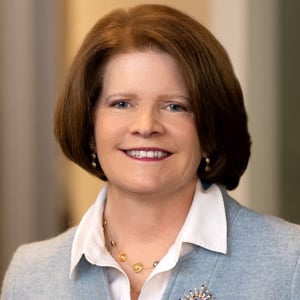
Partner, Antitrust and Competition, Wilson Sonsini Goodrich & Rosati
Maureen Ohlhausen is a partner in the Washington, D.C., office of Wilson Sonsini Goodrich & Rosati, where she advises industry-leading clients on complex antitrust and litigation matters, with a focus on high-profile cases. Sought after for her depth of experience on antitrust and Federal Trade Commission (FTC)-related issues, Maureen is known for her relationships with officials in the U.S. and abroad.
After finishing law school and clerking at the U.S. Court of Appeals for the D.C. Circuit, Maureen joined the FTC in 1997. She held a series of roles at the agency over the next 12 years, rising to the position of Director of the FTC Office of Policy Planning, where she led the agency’s work on e-commerce and headed the FTC’s Internet Access Task Force, which produced an influential report analyzing competition and consumer protection legal issues in the broadband and internet sectors. She then went into private practice at a leading telecommunications law firm, where she headed the FTC practice group.
In 2012, Maureen was confirmed by the Senate as a Commissioner of the FTC and was appointed Acting Chairman in January 2017, a role she held until May 2018. As Acting Chairman, Maureen directed all aspects of the agency’s antitrust work, including merger review, conduct enforcement, and all consumer protection enforcement, with an emphasis on privacy and technology issues. Under her leadership, the FTC won several influential merger challenges in court and reached a number of key digital privacy settlements.
To date, Maureen is the only FTC Commissioner to have received the Robert Pitofsky Lifetime Achievement Award in recognition of her contributions to the FTC.
Following the end of her term at the FTC, and immediately prior to joining Wilson Sonsini, Maureen was chair of the global antitrust and competition practice at Baker Botts, based in that firm’s Washington, D.C., office.
A recognized thought leader, Maureen is a frequent author and speaker, and is often quoted by leading print and broadcast media on antitrust, FTC, and privacy and data security matters. She has published dozens of articles on antitrust, privacy, intellectual property, regulation, FTC litigation, telecommunications, and international law issues in prestigious publications. During her tenure at the FTC and in private practice, she testified more than two dozen times before Congress, including before the Senate Commerce Committee and the House Energy and Commerce Antitrust Sub-Committee. She also testified before the Antitrust Modernization Commission.
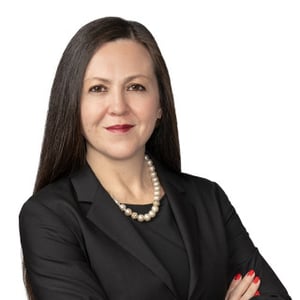
Partner, Axinn, Veltrop & Harkrider LLP
Koren Wong-Ervin is a recognized thought leader on competition issues who has testified before Congress on domestic and international issues in antitrust policy. She has more than eighteen years of experience in government, private practice, and as in-house counsel, including representing defendants and plaintiffs in high-stakes litigations and representing companies in domestic and foreign investigations. While at the Federal Trade Commission (FTC), Koren served as an Attorney Advisor to Commissioner Joshua Wright and Counsel for Intellectual Property & International Antitrust.
The combination of Koren's experience representing defendants—along with her experience at the FTC and as a former plaintiffs class action attorney—gives her insights into the thinking on both sides of cases, including complex multi-district litigations, allowing her to develop both effective offensive and defensive strategies. On top of this, her in-house experience as the Director of Antitrust Litigation & Policy at a major technology company gives her a first-hand understanding of how companies work and unique insight into the needs of clients. Koren also has a deep understanding of economics, as evidenced by the fact that she has trained over 500 foreign judges and enforcers on a variety of economic topics.
Koren’s scholarship has been cited by courts and the Department of Justice. She has authored over sixty articles, including on vertical mergers and restraints, acquisitions of potential competitors, consummated mergers, multisided platforms, the intersection of antitrust and intellectual property, incremental innovations or “product hopping,” optimal penalties, extraterritoriality, methodologies for calculating patent infringement damages, and international due process and convergence. She has spoken at over 200 domestic and international events.
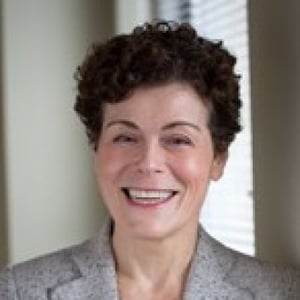
Senior Counsel, Crowell & Moring LLP
Lisa Kimmel is a senior counsel in Crowell & Moring's Antitrust Group. She resides in the firm's Washington, D.C. office. Lisa's practice covers merger and civil nonmerger antitrust investigations and antitrust counseling. Lisa also advocates for clients on competition policy matters before federal and state antitrust agencies, focusing in particular on the technology and digital commerce sectors.
Lisa joined Crowell & Moring in 2015 from the Federal Trade Commission (FTC), where she worked for nearly five years as an attorney advisor on antitrust and competition policy matters for Commissioner and later, Chairwoman, Edith Ramirez. During her time at the FTC, Lisa advised the chairwoman on antitrust enforcement and policy matters across a broad range of sectors, and was her lead advisor on antitrust enforcement and competition policy matters in the technology sector, including matters related to industry standards and the acquisition or assertion of intellectual property rights. Before joining the FTC, Lisa practiced with the antitrust group at an AmLaw 100 firm, where she worked in the firm's San Francisco and Washington, D.C. offices.
Lisa’s recent private practice experience includes:
Lisa earned her J.D. and a Ph.D. in economics from the University of California, Berkeley. She is an active member of the ABA Antitrust Section, where she is vice-chair of the Media & Technology Committee, past editor of the Unilateral Conduct Committee newsletter, and co-editor of a forthcoming revision to the Handbook on Antitrust Aspects of Standard Setting. Lisa is a member of the MLex Antitrust Advisory Board and speaks and writes regularly on antitrust issues involving the technology sector and intellectual property rights.
Admitted to practice: California, District of Columbia
Senior Assistant Attorney General, Office of the Attorney General of the Commonwealth of Virginia
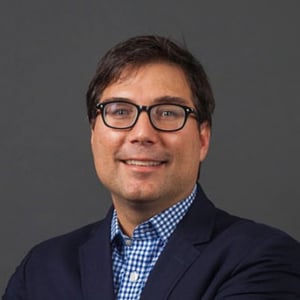
Associate Professor of Law and Director, Program on Economics & Privacy, Antonin Scalia Law School, George Mason University
Associate Professor of Law James C. Cooper brings over a decade of public and private sector experience to his research and teaching. He served as Deputy and Acting Director of the Federal Trade Commission’s Office of Policy Planning, Advisor to Federal Trade Commissioner William Kovacic, and an associate in the antitrust group of Crowell and Moring, LLP. His research on vertical restraints, price discrimination, behavioral economics and antitrust, and privacy policy have appeared in top journals and are widely cited.
Professor Cooper has a BA from the University of South Carolina, received his PhD in economics from Emory University, and his law degree (magna cum laude) from Antonin Scalia Law School, George Mason University, where he was a Levy Fellow and a member of the George Mason Law Review.
He teaches Economics for Lawyers, Advanced Seminar on Law & Economics, and Digital Information Policy Seminar.
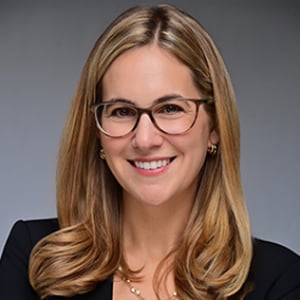
Partner, Clement & Murphy
A seasoned trial and appellate advocate, Danielle Sassoon represents individuals and corporations in high-stakes white-collar, appellate, and commercial matters. Danielle joined the firm after serving as interim United States Attorney for the Southern District of New York, following over eight years as an Assistant United States Attorney. During her time at the SDNY, Danielle handled some of the Office’s most sensitive and consequential cases. As Chief of Appeals for the Criminal Division, Danielle supervised and argued dozens of appeals before the U.S. Court of Appeals for the Second Circuit. As a leader in the SDNY, Danielle oversaw hundreds of cases, advised on complex legal and strategic issues, and managed over 200 lawyers across the SDNY’s civil and criminal divisions.
As a prosecutor, Danielle handled high-profile investigations and criminal trials, including against Samuel Bankman-Fried, for perpetrating a multi-billion-dollar cryptocurrency fraud, and against Lawrence Ray, for racketeering conspiracy, sex trafficking, and other offenses related to his abuse and exploitation of his daughter’s college roommates. As a prosecutor, Danielle was awarded the FBI Director’s Award for Outstanding Criminal Investigation and the Women in Federal Law Enforcement Top Prosecutor Award.
Following law school, Danielle clerked for Judge J. Harvie Wilkinson III of the U.S. Court of Appeals for the Fourth Circuit and for Associate Justice Antonin Scalia of the U.S. Supreme Court.
Danielle serves as a Senior Fellow at the Manhattan Institute.
Senior Assistant Attorney General, Office of the Attorney General of the Commonwealth of Virginia
Associate Professor of Law and Director, Program on Economics & Privacy, Antonin Scalia Law School, George Mason University
Associate Professor of Law James C. Cooper brings over a decade of public and private sector experience to his research and teaching. He served as Deputy and Acting Director of the Federal Trade Commission’s Office of Policy Planning, Advisor to Federal Trade Commissioner William Kovacic, and an associate in the antitrust group of Crowell and Moring, LLP. His research on vertical restraints, price discrimination, behavioral economics and antitrust, and privacy policy have appeared in top journals and are widely cited.
Professor Cooper has a BA from the University of South Carolina, received his PhD in economics from Emory University, and his law degree (magna cum laude) from Antonin Scalia Law School, George Mason University, where he was a Levy Fellow and a member of the George Mason Law Review.
He teaches Economics for Lawyers, Advanced Seminar on Law & Economics, and Digital Information Policy Seminar.
Senior Counsel, Crowell & Moring LLP
Lisa Kimmel is a senior counsel in Crowell & Moring's Antitrust Group. She resides in the firm's Washington, D.C. office. Lisa's practice covers merger and civil nonmerger antitrust investigations and antitrust counseling. Lisa also advocates for clients on competition policy matters before federal and state antitrust agencies, focusing in particular on the technology and digital commerce sectors.
Lisa joined Crowell & Moring in 2015 from the Federal Trade Commission (FTC), where she worked for nearly five years as an attorney advisor on antitrust and competition policy matters for Commissioner and later, Chairwoman, Edith Ramirez. During her time at the FTC, Lisa advised the chairwoman on antitrust enforcement and policy matters across a broad range of sectors, and was her lead advisor on antitrust enforcement and competition policy matters in the technology sector, including matters related to industry standards and the acquisition or assertion of intellectual property rights. Before joining the FTC, Lisa practiced with the antitrust group at an AmLaw 100 firm, where she worked in the firm's San Francisco and Washington, D.C. offices.
Lisa’s recent private practice experience includes:
Lisa earned her J.D. and a Ph.D. in economics from the University of California, Berkeley. She is an active member of the ABA Antitrust Section, where she is vice-chair of the Media & Technology Committee, past editor of the Unilateral Conduct Committee newsletter, and co-editor of a forthcoming revision to the Handbook on Antitrust Aspects of Standard Setting. Lisa is a member of the MLex Antitrust Advisory Board and speaks and writes regularly on antitrust issues involving the technology sector and intellectual property rights.
Admitted to practice: California, District of Columbia
Partner, Antitrust and Competition, Wilson Sonsini Goodrich & Rosati
Maureen Ohlhausen is a partner in the Washington, D.C., office of Wilson Sonsini Goodrich & Rosati, where she advises industry-leading clients on complex antitrust and litigation matters, with a focus on high-profile cases. Sought after for her depth of experience on antitrust and Federal Trade Commission (FTC)-related issues, Maureen is known for her relationships with officials in the U.S. and abroad.
After finishing law school and clerking at the U.S. Court of Appeals for the D.C. Circuit, Maureen joined the FTC in 1997. She held a series of roles at the agency over the next 12 years, rising to the position of Director of the FTC Office of Policy Planning, where she led the agency’s work on e-commerce and headed the FTC’s Internet Access Task Force, which produced an influential report analyzing competition and consumer protection legal issues in the broadband and internet sectors. She then went into private practice at a leading telecommunications law firm, where she headed the FTC practice group.
In 2012, Maureen was confirmed by the Senate as a Commissioner of the FTC and was appointed Acting Chairman in January 2017, a role she held until May 2018. As Acting Chairman, Maureen directed all aspects of the agency’s antitrust work, including merger review, conduct enforcement, and all consumer protection enforcement, with an emphasis on privacy and technology issues. Under her leadership, the FTC won several influential merger challenges in court and reached a number of key digital privacy settlements.
To date, Maureen is the only FTC Commissioner to have received the Robert Pitofsky Lifetime Achievement Award in recognition of her contributions to the FTC.
Following the end of her term at the FTC, and immediately prior to joining Wilson Sonsini, Maureen was chair of the global antitrust and competition practice at Baker Botts, based in that firm’s Washington, D.C., office.
A recognized thought leader, Maureen is a frequent author and speaker, and is often quoted by leading print and broadcast media on antitrust, FTC, and privacy and data security matters. She has published dozens of articles on antitrust, privacy, intellectual property, regulation, FTC litigation, telecommunications, and international law issues in prestigious publications. During her tenure at the FTC and in private practice, she testified more than two dozen times before Congress, including before the Senate Commerce Committee and the House Energy and Commerce Antitrust Sub-Committee. She also testified before the Antitrust Modernization Commission.
Partner, Axinn, Veltrop & Harkrider LLP
Koren Wong-Ervin is a recognized thought leader on competition issues who has testified before Congress on domestic and international issues in antitrust policy. She has more than eighteen years of experience in government, private practice, and as in-house counsel, including representing defendants and plaintiffs in high-stakes litigations and representing companies in domestic and foreign investigations. While at the Federal Trade Commission (FTC), Koren served as an Attorney Advisor to Commissioner Joshua Wright and Counsel for Intellectual Property & International Antitrust.
The combination of Koren's experience representing defendants—along with her experience at the FTC and as a former plaintiffs class action attorney—gives her insights into the thinking on both sides of cases, including complex multi-district litigations, allowing her to develop both effective offensive and defensive strategies. On top of this, her in-house experience as the Director of Antitrust Litigation & Policy at a major technology company gives her a first-hand understanding of how companies work and unique insight into the needs of clients. Koren also has a deep understanding of economics, as evidenced by the fact that she has trained over 500 foreign judges and enforcers on a variety of economic topics.
Koren’s scholarship has been cited by courts and the Department of Justice. She has authored over sixty articles, including on vertical mergers and restraints, acquisitions of potential competitors, consummated mergers, multisided platforms, the intersection of antitrust and intellectual property, incremental innovations or “product hopping,” optimal penalties, extraterritoriality, methodologies for calculating patent infringement damages, and international due process and convergence. She has spoken at over 200 domestic and international events.

American Spirit: A Story of Virginia's Liquor Laws
Jarrett Dieterle, Christine Riggleman, Denver Riggleman, Paul Pisano, Curtis Coleburn, Angela Logomasini
From the Whiskey Rebellion to prohibition, the 21st Amendment to a modern cocktail renaissance, America's...
Topics
Don't Cry for me, Arizona
December 7 marks the seventy-sixth anniversary of the Japanese attack on Pearl Harbor, an act...
The Supreme Court Tackles Patent Reform: Why the Supreme Court Should End Inter Partes Review in Oil States
Richard A. Epstein
Note from the Editor: This article argues that the Supreme Court should find unconstitutional the...
Topics
The Supreme Court Tackles Patent Reform
Click here to download a PDF version of this blog post. Oil States Energy Services,...
Federal Special Education Law and State School Choice Programs
Timothy Keller, Nat Malkus
Note from the Editor: In this article, Nat Malkus and Tim Keller outline the federal...
Jenkins v. Hutton & Virginia v. LeBlanc - Post-Decision SCOTUScast
Ronald Eisenberg
In June, the Supreme Court issued per curiam opinions in two habeas cases: Jenkins v....
Topics
Innumeracy at the Department of Education and the Congressional Committees Overseeing It
On July 21, 2017, preparatory to a July 24 Federalist Society teleforum titled “Are Existing...
Occupational Licensing, Antitrust, and Innovation
Maureen K. Ohlhausen, Koren Wong-Ervin, Lisa Kimmel, Sarah Oxenham Allen, James C. Cooper
Every state has laws or regulations that require individuals seeking to offer a certain service...
Occupational Licensing, Antitrust, and Innovation
Regulatory Transparency Project Event
Washington, DCThe Decades of Our Discontent: Judge J. Harvie Wilkinson III Reflects on the Sixties and Today
Danielle Sassoon
A Review of: All Falling Faiths: Reflections on the Promise & Failure of the 1960s,...