

Judge, United States Court of Appeals, Eleventh Circuit
On March 20, 2018, Judge Elizabeth L. Branch (Lisa) was sworn in as a United States Circuit Judge for the Eleventh Circuit.
Judge Branch attended and graduated from Davidson College in North Carolina (B.A., cum laude, 1990), and Emory University School of Law (J.D., with distinction, 1994).
After graduating from law school, Judge Branch served as a federal law clerk to The Honorable J. Owen Forrester of the U.S. District Court for the Northern District of Georgia from 1994 to 1996. Following her clerkship, Judge Branch joined the litigation department of Smith, Gambrell & Russell, LLP in Atlanta as an associate and then a partner.
From 2004 to 2008, Judge Branch was a senior official in the Administration of President George W. Bush in Washington, D.C. She served first as the Associate General Counsel for Rules and Legislation at the U.S. Department of Homeland Security and then as the Counselor to the Administrator of the Office of Information and Regulatory Affairs at the U. S. Office of Management and Budget.
She returned to Smith Gambrell in 2008 as a litigation partner. Judge Branch then was appointed to the Court of Appeals of Georgia by Governor Nathan Deal, taking office on September 4, 2012, where she served until March 19, 2018.
Judge Branch is a member of the Board of Advisors of the Atlanta Lawyers Chapter for the Federalist Society for Law and Public Policy Studies.
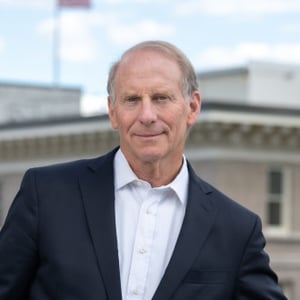
President, Council on Foreign Relations
Dr. Richard Haass is a veteran diplomat, a prominent voice on American foreign policy, and an established leader of nonprofit institutions. He is in his eighteenth year as president of the Council on Foreign Relations, an independent, nonpartisan membership organization, think tank, publisher, and educational institution dedicated to being a resource to help people better understand the world and the foreign policy choices facing the United States and other countries.
In 2013, he served as the chair of the multiparty negotiations in Northern Ireland that provided the foundation for the 2014 Stormont House Agreement. For his efforts to promote peace and conflict resolution, he received the 2013 Tipperary International Peace Award.
From January 2001 to June 2003, Dr. Haass was director of policy planning for the Department of State, where he directed the policy planning staff and was a principal advisor to Secretary of State Colin Powell. Confirmed by the U.S. Senate to hold the rank of ambassador, Dr. Haass also served as U.S. coordinator for policy toward the future of Afghanistan and U.S. envoy to the Northern Ireland peace process.
Dr. Haass has extensive additional government experience. From 1989 to 1993, he was special assistant to President George H.W. Bush and senior director for Near East and South Asian affairs on the staff of the National Security Council. In 1991, Dr. Haass was awarded the Presidential Citizens Medal for his contributions to the development and articulation of U.S. policy during Operations Desert Shield and Desert Storm. Previously, he served in the Departments of State (1981–1985) and Defense (1979–1980), and was a legislative aide in the U.S. Senate.
A Rhodes Scholar, Dr. Haass holds a bachelor’s degree from Oberlin College and master’s and doctorate of philosophy degrees from Oxford University. He has also received numerous honorary degrees and was a member of the faculty of Harvard University’s Kennedy School of Government and Hamilton College.
Dr. Haass is the author or editor of fourteen books on American foreign policy and one book on management. His latest book is The World: A Brief Introduction, published by Penguin Press.
Dr. Haass was born in Brooklyn, New York, and lives in New York City.

Maurice A. Deane Distinguished Professor of Constitutional Law and Faculty Director of International Programs, Hofstra University School of Law
Professor Ku’s primary research interest is the relationship of international law to constitutional law. He has also conducted academic research on a wide range of topics including international dispute resolution, international criminal law, and China’s relationship with international law. He teaches courses such as U.S. constitutional law, U.S. foreign affairs law, transnational law, and international trade and business law. Since 2014, he has served as the faculty director of international programs, overseeing Hofstra Law’s study abroad, exchange and LL.M. programs. Professor Ku also teaches Constitutional Law in our online degree programs: Master of Laws in American Law and Master of Arts in American Legal Studies. He has also been selected as the John DeWitt Gregory Research Scholar and as a Hofstra Law Research Fellow. He is a member of the American Law Institute.
He is the co-author, with John Yoo, of Taming Globalization: International Law, the U.S. Constitution, and the New World Order (Oxford University Press 2012). He also has published more than 40 law review articles, book chapters and symposia essays. He has given dozens of academic lectures and workshops at major universities and conferences in the United States, Europe and Asia.
He co-founded the leading international law weblog Opinio Juris, which is read daily by thousands worldwide. His essays and op-eds have been published in major news publications such as the Wall Street Journal, the Los Angeles Times, and the NYTimes.com. He has been frequently interviewed for television news programs and quoted in print and electronic media. He has also signed or submitted amicus briefs to national and international courts and served as an expert witness in both domestic and international proceedings.
Before joining the Hofstra Law faculty, Professor Ku served as a law clerk to the Honorable Jerry E. Smith of the U.S. Court of Appeals for the Fifth Circuit and as an Olin Fellow and Lecturer in Law at the University of Virginia Law School. Professor Ku also practiced as an associate at the New York City law firm of Debevoise & Plimpton, specializing in litigation and arbitration arising out of international disputes. He has been a visiting professor at the College of William & Mary Marshall- Wythe School of Law in Williamsburg, Virginia; a Fulbright Distinguished Lecturer in Law at East China University of Political Science and Law in Shanghai, China; and a Taiwan Fellow at National Taiwan University in Taipei, Taiwan. He is a member of the New York Bar and a graduate of Yale College and Yale Law School.

Executive Vice President, The Federalist Society
Dean Reuter is Executive Vice President at the Federalist Society for Law and Public Policy Studies. He has served in two federal government agency Offices of the Inspector General, as Counsel to the Inspector General and Deputy Inspector General, responsible for policing the use of federal funds granted and contracted through those agencies. As such, he helped conduct and oversee criminal investigations across the country. He is the principal author of the non-fiction book, The Hidden Nazi: The Untold Story of America's Deal with the Devil, and editor of Liberty’s Nemesis: The Unchecked Expansion of the State and Confronting Terror: 9/11 and the Future of American National Security. He was appointed by the President and served as Vice-Chairman of the Board of Directors of the Corporation for National and Community Service, and recently served as an appointee on the U.S. Commission on Presidential Scholars. He is a graduate of Hood College (BA with Honors) and the University of Maryland School of Law.
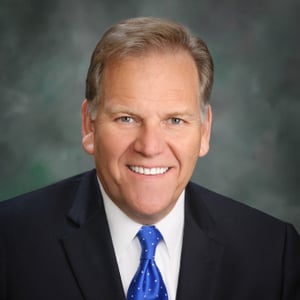
David Abshire Chair, Center for the Study of the Presidency and Congress
Mike Rogers is a former member of Congress representing Michigan's Eighth Congressional District, and previously served as an officer in the U.S. Army and FBI special agent.
While in Congress Mr. Rogers chaired the powerful House Permanent Select Committee on Intelligence (HPSCI) where he authorized and oversaw a budget of $70 billion that funded the nation's 17 intelligence agencies.
He currently serves as the Vice Chairman of the Board at the MITRE Corporation, and as a Director at leading companies including CyberSponse, IAP, and 4IQ. He is currently investing in and helping build companies that are developing solutions for healthcare, energy efficiency and communications challenges.
Mr. Rogers is a Senior Fellow at Harvard University and a member of the Board of Trustees and the David Abshire Chair at the Center for the Study of the Presidency and Congress, where he directs the Center’s national security programs. Mr. Rogers is a regular public speaker on global affairs, cybersecurity, and leadership.
He also serves as a regular national security commentator on CNN and hosted the channel’s documentary-style original series Declassified, which offered viewers insights into America’s spy stories. Mr. Rogers is a 1985 graduate of Adrian College. He is married to Kristi Rogers and has two children.

Associate, Jones Day
Katie Roholt Lane represents clients at critical stages of high-stakes regulatory and constitutional litigation. Her practice also consists of developing case strategy at the trial and appellate levels, briefing legal issues, and conducting motions practice. Katie currently represents clients in litigation arising under the Administrative Procedure Act (APA), the Telephone Consumer Protection Act (TCPA), and the Medicare Act.
In addition to her litigation practice, Katie provides strategic planning and regulatory compliance advice to companies seeking to navigate the complex U.S. regulations that impact domestic and international industries. She has represented clients in rulemakings and consultations before regulatory authorities, including the Federal Communications Commission (FCC) and the Federal Trade Commission (FTC) often seeking to eliminate the regulatory barriers to industry innovation.
Katie also maintains an active pro bono practice that focuses on briefing constitutional and statutory issues before the U.S. Supreme Court and federal appellate courts. She was part of the team that represented The American Legion in its landmark victory at the U.S. Supreme Court in The American Legion v. American Humanist Association, 139 S. Ct. 2067 (2019).
Katie is president of the Federalist Society's D.C. Young Lawyers Chapter.
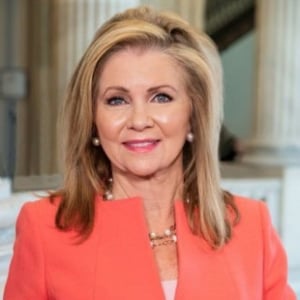
United States Senator, Tennessee
U.S. Senator Marsha Blackburn was sworn in to the Senate in January 2019. Marsha Blackburn was elected to the U.S. Senate in 2018, and is currently serving her first term representing the state of Tennessee. Before her election to the Senate, Marsha represented Tennessee’s 7th Congressional District.
Marsha’s public service is dedicated to promoting opportunities for women and making America a more prosperous place to live. Marsha’s leadership philosophy is based on her experiences in the private sector as a small business woman and author, as well as being a mother and grandmother.
Marsha went to college on a 4-H scholarship and worked her way through school selling books for the Southwestern Company as one of their first female sales associates, and later as one of their first female sales managers.
She then became Director of Retail Fashion and Special Events for the Castner Knott Company, which was a Nashville-based regional department store. Later, Marsha founded her own business, Marketing Strategies, which focused on the retail marketplace, as well as electronic and print media.
Marsha began her career in public service in 1995 when she was named executive director of the Tennessee Film, Entertainment, and Music Commission. In 1998, she was elected to the Tennessee State Senate. In the state legislature, she earned a reputation for fiscal responsibility and government accountability by identifying waste and offering realistic solutions to Tennessee’s budget challenges.
While serving in the Tennessee Senate, Marsha led a statewide grassroots campaign to defeat a proposed state income tax. The tax was defeated, and Marsha’s leadership earned her a reputation as an anti-tax champion. In 2014, the people of Tennessee passed an amendment to the state constitution to expressly prohibit a state income tax – a fitting cap to a 14-year battle.
In 2002, Marsha was elected to represent the people of Tennessee’s 7th Congressional District based on her record in the state legislature. She brought her Tennessee values to Washington, DC, and became a leader in the fight for small, efficient federal government that is accountable to its citizens. As a Congressman, Marsha was often selected by her colleagues to lead the charge for principled conservativism. Her congressional career was also noted for her Chairmanship of the Energy and Commerce Committee’s Subcommittee on Communications and Technology, as well as bipartisan expertise in defending songwriters’ and performers’ rights.
Marsha is a member of numerous charitable organizations and is an active member of her church, Christ Presbyterian.
Marsha and her husband Chuck live in Williamson County, Tennessee. They have two children, Mary Morgan (Paul) Ketchel and Chad (Hillary) Blackburn, and two grandsons. Originally from Laurel, Mississippi, Marsha is a graduate of Mississippi State University.
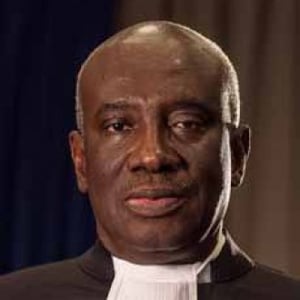
Chief Justice of The Gambia
Hassan Bubacar Jallow was sworn-in as the Chief Justice of The Gambia on 15 February 2017, Jallow after his appointment by newly-elected President of The Gambia, Adama Barrow. He is also the former Chief Prosecutor of the International Criminal Tribunal for Rwanda (ICTR) (2013-2015), the former Prosecutor of the United Nations Mechanism for International Criminal Tribunals (MICT) and Under Secretary-General of the United Nations (2012-2016).
He studied law in Tanzania, Nigeria and Great Britain and previously worked as Attorney General and Minister of Justice in The Gambia (1984-1994) and as Justice of the Gambian Supreme Court (1998-2002), Judge of the Appeals Chamber, UN Special Court for Sierra Leone (2002), Judge Ad Litem of the International Criminal Tribunal for the former Yugoslavia (2001), and Judge of the Commonwealth Arbitral Tribunal.
He has served the UN, the Organisation of African Unity, the African Union and Commonwealth as a Legal Consultant on various matters, including governance, human rights, public law, international law and international criminal justice. He has published various books and papers on his subject of expertise and is the author of Journey for Justice (2012). He was made Commander of the National Order of the Republic of The Gambia (CRG) in 1985.
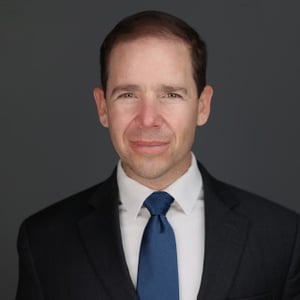
Founder and CEO, Lexpat Global Services
Adam Pearlman is the Founder and Chief Executive Officer of Lexpat Global Services. He is a National Security Law expert and a proven senior leader with experience across the U.S. Departments of Justice, Defense, and State, in the White House, and with the U.S. Federal Judiciary.
Before founding Lexpat, Mr. Pearlman served as the Senior Advisor for Legal Policy in the State Department’s Bureau of Counterterrorism. There, he counseled senior officials on matters covering the entire spectrum of programs and operations to counter terrorism and violent extremism. While participating in sensitive diplomatic engagements and helping to coordinate military operations, he also advised in the development of sanctions policy and initiatives to build legal and operational capacity in partner nations. Mr. Pearlman also managed the Bureau’s participation in federal litigation and led U.S. delegations in multilateral forums concerning criminal justice and rule of law. Separately, Mr. Pearlman supported the State Department’s Bureau of International Narcotics and Law Enforcement Affairs (INL) as the contracted Senior Justice and Rule of Law Advisor in Cabo Verde, Africa. There he was the chief implementer of a Foreign Assistance program that grew eight-fold during his tenure, building host nation capacity across the law enforcement, justice sector, rule of law, anti-money laundering, and corrections disciplines.
A former Associate Deputy General Counsel of the Department of Defense, Mr. Pearlman was agency counsel for complex civil and criminal national security matters in federal and military courts. He also led the Supreme Court and appellate unit of the team dedicated to litigating classified counterterrorism cases. His earlier service in the Department of Justice spanned four litigating divisions and the Office of the Deputy Attorney General. His diverse experience included reviewing complex international transactions and mergers, and advising on immigration removal proceedings, human rights abuses, and terrorist financing investigations. Mr. Pearlman also served with distinction in Iraq as an early advisor to the Iraqi High Tribunal’s prosecution of Saddam Hussein. He was a law clerk for The Honorable Royce C. Lamberth of the U.S. District Court for the District of Columbia, and during law school interned in the White House Counsel’s Office.
Mr. Pearlman is a Senior Fellow at the National Security Institute at George Mason University’s Antonin Scalia Law School, a member of the American Bar Association’s Advisory Committee on Law and National Security, and the Editor-in-Chief of the U.S. Intelligence Community Law Sourcebook. Previously, he has been a Term Member of the Council on Foreign Relations, National Security Fellow at the Foundation for Defense of Democracies, member of the ABA’s Africa Law Initiative Council and of the Center for Strategic & International Studies’ (CSIS) Project on Nuclear Issues, vice chairman of the ABA Section of International Law’s committees on national security, and aerospace and defense, and a liaison to the Board of Directors of the ABA’s Rule of Law Initiative. He has published articles in the Harvard National Security Journal, Stanford Law & Policy Review, Intelligence & National Security, The Foreign Service Journal, Lawfare, and many other outlets.
Mr. Pearlman earned his B.A., with honors, from UCLA, and his J.D., with honors, from The George Washington University Law School, where he was a member of the International Law Review. He also earned a Master of Science of Strategic Intelligence degree from the National Intelligence University, where he was the inaugural recipient of the Kornblum Award for national security law and ethics. Mr. Pearlman is a Certified Financial Crime Specialist and holds certificates in international human rights law from the University of Oxford and in anti-corruption law from American University’s Washington College of Law. He is admitted to the State Bars of California and Virginia, as well as to the Bar of the United States Supreme Court. He speaks and reads Portuguese at the intermediate level.
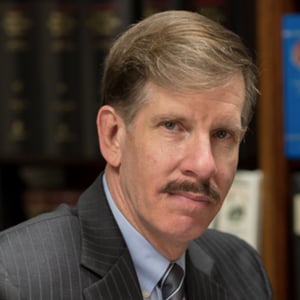
Director, Human Rights Enforcement Policy and Strategy, Human Rights and Special Prosecutions Section, U.S. Department of Justice
Eli Rosenbaum is the longest-serving prosecutor and investigator of Nazi criminals and other perpetrators of human rights violations in world history, having worked on these cases at the U.S. Department of Justice for more than thirty years. A graduate of the Wharton School of the University of Pennsylvania (B.S. and MBA, Finance) and of the Harvard Law School, he served from 1994 to 2010 as Director of the Justice Department's Office of Special Investigations (OSI), where he had previously served as a trial attorney and then as Deputy Director. OSI was created by Attorney General order to investigate and prosecute WWII-era Nazi criminals and, following the December 2004 expansion of its mission by the Intelligence Reform and Terrorism Prevention Act of 2004, also investigated and prosecuted criminal and civil cases involving participants in post-World War II crimes of genocide, extrajudicial killing and torture committed abroad under color of foreign law. Under his leadership, OSI also performed crucial work for the federal government’s inter-agency efforts to trace gold, artwork and other assets looted by the Nazis from Holocaust victims and also to locate, declassify and disclose millions of pages of documents under the Nazi War Crimes Disclosure Act of 1998. Rosenbaum has also worked as a corporate litigator in Manhattan with the law firm of Simpson Thacher & Bartlett, and as General Counsel of the World Jewish Congress, where he directed the investigation that resulted in the worldwide exposure of the Nazi past of former United Nations Secretary General Kurt Waldheim.
In March 2010, OSI was merged with another Criminal Division section to form the Human Rights and Special Prosecutions Section (HRSP), and Rosenbaum was named Director of Human Rights Enforcement Strategy and Policy in the new unit. In that position, he remains in charge of the Justice Department’s continuing enforcement efforts in the World War II Nazi cases and he also directs the development of the new section’s strategic and policy initiatives in the “modern” (i.e., post-WWII) human rights cases. Under Mr. Rosenbaum's leadership, OSI won major awards from Jewish organizations and Holocaust survivor groups, and it has been called “the most successful government Nazi-hunting organization on earth” (ABC News, 3/25/95) and “the world's most aggressive and effective Nazi-hunting operation” (The Washington Post, 8/27/95), possessing “a tremendous success record, [having] uncovered and won more cases than any other Nazi-hunting operation in the world” (USA Today, 1/29/97). In 2014, the Simon Wiesenthal Center again gave the U.S. Justice Department it’s “A” rating, which it reserves for “highly successful proactive prosecution programs.” The United States is the only country in the world to have earned the Center’s “A” rating in each year since the annual ratings were first issued (2001). In November 2008, Rosenbaum received the Assistant Attorney General’s first-ever Award for Human Rights Law Enforcement. He has also received the Assistant Attorney General’s Award for Special Initiative (2008), the Anti-Defamation League’s “Heroes in Blue” award (2000), the Virginia Law Foundation’s Rule of Law Award (2008), and in the Florida Holocaust Museum’s annual Loebenberg Humanitarian Award (2015). In 1997, he was selected by the faculty of the University of Pennsylvania Law School to be the recipient of the school's Honorary Fellowship Award, presented during commencement ceremonies to one attorney "who has distinguished himself or herself in commitment to public service" by "making significant contributions to the ends of justice at the cost of great personal risk and sacrifice."
Rosenbaum’s published works include Betrayal: The Untold Story of the Kurt Waldheim Investigation and Cover-Up (St. Martin's Press), which was selected for "Notable Books of 1993" by The New York Times Book Review and "Best Books of 1993" by The San Francisco Chronicle.
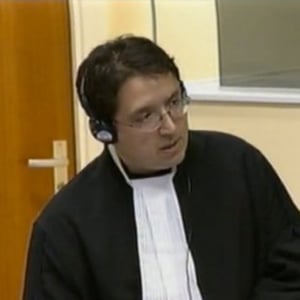
Former war crimes prosecutor for the International Criminal Tribunal for the Former Yugoslavia and ICTR
Arthur Traldi is a litigator and provides consulting services on legal capacity-building, rule of law, investigations and litigation to public and private sector clients. He has extensive experience in international justice and rule of law issues, including the investigation, litigation and adjudication of crimes against humanity, war crimes, and genocide.
Most prominently, Arthur served as a prosecutor at the International Criminal Tribunal for the former Yugoslavia from 2010 to 2017. Among his other responsibilities, he led the component of the Ratko Mladic prosecution related to mass ethnic cleansing in Bosnia and Herzegovina in 1992 and secured convictions for mass murder, persecution, and other crimes - as well as serving on the trial and appeal teams in the case against Vojislav Seselj and advising the teams conducting the cases against Radovan Karadzic, Jovica Stanisic and Franko Simatovic. His work, along with the work of other senior attorneys on the Mladic case, was featured in the documentary The trial of Ratko Mladic. His work has also been featured in Diplomatic Courier, The Pittsburgh Tribune-Review, The Comparative Jurist, William and Mary Law News, Georgetown Law News, Bota Sot, and Where Genius Grows.
Arthur has served on teams making submissions to the International Criminal Court, United States Supreme Court, and other courts in the US and abroad. He has also served in Chambers at the International Criminal Tribunal for Rwanda; led workshops for staff in the War Crimes Department of the Prosecutor's Office of Bosnia and Herzegovina and the Attorney General's Office of Ethiopia; served as an election observer in Arizona, Pennsylvania, Virginia, Albania, Azerbaijan, Georgia and Ukraine; served as a consultant for the OSCE mission to Bosnia and Herzegovina, working to analyze and improve the functioning of the War Crimes Department of the Bosnian prosecutor's office; provided technical legal assistance to the American Bar Association's Centre for Human Rights; and served as a senior adviser to candidates for city, county, state and federal elected office in the United States. He has twice served as an elected member of the Northampton County (Pennsylvania) Democratic Committee.
Arthur received his J.D. from Georgetown University Law Center and his undergraduate degree from the College of William and Mary. He is a member of the American Bar Association, the International Association of Prosecutors, the International Network to Promote the Rule of Law, and the Truman National Security Project and certified to practice law before the state courts of Pennsylvania, the Kosovo Specialist Chambers, and the United States Supreme Court. He serves as a Co-Chair of the American Bar Association's International Criminal Law Committee and as a member of the Kosovo Specialist Chambers Independent Representative Body of Counsel's Executive Committee. He has taught three continuing legal education classes on the investigation and prosecution of mass atrocities and regularly speaks and gives trainings on international law. He has spoken to audiences in Austria, Bosnia and Herzegovina, Ethiopia, Germany, Hungary, Israel, Jordan, Kosovo, Malta, South Africa, the United Kingdom, and the United States.
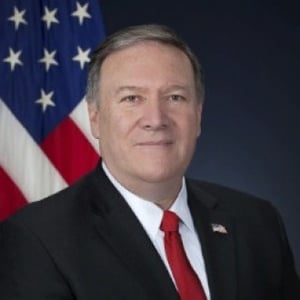
U.S. Secretary of State
Michael R. Pompeo was sworn in as Secretary of State on April 26, 2018. He previously served as Director of the Central Intelligence Agency from January 2017 to April 2018.
Prior to joining the Trump Administration, Mr. Pompeo was serving in his fourth term as congressman from Kansas’ 4th District. He served on the House Intelligence Committee, as well as the Energy and Commerce Committee and House Select Benghazi Committee.
Prior to his service in Congress, Mr. Pompeo founded Thayer Aerospace, where he served as CEO for more than a decade. He later became President of Sentry International, an oilfield equipment manufacturing, distribution, and service company.
Mr. Pompeo graduated first in his class at the United States Military Academy at West Point in 1986 and served as a cavalry officer patrolling the Iron Curtain before the fall of the Berlin Wall. He also served with the 2nd Squadron, 7th Cavalry in the US Army’s Fourth Infantry Division.
After leaving active duty, Mr. Pompeo graduated from Harvard Law School, having been an editor of the Harvard Law Review.
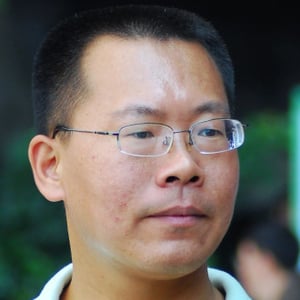
Grove Human Rights Scholar, Hunter College
Dr. Teng Biao is an academic lawyer, currently Grove Human Rights Scholar at Hunter College. He co-founded two human rights NGOs in Beijing –the Open Constitution Initiative, and China Against the Death Penalty. He is one of the earliest promoters of the Rights Defense Movement in China, and the manifesto Charter 08, for which Dr. Liu Xiaobo was awarded the Nobel Peace Prize. His research includes human rights, criminaljustice, social movement and political transition in China. Teng is working on two books, one is on China’s human rights movement, and another on China’s threat to global human rights and freedom.
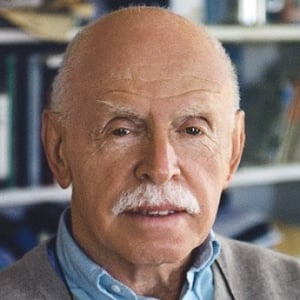
Faculty Director Emeritus, New York University School of Law
Jerome A. Cohen, a professor at NYU School of Law since 1990 and U.S.-Asia Law Institute Faculty Director Emeritus, is a leading American expert on Chinese law and government. A pioneer in the field, Prof. Cohen began studying and teaching about China’s legal system in the early 1960s and from 1964 to 1979 introduced the teaching of Asian law into the curriculum of Harvard Law School, where he served as Jeremiah Smith Professor, Associate Dean and Director of East Asian Legal Studies. Prof. Cohen served for several years as C.V. Starr Senior Fellow and Director of Asia Studies at the Council on Foreign Relations, where he currently is an Adjunct Senior Fellow. In addition, he has published hundreds of scholarly articles on various topics as well as a book, China Today, co-authored with his wife, Joan Lebold Cohen, and a regular series of journalistic opinion pieces for various newspapers. Today, Prof. Cohen continues his research and writing on Asian law, specifically focusing on legal institutions, criminal justice reform, dispute resolution, human rights and the role of international law relating to China and Taiwan.
Jerry has his and his wife's name in the chair professor of Harvard Law School in 2018 and received a honorary doctor degree from Yale University in 2020.
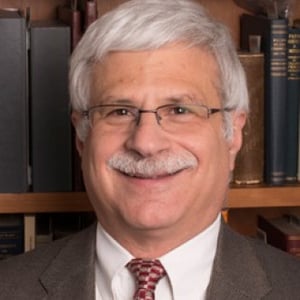
Professor of Law, Catholic University of America
Robert Destro served as Assistant Secretary for the Bureau of Democracy, Human Rights, and Labor (DRL). He has a long history as a human rights advocate and civil rights attorney with expertise in elections, employment, and constitutional law. Destro has served on the faculty at Catholic University’s Columbus School of Law since 1982 and served as its interim dean from 1999 to 2001. He was founding director of the Interdisciplinary Program in Law and Religion and served as the Director of the Institute for Policy Research and Catholic Studies from June 2017 to September 2019. He served as a commissioner on the U.S. Commission on Civil Rights from 1983-1989. His legal work includes collaboration with the Peace Research Institute Oslo in a fifteen-year dialogue among Muslim, Christian, and Jewish leaders in the legal, business, and religious fields in the United States and the Middle East as well as efforts promoting the release of political prisoners and prisoners of conscience in the Middle East. He has served as voting rights counsel for the Ohio Secretary of State and has advocated for the first amendment rights of individuals and organizations.
He earned a B.A. from Miami University, Ohio, and a J.D. from the University of California at Berkeley. He is an active member of the Bar in Ohio and California.
The rest of his bio including his publications are available on the Catholic University Faculty page linked here.
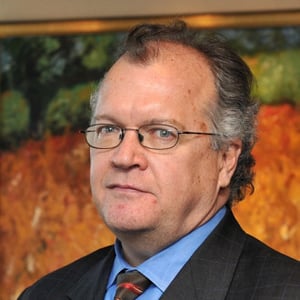
Partner, Morris, Manning, & Martin
Donald B. Cameron, Jr. is a Partner in Morris, Manning, & Martin’s International Trade practice. He has over three decades of experience representing multinational businesses, foreign governments, foreign trade associations and U.S. importers in litigation under U.S. antidumping, countervailing duty, and safeguards law. He also advises clients from around the globe in international trade disputes and market access issues, and has particular experience defending clients in industry sectors that are politically sensitive. Mr. Cameron has represented foreign producers and importers in sectors such as footwear, lumber, textiles, electronic products, and steel products. He practices regularly before the U.S. Department of Commerce, the U.S. International Trade Commission, the Office of the U.S. Trade Representative, the U.S. Court of International Trade and the U.S. Court of Appeals for the Federal Circuit.
Mr. Cameron has extensive experience representing private-sector interests and governments in dispute settlement proceedings before the World Trade Organization (WTO) and its predecessor, the General Agreement on Tariffs and Trade (GATT) in Geneva, and has argued on behalf of clients before the WTO Panels and WTO Appellate Body. He has also defended clients in North American Free Trade Agreement (NAFTA) Chapter 19 proceedings and has argued before NAFTA Panels. Mr. Cameron also advised the Government of Korea in the successful WTO challenges to the U.S. safeguard actions on line pipe and certain steel products (AB-2001-9 and AB-2003-3).
As counsel for foreign manufacturers, Mr. Cameron has also advised and assisted foreign governments in a variety of bilateral and multilateral trade negotiations, most prominent being the steel Voluntary Restraint Arrangements negotiations, bilateral subsidies negotiations and the OECD shipbuilding negotiations.

President, Cass & Associates, PC
Ronald A. Cass is Dean Emeritus of Boston University School of Law (where he was Dean from 1990-2004), President of Cass & Associates, PC, former Vice-Chairman and Commissioner of the U.S. International Trade Commission, former faculty member at Boston University School of Law and the University of Virginia Law School, and Distinguished Senior Fellow at the C. Boyden Gray Center for the Study of the Administrative State. Dean Cass also sits as an arbitrator for commercial, international, and intellectual property rights disputes, and is a former United States member of the Panel of Conciliators of the International Centre for Settlement of Investment Disputes. He is a member of the Council of the Administrative Conference of the United States and has received seven presidential appointments, spanning Presidents Ronald Reagan to Donald J. Trump.
As a law professor, lecturer, and scholar, Dean Cass has been teaching and writing about a wide array of legal issues on topics such as administrative law and regulation, antitrust, constitutional law, communications, intellectual property, international trade, separation of powers, and legal process. He has published more than 160 scholarly books, chapters, articles, and papers, including a leading casebook on administrative law. Dean Cass has taught judges as well as students in schools of law, economics, business, and public policy and has held academic appointments in the United States, Europe, and Latin America.
In addition to his academic work, Dean Cass has participated in numerous important legal cases as an amicus, consultant, or expert, and has advised businesses, law firms, investment funds, and government agencies on a range of trade, antitrust, intellectual property, and regulatory issues. He has a broad range of affiliations with professional groups, and has received numerous honors, fellowships and awards.
Dean Cass is a graduate of the University of Virginia and the University of Chicago Law School.
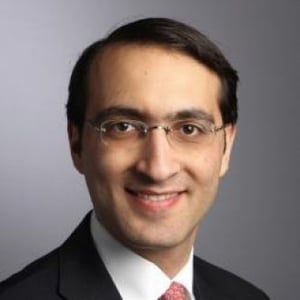
U.S. Department of Commerce, International Trade Administration, Assistant Secretary of Commerce for Enforcement and Compliance
Jeffrey I. Kessler was confirmed unanimously by the U.S. Senate on April 3, 2019 and assumed his position as Assistant Secretary of Commerce for Enforcement and Compliance on April 11, 2019. In his role, Mr. Kessler administers U.S. antidumping and countervailing duty laws, works to ensure foreign compliance with trade agreements, supports the negotiation and implementation of international trade agreements to open foreign markets, and administers the Foreign Trade Zones program – all with the goal of promoting U.S. jobs and economic growth.
Prior to joining the Department of Commerce, Mr. Kessler worked as an international trade attorney in private practice. In that capacity, Mr. Kessler advised leading global companies and U.S. industry associations on a wide range of high-profile, cutting-edge international trade, investment, and market access issues. Mr. Kessler was also involved in litigating several precedent-setting World Trade Organization cases, with successful challenges to foreign country trade practices that restrict billions of dollars of international trade per year, as well as successful defenses of U.S. trade practices.
Mr. Kessler also assisted U.S. companies and industry associations – especially those in innovative, IP-intensive industries – to decipher and navigate foreign trade and investment barriers. Mr. Kessler earned a BA magna cum laude from Yale University, an MA from the University of Chicago, and an JD and MA from Stanford University, where he was an Articles Editor of the Stanford Law Review and a John M. Olin Law and Economics fellow. Additionally,
Mr. Kessler is a member of the American Bar Association and a Term Member of the Council on Foreign Relations. Mr. Kessler resides in Arlington, Virginia with his wife Bethany and their two daughters, Lucy and Diana.
Executive Vice President, The Federalist Society
Dean Reuter is Executive Vice President at the Federalist Society for Law and Public Policy Studies. He has served in two federal government agency Offices of the Inspector General, as Counsel to the Inspector General and Deputy Inspector General, responsible for policing the use of federal funds granted and contracted through those agencies. As such, he helped conduct and oversee criminal investigations across the country. He is the principal author of the non-fiction book, The Hidden Nazi: The Untold Story of America's Deal with the Devil, and editor of Liberty’s Nemesis: The Unchecked Expansion of the State and Confronting Terror: 9/11 and the Future of American National Security. He was appointed by the President and served as Vice-Chairman of the Board of Directors of the Corporation for National and Community Service, and recently served as an appointee on the U.S. Commission on Presidential Scholars. He is a graduate of Hood College (BA with Honors) and the University of Maryland School of Law.
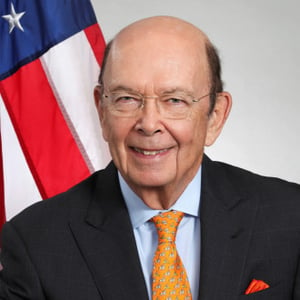
Secretary of Commerce, Department of Commerce
Wilbur L. Ross, Jr. was sworn in by Vice President Mike Pence as the 39th Secretary of Commerce on February 28, 2017. Secretary Ross is the principal voice of business in the Trump Administration, ensuring that U.S. entrepreneurs and businesses have the tools they need to create jobs and economic opportunity.
Secretary Ross is the former Chairman and Chief Strategy Officer of WL Ross & Co. LLC and has over 55 years of investment banking and private equity experience. He has restructured over $400 billion of assets in the airline, apparel, auto parts, banking, beverage, chemical, credit card, electric utility, food service, furniture, gypsum, homebuilding, insurance, marine transport, mortgage origination and servicing, oil and gas, railcar manufacturing and leasing, real estate, restaurant, shipyard, steel, textile and trucking industries. Secretary Ross has been chairman or lead director of more than 100 companies operating in more than 20 different countries.
Named by Bloomberg Markets as one of the 50 most influential people in global finance, Secretary Ross is the only person elected to both the Private Equity Hall of Fame and the Turnaround Management Hall of Fame. He previously served as privatization adviser to New York City Mayor Rudy Giuliani and was appointed by President Bill Clinton to the board of the U.S.-Russia Investment Fund. President Kim Dae-jung awarded Secretary Ross a medal for helping South Korea during its financial crisis and, in November 2014, the Emperor of Japan awarded him the Order of the Rising Sun, Gold and Silver Star.
As a philanthropist, Secretary Ross has served as Chairman of the Japan Society, Trustee of the Brookings Institution and Chairman of its Economic Studies Council, International Counsel Member of the Musée des Arts Décoratifs in Paris, Trustee of the Blenheim Foundation, President of the American Friends of the Rene Magritte Museum in Brussels and Director of the Palm Beach Civic Association. He also was an Advisory Board Member of Yale University School of Management.
Secretary Ross is a graduate of Yale University and Harvard Business School (with distinction). He and his wife Hilary Geary Ross have four children, Jessica Ross, Amanda Ross, Ted Geary and Jack Geary.
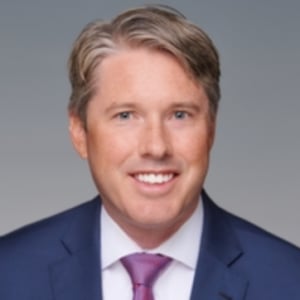
Executive Vice President of Policy, Information Technology Industry Council
Rob Strayer serves as the Executive Vice President of Policy at the Information Technology Industry Council (ITI). He leads ITI’s efforts to shape technology policy around the globe to enable innovation, competition, and economic growth, while supporting governments efforts to achieve their public policy objectives. With a team of experienced professionals at ITI, he is responsible for developing and executing policy strategies in every region of the world and on a wide range of digital technology issues, including privacy and data protection, cybersecurity, trade and market access, standards, artificial intelligence, and taxation.
Prior to joining ITI, Strayer served as the Deputy Assistant Secretary of State for Cyber and International Communications and Information Policy at the U.S. State Department. In that role, he led dozens of bilateral and multilateral dialogues with foreign governments on digital economy regulatory and cybersecurity issues. He was named as an ambassador by the President to lead the 90-plus person U.S. delegation to the International Telecommunication Union (ITU) Plenipotentiary Conference in Dubai, United Arab Emirates in 2018.
Before joining the State Department, Strayer was the general counsel for the U.S. Senate Foreign Relations Committee. He also practiced telecommunications law at WilmerHale, and clerked for the U.S. Court of Appeals for the Eleventh Circuit.
Strayer received a law degree from Vanderbilt University Law School, and earned his B.A. in Economics, summa cum laude, from Denison University.
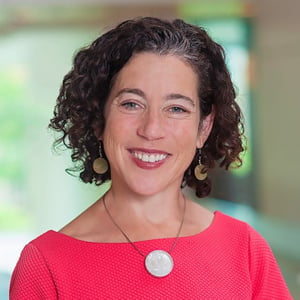
Assistant Professor of Law, American University Washington College of Law
Jennifer Daskal joined American University Washington College of Law (WCL) in 2013 as an Assistant Professor of Law. She teaches and writes in the fields of criminal law, national security law, and constitutional law. From 2009-2011, Prof. Daskal was counsel to the Assistant Attorney General for National Security at the Department of Justice and, among other things, served on the Secretary of Defense and Attorney General-led Detention Policy Task Force. Prior to joining DOJ, she was the senior counterterrorism counsel at Human Rights Watch, worked as a staff attorney for the Public Defender Service for the District of Columbia, and clerked for the Honorable Jed S. Rakoff. She spent two years before joining WCL’s faculty as a national security law fellow and adjunct professor at Georgetown Law Center.
Prof. Daskal is a graduate of Brown University, Harvard Law School, and Cambridge University, where she was a Marshall Scholar. Recent publications include The Un-Territoriality of Data, 326 Yale L.J. 326 (2015); Pre-Crime Restraints: The Explosion of Targeted, Non-Custodial Prevention, 99 Cornell L. Rev. 327 (2014); After the AUMF, 5 Harvard Nat'l Sec. L. J. 115 (2014) (co-authored with Steve Vladeck); and The Geography of the Battlefield: A Framework for Detention and Targeting Outside the ‘Hot’ Conflict Zone, 171 Penn. L. Rev. 1165 (2013). Prof. Daskal has published op-eds in the New York Times, Washington Post, International Herald Tribune, L.A. Times, and Salon.com, and she has appeared on BBC, C-Span, CNN, MSNBC, and NPR, among other media outlets. She is an Executive Editor of and regular contributor to the Just Security blog.
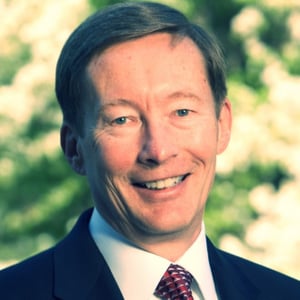
Professor of the Practice of Law and Executive Director, Center on Law, Ethics and National Security, Duke University Law School
Charles J. Dunlap Jr. joined the Duke Law faculty in July 2010 where he is currently a professor of the practice of law and Executive Director of the Center on Law, Ethics and National Security. His teaching and scholarly writing focus on national security, law of armed conflict, the use of force under international law, civil-military relations, cyberwar, airpower, military justice, and ethical issues related to the practice of national security law.
Dunlap retired from the Air Force in June 2010, having attained the rank of major general during a 34-year career in the Judge Advocate General Corps. In his capacity as Deputy Judge Advocate General spanning from May 2006 to March 2010, he assisted the Judge Advocate General in the professional supervision of more than 2,200 judge advocates, 350 civilian lawyers, 1,400 enlisted paralegals, and 500 civilians around the world. In addition to overseeing an array of military justice, operational, international, and civil law functions, he provided legal advice to commanders and civilian leaders at all levels.
In the course of his career, Dunlap has been involved in various high-profile interagency and policy matters, including his testimony before the U.S. House of Representatives concerning the Military Commissions Act of 2006.
Dunlap previously served as the senior lawyer (staff judge advocate) at Air Combat Command Headquarters at Langley Air Force Base in Virginia, at Air Education and Training Command Headquarters at Randolph Air Force Base in Texas, and at U.S. Strategic Command, Omaha, Nebraska, among other leadership posts. Additionally, he served on the faculty of the Air Force Judge Advocate General School where he taught various civil and criminal law topics. An experienced trial lawyer, he also spent two years as a military trial judge for a 22-state circuit. He served tours in the United Kingdom and Korea, and deployed for operations in the Middle East and Africa. He also led military-to-military delegations to Colombia, Uruguay, South Africa, and the Czech Republic.
A prolific author and accomplished public speaker, Dunlap’s commentary on a wide variety of national security topics has been published in leading newspapers and military journals. His 2001 essay written for Harvard University’s Carr Center on “lawfare,” a concept he defines as “the use or misuse of law as a substitute for traditional military means to accomplish an operational objective,” has been highly influential among military scholars and in the broader legal academy.
Dunlap is also the author of the prize-winning essay, “The Origins of the Military Coup of 2012”, originally published in 1992, which was selected for the 40th Anniversary Edition of Parameters (Winter 2010-2011).
Dunlap’s legal scholarship has been published in the Stanford Law Review, the Yale Journal of International Affairs, the Harvard Law’s National Security Journal, the Wake Forest Law Review, the Fletcher Forum of World Affairs, the University of Nebraska Law Review, the Texas Tech Law Review, Temple Law’s Journal of International & Comparative Law, the University of North Carolina’s Journal of International Law, the Connecticut Law Review, the Tennessee Law Review, and the Vanderbilt Journal of Transnational Law, among others.
He’s also authored numerous articles and opinion pieces in a range of publications including The Atlantic, the New York Times, the Washington Post, the Washington Times, the Air Force Times, Strategic Studies Quarterly, the Georgetown Journal of International Affairs, Business Insider, the Journal of Genocide Research, The Hill, Small Wars Journal, and the blogs, Lawfare and Just Security.
Maj Gen Dunlap founded his blog Lawfire in 2015 and has since written over 300 posts on a wide variety of subjects.
Dunlap's wife, Joy, was a vice president of the National Association of Broadcasters, and later a deputy director of Government Relations for the Military Officers Association of America. She served as the elected president of Duke Campus Club, and is a recipient of the prestigious Order of the Emerald by Kappa Delta sorority. Her blog, Speaking Joyfully, won 3rd place in the blog category at the 2021 Blue Ridge Mountains Christian Writers Conference. They reside in Durham.

Executive Vice President, Chief Legal Officer, Gates Corporation
Matthew R. A. Heiman joined the Company in May 2026 and has served as the Company’s Chief Legal Officer and Corporate Secretary since June 2026. As Chief Legal Officer, Mr. Heiman is responsible for all legal functions for Gates, including securities and corporate governance, M&A, litigation, commercial, regulatory, compliance, patents and trademarks, real estate, employment and labor, sustainability and environmental matters. Prior to joining Gates, Mr. Heiman held senior legal leadership roles at Waystar, where he served as Chief Legal & Administrative Officer from 2023 to 2025 and as General Counsel and Corporate Secretary from 2020 to 2023. Prior to that, he was with Johnson Controls, where he served as Vice President, Corporate Secretary, and Associate General Counsel. Mr. Heiman has been a Senior Fellow for the National Security Institute at George Mason University’s Antonin Scalia School of Law since 2018.

Professor Emeritus of Law, Antonin Scalia Law School, George Mason University
Jeremy A. Rabkin is a Professor Emeritus of Law at the Antonin Scalia Law School, George Mason University. Before joining the faculty in June 2007, he was for over two decades a professor in the Department of Government at Cornell University. Professor Rabkin serves on the board of directors of the Center for Individual Rights, a public interest law firm based in Washington, D.C. Previously he was a board member of the U.S. Institute of Peace and the board of academic advisors of the American Enterprise Institute.
Professor Rabkin’s books include Law Without Nations? (Princeton University Press, 2005). He authored “If You Need a Friend, Don’t Call a Cosmopolitan,” a chapter in Varieties of Sovereignty and Citizenship (Sigal R. Ben-Porath & Rogers M. Smith eds., University of Pennsylvania Press, 2012). His articles have appeared in major law reviews and political science journals and his journalistic contributions in a range of magazines and newspapers, including the Washington Post and the Wall Street Journal.

Laurence A. Tisch Professor of Law and Director, Classical Liberal Institute, New York University School of Law; Senior Fellow, The Civitas Institute, University of Texas at Austin
Richard A. Epstein is the inaugural Laurence A. Tisch Professor of Law at NYU School of Law. Prior to his joining the faculty, he was a visiting law professor at NYU from 2007 through 2009. He served as the Peter and Kirstin Bedford Senior Fellow at the Hoover Institution from 2000 to 2024. Since 2024 to the present he is a senior lecturer at the Civitas Institute at the University of Texas—Austin. Epstein is also the James Parker Hall Distinguished Service Professor of Law Emeritus and a senior lecturer at the University of Chicago. His initial law school appointment was at the University of Southern California from 1968 to 1972. Epstein received an LL.D., h.c. from the University of Ghent, 2003. He has been a member of the American Academy of Arts and Sciences since 1985 and was a Senior Fellow of the Center for Clinical Medical Ethics at the University of Chicago Division of Biological Sciences, also from 1983. to 2022 He served as editor of the Journal of Legal Studies from 1981 to 1991, and of the Journal of Law and Economics from 1991-2001. From 2001 to 2010 he was a director of the John M. Olin Program in Law and Economics at the University of Chicago.
His newest book, The Myth of Birthright Citizenship: What the Fourteenth Amendment Really Says was published in 2026 (Encounter Books). Prior to that he has published many books including, The Dubious Morality of the Modern Administrative State (Roman & Littlefield 2020).Earlier he published th Classical Liberal Constitution: The Uncertain Quest for Limited Government (Harvard 2014) iHis previous books include Design for Liberty: Private Property, Public Administration and the Rule of Law (Harvard 2011); The Case Against the Employee Free Choice Act (Hoover 2009); Supreme Neglect: How to Revive the Constitutional Protection of Property Rights (Oxford 2008); Antitrust Decrees in Theory and Practice: Why Less is More (AEI 2007); Overdose: How Excessive Government Regulation Stifles Pharmaceutical Innovation (Yale University Press. 2006); How Progressives Rewrote the Constitution (Cato 2006); Cases and Materials on Torts (Aspen Law & Business; 8th ed. 2004); Skepticism and Freedom: A Modern Case for Classical Liberalism (University of Chicago, 2003); Torts (Aspen Law & Business 1999); Principles for a Free Society: Reconciling Individual Liberty with the Common Good (Perseus Books, 1998): Mortal Peril: Our Inalienable Rights to Health Care (Addison-Wesley, 1997); Simple Rules for a Complex World (Harvard, 1995); Bargaining With the State (Princeton, 1993); Forbidden Grounds: The Case Against Employment Discrimination Laws (Harvard , 1992); Takings: Private Property and the Power of Eminent Domain (Harvard, 1985); and Modern Products Liability Law (Greenwood Press, 1980). He has also edited(with Catherine M. Sharkey) Cases and Materials on the Law of Torts (10th edition 2012).
Professor Epstein has written numerous articles on a wide range of legal and interdisciplinary subjects. He has taught courses in administrative law, antitrust law, civil procedure, communications, constitutional law, contracts, corporations, criminal law, employment discrimination law, environmental law, food and drug law health law and policy, legal history, labor law, property, real estate development and finance, jurisprudence, labor law; land use planning, patents, individual, estate and corporate taxation, Roman Law; torts, and workers' compensation.
Professor Epstein also writes a regular column for Civitas Institute, which also sponsors his podcast, The Libertarian with Charles C.W. Cooke, and Law Talk, with Cooke and John Yoo. He also does a podcast with John Batchelor. And appears regularly on the Freedom File with Judge Andrew Napolitano.

Senior Fellow and Academic Director, Penn Carey Law School
Gus Hurwitz is a Senior Fellow and the Academic Director of the Center for Technology, Innovation & Competition and the University of Pennsylvania Carey Law School where he is working to develop academic and scholarly programs at the intersecution of law, technology, and policy.
He is also Director of Law & Economics Programs at the International Center for Law & Economics (ICLE), a think tank based in Portland, Oregon, where he directs its law and economics-focused research program and helps to translate academic research into applied policy issues.
Hurwitz's research focuses on the regulation of technology, including administrative and regulatory law, antitrust law, torts and products liability, and media law - alongside cognate fields. Inrecent years he has worked on an AI standardization initiative with Seoul National University, a UNICEF-organized study of broadband deployment to public schools in Rwanda, and a book on conglomerate and ecosystems theories of antitrust.
He has published over 30 articles and book chapters, two books (one on cybersecurity law & policy, one on media regulation in the digital era) and have two more in process, over 100 shorter writings (op-eds, shorter analyses, blog posts, &c), hosted over 100 podcast episodes, and regularly appear or am quoted in popular media (including the NY Times, Wall Street Journal, Washington Post, and Associated Press). His work has been cited by legislators, federal courts of appeals, and federal regulatory agencies.
He was previously a full professor and founding director of the Governance & Technology Center at the University of Nebraska, prior to which he was the inaugural research fellow at the Center for Technology, Innovation & Competition (CTIC). From 2007 to 2010, he was a trial attorney with the U.S. Department of Justice Antitrust Division in the Telecommunications and Media Enforcement Section.
He also is, or has been, affiliated with the Classical Liberal Institute at New York University School of Law, the National Security Institute at George Mason University, and the American Enterprise Institute (AEI).
Before attending law school, Hurwitz worked at Los Alamos National Lab and interned at the Naval Research Lab. During this time his work was recognized by the Federal Laboratory Consortium, Los Alamos National Lab, IEEE & ACM, Corporation for Education Network Initiatives in California, R&D Magazine, and even the Guinness Book of World Records.
A current list of Hurwitz’s publications is available on his website: GusHurwitz.net.
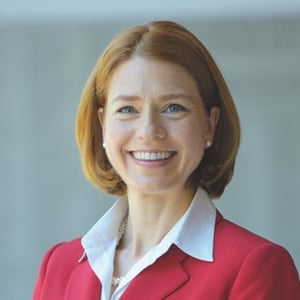
Associate Professor of Law, Villanova University Charles Widger School of Law
Professor Nelson joined the Villanova Law School faculty in 2017 as the Associate Professor of Law (Business Ethics), and she holds a courtesy appointment in the Management & Operations Department of Villanova Business School. A scholar, legal consultant, and start-up advisor, Professor Nelson teaches and writes on issues related to business law, ethics, and white collar crime. She also works collaboratively with two of the Law School’s Centers of Excellence—the John F. Scarpa Center for Law and Entrepreneurship and the David F. and Constance B. Girard-diCarlo Center for Ethics, Integrity, and Compliance—to advance legal scholarship and teaching that lie at the intersection of ethics and business. Professor Nelson came to Villanova from The Wharton School of the University of Pennsylvania, where she has served since 2015 as a Senior Fellow at the Carol and Lawrence Zicklin Center for Business Ethics Research. She also was an advisor in the Center for Entrepreneurial Studies for the Stanford University Graduate School of Business.
Professor Nelson has received numerous awards from the Academy of Legal Studies in Business, including its 2016 Ralph Bunche Outstanding International Paper and its 2015 Outstanding Proceedings awards. Her scholarship has been published in both legal and business journals, including Harvard Law Review, Berkeley Business Law Journal, Journal of Management Inquiry, Cardozo Law Review, Journal of Legal Studies in Business (forthcoming), and The Georgetown Law Journal. Her book co-authored with Lynn Stout, Business Ethics: What Everyone Needs to Know, will be published by the Oxford University Press in 2018.
In addition to her roles at Penn and Stanford, Professor Nelson previously taught at the Drucker School at Claremont Graduate University, the Mihaylo School at Cal State Fullerton, and was a faculty mentor at the Haas Business School of the University of California at Berkeley.
Prior to her work in academia, Nelson served as staff counsel for the U.S. Court of Appeals for the Tenth Circuit and clerked for the Honorable David M. Ebel of the U.S. Court of Appeals for the Tenth Circuit and the Honorable William H. Yohn Jr. of the U.S. District Court for the Eastern District of Pennsylvania. She previously worked as a deputy district attorney and as a business litigator in Denver, Colorado. Nelson is a graduate of Harvard Law School, where she was the Supreme Court Co-Chair of the Harvard Law Review. She earned a Bachelor of Arts in Political Science with honors and distinction in the major from Yale University.
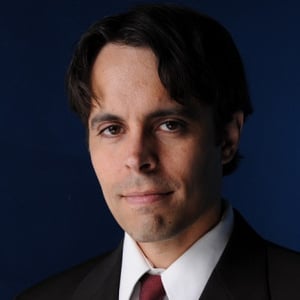
Professor of Law, Florida International University College of Law
Hannibal Travis teaches and conducts research in the fields of cyberlaw, intellectual property, antitrust, international and comparative law, and human rights. He joined FIU after several years practicing intellectual property and Internet law at O’Melveny & Myers in San Francisco, California, and at Debevoise & Plimpton in New York. He has also served as the Irving Cypen Visiting Professor of Law at the University of Florida, a Visiting Associate Professor of Law at Villanova University, and a Visiting Fellow at Oxford. He graduated summa cum laude in philosophy from Washington University, where he was named to Phi Beta Kappa. He graduated magna cum laude from Harvard Law School, where he served as a teaching assistant in philosophy classes taught at Harvard College. After law school, Professor Travis clerked for the United States District Court in Los Angeles, California. Professor Travis has published articles on copyright, trademark, and antitrust law in a variety of journals and books. He has also published works on antitrust law, telecommunications law, and net neutrality in American University Law Review, Hofstra Law Review, and Santa Clara Law Review.
His works have focused on the intellectual property implications of new technologies and user-generated content, as well as antitrust law as applied to broadband and Wi-Fi Internet access markets. He has contributed to symposia and edited volumes on the international and comparative law of copyright and performers’ rights, including a piece on software contracts and copyright that was selected by West Group as one of the best articles relating to intellectual property law that was published in 2010. Professor Travis has also published widely on genocide, cultural survival, and human rights. He is currently an editorial advisory board member of Genocide Studies International (University of Toronto Press), and has served as a peer reviewer for manuscripts submitted to Cambridge University Press, Oxford University Press, Edinburgh University Press, Routledge, and Genocide Studies and Prevention (the journal of the International Association of Genocide Scholars). He has coached FIU’s Jessup International Law Moot Court team, Lefkowitz Trademark Law Moot Court team, and BMI Copyright Law Moot Court team. He is a member of the Copyright Society of the USA and the American Law and Economics Association.
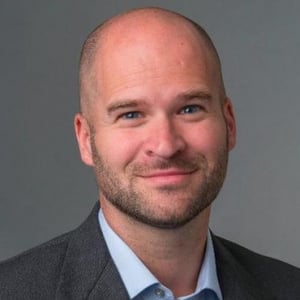
Associate Clinical Professor of Law and Founder/Director, Tech Startup Clinic, Benjamin N. Cardozo School of Law
Aaron Wright is an expert in corporate and intellectual property law, with extensive experience in Internet and new technology issues. Before joining Cardozo's faculty, he sold a company to Wikia, the for-profit sister project of Wikipedia, where he ran Wikia’s New York office, served as General Counsel and Vice President of Product and Business Development, and helped build an open source search engine. Wright has clerked for the Honorable William J. Martini of the U.S. District Court for the District of New Jersey and worked as an associate at several prominent New York law firms, including Patterson Belknap and Jenner & Block. He received his J.D. from the Benjamin N. Cardozo School of Law, where he served as the editor-in-chief of the Cardozo Law Review. He has a forthcoming book about blockchain technology and the law (co-authored with Primavera De Filippi) that will be published by Harvard University Press.

Trade and Globalization Policy Specialist, AFL-CIO
Celeste Drake is the Trade & Globalization Policy Specialist at the AFL-CIO, a job she boils down two main goals: 1) try to improve U.S. trade policy so it doesn’t undercut democracy, gut the American manufacturing sector, and send more U.S. jobs overseas; and 2) try to improve labor rights globally so that empowered workers can race to the top instead of allowing global corporations to force a race to the bottom.
Celeste has testified before the Senate Foreign Relations Committee, various House Subcommittees, the International Trade Commission, and the Executive Branch’s Trade Policy Staff Committee.
Prior to joining the AFL-CIO, Celeste served as Legislative Director for Congresswoman Linda T. Sánchez (D-CA), Legislative Counsel for Congressman Lloyd Doggett (D-TX), Clerk for the Honorable David R. Thompson of the U.S. Court of Appeals for the 9th Circuit, and Economics and World History teacher at Granite Hills High School in El Cajon, CA. She has a J.D., an M.P.P., and a B.A. from the University of California, Los Angeles.
Executive Vice President, Chief Legal Officer, Gates Corporation
Matthew R. A. Heiman joined the Company in May 2026 and has served as the Company’s Chief Legal Officer and Corporate Secretary since June 2026. As Chief Legal Officer, Mr. Heiman is responsible for all legal functions for Gates, including securities and corporate governance, M&A, litigation, commercial, regulatory, compliance, patents and trademarks, real estate, employment and labor, sustainability and environmental matters. Prior to joining Gates, Mr. Heiman held senior legal leadership roles at Waystar, where he served as Chief Legal & Administrative Officer from 2023 to 2025 and as General Counsel and Corporate Secretary from 2020 to 2023. Prior to that, he was with Johnson Controls, where he served as Vice President, Corporate Secretary, and Associate General Counsel. Mr. Heiman has been a Senior Fellow for the National Security Institute at George Mason University’s Antonin Scalia School of Law since 2018.

George C. Dix Professor in Constitutional Law, Northwestern University Pritzker School of Law
John O. McGinnis is a graduate of Harvard College and Harvard Law School where he was an editor of the Harvard Law Review. He also has an MA degree from Balliol College, Oxford, in philosophy and theology. Professor McGinnis clerked on the U.S. Court of Appeals for the District of Columbia. From 1987 to 1991, he was deputy assistant attorney general in the Office of Legal Counsel at the Department of Justice. He is the author of Accelerating Democracy: Transforming Government Through Technology (Princeton 2013) and Originalism and the Good Constitution (Harvard 2013) (with M. Rappaport). He is a past winner of the Paul Bator award given by the Federalist Society to an outstanding academic under 40. He has been listed by the United States on the roster of panelists who may be called upon to decide World Trade Organization Disputes.

Former General Counsel of the U.S. Immigration and Naturalization, Former United States Ambassador to East Timor
Grover Joseph Rees is a Louisiana native whose family has lived in the Breaux Bridge/Lafayette area since the 1700s.
His first job after college was as an assistant to Congressman Dave Treen (R-LA3), who had just been elected as the first Republican Congressman from Louisiana since Reconstruction.
Rees graduated with honors from LSU Law School, where he served as Editor-in-Chief of the Louisiana Law Review. While in law school he worked on Ronald Reagan’s 1976 presidential campaign and was a Reagan delegate from Louisiana to the Republican National Convention. He also served as a member of the Lafayette Parish Republican Executive Committee and as a board member of Acadiana Right to Life.
In 1979, when Congressman Treen ran successfully for Governor, he asked Rees to write his authorized biography. The book, Dave Treen of Louisiana, was read and discussed widely during the campaign and after Treen’s election.
In 1985-86 Rees served as Special Counsel for Judicial Selection in President Reagan’s Justice Department, working closely with Attorney General Ed Meese to reorganize the judicial selection process to make it more philosophically oriented. These efforts resulted in the appointment of over 100 federal judges and were widely credited with transforming the federal judiciary.
From 1986 through 1991 Rees served as Chief Justice of the High Court of American Samoa, an Article I federal judicial position.
From 1991 through 1993 he was General Counsel of the U.S. Immigration and Naturalization Service.
In 1995 Rees went to work for the new Republican Congress as staff director and chief counsel of the Subcommittee on International Operations and Human Rights. He worked with subcommittee chairman Chris Smith (R.-N.J.) to cut U.S. funding for the International Planned Parenthood Federation and other organizations that perform and promote abortions overseas. Rees also worked on the drafting and enactment of the International Religious Freedom Act, the Trafficking Victims Protection Act, and other legislation that has helped to bring U.S. foreign policy into closer alignment not only with our national interests but also with our values.
In 2001-2002 Rees worked for Congressman Henry Hyde (R.-Ill.), who was then serving as Chairman of the House International Relations Committee.
From 2002 until 2006 Rees served as the first United States Ambassador to newly independent East Timor.
From 2006 until 2009 Ambassador Rees was the United States Special Representative for Social Issues, responsible for representing the United States on issues relating to vulnerable persons and the family within the United Nations system.
Ambassador Rees retired from government service in January 2009 and returned to Lafayette. He is married to Lan Dai Nguyen Rees and is a member of St. Genevieve’s Catholic parish in Lafayette. He was recently elected to serve as a member of the Louisiana Republican State Central Committee.

International & National Security Law: The Law, China, and the Possible New Cold War
Lisa Branch, Richard N. Haass, Julian Ku, Dean Reuter, Mike J. Rogers
On November 11, 2020, The Federalist Society's International & National Security Law Practice Group hosted...
A Conversation with Senator Marsha Blackburn
Kaytlin Roholt Lane, Marsha Blackburn
The DC Young Lawyers Chapter hosted Sen. Marsha Blackburn of Tennessee, a member of the...
International Criminal Justice
Hassan Bubacar Jallow, Adam R. Pearlman, Eli Rosenbaum, Arthur Traldi
In May, French authorities arrested Felicien Kabuga after a 26-year manhunt for his alleged role...
Capital Conversations: Michael R. Pompeo, U.S. Secretary of State
Michael R. Pompeo
Join us as Mike Pompeo, the U.S. Secretary of State, discusses the priorities and work...
The Chinese Government's Record of Human Rights: Marking the June 4th Anniversary of Tiananmen Square
Teng Biao, Jerome A. Cohen, Robert A. Destro
On June 4th, 1989, after several weeks of pro-democracy protests, the Chinese Communist Party (CCP)...
Fair Trade: Reinvigorating American Leadership in the 21st Century
Donald B. Cameron, Ronald A. Cass, Jeffrey Ian Kessler, Dean Reuter, Wilbur Ross
On October 15, 2019, the Federalist Society's International & National Security Law Practice Group hosted...
Cyber Strategy Update with Robert L. Strayer
Robert L. Strayer
Join us for a teleforum with Robert L. Strayer, Deputy Assistant Secretary of State for Cyber and...
Panel 1: Legal Authorities for the U.S. Role in Syria: Does Congress Need to Weigh In?
Jennifer Daskal, Charles J. Dunlap, Matthew R. A. Heiman, Jeremy A. Rabkin
On May 23, 2019, the National Security Institute and the Federalist Society co-hosted an event...
Panel: Social Media and Freedom of Speech
Richard A. Epstein, Justin (Gus) Hurwitz, J.S. Nelson, Hannibal Travis, Aaron Wright
Over the past year, there have been a number of discussions about social media and...
How Free Should Trade Be?
Celeste Drake, Matthew R. A. Heiman, John O. McGinnis, Grover Joseph Rees
The panel of experts will focus on international trade and what limits, if any, should...