
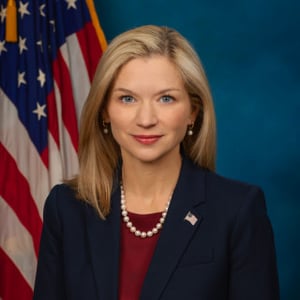
U.S. Attorney, U.S. Attorney's Office for the District of Utah
Melissa Holyoak was nominated by President Trump to serve as U.S. Attorney for the District of Utah on January 29, 2026. Holyoak was appointed on November 17, 2025 by Attorney General Pam Bondi to serve as Interim U.S. Attorney for the District of Utah.
Prior to that, Holyoak served as a Commissioner of the Federal Trade Commission from March 25, 2024 until her appointment as U.S. Attorney. During her FTC tenure, Commissioner Holyoak strove to vigorously enforce the antitrust and consumer protection laws while acting within the agency’s constitutional and statutory remit. She spoke widely about a range of FTC priorities, including improving competition enforcement, effectively applying existing laws to emerging trends in technology, and protecting children and teens online. She also published numerous statements about FTC matters.
Holyoak brings extensive experience as a litigator and leader. She served as Solicitor General with the Utah Attorney General’s Office where she oversaw the civil appeals, criminal appeals, constitutional defense and special litigation, and antitrust and data privacy divisions. She also managed multistate matters including those involving consumer protection and antitrust claims.
Before taking on that role, she served as president and general counsel of Hamilton Lincoln Law Institute, a Washington, D.C.-based public interest law firm and in other public interest attorney positions with the Competitive Enterprise Institute and the Center for Class Action Fairness. Holyoak represented class members challenging unfair class actions and consumers fighting regulatory abuse in federal district courts and appellate courts across the country.
Holyoak has argued in the Fifth, Seventh, Eighth, Ninth, Tenth and D.C. Circuits. She is a former prosecutor and attorney with O’Melveny & Myers LLP. She graduated from the University of Utah S.J. Quinney College of Law in 2003 as a member of the Order of the Coif and the Law Review. Holyoak is a member of the bars of Utah, D.C., and Missouri (inactive). Her husband Dr. Joshua Holyoak is a urologist and together they have four beautiful children.
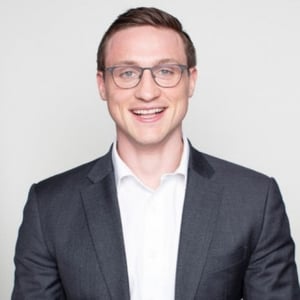
Counsel, Lehotsky Keller LLP
Clayton Kozinski is experienced in managing legal and regulatory frameworks and complex litigation analysis.
Before joining Lehotsky Keller LLP, Mr. Kozinski was general counsel of the Cicero Institute, where he managed legal issues for five non-profit corporations in California and Texas. Mr. Kozinski was also a member of D.E. Shaw & Co., L.P.’s initial class of litigation investment analysts. While there, he advised on over $100 million in capital deployment on issues of complex litigation.
Mr. Kozinski was a law clerk for Justices Anthony Kennedy and Neil Gorsuch on the Supreme Court of the United States and Judge Brett Kavanaugh on the U.S. Court of Appeals for the D.C. Circuit.
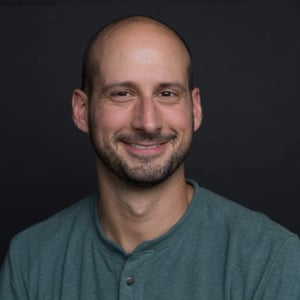
Managing Counsel, Privacy and Product, Cruise
Gabe Ledeen is a trusted in-house counsel with deep experience advising sophisticated technical and business leaders on privacy and issues related to artificial intelligence and machine learning. In 2019, he joined Cruise, a leader in the development of autonomous vehicle technology, to build and manage the privacy and product counseling functions. Prior to Cruise, Gabe was in-house at Facebook where he first counseled on privacy regulatory issues and later spent two years as lead product counsel for AI. Gabe began his legal career as an associate at Jones Day after clerking for Judge A. Raymond Randolph on the U.S. Court of Appeals for the D.C. Circuit.
Gabe graduated cum laude from Rice University with a BA in Philosophy and Cognitive Science with a neuroscience concentration. He earned his law degree from Stanford Law School where he served on the Afghanistan Legal Education Project, was a senior editor for the Stanford Law and Policy Review, and was a founding member of the Stanford Law Veterans Organization.
Prior to law school, Gabe was a Marine logistics officer and deployed twice to al Anbar province, Iraq in 2006 and 2007 with the 3rd Battalion, 3rd Marine Regiment.
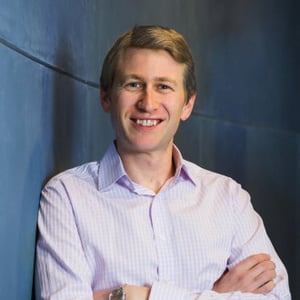
Managing Partner, venBio Partners
Aaron Royston, M.D., M.B.A. is a Managing Partner at venBio with a background in life science investing, healthcare strategy, and as an entrepreneur. Since joining venBio, he has been involved in launching and investing in a number of venBio companies including Apellis Pharmaceuticals (IPO 2017), Menlo Therapeutics (IPO 2018), Akero Therapeutics (IPO 2019), Harmony Biosciences (IPO 2020), RayzeBio, Artiva Biotherapeutics, Neurogastrx, Impel NeuroPharma, and Swift Health Systems. Prior to joining venBio, Dr. Royston was a member of the investment team at Vivo Capital, a life science venture capital firm. Previously, he worked at Bain & Company, where he advised biotechnology companies on a range of strategic and operational issues. Earlier in his career, he coordinated clinical research at Mount Sinai Medical Center, where his research has been published and presented in multiple medical journals and conferences.
Dr. Royston received his B.S. in biological sciences from Duke University, and his M.D. and M.B.A. degrees from the University of Pennsylvania. While a student, he founded and launched a technology company that was acquired after receiving multiple awards and funding from the New York City Economic Development Corporation. In 2010, he was recognized by the United States White House as a Champion of Change for his work in Technology and Innovation. Dr. Royston is active in the community and serves on the board of SFBWS, an environmental non-profit authorized by Congress to support the education, interpretation, and research of the U.S. Fish and Wildlife Service.
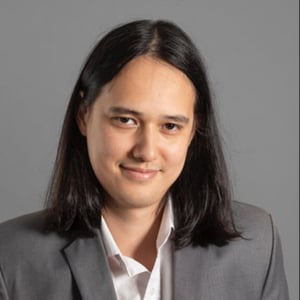
Co-Founder and CEO, Clearview AI
Hoan Ton-That is the CEO and co-founder of Clearview AI, which is based in New York City and has created the next generation of facial recognition technology. Clearview AI's bias-free algorithm can accurately find any face out of three billion images it has collected from the public internet. It is used by law enforcement to solve crimes, including financial fraud, human trafficking, and crimes against children.
A self-taught engineer, Mr. Ton-That is of Vietnamese and Australian heritage. His father's family was descended from the Royal Family of Vietnam. As a student, Mr. Ton-That was ranked #1 solo competitor in Australia’s Informatics Olympiad. He was ranked #2 guitarist under age 16 in Australia’s National Eisteddfod Music Competition.
At the age of 19, Mr. Ton-That moved from Australia to San Francisco to focus on his career in technology. He created over twenty iPhone and Facebook applications with over 10 million installations, some of which ranked in the App Store’s Top 10. Mr. Ton-That moved to New York City in 2016.
In 2017, Mr. Ton-That co-founded Clearview AI, where he developed the technology, raised capital, and built the team and product.
Pronouns: he/him.
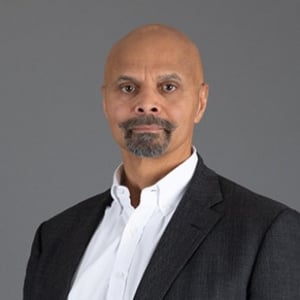
Partner, Benesch, Friedlander, Coplan & Aronoff LLP
Peter focuses his legal practice on representing management in employment-related litigation and in contract negotiations, NLRB proceedings, EEO matters and arbitration.
Peter Kirsanow is a partner with Benesch’s Labor & Employment Practice Group. He returned to Benesch in January 2008 after serving as a presidential appointee to the National Labor Relations Board (NLRB) in Washington D.C. for two years. While serving on the NLRB, he was involved with significant decisions including Oakwood Healthcare, Inc., Dana/Metaldyne and Oil Capital Sheet Metal, Inc. In addition, Peter testified before the Senate Judiciary Committee on the nominations of John Roberts, Samuel Alito, Sonia Sotomayor, Elena Kagan and Neil Gorsuch to the Supreme Court. He also continues to testify before and advise members of the U.S. Congress on employment law matters, most recently on November 18 before the House Subcommittee on Investigations and Oversight regarding disparate impact theory.
Peter was recently reappointed by the Majority Leader of the House of Representatives to his fourth consecutive six-year term on the U.S. Commission on Civil Rights. This is a part-time position which will expire in December 2025.
Recently, Peter and a team of Benesch attorneys served as lead counsel to the National Association of Manufacturers in litigation before the U.S. Circuit Court for the District of Columbia against the NLRB, challenging the Board’s Notice of Employer Rights Posting Rule. The court ruled in favor of Benesch’s client, striking down the NLRB’s Rule in its entirety. This ruling impacts over 6,000,000 employers nationwide which would have been subject to the posting requirement.
Additionally, Peter is past chair of the board of directors of the Center for New Black Leadership and is a member of Benesch’s Diversity & Inclusion Committee. This committee helps ensure that the firm promotes an environment in which differences are respected, employees are treated fairly, and individual skills and talents are valued.
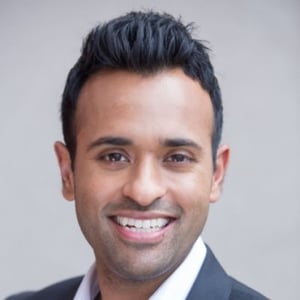
Entrepreneur and Author of WOKE, INC.
Conservative leaders have called Vivek Ramaswamy one of “the most compelling conservative voices in the country” and “one of the towering intellects” in America.
Vivek Ramaswamy is a New York Times bestselling author and a successful entrepreneur who has founded multiple successful enterprises. A first-generation American, he is the founder and executive chairman of Roivant Sciences, a new type of biopharmaceutical company focused on the application of technology to drug development. He founded Roivant in 2014 and led the largest biotech IPOs of 2015 and 2016, eventually culminating in successful clinical trials in multiple disease areas that led to FDA-approved products.
Mr. Ramaswamy was born and raised in southwest Ohio. He graduated summa cum laude in Biology from Harvard in 2007 and began his career as a successful biotech investor at a prominent hedge fund. Mr. Ramaswamy continued to work as an investor while earning his law degree at Yale.
Mr. Ramaswamy was featured on the cover of Forbes magazine in 2015 for his work in drug development. In 2020 he emerged as a prominent commentator on stakeholder capitalism, free speech, and woke culture. He has authored numerous articles and op-eds, which have appeared in The Wall Street Journal, The New York Times, National Review, Newsweek, and Harvard Business Review.
Mr. Ramaswamy serves on the board of directors of the Philanthropy Roundtable, the Foundation for Research on Equal Opportunity, and St. Xavier High School.
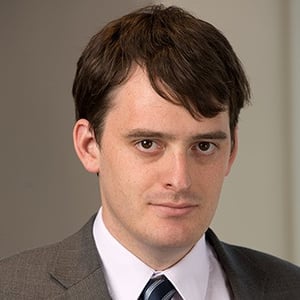
Head of Tech & Innovation, Centre for Policy Studies
Matthew Feeney is Head of Tech & Innovation at Centre for Policy Studies. Before joining CPS, Matthew was the director of Cato Institute’s Project on Emerging Technologies. His writing has appeared in The New York Times, The Washington Post, City A.M., and others. He received both his BA and MA in philosophy from the University of Reading.
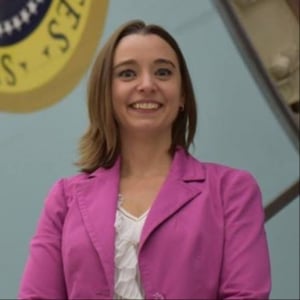
Senior Director for National Security Programs, DataRobot
Jennifer Hay currently serves as the Senior Director for National Security Programs at DataRobot. DataRobot is an end-to-end enterprise AI platform that automates and accelerates machine learning. At DataRobot, Jennifer manages the policy development and outreach efforts at the intersection of national security and AI technology. Jennifer also supports delivery projects to several Department of Defense and Intelligence Community customers, as well as with the participants in DataRobot’s AI for Good initiative.
Prior to joining DataRobot, Jennifer spent two decades working in various roles within the Department of Defense and the White House, including positions on the National Security Council staff, the immediate office of the Deputy Secretary of Defense, the Office of the Under Secretary of Defense for Intelligence, and the Defense Intelligence Agency.
Jennifer is a graduate of The George Washington University with an MA in International Affairs and Pepperdine University with a BA in Political Science.

Founder and Executive Director, National Security Institute; Assistant Professor of Law, Antonin Scalia Law School, George Mason University
Jamil N. Jaffer is the Founder and Executive Director of the National Security Institute at the Antonin Scalia Law School at George Mason University where he also serves as an Assistant Professor of Law, Director of the National Security Law and Policy Program, and Director of the Cyber, Intelligence, and National Security LLM Program. Jamil also teaches classes on counterterrorism, intelligence, surveillance, cybersecurity, and other national security matters, as well as a summer course held abroad with U.S. Supreme Court Justice Neil M. Gorsuch. Jamil is also affiliated with Stanford University’s Center for International Security and Cooperation and previously served as a Visiting Fellow at the Hoover Institution from 2016 to 2019.
Jamil is also a Venture Partner with Paladin Capital Group, where he assists the firm with investments across the full range of its themes and theses, including a focus on dual-use national security technologies. Jamil also serves on the board of directors of RangeForce, a cybersecurity training and readiness platform startup and Tozny, a digital identity startup, and on the advisory boards of U.S. Strategic Metals, North America’s largest primary producer of cobalt, a critical mineral used in EV batteries, aerospace, and other national security applications; and Constella Intelligence, a deep and dark web intelligence startup. Jamil also serves as an advisor to Beacon Global Strategies, a strategic advisory firm and Duco, a technology platform startup that connects corporations with geopolitical and international business experts. Jamil is also the managing director of Trigraph Caveat Capital, a private investment vehicle.
Among other things, Jamil currently serves on the Board of Directors for the Greater Washington Board of Trade, the Board of Advisors for the Global Cyber Alliance, and the Advisory Board of the Foundation for the Defense of Democracies’ Center on Cyber and Tech Innovation, the Executive Committee of the Reagan Institute Strategy Group. Jamil is also a Fellow at the Academy for Judaic, Christian, and Islamic Studies, an advisor to the Concordia Summit, and is a member of the Board of Directors for the Center for Intelligence Policy, the Board of Directors of Speech First, and the Executive Committee of the International Law and National Security Practice Group of the Federalist Society.
Immediately prior to his current positions, from 2015-2021, Jamil served as a senior business leader at IronNet Cybersecurity, helping take the company from a bootstrapped first-year technology products startup through two rounds of venture capital fundraising, growing from 40 employees to over 300, and through its listing on New York Stock Exchange. In his role as IronNet's Senior Vice President for Strategy, Partnerships & Corporate Development, Jamil worked directly for the co-CEOs of the company, Gen (ret.) Keith B. Alexander, the former Director of the National Security Agency and Founding Commander of U.S. Cyber Command, and Bill Welch, the former COO of Zscaler and Duo; in that role, Jamil led all of the company’s strategic and technology partnership efforts, including developing go-to-market and technology integration plans with some of the largest cloud platforms and cybersecurity companies in the market, evaluating potential acquisition targets, and developing overall corporate strategy and thought leadership around collective security and collaborative defense in the cyber arena.
Prior to his time at IronNet, Jamil served on the leadership team of the Senate Foreign Relations Committee as Chief Counsel and Senior Advisor under Chairman Bob Corker (R-TN), where he worked on key national security and foreign policy issues, including leading the drafting of the proposed Authorization for the Use of Military Force against ISIS in 2014 and 2015, the AUMF against Syria in 2013, and revisions to the 9/11 AUMF against al Qaeda. Jamil was also the lead architect of the Iran Nuclear Agreement Review Act and two sanctions laws against Russia for its first intervention in Ukraine.
Prior to joining SFRC, Jamil served as Senior Counsel to the House Permanent Select Committee on Intelligence under Chairman Mike Rogers (R-MI) where he led the committee’s oversight of NSA surveillance, NRO intelligence issues, and NGA analytic and collection matters, as well as intelligence community-wide counterterrorism issues. Jamil was also the lead architect of the Cyber Intelligence Sharing and Protection Act, the nation’s first cyber threat intelligence sharing legislation that was signed into law in 2015.
In the Bush Administration, Jamil served in the White House as an Associate Counsel to the President, handling Defense Department, State Department, and intelligence community matters, and serving as one of the White House Counsel’s primary representatives to the National Security Council Deputies Committee.
Prior to the White House, Jamil served on the leadership team of the Justice Department’s National Security Division as Counsel to the Assistant Attorney General for National Security, where he focused on counterterrorism and intelligence matters. At NSD, Jamil helped lead the division’s work on In re: Directives, the first ever two-party litigated matter in the FISA Court and the second case before the FISA Court of Review in its 30-year history. Jamil also led NSD’s efforts on the President’s Comprehensive National Cybersecurity Initiative (CNCI), including the drafting of NSPD-54/HSPD-23, and related classified matters, and advised the National Security Agency (NSA) and U.S. Cyber Command’s predecessor organization, the Joint Function Component Command for Network Warfare (JFCC-NW), on matters related to cyber intelligence collection and offensive cyber activities. For his work on these matters, Jamil was awarded the Assistant Attorney General’s Award for Special Initiative and was among the group of lawyers awarded the Director of National Intelligence’s 2008 Legal Award (Team of the Year – Cyber Legal).
Jamil also served in other positions in the Justice Department, including in the Office of Legal Policy, where he worked on the confirmations of Chief Justice John G. Roberts, Jr. and Justice Samuel A. Alito, Jr. to the United States Supreme Court.
Jamil also served as a lawyer in private practice at Kellogg Huber, a Washington, DC-based litigation boutique, as a policy advisor to Congressman Bob Goodlatte (R-VA), and as a staff member or senior advisor on a number of political campaigns, including two presidential campaigns and a presidential transition team. While in law school, Jamil was a member of the University of Chicago Law Review, managing editor of the Chicago Journal of International Law, and National Symposium Editor of the Harvard Journal of Law & Public Policy. Following law school, Jamil served as a law clerk to Judge Edith H. Jones of the United States Court of Appeals for the Fifth Circuit and, later in his career, as a law clerk to then-Judge Neil M. Gorsuch when he first joined the United States Court of Appeals for the Tenth Circuit as well as a law clerk to Justice Neil Gorsuch when he joined the U.S. Supreme Court.
Jamil has published multiple op-eds and academic articles on national security, foreign policy, cybersecurity, counterterrorism, encryption, and intelligence matters, and is the co-author of a book chapter with former NSA Director Gen. (Ret.) Keith B. Alexander on national security and the press in National Security, Leaks, and the Freedom of the Press: The Pentagon Papers Fifty Years On (2021) and a book chapter with former CIA Director Gen. (ret.) Mike Hayden on ISIS, al Qaeda, and other international terrorist groups in Choosing to Lead: American Foreign Policy for a Disordered World (2015). Jamil has also written book chapters on cybersecurity and surveillance, as well as op-eds and policy papers with former Attorney General Michael B. Mukasey, former National Counterterrorism Center Director Matt Olsen, and Congressman Mike Waltz (R-FL), among others.
Jamil has previously taught graduate-level courses in intelligence law and policy at George Washington University’s Elliott School of International Affairs and the National Intelligence University, served an outside advisor to the Cyberspace Solarium Commission, and has recently testified before committees of the U.S. Senate and House of Representatives on China, cybersecurity, counterterrorism, and other national security matters. Jamil has also recently appeared on a range of national television and radio outlets including CNN, Fox News, Fox Business, MSNBC, Bloomberg, PBS, Voice of America, and National Public Radio, and in various print and online publications, including the Wall Street Journal, New York Times, and the Washington Post on a range of national security matters including cybersecurity, counterterrorism, surveillance, encryption, privacy, and foreign policy issues.
Jamil holds degrees from UCLA (BA, cum laude), the University of Chicago Law School (JD, with honors), and the United States Naval War College (MA, with distinction).
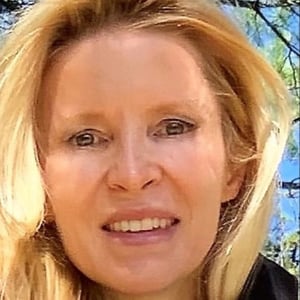
Adjunct Lecturer, The Bush School of Government & Public Service, Texas A&M University
Margaret Peterlin has transitioned across industries and organizations, having served as a Senior Vice President at AT&T following her senior leader position at the U.S. Department of State as Chief of Staff to Secretary Rex Tillerson. Previously, she was as a global executive at Mars, Inc, co-led a large, federal agency, worked for both the Speaker, and the Majority Leader, of the House of Representatives, clerked for a U.S. Court of Appeals Judge, and served as a commissioned officer in the U.S. Navy. Having served in all three branches of the federal government, and in two, global companies, she is now spending time in academia.

Partner, Steptoe & Johnson LLP
Stewart Baker is a partner in the law firm of Steptoe & Johnson in Washington, D.C. From 2005 to 2009, he was the first Assistant Secretary for Policy at the Department of Homeland Security. His law practice covers cybersecurity, data protection, homeland security, and travel and foreign investment regulation; he has been awarded one patent.
Mr. Baker has been General Counsel of the National Security Agency and General Counsel of the commission that investigated WMD intelligence failures prior to the Iraq war. He is the author of Skating on Stilts, a book on terrorism, cybersecurity, and other technology issues; he also hosts the weekly Cyberlaw Podcast.
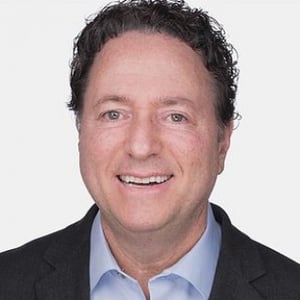
President, Committee for Justice
Curt Levey is President of the Committee For Justice, an organization devoted to advancing constitutionally limited government and individual liberty. He is a veteran of Supreme Court and other judicial confirmation battles and serves on the executive committee of the Federalist Society's Civil Rights Practice Group.
After graduating Harvard Law School with honors and clerking for the U.S. Court of Appeals for the Sixth Circuit, Mr. Levey served as Director of Legal & Public Affairs at the Center for Individual Rights (CIR). There he worked on landmark Supreme Court cases, including the University of Michigan affirmative action cases and the successful constitutional challenge to the Violence Against Women Act. After CIR, Mr. Levey headed the Title IX policy group at the U.S. Department of Education.
Before attending law school, Mr. Levey earned an M.S. and B.A. in computer science from Brown University and worked in the field of artificial intelligence (AI). He invented a new type of AI technology, for which he wrote a successful patent application.
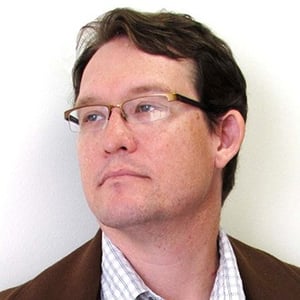
Researcher, International Computer Science Institute and Lecturer, UC Berkeley
Nicholas Weaver received a B.A. in Astrophysics and Computer Science in 1995, and a Ph.D. in Computer Science in 2003 both from the University of California at Berkeley. Although his dissertation was on novel FPGA architectures, he also was highly interested in Computer Security, including postulating the possibility of very fast computer worms in 2001.
In 2003, he joined the International Computer Science Institute, first as a postdoc and then as a staff researcher. His primary research focus is on network security, notably worms, botnets, and other internet-scale attacks, and network measurement. Other areas have included both hardware acceleration and software parallelization of network intrusion detection, defenses for DNS resolvers, and tools for detecting ISP-introduced manipulations of a user's network connection. He is also a lecturer in the Computer Science Department at UC Berkeley.
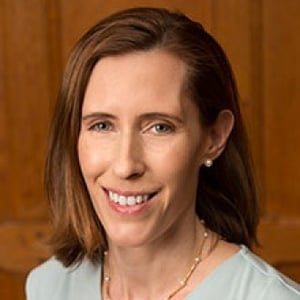
Gerard C. and Bernice Latrobe Smith Professor of International Law and Counselor to the Dean, Yale Law School
Oona A. Hathaway is the Gerard C. and Bernice Latrobe Smith Professor of International Law at Yale Law School, Professor of International Law and Area Studies at the Yale University MacMillan Center, Professor of the Yale University Department of Political Science, and Director of the Yale Law School Center for Global Legal Challenges. She is also Counselor to the Dean at Yale Law School. She has been a member of the Advisory Committee on International Law for the Legal Adviser at the United States Department of State since 2005. In 2014–15, she took leave to serve as Special Counsel to the General Counsel at the U.S. Department of Defense, where she was awarded the Office of the Secretary of Defense Award for Excellence. She is the Director of the annual Yale Cyber Leadership Forum. She has published more than 30 law review articles, and The Internationalists: How a Radical Plan to Outlaw War Remade the World (with Scott Shapiro, 2017).

Judge, United States Court of Appeals, Fifth Circuit
James C. Ho is a Circuit Judge on the U.S. Court of Appeals for the Fifth Circuit. Before taking the bench on January 4, 2018, he was a partner and co-chair of the national Appellate and Constitutional Law practice group of Gibson, Dunn & Crutcher LLP.
As an appellate litigator for over a decade, including three years as the Solicitor General of Texas, Judge Ho presented 50 oral arguments in federal and state courts nationwide. He won numerous appeals, including three merits cases at the U.S. Supreme Court. He was routinely ranked among the nation’s leading lawyers by Benchmark, Chambers, Law360, The Legal 500, and The National Law Journal, among other publications. His work has been cited favorably by courts at every level of both the federal and state judiciaries. He won a Best Brief Award from the National Association of Attorneys General for every year that he served as solicitor general, and he is the only state solicitor general in history to be invited by the U.S. Supreme Court to express the views of a state.
Judge Ho has served in all three branches of the federal government. On the Senate Judiciary Committee, he served as chief counsel of the Subcommittees on the Constitution and Immigration under Senator John Cornyn. At the Justice Department, he served as Special Assistant to the Assistant Attorney General for Civil Rights and an attorney-advisor at the Office of Legal Counsel. He clerked for Judge Jerry E. Smith of the U.S. Court of Appeals for the Fifth Circuit and Justice Clarence Thomas of the U.S. Supreme Court.
His record of public service also includes appointments as vice chair of the Federal Judicial Evaluation Committee in Texas and co-chair of the National Asian Pacific American Bar Association Judiciary Committee, and as a member of the U.S. Magistrate Judge Merit Selection Panel for the Northern District of Texas, the U.S. delegation to the United Nations Committee on the Elimination of Racial Discrimination, and the Continuity of Government Commission.
In addition, Judge Ho has served as an Adjunct Professor of Law at the University of Texas School of Law, where he taught seminars on U.S. Supreme Court Litigation and Religious Liberty. He has authored numerous articles in respected law reviews nationwide, including an annual feature on exemplary judicial writing for The Green Bag Almanac & Reader. He previously served as senior editor of The Green Bag and as co-editor of Pub. L. Misc.
Judge Ho graduated from Stanford University with honors and a B.A. in Public Policy in 1995, and the University of Chicago Law School with high honors in 1999. Before law school, he was a legislative aide to California State Senator Quentin Kopp. He and his wife Allyson live in Dallas, Texas, with their twin daughter and son.
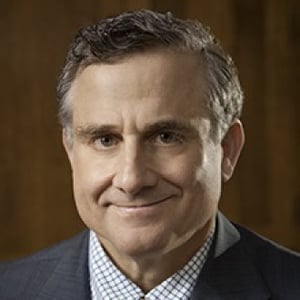
Sam Harris Professor of Corporate Law, Corporate Finance, and Securities Law, Yale Law School
Jonathan R. Macey is Sam Harris Professor of Corporate Law, Corporate Finance, and Securities Law at Yale University, and Professor in the Yale School of Management. From 1991 – 2004, Professor Macey was J. DuPratt White Professor of Law, Director of the John M. Olin Program in Law and Economics at Cornell Law School, and Professor of Law and Business at the Cornell University Johnson Graduate School of Business. Professor Macey earned his B.A. cum laude from Harvard in 1977, and his J.D. from Yale Law School in 1982, where he was Article and Book Review editor of The Yale Law Journal. In 1996, Professor Macey received a Ph.D. honoris causa from the Stockholm School of Economics. Following law school, Professor Macey was law clerk to Judge Henry J. Friendly on the U.S. Court of Appeals for the Second Circuit.
Professor Macey is the author of several books including the two-volume treatise, Macey on Corporation Laws, published in 1998 (Aspen Law & Business), and co-author of two leading casebooks, Corporations: Including Partnerships and Limited Liability Companies (2003 Thomson West), which is in its eighth edition, and Banking Law and Regulation (2002 Aspen Law & Business), which is now in its third edition. He also is the author of over 100 scholarly articles. His recent articles have appeared in the Banking Law Journal, the University of Chicago Law Review, the Stanford Law Review, The Yale Law Journal, the Cornell Law Review, the Journal of Law and Economics, and the Brookings Wharton Papers on Financial Institutions. He has published numerous editorials in such publications as The Wall Street Journal, Forbes, The Los Angeles Times, and The National Law Journal.
Professor Macey has taught at major universities throughout the world, including Bocconi University (Milan), the University of Tokyo; the University of Toronto; the University of Turin, the University of Amsterdam Department of Finance, and the Stockholm School of Economics, Department of Law. He also has been Professor of Law at the University of Chicago (1990) and Visiting Professor of Law at Harvard Law School (1999). Professor Macey is a Senior Research Fellow at the International Centre for Economic Research (ICER) in Turin, Italy. Professor Macey also serves on the Academic Advisory Board (Comitato Scientifico) of the Associazione Disiano Preite for the study of corporate law (per lo studio del diritto dell’impresa). In 1995, Professor Macey was awarded the Paul M. Bator prize for excellence in Teaching, Scholarship and Public Service by the Federalist Society for Law and Public Policy. In 1996, he received a Ph.D., honoris causa from the Stockholm School of Economics. And in 1998, he received the D.P. Jacobs prize for the most significant paper in volume 6 of the Journal of Financial Intermediation for his paper (co-authored with Maureen O’Hara), “The Law & Economics of Best Execution.”
In 1999 Professor Macey was made an honorary Fellow of the Society For Advanced Legal Studies. In 2000, Professor Macey became a member of the Legal Advisory Committee to the Board of Directors of the New York Stock Exchange. In 2001 Professor Macey was appointed a Bertil Daniellson Distinguished Visiting Professor in Banking and Finance at the Stockholm School of Economics. In 2002 Professor Macey was appointed to the Economic Advisory Board of the National Association of Securities Dealers (NASD). In 2004 Professor Macey was awarded a Teaching Award by the Yale Law Women in recognition of his “commitment to excellence in teaching, mentoring and inspiring.” In 2005 Professor Macey became a member of the Board of Editors of Thomson West Publishing Company.

Judge, United States Court of Appeals, Third Circuit
Stephanos Bibas is a judge on the U.S. Court of Appeals for the Third Circuit. Judge Bibas was previously a professor of law and criminology at the University of Pennsylvania Law School. As director of the Penn Law Supreme Court Clinic, he argued six cases before the Supreme Court of the United States and filed briefs in dozens of others. He graduated summa cum laude and Phi Beta Kappa from Columbia University in 1989 with a B.A. in political theory and from Oxford University in 1991 with a B.A. in jurisprudence. He then earned his J.D. from Yale Law School in 1994.
After graduating from Yale Law, Judge Bibas clerked for Judge Patrick Higginbotham of the U.S. Court of Appeals for the Fifth Circuit and Justice Anthony Kennedy on the Supreme Court and was a litigation associate at Covington & Burling LLP in Washington, D.C. Thereafter, Judge Bibas served as an Assistant U.S. Attorney in the Southern District of New York, where he successfully prosecuted the world’s leading expert in Tiffany stained glass for hiring a grave robber to steal priceless Tiffany windows from cemeteries. Before his tenure at Penn Law, Judge Bibas taught at the University of Chicago Law School and the University of Iowa College of Law and was a research fellow at Yale Law School. He has published two books and seventy scholarly articles.
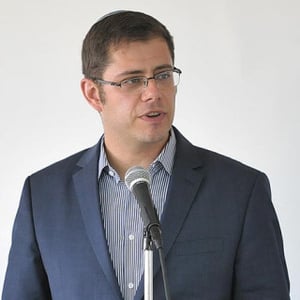
Professor of Law and Director, Center for the Middle East and International Law, George Mason University Antonin Scalia Law School
Professor of Law Eugene Kontorovich is one of the world’s preeminent experts on universal jurisdiction and maritime piracy, as well as international law and the Israel-Arab conflict. He is also the Director of Scalia Law School's Center for the Middle East and International Law. Professor Kontorovich joined the Scalia Law School from Northwestern University Pritzker School of Law where he was a Professor of Law from 2011 to 2018 and an Associate Professor from 2007 to 2011. Previously, he was a Visiting Professor at the University of Chicago from 2005 to 2007 and an Assistant Professor at George Mason School of Law from 2003 to 2007.
Professor Kontorovich has published over thirty major scholarly articles and book chapters in leading law reviews and peer-reviewed journals in the United States and Europe, including the American Journal of International Law, International Review of Law & Economics, Stanford Law Review, California Law Review, University of Pennsylvania Law Review, and Virginia Law Review. His scholarship has been cited in leading foreign relations and international law
His expertise is often sought out and quoted by major news organizations such the New York Times, Wall Street Journal, NPR News, The New Yorker, Los Angeles Times, and numerous television and radio programs. Prof. Kontorovich’s popular writings have appeared in the New York Times, Wall Street Journal, Los Angeles Times, POLITICO, Commentary, Haaretz, and numerous other leading publications. He is also a regular contributor to the Washington Post’s Volokh Conspiracy legal blog.
He attended the University of Chicago for college and law school. After law school, he clerked for Judge Richard Posner on the United States Court of Appeals for the Seventh Circuit. He has been honored with a fellowship at the Institute for Advanced Study in Princeton, in 2011-12, and with the Federalist Society’s prestigious Bator Award, given annually to a young scholar (under 40), for outstanding scholarship and teaching.

George C. Dix Professor in Constitutional Law, Northwestern University Pritzker School of Law
John O. McGinnis is a graduate of Harvard College and Harvard Law School where he was an editor of the Harvard Law Review. He also has an MA degree from Balliol College, Oxford, in philosophy and theology. Professor McGinnis clerked on the U.S. Court of Appeals for the District of Columbia. From 1987 to 1991, he was deputy assistant attorney general in the Office of Legal Counsel at the Department of Justice. He is the author of Accelerating Democracy: Transforming Government Through Technology (Princeton 2013) and Originalism and the Good Constitution (Harvard 2013) (with M. Rappaport). He is a past winner of the Paul Bator award given by the Federalist Society to an outstanding academic under 40. He has been listed by the United States on the roster of panelists who may be called upon to decide World Trade Organization Disputes.
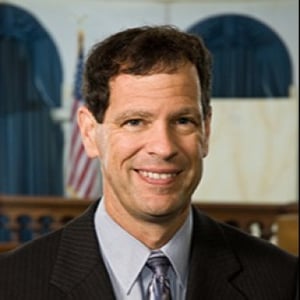
Warren Distinguished Professor of Law, University of San Diego School of Law
Michael D. Ramsey is Warren Distinguished Professor of Law at the University of San Diego School of Law, where he teaches and writes in the areas of Constitutional Law, Foreign Relations Law and International Law. He is the author of The Constitution’s Text in Foreign Affairs (Harvard University Press), co-editor of International Law in the U.S. Supreme Court: Continuity and Change (Cambridge University Press), and co-author of two casebooks, Transnational Law and Practice (2d ed., Aspen) and International Business Transactions: A Problem-Oriented Coursebook (14th ed., West). His scholarly articles have appeared in publications such as the Yale Law Journal, the University of Chicago Law Review, the Georgetown Law Journal and the American Journal of International Law. He received his B.A. magna cum laude from Dartmouth College and his J.D. summa cum laude from Stanford Law School. Prior to teaching, he served as a judicial clerk for Judge J. Clifford Wallace of the United States Court of Appeals for the Ninth Circuit and for Justice Antonin Scalia of the United States Supreme Court, and practiced law with the law firm of Latham & Watkins, where he specialized in international finance and investment. He has taught as a visiting professor at the University of California, San Diego, in the Department of Political Science and at the University of Paris – Sorbonne, in the Department of Comparative Law.
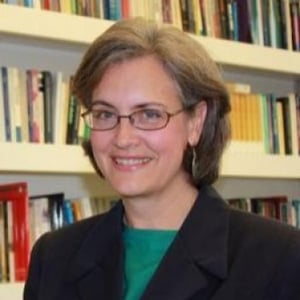
Andrea Mitchell University Professor in Law, Political Science and Business Ethics, Penn Law
Simmons is best known for her research on international political economy during the interwar years, policy diffusion globally, and her work demonstrating the influence that international law has on human rights outcomes around the world. Two of her books, Who Adjusts? Domestic Sources of Foreign Economic Policy During the Interwar Years (1994) and Mobilizing for Human Rights: International Law in Domestic Politics (2009) won the American Political Science Association’s Woodrow Wilson Award for the best book published in the United States on government, politics, or international affairs. The latter was also recognized by the American Society for International Law, the International Social Science Council and the International Studies Association as the best book of the year in 2010. She is currently conducting research in three areas: global performance assessments as informal governance mechanisms in international affairs; international border crossings, and especially evidence of their “thickening” in recent decades in many parts of the world; and international and transnational crime. Simmons has spent a year working at the International Monetary Fund, directed the Weatherhead Center for International Affairs at Harvard, is a past president of the International Studies Association, and has been elected to the National Academy of Sciences and the American Academy of Arts and Sciences.

Partner, Arnold & Porter LLP
John Bellinger heads the firm's Global Law and Public Policy practice. He joined the firm in 2009, after holding several senior Presidential appointments in the US government, including as the Senate-confirmed Legal Adviser to the Department of State and Senior Associate Counsel to the President and Legal Adviser to the National Security Council (NSC) at the White House in the George W. Bush Administration.
Mr. Bellinger represents individuals, corporations, and sovereign governments in litigation in US courts and before international institutions. He has extensive experience in US foreign relations litigation involving the Alien Tort Statute, the Foreign Sovereign Immunities Act, the Anti-Terrorism Act, and the diplomatic and official immunities of foreign governments and government officials. He advises clients on other public international law matters, including treaties and international agreements as well as international humanitarian law and human rights law. He also counsels US and foreign clients on national security legal and policy issues, including US and multilateral financial sanctions and asset controls, the extraterritorial application of US criminal and civil laws, and transactions reviewed by the Committee on Foreign Investment in the United States (CFIUS).
Chambers Global ranks Mr. Bellinger among the best international lawyers in the world, reporting that he has "second-to-none experience in public international law, international litigation and foreign sovereign immunity" and that his "experience at the highest levels of the Executive branch...gives him a distinct and important vantage point on legal issues." Chambers adds: "For any cross border work he's just extraordinary, he knows the area inside-out."
Mr. Bellinger was the State Department Legal Adviser–the most senior international lawyer in the US Government–from 2005 to 2009, serving under Secretary of State Condoleezza Rice. He directed more than 170 lawyers on domestic and international law matters affecting US foreign relations. Before joining the State Department, Mr. Bellinger managed Secretary Rice's Senate confirmation process and co-directed her State Department transition team. In 2009, Mr. Bellinger received the Secretary of State's Distinguished Service Award.
Mr. Bellinger has argued cases before the International Court of Justice (Mexico v. United States–(Medellin)) and the Iran-United States Claims Tribunal in The Hague. He has appeared on numerous briefs in US federal courts, including the Supreme Court, in litigation involving international law issues.
As Legal Adviser to the NSC from 2001 to 2005, Mr. Bellinger advised President Bush, Cabinet officials, National Security Advisor Rice, and NSC staff on a wide range of national security and international law issues, including counterterrorism issues after the 9-11 attacks. He was one of the principal drafters of the legislation that created the Director of National Intelligence.
Prior to his service in the Bush Administration, Mr. Bellinger served as Counsel for National Security Matters in the Criminal Division at the US Department of Justice (1997-2001); Of Counsel to the Senate Select Committee on Intelligence (1996); General Counsel of the Commission on the Roles and Capabilities of the US Intelligence Community (1995-1996); and Special Assistant to Director of Central Intelligence William Webster (1988-1991). Mr. Bellinger is an Adjunct Senior Fellow in International and National Security Law at the Council on Foreign Relations. He has testified before Congress on numerous occasions, is quoted regularly in the media on international and national security law matters, and has lectured at numerous US and foreign universities and law schools. He is the author of many law review articles and op-eds on international law, including op-eds in The Washington Post, The New York Times, and The Wall Street Journal. Mr. Bellinger is a senior contributor to the Lawfare blog.
Mr. Bellinger is a member of the Secretary of State's Advisory Committee on International Law. He served from 2005-2019 as one of four US Members of the Permanent Court of Arbitration in The Hague and a member of the US "National Group", which nominates judges to the International Court of Justice. He is also a member of the Council on Foreign Relations and the American Society of International Law. He is a member of the Council of the American Law Institute; the boards of directors of the American Ditchley Foundation, the Salzburg Global Seminar, and the Stimson Center; and the advisory committee of Foreign Affairs magazine.
Mr. Bellinger is a graduate of Princeton University's Woodrow Wilson School of Public and International Affairs, and he holds an MA in Foreign Affairs from the University of Virginia and a JD from Harvard Law School, where he was an editor of the Harvard International Law Journal.
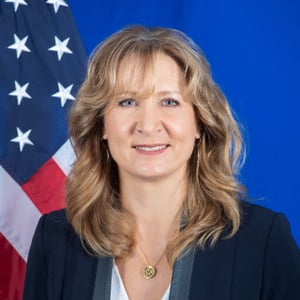
US Department of State, Ambassador At-Large for Global Criminal Justice
Dr. Beth Van Schaack was sworn in as the Department’s sixth Ambassador-at-Large for Global Criminal Justice (GCJ) on March 17, 2022. In this role, she advises the Secretary of State and other Department leadership on issues related to the prevention of and response to atrocity crimes, including war crimes, crimes against humanity, and genocide.
Ambassador Van Schaack served as Deputy to the Ambassador-at-Large in GCJ from 2012 to 2013. Prior to returning to public service in 2022, Ambassador Van Schaack was the Leah Kaplan Visiting Professor in Human Rights at Stanford Law School, where she taught international criminal law, human rights, human trafficking, and a policy lab on Legal & Policy Tools for Preventing Atrocities. In addition, she directed Stanford’s International Human Rights & Conflict Resolution Clinic. Ambassador Van Schaack began her academic career at Santa Clara University School of Law, where, in addition to teaching and writing on international human rights issues, she served as the Academic Adviser to the United States interagency delegation to the International Criminal Court Review Conference in Kampala, Uganda. Earlier in her career, she was a practicing lawyer at Morrison & Foerster, LLP; the Center for Justice & Accountability, a human rights law firm; and the Office of the Prosecutor of the International Criminal Tribunals for Rwanda and the Former Yugoslavia in The Hague.
Ambassador Van Schaack has published numerous articles and papers on international human rights and justice issues, including her 2020 thesis, Imagining Justice for Syria (Oxford University Press). From 2014 to 2022, she served as Executive Editor for Just Security, an online forum for the analysis of national security, foreign policy, and rights. She is a graduate of Stanford (BA), Yale (JD) and Leiden (PhD) Universities.
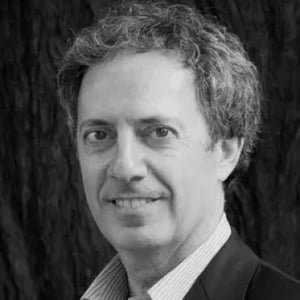
Tad and Dianne Taube Senior Fellow, Hoover Institution, Stanford University; Former Director of Policy Planning Staff, U.S. Department of State
Peter Berkowitz is the Tad and Dianne Taube Senior Fellow at the Hoover Institution, Stanford University. From 2019-2021, he served as the Director of the State Department’s Policy Planning Staff, executive secretary of the department’s Commission on Unalienable Rights, and senior adviser to the Secretary of State. Peter studies and writes about, among other things, constitutional government, conservatism and progressivism, liberal education, national security and law, and Middle East politics. He is the author of Constitutional Conservatism: Liberty, Self-Government, and Political Moderation; Israel and the Struggle over the International Laws of War; Virtue and the Making of Modern Liberalism; and Nietzsche: The Ethics of an Immoralist. He has edited seven volumes on American politics and political institutions. He is a contributor at RealClearPolitics, and has written hundreds of essays, articles, and reviews on many subjects for a variety of publications, including the American Political Science Review, the Atlantic, the Chronicle of Higher Education, the Claremont Review of Books, Commentary, First Things, Haaretz, the Jerusalem Post, National Review, the New Republic, the New York Post, the New York Sun, PJ Media, Policy Review, the Public Interest, the Times Literary Supplement, the Wall Street Journal, the Washington Post, the Weekly Standard, the Wilson Quarterly, and the Yale Law Journal. Peter holds a JD and a PhD in political science from Yale University; an MA in philosophy from the Hebrew University of Jerusalem; and a BA in English literature from Swarthmore College.
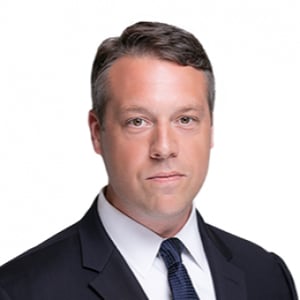
Partner, K&L Gates LLP
David Rybicki is a partner in the Washington, D.C. office of K&L Gates LLP. He is a member of the investigations, enforcement, and white collar practice group.
David recently served in the Criminal Division of the U. S. Department of Justice in Washington, D.C., as Acting Principal Deputy Assistant Attorney General (2017) and Deputy Assistant Attorney General (2017-2020), the second- and third-highest ranking positions in the division. In these roles, David led the investigation, prosecution, and coordination of nationally significant matters and initiatives involving corporate fraud, the Bank Secrecy Act, the Foreign Corrupt Practices Act (FCPA), cybercrime and cryptocurrencies, OFAC sanctions enforcement, transnational organized crime, healthcare fraud, consumer fraud, immigration fraud, civil and criminal RICO, public corruption, human rights, labor racketeering, and gaming law.
Prior to joining the Criminal Division, David served as Counselor to the Attorney General and worked on the Justice Department’s top criminal enforcement initiatives. This work included revision of the Department’s corporate enforcement policies, extension of the FCPA Pilot Program, “Going Dark” and other significant cybersecurity policy matters, Mutual Legal Assistance Treaties, marijuana enforcement and regulatory policy, and creation of the Department's new civil asset forfeiture policies and regulatory guidelines.
In 2018, David was appointed to serve as an ex officio member of the United States Sentencing Commission, where he represented the Justice Department with respect to all aspects of federal sentencing law and policy, including amendments to the Federal Sentencing Guidelines for corporate fraud and other white collar crimes.

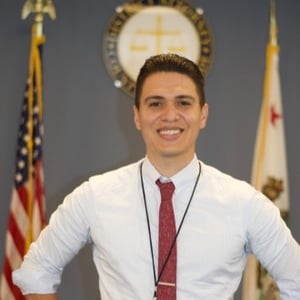
Panel I: Privacy for and from the Digital Person
Daniel A. Bojorquez, Melissa Holyoak, Clayton Kozinski, Gabriel Ledeen, Aaron Royston, Hoan Ton-That
Featuring: Melissa Holyoak, Solicitor General, State of Utah Clayton Kozinski, Counsel, Lehotsky Keller LLP Aaron Royston, Managing Partner,...
Talks with Authors: Woke, Inc.: Inside Corporate America's Social Justice Scam
Peter Kirsanow, Vivek Ramaswamy
Join Mr. Peter Kirsanow and Mr. Vivek Ramaswamy in the latest installment of our Talks...
President Biden's Executive Order on Foreign-Controlled Apps
Matthew Feeney, Jennifer Hay, Jamil N. Jaffer, Margaret A. Peterlin
In June, President Biden revoked a Trump-era executive order that sought to ban TikTok and...
Artificial Intelligence and Bias
Stewart A. Baker, Curt Levey, Nicholas Weaver
It is hard to find a discussion of artificial intelligence these days that does not...
Topics
Chinese Dissidents Lodge Powerful Plea for Donor Privacy in Americans for Prosperity v. Bonta
This week, the U.S. Supreme Court heard oral argument in two consolidated cases that ask...
Debate: Is More Global Governance Necessary?
Oona A. Hathaway, James C. Ho, Jonathan R. Macey
Advocates of global governance argue that more decisions need to be taken at the international...
Panel IV: How Beneficial is International Human Rights Law?
Stephanos Bibas, Eugene Kontorovich, John O. McGinnis, Michael D. Ramsey, Beth Simmons
International human rights law has expanded greatly since World War II. Its advocates see it...
China's Treatment of Turkic Muslims
John B. Bellinger, Beth Van Schaack
The Federalist Society hosts Prof. Beth Van Schaack and Mr. John Bellinger for a discussion...
Legacy of the Unalienable Rights Commission: Discussion with Dr. Peter Berkowitz, Director of the Policy Planning Office, U.S. Department of State
Peter Berkowitz
In May 2019, Secretary of State Mike Pompeo announced formation of the Commission on Unalienable...
Courthouse Steps Oral Argument Teleforum: Nestlé USA, Inc. v. Doe I
David C. Rybicki
The case of Nestlé USA, Inc. v. Doe I (consolidated with Cargill, Inc. v. Doe I)...