
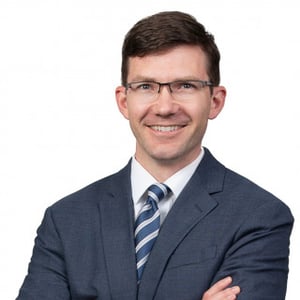
Partner, Nelson Mullins Riley & Scarborough LLP
Miles practices in the areas of appeals, business litigation, and First Amendment law. In addition to representing clients in complex civil and criminal litigation and appeals, Miles advises and represents public and private universities and serves as outside general counsel to several business and educational clients. He also represents and counsels private entities and government agencies and officials, including multiple current and former governors of South Carolina and members of Congress, on issues relating to the constitutional and statutory freedoms of speech, religion, and association. His First Amendment work has been cited by the United States Supreme Court.
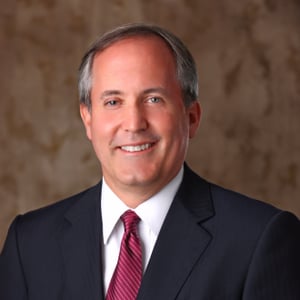
State Attorney General, Texas
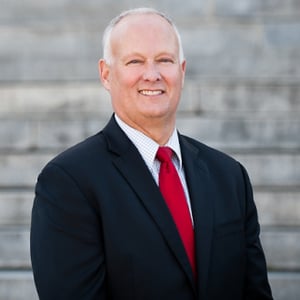
Attorney General, Nebraska
Elected as Nebraska’s 32nd Attorney General in 2014, Doug Peterson has dedicated his career to being an advocate for Nebraskans both in state and federal court.
Peterson was born in Columbus, Nebraska and grew up primarily in Lincoln. He graduated from the University of Nebraska with a business degree in 1981, and from Pepperdine University School of Law in 1985. Following law school, Mr. Peterson spent two years in North Platte, Nebraska, prosecuting both criminal and civil cases for the Lincoln County Attorney. From 1988 to 1990, he served as Assistant Attorney General to the Nebraska Attorney General’s office, representing the State in employment law matters and tort litigation. In 1990, Peterson entered private practice, where he had the opportunity to advise and advocate for both individuals and businesses.
In his role as Attorney General, Peterson works closely with law enforcement agencies across the State to ensure that Nebraska communities are safe. Peterson’s office has supported strengthened legislation and enforcement in the areas of human trafficking, prosecution of child sexual assault and abuse, and consumer protection laws to safeguard all Nebraskans.
Office Overview
The Nebraska Department of Justice/Office of the Attorney General operates, in many respects, as the “State’s law firm.” The office is headed by the Nebraska Attorney General, an independently-elected constitutional officer, and is a diverse organization of highly specialized attorneys and support staff. The Attorney General’s Office is the largest “law firm” in Nebraska outside of Omaha.
Major Duties
Attorney General, South Carolina
Alan Wilson was elected South Carolina’s Fifty-First Attorney General on November 2, 2010, and took office on January 12, 2011, becoming the nation’s youngest Attorney General.
This marks his third stint in the office. Previously, he served as a prosecution division intern under Charlie Condon and as an Assistant Attorney General under Henry McMaster.
As South Carolina’s Attorney General, Wilson is the state’s chief prosecutor, chief securities officer, and the state’s chief legal counsel. The office is comprised of more than two hundred employees and nearly seventy-five attorneys who manage nearly 8,000 active case files.
Wilson has focused on keeping our families safe and defending the Constitution.
He has assembled an unprecedented coalition consisting of the Attorney General’s office, the State Law Enforcement Division, every sheriff, the Police Chief’s Association, and all 16 solicitors. Together, they are actively advancing legislative priorities to ensure South Carolina is the safest place to live, work, and raise a family.
As Attorney General, Wilson has defended the Constitution and the laws of this state even if it means challenging the federal government. He has protected South Carolina’s right-to-work; helped lead the 26-state challenge to the federal health care mandate; and successfully safeguarded South Carolina’s voter identification and immigration laws in court.
Today, he is actively engaged in state and federal litigation to provide safe harbor to South Carolina’s ports, shield the state’s energy interests at Yucca Mountain, as well as a constitutional challenge of Dodd-Frank.
Prior to his election, Wilson served as an Assistant Solicitor and as an Assistant Attorney General before entering private practice with the Columbia firm of Willoughby & Hoefer, P.A. He began his legal career working for the late Judge Marc H. Westbrook.
Growing up, public service was paramount in the Wilson house. Alan and his three brothers have all achieved the rank of Eagle Scout. All four presently serve our nation in uniform.
Wilson joined the National Guard immediately after graduating from college. He was called to serve in Iraq where he led troops through enemy fire and earned the Combat Action Badge. Today, he continues his military service by providing legal support for soldiers and assisting in the prosecution of military crimes as a Lt. Colonel in the Judge Advocate General Corps.
He is a graduate of Francis Marion University and the University of South Carolina School of Law. Wilson and his wife, Jennifer, have two young children, Michael and Anna Grace.
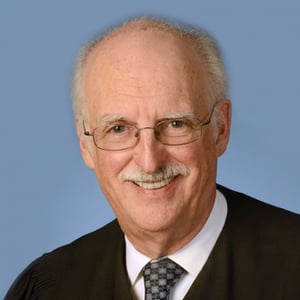
Senior Judge, United States Court of Appeals, District of Columbia Circuit
Circuit Judge Douglas H. Ginsburg was appointed to the United States Court of Appeals for the District of Columbia in 1986. After receiving his B.S. from Cornell University in 1970, and his J.D. from the University of Chicago Law School in 1973, he clerked on the D.C. Circuit and for Justice Thurgood Marshall on the United States Supreme Court. Thereafter, Judge Ginsburg was a professor at the Harvard Law School, the Deputy Assistant and then Assistant Attorney General for the Antitrust Division of the Department of Justice, as well as the Administrator of the Office of Information and Regulatory Affairs in the Office of Management and Budget. Concurrent with his service as a federal judge, Judge Ginsburg has taught at the University of Chicago Law School and the New York University School of Law. Judge Ginsburg is currently a Professor of Law at the George Mason University and a visiting professor at University College London, Faculty of Laws.
Judge Ginsburg is the Chairman of the International Advisory Board of the Global Antitrust Institute at the Law and Economics Center of the George Mason University School of Law. He also serves on the Advisory Boards of: Competition Policy International; the Harvard Journal of Law and Public Policy; the Journal of Competition Law and Economics; the Journal of Law, Economics & Policy; the Supreme Court Economic Review; the University of Chicago Law Review; the New York University Journal of Law and Liberty; and, at University College London, both the Centre for Law, Economics and Society and the Jevons Institute for Competition Law and Economics.
In 2020, Judge Ginsburg was the 11th recipient of the John Sherman Award, presented by the Antitrust Division of the Department of Justice in recognition of the awardee’s Lifetime Contributions to Antitrust Law and Policy.
In 2014, Judge Ginsburg received the Lifetime Achievement Award given annually by the Global Competition Review.
He is the author or co-author of several books and more than 100 articles on competition and regulation, including, most recently, Growing Convergence: The Limited Role of Antitrust in Standard Essential Patent Disputes, in CPI Antitrust Chronicle, Summer 2021, Vol. 1, No. 2.
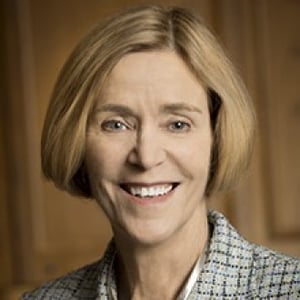
Lafayette S. Foster Professor of Law, Yale Law School
Kate Stith, Lafayette S. Foster Professor of Law at Yale Law School, teaches and writes in the areas of criminal law, criminal procedure, and constitutional law. Prior to joining the faculty at Yale, Professor Stith was an Assistant United States Attorney for the Southern District of New York, where she prosecuted white-collar and organized-crime cases. Professor Stith is serving or has served as an Adviser for the American Law Institute project Model Penal Code Sentencing; on the Committee on Law and Justice of the National Research Council; on the Professional Ethics Committee in the State of Connecticut; as a Commissioner of the Permanent Commission on the Status of Women in Connecticut; as President of the Connecticut Bar Foundation; on the Dartmouth College Board of Trustees; as faculty sponsor and director of the Women's Campaign School at Yale; as Deputy Dean of Yale Law School; and, by appointment of the Chief Justice of the United States, on the Advisory Committee for the Federal Rules of Criminal Procedure. Her book on the federal sentencing guidelines, Fear of Judging (with J.A. Cabranes), was awarded a Certificate of Merit by the ABA in 1999. A graduate of Dartmouth College, the Kennedy School of Government, and Harvard Law School, she clerked for Judge Carl McGowan of the U.S. Court of Appeals for the District of Columbia and for Supreme Court Justice Byron R.White.
Emeritus Professor of Political Economy, Claremont McKenna College
Wm. Craig Stubblebine, Emeritus Professor of Political Economy at the Claremont McKenna College (formerly Claremont Men’s College), is a native of Texas. He holds a B.S. degree from the University of Delaware, and a Ph.D. degree in Economics from the University of Virginia. He is married to the former Carol Ann Wiebe and has two children, Julia and Erik.
Stubblebine taught Economics on the faculty of the University of Virginia from 1961 to 1963, and on the faculty of the University of Delaware from 1963 to 1966. During 1965-66, he was a National Science Foundation Faculty Fellow at the Massachusetts Institute of Technology.
From 1966 to 2003, Stubblebine was a member of the faculties of Claremont McKenna College and Claremont Graduate School. He now is an emeritus professor. He was on leave from Claremont during 1967-68, when he served as a Fulbright Lecturer in Welfare Economics at the University of Turin, Italy; and during 1971-72, when he served as Associate Professor of Economics at Southern Methodist University, and Visiting Scholar in Public Choice and Professor of Economics at Virginia Polytechnic Institute and State University. Stubblebine was appointed Professor of Economics in 1976 and received the Von Tobel Chair of Political Economy in 1979. He was appointed founding Director of the Center for the Study of Law Structures in 1977, serving in that capacity until he became Chairman of the Department of Economics during 1984-87.
Stubblebine has served as President of the Western Tax Association, as President of the Faculty Senate of the Claremont Colleges, and has held various offices at Laws-atWork, including Vice-Chairman. He also has served as a Director and Senior Associate of Public Associates Incorporated, as a Senior Associate of JurEcon, and as a founding Director of the National Tax Limitation Committee. He was a founding director of the YES Fund and a director of Seapointe Savings and Loan. He chaired the national committee which drafted the proposed Federal tax/spending limitation amendment adopted by the U. S. Senate in 1982 and has served as a consultant to various state limitation drafting committees.
Author of articles on property rights and public finance, Stubblebine is a member of several professional societies and has participated in governmental and business consulting activities. With R. T. Smith, he is co-author of Maintaining the Legacy of Proposition 13 (1991). He is an editor of and contributor to Reaganomics: a Mid-Term Report (1983). He has lectured widely, has participated in many economic conferences, and served on a variety of task forces. He has been listed in various “Who’s Who ....” including “Who’s Who in America” and “Who’s Who in Economics”.
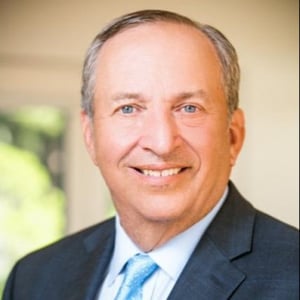
President Emeritus, Harvard University
Lawrence H. Summers is President Emeritus of Harvard University. During the past two decades he has served in a series of senior policy positions, including Vice President of development economics and chief economist of the World Bank, Undersecretary of the Treasury for International Affairs, Director of the National Economic Council for the Obama Administration from 2009 to 2011, and Secretary of the Treasury of the United States, from 1999 to 2001.
He received a bachelor of science degree from the Massachusetts Institute of Technology in 1975 and was awarded a Ph.D. from Harvard in 1982. In 1983, he became one of the youngest individuals in recent history to be named as a tenured member of the Harvard University faculty. In 1987 Mr. Summers became the first social scientist ever to receive the annual Alan T. Waterman Award of the National Science Foundation (NSF) and in 1993, he was awarded the John Bates Clark Medal, given every two years to the outstanding American economist under the age of 40.
He is currently the Charles W. Eliot University Professor at Harvard University. He and his wife Elisa New, a professor of English at Harvard, reside in Brookline with their six children.
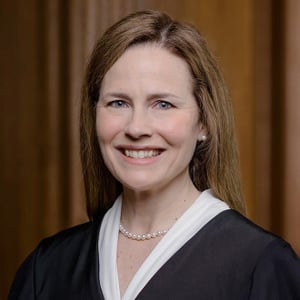
Associate Justice, United States Supreme Court
The Honorable Amy Coney Barrett is an Associate Justice of the Supreme Court of the United States. She was nominated by President Donald Trump and was confirmed on October 27, 2020. She is the fifth woman to serve on the Court.
Justice Barrett earned her J.D., summa cum laude, from Notre Dame, where she was a Kiley Fellow, earned the Hoynes Prize, the Law School’s highest honor, and served as executive editor of the Notre Dame Law Review. She clerked for Judge Laurence H. Silberman of the U.S. Court of Appeals for the D.C. Circuit and for Associate Justice Antonin Scalia of the U.S. Supreme Court. As an associate at Miller, Cassidy, Larroca & Lewin in Washington, D.C., she litigated constitutional, criminal, and commercial cases in both trial and appellate courts.
In 2002, Justice Barrett joined the faculty of Notre Dame Law School. She continued to teach following her appointment to the U.S. Court of Appeals for the Seventh Circuit in November 2017. Justice Barrett also served by appointment of the Chief Justice on the Advisory Committee for the Federal Rules of Appellate Procedure from 2010 to 2016.
Justice Barrett has published widely in the areas of federal courts, constitutional law, and statutory interpretation. Her scholarship in these fields has been published in leading journals, including the Columbia, Virginia, and Texas Law Reviews.
United States District Judge, Middle District of Florida
Judge Berger was raised in Jacksonville, Florida. She received her undergraduate degree from The Florida State University in 1990 and her law degree from The Florida State University College of Law in 1992, where she was a member of Law Review. Judge Berger served as an Assistant State Attorney in the Seventh Judicial Circuit from 1993 – 2000. In January 2001, Judge Berger left the State Attorney’s Office to serve as an Assistant General Counsel to Governor Jeb Bush. Judge Berger served in Governor Bush’s administration from January 2001 until May 2005, when she was appointed by the governor to serve as a Circuit Judge in the Seventh Judicial Circuit. During her service on the circuit court, Judge Berger presided over the civil and probate divisions (2005-2006) and adult felony division (2006-2012) in St. Augustine. She was also the presiding judge of the St. Johns County Adult Drug Court Program (2005-2012).
Judge Berger is currently a member of the St. Johns County Bar Association, the Orange County Bar Association, The Florida Supreme Court Committee on Civil Jury Instructions, the Florida Bar Criminal Procedure Rules Committee, the Florida Bar Appellate Practice Section’s Executive Council, the Dunn Blount Inn of Court, and the Federalist Society. She has prior service on the Florida Bar’s Judicial Administration and Evaluation Committee (2008 – 2013), the Judicial Administration Selection and Tenure Committee (2001-2004), the Florida Supreme Court Subcommittee on Postconviction Relief (2010-2011), the Statewide Diversity Team (2009-2012), and has been a member of both the National Association of Drug Court Professionals and the Florida Association of Drug Court Professionals.
Judge Berger has lectured on a wide range of topics including practicing with professionalism, judicial diversity, the judicial appointment process, effective oral arguments, fundamentals of extradition, capital cases, gender bias in the media, drug court, and drug and alcohol prevention.
Active in her community, Judge Berger served as a member of the St. Johns County Consortium on Substance Abuse as well as the St. Johns County Public Safety Committee. She is a member of the St. Augustine Rotary Club (Paul Harris Fellow) and is a steering committee member of The Marketplace Christian Professional Resources. She volunteers in the schools, has served as a reading mentor, and participates in the PACT Prevention Coalition’s Safe Prom Event. Judge Berger is also an active member of Trinity Episcopal Parish.
Judge Berger and her husband, Larry, live in St. Augustine with their two children.
Judge, The 15th Judicial Circuit of Florida
The Honorable Paige Gillman is a Palm Beach County Court Judge appointed by now Senator Rick Scott in 2018. She currently presides in and is the Administrative Judge for the County Civil Division. Additionally, she serves as the Administrative Judge for the Civil Traffic Division of the Circuit. In June of 2020, Governor Ron Desantis appointed Judge Gillman to the Palm Beach Circuit Court. She will transition to the Circuit bench in January 2021.
Judge Gillman received both her undergraduate and Juris Doctor degrees from the University of Florida. Prior to taking the bench, Judge Gillman served as an Assistant State Attorney in the 19th Judicial Circuit, as a complex commercial and intellectual property litigator with Mracheck Law and finally as Staff Counsel for Allstate, Esurance and Encompass handling a broad range of auto and property matters.
Judge Gillman currently serves on the Florida Bar Small Claims Rules Committee and the Florida Supreme Court Civil Jury Instruction Committee.
General Counsel & Wealth Advisor, Ullmann Wealth Partners
Patrick Kilbane is the General Counsel and a Wealth Advisor for Ullmann Wealth Partners headquartered in Jacksonville Beach, FL. Ullmann Wealth Partners is an independent wealth management firm that manages half a billion dollars of client assets in custody at Fidelity. Before joining Ullmann Wealth Partners, Pat was a Shareholder at Gray Robinson, P.A. where he had a thriving specialty litigation practice. Pat was recognized multiple times by Florida Trend and Super Lawyers Magazine for his skills and professionalism.
Pat serves the Northeast Florida Region in several roles. He’s received five gubernatorial appointments to the Judicial Nominating Commission for Florida’s Fourth Judicial Circuit and the Jacksonville Aviation Authority Board of Directors. His fellow board members elected him Chairman of both boards. Further, Pat is the President of the Jacksonville Lawyers Chapter of the Federalist Society. In 2014-2015, Pat was elected President of the Young Lawyers Section of the Jacksonville Bar Association.
In 2005, Pat received his Juris Doctor degree from the University of Notre Dame. He received his Bachelor of Business Administration degree, summa cum laude, from Adrian College, where he earned the full-ride, merit-based Dawson Scholarship and was named the Outstanding Graduate by faculty vote for the Class of 2002.
Managing Partner, Cramer Multhauf LLP
Attorney Matthew Fernholz focuses his practice on commercial litigation, trust and fiduciary disputes, business torts, trade secrets, non-compete agreements, defamation, and appellate work. In addition, he has developed one of the preeminent political and election law practices in the State of Wisconsin, and has handled several high-profile matters, from representing candidates for statewide office, successfully challenging the Governor’s emergency powers, arguing before the Wisconsin Elections Commission, and representing the Speaker of the Assembly.
Matthew frequently and successfully tries cases to verdict, and believes a lawyer unwilling to try a case should not take on a client in a litigation matter. In addition to this trial work, he has handled dozens of appeals, and countless dispositive motions.
His work has also been published in law review journals and newspapers alike.
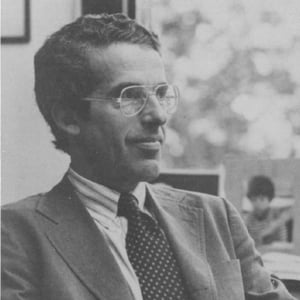
Scholar and former Deputy Solicitor General of the United States
Paul Michael Bator (June 2, 1929 – February 24, 1989) was an American legal academic, Supreme Court advocate and expert on United States federal courts. In addition to teaching for almost 30 years at Harvard Law School and the University of Chicago Law School, Bator served as Deputy Solicitor General of the United States during the Reagan Administration.
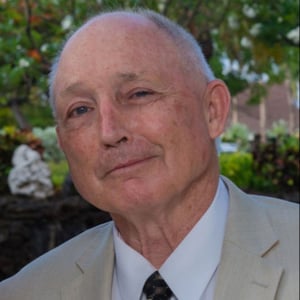
Charles R. Walgreen, Jr. Chair in Law and Co-Director, Program in Law and Philosophy, University of Illinois College of Law
One of the country’s most prominent authorities on the intersection of law and philosophy, and widely regarded as the country’s leading theoretician of the criminal law, Professor Moore joined the faculty in 2002 as the Charles R. Walgreen, Jr. Chair, the first and only university-wide chair for the University of Illinois’ three campuses. He is jointly appointed as professor of law in the College of Law and as a professor with the Center for Advanced Studies, an honor bestowed on faculty on the basis of their outstanding scholarship and among the highest forms of campus recognition. Professor Moore was just the second UI College of Law faculty member to have held such an appointment.
Before coming to Illinois, Professor Moore served as the Warren Distinguished Professor of Law and as co-founder and co-director of the Institute for Law and Philosophy at the University of San Diego. From 1989-2000, he was the Leon Meltzer Professor of Law and Professor of Philosophy at the University of Pennsylvania, where he co-founded and directed the University of Pennsylvania Institute for Law and Philosophy.
Over the course of his career, he also has been a professor of law at the University of California at Berkeley, the University of Southern California (where he held the Robert Kingsley Chair), and the University of Kansas. In addition, he has been the William Minor Lile Distinguished Visiting Professor of Law at the University of Virginia, the Florence Rogatz Visiting Professor at the Yale Law School, The Mason Ladd Distinguished Visiting Professor at the University of Iowa Schools of Law and of Medicine, as well as a visiting professor at Stanford University, Northwestern University, Tel Aviv University in Israel, di Tella University in Buenos Aires, and the Universität Erlangen in Germany.
He has held a number of fellowships and visiting scholar positions, including two in the Law and Humanities Program of Harvard University, five at the Australian National University’s Research School of Social Sciences in Canberra, Australia, and one each at the Humanities Research Institute of the University of California at Irvine, the Rockefeller Center in Bellagio, Italy, the Georgetown University Law Center, the University of Pennsylvania’s Center for Neuroscience and Society, and the Yale Law School.
Over an academic career spanning more than 50 years Moore has published more than 140 books, articles, editorials, and other pieces of scholarship, documented recently in a festschrift published in his honor, K. Ferzan and S. Morse, eds., Legal, Moral, and Metaphysical Truth: The Philosophy of Michael S. Moore (Oxford University Press, 2016). He is the author of Placing Blame: A General Theory of the Criminal Law (Oxford University Press, 1997), widely regarded as the leading modern statement of the retributivist theory of the criminal law. In an earlier book, Act and Crime: The Philosophy of Action and its Implications for Criminal Law (Oxford University Press, 1993), Moore provided a unified theory of action that underlies English and American criminal jurisprudence. In a later book, Causation and Responsibility: An Essay in Law, Morals, and Metaphysics (Oxford University Press, 2009), Moore explored the nature of causation and its relation to both moral and legal responsibility. Earlier in his career, he authored Law and Psychiatry: Rethinking the Relationship (Cambridge University Press, 1984), which explored the tension that often exists between legal and psychiatric theories. His latest book, Mechanical Brains and Responsible Choices, still forthcoming, will return to these same issues, this time as they are raised by contemporary neuroscience rather than by dynamic psychiatry.
Professor Moore has presented hundreds of lectures and papers around the world in law, jurisprudence, political theory, legal philosophy, political science, economics, philosophy, psychology, psychiatry, and neuroscience, including most recently endowed, named lectures at Duke, Dartmouth, Columbia, Tel Aviv, Pennsylvania universities, as well as the annual Public Philosophy Lecture and the annual Center for Advanced Studies Lecture at the University of Illinois. He is on the board of editors of numerous journals in law and in philosophy and for a decade served as editor-in-chief of the journal, Law and Philosophy.
He regularly rotates his law teaching between first-year courses of criminal law, torts, contracts, property, and constitutional law, and upper-year courses in jurisprudence and legal philosophy. During his 13 years on the Philosophy Department faculty at Illinois he taught undergraduate courses in the philosophy of law and political philosophy and graduate seminars in neuroscience, ethics, the theory of action, and the metaphysics of causation.
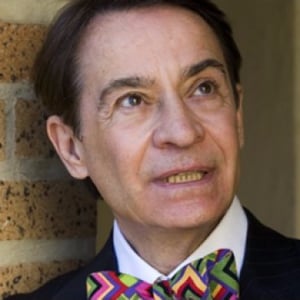
Doy & Dee Henley Chair and Distinguished Professor of Jurisprude, Chapman University Dale E. Fowler School of Law
Ronald D. Rotunda was the Doy & Dee Henley Chair and Distinguished Professor of Jurisprudence, at Chapman University, the Dale E. Fowler School of Law. He joined the faculty in 2008. Before that, he was University Professor and Professor of Law at George Mason University School of Law. From 2002 to 2006, he was the George Mason University Foundation Professor of Law. Before that, he was the Albert E. Jenner, Jr. Professor of Law, at the University of Illinois. He was a magna cum laude graduate of both Harvard College and Harvard Law School, where he was a member of Harvard Law Review. He joined the University of Illinois faculty in 1974 after clerking for Judge Walter R. Mansfield of the United States Court of Appeals for the Second Circuit, practicing law in Washington, D.C., and serving as assistant majority counsel for the Senate Watergate Committee. He has co-authored the most widely used course book on legal ethics, Problems and Materials on Professional Responsibility(Foundation Press, 12th ed. 2014) and was the author of a leading course book on constitutional law, Modern Constitutional Law (West Academic Co., 11th ed. 2015)(Abridged & Unabridged editions). He was the coauthor of, Legal Ethics: The Lawyer's Deskbook on Professional Responsibility (ABA- West/Thompson Reuters Publishing, St. Paul, Minnesota, 2016-2017 ed.) (Jointly published by the ABA and West/Thompson Reuters Publishing) (with John Dzienkowski). Rotunda also co-authored (with John Nowak) the six-volume Treatise on Constitutional Law (West/Thompson Reuters Publishing, 5th ed. 2012)(with annual updates), and a one volume Treatise on Constitutional Law (West Academic, 8th ed. 2010). He was also the author of several other books and more than 500 articles in various law reviews, journals, newspapers, and books in this country and abroad. His works have been translated into French, Portuguese German, Romanian, Czech, Russian, Japanese, and Korean. These books and articles have been cited more than 2000 times by law reviews, by state and federal courts at every level, from trial courts to the U.S. Supreme Court, and by foreign courts in Europe, Africa, Asia, and South America. He has been interviewed on radio and television on legal issues, both in this country and abroad. In 1993 he was the Constitutional Law Adviser to the Supreme National Council of Cambodia and assisted that country in writing its first democratic constitution. He has consulted with various new democracies in Eastern Europe and the former Soviet Union, including Moldova, Romania, and Ukraine, on their proposed constitutions and judicial codes. He chaired the subcommittee that drafted the American Bar Association's Model Rules for Lawyer Disciplinary Enforcement; was a member of the Publications Board of the A.B.A. Center for Professional Responsibility from 1994 to 2016; was a member of the A.B.A. Standing Committee on Professional Discipline (1991-1997); and was Liaison to the A.B.A. Standing Committee on Ethics and Professional Responsibility (1994-1997). He was a Fulbright Professor in Venezuela in 1986 and a Fulbright Research Scholar in Italy in 1981. In 1996 he assisted the Czech Republic in drafting the first Rules of Ethics for lawyers in that country. During the Spring, 1999 semester, he was Visiting Professor at the University of Alabama School of Law, holding the John S. Stone Endowed Chair of Law. During the summer and fall of 2000, he was the Visiting Senior Fellow in Constitutional Studies at the Cato Institute, in Washington, DC. In the fall of 2001, he was visiting professor at George Mason University School of Law. During November-December, 2002, he was Visiting Scholar, Katholieke Universiteit Leuven, Faculty of Law, Leuven, Belgium. In May, 2004, and December, 2005, he was visiting lecturer at the Institute of Law and Economics, Institut für Recht und Ökonomik, at the University of Hamburg. From early June 2004 to May 2005, he was the Special Counsel to the Department of Defense. He was on the Panel of Contributing Editors that produced, Black's Law Dictionary (West/Thompson Reuters Publishing, 8th ed. 2004; Thomson-Reuters, 10th ed. 2014). From 2005-2006, he was a member of the Task Force on Judicial Functions of the Commission on Virginia Courts in the 21st Century: To Benefit All, to Exclude None.
In May, 2000, American Law Media, publisher of The American Lawyer, the National Law Journal, and the Legal Times picked Professor Rotunda as one of the ten most influential Illinois Lawyers. Also in 2000, a lengthy study that the University of Chicago Press published, which sought to determine the influence, productivity, and reputations of law professors over the last several decades, listed Professor Rotunda as the 17th highest in the nation. The 2002-2003 New Educational Quality Ranking of U.S. Law Schools (EQR) [the last year for which such records are available] ranks Professor Rotunda as the eleventh most cited of all law faculty in the United States. Seehttp://www.leiterrankings.com/faculty/2002faculty_impact_cites.shtml.
In July, 2007, he was one of the main speakers at the International Judicial Conference hosted by the United States Embassy, the Supreme Court of Latvia, and the Latvian Ministry of Justice. The other main speakers were Justice Samuel Alito, the President of Latvia, the Prime Minister of Latvia, the Chief Justice of Latvia, and the Minister of Justice of Latvia. On February 27, 2008, President George W. Bush nominated Ronald D. Rotunda to become a member of the Privacy and Civil Liberties Oversight Board (PCLOB) for an initial four-year term and sent his nomination to the Senate Committee on Homeland Security and Governmental Affairs for confirmation hearings on the nominees. He was selected the Best Lawyer in Washington, DC, in 2009 in Ethics and Professional Responsibility Law, as published in November 2008 in the Washington Post in association with the Legal Times. When he moved to California, he was also selected as one of the Best Lawyers in Southern California, in 2009, 2010, 2011, 2012, 2013, 2014, 2015, 2016, 2017, also in Ethics and Professional Responsibility Law as published in the Los Angeles Times, U.S. News, and American Law Media. On June 17, 2009, he became a Commissioner of the Fair Political Practices Commission, a state regulatory agency (analogous to the Federal Election Commission) that is California's independent political watchdog. He served until January 31, 2013, when his term expired. In 2012, he became a Distinguished International Research Fellow at the World Engagement Institute, a non-profit, multidisciplinary and academically-based non-governmental organization with the mission to facilitate professional global engagement for international development and poverty reduction http://www.weinstitute.org/fellows.html. In 2012, Chapman University honored him with The Chapman University Excellence In Scholarly/Creative Work Award, 2011-2012. Since 2014, he has been a member of the Editorial Board of, The International Journal of Sustainable Human Security (IJSHS), a peer-reviewed publication of the World Engagement Institute (WEI). Rotunda was a Member of the Editorial Board of ABA's Journal of Legal Education (2014 to 2016).
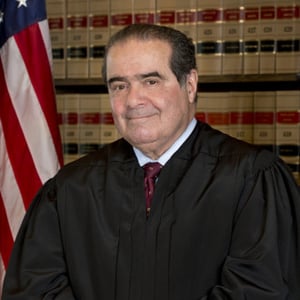
Associate Justice, United States Supreme Court
Antonin Scalia, Associate Justice, was born in Trenton, New Jersey, March 11, 1936. He married Maureen McCarthy and has nine children- Ann Forrest, Eugene, John Francis, Catherine Elisabeth, Mary Clare, Paul David, Matthew, Christopher James, and Margaret Jane. He received his A.B. from Georgetown University and the University of Fribourg, Switzerland, and his LL.B. from Harvard Law School, and was a Sheldon Fellow of Harvard University from 1960-1961. He was in private practice in Cleveland, Ohio from 1961-1967, a Professor of Law at the University of Virginia from 1967-1971, and a Professor of Law at the University of Chicago from 1977-1982, and a Visiting Professor of Law at Georgetown University and Stanford University. He was chairman of the American Bar Association's Section of Administrative Law, 1981-1982, and its Conference of Section Chairmen, 1982-1983. He served the federal government as General Counsel of the Office of Telecommunications Policy from 1971-1972, Chairman of the Administrative Conference of the United States from 1972-1974, and Assistant Attorney General for the Office of Legal Counsel from 1974-1977. He was appointed Judge of the United States Court of Appeals for the District of Columbia Circuit in 1982. President Reagan nominated him as an Associate Justice of the Supreme Court, and he took his seat September 26, 1986.
Scholar and former Deputy Solicitor General of the United States
Paul Michael Bator (June 2, 1929 – February 24, 1989) was an American legal academic, Supreme Court advocate and expert on United States federal courts. In addition to teaching for almost 30 years at Harvard Law School and the University of Chicago Law School, Bator served as Deputy Solicitor General of the United States during the Reagan Administration.
Charles R. Walgreen, Jr. Chair in Law and Co-Director, Program in Law and Philosophy, University of Illinois College of Law
One of the country’s most prominent authorities on the intersection of law and philosophy, and widely regarded as the country’s leading theoretician of the criminal law, Professor Moore joined the faculty in 2002 as the Charles R. Walgreen, Jr. Chair, the first and only university-wide chair for the University of Illinois’ three campuses. He is jointly appointed as professor of law in the College of Law and as a professor with the Center for Advanced Studies, an honor bestowed on faculty on the basis of their outstanding scholarship and among the highest forms of campus recognition. Professor Moore was just the second UI College of Law faculty member to have held such an appointment.
Before coming to Illinois, Professor Moore served as the Warren Distinguished Professor of Law and as co-founder and co-director of the Institute for Law and Philosophy at the University of San Diego. From 1989-2000, he was the Leon Meltzer Professor of Law and Professor of Philosophy at the University of Pennsylvania, where he co-founded and directed the University of Pennsylvania Institute for Law and Philosophy.
Over the course of his career, he also has been a professor of law at the University of California at Berkeley, the University of Southern California (where he held the Robert Kingsley Chair), and the University of Kansas. In addition, he has been the William Minor Lile Distinguished Visiting Professor of Law at the University of Virginia, the Florence Rogatz Visiting Professor at the Yale Law School, The Mason Ladd Distinguished Visiting Professor at the University of Iowa Schools of Law and of Medicine, as well as a visiting professor at Stanford University, Northwestern University, Tel Aviv University in Israel, di Tella University in Buenos Aires, and the Universität Erlangen in Germany.
He has held a number of fellowships and visiting scholar positions, including two in the Law and Humanities Program of Harvard University, five at the Australian National University’s Research School of Social Sciences in Canberra, Australia, and one each at the Humanities Research Institute of the University of California at Irvine, the Rockefeller Center in Bellagio, Italy, the Georgetown University Law Center, the University of Pennsylvania’s Center for Neuroscience and Society, and the Yale Law School.
Over an academic career spanning more than 50 years Moore has published more than 140 books, articles, editorials, and other pieces of scholarship, documented recently in a festschrift published in his honor, K. Ferzan and S. Morse, eds., Legal, Moral, and Metaphysical Truth: The Philosophy of Michael S. Moore (Oxford University Press, 2016). He is the author of Placing Blame: A General Theory of the Criminal Law (Oxford University Press, 1997), widely regarded as the leading modern statement of the retributivist theory of the criminal law. In an earlier book, Act and Crime: The Philosophy of Action and its Implications for Criminal Law (Oxford University Press, 1993), Moore provided a unified theory of action that underlies English and American criminal jurisprudence. In a later book, Causation and Responsibility: An Essay in Law, Morals, and Metaphysics (Oxford University Press, 2009), Moore explored the nature of causation and its relation to both moral and legal responsibility. Earlier in his career, he authored Law and Psychiatry: Rethinking the Relationship (Cambridge University Press, 1984), which explored the tension that often exists between legal and psychiatric theories. His latest book, Mechanical Brains and Responsible Choices, still forthcoming, will return to these same issues, this time as they are raised by contemporary neuroscience rather than by dynamic psychiatry.
Professor Moore has presented hundreds of lectures and papers around the world in law, jurisprudence, political theory, legal philosophy, political science, economics, philosophy, psychology, psychiatry, and neuroscience, including most recently endowed, named lectures at Duke, Dartmouth, Columbia, Tel Aviv, Pennsylvania universities, as well as the annual Public Philosophy Lecture and the annual Center for Advanced Studies Lecture at the University of Illinois. He is on the board of editors of numerous journals in law and in philosophy and for a decade served as editor-in-chief of the journal, Law and Philosophy.
He regularly rotates his law teaching between first-year courses of criminal law, torts, contracts, property, and constitutional law, and upper-year courses in jurisprudence and legal philosophy. During his 13 years on the Philosophy Department faculty at Illinois he taught undergraduate courses in the philosophy of law and political philosophy and graduate seminars in neuroscience, ethics, the theory of action, and the metaphysics of causation.
Doy & Dee Henley Chair and Distinguished Professor of Jurisprude, Chapman University Dale E. Fowler School of Law
Ronald D. Rotunda was the Doy & Dee Henley Chair and Distinguished Professor of Jurisprudence, at Chapman University, the Dale E. Fowler School of Law. He joined the faculty in 2008. Before that, he was University Professor and Professor of Law at George Mason University School of Law. From 2002 to 2006, he was the George Mason University Foundation Professor of Law. Before that, he was the Albert E. Jenner, Jr. Professor of Law, at the University of Illinois. He was a magna cum laude graduate of both Harvard College and Harvard Law School, where he was a member of Harvard Law Review. He joined the University of Illinois faculty in 1974 after clerking for Judge Walter R. Mansfield of the United States Court of Appeals for the Second Circuit, practicing law in Washington, D.C., and serving as assistant majority counsel for the Senate Watergate Committee. He has co-authored the most widely used course book on legal ethics, Problems and Materials on Professional Responsibility(Foundation Press, 12th ed. 2014) and was the author of a leading course book on constitutional law, Modern Constitutional Law (West Academic Co., 11th ed. 2015)(Abridged & Unabridged editions). He was the coauthor of, Legal Ethics: The Lawyer's Deskbook on Professional Responsibility (ABA- West/Thompson Reuters Publishing, St. Paul, Minnesota, 2016-2017 ed.) (Jointly published by the ABA and West/Thompson Reuters Publishing) (with John Dzienkowski). Rotunda also co-authored (with John Nowak) the six-volume Treatise on Constitutional Law (West/Thompson Reuters Publishing, 5th ed. 2012)(with annual updates), and a one volume Treatise on Constitutional Law (West Academic, 8th ed. 2010). He was also the author of several other books and more than 500 articles in various law reviews, journals, newspapers, and books in this country and abroad. His works have been translated into French, Portuguese German, Romanian, Czech, Russian, Japanese, and Korean. These books and articles have been cited more than 2000 times by law reviews, by state and federal courts at every level, from trial courts to the U.S. Supreme Court, and by foreign courts in Europe, Africa, Asia, and South America. He has been interviewed on radio and television on legal issues, both in this country and abroad. In 1993 he was the Constitutional Law Adviser to the Supreme National Council of Cambodia and assisted that country in writing its first democratic constitution. He has consulted with various new democracies in Eastern Europe and the former Soviet Union, including Moldova, Romania, and Ukraine, on their proposed constitutions and judicial codes. He chaired the subcommittee that drafted the American Bar Association's Model Rules for Lawyer Disciplinary Enforcement; was a member of the Publications Board of the A.B.A. Center for Professional Responsibility from 1994 to 2016; was a member of the A.B.A. Standing Committee on Professional Discipline (1991-1997); and was Liaison to the A.B.A. Standing Committee on Ethics and Professional Responsibility (1994-1997). He was a Fulbright Professor in Venezuela in 1986 and a Fulbright Research Scholar in Italy in 1981. In 1996 he assisted the Czech Republic in drafting the first Rules of Ethics for lawyers in that country. During the Spring, 1999 semester, he was Visiting Professor at the University of Alabama School of Law, holding the John S. Stone Endowed Chair of Law. During the summer and fall of 2000, he was the Visiting Senior Fellow in Constitutional Studies at the Cato Institute, in Washington, DC. In the fall of 2001, he was visiting professor at George Mason University School of Law. During November-December, 2002, he was Visiting Scholar, Katholieke Universiteit Leuven, Faculty of Law, Leuven, Belgium. In May, 2004, and December, 2005, he was visiting lecturer at the Institute of Law and Economics, Institut für Recht und Ökonomik, at the University of Hamburg. From early June 2004 to May 2005, he was the Special Counsel to the Department of Defense. He was on the Panel of Contributing Editors that produced, Black's Law Dictionary (West/Thompson Reuters Publishing, 8th ed. 2004; Thomson-Reuters, 10th ed. 2014). From 2005-2006, he was a member of the Task Force on Judicial Functions of the Commission on Virginia Courts in the 21st Century: To Benefit All, to Exclude None.
In May, 2000, American Law Media, publisher of The American Lawyer, the National Law Journal, and the Legal Times picked Professor Rotunda as one of the ten most influential Illinois Lawyers. Also in 2000, a lengthy study that the University of Chicago Press published, which sought to determine the influence, productivity, and reputations of law professors over the last several decades, listed Professor Rotunda as the 17th highest in the nation. The 2002-2003 New Educational Quality Ranking of U.S. Law Schools (EQR) [the last year for which such records are available] ranks Professor Rotunda as the eleventh most cited of all law faculty in the United States. Seehttp://www.leiterrankings.com/faculty/2002faculty_impact_cites.shtml.
In July, 2007, he was one of the main speakers at the International Judicial Conference hosted by the United States Embassy, the Supreme Court of Latvia, and the Latvian Ministry of Justice. The other main speakers were Justice Samuel Alito, the President of Latvia, the Prime Minister of Latvia, the Chief Justice of Latvia, and the Minister of Justice of Latvia. On February 27, 2008, President George W. Bush nominated Ronald D. Rotunda to become a member of the Privacy and Civil Liberties Oversight Board (PCLOB) for an initial four-year term and sent his nomination to the Senate Committee on Homeland Security and Governmental Affairs for confirmation hearings on the nominees. He was selected the Best Lawyer in Washington, DC, in 2009 in Ethics and Professional Responsibility Law, as published in November 2008 in the Washington Post in association with the Legal Times. When he moved to California, he was also selected as one of the Best Lawyers in Southern California, in 2009, 2010, 2011, 2012, 2013, 2014, 2015, 2016, 2017, also in Ethics and Professional Responsibility Law as published in the Los Angeles Times, U.S. News, and American Law Media. On June 17, 2009, he became a Commissioner of the Fair Political Practices Commission, a state regulatory agency (analogous to the Federal Election Commission) that is California's independent political watchdog. He served until January 31, 2013, when his term expired. In 2012, he became a Distinguished International Research Fellow at the World Engagement Institute, a non-profit, multidisciplinary and academically-based non-governmental organization with the mission to facilitate professional global engagement for international development and poverty reduction http://www.weinstitute.org/fellows.html. In 2012, Chapman University honored him with The Chapman University Excellence In Scholarly/Creative Work Award, 2011-2012. Since 2014, he has been a member of the Editorial Board of, The International Journal of Sustainable Human Security (IJSHS), a peer-reviewed publication of the World Engagement Institute (WEI). Rotunda was a Member of the Editorial Board of ABA's Journal of Legal Education (2014 to 2016).
Associate Justice, United States Supreme Court
Antonin Scalia, Associate Justice, was born in Trenton, New Jersey, March 11, 1936. He married Maureen McCarthy and has nine children- Ann Forrest, Eugene, John Francis, Catherine Elisabeth, Mary Clare, Paul David, Matthew, Christopher James, and Margaret Jane. He received his A.B. from Georgetown University and the University of Fribourg, Switzerland, and his LL.B. from Harvard Law School, and was a Sheldon Fellow of Harvard University from 1960-1961. He was in private practice in Cleveland, Ohio from 1961-1967, a Professor of Law at the University of Virginia from 1967-1971, and a Professor of Law at the University of Chicago from 1977-1982, and a Visiting Professor of Law at Georgetown University and Stanford University. He was chairman of the American Bar Association's Section of Administrative Law, 1981-1982, and its Conference of Section Chairmen, 1982-1983. He served the federal government as General Counsel of the Office of Telecommunications Policy from 1971-1972, Chairman of the Administrative Conference of the United States from 1972-1974, and Assistant Attorney General for the Office of Legal Counsel from 1974-1977. He was appointed Judge of the United States Court of Appeals for the District of Columbia Circuit in 1982. President Reagan nominated him as an Associate Justice of the Supreme Court, and he took his seat September 26, 1986.
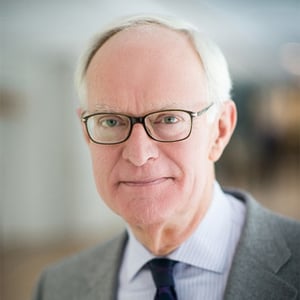
Distinguished Fellow, Hudson Institute
Christopher DeMuth is a distinguished fellow at Hudson Institute. He was president of the American Enterprise Institute for Public Policy Research (AEI) from 1986 to 2008 and was the D.C. Searle Senior Fellow at AEI from 2008 to 2011.
Mr. DeMuth was raised in Kenilworth, Illinois, and attended the Lawrenceville School (1964), Harvard College (A.B. 1968), and the University of Chicago Law School (J.D. 1973). He served as staff assistant to President Richard M. Nixon from 1969 to 1970, working first for Daniel P. Moynihan (then assistant to the President for Urban Affairs) on urban policy matters and then as chairman of the White House Task Force on Environmental Policy. Following law school, he practiced regulatory, antitrust, and general corporate law with Sidley & Austin in Chicago (1973-1976) and was associate general counsel of the Consolidated Rail Corporation (Conrail) in Philadelphia (1976-1977).
From 1977 to 1981, Mr. DeMuth was lecturer in public policy at the Kennedy School of Government at Harvard University, and director of the Harvard Faculty Project on Regulation. There he taught courses on law, economics, and regulatory policy and conducted and sponsored research on health, safety, environmental, and economic regulation.
Returning to Washington in 1981, Mr. DeMuth served as administrator for information and regulatory affairs in the U.S. Office of Management and Budget, and as executive director of the Presidential Task Force on Regulatory Relief during President Ronald Reagan’s first term of office. From 1984 to 1986, he was managing director of Lexecon Inc., a law-and-economics consulting firm; in 1986, he was also publisher and editor-in-chief of Regulation magazine. He was elected president of the American Enterprise Institute in December 1986.
Many of Mr. DeMuth’s articles, lectures, and occasional talks are posted on his website (https://www.ccdemuth.com).
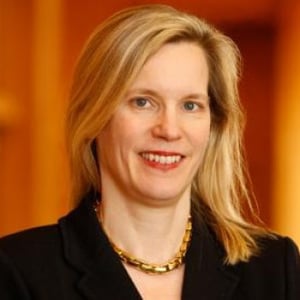
John S. Battle Professor of Law, University of Virginia School of Law
Julia D. Mahoney teaches courses in property, government finance, constitutional law and nonprofit organizations. A graduate of Yale Law School, she joined the University of Virginia faculty as an associate professor in 1999 and is now John S. Battle Professor of Law. She has also taught at the University of Southern California Law School and the University of Chicago Law School, and before entering the legal academy, practiced law at the New York firm Wachtell, Lipton, Rosen & Katz. Her scholarly articles include works on land preservation, eminent domain, health care reform and property rights in human biological materials.
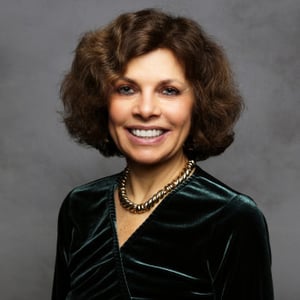
John Marshall Harlan II Professor of Law Emerita, New York Law School; Former President, American Civil Liberties Union
Nadine Strossen, New York Law School Professor Emerita and Senior Fellow at FIRE (the Foundation for Individual Rights and Expression), was national President of the American Civil Liberties Union from 1991 to 2008. An internationally acclaimed free speech scholar and advocate, who regularly addresses diverse audiences and provides media commentary around the world, Strossen is also the Host and Project Consultant for Free To Speak, a 3-hour documentary film series distributed on public television in 2023. Her books about free speech include: Free Speech: What Everyone Needs to Know® (Oxford University Press 2023); HATE: Why We Should Resist It with Free Speech, Not Censorship (Oxford University Press 2018); and Defending Pornography: Free Speech, Sex, and the Fight for Women’s Rights (Scribner 1995), which was republished with a new Preface in 2024 as part of the NYU Classics Series. Her many honors and awards include the National Coalition Against Censorship’s Judy Blume Lifetime Achievement Award for Free Speech. She serves on the Advisory Boards of several organizations that do free speech work, including: ACLU, Academic Freedom Alliance, Foundation Against Intolerance and Racism (FAIR), Heterodox Academy, National Coalition Against Censorship, and the University of Austin.
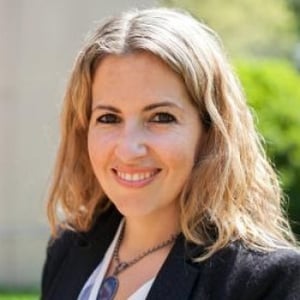
Martha Lubin Karsh and Bruce A. Karsh Bicentennial Professor of Law; Director, Human Rights Program; Senior Fellow, Miller Center, University of Virginia School of Law
Mila Versteeg joined the Law School in 2011. Her research and teaching interests include comparative constitutional law, public international law and empirical legal studies. Most of her research deals with the origins, evolution and effectiveness of provisions in the world’s constitutions. Her publications have, amongst others, appeared in the California Law Review, the New York University Law Review, the University of Chicago Law Review, the American Political Science Review, the American Journal of Political Science, the Journal of Legal Studies, the Journal of Law and Economics, the American Journal of International Law, and the Journal of Law, Economics and Organizations. A number of her works have been translated into Chinese, Portuguese and Turkish.
In 2017, Versteeg was named an Andrew Carnegie Fellow, which provided her with a $200,000 award to expand her research into the world's constitutions to better understand how constitutional rights are enforced in different countries.
Versteeg earned her B.A. in public administration and first law degree from Tilburg University in the Netherlands in 2006. She earned her LL.M. from Harvard Law School in 2007 and a D.Phil. in socio-legal studies in 2011 from the University of Oxford, where she was a Gregory Kulkes Scholar at Balliol College and recipient of an Arts and the Humanities Research Council Award.
Prior to joining the Law School, Versteeg was an Olin Fellow and lecturer in law at the University of Chicago Law School. Versteeg previously worked at the U.N. Interregional Crime and Justice Research Institute in Turin and at the Southern Africa Litigation Centre in Johannesburg. While at UVA, Versteeg has been a visiting associate professor at the University of Chicago Law School (fall 2013) and Columbia Law School (spring 2016), and a visiting professor at the law schools of Hebrew University, the University of Hamburg (summer 2015) and Tel Aviv University (spring 2017).

Thomas M. Siebel Senior Fellow, The Hoover Institution, Stanford University; Gary T. Schwartz Distinguished Professor of Law Emeritus, UCLA School of Law
Eugene Volokh is the Thomas M. Siebel Senior Fellow at the Hoover Institution (Stanford), as well as the Gary T. Schwartz Distinguished Professor of Law Emeritus and Distinguished Research Professor at UCLA School of Law. He recently retired from teaching at UCLA, after 30 years there, and is now focusing on research.
Volokh is the author of the textbooks The First Amendment and Related Statutes (8th ed. 2023), and Academic Legal Writing (5th ed. 2016), as well as over 100 academic law journal articles, mostly on First Amendment law. He is a member of The American Law Institute; the editor-in-chief of the Journal of Free Speech Law; and the creator and coauthor of The Volokh Conspiracy, a leading legal blog founded in 2002 (hosted at the Washington Post from 2014 to 2017 and now at Reason Magazine).
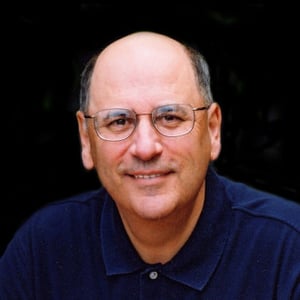
Frank Buckley is a Foundation Professor at George Mason University School of Law, where he has taught since 1989. Before then, he was a visiting Olin Fellow at the University of Chicago Law School. He has also taught at McGill Law School in Montreal, the Sorbonne (Paris II),and Sciences Po in Paris. His most recent books are The American Illness (Yale 2013), Fair Governance (Oxford 2009), Just Exchange (Routledge 2005) and The Morality of Laughter (Michigan 2003). His The Once and Future King will be published by Encounter Books in Spring 2014. He is a senior editor of The American Spectator. He lives in Alexandria VA with his wife, Esther.
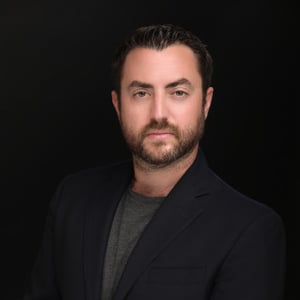
Newsweek Senior Editor-at-Large, Syndicated Columnist, Host of "The Josh Hammer Show," Article III Project Senior Counsel, Newsweek, Salem Media, Article III Project, David Horowitz Freedom Center
Josh Hammer is the senior editor-at-large of Newsweek and host of "The Josh Hammer Show," a podcast, a syndicated radio show, and TV program on Salem News Channel. A syndicated columnist through Creators Syndicate, Josh is a frequent pundit and essayist on political, legal, and cultural issues. He is also senior counsel for the Article III Project and Internet Accountability Project, as well as a Shillman Fellow with the David Horowitz Freedom Center and a fellow with the Palm Beach Freedom Institute.
An outspoken conservative, Josh opines on conservative intellectual trends, contemporary domestic and foreign policy debates, constitutional and legal issues, and the intersection of law, politics and culture. He has been published by many leading outlets, including the Los Angeles Times, the New York Post, Daily Mail, Newsweek, the Claremont Review of Books, National Affairs, American Affairs, The New Criterion, The National Interest, National Review, RealClearPolitics, First Things, City Journal, Public Discourse, Law & Liberty, Tablet Magazine, Deseret Magazine, Compact Magazine, Chronicles Magazine, The Spectator, The American Mind, The American Conservative, The European Conservative, American Greatness, American Compass, The Federalist, Blaze Media, TomKlingenstein.com, Townhall, The Daily Wire, The Daily Signal, The Daily Caller, The Epoch Times, Anchoring Truths, Fortune, Fox Business, The Jerusalem Post, The Times of Israel, The Forward, Jewish Telegraphic Agency and the Jewish Journal. He has also had legal scholarship published by the Harvard Journal of Law & Public Policy and the University of St. Thomas Law Journal.
Josh is a college campus speaker through Young America's Foundation and the Intercollegiate Studies Institute, and a law school campus speaker through the Federalist Society. Prior to Newsweek and The Daily Wire, where he was an editor, Josh worked at Kirkland & Ellis LLP and clerked for the Hon. James C. Ho on the U.S. Court of Appeals for the Fifth Circuit. Josh has also served as a John Marshall Fellow with the Claremont Institute and as a Fellow with the James Wilson Institute. He is the former host of "America on Trial with Josh Hammer," a one-season daily podcast with The First that covered the unique legal issues surrounding the 2024 presidential election.
Josh graduated from Duke University, where he majored in economics, and from the University of Chicago Law School. He lives in Florida, but remains an active member of the State Bar of Texas.

Judge, United States Court of Appeals, Fifth Circuit
Andrew Oldham is a Circuit Judge on the United States Court of Appeals for the Fifth Circuit. Before ascending to the bench, Judge Oldham served as General Counsel to Texas Governor Greg Abbott, where he advised the Governor on a range of issues under federal and state law and managed litigation in which the Governor was an interested party. Before that he served as Deputy Solicitor General for the State of Texas, where he represented Texas in federal courts across the country, including twice before the United States Supreme Court. Before moving to Texas, Judge Oldham was an attorney at Kellogg Hansen Todd Figel & Frederick in Washington, D.C. His practice focused on appellate litigation in federal courts of appeals throughout the country. Before entering private practice, Judge Oldham served as a law clerk to Justice Samuel A. Alito, Jr., at the Supreme Court of the United States and to Judge David B. Sentelle of the U.S. Court of Appeals for the District of Columbia Circuit. He also worked as an attorney-adviser in the Office of Legal Counsel at the U.S. Department of Justice from 2006 to 2008. Judge Oldham earned a B.A. from the University of Virginia with highest honors, a Truman Scholarship for graduate school, an M. Phil., first class (with distinction), from Cambridge University, and a J.D., magna cum laude, from Harvard Law School.

Julius E. Davis Professor of Law, University of Minnesota Law School
Ilan Wurman is the Julius E. Davis Professor of Law at the University of Minnesota, where he teaches administrative law and constitutional law. He previously taught at Arizona State University. He writes primarily on the Fourteenth Amendment, administrative law, separation of powers, and constitutionalism. His academic writing has appeared in the Yale Law Journal, the Stanford Law Review, the University of Chicago Law Review, the University of Pennsylvania Law Review, the Virginia Law Review, the Duke Law Journal, the Minnesota Law Review, the Notre Dame Law Review, and the Texas Law Review among other journals.
Professor Wurman is the author of the new book The Constitution of 1789: A New Introduction (Cambridge 2026). His previous books include A Debt Against the Living: An Introduction to Originalism (Cambridge 2017), and The Second Founding: An Introduction to the Fourteenth Amendment (Cambridge 2020). He is also the author of the casebook, Administrative Law Theory and Fundamentals: An Integrated Approach (Foundation Press 3d ed. 2025).
Professor Wurman practices law with the firm Tully Bailey. He has litigated a variety of administrative law and constitutional law cases, including cases involving COVID-19 restrictions, transmission lines, and Appointments Clause challenges. He also devised winning public nuisance theories to force city governments to address the increasingly challenging public camping crises throughout the country.
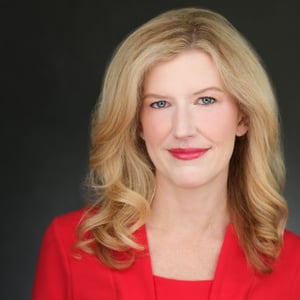
Justice, Texas Fifteenth District Court of Appeals
April Farris was appointed to the Fifteenth Court of Appeals on September 1 of 2024. April previously served on the First Court of Appeals after being appointed in 2021 and elected in 2022.
Before joining the Court, April was a partner at Yetter Coleman LLP, where she handled complex appellate litigation for energy, technology, and government clients. While in private practice, she was recognized in appellate law by Law360, Best Lawyers in America, and Thompson Reuters' Super Lawyers. In 2020, she was one of five attorneys in the nation to be named a Law360 appellate Rising Star, an honor reserved for lawyers under 40.
April previously served as an Assistant Solicitor General for the State of Texas, handling appeals for various Texas agencies. She is a former councilmember for the Texas State Bar's Appellate Section and a current councilmember for the Civil Rights & Civil Liberties Section. She serves as a trustee for the Texas Supreme Court Historical Association, and she is on the board of the Garland R. Walker Inn of Court in Houston. She is a member of the State Bar of Texas Pattern Jury Charge Oversight Committee, and she is on the editorial board of The Advocate. In 2022 and 2023, she was a guest instructor for Harvard Law School's Introduction to Trial Advocacy Program. She taught Origins of the Federal Constitution with Judge Charles Eskridge at the University of Texas School of Law in 2025, and she previously taught First Amendment at South Texas College of Law.
April clerked for Judge Jennifer Walker Elrod on the U.S. Court of Appeals for the Fifth Circuit. She graduated from Harvard Law School cum laude in 2009, and she earned her bachelor's degree summa cum laude from Abilene Christian University in 2006. She was named ACU's Young Alumnus of the Year for 2025. She enjoys spending time with her husband and children, tennis, and theology.
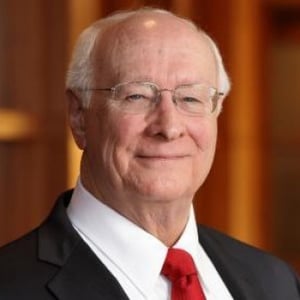
Walter L. Brown Professor of Law, University of Virginia School of Law
John Norton Moore, who joined the faculty in 1966, is an authority on international law, national security law and the law of the sea. He also teaches advanced topics in national security law and the rule of law. Moore taught the first course in the country on national security law and conceived and co-authored the first casebook on the subject. From 1991-93, during the Gulf War and its aftermath, Moore was the principal legal adviser to the Ambassador of Kuwait to the United States and to the Kuwait delegation to the U.N. Iraq-Kuwait Boundary Demarcation Commission.
From 1985 to 1991, he chaired the board of directors of the U.S. Institute of Peace, one of six presidential appointments he has held. From 1973 to 1976, he was chair of the National Security Council Interagency Task Force on the Law of the Sea and ambassador and deputy special representative of the president to the law of the sea conference. Previously he served as the counselor on international law to the State Department. With the deputy attorney general of the United States, he was co-chair in March 1990 of the U.S.-USSR talks in Moscow and Leningrad on the rule of law. As a consultant to the Arms Control and Disarmament Agency, he was honored by the director for his work on the ABM Treaty Interpretation Project. He has been a frequent witness before congressional committees on maritime policy, legal aspects of foreign policy, national security, war and treaty powers, and democracy and human rights. He has been a fellow of the Woodrow Wilson International Center for Scholars at the Smithsonian Institution.
Moore is a member of advisory and editorial boards for nine journals and numerous professional organizations, and he has published many articles on oceans policy, national security and international law.
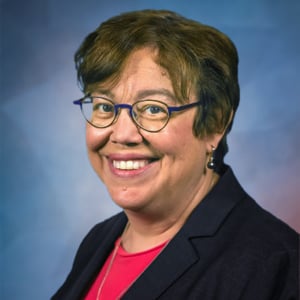
Executive Vice President and Senior Counselor to the President, The Federalist Society for Law and Public Policy Studies
B.A., Yale; J.D., University of Chicago. Lee Liberman Otis is the Executive Vice President and Senior Counselor to the President at the Federalist Society. She also serves as a member of the American Law Institute (ALI), a senior fellow of the Administrative Conference (ACUS), and as the co-chair of the National Constitution Center's Coalition of Freedom Advisory Board. She previously was a special assistant and an Associate Deputy Attorney General at the U.S. Department of Justice, General Counsel of the Department of Energy, an associate in the appellate section of Jones, Day, Reavis & Pogue, an associate counsel to President George H.W. Bush, and a law clerk to Associate Justice Antonin Scalia. She also served as an assistant professor of law at George Mason, where she taught legislation, federal jurisdiction, constitutional law, civil procedure, and appellate advocacy. Ms. Otis has been an important member of the Federalist Society team since the organization’s beginnings. Together with David McIntosh, she led the effort to start what became the Chicago chapter of the Society. She also helped organize the Society’s first conference at Yale, its second conference at Chicago, and its first Lawyers Division chapter in Washington DC, as well as the effort to incorporate the Society, recruit its permanent staff, and obtain its early funding. She was a Founding Director of the Federalist Society.

Sterling Professor of Law and Political Science, Yale Law School
Akhil Reed Amar is Sterling Professor of Law and Political Science at Yale University, where he teaches constitutional law in both Yale College and Yale Law School. After graduating from Yale College, summa cum laude, in 1980 and from Yale Law School in 1984, and clerking for Judge (later Justice) Stephen Breyer, Amar joined the Yale faculty in 1985 at the age of 26. He is Yale’s only living professor to have won the University’s unofficial triple crown — the Sterling Chair for scholarship, the DeVane Medal for teaching, and the Lamar Award for alumni service.
Amar’s work has won awards from both the American Bar Association and the Federalist Society, and he has been cited by Supreme Court justices across the spectrum in more than 50 cases — tops among scholars under age 70. According to both Fred Shapiro’s landmark 2021 study of lifetime scholarly citations and Heinonline’s most recent tabulation of lifetime law-review citations, Amar is America’s second most-cited legal scholar still under age 70. He is a member of the American Academy of Arts and Sciences and has written widely for popular publications, including The New York Times, The Washington Post, The Wall Street Journal, Time, and The Atlantic. He was an informal consultant to the popular TV show The West Wing and his scholarship has been showcased on many broadcasts, including The Colbert Report, Morning Joe, AC360, Velshi, Fox News @ Night with Shannon Bream, Fareed Zakaria GPS, Erin Burnett Outfront, and Constitution USA with Peter Sagal.
He is the author of more than a hundred law review articles and several books, including The Bill of Rights (1998 — winner of the Yale University Press Governors’ Award), America’s Constitution (2005 — winner of the ABA’s Silver Gavel Award), America’s Unwritten Constitution (2012 — named one of the year’s 100 best nonfiction books by The Washington Post), and The Constitution Today (2016 — named one of the year’s top ten nonfiction books by Time magazine). The first volume of his ambitious trilogy on American constitutional history from the Founding to the present, The Words That Made Us: America’s Constitutional Conversation, 1760-1840, came out in May 2021. The second volume, Born Equal: Remaking America’s Constitution, 1840-1920, will be published in September 2025 and is already available for pre-order. All together, his nonfiction books have won two starred reviews from Publishers Weekly and three starred reviews from Kirkus—tops, it is believed, among legal scholars under age 70. Together with Vikram David Amar (YLS ’88), he has a bi-weekly column on the Supreme Court on the distinguished website SCOTUSblog. Along with Andy Lipka, he co-hosts a popular and free weekly podcast, Amarica’s Constitution, whose listeners are eligible for CLE credit in most American jurisdictions. A wide assortment of his articles and op-eds and video links to many of his public lectures and free online courses may be found at akhilamar.com.

U.S. Court of Appeals, Seventh Circuit
Frank H. Easterbrook is a judge of the United States Court of Appeals for the Seventh Circuit and a Senior Lecturer at the Law School of the University of Chicago. He was Chief Judge from 2006–2013. Before joining the court in 1985, he was the Lee andBrena Freeman Professor of Law at the University of Chicago, where he taught and wrote in antitrust, securities, corporate law, jurisprudence, and criminal procedure. He has published The Economic Structure of Corporate Law (with Daniel R. Fischel) and about 100 scholarly articles. He served as Co-Editor of the Journal of Law and Economics from 1982 to 1991 and as a member of the Judicial Conference’s Standing Committee on Rules of Practice and Procedure from 1991 to 1997. Before joining the faculty of the Law School in 1979, Judge Easterbrook was Deputy Solicitor General of the United States. He holds degrees from Swarthmore College (B.A. with high honors, 1970) and the University of Chicago (J.D. cum laude, 1973), and is a member of the American Academy of Arts and Sciences, the American Law Institute, the Mont Pelerin Society, Phi Beta Kappa, and the Order of the Coif.
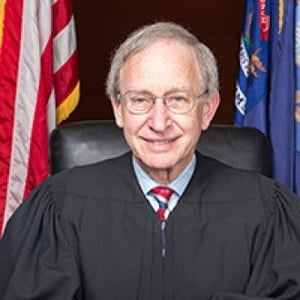
Justice, Michigan Supreme Court
Stephen Markman was appointed Justice of the Michigan Supreme Court on October 1, 1999. He served as the Chief Justice from 2017-2019. Before his appointment, he served as Judge on the Michigan Court of Appeals from 1995-1999. Prior to this, he practiced law with the firm of Miller, Canfield, Paddock & Stone in Detroit.
From 1989-1993, Justice Markman served as United States Attorney, or federal prosecutor, in Michigan, after having been nominated by President George H. W. Bush and confirmed by the United States Senate. From 1985-1989, he served as Assistant Attorney General of the United States, after having been nominated by President Ronald Reagan and confirmed by the United States Senate. In that position, he headed the Department of Justice’s Office of Legal Policy, which served as the principal policy development office within the Department, and which coordinated the federal judicial selection process. Prior to this, he served for seven years as Chief Counsel of the United States Senate Subcommittee on the Constitution, and as Deputy Chief Counsel of the United States Senate Judiciary Committee.
Justice Markman has authored articles for such publications as the University of Michigan Journal of Law Reform, the Detroit College of Law Review, the Stanford Law Review, the University of Chicago Law Review, the American Criminal Justice Law Review, the Barrister’s Law Journal, the Harvard Journal of Law & Public Policy, and the American University Law Review. He has also served as a contributing editor of National Review magazine, and has authored chapters in such books as “In the Name of Justice: The Aims of the Criminal Law,” “Still the Law of the Land,” and “Originalism: A Quarter Century of Debate.”
Justice Markman has taught constitutional law at Hillsdale College since 1993. He has served on the Board of Directors of the Western Michigan University Thomas M. Cooley Law School. He traveled to Ukraine on two occasions on behalf of the State Department, to provide assistance in the development of that nation’s post-Soviet constitution. He is a Fellow of the Michigan Bar Foundation, a Master of the Bench of the Inns of Court, and a member of the One Hundred Club. He has spoken before hundreds of youth, civic, charitable, and legal groups throughout Michigan and nationally, and has coached Little League baseball and basketball. He lives with his wife Mary Kathleen in Mason, and has two sons, James and Charles.
Justice Markman was re-elected to the Supreme Court in 2000, 2004, and 2012. His present term expires January 1, 2021.
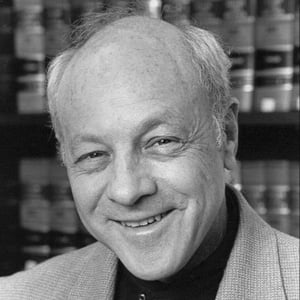
Herbert W. Armstrong Professor of Constitutional Law, Emeritus, University of San Diego Gould School of Law
Larry Simon joined the USC Law faculty in 1975. Specializing in constitutional law and theory, he taught Constitutional Law, Legal Profession and Insurance.
Simon is the author of “The Supreme Court’s Independence: Accountability, Majoritarianism, and Justification; Comments on Seidman” (Symposium: Judicial Election, Selection, and Accountability, Southern California Law Review, 1988), “The New Republicanism: Generosity of Spirit in Search of Something to Say” (William and Mary Law Review, 1987) and “Access to Higher Education and the Law” in Access Policy and Procedures and the Law in U.S. Higher Education (Interbook, Inc., 1978).
A summa cum laude graduate of Hobart College, Simon earned his LLB from Yale Law School, where he was an editor of the Yale Law Journal. His graduate study was at University of Rochester. Simon clerked for Judge Edward Weinfeld, U.S. District Judge, Southern District, New York, and Chief Justice Earl Warren, U.S. Supreme Court. He taught at Yale Law School, where he was associate dean from 1990-95, prior to joining USC Gould.

States’ Attorneys General: Defenders of the Bulwarks of Federalism
Miles Coleman, Ken Paxton, Doug J. Peterson, Alan Wilson
On September 10, 2020, The Federalist Society's South Carolina, Nebraska, and Houston Lawyers Chapters hosted...
Panel IV: Federal Spending and the Deficit: Is a Constitutional Remedy Necessary? [Archive Collection]
Douglas H. Ginsburg, Kate Stith, William Craig Stubblebine, Lawrence H. Summers
On October 16-17, 1987, the Federalist Society hosted a symposium in celebration of the bicentennial...
We’re All Textualists Now? Implementing a Sound Interpretive Approach on the Trial Court and Beyond
Amy Coney Barrett, Wendy Berger, Paige Kilbane, Patrick J. Kilbane
The Federalist Society's Jacksonville Lawyers Chapter held a virtual panel on August 12, 2020 to...
Recent Trends in the Roberts Court
Matthew M. Fernholz
On August 18, 2020, the Federalist Society's Milwaukee Lawyers Chapter hosted a virtual event on...
Panel I: Do We Have an Unwritten Constitution? [Archive Collection]
Paul M. Bator, Michael S. Moore, Ronald D. Rotunda, Antonin Scalia
On March 4-5, 1988, The Federalist Society's University of Virginia student chapter hosted the National...
Panel I: Do We Have an Unwritten Constitution? [Archive Collection]
Paul M. Bator, Michael S. Moore, Ronald D. Rotunda, Antonin Scalia
On March 4-5, 1988, The Federalist Society's University of Virginia student chapter hosted the National...
Civil Liberties and COVID-19
Christopher C. DeMuth, Julia D. Mahoney, Nadine Strossen, Mila Versteeg, Eugene Volokh
The Federalist Society's COVID-19 & the Law Conference concluded with a panel on "Civil Liberties...
The Future of Originalism: A Federalist Society Zoom Dialogue
Frank H. Buckley, Josh Hammer, Andrew Oldham, Ilan Wurman, April Farris
On May 27, 2020, the Federalist Society's Houston and Austin lawyers chapters co-hosted a Zoom...
Luncheon and Address by John Norton Moore [Archive Collection]
John Norton Moore, Lee Liberman Otis
On November 6-7, 1987, The Federalist Society held a symposium at the Grand Hyatt Hotel...
Panel V: The Role and Relevance of the Amendment Process [Archive Collection]
Akhil Reed Amar, Frank H. Easterbrook, Steve J. Markman, Larry Simon
On March 4-5, 1988, The Federalist Society's University of Virginia student chapter hosted the National...