
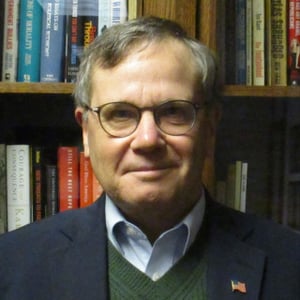
Senior Fellow in Constitutional Jurisprudence, Independence Institute
Professor Robert G. Natelson is a constitutional scholar and author.
Rob’s constitutional scholarship has been cited repeatedly by justices and parties at the U.S. Supreme Court—as well as by federal appeals courts, and at least 18 state supreme courts.
Rob’s research into the Constitution’s original meaning has carried him to libraries throughout the United States and in Britain, including four months at Oxford University. His books and articles span many different parts of the Constitution, including groundbreaking studies of the Necessary and Proper Clause, the Indian Commerce Clause, federalism, Founding-Era interpretation, regulation of elections, and the amendment process of Article V. He created the first-ever online bibliography for 18th century materials used in constitutional research. He is a contributing author to the Encyclopedia of the Supreme Court of the United States (on Magna Carta). He contributed eight essays to the third edition of the Heritage Guide to the Constitution: five on the amendment procedure and one each on the Guarantee Clause, the Postal Clause, and the Recess Appointments Clause.
U.S. Supreme Court justices have relied explicitly on Rob’s research in 41 citations in 13 separate cases.
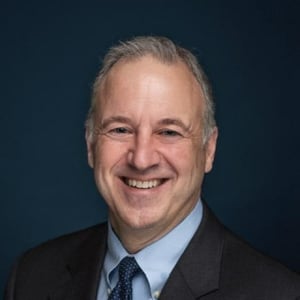
Senior Counsel, Litigation, Defense of Freedom Institute
Don Daugherty is Senior Counsel, Litigation, at the Defense of Freedom Institute for Policy Studies. He previously served as a Senior Counsel at the Institute for Free Speech and the Wisconsin Institute for Law & Liberty. Before that, he was a partner at three of Wisconsin’s largest firms, with nearly 30 years of trial and appellate litigation experience. He has been consistently recognized as among the “Best Lawyers in America,” as well as Wisconsin’s “Super Lawyers.” He received his B.A. from the University of Virginia and his J.D. from Northwestern University Law School. After law school, he served as a clerk to the Honorable Roger J. Miner of the United States Court of Appeals for the Second Circuit.
Don is on the Board of Advisors for the Milwaukee Lawyers’ Chapter of the Federalist Society, and on the Executive Committee of the Federalist Society’s Litigation Practice Group.

Vice President, Edwin Meese III Institute for the Rule of Law, Advancing American Freedom
John G. Malcolm oversees Advancing American Freedom’s work to increase understanding of the Constitution and the rule of law as Vice President of the organization’s Edwin Meese III Institute for the Rule of Law. Malcolm brings to the challenge a wealth of legal expertise and experience in both the public and private sectors.
Prior to joining Advancing American Freedom in 2025, Malcolm was the Vice President of the Institute for Constitutional Government and the Director of the Meese Center for Legal and Judicial Studies at the Heritage Foundation. Prior to joining Heritage in 2012, Malcolm was general counsel at the U.S. Commission on International Religious Freedom, as well as a distinguished practitioner in residence at Pepperdine Law School. From 2004 to 2009, Malcolm was executive vice president and director of worldwide anti-piracy operations for the Motion Picture Association.
Malcolm served as a deputy assistant attorney general in the Department of Justice’s Criminal Division from 2001 to 2004, where he oversaw sections on computer crime and intellectual property, domestic security, child exploitation and obscenity, and special investigations. Immediately prior to that, he was a founding partner in the Atlanta law firm of Malcolm & Schroeder, LLP.
From 1990 to 1997, Malcolm was an assistant U.S. attorney in Atlanta, assigned to the fraud and public corruption section, and also an associate independent counsel, investigating fraud and abuse in the Department of Housing and Urban Development. He was honored with the Director’s Award for Superior Performance for his work in connection with the successful prosecution of Walter Leroy Moody Jr., who assassinated an 11th Circuit judge and the head of the Savannah chapter of the NAACP.
A graduate of Harvard Law School and Columbia College, Malcolm began his career as a law clerk to a federal district court judge and a federal appellate court judge, and as an associate at the Atlanta-based law firm of Sutherland, Asbill & Brennan (new Eversheds Sutherland).
Malcolm, who resides in Washington, D.C., serves on the Board of Trustees of the Washington National Opera and is a Senate-confirmed member of the Board of Directors of the Legal Services Corporation, the largest funder of civil legal aid in the United States.
Fox Family Pavilion Distinguished Scholar in Residence, University of Pennsylvania
MARCI A. HAMILTON is a Fox Family Pavilion Distinguished Scholar in Residence in the Program for Research on Religion and Urban Civil Society at the University of Pennsylvania. She is also the founder, CEO, and Academic Director of CHILD USA, www.childusa.org, a 501(c)(3) nonprofit academic think tank at the University of Pennsylvania dedicated to interdisciplinary, evidence-based research to prevent child abuse and neglect. Before joining the program on religion at Penn, Professor Hamilton was the Paul R. Verkuil Chair in Public Law at Benjamin N. Cardozo School of Law, Yeshiva University.
Hamilton is the leading public intellectual critic of extreme religious liberty and its impact on vulnerable populations including children, LGBTQ, and women. The author of God vs. the Gavel: The Perils of Extreme Religious Liberty (Cambridge University Press), which was nominated for a Pulitzer Prize, she is also a columnist for Verdict on Justia.com. Hamilton successfully challenged the constitutionality of the Religious Freedom Restoration Act (“RFRA”) at the Supreme Court in Boerne v. Flores (1997), and defeated the RFRA claim brought by the Archdiocese of Milwaukee against hundreds of child sex abuse survivors in Committee of Unsecured Creditors v. Listecki (7th Cir. 2015).
Drawing on her experience studying and advising in cases involving clergy sex abuse, Hamilton is the leading expert on child sex abuse statutes of limitations and has submitted testimony and advised legislators in every state where significant reform has occurred. She is the author of Justice Denied: What America Must Do to Protect Its Children (Cambridge University Press), which advocates for the elimination of child sex abuse statutes of limitations. She has also filed countless pro bono amicus briefs for the protection of children at the United States Supreme Court and the state supreme courts. Her textbook, Children and the Law, co-authored with Martin Gardner, will be published Fall 2017 by Carolina Academic Press, formerly Lexis/Nexis.
Hamilton clerked for United States Supreme Court Justice Sandra Day O’Connor and Judge Edward R. Becker of the United States Court of Appeals for the Third Circuit.
Hamilton has been honored with the 2016 Voice Today, Voice of Gratitude Award; the 2015 Religious Liberty Award, American Humanist Association; the 2014 Freethought Heroine Award; the National Crime Victim Bar Association’s Frank Carrington Champion of Civil Justice Award, 2012; the E. Nathaniel Gates Award for outstanding public advocacy and scholarship, 2008; and selected as a Pennsylvania Woman of the Year Award, 2012, among others. She is also frequently quoted in the national media on RFRA, RLUIPA, First Amendment, clergy sex abuse, and statute of limitations issues.
Professor Hamilton is a graduate of Vanderbilt University, B.A., summa cum laude; Pennsylvania State University, M.A. (English, fiction writing, High Honors); M.A. (Philosophy); and the University of Pennsylvania School of Law, J.D., magna cum laude, where she served as Editor-in-Chief of the University of Pennsylvania Law Review. She is a member of Phi Beta Kappa and Order of the Coif.
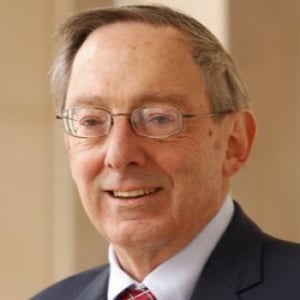
Robert E. Scott Distinguished Professor of Law Emeritus, University of Virginia School of Law; Alice McKean Young Regents Chair in Law Emeritus, University of Texas
Douglas Laycock is perhaps the nation’s leading authority on the law of religious liberty and also on the law of remedies. He has taught and written about these topics for more than four decades at the University of Chicago, the University of Texas, the University of Michigan and the University of Virginia. He retired from teaching at UVA Law School in May 2023.
Laycock has testified frequently before Congress and has argued many cases in the courts, including the U.S. Supreme Court, where he has served as lead counsel in six cases and has also filed influential amicus briefs. He is the author (co-author in the most recent edition) of the leading casebook Modern American Remedies, the award-winning monograph The Death of the Irreparable Injury Rule and many articles in leading law reviews. He co-edited a collection of essays, Same-Sex Marriage and Religious Liberty.
His many writings on religious liberty have been republished in a five-volume collection:
Laycock resigned from the council and as first vice president of the American Law Institute to become co-reporter for the Restatement (Third) of Torts: Remedies. He is a fellow of the American Academy of Arts and Sciences. He earned his B.A. from Michigan State University and his J.D. from the University of Chicago.
William Rand Kenan, Jr. Distinguished Professor of Law, University of North Carolina School of Law
William (Bill) Marshall joined the Carolina Law faculty in 2001 and serves as the William R. Kenan Jr. Distinguished Professor of Law. His teaching and research interests include the first amendment, presidential power, election law, federal jurisdiction, federal judicial selection, civil procedure, and media law. Marshall is the author of numerous book chapters, articles, and essays on free speech, separation of powers, the Establishment Clause, and the Free Exercise Clause. His work has appeared in the Harvard Law Review, the Yale Law Journal, the Supreme Court Review, and the University of Chicago Law Review, among others.
Marshall received his law degree from the University of Chicago and his undergraduate degree from the University of Pennsylvania. Marshall was Deputy Counsel to the President and Deputy Assistant to the President during the Clinton Administration and also served as the Solicitor General for the State of Ohio. He has taught at the Northwestern, Boston University, Vanderbilt, Ohio State, DePaul, Case Western Reserve, William and Mary, and the University Connecticut law schools. Prior to beginning his teaching career, Marshall was a Special Assistant Attorney General for the State of Minnesota.
Distinguished University Chair and Professor of Law, University of St. Thomas School of Law
Michael Stokes Paulsen is Distinguished University Chair & Professor of Law at the University of St. Thomas, where he has taught since 2007. Professor Paulsen was previously the McKnight Presidential Professor of Law & Public Policy and Associate Dean at the University of Minnesota Law School, where he taught from 1991-2007. He is a graduate of Northwestern University, Yale Law School, and Yale Divinity School. He has served as a federal prosecutor, as Attorney-Advisor in the Office of Legal Counsel of the U.S. Department of Justice, and as counsel for the Center for Law & Religious Freedom.
Paulsen has taught as a visiting professor at Princeton University, Pepperdine University, Georgetown University, Bethel University, Uppsala University (Sweden), Daystar University (Kenya), and University of the Andes (Chile). He has been a guest lecturer at universities around the nation, including Harvard, Yale, Columbia, Princeton, Penn, NYU, Georgetown, Virginia, Stanford, Berkeley, Michigan, University of Chicago, and Northwestern.
Professor Paulsen is the author of more than ninety scholarly articles and book chapters on a wide variety of constitutional law topics, published in law journals including the Harvard Law Review, the Yale Law Journal, the Stanford Law Review, the University of Chicago Law Review, the Michigan Law Review, the Georgetown Law Journal, and the Northwestern University Law Review. He is the author or co-author of three books, including The Constitution: An Introduction (Basic Books, 2015) (co-authored with Luke Paulsen) and the casebook The Constitution of the United States, now in its fifth edition with Foundation Press, co-authored with Michael McConnell, Samuel Bray, and Will Baude.

Chief Judge, United States Court of Appeals, Eleventh Circuit
William H. Pryor Jr. serves as Chief Circuit Judge on the United States Court of Appeals for the Eleventh Circuit.
In 2013–18, he served on the United States Sentencing Commission and, in 2017–18, served as Acting Chair.
He has taught as a visiting professor at the University of Alabama School of Law and previously taught as an adjunct professor at the Cumberland School of Law of Samford University.
He served as the 45th Attorney General of Alabama from 1997 to 2004. When he took office, he was the youngest attorney general in the nation. In his reelection, he received the highest percentage of votes of any statewide candidate.
He graduated magna cum laude from Tulane Law School where he finished first in the common-law curriculum and was editor in chief of the Tulane Law Review. He then served as a law clerk for Judge John Minor Wisdom of the U.S. Court of Appeals for the Fifth Circuit.
He is a member of The American Law Institute and an Adviser for the RESTATEMENT OF THE LAW THIRD, CONFLICT OF LAWS. He is a coauthor with Bryan Garner, Justices Gorsuch and Kavanaugh, and several other judges of a treatise, THE LAW OF JUDICIAL PRECEDENT. He has published in the Yale Law Journal, Columbia Law Review, Virginia Law Review, Notre Dame Law Review, Harvard Journal of Law & Public Policy, Yale Law & Policy Review, George Mason Law Review, Florida Law Review, Alabama Law Review, Case Western Reserve Law Review, and Tulane Law Review. He has published op-eds in The Wall Street Journal, The New York Times, National Review, and USA Today. He has debated at National Lawyers’ Conventions of the Federalist Society (including on National Public Radio) and at the Oxford Union in the United Kingdom. And he is listed among several “widely admired judicial writers” in Bryan Garner’s The Redbook: A Manual on Legal Style.
He is a member of the Tulane Law School Hall of Fame and has received the Defender of the Constitution Award from the Heritage Foundation, the Jurist of the Year Award from the Texas Review of Law & Politics, and the St. Thomas More Award from the St. Thomas More Society of Atlanta. Judge Pryor is also a proud member of the National Society of the Sons of the American Revolution.
Fox Family Pavilion Distinguished Scholar in Residence, University of Pennsylvania
MARCI A. HAMILTON is a Fox Family Pavilion Distinguished Scholar in Residence in the Program for Research on Religion and Urban Civil Society at the University of Pennsylvania. She is also the founder, CEO, and Academic Director of CHILD USA, www.childusa.org, a 501(c)(3) nonprofit academic think tank at the University of Pennsylvania dedicated to interdisciplinary, evidence-based research to prevent child abuse and neglect. Before joining the program on religion at Penn, Professor Hamilton was the Paul R. Verkuil Chair in Public Law at Benjamin N. Cardozo School of Law, Yeshiva University.
Hamilton is the leading public intellectual critic of extreme religious liberty and its impact on vulnerable populations including children, LGBTQ, and women. The author of God vs. the Gavel: The Perils of Extreme Religious Liberty (Cambridge University Press), which was nominated for a Pulitzer Prize, she is also a columnist for Verdict on Justia.com. Hamilton successfully challenged the constitutionality of the Religious Freedom Restoration Act (“RFRA”) at the Supreme Court in Boerne v. Flores (1997), and defeated the RFRA claim brought by the Archdiocese of Milwaukee against hundreds of child sex abuse survivors in Committee of Unsecured Creditors v. Listecki (7th Cir. 2015).
Drawing on her experience studying and advising in cases involving clergy sex abuse, Hamilton is the leading expert on child sex abuse statutes of limitations and has submitted testimony and advised legislators in every state where significant reform has occurred. She is the author of Justice Denied: What America Must Do to Protect Its Children (Cambridge University Press), which advocates for the elimination of child sex abuse statutes of limitations. She has also filed countless pro bono amicus briefs for the protection of children at the United States Supreme Court and the state supreme courts. Her textbook, Children and the Law, co-authored with Martin Gardner, will be published Fall 2017 by Carolina Academic Press, formerly Lexis/Nexis.
Hamilton clerked for United States Supreme Court Justice Sandra Day O’Connor and Judge Edward R. Becker of the United States Court of Appeals for the Third Circuit.
Hamilton has been honored with the 2016 Voice Today, Voice of Gratitude Award; the 2015 Religious Liberty Award, American Humanist Association; the 2014 Freethought Heroine Award; the National Crime Victim Bar Association’s Frank Carrington Champion of Civil Justice Award, 2012; the E. Nathaniel Gates Award for outstanding public advocacy and scholarship, 2008; and selected as a Pennsylvania Woman of the Year Award, 2012, among others. She is also frequently quoted in the national media on RFRA, RLUIPA, First Amendment, clergy sex abuse, and statute of limitations issues.
Professor Hamilton is a graduate of Vanderbilt University, B.A., summa cum laude; Pennsylvania State University, M.A. (English, fiction writing, High Honors); M.A. (Philosophy); and the University of Pennsylvania School of Law, J.D., magna cum laude, where she served as Editor-in-Chief of the University of Pennsylvania Law Review. She is a member of Phi Beta Kappa and Order of the Coif.
Robert E. Scott Distinguished Professor of Law Emeritus, University of Virginia School of Law; Alice McKean Young Regents Chair in Law Emeritus, University of Texas
Douglas Laycock is perhaps the nation’s leading authority on the law of religious liberty and also on the law of remedies. He has taught and written about these topics for more than four decades at the University of Chicago, the University of Texas, the University of Michigan and the University of Virginia. He retired from teaching at UVA Law School in May 2023.
Laycock has testified frequently before Congress and has argued many cases in the courts, including the U.S. Supreme Court, where he has served as lead counsel in six cases and has also filed influential amicus briefs. He is the author (co-author in the most recent edition) of the leading casebook Modern American Remedies, the award-winning monograph The Death of the Irreparable Injury Rule and many articles in leading law reviews. He co-edited a collection of essays, Same-Sex Marriage and Religious Liberty.
His many writings on religious liberty have been republished in a five-volume collection:
Laycock resigned from the council and as first vice president of the American Law Institute to become co-reporter for the Restatement (Third) of Torts: Remedies. He is a fellow of the American Academy of Arts and Sciences. He earned his B.A. from Michigan State University and his J.D. from the University of Chicago.
William Rand Kenan, Jr. Distinguished Professor of Law, University of North Carolina School of Law
William (Bill) Marshall joined the Carolina Law faculty in 2001 and serves as the William R. Kenan Jr. Distinguished Professor of Law. His teaching and research interests include the first amendment, presidential power, election law, federal jurisdiction, federal judicial selection, civil procedure, and media law. Marshall is the author of numerous book chapters, articles, and essays on free speech, separation of powers, the Establishment Clause, and the Free Exercise Clause. His work has appeared in the Harvard Law Review, the Yale Law Journal, the Supreme Court Review, and the University of Chicago Law Review, among others.
Marshall received his law degree from the University of Chicago and his undergraduate degree from the University of Pennsylvania. Marshall was Deputy Counsel to the President and Deputy Assistant to the President during the Clinton Administration and also served as the Solicitor General for the State of Ohio. He has taught at the Northwestern, Boston University, Vanderbilt, Ohio State, DePaul, Case Western Reserve, William and Mary, and the University Connecticut law schools. Prior to beginning his teaching career, Marshall was a Special Assistant Attorney General for the State of Minnesota.
Distinguished University Chair and Professor of Law, University of St. Thomas School of Law
Michael Stokes Paulsen is Distinguished University Chair & Professor of Law at the University of St. Thomas, where he has taught since 2007. Professor Paulsen was previously the McKnight Presidential Professor of Law & Public Policy and Associate Dean at the University of Minnesota Law School, where he taught from 1991-2007. He is a graduate of Northwestern University, Yale Law School, and Yale Divinity School. He has served as a federal prosecutor, as Attorney-Advisor in the Office of Legal Counsel of the U.S. Department of Justice, and as counsel for the Center for Law & Religious Freedom.
Paulsen has taught as a visiting professor at Princeton University, Pepperdine University, Georgetown University, Bethel University, Uppsala University (Sweden), Daystar University (Kenya), and University of the Andes (Chile). He has been a guest lecturer at universities around the nation, including Harvard, Yale, Columbia, Princeton, Penn, NYU, Georgetown, Virginia, Stanford, Berkeley, Michigan, University of Chicago, and Northwestern.
Professor Paulsen is the author of more than ninety scholarly articles and book chapters on a wide variety of constitutional law topics, published in law journals including the Harvard Law Review, the Yale Law Journal, the Stanford Law Review, the University of Chicago Law Review, the Michigan Law Review, the Georgetown Law Journal, and the Northwestern University Law Review. He is the author or co-author of three books, including The Constitution: An Introduction (Basic Books, 2015) (co-authored with Luke Paulsen) and the casebook The Constitution of the United States, now in its fifth edition with Foundation Press, co-authored with Michael McConnell, Samuel Bray, and Will Baude.
Chief Judge, United States Court of Appeals, Eleventh Circuit
William H. Pryor Jr. serves as Chief Circuit Judge on the United States Court of Appeals for the Eleventh Circuit.
In 2013–18, he served on the United States Sentencing Commission and, in 2017–18, served as Acting Chair.
He has taught as a visiting professor at the University of Alabama School of Law and previously taught as an adjunct professor at the Cumberland School of Law of Samford University.
He served as the 45th Attorney General of Alabama from 1997 to 2004. When he took office, he was the youngest attorney general in the nation. In his reelection, he received the highest percentage of votes of any statewide candidate.
He graduated magna cum laude from Tulane Law School where he finished first in the common-law curriculum and was editor in chief of the Tulane Law Review. He then served as a law clerk for Judge John Minor Wisdom of the U.S. Court of Appeals for the Fifth Circuit.
He is a member of The American Law Institute and an Adviser for the RESTATEMENT OF THE LAW THIRD, CONFLICT OF LAWS. He is a coauthor with Bryan Garner, Justices Gorsuch and Kavanaugh, and several other judges of a treatise, THE LAW OF JUDICIAL PRECEDENT. He has published in the Yale Law Journal, Columbia Law Review, Virginia Law Review, Notre Dame Law Review, Harvard Journal of Law & Public Policy, Yale Law & Policy Review, George Mason Law Review, Florida Law Review, Alabama Law Review, Case Western Reserve Law Review, and Tulane Law Review. He has published op-eds in The Wall Street Journal, The New York Times, National Review, and USA Today. He has debated at National Lawyers’ Conventions of the Federalist Society (including on National Public Radio) and at the Oxford Union in the United Kingdom. And he is listed among several “widely admired judicial writers” in Bryan Garner’s The Redbook: A Manual on Legal Style.
He is a member of the Tulane Law School Hall of Fame and has received the Defender of the Constitution Award from the Heritage Foundation, the Jurist of the Year Award from the Texas Review of Law & Politics, and the St. Thomas More Award from the St. Thomas More Society of Atlanta. Judge Pryor is also a proud member of the National Society of the Sons of the American Revolution.
Fox Family Pavilion Distinguished Scholar in Residence, University of Pennsylvania
MARCI A. HAMILTON is a Fox Family Pavilion Distinguished Scholar in Residence in the Program for Research on Religion and Urban Civil Society at the University of Pennsylvania. She is also the founder, CEO, and Academic Director of CHILD USA, www.childusa.org, a 501(c)(3) nonprofit academic think tank at the University of Pennsylvania dedicated to interdisciplinary, evidence-based research to prevent child abuse and neglect. Before joining the program on religion at Penn, Professor Hamilton was the Paul R. Verkuil Chair in Public Law at Benjamin N. Cardozo School of Law, Yeshiva University.
Hamilton is the leading public intellectual critic of extreme religious liberty and its impact on vulnerable populations including children, LGBTQ, and women. The author of God vs. the Gavel: The Perils of Extreme Religious Liberty (Cambridge University Press), which was nominated for a Pulitzer Prize, she is also a columnist for Verdict on Justia.com. Hamilton successfully challenged the constitutionality of the Religious Freedom Restoration Act (“RFRA”) at the Supreme Court in Boerne v. Flores (1997), and defeated the RFRA claim brought by the Archdiocese of Milwaukee against hundreds of child sex abuse survivors in Committee of Unsecured Creditors v. Listecki (7th Cir. 2015).
Drawing on her experience studying and advising in cases involving clergy sex abuse, Hamilton is the leading expert on child sex abuse statutes of limitations and has submitted testimony and advised legislators in every state where significant reform has occurred. She is the author of Justice Denied: What America Must Do to Protect Its Children (Cambridge University Press), which advocates for the elimination of child sex abuse statutes of limitations. She has also filed countless pro bono amicus briefs for the protection of children at the United States Supreme Court and the state supreme courts. Her textbook, Children and the Law, co-authored with Martin Gardner, will be published Fall 2017 by Carolina Academic Press, formerly Lexis/Nexis.
Hamilton clerked for United States Supreme Court Justice Sandra Day O’Connor and Judge Edward R. Becker of the United States Court of Appeals for the Third Circuit.
Hamilton has been honored with the 2016 Voice Today, Voice of Gratitude Award; the 2015 Religious Liberty Award, American Humanist Association; the 2014 Freethought Heroine Award; the National Crime Victim Bar Association’s Frank Carrington Champion of Civil Justice Award, 2012; the E. Nathaniel Gates Award for outstanding public advocacy and scholarship, 2008; and selected as a Pennsylvania Woman of the Year Award, 2012, among others. She is also frequently quoted in the national media on RFRA, RLUIPA, First Amendment, clergy sex abuse, and statute of limitations issues.
Professor Hamilton is a graduate of Vanderbilt University, B.A., summa cum laude; Pennsylvania State University, M.A. (English, fiction writing, High Honors); M.A. (Philosophy); and the University of Pennsylvania School of Law, J.D., magna cum laude, where she served as Editor-in-Chief of the University of Pennsylvania Law Review. She is a member of Phi Beta Kappa and Order of the Coif.
Robert E. Scott Distinguished Professor of Law Emeritus, University of Virginia School of Law; Alice McKean Young Regents Chair in Law Emeritus, University of Texas
Douglas Laycock is perhaps the nation’s leading authority on the law of religious liberty and also on the law of remedies. He has taught and written about these topics for more than four decades at the University of Chicago, the University of Texas, the University of Michigan and the University of Virginia. He retired from teaching at UVA Law School in May 2023.
Laycock has testified frequently before Congress and has argued many cases in the courts, including the U.S. Supreme Court, where he has served as lead counsel in six cases and has also filed influential amicus briefs. He is the author (co-author in the most recent edition) of the leading casebook Modern American Remedies, the award-winning monograph The Death of the Irreparable Injury Rule and many articles in leading law reviews. He co-edited a collection of essays, Same-Sex Marriage and Religious Liberty.
His many writings on religious liberty have been republished in a five-volume collection:
Laycock resigned from the council and as first vice president of the American Law Institute to become co-reporter for the Restatement (Third) of Torts: Remedies. He is a fellow of the American Academy of Arts and Sciences. He earned his B.A. from Michigan State University and his J.D. from the University of Chicago.
William Rand Kenan, Jr. Distinguished Professor of Law, University of North Carolina School of Law
William (Bill) Marshall joined the Carolina Law faculty in 2001 and serves as the William R. Kenan Jr. Distinguished Professor of Law. His teaching and research interests include the first amendment, presidential power, election law, federal jurisdiction, federal judicial selection, civil procedure, and media law. Marshall is the author of numerous book chapters, articles, and essays on free speech, separation of powers, the Establishment Clause, and the Free Exercise Clause. His work has appeared in the Harvard Law Review, the Yale Law Journal, the Supreme Court Review, and the University of Chicago Law Review, among others.
Marshall received his law degree from the University of Chicago and his undergraduate degree from the University of Pennsylvania. Marshall was Deputy Counsel to the President and Deputy Assistant to the President during the Clinton Administration and also served as the Solicitor General for the State of Ohio. He has taught at the Northwestern, Boston University, Vanderbilt, Ohio State, DePaul, Case Western Reserve, William and Mary, and the University Connecticut law schools. Prior to beginning his teaching career, Marshall was a Special Assistant Attorney General for the State of Minnesota.
Distinguished University Chair and Professor of Law, University of St. Thomas School of Law
Michael Stokes Paulsen is Distinguished University Chair & Professor of Law at the University of St. Thomas, where he has taught since 2007. Professor Paulsen was previously the McKnight Presidential Professor of Law & Public Policy and Associate Dean at the University of Minnesota Law School, where he taught from 1991-2007. He is a graduate of Northwestern University, Yale Law School, and Yale Divinity School. He has served as a federal prosecutor, as Attorney-Advisor in the Office of Legal Counsel of the U.S. Department of Justice, and as counsel for the Center for Law & Religious Freedom.
Paulsen has taught as a visiting professor at Princeton University, Pepperdine University, Georgetown University, Bethel University, Uppsala University (Sweden), Daystar University (Kenya), and University of the Andes (Chile). He has been a guest lecturer at universities around the nation, including Harvard, Yale, Columbia, Princeton, Penn, NYU, Georgetown, Virginia, Stanford, Berkeley, Michigan, University of Chicago, and Northwestern.
Professor Paulsen is the author of more than ninety scholarly articles and book chapters on a wide variety of constitutional law topics, published in law journals including the Harvard Law Review, the Yale Law Journal, the Stanford Law Review, the University of Chicago Law Review, the Michigan Law Review, the Georgetown Law Journal, and the Northwestern University Law Review. He is the author or co-author of three books, including The Constitution: An Introduction (Basic Books, 2015) (co-authored with Luke Paulsen) and the casebook The Constitution of the United States, now in its fifth edition with Foundation Press, co-authored with Michael McConnell, Samuel Bray, and Will Baude.
Chief Judge, United States Court of Appeals, Eleventh Circuit
William H. Pryor Jr. serves as Chief Circuit Judge on the United States Court of Appeals for the Eleventh Circuit.
In 2013–18, he served on the United States Sentencing Commission and, in 2017–18, served as Acting Chair.
He has taught as a visiting professor at the University of Alabama School of Law and previously taught as an adjunct professor at the Cumberland School of Law of Samford University.
He served as the 45th Attorney General of Alabama from 1997 to 2004. When he took office, he was the youngest attorney general in the nation. In his reelection, he received the highest percentage of votes of any statewide candidate.
He graduated magna cum laude from Tulane Law School where he finished first in the common-law curriculum and was editor in chief of the Tulane Law Review. He then served as a law clerk for Judge John Minor Wisdom of the U.S. Court of Appeals for the Fifth Circuit.
He is a member of The American Law Institute and an Adviser for the RESTATEMENT OF THE LAW THIRD, CONFLICT OF LAWS. He is a coauthor with Bryan Garner, Justices Gorsuch and Kavanaugh, and several other judges of a treatise, THE LAW OF JUDICIAL PRECEDENT. He has published in the Yale Law Journal, Columbia Law Review, Virginia Law Review, Notre Dame Law Review, Harvard Journal of Law & Public Policy, Yale Law & Policy Review, George Mason Law Review, Florida Law Review, Alabama Law Review, Case Western Reserve Law Review, and Tulane Law Review. He has published op-eds in The Wall Street Journal, The New York Times, National Review, and USA Today. He has debated at National Lawyers’ Conventions of the Federalist Society (including on National Public Radio) and at the Oxford Union in the United Kingdom. And he is listed among several “widely admired judicial writers” in Bryan Garner’s The Redbook: A Manual on Legal Style.
He is a member of the Tulane Law School Hall of Fame and has received the Defender of the Constitution Award from the Heritage Foundation, the Jurist of the Year Award from the Texas Review of Law & Politics, and the St. Thomas More Award from the St. Thomas More Society of Atlanta. Judge Pryor is also a proud member of the National Society of the Sons of the American Revolution.
Associate Professor of Law, George Washington University Law School
Dmitry Karshtedt's primary research interest is in patent law. His legal scholarship has been published in the Vanderbilt Law Review, Washington University Law Review, and Iowa Law Review, among other outlets, and cited in three of the leading patent law casebooks, a casebook on intellectual property, and three treatises. Professor Karshtedt's academic work has won several awards, including the Samsung-Stanford Patent Prize and the scholarship grant for judicial clerks sponsored by the University of Houston Law Center Institute for Intellectual Property and Information Law.
Jeremy Kidd graduated in 2007 with honors from George Mason University School of Law, where he was Executive Editor for the Journal of Law, Economics & Policy. He holds a BA in economics and political science and a Ph.D. in economics from Utah State University.
After law school, he practiced as a real estate associate with Ballard Spahr Andrews & Ingersoll in Washington, D.C. and later as a litigation associate with Strong & Hanni in Salt Lake City, Utah. He clerked for the Honorable Ted Stewart on the U.S. District Court for the District of Utah and the Honorable Alice Batchelder, Chief Judge of the U.S. Court of Appeals for the Sixth Circuit.
Professor Kidd's primary teaching interests are in the areas of business associations, torts, contracts, and law and economics. He was a Visiting Assistant Professor at George Mason University School of Law and has taught courses in business law and economics at Utah State University and Weber State University.
Assistant Professor, Florida State University College of Law
Professor of Law, University of Wyoming College of Law
George Mocsary is an expert in corporate and small-business law, and the law of firearms.
Currently, he is Professor of Law, Founder & Director of Firearms Research Center, and Director of the Business Planning Practicum and at the University of Wyoming College of Law.
Professor Mocsary teaches and writes about Agency & Partnership, Contracts, Corporations, Securities Regulation, the Second Amendment, and Firearms Law, including the intersection of Firearms Law and private law. He is a co-author of Firearms Law and the Second Amendment: Regulation, Rights, and Policy (3rd ed. 2021), the first casebook on this topic.
Prior to his appointment at Wyoming, he served as an Associate Professor of Law at the Southern Illinois University School of Law and spent two years as a Visiting Assistant Professor at the University of Connecticut School of Law. He practiced corporate and bankruptcy law at Cravath, Swaine and Moore in New York, and clerked for the Honorable Harris L. Hartz of the U.S. Court of Appeals for the Tenth Circuit.
Professor Mocsary holds a J.D. from Fordham Law School and an M.B.A. from the University of Rochester Simon School of Business. At Fordham, he graduated first in his class, and served as Notes and Articles Editor of the Fordham Law Review. He has published in the George Washington Law Review, George Mason Law Review, Fordham Law Review, Duke Law Journal Online, and other journals. His work has been cited by the Supreme Court of the United States, several U.S. Courts of Appeals, the Supreme Court of Illinois, the Delaware Court of Chancery, and other courts.
Associate Professor of Law, Southern University Law Center
Professor Nedzel's interests include international and comparative commercial law, policy, and jurisprudence; specifically the interrelationship among market economy, technology, the rule of law, and personal autonomy. She has been a Visiting Research Scholar at the Lauterpacht Centre for International Law at Cambridge University, a Fulbright Senior Specialist teaching Comparative Contract Law and Legal Drafting in Santiago, Chile (April, 2007), and she taught legal drafting in Istanbul, Turkey along with other legal writing experts. Most recently, she taught law school faculty in Santiago, Chile how to incorporate case method into their teaching. She is a member of the Louisiana Advisory to the United States Civil Rights Commission.
An active scholar, her textbook, Legal Research and Writing for International Graduate Students (2nd ed. Aspen 2008) has been translated into Chinese, and she'll begin working on a third edition in the summer of 2011. She is finishing a new casebook on Louisiana Sales and Lease, and continues to work on her Rule of Law project. Her most recent law review article is: "The Rule of Law: Its History and Meaning in Common Law, Civil Law, and Latin American Judicial Systems, 10 Richmond J. Global L. & Bus. 57 (2010).
Professor Nedzel came to SULC from Tulane University School of Law, where she was the director of Graduate Legal Studies and Exchange Programs. She also practiced admiralty and international trade, served as a staff attorney for the United States Fifth Circuit Court of Appeals, and is a former judicial clerk for Judge Carl E. Stewart of that court. Professor Nedzel earned her J.D. magna cum laude from Loyola University School of Law and an LL.M. with honors from Northwestern University. She speaks French, Spanish, and some Russian.
Assistant Professor of Law, Duquesne University School of Law
Professor Seth C. Oranburg studies the effect of law on innovation and the economy. His research includes Internet shareholder activism, crowdfunding, venture capital and angel investing, smart contracts, network effects, information brokerage, and other commercial activities that relate to securities regulation, corporate finance, business associations, contracts, and related legal issues. He publishes his research in esteemed journals such as the Rutgers University Law Review, Cornell Journal of Law & Public Policy, and Fordham Journal of Corporate Law, and he has been interviewed by popular publications such as the The Wall Street Journal, AboveTheLaw.com, and CommPro.biz.
Oranburg teaches Contracts and Corporations at Duquesne Law. Before joining the Duquesne faculty in 2016, he taught legal writing courses at the Chicago-Kent College of Law and taught Corporations, Closely Held Business Organizations, and Electronic Discovery of Digital Evidence at the Florida State University College of Law. Oranburg’s practice experience includes providing corporate counsel and managing venture capital transactions in Silicon Valley, Calif., and litigating antitrust matters in Washington, D.C.
Oranburg graduated with honors from the University of Chicago Law School, where he was a member of the Order of the Coif and a Kirkland & Ellis Scholar. He earned his bachelor's degree, magna cum laude, from the University of Florida with a double major in political science and English. Oranburg is a member of the State Bar of California and the Bar of the District of Columbia.
Tocqueville Associate Professor Department of Political Science and Concurrent Associate Professor of Law, University of Notre Dame Law School
Vincent Phillip Muñoz is the Tocqueville Associate Professor of Religion & Public Life in the Department of Political Science at the University of Notre Dame. He is the founding director of Notre Dame's undergraduate minor in Constitutional Studies and directs Notre Dame's Tocqueville Program for Inquiry into Religion and Public Life.
Muñoz writes and teaches across the fields of constitutional law, American politics, and political philosophy with a focus on religious liberty and the American Founding. His first book, God and the Founders: Madison, Washington, and Jefferson (Cambridge University Press, 2009) won the Hubert Morken Award from the American Political Science Association for the best publication on religion and politics in 2009 and 2010. His First Amendment church-state case reader, Religious Liberty and the American Supreme Court: The Essential Cases and Documents (Rowman & Littlefield) was first published in 2013 (revised edition, 2015) and is being used at Notre Dame and other leading universities.
Muñoz's current project is a scholarly monograph on the natural right of religious liberty and the original meaning of the First Amendment's Religion Clauses. Articles from that project have appeared in American Political Science Review, The Harvard Journal of Law and Public Policy, Notre Dame Law Review, American Political Thought, and the University of Pennsylvania's Journal of Constitutional Law.

The Founders Interpret the Constitution: The Division of Federal and State Powers
Robert G. Natelson
Note from the Editor: This article surveys ratification-era statements by defenders of the proposed Constitution...
The Supreme Court in Crisis: A Good Read, But No Crisis
Donald A. Daugherty
A review of: American Justice 2017: The Supreme Court in Crisis, by Kimberly Robinson (University...
The Problem with the Proliferation of Collateral Consequences
John G. Malcolm
Note from the Editor: This article discusses collateral consequences of criminal convictions and argues that...
Panel 3: Religious Liberty after the USCCR Report
Marci A. Hamilton, Douglas Laycock, William P. Marshall, Michael Stokes Paulsen, William H. Pryor
In September, 2016, the United States Commission on Civil Rights released a report entitled Peaceful Coexistence: Reconciling...
Panel 3: Religious Liberty after the USCCR Report
Marci A. Hamilton, Douglas Laycock, William P. Marshall, Michael Stokes Paulsen, William H. Pryor
In September, 2016, the United States Commission on Civil Rights released a report entitled Peaceful Coexistence: Reconciling...
Panel 3: Religious Liberty after the USCCR Report
2017 National Student Symposium
New York, NY7 Minute Presentations of Works in Progress Panel 1-B
19th Annual Faculty Conference
San Francisco, CATopics
Federal Regulation, Judicial Stays, and the Right to Appeal
The election results have raised serious doubts about the future of President Obama’s Clean Power...
Religious Freedom v. ObamaCare
Kansas City, MissouriTopics
Separation of Powers: A Primer
Constitutional concepts like free speech or the right to bear arms are ingrained in our...