
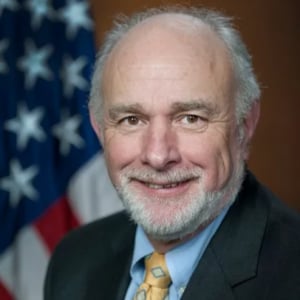
Visiting Fellow in Governance Studies, Brookings Institution
Bill Baer is a visiting fellow in Governance Studies. He is one of the world’s best known and respected antitrust/competition enforcers. Baer is the only person to have led antitrust enforcement at both U.S. antitrust agencies, serving as assistant attorney general in charge of the Antitrust Division of the U.S. Department of Justice from 2013 to 2016, and as director of the Bureau of Competition at the Federal Trade Commission from 1995 to 1999. During his tenure as assistant attorney general, the Antitrust Division achieved unprecedented success in civil and criminal enforcement, bringing and winning more cases than at any point in its history. He also developed close working relationships with his competition enforcement colleagues around the world. In 2016 and early 2017, Baer also served as acting associate attorney general, the third highest official in the Department of Justice. He oversaw the work of the Antitrust, Civil, Civil Rights, Tax, and Environment and Natural Resources Divisions and successfully led the effort to hold financial institutions accountable in the residential mortgage-backed securities crisis, securing record penalties and consumer redress. Baer worked at the Federal Trade Commission on two different occasions: from 1995 to 1999, as director of the Bureau of Competition; and from 1975 to 1980 as attorney advisor to the chairman and assistant general counsel for Legislation and Congressional Relations. While not in public service, he headed the highly regarded antitrust practice at Arnold & Porter, representing a broad range of companies in U.S. and international cartel investigations, antitrust litigation, and merger and acquisition reviews by antitrust enforcers, including the Department of Justice, the Federal Trade Commission, state attorneys general, and the European Commission.
Baer was twice named by Global Competition Review as the best competition lawyer in the world; honored, in 2010 and 2012, by Best Lawyers as the best antitrust lawyer in Washington; and named by The National Law Journal as one of “The Decade’s Most Influential Lawyers.” In 2015 the Federal Trade Commission honored him with the Miles W. Kirkpatrick Lifetime Achievement Award. In 2017, the American Antitrust Institute presented him with the Alfred E. Kahn Award for Antitrust Achievement. In 2024 the American Economic Liberties Project honored him with its first Achievements in Antitrust Award. Most recently, Baer was awarded the John Sherman Award for his substantive contributions to the development of antitrust law. It is the highest honor granted by the Justice Department’s Antitrust Division.
Baer received his J.D. in 1975 from Stanford Law School, where he served as senior article editor of The Stanford Law Review, and his B.A. in 1972 from Lawrence University. Outside of Brookings, he is a trustee and board officer of his alma mater, Lawrence University. He previously served on the Biden transition team for the Federal Trade Commission. In addition, he occasionally serves as a consulting expert on antitrust matters.
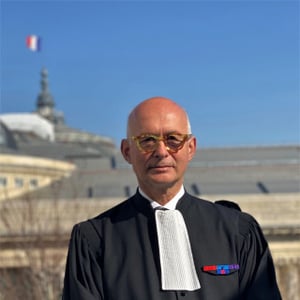
Partner, Supreme Court Attorney, Cabinet Briard LLP
François-Henri Briard is a Knight of the Legion of Honor, an Officer of the National Order of Merit and a Knight of the Palmes Académiques.
He was a member of the Governing Board of the Bar of the French Supreme Courts (2003-2005).
François-Henri Briard was a trustee of Sarah Lawrence College in New York for eight years. He is President of the Institut Vergennes, a member of the U.S. Supreme Court Historical Society and an honorary member of the Society of the Cincinnati and of the Sons of the American Revolution. He is also an expert with the Federalist Society, a U.S. think tank that focuses on constitutional and judicial issues.
He is a member of the Institute of Consulting Tax Attorneys (IACF) and an associate member of the Academy of Moral Sciences, Letters and Arts of Versailles and Ile de France.
He is a member of the French Navy civilian reserve with the rank of frigate captain and has been awarded a medal by the voluntary military services. On behalf of the Firm, he received the Military Reserve Prize (2011).
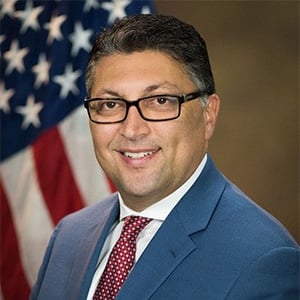
Adjunct Professor of Law, University of Pennsylvania
Makan Delrahim is currently an Adjunct Professor of Law at the University of Pennsylvania.
Previously he served as Assistant Attorney General for the Antitrust Division, Deputy Assistant to the President, and Deputy White House Counsel. Mr. Delrahim’s rich antitrust background covers the full range of industries, issues, and institutions touched upon by the work of the Antitrust Division. He is a former partner in the Los Angeles office of a national law firm. He served in the Antitrust Division from 2003 to 2005 as a Deputy Assistant Attorney General, overseeing the Appellate, Foreign Commerce, and Legal Policy sections. During that time, he played an integral role in building the Antitrust Division’s engagement with its international counterparts and was involved in civil and criminal matters. He has served on the Attorney General’s Task Force on Intellectual Property and as Chairman of the Merger Working Group of the International Competition Network. Mr. Delrahim was also a Commissioner on the Antitrust Modernization Commission from 2004 to 2007. Earlier in his career, Mr. Delrahim served as antitrust counsel, and later as the Staff Director and Chief Counsel of the U.S. Senate Judiciary Committee.
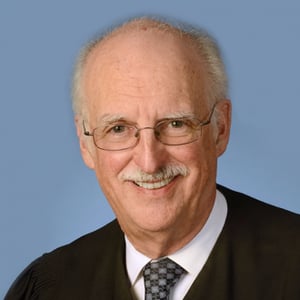
Senior Judge, United States Court of Appeals, District of Columbia Circuit
Circuit Judge Douglas H. Ginsburg was appointed to the United States Court of Appeals for the District of Columbia in 1986. After receiving his B.S. from Cornell University in 1970, and his J.D. from the University of Chicago Law School in 1973, he clerked on the D.C. Circuit and for Justice Thurgood Marshall on the United States Supreme Court. Thereafter, Judge Ginsburg was a professor at the Harvard Law School, the Deputy Assistant and then Assistant Attorney General for the Antitrust Division of the Department of Justice, as well as the Administrator of the Office of Information and Regulatory Affairs in the Office of Management and Budget. Concurrent with his service as a federal judge, Judge Ginsburg has taught at the University of Chicago Law School and the New York University School of Law. Judge Ginsburg is currently a Professor of Law at the George Mason University and a visiting professor at University College London, Faculty of Laws.
Judge Ginsburg is the Chairman of the International Advisory Board of the Global Antitrust Institute at the Law and Economics Center of the George Mason University School of Law. He also serves on the Advisory Boards of: Competition Policy International; the Harvard Journal of Law and Public Policy; the Journal of Competition Law and Economics; the Journal of Law, Economics & Policy; the Supreme Court Economic Review; the University of Chicago Law Review; the New York University Journal of Law and Liberty; and, at University College London, both the Centre for Law, Economics and Society and the Jevons Institute for Competition Law and Economics.
In 2020, Judge Ginsburg was the 11th recipient of the John Sherman Award, presented by the Antitrust Division of the Department of Justice in recognition of the awardee’s Lifetime Contributions to Antitrust Law and Policy.
In 2014, Judge Ginsburg received the Lifetime Achievement Award given annually by the Global Competition Review.
He is the author or co-author of several books and more than 100 articles on competition and regulation, including, most recently, Growing Convergence: The Limited Role of Antitrust in Standard Essential Patent Disputes, in CPI Antitrust Chronicle, Summer 2021, Vol. 1, No. 2.

Vice President and Director of Competition Policy, Progressive Policy Institute
Diana Moss joined the Progressive Policy Institute in 2023. She was previously President of the American Antitrust Institute from 2015-2023. An economist, Dr. Moss has developed and expanded competition enforcement and policy advocacy channels and strategies, and strengthened communications with enforcers, Congress, other advocacy groups, and the media. Her work spans both antitrust and regulation, with industry expertise in digital technology, electricity, petroleum, food and agriculture, airlines, telecommunications, and healthcare. Dr. Moss was previously at the Federal Energy Regulatory Commission, where she coordinated the agency’s competition analysis for electricity mergers. In the early 1990s, she consulted in private practice in the areas of regulation and antitrust. Dr. Moss has spoken widely on various topics involving competition policy and enforcement, testified before Congress, appeared before state and federal regulatory commissions, and made numerous radio and television appearances. She has published articles in a number of economic and legal academic journals, including: American Economic Review, Journal of Industrial Organization, the Energy Law Journal, and the Antitrust Bulletin. She is editor of Network Access, Regulation and Antitrust (2005). Dr. Moss is Adjunct Faculty in the Department of Economics at the University of Colorado at Boulder. She holds a M.A. degree from the University of Denver and a Ph.D. from the Colorado School of Mines.

Judge, United States Court of Appeals, Sixth Circuit
Judge Readler earned his undergraduate and law degrees from the University of Michigan. After graduating, he served as a law clerk to Judge Alan Norris of the United States Court of Appeals for the Sixth Circuit. Judge Readler then began practicing law in the Columbus office of the international law firm Jones Day, eventually spending ten years as a partner in the firm’s Issues and Appeals Practice Group. While at Jones Day, Judge Readler appeared in state and federal trial and appellate courts around the country, most frequently the Supreme Court of Ohio and the Sixth Circuit. Judge Readler also successfully argued before the United States Supreme Court in McQuiggin v. Perkins on behalf of an inmate claiming actual innocence. His other pro bono representations include representing capital defendants before the Tenth Circuit and the Supreme Court of Ohio, as well as representing defendants sentenced to life in prison before the Sixth Circuit. While at Jones Day, Judge Readler traveled to Nairobi with Lawyers Without Borders to train Kenyan lawyers in prosecuting domestic violence cases, and he was also a recipient of the American Marshall Memorial Fellowship awarded by the German Marshall Fund of the United States. Following his career in private practice, Judge Readler served as Acting Assistant Attorney General for the Civil Division of the United States Department of Justice from 2017 to 2019. In that role, Judge Readler led and supervised over 1,000 lawyers in the Department’s largest litigating division, briefing and arguing several cases on behalf of the United States in federal courts across the country, including high-profile cases significant to the Administration and the Department. In March 2019, Judge Readler was confirmed to serve as a Circuit Judge on the Sixth Circuit. He resides in Columbus.

Opinion Columnist, FTC:WATCH
Neil Averitt is a lawyer, editor, and writer.
He was born in Washington, D.C., and later attended Dartmouth College, Harvard College, the London School of Economics, and Harvard Law School, where he was Note Editor on the Law Review.
For most of his professional career he practiced law at the Federal Trade Commission, helping to formulate policy on both antitrust and consumer protection issues. He has worked as advisor to one of the Commissioners, assistant to the Chairman, and as acting head of the antitrust planning staff. He has written numerous articles on antitrust topics, and has contributed to the briefs in a number of Supreme Court litigations.
He was the principal author of the Commission’s 1980 policy statement on its consumer unfairness jurisdiction, and of the opinion in International Harvester which formally adopted that statement.
He presently writes a column of opinion and analysis for the newsweekly FTC:WATCH.
Averitt is married to Kirstin Downey, who is also a writer. She recently published a biography of Frances Perkins, FDR’s Secretary of Labor, under the title of The Woman Behind the New Deal (Random House 2009). She is presently working on a biography of Queen Isabella of Spain (Random House 2014).
Averitt lives in Alexandria, Virginia.
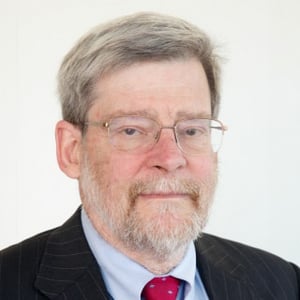
Professor Emeritus of Strategic Management and Public Policy, School of Business, The George Washington University
Howard Beales teaches in the School of Business at the George Washington University, where he has been since 1988. His research interests include a wide variety of consumer protection regulatory issues, including privacy, law and economics, and the regulation of advertising. He has published numerous articles addressing these issues in academic journals.
From 2001 through 2004, Dr. Beales served as the Director of the Bureau of Consumer Protection at the Federal Trade Commission. In that capacity, he was instrumental in redirecting the FTC’s privacy agenda to focus on the consequences of the use and misuse of consumer information. During his tenure, the Commission proposed, promulgated, and implemented the national Do Not Call Registry. He also worked with Congress and the Administration to develop and implement the Fair and Accurate Credit Transactions Act of 2003, and testified before Congress on numerous occasions. His aggressive law enforcement program produced the largest redress orders in FTC history and attacked high volume frauds promoted through heavy television advertising.
Dr. Beales also worked at the FTC from 1977 to 1987, as a staff economist, Assistant to the Director of the Bureau of Consumer Protection, Associate Director for Policy and Evaluation, and Acting Deputy Director. In 1987-88, he was the Chief of the Human Resources and Housing Branch of the Office of Information and Regulatory Affairs in the Office of Management and Budget.
Howard Beales received his Ph.D. in economics from the University of Chicago in 1978. He graduated magna cum laude from Georgetown University with a B.A. in Economics in 1972.
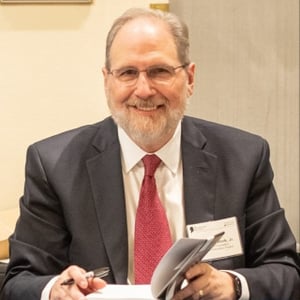
President, Antitrust Education Project

Associate Professor, School of Social Policy & Practice, University of Pennsylvania, Faculty Research Fellow, National Bureau of Economic Research
Ioana Marinescu is an economist who studies the labor market to craft policies that can enhance employment, productivity, and economic security. To make an informed policy decision, it is crucial to determine the costs and benefits of policies. Dr. Marinescu’s research expertise includes online job search, antitrust & the labor market, the universal basic income, unemployment insurance, the minimum wage, and employment contracts.
Dr. Marinescu’s research has been published in leading academic journals such as the Journal of Labor Economics, the American Economic Journal: Macroeconomics, and the Journal of Public Economics. She has testified for policy makers, including the Federal Trade Commission, and has briefed Congressional Staff. Her research has been cited in many media outlets including the New York Times, CNN, and the Wall Street Journal. She writes a monthly op-ed for the French newspaper Liberation.
Dr. Marinescu is a faculty research fellow at the National Bureau of Economic Research. You can follow her on Twitter @mioana and check out her research on her website, marinescu.eu.

Managing Partner - Washington, D.C., Lewis Brisbois Bisgaard & Smith LLP
Jane Luxton is the Managing Partner of Lewis Brisbois’ Washington, D.C. office, co-chair of the Government Investigations & White Collar Defense Practice, co-chair of the Government Relations Group Leadership, co-chair of the Environmental and Administrative Law Practice, and vice-chair of the Consumer Financial Services Practice. Jane has extensive experience in environmental as well as other federal regulatory, policy, and litigation matters. She advises businesses, associations, and coalitions in navigating all levels of the federal regulatory process, including appellate advocacy.
Recent matters include:
Jane’s knowledge of environmental and administrative law gained key insights from her experience serving in several prominent positions in the U.S. government. From 2007-2009, she served as general counsel of the National Oceanic and Atmospheric Administration, advising the Undersecretary of Commerce for Oceans and Atmosphere on legal and policy issues related to natural resource damages, coastal zone and fisheries management, endangered species and marine mammal protection, and weather and climate change science. In this role, in which she held a top secret/SCI security clearance, Jane was appointed by the President to head the U.S. delegation to the 2008 Western and Central Pacific Fisheries Commission. She also received the U.S. Department of Commerce Gold Medal Award in 2008 and 2009.
Jane’s experience includes “first chair” prosecution of antitrust and other criminal cases at the U.S. Department of Justice and U.S. Attorneys office, Eastern District of Virginia. In private practice, Jane has represented clients in grand jury and other government investigations.
Opinion Columnist, FTC:WATCH
Neil Averitt is a lawyer, editor, and writer.
He was born in Washington, D.C., and later attended Dartmouth College, Harvard College, the London School of Economics, and Harvard Law School, where he was Note Editor on the Law Review.
For most of his professional career he practiced law at the Federal Trade Commission, helping to formulate policy on both antitrust and consumer protection issues. He has worked as advisor to one of the Commissioners, assistant to the Chairman, and as acting head of the antitrust planning staff. He has written numerous articles on antitrust topics, and has contributed to the briefs in a number of Supreme Court litigations.
He was the principal author of the Commission’s 1980 policy statement on its consumer unfairness jurisdiction, and of the opinion in International Harvester which formally adopted that statement.
He presently writes a column of opinion and analysis for the newsweekly FTC:WATCH.
Averitt is married to Kirstin Downey, who is also a writer. She recently published a biography of Frances Perkins, FDR’s Secretary of Labor, under the title of The Woman Behind the New Deal (Random House 2009). She is presently working on a biography of Queen Isabella of Spain (Random House 2014).
Averitt lives in Alexandria, Virginia.
Professor Emeritus of Strategic Management and Public Policy, School of Business, The George Washington University
Howard Beales teaches in the School of Business at the George Washington University, where he has been since 1988. His research interests include a wide variety of consumer protection regulatory issues, including privacy, law and economics, and the regulation of advertising. He has published numerous articles addressing these issues in academic journals.
From 2001 through 2004, Dr. Beales served as the Director of the Bureau of Consumer Protection at the Federal Trade Commission. In that capacity, he was instrumental in redirecting the FTC’s privacy agenda to focus on the consequences of the use and misuse of consumer information. During his tenure, the Commission proposed, promulgated, and implemented the national Do Not Call Registry. He also worked with Congress and the Administration to develop and implement the Fair and Accurate Credit Transactions Act of 2003, and testified before Congress on numerous occasions. His aggressive law enforcement program produced the largest redress orders in FTC history and attacked high volume frauds promoted through heavy television advertising.
Dr. Beales also worked at the FTC from 1977 to 1987, as a staff economist, Assistant to the Director of the Bureau of Consumer Protection, Associate Director for Policy and Evaluation, and Acting Deputy Director. In 1987-88, he was the Chief of the Human Resources and Housing Branch of the Office of Information and Regulatory Affairs in the Office of Management and Budget.
Howard Beales received his Ph.D. in economics from the University of Chicago in 1978. He graduated magna cum laude from Georgetown University with a B.A. in Economics in 1972.
President, Antitrust Education Project
Managing Partner - Washington, D.C., Lewis Brisbois Bisgaard & Smith LLP
Jane Luxton is the Managing Partner of Lewis Brisbois’ Washington, D.C. office, co-chair of the Government Investigations & White Collar Defense Practice, co-chair of the Government Relations Group Leadership, co-chair of the Environmental and Administrative Law Practice, and vice-chair of the Consumer Financial Services Practice. Jane has extensive experience in environmental as well as other federal regulatory, policy, and litigation matters. She advises businesses, associations, and coalitions in navigating all levels of the federal regulatory process, including appellate advocacy.
Recent matters include:
Jane’s knowledge of environmental and administrative law gained key insights from her experience serving in several prominent positions in the U.S. government. From 2007-2009, she served as general counsel of the National Oceanic and Atmospheric Administration, advising the Undersecretary of Commerce for Oceans and Atmosphere on legal and policy issues related to natural resource damages, coastal zone and fisheries management, endangered species and marine mammal protection, and weather and climate change science. In this role, in which she held a top secret/SCI security clearance, Jane was appointed by the President to head the U.S. delegation to the 2008 Western and Central Pacific Fisheries Commission. She also received the U.S. Department of Commerce Gold Medal Award in 2008 and 2009.
Jane’s experience includes “first chair” prosecution of antitrust and other criminal cases at the U.S. Department of Justice and U.S. Attorneys office, Eastern District of Virginia. In private practice, Jane has represented clients in grand jury and other government investigations.
Associate Professor, School of Social Policy & Practice, University of Pennsylvania, Faculty Research Fellow, National Bureau of Economic Research
Ioana Marinescu is an economist who studies the labor market to craft policies that can enhance employment, productivity, and economic security. To make an informed policy decision, it is crucial to determine the costs and benefits of policies. Dr. Marinescu’s research expertise includes online job search, antitrust & the labor market, the universal basic income, unemployment insurance, the minimum wage, and employment contracts.
Dr. Marinescu’s research has been published in leading academic journals such as the Journal of Labor Economics, the American Economic Journal: Macroeconomics, and the Journal of Public Economics. She has testified for policy makers, including the Federal Trade Commission, and has briefed Congressional Staff. Her research has been cited in many media outlets including the New York Times, CNN, and the Wall Street Journal. She writes a monthly op-ed for the French newspaper Liberation.
Dr. Marinescu is a faculty research fellow at the National Bureau of Economic Research. You can follow her on Twitter @mioana and check out her research on her website, marinescu.eu.
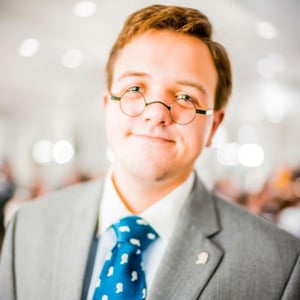
Adam Griffin is a graduate of the University of North Carolina School of Law. During law school, he served as a research assistant to Professor Stephen E. Sachs and UNC Law Dean Martin Brinkley. After law school, Adam spent two years litigating for liberty at the Institute for Justice as an inaugural Law and Liberty Fellow. He then served as a law clerk to Chief Judge Richard E. Myers in the United States District Court for the Eastern District of North Carolina, and previously worked at Pacific Legal Foundation and the Civil Rights Division of the Department of Justice.

President and Founder, International Center for Law & Economics
Geoffrey A. Manne is the president and founder of the International Center for Law and Economics (ICLE), a nonprofit, nonpartisan research center based in Portland, Oregon. He is also a distinguished fellow at Northwestern Law School’s Searle Center on Law, Regulation, & Economic Growth. In April 2017 he was appointed by FCC Chairman Ajit Pai to the FCC’s Broadband Deployment Advisory Committee, and he recently served for two years on the FCC’s Consumer Advisory Committee.
Mr. Manne earned his JD and AB degrees from the University of Chicago and is an expert in the economic analysis of law, specializing in competition, telecommunications, consumer protection, intellectual property, and technology policy.
Prior to founding ICLE, Manne was a law professor at Lewis & Clark Law School. From 2006-2009, he took a leave from teaching to develop Microsoft’s law and economics academic outreach program. Manne has also served as a lecturer in law at the University of Chicago Law School and the University of Virginia School of Law. He practiced antitrust law and appellate litigation at Latham & Watkins, clerked for Hon. Morris S. Arnold on the 8th Circuit Court of Appeals, and worked as a research assistant for Judge Richard Posner. He was also once (very briefly) employed by the FTC.
Mr. Manne’s publications have appeared in numerous journals including the Journal of Competition Law and Economics, the Harvard Journal of Law and Technology, the Supreme Court Economic Review, and the Arizona Law Review, among others. With former FTC Commissioner, Joshua Wright, Manne is the editor of a volume from Cambridge University Press entitled, Competition Policy and Intellectual Property Law Under Uncertainty: Regulating Innovation. Manne has also testified on several occasions before Congress and at the FCC and FTC, and he regularly files written comments and amicus briefs on key antitrust, IP, and telecommunications issues. His analysis is frequently published in popular print and broadcasting outlets such as the Wall Street Journal, Wired, Foreign Affairs, NPR, and Bloomberg, among others.
Manne is a member of the American Law and Economics Association, the Canadian Law and Economics Association, and the Society for Institutional & Organizational Economics. He blogs at Truth on the Market (www.truthonthemarket.com) (of which he is also the co-founder), is a contributor at WIRED, and tweets at @geoffmanne. His scholarly publications are available at http://ssrn.com/author=175541.
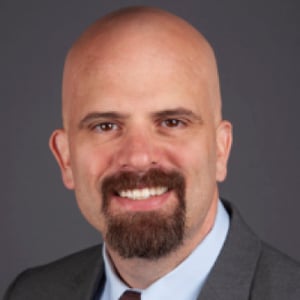
Director of Innovation Policy, International Center for Law & Economics
Kristian Stout, ICLE’s Director of Innovation Policy is an expert in intellectual property, antitrust, telecommunications, and Internet governance. Kristian has been a Fellow at the Internet Law & Policy Foundry, as well as the Eagleton Institute of Politics. Before practicing law, Kristian worked as a technology entrepreneur and a lecturer in the Computer Science Department at Rutgers University. Kristian served on the board of the New Jersey Leadership Program, and wasthe Chair of the Asset Forfeiture Working Group for the NJ State Advisory Committee to the United States Commission on Civil Rights. He has previously served on the Broadband Deployment Advisory Committee for the Federal Communications Commission. Kristian graduated magna cum laude from the Rutgers University School of law, and served on the editorial board of the Rutgers Journal of Law and Public Policy.
Senior Scholar, International Center for Law & Economics
Julian Morris is a Senior Scholar at the International Center for Law & Economics.
Senior Fellow for Law & Economics, International Center for Law & Economics
Dirk Auer is the Senior Fellow for Law & Economics at the International Center for Law & Economics.
Visiting Fellow in Governance Studies, Brookings Institution
Bill Baer is a visiting fellow in Governance Studies. He is one of the world’s best known and respected antitrust/competition enforcers. Baer is the only person to have led antitrust enforcement at both U.S. antitrust agencies, serving as assistant attorney general in charge of the Antitrust Division of the U.S. Department of Justice from 2013 to 2016, and as director of the Bureau of Competition at the Federal Trade Commission from 1995 to 1999. During his tenure as assistant attorney general, the Antitrust Division achieved unprecedented success in civil and criminal enforcement, bringing and winning more cases than at any point in its history. He also developed close working relationships with his competition enforcement colleagues around the world. In 2016 and early 2017, Baer also served as acting associate attorney general, the third highest official in the Department of Justice. He oversaw the work of the Antitrust, Civil, Civil Rights, Tax, and Environment and Natural Resources Divisions and successfully led the effort to hold financial institutions accountable in the residential mortgage-backed securities crisis, securing record penalties and consumer redress. Baer worked at the Federal Trade Commission on two different occasions: from 1995 to 1999, as director of the Bureau of Competition; and from 1975 to 1980 as attorney advisor to the chairman and assistant general counsel for Legislation and Congressional Relations. While not in public service, he headed the highly regarded antitrust practice at Arnold & Porter, representing a broad range of companies in U.S. and international cartel investigations, antitrust litigation, and merger and acquisition reviews by antitrust enforcers, including the Department of Justice, the Federal Trade Commission, state attorneys general, and the European Commission.
Baer was twice named by Global Competition Review as the best competition lawyer in the world; honored, in 2010 and 2012, by Best Lawyers as the best antitrust lawyer in Washington; and named by The National Law Journal as one of “The Decade’s Most Influential Lawyers.” In 2015 the Federal Trade Commission honored him with the Miles W. Kirkpatrick Lifetime Achievement Award. In 2017, the American Antitrust Institute presented him with the Alfred E. Kahn Award for Antitrust Achievement. In 2024 the American Economic Liberties Project honored him with its first Achievements in Antitrust Award. Most recently, Baer was awarded the John Sherman Award for his substantive contributions to the development of antitrust law. It is the highest honor granted by the Justice Department’s Antitrust Division.
Baer received his J.D. in 1975 from Stanford Law School, where he served as senior article editor of The Stanford Law Review, and his B.A. in 1972 from Lawrence University. Outside of Brookings, he is a trustee and board officer of his alma mater, Lawrence University. He previously served on the Biden transition team for the Federal Trade Commission. In addition, he occasionally serves as a consulting expert on antitrust matters.
Partner, Supreme Court Attorney, Cabinet Briard LLP
François-Henri Briard is a Knight of the Legion of Honor, an Officer of the National Order of Merit and a Knight of the Palmes Académiques.
He was a member of the Governing Board of the Bar of the French Supreme Courts (2003-2005).
François-Henri Briard was a trustee of Sarah Lawrence College in New York for eight years. He is President of the Institut Vergennes, a member of the U.S. Supreme Court Historical Society and an honorary member of the Society of the Cincinnati and of the Sons of the American Revolution. He is also an expert with the Federalist Society, a U.S. think tank that focuses on constitutional and judicial issues.
He is a member of the Institute of Consulting Tax Attorneys (IACF) and an associate member of the Academy of Moral Sciences, Letters and Arts of Versailles and Ile de France.
He is a member of the French Navy civilian reserve with the rank of frigate captain and has been awarded a medal by the voluntary military services. On behalf of the Firm, he received the Military Reserve Prize (2011).
Adjunct Professor of Law, University of Pennsylvania
Makan Delrahim is currently an Adjunct Professor of Law at the University of Pennsylvania.
Previously he served as Assistant Attorney General for the Antitrust Division, Deputy Assistant to the President, and Deputy White House Counsel. Mr. Delrahim’s rich antitrust background covers the full range of industries, issues, and institutions touched upon by the work of the Antitrust Division. He is a former partner in the Los Angeles office of a national law firm. He served in the Antitrust Division from 2003 to 2005 as a Deputy Assistant Attorney General, overseeing the Appellate, Foreign Commerce, and Legal Policy sections. During that time, he played an integral role in building the Antitrust Division’s engagement with its international counterparts and was involved in civil and criminal matters. He has served on the Attorney General’s Task Force on Intellectual Property and as Chairman of the Merger Working Group of the International Competition Network. Mr. Delrahim was also a Commissioner on the Antitrust Modernization Commission from 2004 to 2007. Earlier in his career, Mr. Delrahim served as antitrust counsel, and later as the Staff Director and Chief Counsel of the U.S. Senate Judiciary Committee.
Senior Judge, United States Court of Appeals, District of Columbia Circuit
Circuit Judge Douglas H. Ginsburg was appointed to the United States Court of Appeals for the District of Columbia in 1986. After receiving his B.S. from Cornell University in 1970, and his J.D. from the University of Chicago Law School in 1973, he clerked on the D.C. Circuit and for Justice Thurgood Marshall on the United States Supreme Court. Thereafter, Judge Ginsburg was a professor at the Harvard Law School, the Deputy Assistant and then Assistant Attorney General for the Antitrust Division of the Department of Justice, as well as the Administrator of the Office of Information and Regulatory Affairs in the Office of Management and Budget. Concurrent with his service as a federal judge, Judge Ginsburg has taught at the University of Chicago Law School and the New York University School of Law. Judge Ginsburg is currently a Professor of Law at the George Mason University and a visiting professor at University College London, Faculty of Laws.
Judge Ginsburg is the Chairman of the International Advisory Board of the Global Antitrust Institute at the Law and Economics Center of the George Mason University School of Law. He also serves on the Advisory Boards of: Competition Policy International; the Harvard Journal of Law and Public Policy; the Journal of Competition Law and Economics; the Journal of Law, Economics & Policy; the Supreme Court Economic Review; the University of Chicago Law Review; the New York University Journal of Law and Liberty; and, at University College London, both the Centre for Law, Economics and Society and the Jevons Institute for Competition Law and Economics.
In 2020, Judge Ginsburg was the 11th recipient of the John Sherman Award, presented by the Antitrust Division of the Department of Justice in recognition of the awardee’s Lifetime Contributions to Antitrust Law and Policy.
In 2014, Judge Ginsburg received the Lifetime Achievement Award given annually by the Global Competition Review.
He is the author or co-author of several books and more than 100 articles on competition and regulation, including, most recently, Growing Convergence: The Limited Role of Antitrust in Standard Essential Patent Disputes, in CPI Antitrust Chronicle, Summer 2021, Vol. 1, No. 2.
Vice President and Director of Competition Policy, Progressive Policy Institute
Diana Moss joined the Progressive Policy Institute in 2023. She was previously President of the American Antitrust Institute from 2015-2023. An economist, Dr. Moss has developed and expanded competition enforcement and policy advocacy channels and strategies, and strengthened communications with enforcers, Congress, other advocacy groups, and the media. Her work spans both antitrust and regulation, with industry expertise in digital technology, electricity, petroleum, food and agriculture, airlines, telecommunications, and healthcare. Dr. Moss was previously at the Federal Energy Regulatory Commission, where she coordinated the agency’s competition analysis for electricity mergers. In the early 1990s, she consulted in private practice in the areas of regulation and antitrust. Dr. Moss has spoken widely on various topics involving competition policy and enforcement, testified before Congress, appeared before state and federal regulatory commissions, and made numerous radio and television appearances. She has published articles in a number of economic and legal academic journals, including: American Economic Review, Journal of Industrial Organization, the Energy Law Journal, and the Antitrust Bulletin. She is editor of Network Access, Regulation and Antitrust (2005). Dr. Moss is Adjunct Faculty in the Department of Economics at the University of Colorado at Boulder. She holds a M.A. degree from the University of Denver and a Ph.D. from the Colorado School of Mines.
Judge, United States Court of Appeals, Sixth Circuit
Judge Readler earned his undergraduate and law degrees from the University of Michigan. After graduating, he served as a law clerk to Judge Alan Norris of the United States Court of Appeals for the Sixth Circuit. Judge Readler then began practicing law in the Columbus office of the international law firm Jones Day, eventually spending ten years as a partner in the firm’s Issues and Appeals Practice Group. While at Jones Day, Judge Readler appeared in state and federal trial and appellate courts around the country, most frequently the Supreme Court of Ohio and the Sixth Circuit. Judge Readler also successfully argued before the United States Supreme Court in McQuiggin v. Perkins on behalf of an inmate claiming actual innocence. His other pro bono representations include representing capital defendants before the Tenth Circuit and the Supreme Court of Ohio, as well as representing defendants sentenced to life in prison before the Sixth Circuit. While at Jones Day, Judge Readler traveled to Nairobi with Lawyers Without Borders to train Kenyan lawyers in prosecuting domestic violence cases, and he was also a recipient of the American Marshall Memorial Fellowship awarded by the German Marshall Fund of the United States. Following his career in private practice, Judge Readler served as Acting Assistant Attorney General for the Civil Division of the United States Department of Justice from 2017 to 2019. In that role, Judge Readler led and supervised over 1,000 lawyers in the Department’s largest litigating division, briefing and arguing several cases on behalf of the United States in federal courts across the country, including high-profile cases significant to the Administration and the Department. In March 2019, Judge Readler was confirmed to serve as a Circuit Judge on the Sixth Circuit. He resides in Columbus.
Opinion Columnist, FTC:WATCH
Neil Averitt is a lawyer, editor, and writer.
He was born in Washington, D.C., and later attended Dartmouth College, Harvard College, the London School of Economics, and Harvard Law School, where he was Note Editor on the Law Review.
For most of his professional career he practiced law at the Federal Trade Commission, helping to formulate policy on both antitrust and consumer protection issues. He has worked as advisor to one of the Commissioners, assistant to the Chairman, and as acting head of the antitrust planning staff. He has written numerous articles on antitrust topics, and has contributed to the briefs in a number of Supreme Court litigations.
He was the principal author of the Commission’s 1980 policy statement on its consumer unfairness jurisdiction, and of the opinion in International Harvester which formally adopted that statement.
He presently writes a column of opinion and analysis for the newsweekly FTC:WATCH.
Averitt is married to Kirstin Downey, who is also a writer. She recently published a biography of Frances Perkins, FDR’s Secretary of Labor, under the title of The Woman Behind the New Deal (Random House 2009). She is presently working on a biography of Queen Isabella of Spain (Random House 2014).
Averitt lives in Alexandria, Virginia.
Professor Emeritus of Strategic Management and Public Policy, School of Business, The George Washington University
Howard Beales teaches in the School of Business at the George Washington University, where he has been since 1988. His research interests include a wide variety of consumer protection regulatory issues, including privacy, law and economics, and the regulation of advertising. He has published numerous articles addressing these issues in academic journals.
From 2001 through 2004, Dr. Beales served as the Director of the Bureau of Consumer Protection at the Federal Trade Commission. In that capacity, he was instrumental in redirecting the FTC’s privacy agenda to focus on the consequences of the use and misuse of consumer information. During his tenure, the Commission proposed, promulgated, and implemented the national Do Not Call Registry. He also worked with Congress and the Administration to develop and implement the Fair and Accurate Credit Transactions Act of 2003, and testified before Congress on numerous occasions. His aggressive law enforcement program produced the largest redress orders in FTC history and attacked high volume frauds promoted through heavy television advertising.
Dr. Beales also worked at the FTC from 1977 to 1987, as a staff economist, Assistant to the Director of the Bureau of Consumer Protection, Associate Director for Policy and Evaluation, and Acting Deputy Director. In 1987-88, he was the Chief of the Human Resources and Housing Branch of the Office of Information and Regulatory Affairs in the Office of Management and Budget.
Howard Beales received his Ph.D. in economics from the University of Chicago in 1978. He graduated magna cum laude from Georgetown University with a B.A. in Economics in 1972.
President, Antitrust Education Project
Managing Partner - Washington, D.C., Lewis Brisbois Bisgaard & Smith LLP
Jane Luxton is the Managing Partner of Lewis Brisbois’ Washington, D.C. office, co-chair of the Government Investigations & White Collar Defense Practice, co-chair of the Government Relations Group Leadership, co-chair of the Environmental and Administrative Law Practice, and vice-chair of the Consumer Financial Services Practice. Jane has extensive experience in environmental as well as other federal regulatory, policy, and litigation matters. She advises businesses, associations, and coalitions in navigating all levels of the federal regulatory process, including appellate advocacy.
Recent matters include:
Jane’s knowledge of environmental and administrative law gained key insights from her experience serving in several prominent positions in the U.S. government. From 2007-2009, she served as general counsel of the National Oceanic and Atmospheric Administration, advising the Undersecretary of Commerce for Oceans and Atmosphere on legal and policy issues related to natural resource damages, coastal zone and fisheries management, endangered species and marine mammal protection, and weather and climate change science. In this role, in which she held a top secret/SCI security clearance, Jane was appointed by the President to head the U.S. delegation to the 2008 Western and Central Pacific Fisheries Commission. She also received the U.S. Department of Commerce Gold Medal Award in 2008 and 2009.
Jane’s experience includes “first chair” prosecution of antitrust and other criminal cases at the U.S. Department of Justice and U.S. Attorneys office, Eastern District of Virginia. In private practice, Jane has represented clients in grand jury and other government investigations.
Associate Professor, School of Social Policy & Practice, University of Pennsylvania, Faculty Research Fellow, National Bureau of Economic Research
Ioana Marinescu is an economist who studies the labor market to craft policies that can enhance employment, productivity, and economic security. To make an informed policy decision, it is crucial to determine the costs and benefits of policies. Dr. Marinescu’s research expertise includes online job search, antitrust & the labor market, the universal basic income, unemployment insurance, the minimum wage, and employment contracts.
Dr. Marinescu’s research has been published in leading academic journals such as the Journal of Labor Economics, the American Economic Journal: Macroeconomics, and the Journal of Public Economics. She has testified for policy makers, including the Federal Trade Commission, and has briefed Congressional Staff. Her research has been cited in many media outlets including the New York Times, CNN, and the Wall Street Journal. She writes a monthly op-ed for the French newspaper Liberation.
Dr. Marinescu is a faculty research fellow at the National Bureau of Economic Research. You can follow her on Twitter @mioana and check out her research on her website, marinescu.eu.
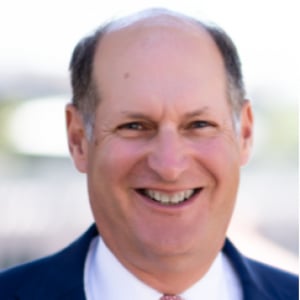
President & Chief Executive Officer, Bank Policy Institute
Greg Baer is the President and Chief Executive Officer at the Bank Policy Institute. Previously, he served as President of The Clearing House Association and Executive Vice President and General Counsel of The Clearing House Payments Company, the largest private sector payments operator in the United States.
Prior to joining The Clearing House, Mr. Baer was Managing Director and Head of Regulatory Policy at JPMorgan Chase. He previously served as General Counsel for Corporate and Regulatory Law at JPMorgan Chase, supervising the company’s legal work with respect to financial reporting, global regulatory affairs, intellectual property, private equity and corporate M&A, and data protection and privacy.
Mr. Baer previously served as Deputy General Counsel for Corporate Law at Bank of America, and as a partner and co-head of the financial institutions group at Wilmer, Cutler, Pickering, Hale & Dorr. From 1999 to 2001, Mr. Baer served as Assistant Secretary for Financial Institutions at the U.S. Department of the Treasury, after serving as Deputy Assistant Secretary. Prior to working for the Treasury Department, Mr. Baer was managing senior counsel at the Board of Governors of the Federal Reserve System.
Mr. Baer received his J.D. cum laude from Harvard Law School in 1987, and served as managing editor of the Harvard Law Review. He received his A.B. with honors from the University of North Carolina at Chapel Hill in 1984.
Mr. Baer also serves as an adjunct professor at Georgetown University Law School, and is a member of the Economic Club of Washington. He currently serves on the board of Honors Carolina, and previously served on the boards of Enterprise Community Partners, the DC College Access Program, and the Appleseed Foundation. He is also the author of two books: The Great Mutual Fund Trap (Random House, 2002) and Life: The Odds (And How to Improve Them) (Penguin-Putnam, 2003).

Partner, O’Melveny & Myers
Brian P. Brooks is the Managing Partner of Valor Capital Group. He has served as CEO of the Bitfury Group and CEO of digital asset exchange and marketplace Binance.US.
Mr. Brooks became Acting Comptroller of the Currency upon the resignation of the 31st Comptroller of the Currency Joseph M. Otting as a result of his designation as First Deputy Comptroller by Treasury Secretary Steven T. Mnuchin pursuant to his authority under 12 USC § 4.
As Acting Comptroller of the Currency, Mr. Brooks was the administrator of the federal banking system and chief officer of the Office of the Comptroller of the Currency (OCC). The OCC supervises nearly 1,200 national banks, federal savings associations, and federal branches and agencies of foreign banks that conduct approximately 70% of all banking business in the United States. The mission of the OCC is to ensure that national banks and federal savings associations operate in a safe and sound manner, provide fair access to financial services, treat customers fairly, and comply with applicable laws and regulations.
The Comptroller also serves as a director of the Federal Deposit Insurance Corporation and a member of the Financial Stability Oversight Council and the Federal Financial Institutions Examination Council.
Prior to becoming Acting Comptroller, Mr. Brooks served as Senior Deputy Comptroller and Chief Operating Officer. In this role, he oversaw OCC bank supervision, bank supervision policy, economics, supervisory system and analytical support, systemic risk identification support and specialty supervision, and innovation. He also served as a member of the OCC's Executive Committee and was the Chair of the Technology and Systems Subcommittee, since joining the agency in April 2020.
Prior to joining the OCC, Mr. Brooks served as Chief Legal Officer of Coinbase Global, Inc., where he headed the legal, compliance, audit, investigations, and government relations functions for the company, which served 20 million customers. He held this position since September 2018.
From 2014-2018, Mr. Brooks served as Executive Vice President, General Counsel, and Corporate Secretary of the $3.2 trillion Fannie Mae. Prior to joining Fannie Mae, he served as a Vice Chairman of OneWest Bank, N.A., from 2011 to 2014. Prior to joining OneWest, he served managing partner of the Washington, D.C. office of the global law firm O'Melveny & Myers LLP, where he also served as chair of the firm's financial services practice group. Prior to joining the OCC, Mr. Brooks also served on the Boards of Directors of Avant, Inc. and Fannie Mae, and also served as an advisor to a number of technology startups.
Mr. Brooks holds a bachelor’s degree from Harvard University in government and a law degree from the University of Chicago.
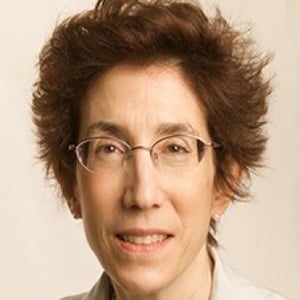
U.S. Court of Appeals, Ninth Circuit
Sandra Segal Ikuta was confirmed as a judge of the U.S. Court of Appeals for the Ninth Circuit on June 19, 2006. She filled a judgeship vacant since September 1, 2000, when Chief Judge Emeritus James R. Browning took senior status.
Before becoming a U.S. Circuit Judge, California Gov. Arnold Schwarzenegger appointed her to be deputy secretary and general counsel of the California Resources Agency in January 2004.
Prior to her political appointment, Judge Ikuta was a partner at the Los Angeles office of O'Melveny & Myers LLP. She joined the law firm in 1990 as an associate and became a partner in 1997. She specialized in environmental and natural resources law and co-chaired the firm's environmental practice group. She previously served as a law clerk for U.S. Supreme Court Justice Sandra Day O'Connor, 1989-90, and Judge Alex Kozinski of the U.S. Court of Appeals for the Ninth Circuit, 1988-89.
Prior to her legal career, Judge Ikuta took an unorthodox career path, which included serving as the first female editor-in-chief of a national martial arts magazine.
She received her J.D. from the University of California at Los Angeles School of Law and a Master of Science from Columbia University School of Journalism. She earned her undergraduate degree from the University of California at Berkeley in 1976.
In addition to her duties as an active U.S. Circuit Judge, Judge Ikuta was an appointed member of the Judicial Conference of the U.S. Advisory Committee on Bankruptcy Rules.
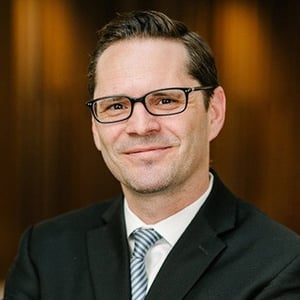
John J. Flynn Endowed Professor of Law, University of Utah S.J. Quinney College of Law
Christopher Peterson is the John J. Flynn Endowed Professor of Law at the University of Utah's S.J. Quinney College of Law. He previously served as a Special Advisor in the Office of the Director at the United States Consumer Financial Protection Bureau, as a Special Advisor in the Office of Legal Policy for Personnel and Readiness in the United States Department of Defense, and as Senior Counsel for Enforcement Policy and Strategy in the Consumer Financial Protection Bureau's Office of Enforcement. Professor Peterson has written dozens of scholarly articles and published three books on consumer finance. He has frequently testified in Congressional hearings and has presented his research to the Federal Deposit Insurance Corporation, the Federal Reserve Board of Governors, and at the White House in both Democratic and Republican administrations. He is a fellow of the American College of Consumer Financial Services Lawyers, the American Bar Association's Consumer Financial Services Committee, and serves on the community advisory board of the American Fintech Council. Professor Peterson is a recipient of the National Association of Consumer Agency Administrators’ Consumer Advocate of the Year award and the Pentagon’s Office of the Secretary of Defense Award for Excellence.

Associate Professor of Legal Studies & Business Ethics; Co-Director, Wharton Initiative on Financial Policy and Regulation, The Wharton School, University of Pennsylvania
Christina Parajon Skinner is an expert on financial regulation. Her research focuses on central banking, the debt markets, separation of powers, corporate governance, and law and macroeconomics. Professor Skinner’s work is international and comparative in scope, drawing on her experience as an academic and central bank lawyer in the United Kingdom. Her research has been published or is forthcoming in the Columbia Law Review, the Duke Law Journal, the Vanderbilt Law Review, and the Georgetown Law Journal, among other leading academic journals. Professor Skinner has also contributed to financial regulatory policy working groups, including those convened by the Federal Reserve Bank of New York, the Financial Stability Board, and the U.K. Banking Standards Board.
Prior to joining the faculty at Wharton, Professor Skinner served as legal counsel at the Bank of England, in the Financial Stability Division of the Bank’s Legal Directorate. Her work there focused principally on matters of bank resolution, financial market infrastructure, and macroprudential policy. Previously, Professor Skinner was an Academic Visitor at the University of Oxford, Faculty of Law and a Visiting Fellow at the London School of Economics, Law Department. From 2014-2016, she was a post-doctoral fellow and lecturer in Law at Columbia Law School.
Professor Skinner received her J.D. from Yale Law School, and an A.B. from the School of Public and International Affairs at Princeton University, with a concentration in international economics. She received certificates of proficiency in European Politics and Society, and Spanish Language and Culture.
She is married with five children.

Assistant Professor — Finance & Economics, Texas State University College of Business
Professor Guzelian has worked professionally as a deputy district attorney, a military intelligence analyst (civilian), a U.S. bankruptcy court staff attorney, a tenured law professor, and Dean of the only accredited Orthodox Christian university (University of St. Katherine). He holds a J.D. from Stanford University Law School, and B.A. and M.A. degrees in Economics from the University of Colorado at Boulder.
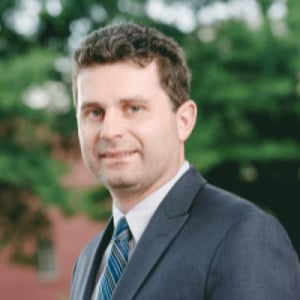
Associate Professor of Law, George Washington University Law School
Dmitry Karshtedt's primary research interest is in patent law. His legal scholarship has been published in the Vanderbilt Law Review, Washington University Law Review, and Iowa Law Review, among other outlets, and cited in three of the leading patent law casebooks, a casebook on intellectual property, and three treatises. Professor Karshtedt's academic work has won several awards, including the Samsung-Stanford Patent Prize and the scholarship grant for judicial clerks sponsored by the University of Houston Law Center Institute for Intellectual Property and Information Law.

Associate Dean for Academic Affairs, Austin E. Owen Research Scholar & Professor of Law, The University of Richmond School of Law
Dean Kristen Jakobsen Osenga teaches and writes in the areas of patent law, antitrust, and legislation and regulation. Some of her recent scholarship focuses on standard development organizations, patent eligible subject matter, patent licensing firms, litigation and remedies for patent infringement, and patent law reform. She has written numerous law review articles on these and other topics, as well as book chapters and op eds on various aspects of patent law. Additionally, she has spoken on these issues at many academic conferences and bar events. Dean Osenga is Chief Policy Counselor for the Inventors Defense Alliance, as well as an active member of the Federal Circuit Bar Association and the American Intellectual Property Law Association.
Dean Osenga received a B.S. degree in Biomedical Engineering from the University of Iowa, an M.S. degree in Electrical Engineering from Southern Illinois University – Carbondale, and a J.D. from the University of Illinois College of Law, where she graduated magna cum laude. After law school, she practiced at the law firm of Finnegan, Henderson, Farabow, Garrett, & Dunner LLP, (now Finnegan) where she did patent prosecution and litigation. She then clerked for the Judge Richard Linn of the U.S. Court of Appeals for the Federal Circuit. After clerking, she entered academia, teaching first at Chicago-Kent College of Law and then at the University of Richmond, where she has been since 2006. She has also been a Visiting Professor at Emory University School of Law and at William & Mary School of Law.
Associate Professor of Legal Studies & Business Ethics; Co-Director, Wharton Initiative on Financial Policy and Regulation, The Wharton School, University of Pennsylvania
Christina Parajon Skinner is an expert on financial regulation. Her research focuses on central banking, the debt markets, separation of powers, corporate governance, and law and macroeconomics. Professor Skinner’s work is international and comparative in scope, drawing on her experience as an academic and central bank lawyer in the United Kingdom. Her research has been published or is forthcoming in the Columbia Law Review, the Duke Law Journal, the Vanderbilt Law Review, and the Georgetown Law Journal, among other leading academic journals. Professor Skinner has also contributed to financial regulatory policy working groups, including those convened by the Federal Reserve Bank of New York, the Financial Stability Board, and the U.K. Banking Standards Board.
Prior to joining the faculty at Wharton, Professor Skinner served as legal counsel at the Bank of England, in the Financial Stability Division of the Bank’s Legal Directorate. Her work there focused principally on matters of bank resolution, financial market infrastructure, and macroprudential policy. Previously, Professor Skinner was an Academic Visitor at the University of Oxford, Faculty of Law and a Visiting Fellow at the London School of Economics, Law Department. From 2014-2016, she was a post-doctoral fellow and lecturer in Law at Columbia Law School.
Professor Skinner received her J.D. from Yale Law School, and an A.B. from the School of Public and International Affairs at Princeton University, with a concentration in international economics. She received certificates of proficiency in European Politics and Society, and Spanish Language and Culture.
She is married with five children.
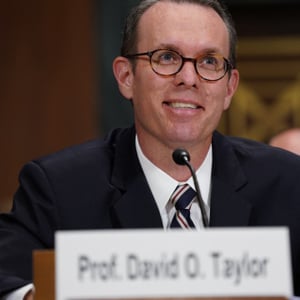
Robert G. Storey Distinguished Faculty Fellow; Associate Professor of Law Co-Director, Tsai Center for Law, Science and Innovation, SMU Dedman School of Law
David O. Taylor is an Associate Professor at the SMU Dedman School of Law in Dallas, Texas. He also founded and currently serves as a Co-Director of the school’s Tsai Center for Law, Science and Innovation.
Professor Taylor earned his bachelor of science, magna cum laude, in mechanical engineering from Texas A&M University and his juris doctor, cum laude, from Harvard Law School. Prior to law school, Professor Taylor worked as an applications engineer at National Instruments Corporation in Austin, Texas. While in law school, he served as an extern for the U.S. Attorney’s Office in Boston, as a member of both the Harvard Journal of Law & Technology and the Harvard Journal of Law & Public Policy, and as President of the law school's Texas Club.
After graduating from law school, Professor Taylor clerked for the current Chief Judge of the U.S. Court of Appeals for the Federal Circuit, the Honorable Sharon Prost. Professor Taylor also worked for seven years at the law firm of Baker Botts LLP in its Dallas office. While at Baker Botts, Professor Taylor engaged in patent litigation in various district courts and at the U.S. Court of Appeals for the Federal Circuit. His litigation experience includes both bench and jury trials. A registered patent attorney, he also gained significant experience in the fields of intellectual property licensing and patent prosecution. During his time in practice he assisted with several advanced patent law courses at SMU Dedman School of Law, including Patent Litigation, Intellectual Property Licensing, and Patent Prosecution, and successfully represented clients in pro bono matters, including before the U.S. Court of Veterans Appeals.
At SMU, Professor Taylor teaches in the areas of contracts and patent law. His scholarship focuses on patent law, patent policy, patent litigation, and civil procedure. Professor Taylor has published articles in various journals, including the Connecticut Law Review, Georgia Law Review, New York University Law Review, and in an assortment of intellectual property specialty journals. His publications have been cited by the U.S. Court of Appeals for the Federal Circuit and various district courts.
A frequent speaker, he has made academic presentations at law schools across the United States, including Boston College, California Berkeley, Cardozo, Chicago-Kent, DePaul, Houston, Kansas, San Diego, Stanford, and Texas, and internationally in Chongqing, China; Ho Chi Minh City, Vietnam; and Taipei, Taiwan. He also is a regular speaker at various continuing legal education (CLE) events, including events sponsored by the Dallas Bar Association, the Eastern District of Texas Bar Association, the Center for American and International Law, and the Federalist Society for Law and Public Policy Studies.
In addition to these activities, Professor Taylor has organized numerous symposia and conferences, helped launch SMU’s Patent and Trademark Clinics, and helped draft the proposal to secure the funding to launch the Tsai Center for Law, Science and Innovation. He serves on several law school committees and is an advisor to both the SMU Science and Technology Law Review and The International Lawyer. Professor Taylor also serves as an advisor to the law school's chapter of the Federalist Society, which regularly hosts speakers addressing hot topics in the field of constitutional law. SMU granted Professor Taylor tenure in 2016.
Professor Taylor serves in various leadership positions. He is a member of the Advisory Council for the U.S. Court of Appeals for the Federal Circuit. He serves on the Executive Board of the Institute for Law and Technology at the Center for American and International Law. He also is currently the Reporter for the Patentable Subject Matter Task Force of the American Intellectual Property Law Association (AIPLA), and he serves as a member of the AIPLA's Amicus Committee. He is a Director of the Intellectual Property Law Section of the Dallas Bar Association (DBA), and he previously served as the Chair of the Computer Law Section of the DBA. In addition to these leadership activities, Professor Taylor has served as an expert and consultant in various intellectual property disputes.
He has received several accolades. Professor Taylor is the recipient of a Thomas Edison Innovation Fellowship from the Center for the Protection of Intellectual Property at the George Mason University Antonin Scalia Law School. He has also been named a founding Barrister of the Honorable Barbara M.G. Lynn American Inn of Court, an Honorary Barrister of the SMU Dedman School of Law Board of Advocates, and an Outstanding Graduate of the Irving Independent School District. In addition to these awards, he has received numerous research and course development grants.
Outside of his work at the law school and the field of intellectual property law, Professor Taylor has engaged in public service with diverse groups including Advocates for Community Transformation, Texas Scottish Rite Hospital for Children, and the Veterans Consortium Pro Bono Program.
Professor Taylor is married. Together with his wife Rachel, he enjoys spending time with his three children: Caroline, Emily, and Joshua.



The Antitrust Revolution?
Bill Baer, François-Henri Briard, Makan Delrahim, Douglas H. Ginsburg, Diana L. Moss, Chad A. Readler
The 2021 National Lawyers Convention took place November 11-13, 2021 at the Mayflower Hotel in...
The Antitrust Revolution?
2021 National Lawyers Convention
Washington, DCDeep Dive Episode 197 – Competition at a Crossroads: Will the Executive Order on Competition Advance Competition, or Restrict It?
Neil Averitt, J. Howard Beales III, Robert H. Bork, Ioana Marinescu, Jane Luxton
Protecting and preserving competition are the key objectives of U.S. antitrust laws, which are all...
Competition at a Crossroads: Will the Executive Order on Competition Advance Competition, or Restrict It?
A Regulatory Transparency Project Webinar
TeleforumCompetition at a Crossroads: Will the Executive Order on Competition Advance Competition, or Restrict It?
Neil Averitt, J. Howard Beales III, Robert H. Bork, Jane Luxton, Ioana Marinescu
Protecting and preserving competition are the key objectives of U.S. antitrust laws, which are all...
Protecting Economic Liberty in the Federal Courts: Theory, Precedent, Practice
Adam F. Griffin
The 14th Amendment meaningfully protects economic liberty. While this protection was originally housed in the...
Reputational Risk in Banking: Is Operation Chokepoint the Answer?
Financial Services & E-Commerce and Corporations, Securities & Antitrust Practice Groups
2021 Executive Branch Review Week
The Next Four Years
7 Minute Presentations of Works in Progress Panel 1-A
23rd Annual Federalist Society Faculty Conference
The Deterioration of Appropriate Remedies in Patent Disputes
Geoffrey A. Manne, Kristian Stout, Julian Morris, Dirk Auer
Note from the Editor: The Federalist Society takes no positions on particular legal and public...