

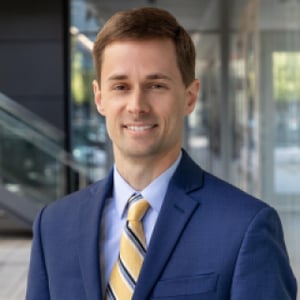
Assistant Professor of Law and, by courtesy, Computer Science, University of Nebraska College of Law; Nonresident Fellow, Stanford Law School Program in Law, Science & Technology
Professor Dickinson is an Assistant Professor of Law University of Nebraska College of Law, where he teaches Contracts, Business Torts and Unfair Competition, The Common Law, and Remedies. He is also a nonresident fellow with the Stanford Law School Program in Law, Science and Technology and holds a JD from Harvard Law School. Before teaching, Professor Dickinson practiced at Ropes & Gray LLP in Boston and at law firms in Rochester, New York, with a year in between as a law clerk for Judge Richard C. Wesley of the U.S. Court of Appeals for the Second Circuit.
Professor Dickinson's research focuses on the interaction between private law and technology. One major area of interest is how the common law responds to technological innovation and can be harnessed to complement the more particular statutory and regulatory schemes layered atop it. A second branch of his work explores how the tools of machine learning and artificial intelligence can be brought to bear on traditional legal questions. Through computational analysis of large bodies of case law his research seeks to provide a more systematic view of our legal system and doctrines and to guide legal reforms and policy decisions. His work appears in leading journals including the Boston College Law Review, the Stanford Technology Law Review, the Harvard Journal on Legislation, and the Administrative Law Review.
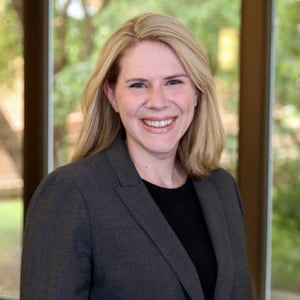
Associate Professor of Law, Sandra Day O'Connor College of Law, Arizona State University ; Affiliated Professor of Philosophy, Arizona State University
Charlie Capps is an Associate Professor at Arizona State University’s Sandra Day O’Connor College of Law and an affiliated member of the philosophy faculty at ASU’s School of Historical, Philosophical, and Religious Studies. He teaches courses on criminal law, constitutional law, and jurisprudence, and his research focuses on the intersection of law and philosophy, especially the role of moral responsibility in criminal law, the debate between positivism and natural-law theory in general jurisprudence, and theories of constitutional and statutory interpretation. Prior to joining ASU, Professor Capps was an Associate Scholar at the University of Chicago Law School and Deputy Solicitor General for the State of Missouri. After graduating from law school, he clerked for Judge Raymond W. Gruender on the U.S. Court of Appeals for the Eighth Circuit. He holds a JD with honors from the University of Chicago Law School and a PhD in Philosophy from the University of Chicago.
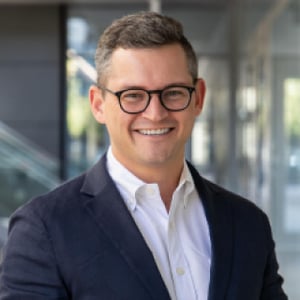
Professor of Law, Co-Director of the Center on the Structural Constitution, Texas A&M University School of Law
Katherine Mims Crocker is a Professor of Law and Faculty Co-Director of the Center on the Structural Constitution at Texas A&M University School of Law. She is also an affiliate of the Stanford Constitutional Law Center. Her scholarship focuses on federal courts, civil-rights litigation, constitutional law, and state and local-government law. She has also taught courses in civil procedure, property, and judicial decision making. Professor Crocker has published papers (or has work forthcoming) in leading journals including the Duke Law Journal, Harvard Law Review, Michigan Law Review, Minnesota Law Review, Notre Dame Law Review, Virginia Law Review, and Washington University Law Review.
Before joining Texas A&M, Professor Crocker was on the faculty at William & Mary Law School and completed a fellowship at Duke Law School. She also practiced at McGuireWoods LLP in Richmond, Virginia, where she concentrated on appellate litigation. Professor Crocker clerked for Justice Antonin Scalia of the Supreme Court of the United States and Judge J. Harvie Wilkinson III of the U.S. Court of Appeals for the Fourth Circuit. She received her law degree from the University of Virginia, where she graduated first in her class and was an Articles Development Editor on the Virginia Law Review. She earned her undergraduate degree from Harvard University cum laude.
Assistant Professor of Law and, by courtesy, Computer Science, University of Nebraska College of Law; Nonresident Fellow, Stanford Law School Program in Law, Science & Technology
Professor Dickinson is an Assistant Professor of Law University of Nebraska College of Law, where he teaches Contracts, Business Torts and Unfair Competition, The Common Law, and Remedies. He is also a nonresident fellow with the Stanford Law School Program in Law, Science and Technology and holds a JD from Harvard Law School. Before teaching, Professor Dickinson practiced at Ropes & Gray LLP in Boston and at law firms in Rochester, New York, with a year in between as a law clerk for Judge Richard C. Wesley of the U.S. Court of Appeals for the Second Circuit.
Professor Dickinson's research focuses on the interaction between private law and technology. One major area of interest is how the common law responds to technological innovation and can be harnessed to complement the more particular statutory and regulatory schemes layered atop it. A second branch of his work explores how the tools of machine learning and artificial intelligence can be brought to bear on traditional legal questions. Through computational analysis of large bodies of case law his research seeks to provide a more systematic view of our legal system and doctrines and to guide legal reforms and policy decisions. His work appears in leading journals including the Boston College Law Review, the Stanford Technology Law Review, the Harvard Journal on Legislation, and the Administrative Law Review.
Associate Professor of Law, Sandra Day O'Connor College of Law, Arizona State University
Jonathan Green is an Associate Professor of Law at Arizona State University teaching Civil Procedure and Statutory Interpretation. His scholarship focuses on the history of political and legal thought. He is especially interested in the history of constitutionalism, theories of interpretation, and the concept of judicial power. His research has been published in the Arizona State Law Journal, the Journal of the History of Ideas, Modern Intellectual History, and the Historical Journal.
Prior to joining the ASU faculty in 2024, Professor Green was a Harry A. Bigelow Fellow at the University of Chicago. He previously clerked for Judge Neomi Rao of the U.S. Court of Appeals for the District of Columbia Circuit, and worked as a litigation associate at DLA Piper in Philadelphia.
Professor Green holds a J.D. from Yale Law School, where he was an editor of the Yale Law Journal. He received his PhD from the University of Cambridge, where he was a joint recipient of Prince Consort & Thirwall Prize, awarded annually for the best dissertation in the Cambridge History Faculty. He also received his MPhil from Cambridge, and earned his B.A., summa cum laude, from Northwestern University.
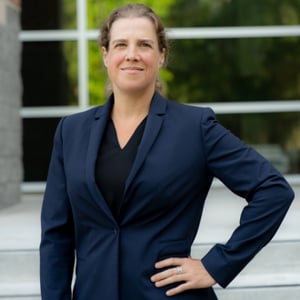
Interim Dean and Levin, Mabie, & Levin Professor, University of Florida Levin College of Law
Merritt E. McAlister is the Interim Dean and Levin, Mabie & Levin Professor at Levin College of Law. She joined the UF Law faculty in 2018, and she was appointed interim dean in June 2023. Prior to her career in academia, Dean McAlister was a partner in the national appellate practice group of King & Spalding.
Dean McAlister clerked for Justice John Paul Stevens of the Supreme Court of the United States and Judge R. Lanier Anderson III of the U.S. Court of Appeals for the Eleventh Circuit. She received her bachelor’s degree in English and Women and Gender Studies, magna cum laude, from Rice University and her law degree summa cum laude from the University of Georgia School of Law, where she served as Executive Articles Editor of the Georgia Law Review.
Dean McAlister teaches and writes in the areas of federal courts, judicial decision-making, constitutional law, and court administration. Her scholarship focuses on issues of institutional design in the federal appellate courts. Dean McAlister’s work has been published in the University of Pennsylvania Law Review, the Michigan Law Review, and the Northwestern University Law Review, among others. In 2020, she received the annual prize from the AALS Federal Courts Section for the best paper on federal courts by an untenured professor.
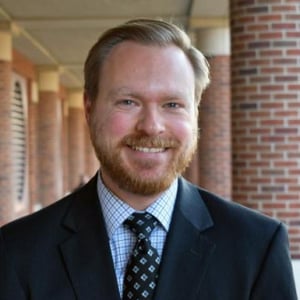
Associate Professor of Law, University of Missouri School of Law
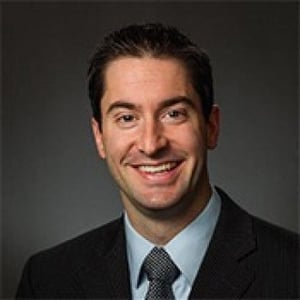
Chief Legal Counsel, Alliance Defending Freedom
Jim Campbell serves as chief legal counsel with Alliance Defending Freedom, where he leads the U.S. Legal Advocacy team. In that role, Campbell oversees all U.S. litigation teams and Allied Legal Affairs.
Prior to joining ADF in March 2023, Campbell was the solicitor general in the office of Nebraska Attorney General Douglas J. Peterson and Michael T. Hilgers. In that role, he represented the state of Nebraska in cases before state and federal courts and oversaw all civil appeals for the state. In February 2023, Campbell argued Biden v. Nebraska before the U.S. Supreme Court, a case in which Nebraska and five other states challenged the Biden administration’s attempt to forgive over $400 billion in federal student loans for over 40 million individuals.
Before joining the Nebraska attorney general’s office in January 2020, Campbell worked as senior counsel with ADF. In that role, he defended his clients’ religious freedom and freedom of speech, with a particular focus on appellate work. Campbell has also authored many articles and legal commentary pieces, including some published by USA Today and The Washington Post.
A native of northeastern Ohio, Campbell earned his Juris Doctor from the University of Akron School of Law, where he graduated summa cum laude in 2006. Following law school, he clerked for the Honorable Alice M. Batchelder of the U.S. Court of Appeals for the 6th Circuit. Campbell is admitted to the state bars of Ohio, Arizona, and Nebraska. He is also admitted to multiple federal district and appellate courts, including the U.S. Supreme Court.
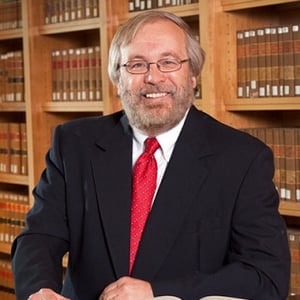
Welpton & Wise Professor of Law, University of Nebraska College of Law
Professor Rick Duncan is the Welpton & Wise Professor of Law at the University Of Nebraska College Of Law. He is a graduate of the Cornell Law School and served as an editor of the Cornell Law Review. He teaches Constitutional Law with a special emphasis on the law of religious freedom, free speech, and federalism. Duncan has written numerous books, articles, and commentaries on a wide variety of legal topics. His recent publications include an article on Justice Scalia’s legacy, another on Kermit Gosnell and Roe v. Wade, a piece on the Electoral College and Federalism, a 2019 piece on Masterpiece Cakeshop and the First Amendment, and three recent articles on the “no compelled speech” doctrine as a First Amendment defense against authoritarianism and tyranny. His most recent article, on School Choice and the First Amendment, will be published in 2023 in Case Western Law Review. He is also the co-author of a book on Secured Transactions under Article 9 of the UCC. He served as Chairman of the Nebraska Advisory Committee to the U.S. Commission on Civil Rights during the Reagan Administration. He also loves to speak at Federalist Society meetings around the country on life, liberty, and the pursuit of federalism.
Duncan has five children, five grandchildren, and a wonderful wife who help him pursue happiness. He loves lifting weights (particularly going heavy on the incline bench press), attending Broadway musicals and plays, including Hamilton: An American Musical which he has seen 12 times (possibly a Nebraska record). He regularly reads both the Bible and the New York Times because it is important to keep up with what both sides have to say. He loves following major league baseball, especially the San Diego Padres. And his favorite legal aphorism is “first come rights then comes government to secure those rights.”
Welpton & Wise Professor of Law, University of Nebraska College of Law
Professor Rick Duncan is the Welpton & Wise Professor of Law at the University Of Nebraska College Of Law. He is a graduate of the Cornell Law School and served as an editor of the Cornell Law Review. He teaches Constitutional Law with a special emphasis on the law of religious freedom, free speech, and federalism. Duncan has written numerous books, articles, and commentaries on a wide variety of legal topics. His recent publications include an article on Justice Scalia’s legacy, another on Kermit Gosnell and Roe v. Wade, a piece on the Electoral College and Federalism, a 2019 piece on Masterpiece Cakeshop and the First Amendment, and three recent articles on the “no compelled speech” doctrine as a First Amendment defense against authoritarianism and tyranny. His most recent article, on School Choice and the First Amendment, will be published in 2023 in Case Western Law Review. He is also the co-author of a book on Secured Transactions under Article 9 of the UCC. He served as Chairman of the Nebraska Advisory Committee to the U.S. Commission on Civil Rights during the Reagan Administration. He also loves to speak at Federalist Society meetings around the country on life, liberty, and the pursuit of federalism.
Duncan has five children, five grandchildren, and a wonderful wife who help him pursue happiness. He loves lifting weights (particularly going heavy on the incline bench press), attending Broadway musicals and plays, including Hamilton: An American Musical which he has seen 12 times (possibly a Nebraska record). He regularly reads both the Bible and the New York Times because it is important to keep up with what both sides have to say. He loves following major league baseball, especially the San Diego Padres. And his favorite legal aphorism is “first come rights then comes government to secure those rights.”

Internet Policy Counsel and Director of Appellate Litigation, TechFreedom
Corbin Barthold is TechFreedom's Internet Policy Counsel and Director of Appellate Litigation.
Corbin clerked for the Hon. Steven D. Merryday (M.D. Fla.) and the Hon. Robert H. Cleland (E.D. Mich.). After his clerkships, he became an associate, and later a partner, in the Los Angeles office of Browne George Ross LLP, where he engaged in high-stakes complex litigation. He then served as Senior Litigation Counsel at Washington Legal Foundation, a D.C. public-interest firm, where his practice focused on appeals involving administrative law, the separation of powers, antitrust, and tech policy.
Corbin received his J.D. from the University of California, Berkeley, School of Law. He also holds a B.A., magna cum laude and Phi Beta Kappa, from the University of California, San Diego, and an Msc., with distinction, from the London School of Economics.
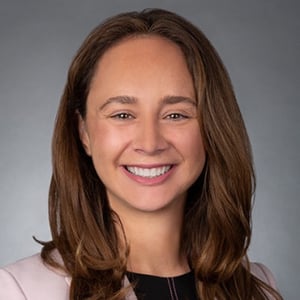
Partner, Kirkland & Ellis LLP
Elyse Dorsey is a partner in the Washington, D.C., office of Kirkland & Ellis LLP. Elyse's practice encompasses a wide array of antitrust and competition matters across the globe. She is uniquely situated to advise clients in domestic and international competition matters, given her combination of government and private practice experience.
Elyse has a focus in cutting edge competition issues, as well as privacy, data security, and consumer protection matters. She has represented clients across levels of government, from state agencies to the U.S. Supreme Court. Prior to joining Kirkland, Elyse served as Counsel to the Assistant Attorney General at the U.S. Department of Justice's Antitrust Division. Her work at the Antitrust Division covered a spectrum of legal and policy matters, including IP and technology issues, the Division's appellate and amicus brief programs, and its international and competition policy efforts. Elyse joined the Division from the U.S. Federal Trade Commission, where she served as Attorney Advisor to Commission Noah Joshua Phillips. While at the Commission, she advised on key cases, matters, and policies affecting industries across the economy--from digital and tech to pharmaceuticals and hospitals and more.
Elyse is a recognized thought leader in the antitrust and competition communities. She has been a frequent nominee and recipient of antitrust writing awards for her scholarship in this space. She has also served as an adjunct professor at George Mason University's Scalia Law School for several years, helping to launch their Antitrust LL.M. program; and she previously served as a visiting scholar at the University of Virginia.

Distinguished Fellow, Energy Policy Research Foundation
Diana Furchtgott-Roth, an Oxford-educated economist, is an Adjunct Professor at George Washington University and a Distinguished Fellow at the Energy Policy Research Foundation. She writes and comments regularly on energy, trade law, tariff authority, and regulatory policy, including recent work on Section 301 and executive trade power. From 2022 until February 2026, Diana headed the Center for Energy, Climate, and Environment at The Heritage Foundation. In President Trump's first term, she was Deputy Assistant Secretary for Research and Technology at the U.S. Department of Transportation and Acting Assistant Secretary for Economic Policy at the U.S. Department of Treasury. She served in the White House under Presidents Reagan, George H.W. Bush, and George W. Bush, including as Chief of Staff of the President's Council of Economic Advisers and Chief Economist of the U.S. Department of Labor, and has testified before Congress on economic and regulatory policy. Diana is the author or coauthor of six books, including Regulating to Disaster, and hundreds of articles in The Wall Street Journal, The Washington Post, The New York Times, National Review, Forbes, the UK’s Daily Telegraph and the New York Post.

Partner, Gibson, Dunn & Crutcher, LLP
Svetlana S. Gans is a partner in the Washington, D.C. office of Gibson, Dunn & Crutcher, LLP where she helps clients navigate complex consumer protection, privacy, and competition related regulatory proceedings before the U.S. Federal Trade Commission (FTC), , U.S. Department of Justice Antitrust Division, State Attorneys General and other enforcement bodies. Ms. Gans also assists on litigation matters and provides strategic counseling and advice related to public policy issues.
Before joining Gibson Dunn, she served as the Vice President & Associate General Counsel at NCTA, the Internet & Television Association, where she helped lead the association’s consumer protection and competition policy work. Prior to joining NCTA, Ms. Gans served with distinction as Chief of Staff to Acting Chairman Maureen K. Ohlhausen at the FTC. As the agency chief of staff, Ms. Gans managed and oversaw agency operations, including bureau and office heads reporting to the Chairman, a seven-member office staff, and an agency budget of over $300 million. She also served as the Acting Chairman’s key advisor on consumer protection and competition investigations and litigation, working with a diverse team of attorneys and economists to preserve competition and protect U.S. consumers. She created, executed, and oversaw several strategic initiatives for the agency, including the agency process reform, regulatory reform, and data security transparency initiatives. Previously, Ms. Gans had the unique experience of serving in both litigating bureaus of the FTC: the Bureau of Competition and the Bureau of Consumer Protection.
Prior to her time in government, Ms. Gans worked as an antitrust associate at major law firms. Her practice focused on defending consumer product, financial services, and trade association clients in regulatory and private investigations alleging conspiracy and violations of antitrust and consumer protection laws.
Ms. Gans has been an active leader in the ABA Antitrust Law Section (“Section”) for two decades, and currently serves as the Section’s Marketing Officer. Ms. Gans helped create the Section’s Young Lawyer Representative Program, now in its 10th year, and the Section’s Law Ambassador Program, each aimed at developing and promoting the next generation of consumer protection and competition attorneys. Ms. Gans is also active in the Federal Communications Bar Association, currently serving as Co-Chair of the Diversity Pipeline Initiative and the Women’s Leadership Committee.
Ms. Gans received her law degree with high honors from the University of Denver College of Law. During law school, Ms. Gans served as a Judicial Intern to the Honorable John L. Kane, Jr. and as an Honors Program Paralegal for the United States Department of Justice Antitrust Division, Merger Taskforce. Ms. Gans earned her undergraduate degree cum laude from Boston University.

Senior Fellow and Academic Director, Penn Carey Law School
Gus Hurwitz is a Senior Fellow and the Academic Director of the Center for Technology, Innovation & Competition and the University of Pennsylvania Carey Law School where he is working to develop academic and scholarly programs at the intersecution of law, technology, and policy.
He is also Director of Law & Economics Programs at the International Center for Law & Economics (ICLE), a think tank based in Portland, Oregon, where he directs its law and economics-focused research program and helps to translate academic research into applied policy issues.
Hurwitz's research focuses on the regulation of technology, including administrative and regulatory law, antitrust law, torts and products liability, and media law - alongside cognate fields. Inrecent years he has worked on an AI standardization initiative with Seoul National University, a UNICEF-organized study of broadband deployment to public schools in Rwanda, and a book on conglomerate and ecosystems theories of antitrust.
He has published over 30 articles and book chapters, two books (one on cybersecurity law & policy, one on media regulation in the digital era) and have two more in process, over 100 shorter writings (op-eds, shorter analyses, blog posts, &c), hosted over 100 podcast episodes, and regularly appear or am quoted in popular media (including the NY Times, Wall Street Journal, Washington Post, and Associated Press). His work has been cited by legislators, federal courts of appeals, and federal regulatory agencies.
He was previously a full professor and founding director of the Governance & Technology Center at the University of Nebraska, prior to which he was the inaugural research fellow at the Center for Technology, Innovation & Competition (CTIC). From 2007 to 2010, he was a trial attorney with the U.S. Department of Justice Antitrust Division in the Telecommunications and Media Enforcement Section.
He also is, or has been, affiliated with the Classical Liberal Institute at New York University School of Law, the National Security Institute at George Mason University, and the American Enterprise Institute (AEI).
Before attending law school, Hurwitz worked at Los Alamos National Lab and interned at the Naval Research Lab. During this time his work was recognized by the Federal Laboratory Consortium, Los Alamos National Lab, IEEE & ACM, Corporation for Education Network Initiatives in California, R&D Magazine, and even the Guinness Book of World Records.
A current list of Hurwitz’s publications is available on his website: GusHurwitz.net.
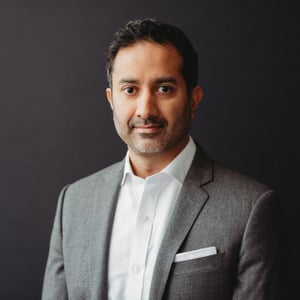
Antitrust Partner, White & Case
Rahul Rao is a partner in the Global Antitrust Practice at White & Case and the former Deputy Director of the Federal Trade Commission’s Bureau of Competition. He advises clients on merger clearance, government investigations, antitrust litigation, and regulatory strategy, with particular depth in healthcare, life sciences, private equity, retail, and labor markets.
At the FTC, Rahul led major merger and conduct investigations, supervised enforcement in critical sectors, and helped shape landmark policy initiatives, including the revised Merger Guidelines and the Commission’s noncompete rulemaking. Earlier, he helped establish the Washington State Attorney General’s Antitrust Division as a national leader in labor market competition enforcement.
Having served on both the federal and state enforcement front lines, Rahul brings clients a unique understanding of agency priorities, risk profiles, and strategies for navigating today’s increasingly dynamic antitrust environment.

Assistant Professor of Law, University of Baltimore
Matthew Sipe is an assistant professor of law. He joined the faculty in 2020 and teaches Civil Procedure, Antitrust, Property, and Introduction to Lawyering Skills.
His research focuses on the relationship among law, innovation and ownership. His work has been published in academic journals such as the University of Pennsylvania Law Review, the Wisconsin Law Review, the Harvard Journal of Law & Technology, and the American University Law Review.
Prior to joining the faculty, Sipe taught at George Washington University Law School as the Frank H. Marks Visiting Associate Professor in Intellectual Property. His previous position was at the U.S. Supreme Court, serving an appointment as a Supreme Court Fellow.
Sipe received his J.D. from Yale Law School, where he was an editor and author for the Yale Law Journal and the Yale Journal on Regulation. Following law school, he clerked for Judge Kathleen O'Malley, of the U.S. Court of Appeals for the Federal Circuit, and Judge Samuel Mays, of the U.S. District Court for the Western District of Tennessee. He received his undergraduate degree in mathematics and economics from the University of Virginia, where he was honored with residency on the Lawn.

Associate Professor, Robert H. Smith School of Business, University of Maryland
Evan Starr is an Assistant Professor of Management & Organization at the Robert H. Smith School of Business at the University of Maryland. He received a Ph.D. in economics from the University of Michigan and a bachelor's degree from Denison University. He originally hails from Claremont, California. Starr's current research examines issues at the intersection of human capital accumulation, employee mobility, entrepreneurship, and innovation. In a recent set of projects utilizing employee-employer matched data and survey data that he and coauthors developed, Starr examined the use and impacts of noncompete agreements and their enforceability on the provision of firm-sponsored training, employee mobility and earnings, and on the creation, growth, and survival of new ventures.
Associate Professor of Law, Sandra Day O'Connor College of Law, Arizona State University ; Affiliated Professor of Philosophy, Arizona State University
Charlie Capps is an Associate Professor at Arizona State University’s Sandra Day O’Connor College of Law and an affiliated member of the philosophy faculty at ASU’s School of Historical, Philosophical, and Religious Studies. He teaches courses on criminal law, constitutional law, and jurisprudence, and his research focuses on the intersection of law and philosophy, especially the role of moral responsibility in criminal law, the debate between positivism and natural-law theory in general jurisprudence, and theories of constitutional and statutory interpretation. Prior to joining ASU, Professor Capps was an Associate Scholar at the University of Chicago Law School and Deputy Solicitor General for the State of Missouri. After graduating from law school, he clerked for Judge Raymond W. Gruender on the U.S. Court of Appeals for the Eighth Circuit. He holds a JD with honors from the University of Chicago Law School and a PhD in Philosophy from the University of Chicago.
Professor of Law, Co-Director of the Center on the Structural Constitution, Texas A&M University School of Law
Katherine Mims Crocker is a Professor of Law and Faculty Co-Director of the Center on the Structural Constitution at Texas A&M University School of Law. She is also an affiliate of the Stanford Constitutional Law Center. Her scholarship focuses on federal courts, civil-rights litigation, constitutional law, and state and local-government law. She has also taught courses in civil procedure, property, and judicial decision making. Professor Crocker has published papers (or has work forthcoming) in leading journals including the Duke Law Journal, Harvard Law Review, Michigan Law Review, Minnesota Law Review, Notre Dame Law Review, Virginia Law Review, and Washington University Law Review.
Before joining Texas A&M, Professor Crocker was on the faculty at William & Mary Law School and completed a fellowship at Duke Law School. She also practiced at McGuireWoods LLP in Richmond, Virginia, where she concentrated on appellate litigation. Professor Crocker clerked for Justice Antonin Scalia of the Supreme Court of the United States and Judge J. Harvie Wilkinson III of the U.S. Court of Appeals for the Fourth Circuit. She received her law degree from the University of Virginia, where she graduated first in her class and was an Articles Development Editor on the Virginia Law Review. She earned her undergraduate degree from Harvard University cum laude.
Assistant Professor of Law and, by courtesy, Computer Science, University of Nebraska College of Law; Nonresident Fellow, Stanford Law School Program in Law, Science & Technology
Professor Dickinson is an Assistant Professor of Law University of Nebraska College of Law, where he teaches Contracts, Business Torts and Unfair Competition, The Common Law, and Remedies. He is also a nonresident fellow with the Stanford Law School Program in Law, Science and Technology and holds a JD from Harvard Law School. Before teaching, Professor Dickinson practiced at Ropes & Gray LLP in Boston and at law firms in Rochester, New York, with a year in between as a law clerk for Judge Richard C. Wesley of the U.S. Court of Appeals for the Second Circuit.
Professor Dickinson's research focuses on the interaction between private law and technology. One major area of interest is how the common law responds to technological innovation and can be harnessed to complement the more particular statutory and regulatory schemes layered atop it. A second branch of his work explores how the tools of machine learning and artificial intelligence can be brought to bear on traditional legal questions. Through computational analysis of large bodies of case law his research seeks to provide a more systematic view of our legal system and doctrines and to guide legal reforms and policy decisions. His work appears in leading journals including the Boston College Law Review, the Stanford Technology Law Review, the Harvard Journal on Legislation, and the Administrative Law Review.
Associate Professor of Law, Sandra Day O'Connor College of Law, Arizona State University
Jonathan Green is an Associate Professor of Law at Arizona State University teaching Civil Procedure and Statutory Interpretation. His scholarship focuses on the history of political and legal thought. He is especially interested in the history of constitutionalism, theories of interpretation, and the concept of judicial power. His research has been published in the Arizona State Law Journal, the Journal of the History of Ideas, Modern Intellectual History, and the Historical Journal.
Prior to joining the ASU faculty in 2024, Professor Green was a Harry A. Bigelow Fellow at the University of Chicago. He previously clerked for Judge Neomi Rao of the U.S. Court of Appeals for the District of Columbia Circuit, and worked as a litigation associate at DLA Piper in Philadelphia.
Professor Green holds a J.D. from Yale Law School, where he was an editor of the Yale Law Journal. He received his PhD from the University of Cambridge, where he was a joint recipient of Prince Consort & Thirwall Prize, awarded annually for the best dissertation in the Cambridge History Faculty. He also received his MPhil from Cambridge, and earned his B.A., summa cum laude, from Northwestern University.
Interim Dean and Levin, Mabie, & Levin Professor, University of Florida Levin College of Law
Merritt E. McAlister is the Interim Dean and Levin, Mabie & Levin Professor at Levin College of Law. She joined the UF Law faculty in 2018, and she was appointed interim dean in June 2023. Prior to her career in academia, Dean McAlister was a partner in the national appellate practice group of King & Spalding.
Dean McAlister clerked for Justice John Paul Stevens of the Supreme Court of the United States and Judge R. Lanier Anderson III of the U.S. Court of Appeals for the Eleventh Circuit. She received her bachelor’s degree in English and Women and Gender Studies, magna cum laude, from Rice University and her law degree summa cum laude from the University of Georgia School of Law, where she served as Executive Articles Editor of the Georgia Law Review.
Dean McAlister teaches and writes in the areas of federal courts, judicial decision-making, constitutional law, and court administration. Her scholarship focuses on issues of institutional design in the federal appellate courts. Dean McAlister’s work has been published in the University of Pennsylvania Law Review, the Michigan Law Review, and the Northwestern University Law Review, among others. In 2020, she received the annual prize from the AALS Federal Courts Section for the best paper on federal courts by an untenured professor.
Associate Professor of Law, University of Missouri School of Law
Internet Policy Counsel and Director of Appellate Litigation, TechFreedom
Corbin Barthold is TechFreedom's Internet Policy Counsel and Director of Appellate Litigation.
Corbin clerked for the Hon. Steven D. Merryday (M.D. Fla.) and the Hon. Robert H. Cleland (E.D. Mich.). After his clerkships, he became an associate, and later a partner, in the Los Angeles office of Browne George Ross LLP, where he engaged in high-stakes complex litigation. He then served as Senior Litigation Counsel at Washington Legal Foundation, a D.C. public-interest firm, where his practice focused on appeals involving administrative law, the separation of powers, antitrust, and tech policy.
Corbin received his J.D. from the University of California, Berkeley, School of Law. He also holds a B.A., magna cum laude and Phi Beta Kappa, from the University of California, San Diego, and an Msc., with distinction, from the London School of Economics.
Partner, Kirkland & Ellis LLP
Elyse Dorsey is a partner in the Washington, D.C., office of Kirkland & Ellis LLP. Elyse's practice encompasses a wide array of antitrust and competition matters across the globe. She is uniquely situated to advise clients in domestic and international competition matters, given her combination of government and private practice experience.
Elyse has a focus in cutting edge competition issues, as well as privacy, data security, and consumer protection matters. She has represented clients across levels of government, from state agencies to the U.S. Supreme Court. Prior to joining Kirkland, Elyse served as Counsel to the Assistant Attorney General at the U.S. Department of Justice's Antitrust Division. Her work at the Antitrust Division covered a spectrum of legal and policy matters, including IP and technology issues, the Division's appellate and amicus brief programs, and its international and competition policy efforts. Elyse joined the Division from the U.S. Federal Trade Commission, where she served as Attorney Advisor to Commission Noah Joshua Phillips. While at the Commission, she advised on key cases, matters, and policies affecting industries across the economy--from digital and tech to pharmaceuticals and hospitals and more.
Elyse is a recognized thought leader in the antitrust and competition communities. She has been a frequent nominee and recipient of antitrust writing awards for her scholarship in this space. She has also served as an adjunct professor at George Mason University's Scalia Law School for several years, helping to launch their Antitrust LL.M. program; and she previously served as a visiting scholar at the University of Virginia.
Distinguished Fellow, Energy Policy Research Foundation
Diana Furchtgott-Roth, an Oxford-educated economist, is an Adjunct Professor at George Washington University and a Distinguished Fellow at the Energy Policy Research Foundation. She writes and comments regularly on energy, trade law, tariff authority, and regulatory policy, including recent work on Section 301 and executive trade power. From 2022 until February 2026, Diana headed the Center for Energy, Climate, and Environment at The Heritage Foundation. In President Trump's first term, she was Deputy Assistant Secretary for Research and Technology at the U.S. Department of Transportation and Acting Assistant Secretary for Economic Policy at the U.S. Department of Treasury. She served in the White House under Presidents Reagan, George H.W. Bush, and George W. Bush, including as Chief of Staff of the President's Council of Economic Advisers and Chief Economist of the U.S. Department of Labor, and has testified before Congress on economic and regulatory policy. Diana is the author or coauthor of six books, including Regulating to Disaster, and hundreds of articles in The Wall Street Journal, The Washington Post, The New York Times, National Review, Forbes, the UK’s Daily Telegraph and the New York Post.
Partner, Gibson, Dunn & Crutcher, LLP
Svetlana S. Gans is a partner in the Washington, D.C. office of Gibson, Dunn & Crutcher, LLP where she helps clients navigate complex consumer protection, privacy, and competition related regulatory proceedings before the U.S. Federal Trade Commission (FTC), , U.S. Department of Justice Antitrust Division, State Attorneys General and other enforcement bodies. Ms. Gans also assists on litigation matters and provides strategic counseling and advice related to public policy issues.
Before joining Gibson Dunn, she served as the Vice President & Associate General Counsel at NCTA, the Internet & Television Association, where she helped lead the association’s consumer protection and competition policy work. Prior to joining NCTA, Ms. Gans served with distinction as Chief of Staff to Acting Chairman Maureen K. Ohlhausen at the FTC. As the agency chief of staff, Ms. Gans managed and oversaw agency operations, including bureau and office heads reporting to the Chairman, a seven-member office staff, and an agency budget of over $300 million. She also served as the Acting Chairman’s key advisor on consumer protection and competition investigations and litigation, working with a diverse team of attorneys and economists to preserve competition and protect U.S. consumers. She created, executed, and oversaw several strategic initiatives for the agency, including the agency process reform, regulatory reform, and data security transparency initiatives. Previously, Ms. Gans had the unique experience of serving in both litigating bureaus of the FTC: the Bureau of Competition and the Bureau of Consumer Protection.
Prior to her time in government, Ms. Gans worked as an antitrust associate at major law firms. Her practice focused on defending consumer product, financial services, and trade association clients in regulatory and private investigations alleging conspiracy and violations of antitrust and consumer protection laws.
Ms. Gans has been an active leader in the ABA Antitrust Law Section (“Section”) for two decades, and currently serves as the Section’s Marketing Officer. Ms. Gans helped create the Section’s Young Lawyer Representative Program, now in its 10th year, and the Section’s Law Ambassador Program, each aimed at developing and promoting the next generation of consumer protection and competition attorneys. Ms. Gans is also active in the Federal Communications Bar Association, currently serving as Co-Chair of the Diversity Pipeline Initiative and the Women’s Leadership Committee.
Ms. Gans received her law degree with high honors from the University of Denver College of Law. During law school, Ms. Gans served as a Judicial Intern to the Honorable John L. Kane, Jr. and as an Honors Program Paralegal for the United States Department of Justice Antitrust Division, Merger Taskforce. Ms. Gans earned her undergraduate degree cum laude from Boston University.
Senior Fellow and Academic Director, Penn Carey Law School
Gus Hurwitz is a Senior Fellow and the Academic Director of the Center for Technology, Innovation & Competition and the University of Pennsylvania Carey Law School where he is working to develop academic and scholarly programs at the intersecution of law, technology, and policy.
He is also Director of Law & Economics Programs at the International Center for Law & Economics (ICLE), a think tank based in Portland, Oregon, where he directs its law and economics-focused research program and helps to translate academic research into applied policy issues.
Hurwitz's research focuses on the regulation of technology, including administrative and regulatory law, antitrust law, torts and products liability, and media law - alongside cognate fields. Inrecent years he has worked on an AI standardization initiative with Seoul National University, a UNICEF-organized study of broadband deployment to public schools in Rwanda, and a book on conglomerate and ecosystems theories of antitrust.
He has published over 30 articles and book chapters, two books (one on cybersecurity law & policy, one on media regulation in the digital era) and have two more in process, over 100 shorter writings (op-eds, shorter analyses, blog posts, &c), hosted over 100 podcast episodes, and regularly appear or am quoted in popular media (including the NY Times, Wall Street Journal, Washington Post, and Associated Press). His work has been cited by legislators, federal courts of appeals, and federal regulatory agencies.
He was previously a full professor and founding director of the Governance & Technology Center at the University of Nebraska, prior to which he was the inaugural research fellow at the Center for Technology, Innovation & Competition (CTIC). From 2007 to 2010, he was a trial attorney with the U.S. Department of Justice Antitrust Division in the Telecommunications and Media Enforcement Section.
He also is, or has been, affiliated with the Classical Liberal Institute at New York University School of Law, the National Security Institute at George Mason University, and the American Enterprise Institute (AEI).
Before attending law school, Hurwitz worked at Los Alamos National Lab and interned at the Naval Research Lab. During this time his work was recognized by the Federal Laboratory Consortium, Los Alamos National Lab, IEEE & ACM, Corporation for Education Network Initiatives in California, R&D Magazine, and even the Guinness Book of World Records.
A current list of Hurwitz’s publications is available on his website: GusHurwitz.net.
Antitrust Partner, White & Case
Rahul Rao is a partner in the Global Antitrust Practice at White & Case and the former Deputy Director of the Federal Trade Commission’s Bureau of Competition. He advises clients on merger clearance, government investigations, antitrust litigation, and regulatory strategy, with particular depth in healthcare, life sciences, private equity, retail, and labor markets.
At the FTC, Rahul led major merger and conduct investigations, supervised enforcement in critical sectors, and helped shape landmark policy initiatives, including the revised Merger Guidelines and the Commission’s noncompete rulemaking. Earlier, he helped establish the Washington State Attorney General’s Antitrust Division as a national leader in labor market competition enforcement.
Having served on both the federal and state enforcement front lines, Rahul brings clients a unique understanding of agency priorities, risk profiles, and strategies for navigating today’s increasingly dynamic antitrust environment.
Assistant Professor of Law, University of Baltimore
Matthew Sipe is an assistant professor of law. He joined the faculty in 2020 and teaches Civil Procedure, Antitrust, Property, and Introduction to Lawyering Skills.
His research focuses on the relationship among law, innovation and ownership. His work has been published in academic journals such as the University of Pennsylvania Law Review, the Wisconsin Law Review, the Harvard Journal of Law & Technology, and the American University Law Review.
Prior to joining the faculty, Sipe taught at George Washington University Law School as the Frank H. Marks Visiting Associate Professor in Intellectual Property. His previous position was at the U.S. Supreme Court, serving an appointment as a Supreme Court Fellow.
Sipe received his J.D. from Yale Law School, where he was an editor and author for the Yale Law Journal and the Yale Journal on Regulation. Following law school, he clerked for Judge Kathleen O'Malley, of the U.S. Court of Appeals for the Federal Circuit, and Judge Samuel Mays, of the U.S. District Court for the Western District of Tennessee. He received his undergraduate degree in mathematics and economics from the University of Virginia, where he was honored with residency on the Lawn.
Associate Professor, Robert H. Smith School of Business, University of Maryland
Evan Starr is an Assistant Professor of Management & Organization at the Robert H. Smith School of Business at the University of Maryland. He received a Ph.D. in economics from the University of Michigan and a bachelor's degree from Denison University. He originally hails from Claremont, California. Starr's current research examines issues at the intersection of human capital accumulation, employee mobility, entrepreneurship, and innovation. In a recent set of projects utilizing employee-employer matched data and survey data that he and coauthors developed, Starr examined the use and impacts of noncompete agreements and their enforceability on the provision of firm-sponsored training, employee mobility and earnings, and on the creation, growth, and survival of new ventures.
Internet Policy Counsel and Director of Appellate Litigation, TechFreedom
Corbin Barthold is TechFreedom's Internet Policy Counsel and Director of Appellate Litigation.
Corbin clerked for the Hon. Steven D. Merryday (M.D. Fla.) and the Hon. Robert H. Cleland (E.D. Mich.). After his clerkships, he became an associate, and later a partner, in the Los Angeles office of Browne George Ross LLP, where he engaged in high-stakes complex litigation. He then served as Senior Litigation Counsel at Washington Legal Foundation, a D.C. public-interest firm, where his practice focused on appeals involving administrative law, the separation of powers, antitrust, and tech policy.
Corbin received his J.D. from the University of California, Berkeley, School of Law. He also holds a B.A., magna cum laude and Phi Beta Kappa, from the University of California, San Diego, and an Msc., with distinction, from the London School of Economics.
Partner, Kirkland & Ellis LLP
Elyse Dorsey is a partner in the Washington, D.C., office of Kirkland & Ellis LLP. Elyse's practice encompasses a wide array of antitrust and competition matters across the globe. She is uniquely situated to advise clients in domestic and international competition matters, given her combination of government and private practice experience.
Elyse has a focus in cutting edge competition issues, as well as privacy, data security, and consumer protection matters. She has represented clients across levels of government, from state agencies to the U.S. Supreme Court. Prior to joining Kirkland, Elyse served as Counsel to the Assistant Attorney General at the U.S. Department of Justice's Antitrust Division. Her work at the Antitrust Division covered a spectrum of legal and policy matters, including IP and technology issues, the Division's appellate and amicus brief programs, and its international and competition policy efforts. Elyse joined the Division from the U.S. Federal Trade Commission, where she served as Attorney Advisor to Commission Noah Joshua Phillips. While at the Commission, she advised on key cases, matters, and policies affecting industries across the economy--from digital and tech to pharmaceuticals and hospitals and more.
Elyse is a recognized thought leader in the antitrust and competition communities. She has been a frequent nominee and recipient of antitrust writing awards for her scholarship in this space. She has also served as an adjunct professor at George Mason University's Scalia Law School for several years, helping to launch their Antitrust LL.M. program; and she previously served as a visiting scholar at the University of Virginia.
Distinguished Fellow, Energy Policy Research Foundation
Diana Furchtgott-Roth, an Oxford-educated economist, is an Adjunct Professor at George Washington University and a Distinguished Fellow at the Energy Policy Research Foundation. She writes and comments regularly on energy, trade law, tariff authority, and regulatory policy, including recent work on Section 301 and executive trade power. From 2022 until February 2026, Diana headed the Center for Energy, Climate, and Environment at The Heritage Foundation. In President Trump's first term, she was Deputy Assistant Secretary for Research and Technology at the U.S. Department of Transportation and Acting Assistant Secretary for Economic Policy at the U.S. Department of Treasury. She served in the White House under Presidents Reagan, George H.W. Bush, and George W. Bush, including as Chief of Staff of the President's Council of Economic Advisers and Chief Economist of the U.S. Department of Labor, and has testified before Congress on economic and regulatory policy. Diana is the author or coauthor of six books, including Regulating to Disaster, and hundreds of articles in The Wall Street Journal, The Washington Post, The New York Times, National Review, Forbes, the UK’s Daily Telegraph and the New York Post.
Partner, Gibson, Dunn & Crutcher, LLP
Svetlana S. Gans is a partner in the Washington, D.C. office of Gibson, Dunn & Crutcher, LLP where she helps clients navigate complex consumer protection, privacy, and competition related regulatory proceedings before the U.S. Federal Trade Commission (FTC), , U.S. Department of Justice Antitrust Division, State Attorneys General and other enforcement bodies. Ms. Gans also assists on litigation matters and provides strategic counseling and advice related to public policy issues.
Before joining Gibson Dunn, she served as the Vice President & Associate General Counsel at NCTA, the Internet & Television Association, where she helped lead the association’s consumer protection and competition policy work. Prior to joining NCTA, Ms. Gans served with distinction as Chief of Staff to Acting Chairman Maureen K. Ohlhausen at the FTC. As the agency chief of staff, Ms. Gans managed and oversaw agency operations, including bureau and office heads reporting to the Chairman, a seven-member office staff, and an agency budget of over $300 million. She also served as the Acting Chairman’s key advisor on consumer protection and competition investigations and litigation, working with a diverse team of attorneys and economists to preserve competition and protect U.S. consumers. She created, executed, and oversaw several strategic initiatives for the agency, including the agency process reform, regulatory reform, and data security transparency initiatives. Previously, Ms. Gans had the unique experience of serving in both litigating bureaus of the FTC: the Bureau of Competition and the Bureau of Consumer Protection.
Prior to her time in government, Ms. Gans worked as an antitrust associate at major law firms. Her practice focused on defending consumer product, financial services, and trade association clients in regulatory and private investigations alleging conspiracy and violations of antitrust and consumer protection laws.
Ms. Gans has been an active leader in the ABA Antitrust Law Section (“Section”) for two decades, and currently serves as the Section’s Marketing Officer. Ms. Gans helped create the Section’s Young Lawyer Representative Program, now in its 10th year, and the Section’s Law Ambassador Program, each aimed at developing and promoting the next generation of consumer protection and competition attorneys. Ms. Gans is also active in the Federal Communications Bar Association, currently serving as Co-Chair of the Diversity Pipeline Initiative and the Women’s Leadership Committee.
Ms. Gans received her law degree with high honors from the University of Denver College of Law. During law school, Ms. Gans served as a Judicial Intern to the Honorable John L. Kane, Jr. and as an Honors Program Paralegal for the United States Department of Justice Antitrust Division, Merger Taskforce. Ms. Gans earned her undergraduate degree cum laude from Boston University.
Senior Fellow and Academic Director, Penn Carey Law School
Gus Hurwitz is a Senior Fellow and the Academic Director of the Center for Technology, Innovation & Competition and the University of Pennsylvania Carey Law School where he is working to develop academic and scholarly programs at the intersecution of law, technology, and policy.
He is also Director of Law & Economics Programs at the International Center for Law & Economics (ICLE), a think tank based in Portland, Oregon, where he directs its law and economics-focused research program and helps to translate academic research into applied policy issues.
Hurwitz's research focuses on the regulation of technology, including administrative and regulatory law, antitrust law, torts and products liability, and media law - alongside cognate fields. Inrecent years he has worked on an AI standardization initiative with Seoul National University, a UNICEF-organized study of broadband deployment to public schools in Rwanda, and a book on conglomerate and ecosystems theories of antitrust.
He has published over 30 articles and book chapters, two books (one on cybersecurity law & policy, one on media regulation in the digital era) and have two more in process, over 100 shorter writings (op-eds, shorter analyses, blog posts, &c), hosted over 100 podcast episodes, and regularly appear or am quoted in popular media (including the NY Times, Wall Street Journal, Washington Post, and Associated Press). His work has been cited by legislators, federal courts of appeals, and federal regulatory agencies.
He was previously a full professor and founding director of the Governance & Technology Center at the University of Nebraska, prior to which he was the inaugural research fellow at the Center for Technology, Innovation & Competition (CTIC). From 2007 to 2010, he was a trial attorney with the U.S. Department of Justice Antitrust Division in the Telecommunications and Media Enforcement Section.
He also is, or has been, affiliated with the Classical Liberal Institute at New York University School of Law, the National Security Institute at George Mason University, and the American Enterprise Institute (AEI).
Before attending law school, Hurwitz worked at Los Alamos National Lab and interned at the Naval Research Lab. During this time his work was recognized by the Federal Laboratory Consortium, Los Alamos National Lab, IEEE & ACM, Corporation for Education Network Initiatives in California, R&D Magazine, and even the Guinness Book of World Records.
A current list of Hurwitz’s publications is available on his website: GusHurwitz.net.
Antitrust Partner, White & Case
Rahul Rao is a partner in the Global Antitrust Practice at White & Case and the former Deputy Director of the Federal Trade Commission’s Bureau of Competition. He advises clients on merger clearance, government investigations, antitrust litigation, and regulatory strategy, with particular depth in healthcare, life sciences, private equity, retail, and labor markets.
At the FTC, Rahul led major merger and conduct investigations, supervised enforcement in critical sectors, and helped shape landmark policy initiatives, including the revised Merger Guidelines and the Commission’s noncompete rulemaking. Earlier, he helped establish the Washington State Attorney General’s Antitrust Division as a national leader in labor market competition enforcement.
Having served on both the federal and state enforcement front lines, Rahul brings clients a unique understanding of agency priorities, risk profiles, and strategies for navigating today’s increasingly dynamic antitrust environment.
Assistant Professor of Law, University of Baltimore
Matthew Sipe is an assistant professor of law. He joined the faculty in 2020 and teaches Civil Procedure, Antitrust, Property, and Introduction to Lawyering Skills.
His research focuses on the relationship among law, innovation and ownership. His work has been published in academic journals such as the University of Pennsylvania Law Review, the Wisconsin Law Review, the Harvard Journal of Law & Technology, and the American University Law Review.
Prior to joining the faculty, Sipe taught at George Washington University Law School as the Frank H. Marks Visiting Associate Professor in Intellectual Property. His previous position was at the U.S. Supreme Court, serving an appointment as a Supreme Court Fellow.
Sipe received his J.D. from Yale Law School, where he was an editor and author for the Yale Law Journal and the Yale Journal on Regulation. Following law school, he clerked for Judge Kathleen O'Malley, of the U.S. Court of Appeals for the Federal Circuit, and Judge Samuel Mays, of the U.S. District Court for the Western District of Tennessee. He received his undergraduate degree in mathematics and economics from the University of Virginia, where he was honored with residency on the Lawn.
Associate Professor, Robert H. Smith School of Business, University of Maryland
Evan Starr is an Assistant Professor of Management & Organization at the Robert H. Smith School of Business at the University of Maryland. He received a Ph.D. in economics from the University of Michigan and a bachelor's degree from Denison University. He originally hails from Claremont, California. Starr's current research examines issues at the intersection of human capital accumulation, employee mobility, entrepreneurship, and innovation. In a recent set of projects utilizing employee-employer matched data and survey data that he and coauthors developed, Starr examined the use and impacts of noncompete agreements and their enforceability on the provision of firm-sponsored training, employee mobility and earnings, and on the creation, growth, and survival of new ventures.
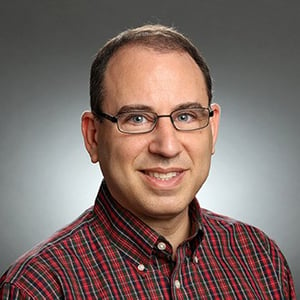
Professor of Law and Co-Director, High Tech Law Institute, Santa Clara University School of Law
Eric Goldman is a Professor of Law, and Co-Director of the High Tech Law Institute, at Santa Clara University School of Law. Before he became a full-time academic in 2002, he practiced Internet law for 8 years in the Silicon Valley. His research and teaching focuses on Internet, IP and advertising law topics, and he blogs on these topics at the Technology & Marketing Law Blog [http://blog.ericgoldman.org]. Managing IP magazine has twice named him to a shortlist of North American “IP Thought Leaders,” and he has been named an “IP Vanguard” by the California State Bar’s IP Section.
Senior Fellow and Academic Director, Penn Carey Law School
Gus Hurwitz is a Senior Fellow and the Academic Director of the Center for Technology, Innovation & Competition and the University of Pennsylvania Carey Law School where he is working to develop academic and scholarly programs at the intersecution of law, technology, and policy.
He is also Director of Law & Economics Programs at the International Center for Law & Economics (ICLE), a think tank based in Portland, Oregon, where he directs its law and economics-focused research program and helps to translate academic research into applied policy issues.
Hurwitz's research focuses on the regulation of technology, including administrative and regulatory law, antitrust law, torts and products liability, and media law - alongside cognate fields. Inrecent years he has worked on an AI standardization initiative with Seoul National University, a UNICEF-organized study of broadband deployment to public schools in Rwanda, and a book on conglomerate and ecosystems theories of antitrust.
He has published over 30 articles and book chapters, two books (one on cybersecurity law & policy, one on media regulation in the digital era) and have two more in process, over 100 shorter writings (op-eds, shorter analyses, blog posts, &c), hosted over 100 podcast episodes, and regularly appear or am quoted in popular media (including the NY Times, Wall Street Journal, Washington Post, and Associated Press). His work has been cited by legislators, federal courts of appeals, and federal regulatory agencies.
He was previously a full professor and founding director of the Governance & Technology Center at the University of Nebraska, prior to which he was the inaugural research fellow at the Center for Technology, Innovation & Competition (CTIC). From 2007 to 2010, he was a trial attorney with the U.S. Department of Justice Antitrust Division in the Telecommunications and Media Enforcement Section.
He also is, or has been, affiliated with the Classical Liberal Institute at New York University School of Law, the National Security Institute at George Mason University, and the American Enterprise Institute (AEI).
Before attending law school, Hurwitz worked at Los Alamos National Lab and interned at the Naval Research Lab. During this time his work was recognized by the Federal Laboratory Consortium, Los Alamos National Lab, IEEE & ACM, Corporation for Education Network Initiatives in California, R&D Magazine, and even the Guinness Book of World Records.
A current list of Hurwitz’s publications is available on his website: GusHurwitz.net.

Partner, Covington & Burling
As Partner, Covington & Burling, Lindsey Tonsager helps national and multinational clients in a broad range of industries anticipate and effectively evaluate legal and reputational risks under federal and state data privacy and communications laws. She co-chairs the firm’s Artificial Intelligence Initiative.
In addition to assisting clients engage strategically with the Federal Trade Commission, Federal Communications Commission, the U.S. Congress, and other federal and state regulators on a proactive basis, she has experience helping clients respond to informal investigations and enforcement actions, including by self-regulatory bodies such as the Digital Advertising Alliance and Children’s Advertising Review Unit.
Ms. Tonsager’s practice focuses on helping clients launch new products and services that implicate the laws governing the use of artificial intelligence, data processing for Internet of Things devices, behavioral advertising, endorsements and testimonials in advertising and social media, the collection of personal information from children and students online, e-mail marketing, telecommunications, and new technologies.
Ms. Tonsager also conducts privacy and data security diligence in complex corporate transactions and negotiates agreements with third-party service providers to ensure that robust protections are in place to avoid unauthorized access, use, or disclosure of customer data and other types of confidential information. She regularly assists clients in developing clear privacy disclosures and policies―including website and mobile app disclosures, terms of use, and internal social media and privacy-by-design programs.

The Genius of General Law: A Defense of Doing Less in the Age of AI
Nebraska Lawyer Chapter
Lincoln, NEYoung Legal Scholars Paper Presentations [Part 1]
Charles F. Capps, Katherine Mims Crocker, Gregory Dickinson, Jonathan Green, Merritt E. McAlister, Ryan Snyder
Prof. Charles Capps, “What Interpretation Just Is and Why It Matters,” Associate Professor of Law,...
Young Legal Scholars Paper Presentations [Part 1]
New Orleans, LA27th Annual Faculty Conference
New Orleans, LANebraska Lawyers Chapter Annual Event
at the Nebraska State Bar Association Meeting
La Vista, NEIt Was the Best of Times, It Was the Worst of Times: Religious Liberty in a Woke Age
New Orleans Lawyers Chapter
New Orleans, LAThe Implications of the FTC's Proposed Ban on Noncompete Agreements
Corbin K. Barthold, Elyse Dorsey, Diana Furchtgott-Roth, Svetlana Gans, Justin (Gus) Hurwitz, Rahul Rao, Matthew Sipe, Evan Starr
In January 2023, the FTC announced a proposed rule that would ban noncompete agreements across...
The Implications of the FTC's Proposed Ban on Noncompete Agreements
Corbin K. Barthold, Elyse Dorsey, Diana Furchtgott-Roth, Svetlana Gans, Justin (Gus) Hurwitz, Rahul Rao, Matthew Sipe, Evan Starr
In January 2023, the FTC announced a proposed rule that would ban noncompete agreements across...
The Implications of the FTC's Proposed Ban on Noncompete Agreements
A Regulatory Transparency Project Webinar
TeleforumExamining the California Consumer Privacy Act
Eric Goldman, Justin (Gus) Hurwitz, Lindsey L. Tonsager
On June 28, 2018, the California legislature enacted the California Consumer Privacy Act of 2018...