
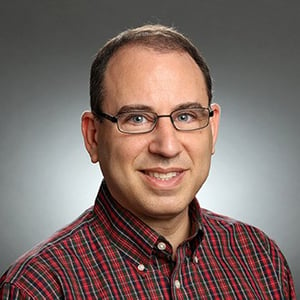
Professor of Law and Co-Director, High Tech Law Institute, Santa Clara University School of Law
Eric Goldman is a Professor of Law, and Co-Director of the High Tech Law Institute, at Santa Clara University School of Law. Before he became a full-time academic in 2002, he practiced Internet law for 8 years in the Silicon Valley. His research and teaching focuses on Internet, IP and advertising law topics, and he blogs on these topics at the Technology & Marketing Law Blog [http://blog.ericgoldman.org]. Managing IP magazine has twice named him to a shortlist of North American “IP Thought Leaders,” and he has been named an “IP Vanguard” by the California State Bar’s IP Section.

Senior Fellow and Academic Director, Penn Carey Law School
Gus Hurwitz is a Senior Fellow and the Academic Director of the Center for Technology, Innovation & Competition and the University of Pennsylvania Carey Law School where he is working to develop academic and scholarly programs at the intersecution of law, technology, and policy.
He is also Director of Law & Economics Programs at the International Center for Law & Economics (ICLE), a think tank based in Portland, Oregon, where he directs its law and economics-focused research program and helps to translate academic research into applied policy issues.
Hurwitz's research focuses on the regulation of technology, including administrative and regulatory law, antitrust law, torts and products liability, and media law - alongside cognate fields. Inrecent years he has worked on an AI standardization initiative with Seoul National University, a UNICEF-organized study of broadband deployment to public schools in Rwanda, and a book on conglomerate and ecosystems theories of antitrust.
He has published over 30 articles and book chapters, two books (one on cybersecurity law & policy, one on media regulation in the digital era) and have two more in process, over 100 shorter writings (op-eds, shorter analyses, blog posts, &c), hosted over 100 podcast episodes, and regularly appear or am quoted in popular media (including the NY Times, Wall Street Journal, Washington Post, and Associated Press). His work has been cited by legislators, federal courts of appeals, and federal regulatory agencies.
He was previously a full professor and founding director of the Governance & Technology Center at the University of Nebraska, prior to which he was the inaugural research fellow at the Center for Technology, Innovation & Competition (CTIC). From 2007 to 2010, he was a trial attorney with the U.S. Department of Justice Antitrust Division in the Telecommunications and Media Enforcement Section.
He also is, or has been, affiliated with the Classical Liberal Institute at New York University School of Law, the National Security Institute at George Mason University, and the American Enterprise Institute (AEI).
Before attending law school, Hurwitz worked at Los Alamos National Lab and interned at the Naval Research Lab. During this time his work was recognized by the Federal Laboratory Consortium, Los Alamos National Lab, IEEE & ACM, Corporation for Education Network Initiatives in California, R&D Magazine, and even the Guinness Book of World Records.
A current list of Hurwitz’s publications is available on his website: GusHurwitz.net.

Partner, Covington & Burling
As Partner, Covington & Burling, Lindsey Tonsager helps national and multinational clients in a broad range of industries anticipate and effectively evaluate legal and reputational risks under federal and state data privacy and communications laws. She co-chairs the firm’s Artificial Intelligence Initiative.
In addition to assisting clients engage strategically with the Federal Trade Commission, Federal Communications Commission, the U.S. Congress, and other federal and state regulators on a proactive basis, she has experience helping clients respond to informal investigations and enforcement actions, including by self-regulatory bodies such as the Digital Advertising Alliance and Children’s Advertising Review Unit.
Ms. Tonsager’s practice focuses on helping clients launch new products and services that implicate the laws governing the use of artificial intelligence, data processing for Internet of Things devices, behavioral advertising, endorsements and testimonials in advertising and social media, the collection of personal information from children and students online, e-mail marketing, telecommunications, and new technologies.
Ms. Tonsager also conducts privacy and data security diligence in complex corporate transactions and negotiates agreements with third-party service providers to ensure that robust protections are in place to avoid unauthorized access, use, or disclosure of customer data and other types of confidential information. She regularly assists clients in developing clear privacy disclosures and policies―including website and mobile app disclosures, terms of use, and internal social media and privacy-by-design programs.
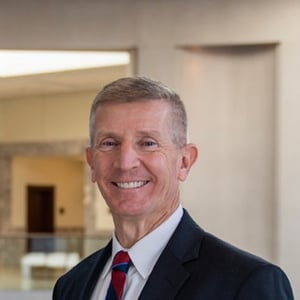
Judge, United States Court of Appeals, 8th Circuit
Leonard Steven Grasz is an American attorney and jurist serving as a United States circuit judge of the United States Court of Appeals for the Eighth Circuit.
A graduate of the University of Nebraska–Lincoln and the University of Nebraska College of Law, Grasz spent eleven years as the state of Nebraska's Chief Deputy Attorney General. He was a senior partner at the law firm of Husch Blackwell prior to his appointment to the federal judiciary.
Professor of Law and Co-Director, High Tech Law Institute, Santa Clara University School of Law
Eric Goldman is a Professor of Law, and Co-Director of the High Tech Law Institute, at Santa Clara University School of Law. Before he became a full-time academic in 2002, he practiced Internet law for 8 years in the Silicon Valley. His research and teaching focuses on Internet, IP and advertising law topics, and he blogs on these topics at the Technology & Marketing Law Blog [http://blog.ericgoldman.org]. Managing IP magazine has twice named him to a shortlist of North American “IP Thought Leaders,” and he has been named an “IP Vanguard” by the California State Bar’s IP Section.
Senior Fellow and Academic Director, Penn Carey Law School
Gus Hurwitz is a Senior Fellow and the Academic Director of the Center for Technology, Innovation & Competition and the University of Pennsylvania Carey Law School where he is working to develop academic and scholarly programs at the intersecution of law, technology, and policy.
He is also Director of Law & Economics Programs at the International Center for Law & Economics (ICLE), a think tank based in Portland, Oregon, where he directs its law and economics-focused research program and helps to translate academic research into applied policy issues.
Hurwitz's research focuses on the regulation of technology, including administrative and regulatory law, antitrust law, torts and products liability, and media law - alongside cognate fields. Inrecent years he has worked on an AI standardization initiative with Seoul National University, a UNICEF-organized study of broadband deployment to public schools in Rwanda, and a book on conglomerate and ecosystems theories of antitrust.
He has published over 30 articles and book chapters, two books (one on cybersecurity law & policy, one on media regulation in the digital era) and have two more in process, over 100 shorter writings (op-eds, shorter analyses, blog posts, &c), hosted over 100 podcast episodes, and regularly appear or am quoted in popular media (including the NY Times, Wall Street Journal, Washington Post, and Associated Press). His work has been cited by legislators, federal courts of appeals, and federal regulatory agencies.
He was previously a full professor and founding director of the Governance & Technology Center at the University of Nebraska, prior to which he was the inaugural research fellow at the Center for Technology, Innovation & Competition (CTIC). From 2007 to 2010, he was a trial attorney with the U.S. Department of Justice Antitrust Division in the Telecommunications and Media Enforcement Section.
He also is, or has been, affiliated with the Classical Liberal Institute at New York University School of Law, the National Security Institute at George Mason University, and the American Enterprise Institute (AEI).
Before attending law school, Hurwitz worked at Los Alamos National Lab and interned at the Naval Research Lab. During this time his work was recognized by the Federal Laboratory Consortium, Los Alamos National Lab, IEEE & ACM, Corporation for Education Network Initiatives in California, R&D Magazine, and even the Guinness Book of World Records.
A current list of Hurwitz’s publications is available on his website: GusHurwitz.net.
Partner, Covington & Burling
As Partner, Covington & Burling, Lindsey Tonsager helps national and multinational clients in a broad range of industries anticipate and effectively evaluate legal and reputational risks under federal and state data privacy and communications laws. She co-chairs the firm’s Artificial Intelligence Initiative.
In addition to assisting clients engage strategically with the Federal Trade Commission, Federal Communications Commission, the U.S. Congress, and other federal and state regulators on a proactive basis, she has experience helping clients respond to informal investigations and enforcement actions, including by self-regulatory bodies such as the Digital Advertising Alliance and Children’s Advertising Review Unit.
Ms. Tonsager’s practice focuses on helping clients launch new products and services that implicate the laws governing the use of artificial intelligence, data processing for Internet of Things devices, behavioral advertising, endorsements and testimonials in advertising and social media, the collection of personal information from children and students online, e-mail marketing, telecommunications, and new technologies.
Ms. Tonsager also conducts privacy and data security diligence in complex corporate transactions and negotiates agreements with third-party service providers to ensure that robust protections are in place to avoid unauthorized access, use, or disclosure of customer data and other types of confidential information. She regularly assists clients in developing clear privacy disclosures and policies―including website and mobile app disclosures, terms of use, and internal social media and privacy-by-design programs.
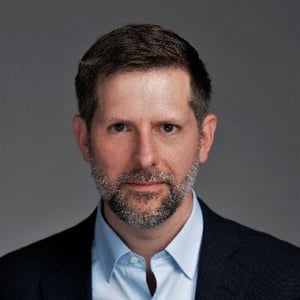
Head of AI Policy, Abundance Institute
Neil Chilson is the Head of AI Policy at the Abundance Institute. Prior to this position, he served as a Senior Research Fellow at the Center for Growth and Opportunity. Chilson is a lawyer, computer scientist, and author of the book “Getting Out of Control: Emergent Leadership in a Complex World.”
Chilson was previously the senior research fellow for Technology and Innovation at Stand Together, where he guided efforts to understand and promote the legal and cultural paradigms that best enable people to discover, innovate, and improve all our lives.
Before Stand Together, Chilson was the Chief Technologist at the Federal Trade Commission, where he focused on the economics of privacy and blockchain-related issues. Previously, he was an attorney advisor to Acting FTC Chairman Maureen K. Ohlhausen. In both roles he advised Chairman Ohlhausen and worked with staff on nearly every major technology-related case, report, workshop, or other FTC proceeding since January 2014. Neil joined the FTC from telecom firm Wilkinson Barker Knauer. Neil is frequently quoted by the press and his work has appeared in numerous news outlets, including The Wall Street Journal, The Washington Post, USAToday, and Newsweek. Neil has a J.D. from The George Washington Law School, a M.S. in computer science from University of Illinois, Urbana-Champaign, and a B.S. in computer science from Harding University.
Senior Fellow and Academic Director, Penn Carey Law School
Gus Hurwitz is a Senior Fellow and the Academic Director of the Center for Technology, Innovation & Competition and the University of Pennsylvania Carey Law School where he is working to develop academic and scholarly programs at the intersecution of law, technology, and policy.
He is also Director of Law & Economics Programs at the International Center for Law & Economics (ICLE), a think tank based in Portland, Oregon, where he directs its law and economics-focused research program and helps to translate academic research into applied policy issues.
Hurwitz's research focuses on the regulation of technology, including administrative and regulatory law, antitrust law, torts and products liability, and media law - alongside cognate fields. Inrecent years he has worked on an AI standardization initiative with Seoul National University, a UNICEF-organized study of broadband deployment to public schools in Rwanda, and a book on conglomerate and ecosystems theories of antitrust.
He has published over 30 articles and book chapters, two books (one on cybersecurity law & policy, one on media regulation in the digital era) and have two more in process, over 100 shorter writings (op-eds, shorter analyses, blog posts, &c), hosted over 100 podcast episodes, and regularly appear or am quoted in popular media (including the NY Times, Wall Street Journal, Washington Post, and Associated Press). His work has been cited by legislators, federal courts of appeals, and federal regulatory agencies.
He was previously a full professor and founding director of the Governance & Technology Center at the University of Nebraska, prior to which he was the inaugural research fellow at the Center for Technology, Innovation & Competition (CTIC). From 2007 to 2010, he was a trial attorney with the U.S. Department of Justice Antitrust Division in the Telecommunications and Media Enforcement Section.
He also is, or has been, affiliated with the Classical Liberal Institute at New York University School of Law, the National Security Institute at George Mason University, and the American Enterprise Institute (AEI).
Before attending law school, Hurwitz worked at Los Alamos National Lab and interned at the Naval Research Lab. During this time his work was recognized by the Federal Laboratory Consortium, Los Alamos National Lab, IEEE & ACM, Corporation for Education Network Initiatives in California, R&D Magazine, and even the Guinness Book of World Records.
A current list of Hurwitz’s publications is available on his website: GusHurwitz.net.
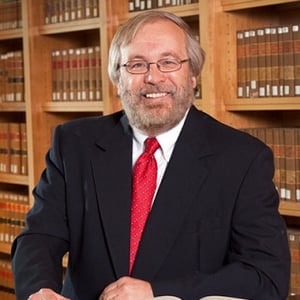
Welpton & Wise Professor of Law, University of Nebraska College of Law
Professor Rick Duncan is the Welpton & Wise Professor of Law at the University Of Nebraska College Of Law. He is a graduate of the Cornell Law School and served as an editor of the Cornell Law Review. He teaches Constitutional Law with a special emphasis on the law of religious freedom, free speech, and federalism. Duncan has written numerous books, articles, and commentaries on a wide variety of legal topics. His recent publications include an article on Justice Scalia’s legacy, another on Kermit Gosnell and Roe v. Wade, a piece on the Electoral College and Federalism, a 2019 piece on Masterpiece Cakeshop and the First Amendment, and three recent articles on the “no compelled speech” doctrine as a First Amendment defense against authoritarianism and tyranny. His most recent article, on School Choice and the First Amendment, will be published in 2023 in Case Western Law Review. He is also the co-author of a book on Secured Transactions under Article 9 of the UCC. He served as Chairman of the Nebraska Advisory Committee to the U.S. Commission on Civil Rights during the Reagan Administration. He also loves to speak at Federalist Society meetings around the country on life, liberty, and the pursuit of federalism.
Duncan has five children, five grandchildren, and a wonderful wife who help him pursue happiness. He loves lifting weights (particularly going heavy on the incline bench press), attending Broadway musicals and plays, including Hamilton: An American Musical which he has seen 12 times (possibly a Nebraska record). He regularly reads both the Bible and the New York Times because it is important to keep up with what both sides have to say. He loves following major league baseball, especially the San Diego Padres. And his favorite legal aphorism is “first come rights then comes government to secure those rights.”

Examining the California Consumer Privacy Act
Eric Goldman, Justin (Gus) Hurwitz, Lindsey L. Tonsager
On June 28, 2018, the California legislature enacted the California Consumer Privacy Act of 2018...
Deep Dive Episode 35 – Examining the California Consumer Privacy Act
Regulatory Transparency Project Teleforum
TeleforumCourthouse Steps: FCC v. AT&T
Telecommunications & Electronic Media Practice Group and Regulatory Transparency Project Teleforum
TeleforumJudicial Selection in Nebraska
Steven Grasz
The Federalist Society for Law and Public Policy Studies is an organization of 40,000 lawyers,...
Judicial Selection in Nebraska
The Federalist Society for Law and Public Policy Studies is an organization of 40,000 lawyers,...
"The Tea Party's Constitution" The Movement to Amend the Constitution to Advance Federalism