
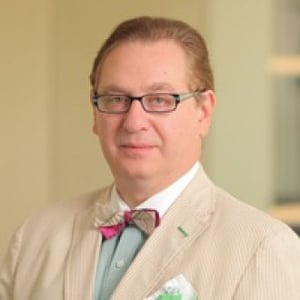
Partner, Baker Hostetler LLP
David Rivkin is a member of the firm's litigation, international and environmental teams and is co-leader of the firm's national appellate practice. He has extensive experience in constitutional, administrative and international law litigation and has been involved in numerous high-profile cases. With his prior experience in the government sector, David draws on a wealth of knowledge when providing compliance advice to companies and handling enforcement proceedings before government agencies on issues arising out of multilateral and unilateral sanctions, the Foreign Corrupt Practices Act (FCPA), anti-boycott issues, bankruptcy and financial fraud matters, and environmental and energy issues.
David has developed and implemented legislative, regulatory and litigation initiatives for two presidential administrations. Over the years, he has published hundreds of articles, op-eds, book reviews and book chapters on a variety of international, legal, constitutional, defense, arms control, foreign policy, environmental and energy issues for various newspapers and magazines, including The Wall Street Journal, The Washington Post, The New York Times, USA Today and The Los Angeles Times, and has been a frequent commentator and guest on TV and radio shows including ABC, CBS, NBC, CNN, Fox News, NPR and PBS.
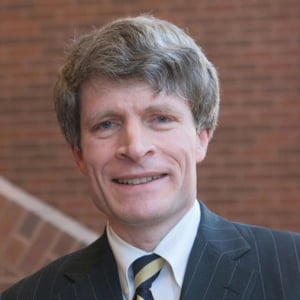
S. Walter Richey Professor of Corporate Law, University of Minnesota Law School
Professor Richard W. Painter received his B.A., summa cum laude, in history from Harvard University and his J.D. from Yale University, where he was an editor of the Yale Journal on Regulation. Following law school, he clerked for Judge John T. Noonan Jr., of the United States Court of Appeals for the Ninth Circuit and later practiced at Sullivan & Cromwell in New York City and Finn Dixon & Herling in Stamford, Connecticut.
He has served as a tenured member of the law faculty at the University of Oregon School of Law and the University of Illinois College of Law, where he was the Guy Raymond and Mildred Van Voorhis Jones Professor of Law from 2002 to 2005.
From February 2005 to July 2007, he was Associate Counsel to the President in the White House Counsel's office, serving as the chief ethics lawyer for the President, White House employees and senior nominees to Senate-confirmed positions in the Executive Branch. He is a member of the American Law Institute and is an advisor for the new ALI Principles of Government Ethics. He has also been active in the Professional Responsibility Section of the American Bar Association.
Professor Painter has also been active in law reform efforts aimed at deterring securities fraud and improving ethics of corporate managers and lawyers. A key provision of the Sarbanes-Oxley Act of 2002 requiring the SEC to issue rules of professional responsibility for securities lawyers was based on earlier proposals Professor Painter made in law review articles and to the ABA and the SEC. He has given dozens of lectures on the Sarbanes-Oxley Act to law schools, bar associations, and learned societies, such as the American Academy of Arts and Sciences. Professor Painter has on four separate occasions provided invited testimony before committees of the U.S. House of Representatives or the U.S. Senate on securities litigation and/or the role of attorneys in corporate governance.
His book, Getting the Government America Deserves: How Ethics Reform Can Make a Difference, was published by Oxford University Press in January 2009. He has written op-eds on government ethics for various publications including the New York Times, the Washington Post and the Los Angeles Times, and he has been interviewed several times on government ethics and corporate ethics by national news organizations, including appearances on Lawrence O'Donnell (MSNBC), Anderson Cooper 360 (CNN), CNN News, Fox News, National Public Radio All Things Considered, and Minnesota Public Radio News. In 2011, he testified before the U.S. House Government Oversight Committee on partisan political activity by government officials and reform of the Hatch Act. Professor Painter has also given expert testimony in cases involving securities transactions and the professional responsibility of lawyers. He testified as a defense witness in SEC. v. The Reserve Money Market Fund (SDNY, November 2012), a jury trial of an SEC enforcement action against the founders of the world's oldest money market fund that ended with a defense verdict on all of the fraud counts.
Professor Painter is the author of two casebooks: Securities Litigation and Enforcement (with Margaret Sachs and Donna Nagy; West 2003; Second Edition, 2007; Third Edition 2011) and Professional and Personal Responsibilities of the Lawyer (with Judge John T. Noonan Jr.; Foundation 1997; Second Edition, 2001; Third Edition 2011). He has written dozens of articles, book reviews, and essays, including a series of papers and a forthcoming book with Minnesota colleague Claire Hill on the personal responsibility of investment bankers.

Laurence H. Silberman Chair in Constitutional Governance, American Enterprise Institute; Executive Director, Antonin Scalia Law School’s C. Boyden Gray Center for the Study of the Administrative State
Adam J. White is the Laurence H. Silberman Chair in Constitutional Governance and senior fellow at the American Enterprise Institute, where he focuses on the Supreme Court and the administrative state. He also directs the Antonin Scalia Law School’s C. Boyden Gray Center for the Study of the Administrative State.
He writes on regulation and constitutional government for a variety of publications. He practiced law in Washington, D.C., after clerking for the D.C. Circuit's Judge David Sentelle. He also has been chairman of the ABA's Administrative Law Section.
In 2021, he served on the Presidential Commission on the Supreme Court of the United States, where he criticized “Court packing” and other efforts to restructure the Supreme Court.
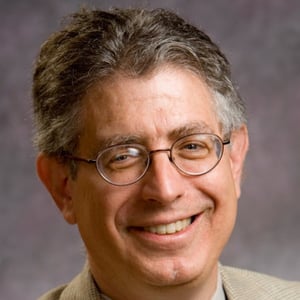
Sho Sato Professor of Law; Faculty Director, Center for Law, Energy, & the Environment, University of California, Berkeley
Dan Farber is the Sho Sato Professor of Law at the University of California, Berkeley. He is also the Co-Director of the Center for Law, Energy, and the Environment. Professor Farber serves on the editorial board of Foundation Press. He is a member of the American Academy of Arts and Sciences and a Life Member of the American Law Institute. He is the editor of Issues in Legal Scholarship.
Professor Farber is a graduate of the University of Illinois, where he earned his B.A., M.A., and J.D. degrees. He graduated, summa cum laude, from the College of Law, where he was the class valedictorian and served as Editor-in-Chief of the University of Illinois Law Review. After graduation from law school, he was a law clerk for Judge Philip W. Tone of the United States Court of Appeals for the Seventh Circuit and then for Justice John Paul Stevens of the Supreme Court of the United States. Professor Farber practiced law with Sidley & Austin, where he primarily worked on energy issues, before joining the University of Illinois College of Law faculty in 1978. He was a member of the University of Minnesota Law School faculty from1981 to 2002, where he was the McKnight Presidential Professor of Public Law. He also has been a Visiting Professor at the Stanford Law School, Harvard Law School, and the University of Chicago Law School.
Among Professor Farber’s eighteen books are RESEARCH HANDBOOK ON PUBLIC CHOICE AND PUBLIC LAW (Elgar 2010) (with A. O’Connell); JUDGMENT CALLS: POLITICS AND PRINCIPLE IN CONSTITUTIONAL LAW (Oxford University Press 2008) (with S. Sherry); RETAINED BY THE PEOPLE: THE “SILENT” NINTH AMENDMENT AND THE RIGHTS AMERICANS DON’T KNOW THEY HAVE (Basic Books 2007); and LINCOLN’S CONSTITUTION (University of Chicago Press 2003).
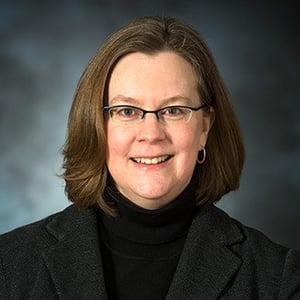
Associate Dean for Research and Intellectual Life, McKnight Presidential Professor in Law, Distinguished McKnight University Professor, Harlan Albert Rogers Professor in Law, Associate Director, Corporate Institute, University of Minnesota Law School
Professor Kristin E. Hickman is the McKnight Presidential Professor in Law, a Distinguished McKnight University Professor, and Harlan Albert Rogers Professor in Law at the University of Minnesota Law School. She also has taught at Harvard Law School and Northwestern University School of Law. Professor Hickman teaches and writes primarily in the areas of administrative law, tax administration, and statutory interpretation. Her articles on these topics have appeared in the Columbia Law Review, Cornell Law Review, Virginia Law Review, Duke Law Journal, and other publications. She also co-authors the Administrative Law Treatise with Richard J. Pierce, Jr., and a casebook on federal administrative law with Pierce and Christopher J. Walker. Her scholarly work has been cited several times in opinions of the United States Supreme Court as well as regularly in lower court judicial opinions and court briefs.
In 2018-19, Professor Hickman served as Special Adviser to the Administrator of the Office of Information and Regulatory Affairs in Washington, D.C. She presently serves as a Senior Fellow, and previously served as a public member and chair of the judicial review committee, for the Administrative Conference of the United States. She also is a Fellow of the American College of Tax Counsel.
Professor Hickman received her B.S. degree in business administration with a concentration in accounting and a secondary major in history from Trinity University in San Antonio, Texas. After practicing for several years as a certified public accountant, Professor Hickman earned her J.D. degree, magna cum laude, from Northwestern University School of Law, where she was awarded the Raoul Berger Prize and the Lowden Wigmore Prize for her scholarly writings. Following law school, Professor Hickman clerked for The Honorable David B. Sentelle of the United States Court of Appeals for the District of Columbia Circuit and practiced law as an associate with the Chicago office of Skadden, Arps, Slate, Meagher & Flom, concentrating on corporate and international tax transactions and matters.
Director, Multinational Business Services, Center for Regulatory Effectiveness
Jim Tozzi is a former regulatory official of the United States Office of Management and Budget (OMB). He currently is the head of the Center for Regulatory Effectiveness, an industry-supported organization that describes itself as a "regulatory watchdog."
Jim Tozzi got his Ph.D. in Economics and Business Administration from the University of Florida. After some time playing jazz as a self-described “bottom-tier” musician in New Orleans, Mr. Tozzi began working in Washington in 1964 at the Department of Defense, Office of the Secretary of the Army, where he worked on budget and strategic response issues. Mr. Tozzi served as an officer in the US Army Corps of Engineers.
S. Walter Richey Professor of Corporate Law, University of Minnesota Law School
Professor Richard W. Painter received his B.A., summa cum laude, in history from Harvard University and his J.D. from Yale University, where he was an editor of the Yale Journal on Regulation. Following law school, he clerked for Judge John T. Noonan Jr., of the United States Court of Appeals for the Ninth Circuit and later practiced at Sullivan & Cromwell in New York City and Finn Dixon & Herling in Stamford, Connecticut.
He has served as a tenured member of the law faculty at the University of Oregon School of Law and the University of Illinois College of Law, where he was the Guy Raymond and Mildred Van Voorhis Jones Professor of Law from 2002 to 2005.
From February 2005 to July 2007, he was Associate Counsel to the President in the White House Counsel's office, serving as the chief ethics lawyer for the President, White House employees and senior nominees to Senate-confirmed positions in the Executive Branch. He is a member of the American Law Institute and is an advisor for the new ALI Principles of Government Ethics. He has also been active in the Professional Responsibility Section of the American Bar Association.
Professor Painter has also been active in law reform efforts aimed at deterring securities fraud and improving ethics of corporate managers and lawyers. A key provision of the Sarbanes-Oxley Act of 2002 requiring the SEC to issue rules of professional responsibility for securities lawyers was based on earlier proposals Professor Painter made in law review articles and to the ABA and the SEC. He has given dozens of lectures on the Sarbanes-Oxley Act to law schools, bar associations, and learned societies, such as the American Academy of Arts and Sciences. Professor Painter has on four separate occasions provided invited testimony before committees of the U.S. House of Representatives or the U.S. Senate on securities litigation and/or the role of attorneys in corporate governance.
His book, Getting the Government America Deserves: How Ethics Reform Can Make a Difference, was published by Oxford University Press in January 2009. He has written op-eds on government ethics for various publications including the New York Times, the Washington Post and the Los Angeles Times, and he has been interviewed several times on government ethics and corporate ethics by national news organizations, including appearances on Lawrence O'Donnell (MSNBC), Anderson Cooper 360 (CNN), CNN News, Fox News, National Public Radio All Things Considered, and Minnesota Public Radio News. In 2011, he testified before the U.S. House Government Oversight Committee on partisan political activity by government officials and reform of the Hatch Act. Professor Painter has also given expert testimony in cases involving securities transactions and the professional responsibility of lawyers. He testified as a defense witness in SEC. v. The Reserve Money Market Fund (SDNY, November 2012), a jury trial of an SEC enforcement action against the founders of the world's oldest money market fund that ended with a defense verdict on all of the fraud counts.
Professor Painter is the author of two casebooks: Securities Litigation and Enforcement (with Margaret Sachs and Donna Nagy; West 2003; Second Edition, 2007; Third Edition 2011) and Professional and Personal Responsibilities of the Lawyer (with Judge John T. Noonan Jr.; Foundation 1997; Second Edition, 2001; Third Edition 2011). He has written dozens of articles, book reviews, and essays, including a series of papers and a forthcoming book with Minnesota colleague Claire Hill on the personal responsibility of investment bankers.
Partner, Gibson Dunn
Thomas H. Dupree, Jr. is a partner in the Washington, DC office of Gibson, Dunn & Crutcher. He is a member of the firm's litigation department and its Appellate and Constitutional Law practice group, and serves as the hiring partner for the DC office.
Mr. Dupree is an experienced trial and appellate advocate. He has argued more than 70 appeals in the federal courts, including in all thirteen circuits as well as the United States Supreme Court. He has represented clients throughout the country in a wide variety of trial and appellate matters, including cases involving punitive damages, class actions, product liability, arbitration, intellectual property, employment, and constitutional challenges to federal and state statutes.
In 2007, Mr. Dupree was appointed Deputy Assistant Attorney General. He served in the Civil Division at the U.S. Department of Justice from 2007 to 2009, ultimately becoming the Principal Deputy Assistant Attorney General. In that capacity, he served as the division's second-in-command, overseeing the more than 900 lawyers in the Civil Appellate, Commercial, Federal Programs and Torts branches, as well as the Office of Immigration Litigation and the Office of Consumer Litigation. Mr. Dupree was responsible for managing many of the government's most significant cases involving regulatory, commercial, constitutional and national security matters on behalf of virtually all of the federal agencies, the White House, and senior federal officials. Before being named the division's top deputy, Mr. Dupree ran its largest litigating branch, managing a staff of 280 lawyers.
Chambers and Partners named Mr. Dupree one of the leading appellate lawyers in the United States in 2012, 2013, 2014, 2015, and 2016. He received similar honors in 2010, when he was ranked as one of the top ten appellate litigators under age 40 by Law360. In 2009, the National Law Journal and Legal Times selected him as one of the top 40 lawyers under 40 in Washington, DC, as did Washingtonian magazine in 2006. Based on surveys of hundreds of corporate counsel, Mr. Dupree was named a "Client Service All-Star" by BTI Consulting Group in a 2013 report for his "overall legal prowess" and his "ability to deliver a plan of action that yields results."
Legal Times has called Mr. Dupree "no stranger to high-profile work." Among other things, he played a substantial role in the successful representation of George W. Bush before the United States Supreme Court in Bush v. Gore, and represented New England Patriots quarterback Tom Brady in challenging his "Deflategate" suspension.
In 2014, Mr. Dupree argued and won, by a unanimous 9-0 vote, a landmark personal jurisdiction case in the United States Supreme Court, Daimler AG v. Bauman. For this achievement, American Lawyer magazine named him Litigator of the Week, noting that he "won over both the liberal and conservative wings of the court."
Other matters Mr. Dupree has handled include:
Mr. Dupree appears frequently on national television as a legal analyst. He is a regular guest on Fox News Channel, and has appeared on "The O'Reilly Factor" and "The Kelly File," as well as on CNN's "Situation Room" and C-Span's "America & The Courts," among other programs. He has also been quoted in numerous print publications, including the New York Times, the Wall Street Journal, the Washington Post, the Los Angeles Times and many others, discussing legal issues and developments. Mr. Dupree has also testified before Congress on constitutional and separation-of-powers issues, including the President's authority to act through executive order.
Mr. Dupree graduated cum laude from Williams College, and with Honors from the University of Chicago Law School, where he served as an Editor of the University of Chicago Law Review. After law school, he clerked for the Honorable Jerry E. Smith of the United States Court of Appeals for the Fifth Circuit.
Professor of Law, Antonin Scalia Law School, George Mason University
Professor of Law Michael S. Greve joined the faculty of the Antonin Scalia Law School, George Mason University in fall 2012 after having served as John G. Searle Scholar at the American Enterprise Institute (AEI), where he specialized in constitutional law, courts, and business regulation and served as chairman of the Competitive Enterprise Institute. Prior to joining AEI, Greve was founder and co-director of the Center for Individual Rights, a public interest law firm specializing in constitutional litigation.
Greve has served previously as an adjunct professor at a number of universities, including Cornell and Johns Hopkins Universities, and has been a visiting professor at Boston College since 2004. He was awarded a PhD and an MA in government by Cornell University. Greve also earned a Diploma from the University of Hamburg in Germany.
A prolific writer, Greve is the author of nine books and a multitude of articles appearing in scholarly publications, as well as numerous editorials, short articles, and book reviews. He is a frequent speaker for professional and scholarly organizations and has made many appearances on radio and television.
In addition Greve has provided congressional and state legislative testimony, has lobbied and consulted in federal agency proceedings, and has provided litigation services and management in over 30 cases, including matters before the U.S. Supreme Court.
Maurice and Hilda Friedman Professor of Law, Columbia Law School; CEO, New Civil Liberties Alliance
Philip Hamburger is the Maurice and Hilda Friedman Professor of Law at Columbia Law School, and Chief Executive Officer at the New Civil Liberties Alliance. Before coming to Columbia, he was the John P. Wilson Professor at the University of Chicago Law School.
He writes on constitutional law and its history—with particular emphasis on religious liberty, freedom of speech and the press, judicial office, administrative power, and unconstitutional conditions.
His books are Separation of Church and State (Harvard 2002), Law and Judicial Duty (Harvard 2008), Is Administrative Law Unlawful? (Chicago 2014), The Administrative Threat (Encounter 2017), and Liberal Suppression: Section 501(c)(3) and the Taxation of Speech (Chicago 2018). A forthcoming book is Purchasing Submission: Conditions, Power, and Freedom (Harvard 2021).
He is a member of the American Academy of Arts and Sciences, and he has served on the board of directors of the American Society for Legal History. He has twice received the Sutherland Prize for the most significant contribution to English legal history, and has been awarded the Henry Paolucci - Walter Bagehot Book Award, the Hayek Book Prize, and the Bradley Prize.
Associate Dean for Research and Intellectual Life, McKnight Presidential Professor in Law, Distinguished McKnight University Professor, Harlan Albert Rogers Professor in Law, Associate Director, Corporate Institute, University of Minnesota Law School
Professor Kristin E. Hickman is the McKnight Presidential Professor in Law, a Distinguished McKnight University Professor, and Harlan Albert Rogers Professor in Law at the University of Minnesota Law School. She also has taught at Harvard Law School and Northwestern University School of Law. Professor Hickman teaches and writes primarily in the areas of administrative law, tax administration, and statutory interpretation. Her articles on these topics have appeared in the Columbia Law Review, Cornell Law Review, Virginia Law Review, Duke Law Journal, and other publications. She also co-authors the Administrative Law Treatise with Richard J. Pierce, Jr., and a casebook on federal administrative law with Pierce and Christopher J. Walker. Her scholarly work has been cited several times in opinions of the United States Supreme Court as well as regularly in lower court judicial opinions and court briefs.
In 2018-19, Professor Hickman served as Special Adviser to the Administrator of the Office of Information and Regulatory Affairs in Washington, D.C. She presently serves as a Senior Fellow, and previously served as a public member and chair of the judicial review committee, for the Administrative Conference of the United States. She also is a Fellow of the American College of Tax Counsel.
Professor Hickman received her B.S. degree in business administration with a concentration in accounting and a secondary major in history from Trinity University in San Antonio, Texas. After practicing for several years as a certified public accountant, Professor Hickman earned her J.D. degree, magna cum laude, from Northwestern University School of Law, where she was awarded the Raoul Berger Prize and the Lowden Wigmore Prize for her scholarly writings. Following law school, Professor Hickman clerked for The Honorable David B. Sentelle of the United States Court of Appeals for the District of Columbia Circuit and practiced law as an associate with the Chicago office of Skadden, Arps, Slate, Meagher & Flom, concentrating on corporate and international tax transactions and matters.

George C. Dix Professor in Constitutional Law, Northwestern University Pritzker School of Law
John O. McGinnis is a graduate of Harvard College and Harvard Law School where he was an editor of the Harvard Law Review. He also has an MA degree from Balliol College, Oxford, in philosophy and theology. Professor McGinnis clerked on the U.S. Court of Appeals for the District of Columbia. From 1987 to 1991, he was deputy assistant attorney general in the Office of Legal Counsel at the Department of Justice. He is the author of Accelerating Democracy: Transforming Government Through Technology (Princeton 2013) and Originalism and the Good Constitution (Harvard 2013) (with M. Rappaport). He is a past winner of the Paul Bator award given by the Federalist Society to an outstanding academic under 40. He has been listed by the United States on the roster of panelists who may be called upon to decide World Trade Organization Disputes.
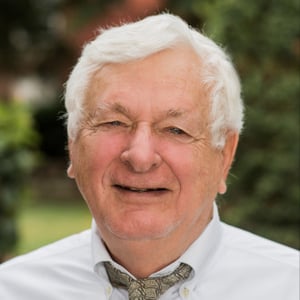
Lyle T. Alverson Professor of Law, George Washington University Law School
Professor Pierce is author of over twenty books and 130 articles on administrative law, government regulation, and the effects of various forms of government intervention on the performance of markets. His books and articles have been cited in hundreds of judicial opinions, including over a dozen opinions of the U.S. Supreme Court.
Professor of Law, Antonin Scalia Law School, George Mason University
Professor of Law Michael S. Greve joined the faculty of the Antonin Scalia Law School, George Mason University in fall 2012 after having served as John G. Searle Scholar at the American Enterprise Institute (AEI), where he specialized in constitutional law, courts, and business regulation and served as chairman of the Competitive Enterprise Institute. Prior to joining AEI, Greve was founder and co-director of the Center for Individual Rights, a public interest law firm specializing in constitutional litigation.
Greve has served previously as an adjunct professor at a number of universities, including Cornell and Johns Hopkins Universities, and has been a visiting professor at Boston College since 2004. He was awarded a PhD and an MA in government by Cornell University. Greve also earned a Diploma from the University of Hamburg in Germany.
A prolific writer, Greve is the author of nine books and a multitude of articles appearing in scholarly publications, as well as numerous editorials, short articles, and book reviews. He is a frequent speaker for professional and scholarly organizations and has made many appearances on radio and television.
In addition Greve has provided congressional and state legislative testimony, has lobbied and consulted in federal agency proceedings, and has provided litigation services and management in over 30 cases, including matters before the U.S. Supreme Court.
Maurice and Hilda Friedman Professor of Law, Columbia Law School; CEO, New Civil Liberties Alliance
Philip Hamburger is the Maurice and Hilda Friedman Professor of Law at Columbia Law School, and Chief Executive Officer at the New Civil Liberties Alliance. Before coming to Columbia, he was the John P. Wilson Professor at the University of Chicago Law School.
He writes on constitutional law and its history—with particular emphasis on religious liberty, freedom of speech and the press, judicial office, administrative power, and unconstitutional conditions.
His books are Separation of Church and State (Harvard 2002), Law and Judicial Duty (Harvard 2008), Is Administrative Law Unlawful? (Chicago 2014), The Administrative Threat (Encounter 2017), and Liberal Suppression: Section 501(c)(3) and the Taxation of Speech (Chicago 2018). A forthcoming book is Purchasing Submission: Conditions, Power, and Freedom (Harvard 2021).
He is a member of the American Academy of Arts and Sciences, and he has served on the board of directors of the American Society for Legal History. He has twice received the Sutherland Prize for the most significant contribution to English legal history, and has been awarded the Henry Paolucci - Walter Bagehot Book Award, the Hayek Book Prize, and the Bradley Prize.
Associate Dean for Research and Intellectual Life, McKnight Presidential Professor in Law, Distinguished McKnight University Professor, Harlan Albert Rogers Professor in Law, Associate Director, Corporate Institute, University of Minnesota Law School
Professor Kristin E. Hickman is the McKnight Presidential Professor in Law, a Distinguished McKnight University Professor, and Harlan Albert Rogers Professor in Law at the University of Minnesota Law School. She also has taught at Harvard Law School and Northwestern University School of Law. Professor Hickman teaches and writes primarily in the areas of administrative law, tax administration, and statutory interpretation. Her articles on these topics have appeared in the Columbia Law Review, Cornell Law Review, Virginia Law Review, Duke Law Journal, and other publications. She also co-authors the Administrative Law Treatise with Richard J. Pierce, Jr., and a casebook on federal administrative law with Pierce and Christopher J. Walker. Her scholarly work has been cited several times in opinions of the United States Supreme Court as well as regularly in lower court judicial opinions and court briefs.
In 2018-19, Professor Hickman served as Special Adviser to the Administrator of the Office of Information and Regulatory Affairs in Washington, D.C. She presently serves as a Senior Fellow, and previously served as a public member and chair of the judicial review committee, for the Administrative Conference of the United States. She also is a Fellow of the American College of Tax Counsel.
Professor Hickman received her B.S. degree in business administration with a concentration in accounting and a secondary major in history from Trinity University in San Antonio, Texas. After practicing for several years as a certified public accountant, Professor Hickman earned her J.D. degree, magna cum laude, from Northwestern University School of Law, where she was awarded the Raoul Berger Prize and the Lowden Wigmore Prize for her scholarly writings. Following law school, Professor Hickman clerked for The Honorable David B. Sentelle of the United States Court of Appeals for the District of Columbia Circuit and practiced law as an associate with the Chicago office of Skadden, Arps, Slate, Meagher & Flom, concentrating on corporate and international tax transactions and matters.
George C. Dix Professor in Constitutional Law, Northwestern University Pritzker School of Law
John O. McGinnis is a graduate of Harvard College and Harvard Law School where he was an editor of the Harvard Law Review. He also has an MA degree from Balliol College, Oxford, in philosophy and theology. Professor McGinnis clerked on the U.S. Court of Appeals for the District of Columbia. From 1987 to 1991, he was deputy assistant attorney general in the Office of Legal Counsel at the Department of Justice. He is the author of Accelerating Democracy: Transforming Government Through Technology (Princeton 2013) and Originalism and the Good Constitution (Harvard 2013) (with M. Rappaport). He is a past winner of the Paul Bator award given by the Federalist Society to an outstanding academic under 40. He has been listed by the United States on the roster of panelists who may be called upon to decide World Trade Organization Disputes.
Lyle T. Alverson Professor of Law, George Washington University Law School
Professor Pierce is author of over twenty books and 130 articles on administrative law, government regulation, and the effects of various forms of government intervention on the performance of markets. His books and articles have been cited in hundreds of judicial opinions, including over a dozen opinions of the U.S. Supreme Court.
S. Walter Richey Professor of Corporate Law, University of Minnesota Law School
Professor Richard W. Painter received his B.A., summa cum laude, in history from Harvard University and his J.D. from Yale University, where he was an editor of the Yale Journal on Regulation. Following law school, he clerked for Judge John T. Noonan Jr., of the United States Court of Appeals for the Ninth Circuit and later practiced at Sullivan & Cromwell in New York City and Finn Dixon & Herling in Stamford, Connecticut.
He has served as a tenured member of the law faculty at the University of Oregon School of Law and the University of Illinois College of Law, where he was the Guy Raymond and Mildred Van Voorhis Jones Professor of Law from 2002 to 2005.
From February 2005 to July 2007, he was Associate Counsel to the President in the White House Counsel's office, serving as the chief ethics lawyer for the President, White House employees and senior nominees to Senate-confirmed positions in the Executive Branch. He is a member of the American Law Institute and is an advisor for the new ALI Principles of Government Ethics. He has also been active in the Professional Responsibility Section of the American Bar Association.
Professor Painter has also been active in law reform efforts aimed at deterring securities fraud and improving ethics of corporate managers and lawyers. A key provision of the Sarbanes-Oxley Act of 2002 requiring the SEC to issue rules of professional responsibility for securities lawyers was based on earlier proposals Professor Painter made in law review articles and to the ABA and the SEC. He has given dozens of lectures on the Sarbanes-Oxley Act to law schools, bar associations, and learned societies, such as the American Academy of Arts and Sciences. Professor Painter has on four separate occasions provided invited testimony before committees of the U.S. House of Representatives or the U.S. Senate on securities litigation and/or the role of attorneys in corporate governance.
His book, Getting the Government America Deserves: How Ethics Reform Can Make a Difference, was published by Oxford University Press in January 2009. He has written op-eds on government ethics for various publications including the New York Times, the Washington Post and the Los Angeles Times, and he has been interviewed several times on government ethics and corporate ethics by national news organizations, including appearances on Lawrence O'Donnell (MSNBC), Anderson Cooper 360 (CNN), CNN News, Fox News, National Public Radio All Things Considered, and Minnesota Public Radio News. In 2011, he testified before the U.S. House Government Oversight Committee on partisan political activity by government officials and reform of the Hatch Act. Professor Painter has also given expert testimony in cases involving securities transactions and the professional responsibility of lawyers. He testified as a defense witness in SEC. v. The Reserve Money Market Fund (SDNY, November 2012), a jury trial of an SEC enforcement action against the founders of the world's oldest money market fund that ended with a defense verdict on all of the fraud counts.
Professor Painter is the author of two casebooks: Securities Litigation and Enforcement (with Margaret Sachs and Donna Nagy; West 2003; Second Edition, 2007; Third Edition 2011) and Professional and Personal Responsibilities of the Lawyer (with Judge John T. Noonan Jr.; Foundation 1997; Second Edition, 2001; Third Edition 2011). He has written dozens of articles, book reviews, and essays, including a series of papers and a forthcoming book with Minnesota colleague Claire Hill on the personal responsibility of investment bankers.
Partner, Baker Hostetler LLP
David Rivkin is a member of the firm's litigation, international and environmental teams and is co-leader of the firm's national appellate practice. He has extensive experience in constitutional, administrative and international law litigation and has been involved in numerous high-profile cases. With his prior experience in the government sector, David draws on a wealth of knowledge when providing compliance advice to companies and handling enforcement proceedings before government agencies on issues arising out of multilateral and unilateral sanctions, the Foreign Corrupt Practices Act (FCPA), anti-boycott issues, bankruptcy and financial fraud matters, and environmental and energy issues.
David has developed and implemented legislative, regulatory and litigation initiatives for two presidential administrations. Over the years, he has published hundreds of articles, op-eds, book reviews and book chapters on a variety of international, legal, constitutional, defense, arms control, foreign policy, environmental and energy issues for various newspapers and magazines, including The Wall Street Journal, The Washington Post, The New York Times, USA Today and The Los Angeles Times, and has been a frequent commentator and guest on TV and radio shows including ABC, CBS, NBC, CNN, Fox News, NPR and PBS.
Sho Sato Professor of Law; Faculty Director, Center for Law, Energy, & the Environment, University of California, Berkeley
Dan Farber is the Sho Sato Professor of Law at the University of California, Berkeley. He is also the Co-Director of the Center for Law, Energy, and the Environment. Professor Farber serves on the editorial board of Foundation Press. He is a member of the American Academy of Arts and Sciences and a Life Member of the American Law Institute. He is the editor of Issues in Legal Scholarship.
Professor Farber is a graduate of the University of Illinois, where he earned his B.A., M.A., and J.D. degrees. He graduated, summa cum laude, from the College of Law, where he was the class valedictorian and served as Editor-in-Chief of the University of Illinois Law Review. After graduation from law school, he was a law clerk for Judge Philip W. Tone of the United States Court of Appeals for the Seventh Circuit and then for Justice John Paul Stevens of the Supreme Court of the United States. Professor Farber practiced law with Sidley & Austin, where he primarily worked on energy issues, before joining the University of Illinois College of Law faculty in 1978. He was a member of the University of Minnesota Law School faculty from1981 to 2002, where he was the McKnight Presidential Professor of Public Law. He also has been a Visiting Professor at the Stanford Law School, Harvard Law School, and the University of Chicago Law School.
Among Professor Farber’s eighteen books are RESEARCH HANDBOOK ON PUBLIC CHOICE AND PUBLIC LAW (Elgar 2010) (with A. O’Connell); JUDGMENT CALLS: POLITICS AND PRINCIPLE IN CONSTITUTIONAL LAW (Oxford University Press 2008) (with S. Sherry); RETAINED BY THE PEOPLE: THE “SILENT” NINTH AMENDMENT AND THE RIGHTS AMERICANS DON’T KNOW THEY HAVE (Basic Books 2007); and LINCOLN’S CONSTITUTION (University of Chicago Press 2003).
Associate Dean for Research and Intellectual Life, McKnight Presidential Professor in Law, Distinguished McKnight University Professor, Harlan Albert Rogers Professor in Law, Associate Director, Corporate Institute, University of Minnesota Law School
Professor Kristin E. Hickman is the McKnight Presidential Professor in Law, a Distinguished McKnight University Professor, and Harlan Albert Rogers Professor in Law at the University of Minnesota Law School. She also has taught at Harvard Law School and Northwestern University School of Law. Professor Hickman teaches and writes primarily in the areas of administrative law, tax administration, and statutory interpretation. Her articles on these topics have appeared in the Columbia Law Review, Cornell Law Review, Virginia Law Review, Duke Law Journal, and other publications. She also co-authors the Administrative Law Treatise with Richard J. Pierce, Jr., and a casebook on federal administrative law with Pierce and Christopher J. Walker. Her scholarly work has been cited several times in opinions of the United States Supreme Court as well as regularly in lower court judicial opinions and court briefs.
In 2018-19, Professor Hickman served as Special Adviser to the Administrator of the Office of Information and Regulatory Affairs in Washington, D.C. She presently serves as a Senior Fellow, and previously served as a public member and chair of the judicial review committee, for the Administrative Conference of the United States. She also is a Fellow of the American College of Tax Counsel.
Professor Hickman received her B.S. degree in business administration with a concentration in accounting and a secondary major in history from Trinity University in San Antonio, Texas. After practicing for several years as a certified public accountant, Professor Hickman earned her J.D. degree, magna cum laude, from Northwestern University School of Law, where she was awarded the Raoul Berger Prize and the Lowden Wigmore Prize for her scholarly writings. Following law school, Professor Hickman clerked for The Honorable David B. Sentelle of the United States Court of Appeals for the District of Columbia Circuit and practiced law as an associate with the Chicago office of Skadden, Arps, Slate, Meagher & Flom, concentrating on corporate and international tax transactions and matters.
Director, Multinational Business Services, Center for Regulatory Effectiveness
Jim Tozzi is a former regulatory official of the United States Office of Management and Budget (OMB). He currently is the head of the Center for Regulatory Effectiveness, an industry-supported organization that describes itself as a "regulatory watchdog."
Jim Tozzi got his Ph.D. in Economics and Business Administration from the University of Florida. After some time playing jazz as a self-described “bottom-tier” musician in New Orleans, Mr. Tozzi began working in Washington in 1964 at the Department of Defense, Office of the Secretary of the Army, where he worked on budget and strategic response issues. Mr. Tozzi served as an officer in the US Army Corps of Engineers.
Laurence H. Silberman Chair in Constitutional Governance, American Enterprise Institute; Executive Director, Antonin Scalia Law School’s C. Boyden Gray Center for the Study of the Administrative State
Adam J. White is the Laurence H. Silberman Chair in Constitutional Governance and senior fellow at the American Enterprise Institute, where he focuses on the Supreme Court and the administrative state. He also directs the Antonin Scalia Law School’s C. Boyden Gray Center for the Study of the Administrative State.
He writes on regulation and constitutional government for a variety of publications. He practiced law in Washington, D.C., after clerking for the D.C. Circuit's Judge David Sentelle. He also has been chairman of the ABA's Administrative Law Section.
In 2021, he served on the Presidential Commission on the Supreme Court of the United States, where he criticized “Court packing” and other efforts to restructure the Supreme Court.
Partner, Gibson Dunn
Thomas H. Dupree, Jr. is a partner in the Washington, DC office of Gibson, Dunn & Crutcher. He is a member of the firm's litigation department and its Appellate and Constitutional Law practice group, and serves as the hiring partner for the DC office.
Mr. Dupree is an experienced trial and appellate advocate. He has argued more than 70 appeals in the federal courts, including in all thirteen circuits as well as the United States Supreme Court. He has represented clients throughout the country in a wide variety of trial and appellate matters, including cases involving punitive damages, class actions, product liability, arbitration, intellectual property, employment, and constitutional challenges to federal and state statutes.
In 2007, Mr. Dupree was appointed Deputy Assistant Attorney General. He served in the Civil Division at the U.S. Department of Justice from 2007 to 2009, ultimately becoming the Principal Deputy Assistant Attorney General. In that capacity, he served as the division's second-in-command, overseeing the more than 900 lawyers in the Civil Appellate, Commercial, Federal Programs and Torts branches, as well as the Office of Immigration Litigation and the Office of Consumer Litigation. Mr. Dupree was responsible for managing many of the government's most significant cases involving regulatory, commercial, constitutional and national security matters on behalf of virtually all of the federal agencies, the White House, and senior federal officials. Before being named the division's top deputy, Mr. Dupree ran its largest litigating branch, managing a staff of 280 lawyers.
Chambers and Partners named Mr. Dupree one of the leading appellate lawyers in the United States in 2012, 2013, 2014, 2015, and 2016. He received similar honors in 2010, when he was ranked as one of the top ten appellate litigators under age 40 by Law360. In 2009, the National Law Journal and Legal Times selected him as one of the top 40 lawyers under 40 in Washington, DC, as did Washingtonian magazine in 2006. Based on surveys of hundreds of corporate counsel, Mr. Dupree was named a "Client Service All-Star" by BTI Consulting Group in a 2013 report for his "overall legal prowess" and his "ability to deliver a plan of action that yields results."
Legal Times has called Mr. Dupree "no stranger to high-profile work." Among other things, he played a substantial role in the successful representation of George W. Bush before the United States Supreme Court in Bush v. Gore, and represented New England Patriots quarterback Tom Brady in challenging his "Deflategate" suspension.
In 2014, Mr. Dupree argued and won, by a unanimous 9-0 vote, a landmark personal jurisdiction case in the United States Supreme Court, Daimler AG v. Bauman. For this achievement, American Lawyer magazine named him Litigator of the Week, noting that he "won over both the liberal and conservative wings of the court."
Other matters Mr. Dupree has handled include:
Mr. Dupree appears frequently on national television as a legal analyst. He is a regular guest on Fox News Channel, and has appeared on "The O'Reilly Factor" and "The Kelly File," as well as on CNN's "Situation Room" and C-Span's "America & The Courts," among other programs. He has also been quoted in numerous print publications, including the New York Times, the Wall Street Journal, the Washington Post, the Los Angeles Times and many others, discussing legal issues and developments. Mr. Dupree has also testified before Congress on constitutional and separation-of-powers issues, including the President's authority to act through executive order.
Mr. Dupree graduated cum laude from Williams College, and with Honors from the University of Chicago Law School, where he served as an Editor of the University of Chicago Law Review. After law school, he clerked for the Honorable Jerry E. Smith of the United States Court of Appeals for the Fifth Circuit.
S. Walter Richey Professor of Corporate Law, University of Minnesota Law School
Professor Richard W. Painter received his B.A., summa cum laude, in history from Harvard University and his J.D. from Yale University, where he was an editor of the Yale Journal on Regulation. Following law school, he clerked for Judge John T. Noonan Jr., of the United States Court of Appeals for the Ninth Circuit and later practiced at Sullivan & Cromwell in New York City and Finn Dixon & Herling in Stamford, Connecticut.
He has served as a tenured member of the law faculty at the University of Oregon School of Law and the University of Illinois College of Law, where he was the Guy Raymond and Mildred Van Voorhis Jones Professor of Law from 2002 to 2005.
From February 2005 to July 2007, he was Associate Counsel to the President in the White House Counsel's office, serving as the chief ethics lawyer for the President, White House employees and senior nominees to Senate-confirmed positions in the Executive Branch. He is a member of the American Law Institute and is an advisor for the new ALI Principles of Government Ethics. He has also been active in the Professional Responsibility Section of the American Bar Association.
Professor Painter has also been active in law reform efforts aimed at deterring securities fraud and improving ethics of corporate managers and lawyers. A key provision of the Sarbanes-Oxley Act of 2002 requiring the SEC to issue rules of professional responsibility for securities lawyers was based on earlier proposals Professor Painter made in law review articles and to the ABA and the SEC. He has given dozens of lectures on the Sarbanes-Oxley Act to law schools, bar associations, and learned societies, such as the American Academy of Arts and Sciences. Professor Painter has on four separate occasions provided invited testimony before committees of the U.S. House of Representatives or the U.S. Senate on securities litigation and/or the role of attorneys in corporate governance.
His book, Getting the Government America Deserves: How Ethics Reform Can Make a Difference, was published by Oxford University Press in January 2009. He has written op-eds on government ethics for various publications including the New York Times, the Washington Post and the Los Angeles Times, and he has been interviewed several times on government ethics and corporate ethics by national news organizations, including appearances on Lawrence O'Donnell (MSNBC), Anderson Cooper 360 (CNN), CNN News, Fox News, National Public Radio All Things Considered, and Minnesota Public Radio News. In 2011, he testified before the U.S. House Government Oversight Committee on partisan political activity by government officials and reform of the Hatch Act. Professor Painter has also given expert testimony in cases involving securities transactions and the professional responsibility of lawyers. He testified as a defense witness in SEC. v. The Reserve Money Market Fund (SDNY, November 2012), a jury trial of an SEC enforcement action against the founders of the world's oldest money market fund that ended with a defense verdict on all of the fraud counts.
Professor Painter is the author of two casebooks: Securities Litigation and Enforcement (with Margaret Sachs and Donna Nagy; West 2003; Second Edition, 2007; Third Edition 2011) and Professional and Personal Responsibilities of the Lawyer (with Judge John T. Noonan Jr.; Foundation 1997; Second Edition, 2001; Third Edition 2011). He has written dozens of articles, book reviews, and essays, including a series of papers and a forthcoming book with Minnesota colleague Claire Hill on the personal responsibility of investment bankers.

Judge, United States Court of Appeals, Eighth Circuit
David Stras became a judge on the United States Court of Appeals for the Eighth Circuit on January 31, 2018. Before serving on the Eighth Circuit, Judge Stras was an Associate Justice of the Minnesota Supreme Court, a position he occupied from July 1, 2010 until his appointment to the Eighth Circuit.
Prior to becoming a judge, Stras was a member of the faculty of the University of Minnesota Law School from 2004 through 2010. He taught and wrote in the areas of federal courts and jurisdiction, constitutional law, criminal law, and law and politics.
Judge Stras received his Bachelor of Arts degree, with highest distinction, in 1995 and his Master of Business Administration in 1999, both from the University of Kansas. He also received his law degree from the University of Kansas School of Law in 1999, where he served as Editor-in-Chief of the Criminal Procedure Edition of the Kansas Law Review.
Following law school, Stras clerked for The Honorable Melvin Brunetti of the United States Court of Appeals for the Ninth Circuit and then for The Honorable J. Michael Luttig of the United States Court of Appeals for the Fourth Circuit.
From 2001 to 2002, he practiced white-collar criminal and appellate litigation with the Washington, D.C., office of Sidley Austin Brown & Wood. Following his year in practice, he clerked for The Honorable Clarence Thomas of the Supreme Court of the United States.

Presidential Conflicts? - Podcast
David B. Rivkin, Richard W. Painter
“Suggestions that President-elect Donald Trump put his business holdings in a 'blind trust,' which would...
Presidential Conflicts?
TeleforumOur Fractured Republic, Religious and Political Divides, and the Role of Pluralism
How Should "Administrative Law" Be Taught Today? - Podcast
Adam White, Daniel Farber, Kristin E. Hickman, Jim Tozzi
The growing role of the administrative agencies in American government is mirrored by a growing...
How Should "Administrative Law" Be Taught Today?
TeleforumSanctioning (Government) Lawyers - Podcast
Richard W. Painter, Thomas H. Dupree
On May 19, 2016, the United States District Court for the Southern District of Texas...
Sanctioning (Government) Lawyers
Teleforum2015 U.S. Supreme Court Term Review
Des Moines, IowaPanel II: The Administrative State: Within the Bounds of Law?
Michael S. Greve, Philip A. Hamburger, Kristin E. Hickman, John O. McGinnis, Richard J. Pierce
This panel was part of the 17th Annual Federalist Society Faculty Conference held on January...
Panel II: The Administrative State: Within the Bounds of Law?
Michael S. Greve, Philip A. Hamburger, Kristin E. Hickman, John O. McGinnis, Richard J. Pierce
This panel was part of the 17th Annual Federalist Society Faculty Conference held on January...