

Senior Counsel, Caplin & Drysdale; Adjunct Professor of Law, Georgetown Law
Professor Carney is a Senior Counsel with Caplin & Drysdale, Cht’d. in Washington, D.C. He served as a Trial Attorney for the Tax Division of the U.S. Department of Justice for six years, and was in private (law firm) tax practice for many years, specializing in IRS administrative practice, tax controversies (audit and IRS Appeals Office), and tax litigation. He also advised clients in a similar capacity as a partner in the National Tax Office of Ernst & Young LLP in Washington. He is a member of the District of Columbia bar, as well as the bars of the U.S. Tax Court, U.S. Court of Federal Claims, U.S. District Court for the District of Columbia, and the U.S. Courts of Appeals for the Federal Circuit, D.C Circuit, and Eleventh Circuit.
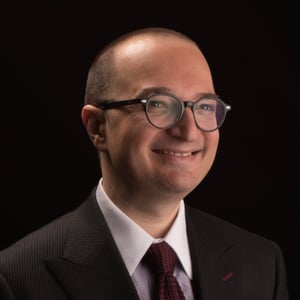
Professor of Law, University of Baltimore School of Law (on leave); Senior Counsel, U.S. Department of Justice
Professor Dolin’s scholarship centers on patent law with a specific focus on how the patent regime affects innovation, especially in bio-pharmaceutical areas. His work in these areas includes a number of scholarly articles, presentations, amicus briefs, and congressional testimony.
Dr. Dolin is currently on leave from his academic duties while he serves as Senior Counsel in the Civil Rights Division of the United States Department of Justice.
From January 2020 to January 2022, Professor Dolin served as a resident Associate Justice of the Supreme Court of the Republic of Palau. In this role, he (together with other members of the Court) heard appeals in civil, criminal, administrative, and constitutional law matters.
Prior to joining the University of Baltimore School of Law, Professor Dolin held visiting appointments in other law schools. He also served as a law clerk to the Hon. Pauline Newman, of the U.S. Court of Appeals for the Federal Circuit and the late Hon. H. Emory Widener Jr., of the U.S. Court of Appeals for the Fourth Circuit.
Rumors that he has a real Russian bear in his office are entirely true.
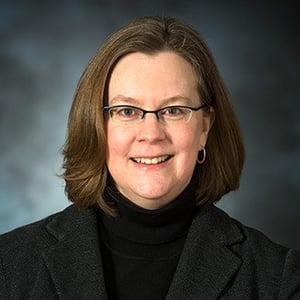
Associate Dean for Research and Intellectual Life, McKnight Presidential Professor in Law, Distinguished McKnight University Professor, Harlan Albert Rogers Professor in Law, Associate Director, Corporate Institute, University of Minnesota Law School
Professor Kristin E. Hickman is the McKnight Presidential Professor in Law, a Distinguished McKnight University Professor, and Harlan Albert Rogers Professor in Law at the University of Minnesota Law School. She also has taught at Harvard Law School and Northwestern University School of Law. Professor Hickman teaches and writes primarily in the areas of administrative law, tax administration, and statutory interpretation. Her articles on these topics have appeared in the Columbia Law Review, Cornell Law Review, Virginia Law Review, Duke Law Journal, and other publications. She also co-authors the Administrative Law Treatise with Richard J. Pierce, Jr., and a casebook on federal administrative law with Pierce and Christopher J. Walker. Her scholarly work has been cited several times in opinions of the United States Supreme Court as well as regularly in lower court judicial opinions and court briefs.
In 2018-19, Professor Hickman served as Special Adviser to the Administrator of the Office of Information and Regulatory Affairs in Washington, D.C. She presently serves as a Senior Fellow, and previously served as a public member and chair of the judicial review committee, for the Administrative Conference of the United States. She also is a Fellow of the American College of Tax Counsel.
Professor Hickman received her B.S. degree in business administration with a concentration in accounting and a secondary major in history from Trinity University in San Antonio, Texas. After practicing for several years as a certified public accountant, Professor Hickman earned her J.D. degree, magna cum laude, from Northwestern University School of Law, where she was awarded the Raoul Berger Prize and the Lowden Wigmore Prize for her scholarly writings. Following law school, Professor Hickman clerked for The Honorable David B. Sentelle of the United States Court of Appeals for the District of Columbia Circuit and practiced law as an associate with the Chicago office of Skadden, Arps, Slate, Meagher & Flom, concentrating on corporate and international tax transactions and matters.

President, Cass & Associates, PC
Ronald A. Cass is Dean Emeritus of Boston University School of Law (where he was Dean from 1990-2004), President of Cass & Associates, PC, former Vice-Chairman and Commissioner of the U.S. International Trade Commission, former faculty member at Boston University School of Law and the University of Virginia Law School, and Distinguished Senior Fellow at the C. Boyden Gray Center for the Study of the Administrative State. Dean Cass also sits as an arbitrator for commercial, international, and intellectual property rights disputes, and is a former United States member of the Panel of Conciliators of the International Centre for Settlement of Investment Disputes. He is a member of the Council of the Administrative Conference of the United States and has received seven presidential appointments, spanning Presidents Ronald Reagan to Donald J. Trump.
As a law professor, lecturer, and scholar, Dean Cass has been teaching and writing about a wide array of legal issues on topics such as administrative law and regulation, antitrust, constitutional law, communications, intellectual property, international trade, separation of powers, and legal process. He has published more than 160 scholarly books, chapters, articles, and papers, including a leading casebook on administrative law. Dean Cass has taught judges as well as students in schools of law, economics, business, and public policy and has held academic appointments in the United States, Europe, and Latin America.
In addition to his academic work, Dean Cass has participated in numerous important legal cases as an amicus, consultant, or expert, and has advised businesses, law firms, investment funds, and government agencies on a range of trade, antitrust, intellectual property, and regulatory issues. He has a broad range of affiliations with professional groups, and has received numerous honors, fellowships and awards.
Dean Cass is a graduate of the University of Virginia and the University of Chicago Law School.
Associate Dean for Research and Intellectual Life, McKnight Presidential Professor in Law, Distinguished McKnight University Professor, Harlan Albert Rogers Professor in Law, Associate Director, Corporate Institute, University of Minnesota Law School
Professor Kristin E. Hickman is the McKnight Presidential Professor in Law, a Distinguished McKnight University Professor, and Harlan Albert Rogers Professor in Law at the University of Minnesota Law School. She also has taught at Harvard Law School and Northwestern University School of Law. Professor Hickman teaches and writes primarily in the areas of administrative law, tax administration, and statutory interpretation. Her articles on these topics have appeared in the Columbia Law Review, Cornell Law Review, Virginia Law Review, Duke Law Journal, and other publications. She also co-authors the Administrative Law Treatise with Richard J. Pierce, Jr., and a casebook on federal administrative law with Pierce and Christopher J. Walker. Her scholarly work has been cited several times in opinions of the United States Supreme Court as well as regularly in lower court judicial opinions and court briefs.
In 2018-19, Professor Hickman served as Special Adviser to the Administrator of the Office of Information and Regulatory Affairs in Washington, D.C. She presently serves as a Senior Fellow, and previously served as a public member and chair of the judicial review committee, for the Administrative Conference of the United States. She also is a Fellow of the American College of Tax Counsel.
Professor Hickman received her B.S. degree in business administration with a concentration in accounting and a secondary major in history from Trinity University in San Antonio, Texas. After practicing for several years as a certified public accountant, Professor Hickman earned her J.D. degree, magna cum laude, from Northwestern University School of Law, where she was awarded the Raoul Berger Prize and the Lowden Wigmore Prize for her scholarly writings. Following law school, Professor Hickman clerked for The Honorable David B. Sentelle of the United States Court of Appeals for the District of Columbia Circuit and practiced law as an associate with the Chicago office of Skadden, Arps, Slate, Meagher & Flom, concentrating on corporate and international tax transactions and matters.
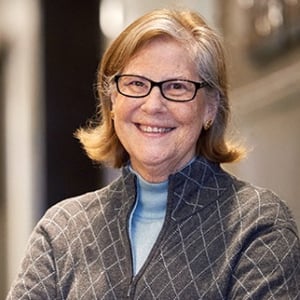
Professor of Practice and Distinguished Scholar in Residence; Co-Director of the Legislative and Regulatory Process Clinic, New York University School of Law
Sally Katzen served in the Clinton administration as administrator of the Office of Information and Regulatory Affairs in the Office of Management and Budget (OMB), as deputy assistant to the president for economic policy and deputy director of the National Economic Council in the White House, and then as the deputy director for management at OMB. She served as the head of the Agency Review Group for the Obama/Biden transition with responsibility for the Executive Office of the President and all government-wide agencies. She has taught both undergraduates and at various law schools. She is a member of the American Law Institute and the National Academy of Public Administration, has served on multiple panels for the National Academy of Sciences, testified frequently before Congress, and is on the board of several non-profit organizations. Before joining the Clinton administration, Katzen was a partner in the Washington, DC, law firm of Wilmer, Cutler & Pickering, specializing in regulatory and legislative matters, while serving in leadership roles in the American Bar Association (including chair of the Section on Administrative Law and Regulatory Practice and as DC delegate to the ABA’s House of Delegates), as president of the Federal Communications Bar Association and as president of the Women’s Legal Defense Fund. She graduated from Smith College and the University of Michigan Law School, where she was the first woman editor-in-chief of the Law Review. She clerked for Judge J. Skelly Wright of the United States Court of Appeals for the District of Columbia Circuit and served in the Carter administration as the general counsel of the Council on Wage and Price Stability in the Executive Office of the President.
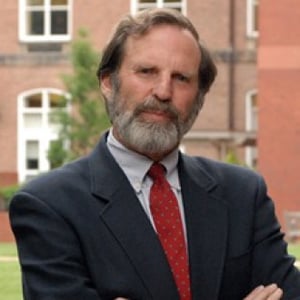
Adjunct Professor, George Washington University Law School

Executive Vice President, The Federalist Society
Dean Reuter is Executive Vice President at the Federalist Society for Law and Public Policy Studies. He has served in two federal government agency Offices of the Inspector General, as Counsel to the Inspector General and Deputy Inspector General, responsible for policing the use of federal funds granted and contracted through those agencies. As such, he helped conduct and oversee criminal investigations across the country. He is the principal author of the non-fiction book, The Hidden Nazi: The Untold Story of America's Deal with the Devil, and editor of Liberty’s Nemesis: The Unchecked Expansion of the State and Confronting Terror: 9/11 and the Future of American National Security. He was appointed by the President and served as Vice-Chairman of the Board of Directors of the Corporation for National and Community Service, and recently served as an appointee on the U.S. Commission on Presidential Scholars. He is a graduate of Hood College (BA with Honors) and the University of Maryland School of Law.
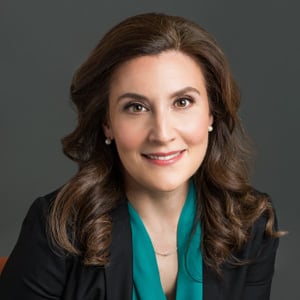
Board Member, U.S. Privacy and Civil Liberties Oversight Board
Beth A. Williams is a Board Member of the United States Privacy and Civil Liberties Oversight Board, an agency whose mission is to ensure that the federal government's efforts to prevent terrorism are balanced with the need to protect privacy and civil liberties.
Prior to her Board service, Ms. Williams was the Assistant Attorney General for the Office of Legal Policy at the United States Department of Justice from August 2017 to December 2020. In that role, she served as the primary policy advisor to the Attorney General and the Deputy Attorney General, and as the Chief Regulatory Officer for the Department. Ms. Williams also led the judicial nomination process for the Department, assisting in the selection and confirmation of more than 230 Article III judges to the bench.
Prior to becoming Assistant Attorney General, Ms. Williams was a litigation and appellate partner at a national law firm, where her practice focused on complex commercial, securities, appellate, and First Amendment litigation. From 2005-2006, Ms. Williams served as Special Counsel to the United States Senate Committee on the Judiciary, where she assisted with the confirmation of Chief Justice John G. Roberts, Jr. and Associate Justice Samuel A. Alito, Jr. to the United States Supreme Court.
Ms. Williams clerked for the Hon. Richard C. Wesley on the United State Court of Appeals for the Second Circuit. She graduated from Harvard College magna cum laude, with a degree in History and Literature, and she earned her law degree from Harvard Law School, where she served as Executive Editor of the Harvard Journal of Law and Public Policy.
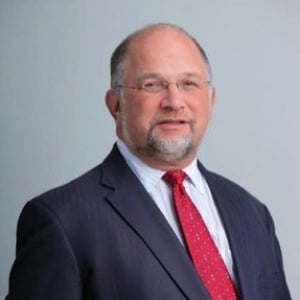
Stu Bassin has been a leading figure in the federal tax arena for the past two decades. He founded the Bassin Law Firm following a long career as one of the U.S. Department of Justice’s top tax litigators and a stint as the national leader of the civil tax litigation practice of an AmLaw 100 law firm.
The U.S. Justice Department has recognized his skills by naming him an Outstanding Attorney on six different occasions. His work for private clients was recognized by U.S. News and World Report, which named his prior firm as one of the country’s top 15 tax litigation firms. During 2019, he was elected to the American College of Tax Counsel, an honorary society reserved for those at the top of the profession. He is recognized as a thought leader in the profession, frequently speaking at bar association events and publishing in leading professional journals.
Stu handles a wide variety of tax matters, particularly involving disputes with the IRS. He is one of the leading tax litigators in the country and has tried many of the most prominent cases of the past decade. He also has broad expertise in civil litigation, particularly complex cases and matters involving electronic discovery questions. Often, he advises small businesses on an array of general corporate and business issues.
He lives in Bethesda, Maryland with his wife, daughter, and dog. In his free time, he served on the board of his local high school crew club and is involved in other community affairs. He is admitted to practice in Maryland, the District of Columbia, and many federal courts.
Senior Counsel, Caplin & Drysdale; Adjunct Professor of Law, Georgetown Law
Professor Carney is a Senior Counsel with Caplin & Drysdale, Cht’d. in Washington, D.C. He served as a Trial Attorney for the Tax Division of the U.S. Department of Justice for six years, and was in private (law firm) tax practice for many years, specializing in IRS administrative practice, tax controversies (audit and IRS Appeals Office), and tax litigation. He also advised clients in a similar capacity as a partner in the National Tax Office of Ernst & Young LLP in Washington. He is a member of the District of Columbia bar, as well as the bars of the U.S. Tax Court, U.S. Court of Federal Claims, U.S. District Court for the District of Columbia, and the U.S. Courts of Appeals for the Federal Circuit, D.C Circuit, and Eleventh Circuit.
Associate Dean for Research and Intellectual Life, McKnight Presidential Professor in Law, Distinguished McKnight University Professor, Harlan Albert Rogers Professor in Law, Associate Director, Corporate Institute, University of Minnesota Law School
Professor Kristin E. Hickman is the McKnight Presidential Professor in Law, a Distinguished McKnight University Professor, and Harlan Albert Rogers Professor in Law at the University of Minnesota Law School. She also has taught at Harvard Law School and Northwestern University School of Law. Professor Hickman teaches and writes primarily in the areas of administrative law, tax administration, and statutory interpretation. Her articles on these topics have appeared in the Columbia Law Review, Cornell Law Review, Virginia Law Review, Duke Law Journal, and other publications. She also co-authors the Administrative Law Treatise with Richard J. Pierce, Jr., and a casebook on federal administrative law with Pierce and Christopher J. Walker. Her scholarly work has been cited several times in opinions of the United States Supreme Court as well as regularly in lower court judicial opinions and court briefs.
In 2018-19, Professor Hickman served as Special Adviser to the Administrator of the Office of Information and Regulatory Affairs in Washington, D.C. She presently serves as a Senior Fellow, and previously served as a public member and chair of the judicial review committee, for the Administrative Conference of the United States. She also is a Fellow of the American College of Tax Counsel.
Professor Hickman received her B.S. degree in business administration with a concentration in accounting and a secondary major in history from Trinity University in San Antonio, Texas. After practicing for several years as a certified public accountant, Professor Hickman earned her J.D. degree, magna cum laude, from Northwestern University School of Law, where she was awarded the Raoul Berger Prize and the Lowden Wigmore Prize for her scholarly writings. Following law school, Professor Hickman clerked for The Honorable David B. Sentelle of the United States Court of Appeals for the District of Columbia Circuit and practiced law as an associate with the Chicago office of Skadden, Arps, Slate, Meagher & Flom, concentrating on corporate and international tax transactions and matters.
President, American Constitution Society Penn State Law Student Chapter
President, Penn State-University Park Student Chapter

Robins, Kaplan, Miller & Ciresi Professor of Law, University of Minnesota Law School
Professor Heidi Kitrosser joined the University of Minnesota Law School faculty in 2006. She was a visiting professor at the Law School from 2005-06, and an assistant professor at Brooklyn Law School from 2003-2006.
Kitrosser is an expert on the constitutional law of federal government secrecy and on separation of powers and free speech law more broadly. She has written, spoken, and consulted widely on these topics. Her book, Reclaiming Accountability: Transparency, Executive Power, and the U.S. Constitution, was published in 2015 by the University of Chicago Press. It was awarded the 2014 IIT Chicago-Kent College of Law / Roy C. Palmer Civil Liberties Prize. Kitrosser’s articles have appeared in many venues, including Supreme Court Review, Georgetown Law Journal, Journal of National Security Law and Policy, Minnesota Law Review, and Constitutional Commentary.
Kitrosser is a 2017 Guggenheim Fellow. She is spending the 2017-18 school year using her fellowship to work on a new book about the law and policy of whistleblowing among federal government employees and contractors.
Kitrosser graduated from UCLA in 1992, summa cum laude and Phi Beta Kappa, with a B.A. in political science. She received her J.D. degree from Yale Law School in 1996. During her third year at Yale, she won the Harlan Fiske Stone Prize for best oral argument in the Morris Tyler Moot Court of Appeals.
Following law school, she clerked for Judge William Rea on the District Court for the Central District of California and for Judge Judith Rogers on the U.S. Court of Appeals for the District of Columbia Circuit. She also worked as an associate at the Washington, D.C., office of Jenner & Block.
For more information, download Professor Kitrosser’s  curriculum vitae.

Dean and Distinguished Professor of Law, Penn State Law
Hari M. Osofsky is Dean of Penn State Law and the Penn State School of International Affairs and Distinguished Professor of Law, Professor of International Affairs, and Professor of Geography. As dean, she is deeply committed to collaboratively building legal and international affairs education for a changing society, and is leading initiatives in mentoring, technology, and interdisciplinary and international partnerships. She has been recognized for her technology leadership by the American Bar Association’s Legal Technology Resource Center as one of the 2019 Women of Legal-Tech. She also has been very involved nationally in supporting more women and people of color to consider law school and university leadership.
Dean Osofsky’s over 50 publications focus on improving governance and addressing injustice in energy and climate change regulation. Her scholarship includes books with Cambridge University Press on climate change litigation, textbooks on both energy and climate change law, and articles in leading law and geography journals. Dean Osofsky’s Emory Law Journal article, Energy Partisanship, was awarded the 2018 Morrison Prize, which recognizes the most impactful sustainability-related legal academic article published in North America during the previous year. Dean Osofsky has collaborated extensively with business, government, and nonprofit leaders to make bipartisan progress on these issues through her leadership roles and teaching.
Her professional leadership roles have included, among others, serving as President of the Association for Law, Property, and Society; chair of the American Association of Law School’s Section on Property; and a member of the Executive Council of the American Society of International Law and the International Law Association’s Committee on the Legal Principles of Climate Change. She also is a member of the Board of Governors of the Society of American Law Teachers and the editorial board of Climate Law. Her leadership and mentorship work was recognized by the Association for Law, Property, and Society’s 2016 Distinguished Service Award and the University of Minnesota 2015 Sara Evans Faculty Woman Scholar/Leader Award.
Dean Osofsky received a Ph.D. in geography from the University of Oregon and a J.D. from Yale Law School. Prior to joining the Pennsylvania State University, Dean Osofsky served on the faculties of University of Minnesota Law School, Washington and Lee University School of Law, the University of Oregon School of Law, and Whittier Law School.

David Boies Professor of Law, Yale Law School
President, Cass & Associates, PC
Ronald A. Cass is Dean Emeritus of Boston University School of Law (where he was Dean from 1990-2004), President of Cass & Associates, PC, former Vice-Chairman and Commissioner of the U.S. International Trade Commission, former faculty member at Boston University School of Law and the University of Virginia Law School, and Distinguished Senior Fellow at the C. Boyden Gray Center for the Study of the Administrative State. Dean Cass also sits as an arbitrator for commercial, international, and intellectual property rights disputes, and is a former United States member of the Panel of Conciliators of the International Centre for Settlement of Investment Disputes. He is a member of the Council of the Administrative Conference of the United States and has received seven presidential appointments, spanning Presidents Ronald Reagan to Donald J. Trump.
As a law professor, lecturer, and scholar, Dean Cass has been teaching and writing about a wide array of legal issues on topics such as administrative law and regulation, antitrust, constitutional law, communications, intellectual property, international trade, separation of powers, and legal process. He has published more than 160 scholarly books, chapters, articles, and papers, including a leading casebook on administrative law. Dean Cass has taught judges as well as students in schools of law, economics, business, and public policy and has held academic appointments in the United States, Europe, and Latin America.
In addition to his academic work, Dean Cass has participated in numerous important legal cases as an amicus, consultant, or expert, and has advised businesses, law firms, investment funds, and government agencies on a range of trade, antitrust, intellectual property, and regulatory issues. He has a broad range of affiliations with professional groups, and has received numerous honors, fellowships and awards.
Dean Cass is a graduate of the University of Virginia and the University of Chicago Law School.
Associate Dean for Research and Intellectual Life, McKnight Presidential Professor in Law, Distinguished McKnight University Professor, Harlan Albert Rogers Professor in Law, Associate Director, Corporate Institute, University of Minnesota Law School
Professor Kristin E. Hickman is the McKnight Presidential Professor in Law, a Distinguished McKnight University Professor, and Harlan Albert Rogers Professor in Law at the University of Minnesota Law School. She also has taught at Harvard Law School and Northwestern University School of Law. Professor Hickman teaches and writes primarily in the areas of administrative law, tax administration, and statutory interpretation. Her articles on these topics have appeared in the Columbia Law Review, Cornell Law Review, Virginia Law Review, Duke Law Journal, and other publications. She also co-authors the Administrative Law Treatise with Richard J. Pierce, Jr., and a casebook on federal administrative law with Pierce and Christopher J. Walker. Her scholarly work has been cited several times in opinions of the United States Supreme Court as well as regularly in lower court judicial opinions and court briefs.
In 2018-19, Professor Hickman served as Special Adviser to the Administrator of the Office of Information and Regulatory Affairs in Washington, D.C. She presently serves as a Senior Fellow, and previously served as a public member and chair of the judicial review committee, for the Administrative Conference of the United States. She also is a Fellow of the American College of Tax Counsel.
Professor Hickman received her B.S. degree in business administration with a concentration in accounting and a secondary major in history from Trinity University in San Antonio, Texas. After practicing for several years as a certified public accountant, Professor Hickman earned her J.D. degree, magna cum laude, from Northwestern University School of Law, where she was awarded the Raoul Berger Prize and the Lowden Wigmore Prize for her scholarly writings. Following law school, Professor Hickman clerked for The Honorable David B. Sentelle of the United States Court of Appeals for the District of Columbia Circuit and practiced law as an associate with the Chicago office of Skadden, Arps, Slate, Meagher & Flom, concentrating on corporate and international tax transactions and matters.
Professor of Practice and Distinguished Scholar in Residence; Co-Director of the Legislative and Regulatory Process Clinic, New York University School of Law
Sally Katzen served in the Clinton administration as administrator of the Office of Information and Regulatory Affairs in the Office of Management and Budget (OMB), as deputy assistant to the president for economic policy and deputy director of the National Economic Council in the White House, and then as the deputy director for management at OMB. She served as the head of the Agency Review Group for the Obama/Biden transition with responsibility for the Executive Office of the President and all government-wide agencies. She has taught both undergraduates and at various law schools. She is a member of the American Law Institute and the National Academy of Public Administration, has served on multiple panels for the National Academy of Sciences, testified frequently before Congress, and is on the board of several non-profit organizations. Before joining the Clinton administration, Katzen was a partner in the Washington, DC, law firm of Wilmer, Cutler & Pickering, specializing in regulatory and legislative matters, while serving in leadership roles in the American Bar Association (including chair of the Section on Administrative Law and Regulatory Practice and as DC delegate to the ABA’s House of Delegates), as president of the Federal Communications Bar Association and as president of the Women’s Legal Defense Fund. She graduated from Smith College and the University of Michigan Law School, where she was the first woman editor-in-chief of the Law Review. She clerked for Judge J. Skelly Wright of the United States Court of Appeals for the District of Columbia Circuit and served in the Carter administration as the general counsel of the Council on Wage and Price Stability in the Executive Office of the President.
Adjunct Professor, George Washington University Law School
Board Member, U.S. Privacy and Civil Liberties Oversight Board
Beth A. Williams is a Board Member of the United States Privacy and Civil Liberties Oversight Board, an agency whose mission is to ensure that the federal government's efforts to prevent terrorism are balanced with the need to protect privacy and civil liberties.
Prior to her Board service, Ms. Williams was the Assistant Attorney General for the Office of Legal Policy at the United States Department of Justice from August 2017 to December 2020. In that role, she served as the primary policy advisor to the Attorney General and the Deputy Attorney General, and as the Chief Regulatory Officer for the Department. Ms. Williams also led the judicial nomination process for the Department, assisting in the selection and confirmation of more than 230 Article III judges to the bench.
Prior to becoming Assistant Attorney General, Ms. Williams was a litigation and appellate partner at a national law firm, where her practice focused on complex commercial, securities, appellate, and First Amendment litigation. From 2005-2006, Ms. Williams served as Special Counsel to the United States Senate Committee on the Judiciary, where she assisted with the confirmation of Chief Justice John G. Roberts, Jr. and Associate Justice Samuel A. Alito, Jr. to the United States Supreme Court.
Ms. Williams clerked for the Hon. Richard C. Wesley on the United State Court of Appeals for the Second Circuit. She graduated from Harvard College magna cum laude, with a degree in History and Literature, and she earned her law degree from Harvard Law School, where she served as Executive Editor of the Harvard Journal of Law and Public Policy.
Executive Vice President, The Federalist Society
Dean Reuter is Executive Vice President at the Federalist Society for Law and Public Policy Studies. He has served in two federal government agency Offices of the Inspector General, as Counsel to the Inspector General and Deputy Inspector General, responsible for policing the use of federal funds granted and contracted through those agencies. As such, he helped conduct and oversee criminal investigations across the country. He is the principal author of the non-fiction book, The Hidden Nazi: The Untold Story of America's Deal with the Devil, and editor of Liberty’s Nemesis: The Unchecked Expansion of the State and Confronting Terror: 9/11 and the Future of American National Security. He was appointed by the President and served as Vice-Chairman of the Board of Directors of the Corporation for National and Community Service, and recently served as an appointee on the U.S. Commission on Presidential Scholars. He is a graduate of Hood College (BA with Honors) and the University of Maryland School of Law.
President, Cass & Associates, PC
Ronald A. Cass is Dean Emeritus of Boston University School of Law (where he was Dean from 1990-2004), President of Cass & Associates, PC, former Vice-Chairman and Commissioner of the U.S. International Trade Commission, former faculty member at Boston University School of Law and the University of Virginia Law School, and Distinguished Senior Fellow at the C. Boyden Gray Center for the Study of the Administrative State. Dean Cass also sits as an arbitrator for commercial, international, and intellectual property rights disputes, and is a former United States member of the Panel of Conciliators of the International Centre for Settlement of Investment Disputes. He is a member of the Council of the Administrative Conference of the United States and has received seven presidential appointments, spanning Presidents Ronald Reagan to Donald J. Trump.
As a law professor, lecturer, and scholar, Dean Cass has been teaching and writing about a wide array of legal issues on topics such as administrative law and regulation, antitrust, constitutional law, communications, intellectual property, international trade, separation of powers, and legal process. He has published more than 160 scholarly books, chapters, articles, and papers, including a leading casebook on administrative law. Dean Cass has taught judges as well as students in schools of law, economics, business, and public policy and has held academic appointments in the United States, Europe, and Latin America.
In addition to his academic work, Dean Cass has participated in numerous important legal cases as an amicus, consultant, or expert, and has advised businesses, law firms, investment funds, and government agencies on a range of trade, antitrust, intellectual property, and regulatory issues. He has a broad range of affiliations with professional groups, and has received numerous honors, fellowships and awards.
Dean Cass is a graduate of the University of Virginia and the University of Chicago Law School.
Associate Dean for Research and Intellectual Life, McKnight Presidential Professor in Law, Distinguished McKnight University Professor, Harlan Albert Rogers Professor in Law, Associate Director, Corporate Institute, University of Minnesota Law School
Professor Kristin E. Hickman is the McKnight Presidential Professor in Law, a Distinguished McKnight University Professor, and Harlan Albert Rogers Professor in Law at the University of Minnesota Law School. She also has taught at Harvard Law School and Northwestern University School of Law. Professor Hickman teaches and writes primarily in the areas of administrative law, tax administration, and statutory interpretation. Her articles on these topics have appeared in the Columbia Law Review, Cornell Law Review, Virginia Law Review, Duke Law Journal, and other publications. She also co-authors the Administrative Law Treatise with Richard J. Pierce, Jr., and a casebook on federal administrative law with Pierce and Christopher J. Walker. Her scholarly work has been cited several times in opinions of the United States Supreme Court as well as regularly in lower court judicial opinions and court briefs.
In 2018-19, Professor Hickman served as Special Adviser to the Administrator of the Office of Information and Regulatory Affairs in Washington, D.C. She presently serves as a Senior Fellow, and previously served as a public member and chair of the judicial review committee, for the Administrative Conference of the United States. She also is a Fellow of the American College of Tax Counsel.
Professor Hickman received her B.S. degree in business administration with a concentration in accounting and a secondary major in history from Trinity University in San Antonio, Texas. After practicing for several years as a certified public accountant, Professor Hickman earned her J.D. degree, magna cum laude, from Northwestern University School of Law, where she was awarded the Raoul Berger Prize and the Lowden Wigmore Prize for her scholarly writings. Following law school, Professor Hickman clerked for The Honorable David B. Sentelle of the United States Court of Appeals for the District of Columbia Circuit and practiced law as an associate with the Chicago office of Skadden, Arps, Slate, Meagher & Flom, concentrating on corporate and international tax transactions and matters.
Professor of Practice and Distinguished Scholar in Residence; Co-Director of the Legislative and Regulatory Process Clinic, New York University School of Law
Sally Katzen served in the Clinton administration as administrator of the Office of Information and Regulatory Affairs in the Office of Management and Budget (OMB), as deputy assistant to the president for economic policy and deputy director of the National Economic Council in the White House, and then as the deputy director for management at OMB. She served as the head of the Agency Review Group for the Obama/Biden transition with responsibility for the Executive Office of the President and all government-wide agencies. She has taught both undergraduates and at various law schools. She is a member of the American Law Institute and the National Academy of Public Administration, has served on multiple panels for the National Academy of Sciences, testified frequently before Congress, and is on the board of several non-profit organizations. Before joining the Clinton administration, Katzen was a partner in the Washington, DC, law firm of Wilmer, Cutler & Pickering, specializing in regulatory and legislative matters, while serving in leadership roles in the American Bar Association (including chair of the Section on Administrative Law and Regulatory Practice and as DC delegate to the ABA’s House of Delegates), as president of the Federal Communications Bar Association and as president of the Women’s Legal Defense Fund. She graduated from Smith College and the University of Michigan Law School, where she was the first woman editor-in-chief of the Law Review. She clerked for Judge J. Skelly Wright of the United States Court of Appeals for the District of Columbia Circuit and served in the Carter administration as the general counsel of the Council on Wage and Price Stability in the Executive Office of the President.
Adjunct Professor, George Washington University Law School
Executive Vice President, The Federalist Society
Dean Reuter is Executive Vice President at the Federalist Society for Law and Public Policy Studies. He has served in two federal government agency Offices of the Inspector General, as Counsel to the Inspector General and Deputy Inspector General, responsible for policing the use of federal funds granted and contracted through those agencies. As such, he helped conduct and oversee criminal investigations across the country. He is the principal author of the non-fiction book, The Hidden Nazi: The Untold Story of America's Deal with the Devil, and editor of Liberty’s Nemesis: The Unchecked Expansion of the State and Confronting Terror: 9/11 and the Future of American National Security. He was appointed by the President and served as Vice-Chairman of the Board of Directors of the Corporation for National and Community Service, and recently served as an appointee on the U.S. Commission on Presidential Scholars. He is a graduate of Hood College (BA with Honors) and the University of Maryland School of Law.
Board Member, U.S. Privacy and Civil Liberties Oversight Board
Beth A. Williams is a Board Member of the United States Privacy and Civil Liberties Oversight Board, an agency whose mission is to ensure that the federal government's efforts to prevent terrorism are balanced with the need to protect privacy and civil liberties.
Prior to her Board service, Ms. Williams was the Assistant Attorney General for the Office of Legal Policy at the United States Department of Justice from August 2017 to December 2020. In that role, she served as the primary policy advisor to the Attorney General and the Deputy Attorney General, and as the Chief Regulatory Officer for the Department. Ms. Williams also led the judicial nomination process for the Department, assisting in the selection and confirmation of more than 230 Article III judges to the bench.
Prior to becoming Assistant Attorney General, Ms. Williams was a litigation and appellate partner at a national law firm, where her practice focused on complex commercial, securities, appellate, and First Amendment litigation. From 2005-2006, Ms. Williams served as Special Counsel to the United States Senate Committee on the Judiciary, where she assisted with the confirmation of Chief Justice John G. Roberts, Jr. and Associate Justice Samuel A. Alito, Jr. to the United States Supreme Court.
Ms. Williams clerked for the Hon. Richard C. Wesley on the United State Court of Appeals for the Second Circuit. She graduated from Harvard College magna cum laude, with a degree in History and Literature, and she earned her law degree from Harvard Law School, where she served as Executive Editor of the Harvard Journal of Law and Public Policy.
Stu Bassin has been a leading figure in the federal tax arena for the past two decades. He founded the Bassin Law Firm following a long career as one of the U.S. Department of Justice’s top tax litigators and a stint as the national leader of the civil tax litigation practice of an AmLaw 100 law firm.
The U.S. Justice Department has recognized his skills by naming him an Outstanding Attorney on six different occasions. His work for private clients was recognized by U.S. News and World Report, which named his prior firm as one of the country’s top 15 tax litigation firms. During 2019, he was elected to the American College of Tax Counsel, an honorary society reserved for those at the top of the profession. He is recognized as a thought leader in the profession, frequently speaking at bar association events and publishing in leading professional journals.
Stu handles a wide variety of tax matters, particularly involving disputes with the IRS. He is one of the leading tax litigators in the country and has tried many of the most prominent cases of the past decade. He also has broad expertise in civil litigation, particularly complex cases and matters involving electronic discovery questions. Often, he advises small businesses on an array of general corporate and business issues.
He lives in Bethesda, Maryland with his wife, daughter, and dog. In his free time, he served on the board of his local high school crew club and is involved in other community affairs. He is admitted to practice in Maryland, the District of Columbia, and many federal courts.
Senior Counsel, Caplin & Drysdale; Adjunct Professor of Law, Georgetown Law
Professor Carney is a Senior Counsel with Caplin & Drysdale, Cht’d. in Washington, D.C. He served as a Trial Attorney for the Tax Division of the U.S. Department of Justice for six years, and was in private (law firm) tax practice for many years, specializing in IRS administrative practice, tax controversies (audit and IRS Appeals Office), and tax litigation. He also advised clients in a similar capacity as a partner in the National Tax Office of Ernst & Young LLP in Washington. He is a member of the District of Columbia bar, as well as the bars of the U.S. Tax Court, U.S. Court of Federal Claims, U.S. District Court for the District of Columbia, and the U.S. Courts of Appeals for the Federal Circuit, D.C Circuit, and Eleventh Circuit.
Associate Dean for Research and Intellectual Life, McKnight Presidential Professor in Law, Distinguished McKnight University Professor, Harlan Albert Rogers Professor in Law, Associate Director, Corporate Institute, University of Minnesota Law School
Professor Kristin E. Hickman is the McKnight Presidential Professor in Law, a Distinguished McKnight University Professor, and Harlan Albert Rogers Professor in Law at the University of Minnesota Law School. She also has taught at Harvard Law School and Northwestern University School of Law. Professor Hickman teaches and writes primarily in the areas of administrative law, tax administration, and statutory interpretation. Her articles on these topics have appeared in the Columbia Law Review, Cornell Law Review, Virginia Law Review, Duke Law Journal, and other publications. She also co-authors the Administrative Law Treatise with Richard J. Pierce, Jr., and a casebook on federal administrative law with Pierce and Christopher J. Walker. Her scholarly work has been cited several times in opinions of the United States Supreme Court as well as regularly in lower court judicial opinions and court briefs.
In 2018-19, Professor Hickman served as Special Adviser to the Administrator of the Office of Information and Regulatory Affairs in Washington, D.C. She presently serves as a Senior Fellow, and previously served as a public member and chair of the judicial review committee, for the Administrative Conference of the United States. She also is a Fellow of the American College of Tax Counsel.
Professor Hickman received her B.S. degree in business administration with a concentration in accounting and a secondary major in history from Trinity University in San Antonio, Texas. After practicing for several years as a certified public accountant, Professor Hickman earned her J.D. degree, magna cum laude, from Northwestern University School of Law, where she was awarded the Raoul Berger Prize and the Lowden Wigmore Prize for her scholarly writings. Following law school, Professor Hickman clerked for The Honorable David B. Sentelle of the United States Court of Appeals for the District of Columbia Circuit and practiced law as an associate with the Chicago office of Skadden, Arps, Slate, Meagher & Flom, concentrating on corporate and international tax transactions and matters.
David Boies Professor of Law, Yale Law School
Robins, Kaplan, Miller & Ciresi Professor of Law, University of Minnesota Law School
Professor Heidi Kitrosser joined the University of Minnesota Law School faculty in 2006. She was a visiting professor at the Law School from 2005-06, and an assistant professor at Brooklyn Law School from 2003-2006.
Kitrosser is an expert on the constitutional law of federal government secrecy and on separation of powers and free speech law more broadly. She has written, spoken, and consulted widely on these topics. Her book, Reclaiming Accountability: Transparency, Executive Power, and the U.S. Constitution, was published in 2015 by the University of Chicago Press. It was awarded the 2014 IIT Chicago-Kent College of Law / Roy C. Palmer Civil Liberties Prize. Kitrosser’s articles have appeared in many venues, including Supreme Court Review, Georgetown Law Journal, Journal of National Security Law and Policy, Minnesota Law Review, and Constitutional Commentary.
Kitrosser is a 2017 Guggenheim Fellow. She is spending the 2017-18 school year using her fellowship to work on a new book about the law and policy of whistleblowing among federal government employees and contractors.
Kitrosser graduated from UCLA in 1992, summa cum laude and Phi Beta Kappa, with a B.A. in political science. She received her J.D. degree from Yale Law School in 1996. During her third year at Yale, she won the Harlan Fiske Stone Prize for best oral argument in the Morris Tyler Moot Court of Appeals.
Following law school, she clerked for Judge William Rea on the District Court for the Central District of California and for Judge Judith Rogers on the U.S. Court of Appeals for the District of Columbia Circuit. She also worked as an associate at the Washington, D.C., office of Jenner & Block.
For more information, download Professor Kitrosser’s curriculum vitae.
President, American Constitution Society Penn State Law Student Chapter
President, Penn State-University Park Student Chapter
Robins, Kaplan, Miller & Ciresi Professor of Law, University of Minnesota Law School
Professor Heidi Kitrosser joined the University of Minnesota Law School faculty in 2006. She was a visiting professor at the Law School from 2005-06, and an assistant professor at Brooklyn Law School from 2003-2006.
Kitrosser is an expert on the constitutional law of federal government secrecy and on separation of powers and free speech law more broadly. She has written, spoken, and consulted widely on these topics. Her book, Reclaiming Accountability: Transparency, Executive Power, and the U.S. Constitution, was published in 2015 by the University of Chicago Press. It was awarded the 2014 IIT Chicago-Kent College of Law / Roy C. Palmer Civil Liberties Prize. Kitrosser’s articles have appeared in many venues, including Supreme Court Review, Georgetown Law Journal, Journal of National Security Law and Policy, Minnesota Law Review, and Constitutional Commentary.
Kitrosser is a 2017 Guggenheim Fellow. She is spending the 2017-18 school year using her fellowship to work on a new book about the law and policy of whistleblowing among federal government employees and contractors.
Kitrosser graduated from UCLA in 1992, summa cum laude and Phi Beta Kappa, with a B.A. in political science. She received her J.D. degree from Yale Law School in 1996. During her third year at Yale, she won the Harlan Fiske Stone Prize for best oral argument in the Morris Tyler Moot Court of Appeals.
Following law school, she clerked for Judge William Rea on the District Court for the Central District of California and for Judge Judith Rogers on the U.S. Court of Appeals for the District of Columbia Circuit. She also worked as an associate at the Washington, D.C., office of Jenner & Block.
For more information, download Professor Kitrosser’s curriculum vitae.
Dean and Distinguished Professor of Law, Penn State Law
Hari M. Osofsky is Dean of Penn State Law and the Penn State School of International Affairs and Distinguished Professor of Law, Professor of International Affairs, and Professor of Geography. As dean, she is deeply committed to collaboratively building legal and international affairs education for a changing society, and is leading initiatives in mentoring, technology, and interdisciplinary and international partnerships. She has been recognized for her technology leadership by the American Bar Association’s Legal Technology Resource Center as one of the 2019 Women of Legal-Tech. She also has been very involved nationally in supporting more women and people of color to consider law school and university leadership.
Dean Osofsky’s over 50 publications focus on improving governance and addressing injustice in energy and climate change regulation. Her scholarship includes books with Cambridge University Press on climate change litigation, textbooks on both energy and climate change law, and articles in leading law and geography journals. Dean Osofsky’s Emory Law Journal article, Energy Partisanship, was awarded the 2018 Morrison Prize, which recognizes the most impactful sustainability-related legal academic article published in North America during the previous year. Dean Osofsky has collaborated extensively with business, government, and nonprofit leaders to make bipartisan progress on these issues through her leadership roles and teaching.
Her professional leadership roles have included, among others, serving as President of the Association for Law, Property, and Society; chair of the American Association of Law School’s Section on Property; and a member of the Executive Council of the American Society of International Law and the International Law Association’s Committee on the Legal Principles of Climate Change. She also is a member of the Board of Governors of the Society of American Law Teachers and the editorial board of Climate Law. Her leadership and mentorship work was recognized by the Association for Law, Property, and Society’s 2016 Distinguished Service Award and the University of Minnesota 2015 Sara Evans Faculty Woman Scholar/Leader Award.
Dean Osofsky received a Ph.D. in geography from the University of Oregon and a J.D. from Yale Law School. Prior to joining the Pennsylvania State University, Dean Osofsky served on the faculties of University of Minnesota Law School, Washington and Lee University School of Law, the University of Oregon School of Law, and Whittier Law School.
David Boies Professor of Law, Yale Law School
President, American Constitution Society Penn State Law Student Chapter
President, Penn State-University Park Student Chapter
Robins, Kaplan, Miller & Ciresi Professor of Law, University of Minnesota Law School
Professor Heidi Kitrosser joined the University of Minnesota Law School faculty in 2006. She was a visiting professor at the Law School from 2005-06, and an assistant professor at Brooklyn Law School from 2003-2006.
Kitrosser is an expert on the constitutional law of federal government secrecy and on separation of powers and free speech law more broadly. She has written, spoken, and consulted widely on these topics. Her book, Reclaiming Accountability: Transparency, Executive Power, and the U.S. Constitution, was published in 2015 by the University of Chicago Press. It was awarded the 2014 IIT Chicago-Kent College of Law / Roy C. Palmer Civil Liberties Prize. Kitrosser’s articles have appeared in many venues, including Supreme Court Review, Georgetown Law Journal, Journal of National Security Law and Policy, Minnesota Law Review, and Constitutional Commentary.
Kitrosser is a 2017 Guggenheim Fellow. She is spending the 2017-18 school year using her fellowship to work on a new book about the law and policy of whistleblowing among federal government employees and contractors.
Kitrosser graduated from UCLA in 1992, summa cum laude and Phi Beta Kappa, with a B.A. in political science. She received her J.D. degree from Yale Law School in 1996. During her third year at Yale, she won the Harlan Fiske Stone Prize for best oral argument in the Morris Tyler Moot Court of Appeals.
Following law school, she clerked for Judge William Rea on the District Court for the Central District of California and for Judge Judith Rogers on the U.S. Court of Appeals for the District of Columbia Circuit. She also worked as an associate at the Washington, D.C., office of Jenner & Block.
For more information, download Professor Kitrosser’s curriculum vitae.
Dean and Distinguished Professor of Law, Penn State Law
Hari M. Osofsky is Dean of Penn State Law and the Penn State School of International Affairs and Distinguished Professor of Law, Professor of International Affairs, and Professor of Geography. As dean, she is deeply committed to collaboratively building legal and international affairs education for a changing society, and is leading initiatives in mentoring, technology, and interdisciplinary and international partnerships. She has been recognized for her technology leadership by the American Bar Association’s Legal Technology Resource Center as one of the 2019 Women of Legal-Tech. She also has been very involved nationally in supporting more women and people of color to consider law school and university leadership.
Dean Osofsky’s over 50 publications focus on improving governance and addressing injustice in energy and climate change regulation. Her scholarship includes books with Cambridge University Press on climate change litigation, textbooks on both energy and climate change law, and articles in leading law and geography journals. Dean Osofsky’s Emory Law Journal article, Energy Partisanship, was awarded the 2018 Morrison Prize, which recognizes the most impactful sustainability-related legal academic article published in North America during the previous year. Dean Osofsky has collaborated extensively with business, government, and nonprofit leaders to make bipartisan progress on these issues through her leadership roles and teaching.
Her professional leadership roles have included, among others, serving as President of the Association for Law, Property, and Society; chair of the American Association of Law School’s Section on Property; and a member of the Executive Council of the American Society of International Law and the International Law Association’s Committee on the Legal Principles of Climate Change. She also is a member of the Board of Governors of the Society of American Law Teachers and the editorial board of Climate Law. Her leadership and mentorship work was recognized by the Association for Law, Property, and Society’s 2016 Distinguished Service Award and the University of Minnesota 2015 Sara Evans Faculty Woman Scholar/Leader Award.
Dean Osofsky received a Ph.D. in geography from the University of Oregon and a J.D. from Yale Law School. Prior to joining the Pennsylvania State University, Dean Osofsky served on the faculties of University of Minnesota Law School, Washington and Lee University School of Law, the University of Oregon School of Law, and Whittier Law School.
David Boies Professor of Law, Yale Law School

The Implications and Importance of CIC Services, LLC v. Internal Revenue Service
TeleforumRestoring Judicial Power: Righting the Ship of Judicial Review and Deference Doctrines
Ronald A. Cass, Kristin E. Hickman, Sally Katzen, Alan B. Morrison, Beth A. Williams, Dean Reuter
The Eighth Annual Executive Branch Review Conference was held on April 28, 2020 via an...
Restoring Judicial Power: Righting the Ship of Judicial Review and Deference Doctrines
Ronald A. Cass, Kristin E. Hickman, Sally Katzen, Alan B. Morrison, Dean Reuter, Beth A. Williams
The Eighth Annual Executive Branch Review Conference was held on April 28, 2020 via an...
Restoring Judicial Power: Righting the Ship of Judicial Review and Deference Doctrines
Executive Branch Review Week Webinar
The Changing Environment for APA Challenges to Tax Regulations
Stuart Bassin, Robert T. Carney, Kristin E. Hickman
Until recently, the Internal Revenue Service and Treasury Department typically issued regulations involving the tax...
The Changing Environment for APA Challenges to Tax Regulations
Administrative Law Practice Group Teleforum
TeleforumNecessary & Proper Episode 54: Presidential Impeachment: Historical Context and Current Controversies
Keith E. Whittington, Heidi Kitrosser
Description: On January 16 Penn State Law's Federalist Society Chapter co-hosted an impeachment dicussion featuring...
Presidential Impeachment: Historical Context and Current Controversies
Shifa Abuzaid, Dallas Kephart, Heidi Kitrosser, Hari M. Osofsky, Keith E. Whittington
On January 16, 2020, the Penn State-University Park Student Chapter, the Article I Initiative, and...
Presidential Impeachment: Historical Context and Current Controversies
Shifa Abuzaid, Dallas Kephart, Heidi Kitrosser, Hari M. Osofsky, Keith E. Whittington
On January 16, 2020, the Penn State-University Park Student Chapter, the Article I Initiative, and...
Presidential Impeachment: Historical Context and Current Controversies
Penn State-University Park Student Chapter
State College, PA