
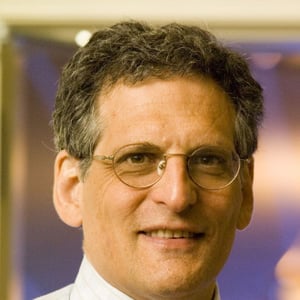
Patricia A. Dore Professor of Administrative Law, Florida State University College of Law
Mark Seidenfeld is the author of influential publications on how administrative law doctrine relates to institutional behavior and agency accountability. Professor Seidenfeld is recognized as one of the country's leading scholars on federal administrative law. He is also author of Microeconomic Predicates to Law and Economics (Anderson Pub. Co., 1996).
He teaches courses in Administrative Law, Constitutional Law, Legislation & Regulation, and has taught courses on a variety of areas of federal regulation. Professor Seidenfeld clerked for the Honorable Patricia Wald of the United States Court of Appeals for the D.C. Circuit and served as assistant counsel for the New York State Public Service Commission. He currently serves on the Scholarship Awards Committee of the American Bar Association's Section on Administrative Law & Regulatory Practice. He holds a B.A. in physics from Reed College and an M.A. in theoretical physics from Brandeis University. He is also a 1983 graduate of Stanford Law School, where he was a senior articles editor for Stanford Law Review and elected to the Order of the Coif.
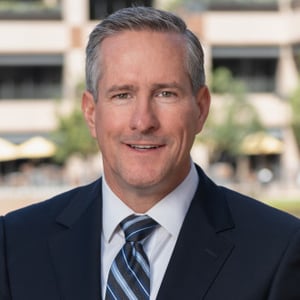
Managing Partner, Brown Wegner LLP
Mr. Brown leads a law firm in California focused on trials and appeals in intellectual property and other complex commercial disputes. Previously, he practiced for more than a decade in the Intellectual Property Group at Jones Day, was an Adjunct Professor at Chapman University School of Law, and served a judicial law clerk to a federal district judge in Los Angeles. Mr. Brown has been named a Southern California Super Lawyer for ten years, was listed among the Top 50 Lawyers in Orange County several years. He is a Master in the Howard T. Markey Intellectual Property American Inn of Court.
Education
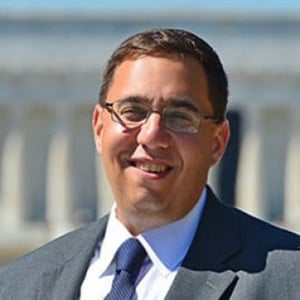
Partner, Consovoy McCarthy Park PLLC
Mr. Consovoy assists clients on a broad range of litigation and appellate issues primarily before the Supreme Court of the United States and federal appellate and district courts, as well as before federal agencies. Mr. Consovoy represents clients in cases involving constitutional issues, interpretation and enforcement of federal statutes, administrative law, civil rights disputes, and a variety of other civil litigation issues. Mr. Consovoy recently argued two cases—Spokeo v. Robbins and Evenwel v. Abbott—before the Supreme Court of the United States.
Mr. Consovoy is a former law clerk to Supreme Court Justice Clarence Thomas, Judge Edith H. Jones of the United States Court of Appeals for the Fifth Circuit, and the 17th Judicial Circuit of Virginia. Mr. Consovoy is a member of the Edward Coke Appellate Inn of Court and was named by Law360 as a “rising star” in appellate law for 2013. Since 2011, Mr. Consovoy has been the co-director of the Supreme Court Clinic at the Antonin Scalia Law School at George Mason University, where he also is the co-director of the Administrative Law Clinic.
Mr. Consovoy earned his B.A. from Monmouth University, and his J.D. magna cum laude from George Mason University School of Law. Mr. Consovoy is a member of the Virginia and District of Columbia bars.

Senior Fellow, Arthur F. Burns Fellow in Financial Policy Studies, American Enterprise Institute
Peter J. Wallison holds the Arthur F. Burns Chair in Financial Policy Studies and is co-director of AEI’s program on Financial Policy Studies. Prior to joining AEI, he practiced banking, corporate and financial law at Gibson, Dunn & Crutcher in Washington, D.C., and New York. Mr. Wallison has held a number of government positions. From June 1981 to January 1985, he was General Counsel of the United States Treasury Department, where he had a significant role in the development of the Reagan Administration's proposals for deregulation in the financial services industry. During 1986 and 1987, Mr. Wallison was White House counsel to President Ronald Reagan, and between 1972 and 1976, he served first as Special Assistant to New York's Gov. Nelson A. Rockefeller and, subsequently, as counsel to Mr. Rockefeller as vice president of the United States.
Mr. Wallison was admitted to practice before the courts of New York and the District of Columbia, and is retired from practice in New York. He continues to be a member of the District of Columbia Bar Association. He received his undergraduate degree from Harvard College in 1963 and law degree from Harvard Law School in 1966.
Mr. Wallison is the author of Ronald Reagan: The Power of Conviction and the Success of His Presidency, published in December 2002 by Westview Press. On campaign finance, he is the author (with Joel Gora) of Better Parties, Better Government, (AEI Press 2009). On financial or regulatory matters, he is the author of Back From the Brink, a proposal for a private deposit insurance system, and co-author of Nationalizing Mortgage Risk: The Growth of Fannie Mae and Freddie Mac; The GAAP Gap: Corporate Disclosure in the Internet Age; Competitive Equity: A Better Way to Organize Mutual Funds; Bad History, Worse Policy: How a False Narrative about the Financial Crisis Led to the Dodd-Frank Act (AEI Press 2013); and Hidden In Plain Sight: What Caused the World’s Worst Financial Crisis and Why it Could Happen Again (Encounter Books 2015). His most recent book is Judicial Fortitude: The Last Chance to Rein in the Administrative State, published by Encounter Books in October 2018.
He testifies frequently before committees of Congress, and is a frequent contributor to the op-ed pages of the Wall Street Journal and other print and online journals. He has also been a speaker at many conferences on financial services, housing, the causes of the financial crisis, the Dodd-Frank Act, accounting, and corporate governance, and was a member of the Shadow Financial Regulatory Committee between 1995 and 2015. He was a member of the SEC Advisory Committee on Improvements to Financial Reporting (2008), co-Chair of the Pew Financial Reform Task Force (2009), and a member of the congressionally- appointed Financial Crisis Inquiry Commission (2009-2011). In May 2011, for his work in financial policy, Mr. Wallison received an honorary doctorate in Humane Letters from the University of Colorado.
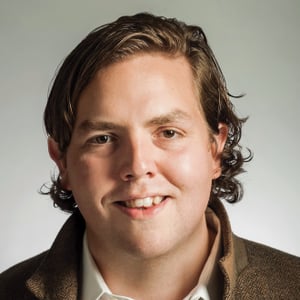
Harry Kalven, Jr. Professor of Law & Faculty Director, Constitutional Law Institute, University of Chicago Law School
William Baude is a Professor of Law and the Faculty Director of the Constitutional Law Institute at the University of Chicago Law School, where he teaches federal courts, constitutional law, and conflict of laws. His current research interests include different aspects of the Fourteenth Amendment (particularly both Section One and Section Three) and the nature of judicial discretion.
Among his other activities Baude is: the co-editor of two textbooks, The Constitution of the United States and Hart & Wechsler's Federal Courts in the Federal System; an Affiliated Scholar at the Center for the Study of Constitutional Originalism; a founding member of the Academic Freedom Alliance; a member of the American Law Institute; an occasional blogger at The Volokh Conspiracy; and a podcaster on Divided Argument. He also recently served on the Presidential Commission on the Supreme Court of the United States.
Professor Baude received his BS in Mathematics from the University of Chicago and his JD from Yale Law School. He then clerked for then-Judge Michael McConnell on the United States Court of Appeals, and Chief Justice John Roberts on the United States Supreme Court. Before joining the Chicago faculty, he was a fellow at the Stanford Constitutional Law Center, and a lawyer in Washington, DC.
Associate, Covington & Burling LLP
Kathryn Bi is an Associate at Covington & Burling LLP. She graduated from the University of Chicago Law School in 2015 and from Dartmouth College in 2009 where she earned Bachelor of Engineering and Bachelor of Arts degrees. Prior to law school Kathryn worked for three years as a chemical engineer at DuPont Corporation in Palo Alto and Genzyme Corporation in Boston.
Senior Associate to the President and Secretary of the University of Arizona
Jon Dudas has served as the Senior Associate to the President and Secretary of the University of Arizona since July 2014.
Mr. Dudas spent fourteen years in service to the U.S. Government, and as head of the USPTO, he led a performance-based government agency with 9,000 employees and a nearly $2 billion annual budget. During his tenure, the USPTO achieved record-level performance in meeting key annual objectives, and led key patent cooperation and development missions with China, India, Europe, Brazil and several other countries.
In addition to holding his post as Director of the USPTO from 2004 – 2009, Mr. Dudas’s public sector experience includes serving as Counsel for Legal Policy and Senior Floor Assistant for The Speaker of the House for the U.S. House of Representatives and Staff Director and Deputy General Counsel for the Committee on the Judiciary. After his appointment as Director of the USPTO, Mr. Dudas was a partner at Foley & Lardner LLP in Washington D.C. and then President of FIRST (For Inspiration and Recognition of Science and Technology), a national nonprofit that works to educate and inspire children to pursue careers in technology, science and innovation. He also served as a member of the Board of Directors for Conversant Intellectual Property Management, Inc., of Ottowa, Ontario. Mr. Dudas holds a J.D. from the University of Chicago and a bachelor’s degree in finance from the University of Illinois.
Chief Counsel, U.S. Chamber Litigation Center
Steven P. Lehotsky has significant experience developing and executing litigation strategies to help businesses and trade associations address their most important regulatory and public-policy challenges.
Before founding Lehotsky Keller LLP, Mr. Lehotsky directed the litigation strategy of the U.S. Chamber of Commerce, the world's leading business federation, where he worked from 2013-2021. While at the U.S. Chamber’s Litigation Center, he served as chief litigation counsel. Mr. Lehotsky led the Chamber's efforts to bring successful challenges to federal, state, and local regulations of business. He also directed the U.S. Chamber's efforts to defend pro-growth regulatory reforms. Mr. Lehotsky also led and implemented the U.S. Chamber’s strategies for filing hundreds of amicus curiae briefs in the U.S. Supreme Court, federal appellate and district courts, and state supreme and appellate courts. He is a frequent speaker at events and conferences on litigation and regulatory trends.
Mr. Lehotsky previously was an attorney at WilmerHale LLP in both the Washington D.C. and Boston offices, where he practiced government and regulatory litigation, appellate litigation, and counseling on constitutional, statutory, and regulatory issues for clients across a wide variety of industry sectors. He also previously practiced as a commercial litigator at Goodwin Procter LLP in Boston.
In addition, Mr. Lehotsky was an Attorney-Adviser in the Office of Legal Counsel of the U.S. Department of Justice from 2006-2009, advising the White House and executive departments and agencies on constitutional and statutory issues relating to national security, immigration, international sanctions under the International Emergency Economic Powers Act and other programs, the response to the 2008 financial crisis, pandemic influenza and infectious-disease mitigation, cybersecurity, and congressional investigations, among many other subjects.
Mr. Lehotsky was a law clerk for Justice Antonin Scalia of the Supreme Court of the United States and Chief Judge Douglas H. Ginsburg of the U.S. Court of Appeals for the District of Columbia Circuit.

Justice, Michigan Supreme Court
Stephen Markman was appointed Justice of the Michigan Supreme Court on October 1, 1999. He served as the Chief Justice from 2017-2019. Before his appointment, he served as Judge on the Michigan Court of Appeals from 1995-1999. Prior to this, he practiced law with the firm of Miller, Canfield, Paddock & Stone in Detroit.
From 1989-1993, Justice Markman served as United States Attorney, or federal prosecutor, in Michigan, after having been nominated by President George H. W. Bush and confirmed by the United States Senate. From 1985-1989, he served as Assistant Attorney General of the United States, after having been nominated by President Ronald Reagan and confirmed by the United States Senate. In that position, he headed the Department of Justice’s Office of Legal Policy, which served as the principal policy development office within the Department, and which coordinated the federal judicial selection process. Prior to this, he served for seven years as Chief Counsel of the United States Senate Subcommittee on the Constitution, and as Deputy Chief Counsel of the United States Senate Judiciary Committee.
Justice Markman has authored articles for such publications as the University of Michigan Journal of Law Reform, the Detroit College of Law Review, the Stanford Law Review, the University of Chicago Law Review, the American Criminal Justice Law Review, the Barrister’s Law Journal, the Harvard Journal of Law & Public Policy, and the American University Law Review. He has also served as a contributing editor of National Review magazine, and has authored chapters in such books as “In the Name of Justice: The Aims of the Criminal Law,” “Still the Law of the Land,” and “Originalism: A Quarter Century of Debate.”
Justice Markman has taught constitutional law at Hillsdale College since 1993. He has served on the Board of Directors of the Western Michigan University Thomas M. Cooley Law School. He traveled to Ukraine on two occasions on behalf of the State Department, to provide assistance in the development of that nation’s post-Soviet constitution. He is a Fellow of the Michigan Bar Foundation, a Master of the Bench of the Inns of Court, and a member of the One Hundred Club. He has spoken before hundreds of youth, civic, charitable, and legal groups throughout Michigan and nationally, and has coached Little League baseball and basketball. He lives with his wife Mary Kathleen in Mason, and has two sons, James and Charles.
Justice Markman was re-elected to the Supreme Court in 2000, 2004, and 2012. His present term expires January 1, 2021.
Professor of Law, University of Chicago Law School
Jennifer Nou is Professor of Law at the University of Chicago Law School. Nou’s main research interests are in administrative law, executive branch dynamics, regulatory policy, and constitutional separation-of-powers. Prior to joining the faculty, she was a Public Law Fellow at the Law School and also worked as a policy analyst and special assistant at the Office of Information and Regulatory Affairs. Nou is a graduate of Yale College and Yale Law School, and received an MPhil in Politics from Oxford University as a Marshall Scholar. After law school, she was a law clerk to Judge Richard Posner of the US Court of Appeals for the Seventh Circuit and then to Justice Stephen Breyer of the US Supreme Court. She is currently a public member of the Administrative Conference of the United States.
President, Students for Fair Admissions
Edward Blum is the president of Students for Fair Admissions, a membership organization whose mission is to eliminate racial and ethnic classifications and preferences in school admissions. Shortly after SFFA’s inception in 2014, the group challenged in federal court the racial admissions policies at Harvard and the University of North Carolina-Chapel Hill. In 2023, the United States Supreme Court struck down the use of race as an admissions factor at all colleges and universities.
He is the president of the newly formed American Alliance for Equal Rights which has filed over a dozen lawsuits challenging the use of race by corporations, law firms, venture capital firms and cultural institutions. Mr. Blum also serves as the President of the Project on Fair Representation, a nonprofit legal foundation formed in 2005 that has provided counsel in a number of race-related U.S. Supreme Court cases including, Shelby Co. Alabama v. Holder, Fisher v. University of Texas (I and II) and Evenwel v. Abbott.
Since 2005, Blum has been a visiting fellow at the American Enterprise Institute where he studies legal and policy issues relating to race and ethnicity. He is the author of a book on the Voting Rights Act, numerous essays and law review articles, and is a frequent contributor to the Wall Street Journal, USA Today, Los Angeles Times, Washington Post, and National Review, among others.
Partner, Consovoy McCarthy Park PLLC
Mr. Consovoy assists clients on a broad range of litigation and appellate issues primarily before the Supreme Court of the United States and federal appellate and district courts, as well as before federal agencies. Mr. Consovoy represents clients in cases involving constitutional issues, interpretation and enforcement of federal statutes, administrative law, civil rights disputes, and a variety of other civil litigation issues. Mr. Consovoy recently argued two cases—Spokeo v. Robbins and Evenwel v. Abbott—before the Supreme Court of the United States.
Mr. Consovoy is a former law clerk to Supreme Court Justice Clarence Thomas, Judge Edith H. Jones of the United States Court of Appeals for the Fifth Circuit, and the 17th Judicial Circuit of Virginia. Mr. Consovoy is a member of the Edward Coke Appellate Inn of Court and was named by Law360 as a “rising star” in appellate law for 2013. Since 2011, Mr. Consovoy has been the co-director of the Supreme Court Clinic at the Antonin Scalia Law School at George Mason University, where he also is the co-director of the Administrative Law Clinic.
Mr. Consovoy earned his B.A. from Monmouth University, and his J.D. magna cum laude from George Mason University School of Law. Mr. Consovoy is a member of the Virginia and District of Columbia bars.
Partner, Hunton & Williams LLP
Bill is Chairman of the firm’s Executive Committee, and former head of its Administrative Law and Environmental Practice Groups. His practice focuses on environmental litigation, regulation and counseling, including climate change regulation and litigation, clean air regulation, environmental licensing and auditing, and waste management and clean water issues. Bill and his team represent clients in both the United States and Europe. In the United States, his practice involves proceedings before federal and state agencies, courts and Congress; in Europe, it involves advice on European Community law.
Bill is a member of the American Bar Association and is AV® Peer Review Rated in Martindale-Hubbell. He is admitted to practice before the U.S. Supreme Court and the U.S. Courts of Appeals for the D.C., Second, Fourth, Fifth, Sixth, Seventh and Eleventh Circuits.
Assistant Attorney General, Environment and Natural Resources Division, U.S. Department of Justice
Jeffrey Bossert Clark was born in Philadelphia, Pennsylvania on April 17, 1967. He is a graduate of Harvard University (A.B. in economics and history, 1989), the University of Delaware (M.A. in urban affairs and public policy, 1993), and the Georgetown University Law Center (J.D., 1995).
Mr. Clark began his career working for the State of Delaware’s Department of Finance, Division of Revenue as an economics analyst in the field of tax policy. During his tenure from 1989 to 1992, he authored several white papers analyzing Delaware revenue sources. Delaware also selected Mr. Clark to submit an economic report and affidavit to the United States Supreme Court in the original jurisdiction case of Delaware v. New York, 507 U.S. 490 (1993).
He entered Georgetown’s law school in 1992 where he earned honors as an articles editor of the Georgetown Law Journal, an Olin Law & Economics Fellow, and a member of the Order of the Coif. From 1995 to 1996, Mr. Clark clerked for Judge Boggs of the U.S. Court of Appeals of the Sixth Circuit. Mr. Clark then joined the law firm of Kirkland & Ellis as an associate from 1996-2001. He worked as an appellate litigator on numerous Supreme Court and other appellate cases and developed expertise in administrative law, statutory interpretation, as well as antitrust, labor, environmental, and telecommunications law.
Mr. Clark went on to serve in ENRD from 2001-2005 as a Deputy Assistant Attorney General selected by Attorney General Ashcroft and Assistant Attorney General Tom Sansonetti. In that capacity, he supervised ENRD’s Appellate and Indian Resources Sections. He reviewed, edited, and contributed to virtually every brief that ENRD filed in the Courts of Appeals, including several cases of exceptional significance that he personally briefed and argued. During his service in the early 2000s, Mr. Clark argued and won numerous cases in multiple U.S. Courts of Appeals and worked on all Supreme Court cases arising out of ENRD’s work.
In 2005, Mr. Clark returned to Kirkland & Ellis LLP as a partner, where he litigated until his return to ENRD in 2018. There he worked on numerous multi-billion-dollar matters and continued to argue many appellate cases. His practice operated at all levels — appellate litigation, trial court litigation, agency proceedings, and regulatory and litigation counseling. He has been named a Super Lawyer for multiple years running, highlighted in the Legal 500, named to the “Legal Who’s Who for Environmental Law” in Corporate Responsibility Magazine, rated A.V. preeminent by Martindale Hubbell, and named a member of the National Association of Distinguished Counsel’s Nation’s One Percent. He also was named one of America’s Top 100 High Stakes Litigators.
President Trump nominated Mr. Clark to be the Assistant Attorney General of the Environment and Natural Resources Division (ENRD) on June 7, 2017. He was confirmed by the U.S. Senate on October 11, 2018 and sworn into office on November 1, 2018, followed by an investiture ceremony on November 15, 2018.
Director, Climate & Clean Air Program, Natural Resources Defense Council
David Doniger has been at the forefront of the battle against air pollution and global climate change since he joined NRDC in 1978. He helped formulate the Montreal Protocol, an international agreement designed to stop the depletion of the earth's ozone layer, as well as several essential amendments to the Clean Air Act. In 1993, he left NRDC to serve on the White House Council on Environmental Quality, followed by key posts at the U.S. Environmental Protection Agency. He rejoined NRDC in 2001 and has since been working to defend the Clean Air Act from assaults in Congress. He is based in Washington, D.C.
Republican Special Counsel, U.S. Senate Energy and Natural Resources Committee
Patrick McCormick was appointed to the position of Special Counsel to the United States Committee on Energy and Natural Resources in April 2011 by U.S. Sen. Lisa Murkowski, R-Alaska, the Committee's Ranking Republican. He provides counsel and advocacy on all matters within the committee's jurisdiction especially as they bear on the security, adequacy, reliability and affordability of the nation's energy supply resources and delivery infrastructure.
Prior to this appointment, he was with Hunton & Williams LLP where he was a partner and the leader of the regulated markets and energy infrastructure practice in the firm's Washington office. McCormick's private practice focused on representing clients and advising executives on matters pertaining to energy regulation and infrastructure development.
Before joining Hunton and Williams in 2005, McCormick was the managing partner for the Washington office of Balch & Bingham LLP for more than a decade. Earlier in his career he served as deputy assistant general counsel for electric rates and corporate regulation with the Federal Energy Regulatory Commission and in positions of increasing responsibility in the law and governmental affairs departments of Potomac Electric Power Company.
McCormick is admitted to practice in the District of Columbia and Maryland. He has been listed in Chambers USA and Best Lawyers in America.
McCormick earned a Bachelor of Arts in history at Wheeling Jesuit in 1977 and a Juris Doctorate from Columbus School of Law, Catholic University of America in 1984.
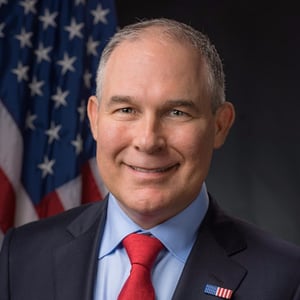
Former Administrator, U.S. Environmental Protection Agency
Scott Pruitt served as the 14th Administrator of the U.S. Environmental Protection Agency.
As Administrator, Mr. Pruitt’s overarching goal was to lead EPA in a way that our future generations inherit a better and healthier environment as he works with the thousands of dedicated public servants at EPA who have devoted their careers to helping realize this shared vision, while faithfully administering environmental laws.
Prior to the EPA, Pruitt served as the Attorney General for Oklahoma. Almost immediately upon taking office, he worked with his Democratic counterpart in Arkansas to reach agreement to study the water quality of the Illinois River, which crosses the border between the two states and has been enjoyed by generations of Oklahomans. The Statement of Joint Principles provides for a best science study using EPA-approved methods, with both states agreeing, for the first time, to be bound by the outcome.
Also during his tenure as Oklahoma’s Attorney General, Pruitt led an historic water rights settlement between Oklahoma, Oklahoma City and the Choctaw and Chickasaw Tribal Nations that preserved the ecosystems of scenic lakes and rivers on native lands. The agreement, which required Congressional approval, was enacted into Section 3608 of Public Law 114-322 and signed in December 2016. It provides a framework that fosters intergovernmental collaboration on significant water resource concerns with the settlement area, while at the same time protecting existing water rights and affirming the state’s role in water rights permitting and administration.
Water settlement cases can be lengthy, costly, divisive and disruptive; however under Pruitt’s forward-thinking leadership, the process was hailed by all parties as one of commitment, hard work, perseverance and cooperation.
Pruitt became a national leader through a career of advocating to keep power in the hands of hard-working Americans. He has a proven track record of working with others – including industry, farmers, ranchers, landowners and small business owners - who want to do the right thing by the environment.
He has dedicated his career to creating policy that serves the people. He strongly believes that environmental law, policy and progress are all based on cooperation between the states, cooperation between the states and EPA, and cooperation between regulators and the public. As Attorney General for Oklahoma, he led the state’s legal challenges against property rights intrusion, while protecting Oklahoma’s natural resources and environment.
He is recognized as a national leader in the cause to restore the proper balance between the states and federal government, and he established Oklahoma’s first federalism unit to combat unwarranted regulation and overreach by the federal government.
Before being elected attorney general, he served eight years in the Oklahoma State Senate where he was a leading voice for fiscal responsibility.
After earning his Bachelor’s Degree from Georgetown College and graduating from the University of Tulsa College of Law, Pruitt went into private legal practice, specializing in constitutional law.
In addition to his life as a civil servant, Pruitt is a successful entrepreneur. As a co-owner and managing general partner of Oklahoma City’s Triple-A minor league baseball affiliate, the Oklahoma City Redhawks, Mr. Pruitt took over the team’s marketing operations and helped the team become one of the minor league leaders in attendance and merchandise sales.
Pruitt is, first and foremost, a family man. He and Marlyn, his wife of 27 years, proudly raised their daughter, McKenna, and son, Cade, in Tulsa. Pruitt has made it a priority to pass on to his children the same principled family values with which he was raised.
Resident Fellow, American Enterprise Institute
Timothy P. Carney is a resident fellow at the American Enterprise Institute, where he works on economic competition, cronyism, civil society, localism, and religion in America. He is concurrently the commentary editor at the Washington Examiner.
Mr. Carney’s latest book, “Alienated America: Why Some Places Thrive While Others Collapse” (HarperCollins), was published in February 2019. His previous books include “Obamanomics: How Barack Obama Is Bankrupting You and Enriching His Wall Street Friends, Corporate Lobbyists, and Union Bosses” (Regnery Publishing, 2009) and “The Big Ripoff: How Big Business and Big Government Steal Your Money” (John Wiley & Sons, 2006), which was awarded the 2008 Culture of Enterprise award by the Intercollegiate Studies Institute.
In addition to his Washington Examiner columns, Mr. Carney’s work has been published in a variety of magazines, websites, and newspapers, including The Atlantic, New York Post, The New York Times, Reason Magazine, and The Wall Street Journal. His television appearances include CNBC, CNN, Fox News, MSNBC, and the “PBS NewsHour.”
Mr. Carney has a bachelor’s degree from St. John’s College in Annapolis.
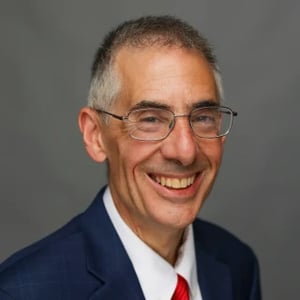
Wendell H. Ford Professor of Law, University of Kentucky J. David Rosenberg College of Law
Paul E. Salamanca graduated from Dartmouth College in 1983 and Boston College Law School in 1989, where he was a note editor for the Boston College Law Review and a member of the Order of the Coif.
Professor Salamanca served as a law clerk to Judge David H. Souter of the U.S. Court of Appeals for the First Circuit, and subsequently clerked for Justice Souter on the U.S. Supreme Court. He practiced law with the firm of Debevoise & Plimpton in New York from 1991 to 1994 and was a visiting assistant professor of law at Loyola University School of Law in New Orleans before joining the faculty at the University of Kentucky College of Law in June 1995.
Professor Salamanca writes in the areas of separation of powers, freedom of speech, freedom of religion, and privacy. He has published articles on these subjects in the University of Cincinnati Law Review, the Missouri Law Review, the Georgia Law Review and the Kentucky Law Journal, among other places.
From 2019 until 2021, Professor Salamanca served as a Senior Counsel and then as a Deputy Assistant Attorney General in the Environment and Natural Resources Division (ENRD) of the United States Department of Justice. His duties included supervision of the Natural Resources and Land Acquisition Sections of ENRD.
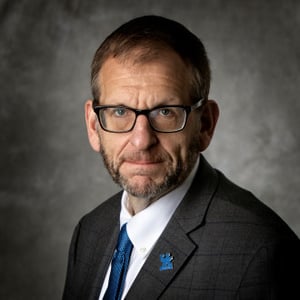
General Counsel, University of Kentucky & Former Solicitor General of Virginia, University of Kentucky
William E. Thro, the General Counsel of the University of Kentucky, is an accomplished university attorney, appellate advocate, and legal scholar.
As the Chief Legal Officer for the University of Kentucky, he provides proactive strategic advice on critical legal and policy issues confronting a public flagship land grant research university with an integrated academic medical center and a high profile athletics program. Before assuming his present position in 2012, he spent more than twenty years representing public universities including eight years as the first in-house counsel at Christopher Newport University.
As Solicitor General of Virginia for four years, he was responsible for the Virginia State Government’s U.S. Supreme Court litigation (except capital cases) as well as lower court appeals involving the constitutionality of statutes or politically sensitive issues. He argued two cases in the U.S. Supreme Court and numerous cases in the lower appellate courts. He co-authored seven U.S. Court merits briefs, eleven U.S. Supreme Court amicus briefs, and more than fifty briefs at the petition stage. He received two Best Brief Awards from the National Association of Attorneys General.
As a legal scholar, he focuses on constitutional law in educational contexts. He has more than sixty publications in law reviews or peer reviewed journals as well as numerous monographs, book chapters, and encyclopedia entries. In recognition of his scholarly work, he received Stetson University’s Kaplin Award for Excellence in Higher Education Law & Policy Scholarship (2014) and became a Fellow of both the National Education Finance Conference (2012) and the National Association of College and University Attorneys (2007).
He has served as President of the Education Law Association, Chair of the Virginia Bar Association’s Appellate Practice Section, Board Chair for a local Red Cross Chapter, on the Boards of both the National Association of College & University Attorneys and the National Education Finance Academy, and an Elder in the Presbyterian Church (U.S.A.).
A native of Kentucky, he received his undergraduate degree summa cum laude from Hanover College. In addition to receiving the Crowe Citation as the outstanding male in his class, he was the first Hanover student to become a Harry S. Truman Scholar. He earned a graduate degree with honours from the University of Melbourne while attending as a Rotary Foundation International Ambassadorial Scholar. His law degree is from the University of Virginia where he was a published member of the VIRGINIA LAW REVIEW and research assistant to constitutional law professor A.E. Dick Howard. He began his legal career as a judicial clerk to the late Judge Ronald E. Meredith of the U.S. District Court for the Western District of Kentucky in Louisville.
He is married to the Rev. Dr. Julie Urback Thro and has two children in college (Sandra, Will) and one in high school (Noah).

Distinguished University Professor, Antonin Scalia Law School, George Mason University
University Professor Nelson Lund is the author of Rousseau’s Rejuvenation of Political Philosophy: A New Introduction. He has also written widely in the field of constitutional law, including articles on constitutional interpretation, federalism, separation of powers, the Second Amendment, the Commerce Clause, the Speech or Debate Clause, the Equal Protection Clause, and the Uniformity Clause. In addition, he has published articles in the fields of employment discrimination and civil rights, the legal regulation of medical ethics, and the application of economic analysis to legal institutions and legal ethics.
Professor Lund graduated from St. John's College in Annapolis, Maryland, after which he received an MA in philosophy from the Catholic University of America and a PhD in political science from Harvard University. He left the faculty of the University of Chicago to attend its law school, where he served as executive editor of the University of Chicago Law Review and chapter chairman of the Federalist Society for Law and Public Policy Studies. After law school, he held positions at the United States Department of Justice in the Office of the Solicitor General and the Office of Legal Counsel. He also served as a law clerk to the Honorable Patrick E. Higginbotham of the United States Court of Appeals for the Fifth Circuit and to the Honorable Sandra Day O'Connor of the United States Supreme Court. Following his clerkship with Justice O'Connor, Professor Lund served in the White House as associate counsel to the president from 1989 to 1992.
Since joining the faculty at George Mason University's Antonin Scalia Law School, Professor Lund has taught Constitutional Law, Legislation, Federal Election Law, Employment Discrimination, State and Local Government, and seminars on the Second Amendment and on a variety of topics in Jurisprudence.

Chevron's Foundation: Congressional Delegation of Interpretive Primacy - Podcast
Mark Seidenfeld
This Teleforum explores the foundation for Chevron deference to agency statutory interpretation, and the implications...
Courthouse Steps Decision: TC Heartland LLC v. Kraft Foods Group Brands LLC - Podcast
William J. Brown, J Hartline
On May 22, 2017, the Supreme Court handed down its unanimous opinion in the closely-watched...
Race-Based Admissions: Student Lawsuits Against Harvard and UNC Move Forward - Podcast
William S. Consovoy
In 2014, the Students for Fair Admissions ("SFFA"), a membership organization comprised of students, parents,...
Is the Administrative State Too Big to Fail?: MetLife v. Financial Stability Oversight Council - Podcast
Peter J. Wallison
On March 30, Federal district court Judge Rosemary Collyer struck down the Financial Stability Oversight...
Panel I: Innovation and the Administrative State
William Baude, Kathryn Bi, Jon Dudas, Steven Lehotsky, Steve J. Markman, Jennifer Nou
Regulation can be a significant barrier to innovation, protecting incumbents and making it harder to...
College Admissions and Affirmative Action - Podcast
Edward J. Blum, William S. Consovoy
The battle over the use of affirmative action in college admissions seems far from over,...
Amtrak and the Non-Delegation Doctrine in the Supreme Court - Podcast
Congress passed the Passenger Rail Investment and Improvement Act (PRIIA) in 2008. Section 207 of...
Libertarianism vs. Conservatism: Strange Bedfellows or a Match Made in Heaven?
Lexington, KentuckyWhat the Heller Did the Supreme Court Mean? The Emerging Jurisprudence of the Second Amendment
Lexington, KentuckyThe Oklahoma Attorney General's Plan: The Clean Air Act Section 111(d) Framework that Preserves States' Rights
William Brownell, Jeffrey Bossert Clark, David D. Doniger, Patrick McCormick, Scott Pruitt
Under Section 111(d) of the Clean Air Act, the Environmental Protection Agency is poised to...