
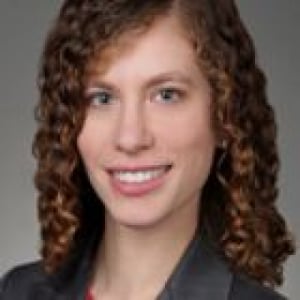
Principal Deputy Solicitor General, Commonwealth of Virginia
Erika Maley was the Solicitor General of the Commonwealth of Virginia, representing the Commonwealth and its agencies in state and federal courts of appeals. Erika was previously a partner in the Supreme Court and Appellate group at Sidley Austin LLP, and a trial attorney in the Federal Programs Branch of the Civil Division of the U.S. Department of Justice. She has handled cases before the United States Supreme Court, Virginia Supreme Court, courts of appeals and district courts, involving a wide range of constitutional, statutory and administrative law issues. Erika also served as a law clerk both for Associate Justice Stephen G. Breyer of the United States Supreme Court and for Chief Judge Alex Kozinski of the U.S. Court of Appeals for the Ninth Circuit. She earned her law degree from Stanford Law School and her B.A. from Duke University.
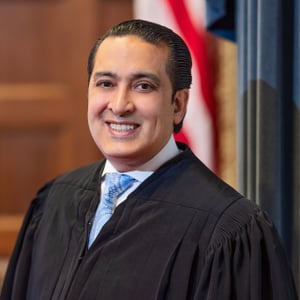
Judge, United States Court of Appeals, Sixth Circuit
John B. Nalbandian serves as a United States Circuit Judge from Kentucky on the U.S. Court of Appeals for the Sixth Circuit. He was nominated and confirmed to that position in 2018. Prior to that, Judge Nalbandian was a partner in the litigation practice group of Taft Stettinius & Hollister LLP in Cincinnati, where he served as the firm’s lead appellate lawyer and also practiced complex litigation in state and federal courts. Judge Nalbandian was board certified by the Ohio State Bar Association as a specialist in appellate law. Prior to joining Taft, Judge Nalbandian practiced for five years in the appellate section of Jones Day in Washington, DC. Upon graduation from law school, Judge Nalbandian clerked for the Honorable Jerry E. Smith of the U.S. Court of Appeals for the Fifth Circuit in Houston. While in private practice, he also served as a board member of the State Justice Institute, a nonprofit organization established by the federal government to improve the administration of justice in state courts. He served as President of the Cincinnati Lawyers Chapter of the Federalist Society. He has also been involved in his community as a board member of the Greater Cincinnati Minority Counsel Program, and as a board member of the Asian Pacific Bar Association of Southwest Ohio. Judge Nalbandian earned his B.S., magna cum laude, from the Wharton School at the University of Pennsylvania and his J.D. from the University of Virginia School of Law, where he was inducted into the Order of the Coif and served as managing editor of the Virginia Law Review.
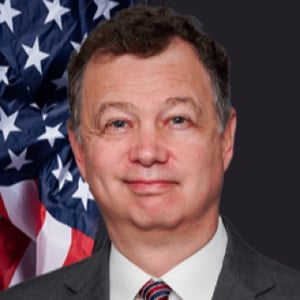
Dan Schweitzer is the Director and Chief Counsel of the National Association of Attorneys General’s Center for Supreme Court Advocacy. Since joining NAAG in February 1996, his principal responsibility has been to assist state appellate litigators who appear before the United States Supreme Court. Toward this end, Mr. Schweitzer organizes and participates in moot courts, edits about 20 state briefs filed each year in the Court, edits the biweekly Supreme Court Report, and provides strategic and technical assistance to state Attorney General offices. Prior to joining NAAG, Mr. Schweitzer was a litigator at a private law firm. He is a graduate of the University of Pennsylvania (B.A. 1986) and Harvard Law School (J.D. 1989).
Among Mr. Schweitzer’s publications are How to Write a Successful Brief in Opposition: A Guide for State Lawyers (NAGTRI 2019); How to Write a Successful Cert Petition: A Guide for State Lawyers (NAGTRI 2019); U.S. Supreme Court Brief Writing Style Guide, 19 J. of App. Practice & Process 129 (2018); The Law of Preemption (NAGTRI 2011); Frustrated with Preemption: Why Courts Should Rarely Displace State Law Under the Doctrine of Frustration Preemption, 65 N.Y.U. Annual Survey of American Law 585 (2010) (with Kevin O. Leske); and Fundamentals of Preparing a United States Supreme Court Amicus Brief, 5 J. of App. Practice & Process 523 (2003).
Mr. Schweitzer is a Master in the Edward Coke Appellate Inn of Court and on the Advisory Board of the Georgetown University Law Center’s Supreme Court Institute.
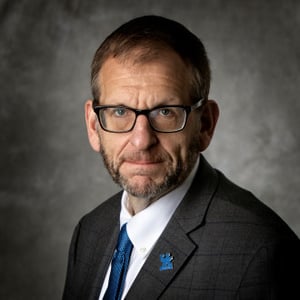
General Counsel, University of Kentucky & Former Solicitor General of Virginia, University of Kentucky
William E. Thro, the General Counsel of the University of Kentucky, is an accomplished university attorney, appellate advocate, and legal scholar.
As the Chief Legal Officer for the University of Kentucky, he provides proactive strategic advice on critical legal and policy issues confronting a public flagship land grant research university with an integrated academic medical center and a high profile athletics program. Before assuming his present position in 2012, he spent more than twenty years representing public universities including eight years as the first in-house counsel at Christopher Newport University.
As Solicitor General of Virginia for four years, he was responsible for the Virginia State Government’s U.S. Supreme Court litigation (except capital cases) as well as lower court appeals involving the constitutionality of statutes or politically sensitive issues. He argued two cases in the U.S. Supreme Court and numerous cases in the lower appellate courts. He co-authored seven U.S. Court merits briefs, eleven U.S. Supreme Court amicus briefs, and more than fifty briefs at the petition stage. He received two Best Brief Awards from the National Association of Attorneys General.
As a legal scholar, he focuses on constitutional law in educational contexts. He has more than sixty publications in law reviews or peer reviewed journals as well as numerous monographs, book chapters, and encyclopedia entries. In recognition of his scholarly work, he received Stetson University’s Kaplin Award for Excellence in Higher Education Law & Policy Scholarship (2014) and became a Fellow of both the National Education Finance Conference (2012) and the National Association of College and University Attorneys (2007).
He has served as President of the Education Law Association, Chair of the Virginia Bar Association’s Appellate Practice Section, Board Chair for a local Red Cross Chapter, on the Boards of both the National Association of College & University Attorneys and the National Education Finance Academy, and an Elder in the Presbyterian Church (U.S.A.).
A native of Kentucky, he received his undergraduate degree summa cum laude from Hanover College. In addition to receiving the Crowe Citation as the outstanding male in his class, he was the first Hanover student to become a Harry S. Truman Scholar. He earned a graduate degree with honours from the University of Melbourne while attending as a Rotary Foundation International Ambassadorial Scholar. His law degree is from the University of Virginia where he was a published member of the VIRGINIA LAW REVIEW and research assistant to constitutional law professor A.E. Dick Howard. He began his legal career as a judicial clerk to the late Judge Ronald E. Meredith of the U.S. District Court for the Western District of Kentucky in Louisville.
He is married to the Rev. Dr. Julie Urback Thro and has two children in college (Sandra, Will) and one in high school (Noah).

Associate, Taft Stettinius & Hollister LLP
Annie is an attorney in Taft’s Litigation practice group. She advises individual and business clients on all aspects of the litigation process.
Prior to joining Taft, Annie clerked for the Honorable Amul Thapar and the Honorable John Nalbandian of the United States Court of Appeals for the Sixth Circuit, as well as the Honorable Justin Walker of the United States Court of Appeals for the DC Circuit.
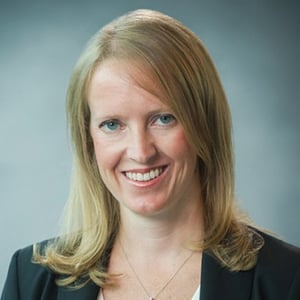
Partner, Clement & Murphy, PLLC
Erin Murphy is founding partner of Clement & Murphy, PLLC. She is widely recognized as one of the nation’s leading Supreme Court and appellate advocates. She has argued dozens of cases in appellate and trial courts throughout the country, including the Supreme Court and nearly all of the federal courts of appeals. Erin has long been ranked by Chambers & Partners rankings as a leading appellate practitioner, and the National Law Journal has named her one of the nation’s “Outstanding Women Lawyers.” Erin also has an active pro bono practice, through which she has successfully represented many religious organizations and adherents, criminal defendants, asylum applicants, adoptive parents, and more.
Erin is an adjunct professor at her alma mater the Georgetown University Law Center, a member and former officer of the Edward Coke Appellate Inn of Court, and a frequent speaker on topics relating to the Supreme Court and appellate advocacy. In her spare time, Erin serves on the board of directors of Street Law.

Senior Vice President for Legal Studies, Cato Institute
Clark Neily is senior vice president for legal studies at the Cato Institute. His areas of interest include constitutional law, overcriminalization, civil forfeiture, police accountability, and gun rights. Neily is the author of Terms of Engagement: How Our Courts Should Enforce the Constitution’s Promise of Limited Government. His writing has appeared in the Wall Street Journal, Forbes, and National Review Online, as well as various law reviews, including the Harvard Journal of Law and Public Policy, George Mason Law Review, Georgetown Journal of Law and Public Policy, NYU Journal of Law and Liberty, and Texas Review of Law and Politics. Neily is a frequent guest speaker and lecturer for the Federalist Society, Institute for Humane Studies, and American Constitution Society.
Before joining Cato in 2017, Neily was a senior attorney and constitutional litigator at the Institute for Justice and director of the Institute’s Center for Judicial Engagement. He is also an adjunct professor at the University of Texas School of Law, where he teaches constitutional litigation and public-interest law.
Neily served as co-counsel in District of Columbia v. Heller, the historic case in which the Supreme Court held for the first time that the Second Amendment protects an individual right to own a gun for self-defense.
Neily began his legal career as a law clerk to Judge Royce Lamberth on the U.S. District Court for the District of Columbia. After that he spent four years in the trial department of the Dallas-based firm Thompson & Knight. Neily received his undergraduate and law degrees from the University of Texas, where he was Chief Articles Editor of the Texas Law Review.
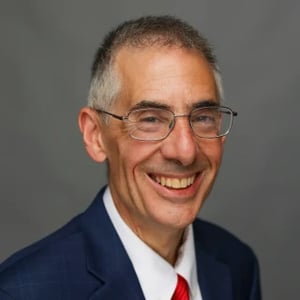
Wendell H. Ford Professor of Law, University of Kentucky J. David Rosenberg College of Law
Paul E. Salamanca graduated from Dartmouth College in 1983 and Boston College Law School in 1989, where he was a note editor for the Boston College Law Review and a member of the Order of the Coif.
Professor Salamanca served as a law clerk to Judge David H. Souter of the U.S. Court of Appeals for the First Circuit, and subsequently clerked for Justice Souter on the U.S. Supreme Court. He practiced law with the firm of Debevoise & Plimpton in New York from 1991 to 1994 and was a visiting assistant professor of law at Loyola University School of Law in New Orleans before joining the faculty at the University of Kentucky College of Law in June 1995.
Professor Salamanca writes in the areas of separation of powers, freedom of speech, freedom of religion, and privacy. He has published articles on these subjects in the University of Cincinnati Law Review, the Missouri Law Review, the Georgia Law Review and the Kentucky Law Journal, among other places.
From 2019 until 2021, Professor Salamanca served as a Senior Counsel and then as a Deputy Assistant Attorney General in the Environment and Natural Resources Division (ENRD) of the United States Department of Justice. His duties included supervision of the Natural Resources and Land Acquisition Sections of ENRD.
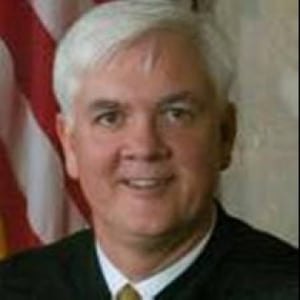
Judge, U.S. District Court, Eastern District of Kentucky
Judge Gregory F. Van Tatenhove has served as a District Court Judge in the Eastern District of Kentucky since his confirmation by the United States Senate on December 21, 2005. Prior to his appointment to the Court, Judge Van Tatenhove served over four years as the United States Attorney for the Eastern District of Kentucky. He has been an adjunct professor at the College of Law since the Spring Semester of 2017, where he teaches Crime and Punishment: Sentencing Policy and Procedure (LAW 902). Judge Van Tatenhove is presently a member of the University of Kentucky College of Law Board of Visitors as well as the Henry Clay Memorial Foundation board. Past service includes a term as President of the Asbury University Alumni Board and Vice-Chair of the Asbury Board of Trustees. He is also a Member of the Kentucky Bar Association Commission on the Future of Law Practice.
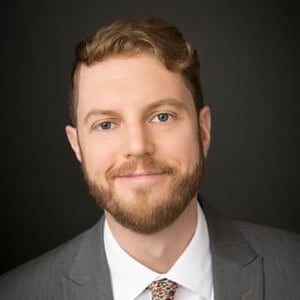
Legal Director, Foundation for Individual Rights and Expression
Will began defending student and faculty rights for FIRE in 2006 after graduating from New York University School of Law, where he served as an associate executive editor for the New York University Law Review. Will has appeared on national cable television and radio on behalf of FIRE and has spoken to students, faculty, administrators, and attorneys at events across the country. Will’s writing has been published by The New York Times, the Wall Street Journal, The Washington Post, the Chronicle of Higher Education, Jurist, Inside Higher Ed, Daily Journal, the Charleston Law Review, and many other outlets. Will edited the second edition of FIRE’s Guide to Due Process and Campus Justice, co-edited the second edition of FIRE’s Guide to Free Speech on Campus, and has coauthored amicus curiae briefs submitted to a number of courts, including the Supreme Court of the United States and the United States Courts of Appeals for the Third, Ninth, and Eleventh Circuits. Will has taught FIRE’s Continuing Legal Education programs in New York, Pennsylvania, and online. A member of the New York State Bar and the First Amendment Lawyers Association, Will serves as Co-Chair of the Education Subcommittee of the American Bar Association’s Section of Administrative Law and Regulatory Practice.
Will graduated magna cum laude from New York University’s Gallatin School of Individualized Study in 2003. A proud native of Buffalo, New York, Will now lives in New Jersey with his wife and two children.
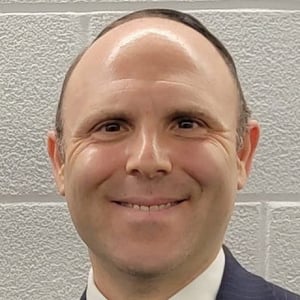
Special Counsel, Sullivan & Cromwell LLP
Aharon Friedman is Special Counsel at Sullivan & Cromwell LLP. He is also a Visiting Scholar at the Hoover Institution. He formerly served as senior counsel to the House Ways and Means Committee, senior adviser to the U.S. Treasury Department and as a law clerk for Israel’s Supreme Court.
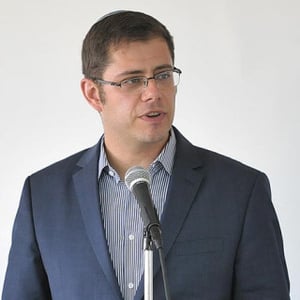
Professor of Law and Director, Center for the Middle East and International Law, George Mason University Antonin Scalia Law School
Professor of Law Eugene Kontorovich is one of the world’s preeminent experts on universal jurisdiction and maritime piracy, as well as international law and the Israel-Arab conflict. He is also the Director of Scalia Law School's Center for the Middle East and International Law. Professor Kontorovich joined the Scalia Law School from Northwestern University Pritzker School of Law where he was a Professor of Law from 2011 to 2018 and an Associate Professor from 2007 to 2011. Previously, he was a Visiting Professor at the University of Chicago from 2005 to 2007 and an Assistant Professor at George Mason School of Law from 2003 to 2007.
Professor Kontorovich has published over thirty major scholarly articles and book chapters in leading law reviews and peer-reviewed journals in the United States and Europe, including the American Journal of International Law, International Review of Law & Economics, Stanford Law Review, California Law Review, University of Pennsylvania Law Review, and Virginia Law Review. His scholarship has been cited in leading foreign relations and international law
His expertise is often sought out and quoted by major news organizations such the New York Times, Wall Street Journal, NPR News, The New Yorker, Los Angeles Times, and numerous television and radio programs. Prof. Kontorovich’s popular writings have appeared in the New York Times, Wall Street Journal, Los Angeles Times, POLITICO, Commentary, Haaretz, and numerous other leading publications. He is also a regular contributor to the Washington Post’s Volokh Conspiracy legal blog.
He attended the University of Chicago for college and law school. After law school, he clerked for Judge Richard Posner on the United States Court of Appeals for the Seventh Circuit. He has been honored with a fellowship at the Institute for Advanced Study in Princeton, in 2011-12, and with the Federalist Society’s prestigious Bator Award, given annually to a young scholar (under 40), for outstanding scholarship and teaching.
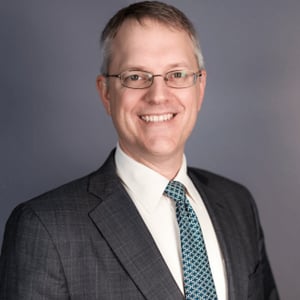
President and General Counsel, New Civil Liberties Alliance
NCLA’s President and General Counsel, Mark Chenoweth, has observed the administrative state up close and personal from perches in all four branches of the federal government. Mark served as the first chief of staff to Congressman Mike Pompeo, as legal counsel to Commissioner Anne Northup at the U.S. Consumer Product Safety Commission, as an attorney advisor in the Office of Legal Policy at the U.S. Department of Justice, and as a law clerk to the Hon. Danny J. Boggs on the U.S. Court of Appeals for the Sixth Circuit.
Mark has worked in several different roles in the private sector as well. He began his legal career in D.C. as a regulatory associate at Wilmer, Cutler & Pickering. He then returned to his home state of Kansas to serve as in-house counsel for Koch Industries. Most recently he spent over four years as general counsel of the Washington Legal Foundation.
Mark is a graduate of Yale College and the University of Chicago Law School, where he co-founded the Institute for Justice Clinic on Entrepreneurship and became a Tony Patiño Fellow. Mark has been widely quoted and/or published in newspapers and websites including the New York Times, San Francisco Chronicle, New Hampshire Union Leader, and Metropolitan Corporate Counsel. He has also had recurring op-eds in the Los Angeles Daily Journal, and at Forbes.com.
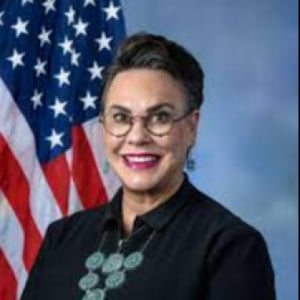
U.S. Representative, Wyoming
Congresswoman Harriet Hageman represents the state of Wyoming in the U.S. House of Representatives. She grew up on a ranch, attended Casper College on a livestock judging scholarship and earned both her bachelor's degree and law degree from the University of Wyoming. A litigator for 34 years, Harriet is nationally known for challenging federal overreach, for protecting water and property rights, for exposing federal land and wildlife mismanagement, and for fighting back against the unconstitutional and unlawful acts of unelected bureaucrats. Harriet has extensive experience engaging in complex trials against federal agencies and has been admitted to practice in several states as well as the United States Supreme Court.
In her freshman term in the 118th Congress, Harriet has been selected to serve on the House Natural Resources committee where she is Chair of the Subcommittee on Indian and Insular Affairs, and also serves on the Subcommittee on Water, Wildlife, and Fisheries. Representative Hageman also serves on the Judiciary Committee and Subcommittees on the Constitution and Limited Government; the Subcommittee on the Administrative State, Regulatory Reform, and Antitrust; and the Select Committee on the Weaponization of the Federal Government. She has shown her support for American energy independence by serving as Co-Chair of the Congressional Coal Caucus.
Legislation sponsored by Representative Hageman has been focused on reining in the regulatory state, ending the weaponization of our federal government and its proxies against American citizens, and ending the de facto moratorium on American energy production.

Former Acting Assistant Secretary, US Department of Education; Partner, Jackson Bone LLP, U.S. Department of Education
Candice Jackson is an attorney who served as Acting Assistant Secretary for Civil Rights and Deputy General Counsel in the US Department of Education from 2017 to 2021 where she was responsible for drafting the first-ever regulations under Title IX addressing campus sexual harassment and assault. Candice has returned to private law practice and currently represents incarcerated women in California prisons in WoLF’s lawsuit to overturn the 2021 law that allows male criminals to choose to be housed in women’s prisons based on “gender identity.” Candice lives with her wife Patricia and their 9-year-old twins Madelyn and Zachary.
Professor of History, Brooklyn College and the CUNY Graduate Center
KC Johnson is professor of history at Brooklyn College and the CUNY Graduate Center, where he has taught since 1999. He has written 13 books on topics in U.S. political history, U.S. foreign policy, and legal and policy debates surrounding campus due process and civil liberties. His Duke lacrosse case blog, Durham-in-Wonderland, was named ABA Journal’s Best Ethics Blog in 2007; and he continues to blog on higher-ed matters at the blog Minding the Campus.
Owner, Schneider Education & Employment Law PLLC
Scott Schneider is the owner and founder of Schneider Education & Employment Law and has advised companies and educational institutions nationwide on a variety of complex legal issues with a focus on particularly sensitive matters like institutional response to sexual misconduct.
Prior to founding Schneider Education & Employment Law, Scott was an equity partner in two major national law firms and served as in-house counsel for Tulane University.
He is a prominent litigator as well as a sought-after advisor on Title IX, labor and employment law issues, and various risk management concerns. He has led numerous investigations of serial sex abuse allegations, allegations of misconduct involving senior leadership and other acts of institutional misconduct. He has also handled various high-profile program reviews of institutional response to sexual misconduct, racial discrimination, athletics department ethics and compliance, and treatment of at-risk employees and students.
Scott has provided training nationally to thousands of personnel on a variety of issues, including Title IX; labor and employment law; faculty hiring, promotion and tenure processes; and Greek Life risk management. Scott also provides expert witness testimony on matters dealing with institutional response to allegations of sexual misconduct.
Scott regularly presents to national organizations, including the National Association of College and University Attorneys (NACUA), the National Association of Independent Schools (NAIS), the Association for Student Conduct Administration (ASCA) Gehring Academy, the International Association of Campus Law Enforcement Administrators (IACLEA), the Association of College and University Housing Officers-International (ACUHO-I), EDUCAUSE and various associations of independent schools.
Additionally, Scott previously served as an award-winning professor at Tulane University, where he taught courses on higher education and labor and employment law and created the Tulane University Law School’s Title IX certification program. Scott has been retained by the National Center for Campus Public Safety to serve as a faculty member for its Trauma-Informed Sexual Assault Investigation and Adjudication training program for campus officials. Scott also serves on the faculty for the State University of New York’s Student Conduct Institute where he provides training on informal resolution and restorative justice.
Harold Paul Green Research Professor of Law, George Washington University School of Law
Robert J. Cottrol joined the law school faculty in 1995 as a visiting professor of law of legal history. Previously, he taught at Rutgers University and Boston College, and had visited at the University of Virginia. As well as specializing in American legal history, Professor Cottrol has also taught torts and criminal law. His writings on law and history have appeared in the Yale Law Journal, Georgetown Law Journal, American Journal of Legal History, Law and Society Review, Slavery and Abolition: A Journal of Slave and Post-Slave Studies and American Quarterly, among others.
He is the author of The Afro-Yankees: Providence’s Black Community in the Antebellum Era (selected by Choice as an outstanding academic book for 1983), editor of Gun Control and the Constitution: Sources and Explorations on the Second Amendment (Book of the Month selection by the History Book Club), and From African to Yankee: Narratives of Slavery and Freedom in Antebellum New England (1998). Professor Cottrol’s book Brown v. Board of Education: Caste, Culture and the Constitution (2003) won the Langum Project Prize for Historical Literature in 2003 and was a “Book-of-the-Month” selection of the History Book Club. Most recently, he has authored The Long, Lingering Shadow: Slavery, Race, and Law in the American Hemisphere (2013).
He is currently doing research contrasting the role of law in the development of systems of slavery and racial hierarchy in the United States and Latin America. He has lectured on American law at the Federal Universities of Santa Catarina and Rio Grande do Sul in Brazil and the University of Buenos Aires and La Universidad del Museo Social in Argentina.
Professor of Law, Widener University Commonwealth Law School
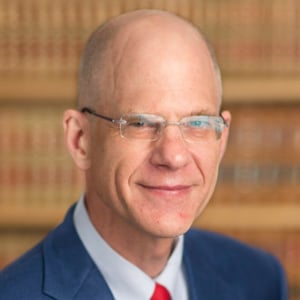
Charles W. Ebersold and Florence Whitcomb Ebersold Chair in Constitutional Law; Director, Election Law @ Moritz, Ohio State University Moritz College of Law
Professor Foley (known as “Ned”) directs Election Law @ Moritz at Ohio State’s law school, where he also holds the Ebersold Chair in Constitutional Law.
His book Ballot Battles: The History of Disputed Elections in the United States (Oxford University Press, 2016) was named Finalist for the David J. Langum, Sr. Prize in American Legal History and listed as one of 100 “must-read books about law and social justice”.
He has completed a new book manuscript, Presidential Elections and Majority Rule (to be published by Oxford University Press), which employs historical analysis to offer a feasible reform of state laws that would enable the Electoral College to operate as intended and thereby avoid the election of presidents who lack majority support among the voters in the states responsible for their Electoral College victories.
As Reporter for the American Law Institute’s Project on Election Administration (with his Mortiz colleague Steven Huefner, who served as Associate Reporter), Professor Foley drafted Principles of Law: Non-Precinct Voting and Resolution of Ballot-Counting Disputes, which provides nonpartisan guidance for the resolution of election disputes.
During his fellowship at Stanford University’s Center on Democracy, Development, and the Rule of Law, Foley wrote Due Process, Fair Play and Excessive Partisanship: A New Principle of Judicial Review of Election Law, 84 U. Chicago Law Review 655-758 (2017), which was cited in briefs in Gill v. Whitford and Benisek v. Lamone (the Supreme Court gerrymandering cases). His extensive online commentary about gerrymandering includes: Wechsler, History, and Gerrymandering, Scotusblog, and Constitutional Preservation, the Marbury Duty & Congressional Gerrymanders, Election Law Blog.
While Professor Foley has special expertise on recounts and other procedures for fairly and accurately identifying which candidate is the winner in close elections, he has written widely on all aspects of election law, including the need for nonpartisan institutions in election administration. He has also co-authored Election Law and Litigation: The Judicial Regulation of Politics (Wolters Kluwer 2014).
Professor Foley has taught at Ohio State since 1991. Previously, he clerked for Chief Judge Patricia M. Wald of the U.S. Court of Appeals and Justice Harry Blackmun of the United States Supreme Court. In 1999, he took a leave from the faculty to serve as the state solicitor in the office of Ohio’s Attorney General. In that capacity, he was responsible for the state’s appellate and constitutional cases.
Professor Foley is a graduate of Columbia University School of Law and Yale College.

Professor of Law, Notre Dame Law School
Professor Derek Muller is a nationally-recognized scholar in the field of election law. His research focuses on the role of states in the administration of federal elections, the constitutional contours of voting rights and election administration, the limits of judicial power in the domain of elections, and the Electoral College.
He has published more than two dozen academic works, and his op-eds have appeared in the New York Times, the Los Angeles Times, and the Wall Street Journal. He has testified before Congress, and he is a contributor at the Election Law Blog. He is a co-author on a Federal Courts casebook published by Carolina Academic Press. He is also the co-reporter on a new Restatement of the Law, Election Litigation, an effort led by the American Law Institute.
Professor Muller teaches Election Law, Civil Procedure, and Evidence.
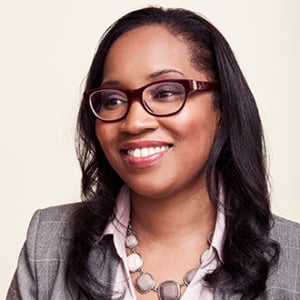
George T. and Harriet E. Pfleger Chair in Law, USC Gould School of Law
Franita Tolson is the George T. and Harriet E. Pfleger Chair in Law at the University of Southern California Gould School of Law. She also holds a courtesy faculty appointment in the Political Science and International Relations Department at the USC Dornsife College of Letter, Arts and Sciences.
Her scholarship and teaching focus on the areas of election law, constitutional law, legal history, and employment discrimination. She has written on a wide range of topics including partisan gerrymandering, political parties, the Elections Clause, the Voting Rights Act of 1965, and the Fourteenth and Fifteenth Amendments.
Her research has appeared or will appear in leading law reviews including the Yale Law Journal, Harvard Law Review, Stanford Law Review, California Law Review, University of Pennsylvania Law Review, and Vanderbilt Law Review. Tolson is one of the coauthors of the leading election law casebook, The Law of Democracy (Foundation Press, 6th ed., forthcoming 2022). Her forthcoming book, In Congress We Trust?: Enforcing Voting Rights from the Founding to the Jim Crow Era, will be published in 2023 by Cambridge University Press.
As a nationally recognized expert in election law, Tolson has written for or appeared as a commentator for various mass media outlets including The New York Times, The Los Angeles Times, the Wall Street Journal, Reuters and Bloomberg Law. She has testified before Congress numerous times on voting rights issues. She has also authored a legal analysis for an amendment to the U.S. Constitution, introduced by Senator Elizabeth Warren and Senator Richard Durbin, that would explicitly protect the right to vote. During the fall of 2020, Tolson worked as an election law analyst for CNN. She currently co-hosts an election themed podcast, Free and Fair with Franita and Foley, with Ned Foley of The Ohio State University Moritz College of Law.
Prior to joining USC, Tolson was the Betty T. Ferguson Professor of Voting Rights at Florida State University College of Law and a visiting assistant professor at Northwestern University School of Law. Before entering academia, she clerked for the Honorable Ann Claire Williams of the United States Court of Appeals for the Seventh Circuit and the Honorable Ruben Castillo of the Northern District of Illinois.
Tolson is a graduate of the University of Chicago Law School, where she was the Walter V. Schaefer Visiting Professor of Law during the Spring 2021 academic quarter.
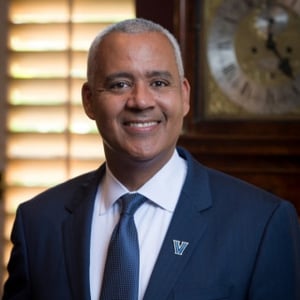
Arthur J. Kania Dean and Professor of Law, Villanova University, Charles Widger School of Law
Mark C. Alexander, JD is the Arthur J. Kania Dean and Professor of Law at the Villanova University Charles Widger School of Law. As the School’s chief administrator and chairperson of the faculty, Alexander is responsible for all facets of the Law School, including its long-term strategic and academic planning, curricular initiatives, faculty research and teaching support, student services, and fundraising and alumni relations.
Alexander previously served as Associate Dean for Academics at Seton Hall University’s School of Law. His responsibilities included oversight of the curriculum’s academic components, collaboration with the faculty and administration on implementation of the School’s strategic plan, and management of the career, enrollment and student services offices. A member of Seton Hall’s Law School faculty for two decades, he was honored as Professor of the Year on numerous occasions.
Alexander’s areas of expertise include constitution law, election law, the First Amendment and criminal procedure. His research interests focus on the constitutional dimensions of election law and campaign reform. Alexander has authored several books on the First Amendment and constitutional law, and his scholarship has been published in leading journals such as Harvard Journal of Law & Public Policy, Stanford Law & Policy Review and NYU Review of Law & Social Change.
Regularly interviewed by national print and broadcast media, Alexander is a sought-after speaker and panelist for national and international law symposiums and academic forums. He possesses significant international experience, having spent a year in Spain teaching American law and politics on a Fulbright Scholarship, as well as teaching in the Seton Hall Law-in-Italy program. He is also a fellow of the U.S.-Japan Leadership Program. Alexander served on the J. William Fulbright Foreign Scholarship Board from 2010 to 2014, having been appointed by President Barack Obama.
In addition to his leadership in academia, Alexander has also served as an adviser and issues director for several high-profile political campaigns. Prior to joining the Seton Hall Law School faculty in 1996, he clerked for Chief Judge Thelton Henderson of the United States District Court for the Northern District of California and was a litigator with Gibson, Dunn & Crutcher in San Francisco. Alexander earned a Juris Doctor from Yale University Law School and a Bachelor of Arts in Architecture from Yale University.
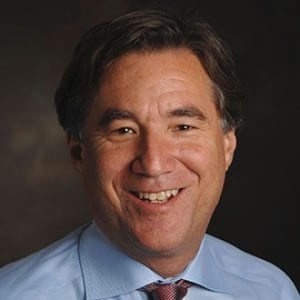
Ashe Family Chair Professor of Law, Georgia State University College of Law
Eric J. Segall graduated from Emory University, Phi Beta Kappa and summa cum laude, and from Vanderbilt Law School, where he was the research editor for the Law Review and member of Order of the Coif. He clerked for the Chief Judge Charles Moye Jr. for the Northern District of Georgia, and Albert J. Henderson of the 11th Circuit Court of Appeals. After his clerkships, Segall worked for Gibson, Dunn & Crutcher and the U.S. Department of Justice, before joining the Georgia State faculty in 1991.
Segall teaches federal courts and constitutional law I and II. He is the author of the books Originalism as Faith and Supreme Myths: Why the Supreme Court is not a Court and its Justices are not Judges. His articles on constitutional law have appeared in, among others, the Harvard Law Review Forum, the Stanford Law Review On Line, the UCLA Law Review, the George Washington Law Review, the Washington University Law Review, the University of Pennsylvania Journal of Constitutional Law, the Northwestern University Law Review Colloquy, and Constitutional Commentary among many others.
Segall’s op-eds and essays have appeared in the New York Times, the LA Times, The Atlantic, SLATE, Vox, Salon, and the Daily Beast, among others. He has appeared on CNN, Fox News, MSNBC, and France 24 and all four of Atlanta’s local television stations. He has also appeared on numerous local and national radio shows.
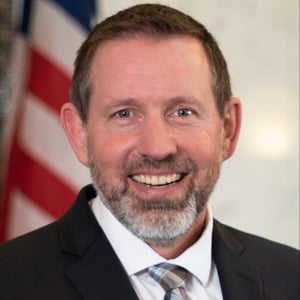
Judge, United States Court of Appeals, Ninth Circuit
Lawrence VanDyke serves as a circuit judge on the U.S. Court of Appeals for the Ninth Circuit. Prior to that appointment in January 2020, he served as a Deputy Assistant Attorney General in the Environment and Natural Resources Division of the United States Department of Justice. Before that, he served consecutively as the Solicitor General of two western states – Nevada and Montana. At the beginning of his legal career, he worked as an attorney in the Appellate and Constitutional Issues practice group at Gibson Dunn & Crutcher, LLP.
Judge VanDyke received his law degree magna cum laude from Harvard Law School, where he was an editor on the Harvard Law Review. He has engineering and theology undergraduate degrees and a masters degree in engineering management. He served as a law clerk to the Honorable Janice Rogers Brown of the United States Court of Appeals for the District of Columbia Circuit. Judge VanDyke and his wife Cheryl live in Reno, Nevada, and they have three children.

University of Minnesota Law School
Ilan Wurman is a professor at the University of Minnesota, where he teaches administrative law and constitutional law. He is also the co-host of the new legal podcast, Rationally BASED.
Professor Wurman previously taught at Arizona State University. He writes primarily on the Fourteenth Amendment, administrative law, separation of powers, and constitutionalism. His academic writing has appeared in the Yale Law Journal, the Stanford Law Review, the University of Chicago Law Review, the University of Pennsylvania Law Review, the Virginia Law Review, the Duke Law Journal, the Minnesota Law Review, the Notre Dame Law Review, and the Texas Law Review among other journals.
Professor Wurman is the author of the new book The Constitution of 1789: A New Introduction (Cambridge 2026). His previous books include A Debt Against the Living: An Introduction to Originalism (Cambridge 2017), and The Second Founding: An Introduction to the Fourteenth Amendment (Cambridge 2020). He is also the author of the casebook, Administrative Law Theory and Fundamentals: An Integrated Approach (Foundation Press 3d ed. 2025).
Professor Wurman has also litigated a variety of administrative law and constitutional law cases, including cases involving COVID-19 restrictions, transmission lines, and Appointments Clause challenges. He also devised winning public nuisance theories to force city governments to address the increasingly challenging public camping crises throughout the country.
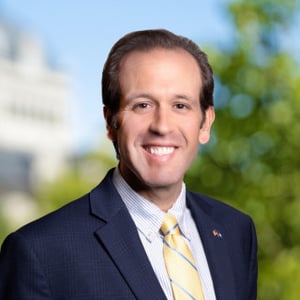
Member, Sturgill, Turner, Barker & Moloney, PLLC
Currently a litigator in private practice, Carmine has served the public as counsel and director for executive and regulatory agencies in Kentucky. Most recently as Chief of Staff and as General Counsel to the Kentucky Attorney General, he provided comprehensive strategic, policy, political, and legal advice and counsel to the Attorney General and the office’s divisions on issues involving complex litigation, government law, ethics, and compliance.
He previously served as Executive Director of the Attorney General’s Office of Civil & Environmental Law, where he oversaw trial litigation throughout the Commonwealth as well as appeals under the Open Meetings and Open Records Acts, and Opinions of the Attorney General. In this role, he was chiefly responsible for defending state statutes challenged as unconstitutional and for the defense of executive and judicial branch officials. While at the Attorney General’s office, he authored an Opinion of the Attorney General which concluded that ESG investment practices are inconsistent with Kentucky law governing public pensions—the first such opinion in the country.
Before joining the Office of the Attorney General, Carmine served as Governor-appointed General Counsel of the Kentucky Public Protection Cabinet, where he was chief counsel to the Cabinet and its 12 agencies charged with regulating horse racing, financial institutions, insurance, alcoholic beverages, construction, professional licensing, and charitable gaming. While at the Cabinet, he litigated throughout state and federal court, including a case defending the Kentucky Horse Racing Commission’s declaration of the winner of the 145th running of the Kentucky Derby.
Wendell H. Ford Professor of Law, University of Kentucky J. David Rosenberg College of Law
Paul E. Salamanca graduated from Dartmouth College in 1983 and Boston College Law School in 1989, where he was a note editor for the Boston College Law Review and a member of the Order of the Coif.
Professor Salamanca served as a law clerk to Judge David H. Souter of the U.S. Court of Appeals for the First Circuit, and subsequently clerked for Justice Souter on the U.S. Supreme Court. He practiced law with the firm of Debevoise & Plimpton in New York from 1991 to 1994 and was a visiting assistant professor of law at Loyola University School of Law in New Orleans before joining the faculty at the University of Kentucky College of Law in June 1995.
Professor Salamanca writes in the areas of separation of powers, freedom of speech, freedom of religion, and privacy. He has published articles on these subjects in the University of Cincinnati Law Review, the Missouri Law Review, the Georgia Law Review and the Kentucky Law Journal, among other places.
From 2019 until 2021, Professor Salamanca served as a Senior Counsel and then as a Deputy Assistant Attorney General in the Environment and Natural Resources Division (ENRD) of the United States Department of Justice. His duties included supervision of the Natural Resources and Land Acquisition Sections of ENRD.
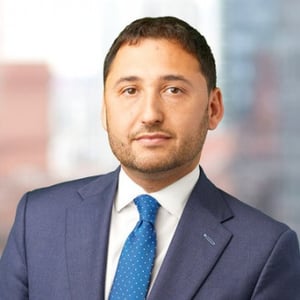
Partner, Troutman Pepper Locke LLP
Misha leads Troutman Peppers' national appellate and Supreme Court practice. Most recently, he successfully obtained orders from the Supreme Court blocking an unconstitutional restriction on places of worship, as well as overturning a lower court order that had blocked several state election laws. He has also argued and prevailed before the Supreme Court in Gill v. Whitford, one of the most significant redistricting cases in decades, as well as Murr v. Wisconsin, a high-stakes regulatory taking case.
Before joining Troutman, Misha served as Solicitor General of the State of Wisconsin. Misha previously served as a law clerk for the Honorable Anthony M. Kennedy of the Supreme Court, Janice Rogers Brown of the D.C. Circuit, and Alex Kozinski of the 9th Circuit. He graduated from Georgetown University Law Center, where he was President of the Federalist Society Chapter.
Judge, U.S. District Court, Eastern District of Kentucky
Judge Gregory F. Van Tatenhove has served as a District Court Judge in the Eastern District of Kentucky since his confirmation by the United States Senate on December 21, 2005. Prior to his appointment to the Court, Judge Van Tatenhove served over four years as the United States Attorney for the Eastern District of Kentucky. He has been an adjunct professor at the College of Law since the Spring Semester of 2017, where he teaches Crime and Punishment: Sentencing Policy and Procedure (LAW 902). Judge Van Tatenhove is presently a member of the University of Kentucky College of Law Board of Visitors as well as the Henry Clay Memorial Foundation board. Past service includes a term as President of the Asbury University Alumni Board and Vice-Chair of the Asbury Board of Trustees. He is also a Member of the Kentucky Bar Association Commission on the Future of Law Practice.
Member, Sturgill, Turner, Barker & Moloney, PLLC
Currently a litigator in private practice, Carmine has served the public as counsel and director for executive and regulatory agencies in Kentucky. Most recently as Chief of Staff and as General Counsel to the Kentucky Attorney General, he provided comprehensive strategic, policy, political, and legal advice and counsel to the Attorney General and the office’s divisions on issues involving complex litigation, government law, ethics, and compliance.
He previously served as Executive Director of the Attorney General’s Office of Civil & Environmental Law, where he oversaw trial litigation throughout the Commonwealth as well as appeals under the Open Meetings and Open Records Acts, and Opinions of the Attorney General. In this role, he was chiefly responsible for defending state statutes challenged as unconstitutional and for the defense of executive and judicial branch officials. While at the Attorney General’s office, he authored an Opinion of the Attorney General which concluded that ESG investment practices are inconsistent with Kentucky law governing public pensions—the first such opinion in the country.
Before joining the Office of the Attorney General, Carmine served as Governor-appointed General Counsel of the Kentucky Public Protection Cabinet, where he was chief counsel to the Cabinet and its 12 agencies charged with regulating horse racing, financial institutions, insurance, alcoholic beverages, construction, professional licensing, and charitable gaming. While at the Cabinet, he litigated throughout state and federal court, including a case defending the Kentucky Horse Racing Commission’s declaration of the winner of the 145th running of the Kentucky Derby.
Wendell H. Ford Professor of Law, University of Kentucky J. David Rosenberg College of Law
Paul E. Salamanca graduated from Dartmouth College in 1983 and Boston College Law School in 1989, where he was a note editor for the Boston College Law Review and a member of the Order of the Coif.
Professor Salamanca served as a law clerk to Judge David H. Souter of the U.S. Court of Appeals for the First Circuit, and subsequently clerked for Justice Souter on the U.S. Supreme Court. He practiced law with the firm of Debevoise & Plimpton in New York from 1991 to 1994 and was a visiting assistant professor of law at Loyola University School of Law in New Orleans before joining the faculty at the University of Kentucky College of Law in June 1995.
Professor Salamanca writes in the areas of separation of powers, freedom of speech, freedom of religion, and privacy. He has published articles on these subjects in the University of Cincinnati Law Review, the Missouri Law Review, the Georgia Law Review and the Kentucky Law Journal, among other places.
From 2019 until 2021, Professor Salamanca served as a Senior Counsel and then as a Deputy Assistant Attorney General in the Environment and Natural Resources Division (ENRD) of the United States Department of Justice. His duties included supervision of the Natural Resources and Land Acquisition Sections of ENRD.
Partner, Troutman Pepper Locke LLP
Misha leads Troutman Peppers' national appellate and Supreme Court practice. Most recently, he successfully obtained orders from the Supreme Court blocking an unconstitutional restriction on places of worship, as well as overturning a lower court order that had blocked several state election laws. He has also argued and prevailed before the Supreme Court in Gill v. Whitford, one of the most significant redistricting cases in decades, as well as Murr v. Wisconsin, a high-stakes regulatory taking case.
Before joining Troutman, Misha served as Solicitor General of the State of Wisconsin. Misha previously served as a law clerk for the Honorable Anthony M. Kennedy of the Supreme Court, Janice Rogers Brown of the D.C. Circuit, and Alex Kozinski of the 9th Circuit. He graduated from Georgetown University Law Center, where he was President of the Federalist Society Chapter.
Judge, U.S. District Court, Eastern District of Kentucky
Judge Gregory F. Van Tatenhove has served as a District Court Judge in the Eastern District of Kentucky since his confirmation by the United States Senate on December 21, 2005. Prior to his appointment to the Court, Judge Van Tatenhove served over four years as the United States Attorney for the Eastern District of Kentucky. He has been an adjunct professor at the College of Law since the Spring Semester of 2017, where he teaches Crime and Punishment: Sentencing Policy and Procedure (LAW 902). Judge Van Tatenhove is presently a member of the University of Kentucky College of Law Board of Visitors as well as the Henry Clay Memorial Foundation board. Past service includes a term as President of the Asbury University Alumni Board and Vice-Chair of the Asbury Board of Trustees. He is also a Member of the Kentucky Bar Association Commission on the Future of Law Practice.
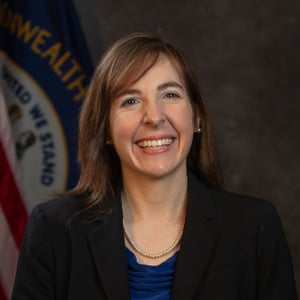
Auditor of Public Accounts, Commonwealth of Kentucky
Allison Ball is the 48th Auditor of Public Accounts for the Commonwealth of Kentucky. Prior to being elected Auditor, Ball served two terms as Kentucky State Treasurer. Before that, she spent four years as Assistant Floyd County Attorney, prosecuting child abuse and juvenile delinquency cases. When first appointed to office, Ball was the youngest statewide elected official in the country.
Ball has a rich Kentucky history; her family has been in Eastern Kentucky since the 1790s, and she holds a degree from the University of Kentucky College of Law.
She is a fierce watchdog for Kentucky taxpayer dollars. As Auditor, Ball protects against waste, fraud, and abuse.
As Treasurer, she returned more unclaimed property than any Treasurer in state history and established a savings and investment program for people with disabilities. She has been a national leader for improved financial literacy; Ball established the Kentucky Financial Empowerment Commission, and she successfully advocated for a financial literacy high school graduation requirement.
A Floyd County native, Ball and her husband, Dr. Asa James Swan, have two children, Levi and Marigold. Upon birth of her son, she was the first Kentucky Constitutional Officer to give birth while in office.
Chief of Staff, Office of the Kentucky State Treasurer
Assistant Deputy Attorney General, Commonwealth of Kentucky
Victor "Vic" Maddox heads the Civil Branch in the Office of the Attorney General. Maddox co-founded the Louisville firm known today as Fultz Maddox Dickens, PLC, where he represented clients in constitutional, administrative, business, and personal injury matters. Maddox is an expert in litigation matters and has represented elected officials and Kentucky citizens in his nearly four decades of legal experience, including vast experience at both the trial and appellate level. He was previously a partner with the predecessor firm to Frost Brown Todd, LLC, where he served in the firm's litigation practice and was involved in cases regarding securities fraud, product liability, trade secrets, and engineering liability. During his early career, Maddox worked in Washington, D.C., as a trial attorney with the Civil Division of the United States Department of Justice. He later served as Counsel on the Senate Judiciary Committee for Senator Mitch McConnell, where he oversaw judicial and Justice Department nominations. Maddox was also appointed to the board of the Legal Services Corporation, a federally-chartered non-profit that provides funding for legal aid in civil cases to low-income Americans by President Obama on the recommendation of Senator McConnell. In that capacity, Maddox served as chairman of the Audit Committee and co-chaired the organization's Opioid Task Force. Maddox is a graduate of Ohio University and the Indiana University Maurer School of Law.
Partner, Wyant, Tarrant & Combs LLP
Douglas McSwain is a member of the Litigation & Dispute Resolution Service Team at Wyant, Tarrant & Combs LLP. He has been a litigator, legal advisor, speaker, and writer for more than 30 years. He concentrates his practice in constitutional law, business, professional, employment, civil rights, data privacy & security, and trade law. Mr. McSwain also has experience in health care, administrative and equine law.
Mr. McSwain has handled numerous multi-party wage and hour cases both administratively and in litigation. He has conducted auditing and investigative cases involving the U.S. Department of Labor and the Kentucky Labor Cabinet, as well as multi-Plaintiff cases individually suing or class and collective actions.
Executive General Counsel, First Liberty Institute
Hiram Sasser is Executive General Counsel for First Liberty Institute, where he oversees First Liberty’s litigation and media efforts. Sasser’s practice focuses on First Amendment and other constitutional and civil rights issues relating to religious liberty. Sasser served as co-counsel in seven victories before the United States Supreme Court, including Groff v. DeJoy (landmark case overturning the “de minimis cost” test for Title VII in place almost 50 years), Kennedy v. Bremerton (landmark case overturning 50 years of Establishment Clause precedent), Carson v. Makin (overturning 40 years of Maine’s discrimination against parents choosing faith-based schools), American Legion v. American Humanist Association (landmark case ending Establishment Clause attacks on veterans’ memorials with religious imagery), Klein v. Oregon Bureau of Labor and Industries (granted, vacated, and remanded (twice) in religious wedding service case), and Sause v. Bauer (summary reversal revoking qualified immunity for police who ordered a citizen not to pray in her own home).
In addition to his legal duties, Sasser develops, coordinates, and implements successful media strategies on behalf of his clients. This includes numerous appearances on ABC, NBC, CBS, Fox News, CNN, and the BBC as well as being heard on various radio stations throughout the United States, Asia, Africa, and Europe.
In 2016, Sasser took a leave of absence to serve a temporary assignment as the Chief of Staff for the Attorney General of Texas. He currently serves as an Adjunct Professor of Law at both The University of Texas at Austin School of Law (teaching Religious Liberty) and Oklahoma City University School of Law (teaching Civil Rights Procedure).
General Counsel, University of Kentucky & Former Solicitor General of Virginia, University of Kentucky
William E. Thro, the General Counsel of the University of Kentucky, is an accomplished university attorney, appellate advocate, and legal scholar.
As the Chief Legal Officer for the University of Kentucky, he provides proactive strategic advice on critical legal and policy issues confronting a public flagship land grant research university with an integrated academic medical center and a high profile athletics program. Before assuming his present position in 2012, he spent more than twenty years representing public universities including eight years as the first in-house counsel at Christopher Newport University.
As Solicitor General of Virginia for four years, he was responsible for the Virginia State Government’s U.S. Supreme Court litigation (except capital cases) as well as lower court appeals involving the constitutionality of statutes or politically sensitive issues. He argued two cases in the U.S. Supreme Court and numerous cases in the lower appellate courts. He co-authored seven U.S. Court merits briefs, eleven U.S. Supreme Court amicus briefs, and more than fifty briefs at the petition stage. He received two Best Brief Awards from the National Association of Attorneys General.
As a legal scholar, he focuses on constitutional law in educational contexts. He has more than sixty publications in law reviews or peer reviewed journals as well as numerous monographs, book chapters, and encyclopedia entries. In recognition of his scholarly work, he received Stetson University’s Kaplin Award for Excellence in Higher Education Law & Policy Scholarship (2014) and became a Fellow of both the National Education Finance Conference (2012) and the National Association of College and University Attorneys (2007).
He has served as President of the Education Law Association, Chair of the Virginia Bar Association’s Appellate Practice Section, Board Chair for a local Red Cross Chapter, on the Boards of both the National Association of College & University Attorneys and the National Education Finance Academy, and an Elder in the Presbyterian Church (U.S.A.).
A native of Kentucky, he received his undergraduate degree summa cum laude from Hanover College. In addition to receiving the Crowe Citation as the outstanding male in his class, he was the first Hanover student to become a Harry S. Truman Scholar. He earned a graduate degree with honours from the University of Melbourne while attending as a Rotary Foundation International Ambassadorial Scholar. His law degree is from the University of Virginia where he was a published member of the VIRGINIA LAW REVIEW and research assistant to constitutional law professor A.E. Dick Howard. He began his legal career as a judicial clerk to the late Judge Ronald E. Meredith of the U.S. District Court for the Western District of Kentucky in Louisville.
He is married to the Rev. Dr. Julie Urback Thro and has two children in college (Sandra, Will) and one in high school (Noah).

Panel: Federalism Reignited: A View from the States
2025 Kentucky Chapters Conference
Louisville, KYDefining Antisemitism: A Debate on Free Speech and Civil Rights
William Creeley, Aharon Jeffrey Friedman, Eugene Kontorovich
Congress is currently debating the Antisemitism Awareness Act. This proposed legislation aims to provide a...
Plenary Session 1: Title IX: Gender Identity and So Much More
Mark Chenoweth, Harriet Hageman, Candice Jackson, KC Johnson, Scott Schneider
The Biden administration contends that the U.S. Department of Education’s final Title IX regulations published...
Panel Two: Aftermath of Bruen
2023 Kentucky Chapters Conference
Versailles, KYPanel: Election Law in Flux
Robert J. Cottrol, Michael R. Dimino, Edward B. Foley, Derek T. Muller, Franita Tolson
Election law has attracted increasing academic and judicial scrutiny in recent years, with topics of...
Welcome Remarks by AALS President-Elect, Dean Mark Alexander
Mark C. Alexander
Featuring Dean Mark Alexander, AALS President-Elect
Feddie Night Frights: Saving the Constitution from the Courts?
Eric J. Segall, Lawrence VanDyke, Ilan Wurman
The Federalist Society’s Student Division &University of Kentucky College of Law Student Chapter present: Feddie Night...
A Discussion on Nationwide Injunctions
Carmine G. Iaccarino, Paul E. Salamanca, Misha Tseytlin, Gregory F. Van Tatenhove
On October 14-15, the Federalist Society's Kentucky lawyers chapters hosted their annual conference via online...
A Discussion on Nationwide Injunctions
Carmine G. Iaccarino, Paul E. Salamanca, Misha Tseytlin, Gregory F. Van Tatenhove
On October 14-15, the Federalist Society's Kentucky lawyers chapters hosted their annual conference via online...
Covid-19 & Constitutional Law
Allison Joy Ball, Lesley Bilby, Victor B. Maddox, Douglas McSwain, Hiram Sasser, William Thro
On October 14-15, the Federalist Society's Kentucky lawyers chapters hosted their annual conference via online...