
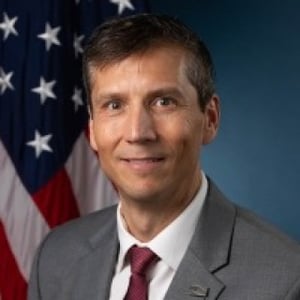
U.S. Attorney, Middle District of Tennessee, U.S. Department of Justice
Braden Boucek was sworn in on December 24, 2025, as the United States Attorney for the Middle District of Tennessee. Prior to becoming United States Attorney, Mr. Boucek served as the senior vice president of litigation at the Southeastern Legal Foundation having previously served as the vice president of legal affairs at the Beacon Center. Mr. Boucek has extensive experience as a prosecutor, starting his career at the Tennessee Attorney General’s Office before serving for two years as an Assistant District Attorney General in Williamson County. He was a federal prosecutor for ten years, first serving as an Assistant United States Attorney in the Western District of Tennessee from 2005 to 2011. From 2011 to 2015, Mr. Boucek was an Assistant United States Attorney in the Middle District of Tennessee, the district he now leads as the United States Attorney.
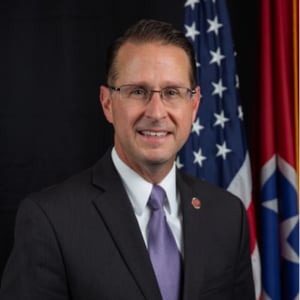
United States Attorney, Western District of Tennessee
D. Michael Dunavant is currently serving for the second time as the Presidentially Appointed, Senate Confirmed United States Attorney for the Western District of Tennessee, and was sworn into office on October 10, 2025. In that role, he is the 50th and 54th person to serve as the chief federal prosecutor and legal representative of the United States for the 22 counties and approximately 1.6 million citizens of West Tennessee. Mr. Dunavant is the first person to serve the district twice as the Presidential appointee, having previously served as U.S. Attorney from 2017–2021 during the first Trump administration. In addition to his service as the U.S. Attorney, Mr. Dunavant has served as the Deputy Executive Director of Legal Services & Policy for the Tennessee District Attorneys General Conference from 2023-2025; the Chief Investigative Counsel for the Tennessee Comptroller of the Treasury Division of Investigations from 2021-2023; and the elected District Attorney General for the 25th Judicial District of Tennessee, where he served as the chief state criminal prosecutor for Lauderdale, Tipton, Fayette, Hardeman, and McNairy counties in West Tennessee from 20062017. Prior to his service as District Attorney, Mr. Dunavant was a partner in the law firm of Carney, Wilder & Dunavant in Ripley, Tennessee. A native of Ripley, Mr. Dunavant holds a Bachelor’s Degree in Political Science from the University of Tennessee at Knoxville, and a Doctor of Jurisprudence Degree with honors from the University of Mississippi at Oxford, and has been practicing law in Tennessee since 1995.
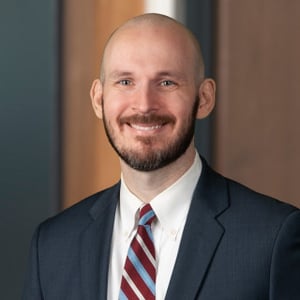
United States District Judge, United States District Court for the Western District of Tennessee
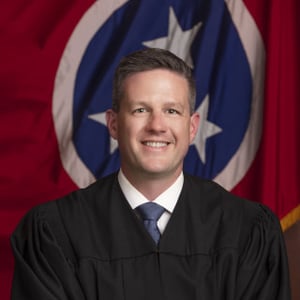
Brian Lea is a district judge on the United States District Court for the Western District of Tennessee. Before taking the bench, Judge Lea served as Deputy Associate Attorney General in President Trump’s second administration. Prior to his public service, Judge Lea was a partner with the Issues and Appeals practice of Jones Day. He also served on the faculty of the University of Georgia School of Law, where his research and publications focused on the operation of the federal courts. Judge Lea began his legal career with two clerkships, one for Justice Clarence Thomas and the other with Judge Ed Carnes of the United States Court of Appeals for the Eleventh Circuit. Judge Lea graduated first in his class from the University of Georgia School of Law, where he served as an editor on the Law Review. He earned his undergraduate degree from Union University in Jackson, Tennessee.
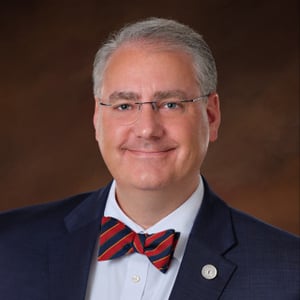
Judge, Court of Criminal Appeals Judge, Tennessee Court of Appeals
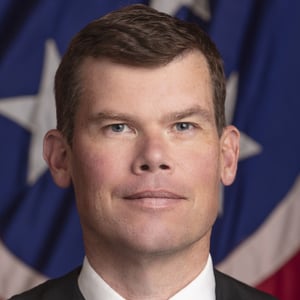
Judge Tom Greenholtz serves on the Tennessee Court of Criminal Appeals, Eastern Section, where he hears direct appeals in criminal and post-conviction matters from across the state. Appointed by Governor Bill Lee and confirmed by the General Assembly in 2022, he brings to the appellate bench a record that includes seven years as a judge in Hamilton County Criminal Court and prior private practice with Chambliss, Bahner & Stophel, where his work encompassed municipal and governmental law, complex civil litigation, labor and employment matters, and appellate advocacy. He began his legal career as a law clerk to the Honorable William M. Barker of the Tennessee Supreme Court. He earned his juris doctor from the University of Tennessee, summa cum laude.
Beyond his judicial responsibilities, Judge Greenholtz serves on the Tennessee Supreme Court’s Technology Oversight Committee, and he is an ex-officio member of the supreme court’s Advisory Commission on the Rules of Practice and Procedure. A Fellow of the Chattanooga, Tennessee, and American Bar Foundations, he has long served as an adjunct professor of political science at the University of Tennessee at Chattanooga, teaching courses on constitutional law, civil liberties, and the judicial process. He and his wife, Kate, have two children and have called Chattanooga home since the mid-1980s.
Justice, Tennessee Supreme Court
Judge, Tennessee Court of Appeals
Judge, Tennessee Court of Appeal
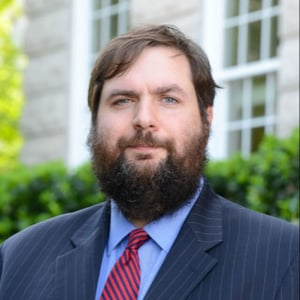
Jeffrey Usman is a member of the Tennessee Court of Appeals. He earned his bachelor's degree from Georgetown University, his J.D. from Vanderbilt Law School, and his LL.M. from Harvard Law School. He clerked for Judge W. Harold Albritton of the United States District Court for the Middle District of Alabama and Judge Mary Beck Briscoe of the United States Court of Appeals for the Tenth Circuit. He also previously served as a career clerk for Justice William C. Koch, Jr. of the Tennessee Supreme Court and as an Assistant Attorney General for the State of Tennessee. Most recently, he was professor at the Belmont University College of Law for over a decade. At Belmont, he taught constitutional law related courses and was recognized 5 times with a best professor award.
Judge, Tennessee Court of Criminal Appeals
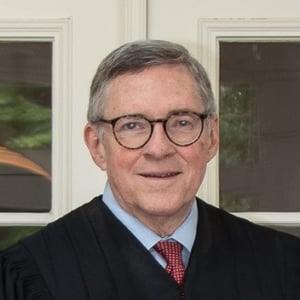
Circuit Court Judge, State of Tennessee, 21st Judicial District
Judge Woodruff has served as the Division I Circuit Judge of Tennessee’s 21st Judicial District since his election in 2014. The 21st is one of Tennessee’s busiest judicial districts and each judge sits as a chancellor, criminal and civil circuit court judge. Prior to redistricting in 2022, the 21st Judicial District had the largest ratio of population per judge of any of Tennessee’s 31 judicial districts. Today, the 21st remains in the top tier of that statistic. He was re-elected in 2022 without opposition.
Before becoming a judge, Woody was a partner in the litigation group at Waller Lansden Dortch & Davis, LLP, where he represented clients in state and federal trial and appellate courtrooms in a nationwide practice focusing on the healthcare and financial services industries. From 2004 through 2007, he was the lead lawyer of the team representing the State of Tennessee in litigation against the Maddox Foundation. This bitter interstate legal battle concluded with a settlement returning $55 million to Tennessee reviving the charitable foundation originally established by Nashville philanthropists Dan and Margaret Maddox.
Woody began his legal career as an officer in the US Army JAG Corps. During his six years of active duty, he tried to verdict more than 100 contested cases involving military justice, administrative law and federal tort claims actions. In 1986, he successfully represented a military intelligence agent charged with financial crimes related to covert activities and stemming from a sweeping criminal investigation into the official actions of high-ranking commissioned officers. His client was the first defendant tried, and only defendant to be acquitted. Following active duty, Woody served as a JAG in the US Army Reserve and retired at the rank of Lieutenant Colonel.
He earned his JD degree in 1981 from the University of Alabama School of Law. In law school, he was the recipient of the Dean M. Leigh Harrison Award, the Hugo Black Award, and was a member of the Order of the Coif, among other honors. He has published scholarly articles in various legal periodicals, as well as newspaper columns and blogs on college football. He has been an adjunct professor at the Belmont University School of Law, and is an active member of the Tenn. John Marshall Chapter, American Inns of Court and the Federalist Society for Law and Public Policy.
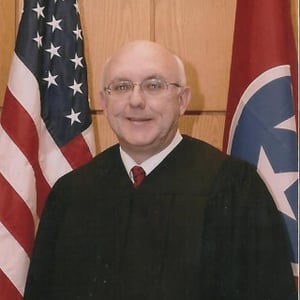
Judge, Tennessee 5th Judicial District, Blount County Circuit Court
David R. Duggan, Blount County circuit judge, is the author of the book, Alcoa: A Century in Words and Pictures. He also co-authored Alcoa and Maryville in Arcadia Publishing’s Images of America series. He is Alcoa city historian, a former Blount County Library board chair, and lay representative, a Sunday School teacher, and church historian at Alcoa First Methodist Church. He serves as lay leader of the MidSouth Annual Conference of the Global Methodist Church (GMC), and he is a member of the GMC’s global Ecumenical Relations Commission. He chaired the City of Alcoa’s 75th Anniversary and Centennial Committees. Named to the Daily Times Alumni Wall of Fame in 2010, he received the Blount Historic Trust Champion Award in 2015. He also received, in 2018, a Community History Award, and in 2022 an Award of Distinction, from the East Tennessee Historical Society. He is president and a director of the Faith and Family Coalition, Inc. He serves as a member of the executive committee of the Knoxville chapter of the Federalist Society. Duggan also serves on the Mr. P Foundation board. Alcoa High School’s lyceum is named in his honor.
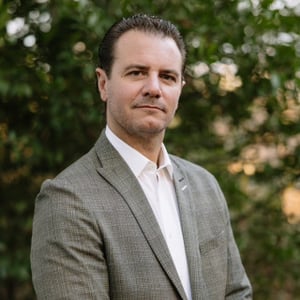
Circuit Court Judge of the Tenth Judicial District, State of Tennessee
Judge Andrew Mark Freiberg is a Circuit Court Judge for criminal matters in the Tenth Judicial District in Tennessee, covering the counties of Bradley, McMinn, Monroe, and Polk. He was elected to the court in 2014 and was reelected to office in 2022.
Judge Freiberg received his undergraduate degree from the University of Wisconsin-Madison in 2001, majoring in Psychology and minoring in Criminal Justice. He received his Juris Doctorate degree from the University of Tennessee College of Law in 2004. From 2004-2011, he was a Prosecutor in the District Attorney’s Office, 10th Judicial District, Tennessee, and from 2011-2014, prior to his election, he was a litigation attorney in a local law firm. He has also served part-time as an Adjunct Professor at Tennessee Wesleyan University.
As a judge, he has presided over criminal jurisdiction matters throughout Southeast Tennessee having adjudicated over eleven thousand felony jury trials, motion hearings and pleas involving the criminally accused. He has served with distinction as the presiding Judge for the Tenth Judicial Recovery Court, which is a judicially monitored, intensive out-patient treatment program for non-violent offenders seeking to overcome addiction and mental illness. He also founded a successful Mental Health Court rehabilitation program for the Tenth Judicial District serving the mentally ill convicted of non-violent offenses.
While attending law school at UT, Judge Freiberg met his wife, Crystal Freiberg, with whom he shares two amazing children, Archer and Berkley Freiberg. He is a member of First Lutheran Church in Cleveland, Tennessee where he has served as both President and Vice-President. He is also a member of the Federalist Society, Heritage Foundation, NRA, National Association of Drug Court Professionals, and Benevolent and Protective Order of the Elks. He is also an avid sports fan and a fanatic of the Green Bay Packers and the Tennessee Vols.
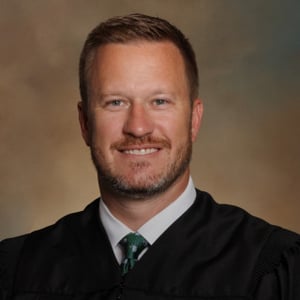
Circuit Court Judge, State of Tennessee
A West Tennessee native, Judge Jimmy Turner graduated from Middle Tennessee State University in 2006 with a Bachelor of Science in Aerospace Administration. He graduated from Nashville School of Law in 2011. As an attorney, his practice focused on criminal defense, domestic relations and personal injury litigation representing both plaintiffs and defendants. He also served as the City Attorney for Eagleville, Tennessee. In 2021, Judge Turner was appointed by Governor Bill Lee as Circuit Court Judge for the 16th Judicial District. He presides over a criminal docket. Judge Turner and his wife Erin reside in Lascassas, Tennessee with their two sons, Hudson and Harrison.
Justice, Tennessee Supreme Court
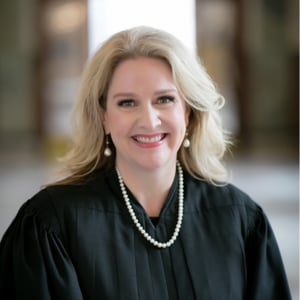
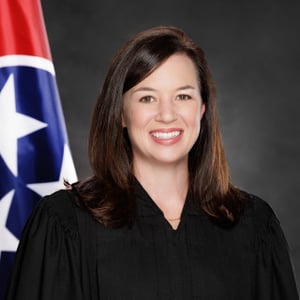
Tennessee Gov. Bill Haslam appointed Mary L. Wagner of Memphis as Circuit Court Judge, Division VII, for the 30th Judicial District on October 24, 2016. Wagner was elected to this judgeship in August 2018.
“With her extensive background in Shelby County, Mary Wagner is well prepared for a seat on the circuit court in the 30th Judicial District,” Haslam said. “We are fortunate to have someone with her experience, and we are pleased to announce this appointment.”
Prior to her appointment Wagner practiced with the Memphis law firm Rice, Amundsen & Caperton PLLC, where she had a general civil litigation practice. While at the firm, she taught at the Cecil C. Humphreys School of Law at the University of Memphis from 2012-2014 as an adjunct professor, teaching second-year law students advanced skills in legal writing and oral advocacy and first-year students legal writing, research and analysis.
Before joining Rice, Amundsen & Caperton, Wagner practiced with a regional insurance defense firm. She served as a law clerk from 2009-2010 for Judge Steven Stafford of the Tennessee Court of Appeals, law clerk for Judge Robert L. Childers in the Shelby County Circuit Court from 2008-2009 and worked as an extern in 2008 with the U.S. Attorney’s office for the Western District of Tennessee. Wagner was a research assistant in 2007 for Prof. Andrew McClurg during law school.
Wagner received her law degree from the University of Memphis in 2009 graduating magna cum laude, 4th in her class. While in law school, Wagner served as a Notes Editor for the University of Memphis Law Review. She received a bachelor’s degree in 2006 from the University of Colorado, majoring in political science.
Throughout her career, Wagner has been active in the legal community. She is a member of the Tennessee, Mississippi and Memphis Bar Associations. She serves on various committees and board for these associations. In 2018, Wagner was elected as a Fellow of the Memphis Bar Foundation. Also, in 2018, Wagner was selected as one of the Twelve Most Outstanding Women, Honoring Women in the Judicial System by the Memphis Inter-Denominational Fellowship Inc. Wagner is also active in the Tennessee Judicial Conference, where she served as Secretary and currently serves on the Tennessee Pattern Jury Instruction Committee and Legislation Committee. Wagner is also a member of the Tennessee Trial Judges Association. In 2019, Wagner received the Chancellor Charles A. Round Memorial Award for Outstanding Judge of the Year from the Young Lawyers’ Division of the Memphis Bar Association.
Judge Wagner has also been appointed by the Tennessee Supreme Court as special judge for the Tennessee Worker’s Compensation Appeals Panel and as a member of a Three-Judge panel in a constitutional case.
Director of Property Rights Litigation, Pacific Legal Foundation
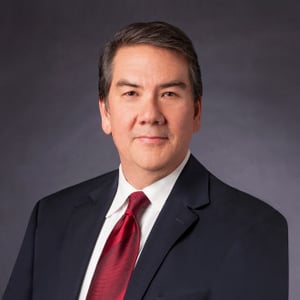
Robert Thomas is Pacific Legal Foundation’s director of its Property Rights practice group. He is an expert on property rights, takings, land use, and eminent domain issues.
After more than three decades in private practice in Hawaii and California representing property owners in takings, eminent domain, and land use cases, Robert joined PLF’s team of freedom fighters in 2021.
He has litigated cases in both state and federal court. As counsel for the property owners in County of Hawaii v. C&J Coupe Family Limited Partnership, he helped establish the rule that courts are not mere “rubber stamps” when a local government is taking property by eminent domain. Another case, Hamilton ex rel. Lethem v. Lethem, held that a parent’s liberty interest in raising and disciplining his child included a right to fair procedures, including notice and a judicial hearing before the family court could restrict parent-child contact.
Robert is a frequent speaker on property rights, takings, land use, and eminent domain issues nationwide. He also regularly publishes scholarly and practical articles in his area of practice, most recently including, “Hoist the Yellow Flag and Spam® Up: The Separation of Powers Limitation on Hawaii’s Emergency Authority”, 43 U. Haw. L. Rev. 71 (2020) and “Evaluating Emergency Takings: Flattening the Economic Curve”, 29 Wm. & Mary Bill Rts. J. 1145 (2021).
An elected member of the American Law Institute, Robert received his LLM, with honors, from Columbia Law School, where he was a Harlan Fiske Stone Scholar, and his JD from the University of Hawaii School of Law, where he served as editor of the Law Review. He also serves as the inaugural Joseph T. Waldo Visiting Chair in Property Rights Law at William & Mary Law School in Williamsburg, Virginia, where he teaches upper-division courses in eminent domain, land use, property rights, and property law.
When he’s not working, you might find Robert writing and publishing his blog on land use, property, and takings law, inversecondemnation.com, one of the most widely read blogs on those subjects.
Richard E. Nelson Eminent Scholar Chair in Local Government Professor of Law, University of Florida Levin College of Law
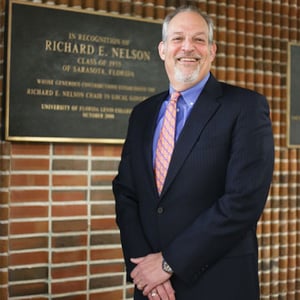
Michael Allan Wolf joined the faculty of the University of Florida Levin College of Law in August, 2003, as the first occupant of the Richard E. Nelson Chair in Local Government Law. Professor Wolf has been teaching and writing for more than three decades in the areas of land-use planning, property, local government, constitutional, environmental, and urban revitalization law; and legal and constitutional history. He earned his B.A. degree from Emory University, his J.D. degree from the Georgetown University Law Center, and his A.M. (history) and Ph.D. (History of American Civilization) degrees from Harvard University. Professor Wolf, who was Professor of Law and History at the University of Richmond, held his first law teaching appointment at Oklahoma City University and has also served as a visiting professor, first at the University of Richmond, then at American University.
Since 2000, Professor Wolf has been the General Editor of Powell on Real Property (17 volumes), the most prominent treatise in the area that is regularly cited by state and federal courts. Other recent books include Land Use Law (with Daniel R. Mandelker, 2015-), The Supreme Court and the Environment: The Reluctant Protector (2012), Land Use Planning and the Environment: A Casebook (with Charles M. Haar, 2010), Powell on Real Property: Michael Allan Wolf Desk Edition (a one-volume abridgement of the treatise, 2009), The Zoning of America: Euclid v. Ambler (2008), and Strategies for Environmental Success in an Uncertain Judicial Climate (editor and contributor, 2005). His writings have also appeared in a wide variety of law and law-related journals (including the Harvard Law Review, Michigan Law Review, and Fordham Law Review), many of them contributions to symposia on topics in land-use regulation, environmental law, eminent domain, and regulatory takings. His commentaries have been featured in national newspapers and on National Public Radio.
Legal Director, Foundation for Individual Rights and Expression
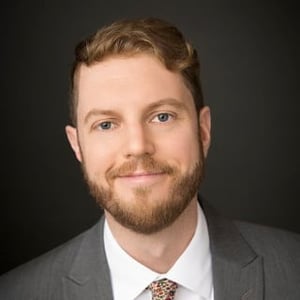
Will began defending student and faculty rights for FIRE in 2006 after graduating from New York University School of Law, where he served as an associate executive editor for the New York University Law Review. Will has appeared on national cable television and radio on behalf of FIRE and has spoken to students, faculty, administrators, and attorneys at events across the country. Will’s writing has been published by The New York Times, the Wall Street Journal, The Washington Post, the Chronicle of Higher Education, Jurist, Inside Higher Ed, Daily Journal, the Charleston Law Review, and many other outlets. Will edited the second edition of FIRE’s Guide to Due Process and Campus Justice, co-edited the second edition of FIRE’s Guide to Free Speech on Campus, and has coauthored amicus curiae briefs submitted to a number of courts, including the Supreme Court of the United States and the United States Courts of Appeals for the Third, Ninth, and Eleventh Circuits. Will has taught FIRE’s Continuing Legal Education programs in New York, Pennsylvania, and online. A member of the New York State Bar and the First Amendment Lawyers Association, Will serves as Co-Chair of the Education Subcommittee of the American Bar Association’s Section of Administrative Law and Regulatory Practice.
Will graduated magna cum laude from New York University’s Gallatin School of Individualized Study in 2003. A proud native of Buffalo, New York, Will now lives in New Jersey with his wife and two children.
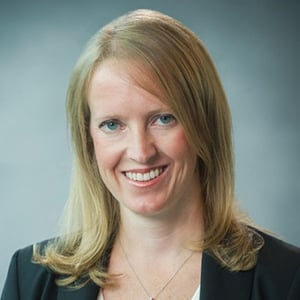
Partner, Clement & Murphy, PLLC
Erin Murphy is founding partner of Clement & Murphy, PLLC. She is widely recognized as one of the nation’s leading Supreme Court and appellate advocates. She has argued dozens of cases in appellate and trial courts throughout the country, including the Supreme Court and nearly all of the federal courts of appeals. Erin has long been ranked by Chambers & Partners rankings as a leading appellate practitioner, and the National Law Journal has named her one of the nation’s “Outstanding Women Lawyers.” Erin also has an active pro bono practice, through which she has successfully represented many religious organizations and adherents, criminal defendants, asylum applicants, adoptive parents, and more.
Erin is an adjunct professor at her alma mater the Georgetown University Law Center, a member and former officer of the Edward Coke Appellate Inn of Court, and a frequent speaker on topics relating to the Supreme Court and appellate advocacy. In her spare time, Erin serves on the board of directors of Street Law.
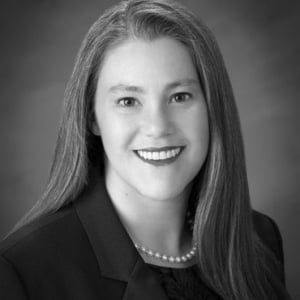
Judge, Arizona Court of Appeals, Division One
The Honorable Jennifer M. Perkins began service on the Arizona Court of Appeals, Division One, on October 30, 2017. At the time of her appointment by Governor Douglas Ducey, Judge Perkins was Assistant Solicitor General for the State of Arizona.
Judge Perkins was born in Portales, New Mexico, and primarily raised in Albuquerque. She attended the prestigious Albuquerque Academy from 1988-1995, before moving to Washington D.C. to attend the Elliott School of International Affairs at the George Washington University as a National Merit Scholar. Therafter, she relocated again to Dallas, Texas, and earned her juris doctor from the SMU Dedman School of Law, graduating cum laude in 2002.
Judge Perkins started her career at the law firm of Browning & Peifer (now Peifer, Hanson, Mullins, and Baker) in Albuquerque, New Mexico. While there, she litigated complex commercial matters including class action plaintiff and defense work, and assisted with employment and contract litigation. In 2003, the judge accompanied the Honorable James O. Browning in transitioning to the federal district court bench, serving as his first law clerk.
After her clerkship, Judge Perkins moved to Arizona to work for the Institute for Justice, Arizona Chapter, a public interest law firm. She spent five years with IJ-AZ litigating civil rights cases in Arizona and across the country. In 2009, the judge became Disciplinary Counsel for the Arizona Commission on Judicial Conduct, where she reviewed and prosecuted ethics complaints against state court judges throughout Arizona. After five years serving the state in this capacity, Judge Perkins entered private practice by joining an appellate law firm in Phoenix. While there, she worked on state and federal appeals involving a wide range of legal subjects, including complex business disputes, property rights, judicial ethics, and personal injury matters.
In January 2015, Judge Perkins joined the Office of the Arizona Attorney General to serve as the first Assistant Solicitor General; in that capacity, she was responsible for oversight of Attorney General Opinions and served as ethics counsel to the entire office. In addition to these two primary roles, the judge assisted on a variety of matters including trial and appellate litigation of election-related matters; federal appellate litigation with the Federalism Unit; state criminal appeals; and drafting amicus briefs on behalf of Arizona in state and federal courts.
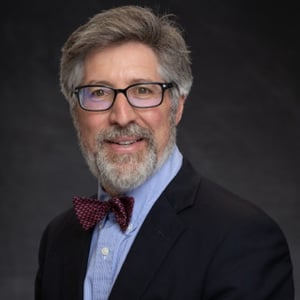
Associate Professor of Government, Hillsdale College, Washington, D.C. Campus
Richard Samuelson is an Associate Professor of Government at Hillsdale College’s Washington, D.C., campus. Dr. Samuelson is an historian of the American founding and of American politics and constitutional thought. He graduated from Bates College and received his MA and PhD in American history from the University of Virginia. Dr. Samuelson taught at California State University San Bernardino from 2007 to 2022. He was the 2009-2010 Garwood Visiting Fellow at Princeton University’s James Madison Program.
Dr. Samuelson has written extensively on John Adams and on the Adams family of Massachusetts, and on the constitutional politics of the founding more largely. His work also connects the founding with more contemporary issues, with a particular focus on religious liberty, and the challenge the modern American state, and contemporary civil rights laws present to religious liberty.
His essays and reviews have appeared in The Review of Politics, The William and Mary Quarterly, Commentary, The Claremont Review of Books, The Public Interest, National Review, and other publications. He has also contributed many essays and reviews to such online publications as Mosaic, Law and Liberty, Realclearpolitics, and other platforms.
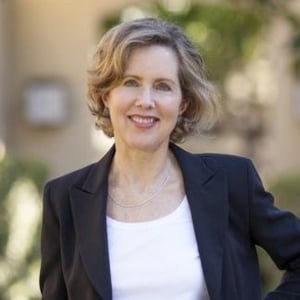
Thomas W. Smith Fellow; Contributing Editor, City Journal, Manhattan Institute
Heather Mac Donald is the Thomas W. Smith Fellow at the Manhattan Institute, a contributing editor of City Journal, and a New York Times bestselling author. She is a recipient of the 2005 Bradley Prize. Mac Donald’s work at City Journal has covered a range of topics, including higher education, immigration, policing, homelessness and homeless advocacy, criminal-justice reform, and race relations. Her writing has appeared in the Wall Street Journal, Washington Post, New York Times, Los Angeles Times, The New Republic, and The New Criterion. Mac Donald's newest book, The Diversity Delusion: How Race and Gender Pandering Corrupt the University and Undermine Our Culture (2018), argues that toxic ideas first spread by higher education have undermined humanistic values, fueled intolerance, and widened divisions in our larger culture.
Mac Donald’s The War on Cops (2016), a New York Times bestseller, warns that raced-based attacks on the criminal-justice system, from the White House on down, are eroding the authority of law and putting lives at risk. Other previous works include The Burden of Bad Ideas (2001), a collection of Mac Donald’s City Journal essays, details the effects of the 1960s counterculture’s destructive march through America’s institutions. In The Immigration Solution: A Better Plan than Today’s (2007), coauthored with Victor Davis Hanson and Steven Malanga, she chronicles the effects of broken immigration laws and proposes a practical solution to securing the country’s porous borders. In Are Cops Racist? (2010), another City Journal anthology, Mac Donald investigates the workings of the police, the controversy over so-called racial profiling, and the anti-profiling lobby’s harmful effects on black Americans.
A nonpracticing lawyer, Mac Donald clerked for the Honorable Stephen Reinhardt, U.S. Court of Appeals for the Ninth Circuit, and was an attorney-advisor in the Office of the General Counsel of the U.S. Environmental Protection Agency and a volunteer with the Natural Resources Defense Council. She has frequently testified before U.S. House and Senate Committees. In 1998, Mac Donald was appointed to Mayor Rudolph Giuliani’s task force on the City University of New York. She has received numerous awards for her writing:
A frequent guest on Fox News and other TV and radio programs, Mac Donald holds a B.A. in English from Yale University, graduating with a Mellon Fellowship to Cambridge University, where she earned an M.A. in English and studied in Italy through a Clare College study grant. She holds a J.D. from Stanford University Law School.
At the Criminal Justice Legal Foundation's 2018 annual meeting in downtown Los Angeles, U.S. Attorney General Jeff Sessions called Mac Donald, “the greatest thinker on criminal justice in America today.”
Visiting Fellow in Bioethics, Ethics & Public Policy Center
Alexander Raikin is a Visiting Fellow in the Bioethics, Technology and Human Flourishing Program at the Ethics and Public Policy Center. His research focuses on the dignity of human life and end-of-life issues, especially on its impact on the field of medicine and broader ethical questions of social belonging.
For tips, please send an email to araikin+tips@eppc.org.
His writing has been widely cited in major publications such as The Atlantic and the New York Times and in academic journals in the United States, Canada, UK, and France. He wrote cover stories for National Review and The New Atlantis, while his other bylines include City Journal, Plough, and the Washington Free Beacon. Raikin frequently speaks on national radio and on major podcasts.
Last year, Raikin was an inaugural Richard John Neuhaus Fellow at the Public Interest Fellowship and EPPC. He was a Tikvah Summer Fellow and a Killam scholar with Fulbright at American University. He graduated from Carleton University with a bachelor’s degree in public policy. Raikin is a proud member of Kesher Israel synagogue and lives with his wife in Washington, D.C.
Senior Fellow, Cato Institute
Jeffrey A. Singer is a senior fellow at the Cato Institute and works in the Department of Health Policy Studies. He is principal and founder of Valley Surgical Clinics Ltd., the largest and oldest group private surgical practice in Arizona, and has been in private practice as a general surgeon for more than 35 years.
He is also a visiting fellow at the Goldwater Institute in Phoenix. Singer is a member of the Board of Scientific Advisors of the American Council on Science and Health. From 1994 to 2016, he was a regular contributor to Arizona Medicine, the journal of the Arizona Medical Association. He served on the Advisory Board Council of the Center for Political Thought and Leadership at Arizona State University from 2014 to 2018 and is an adjunct instructor in the Program on Political History and Leadership at ASU. He writes and speaks extensively on regional and national public policy, with a specific focus on the areas of health care policy and the harmful effects of drug prohibition.
He received his BA from Brooklyn College (City University of New York) and his MD from New York Medical College. He is a fellow of the American College of Surgeons.
Managing Director, Berkeley Research Group
Dan Troy is Managing Director and an expert witness on FDA matters at Berkeley Research Group. Previously he served as Chief Counsel of the US Food and Drug Administration and General Counsel of GlaxoSmithKline PLC.
Visiting Fellow in Bioethics, Ethics & Public Policy Center
Alexander Raikin is a Visiting Fellow in the Bioethics, Technology and Human Flourishing Program at the Ethics and Public Policy Center. His research focuses on the dignity of human life and end-of-life issues, especially on its impact on the field of medicine and broader ethical questions of social belonging.
For tips, please send an email to araikin+tips@eppc.org.
His writing has been widely cited in major publications such as The Atlantic and the New York Times and in academic journals in the United States, Canada, UK, and France. He wrote cover stories for National Review and The New Atlantis, while his other bylines include City Journal, Plough, and the Washington Free Beacon. Raikin frequently speaks on national radio and on major podcasts.
Last year, Raikin was an inaugural Richard John Neuhaus Fellow at the Public Interest Fellowship and EPPC. He was a Tikvah Summer Fellow and a Killam scholar with Fulbright at American University. He graduated from Carleton University with a bachelor’s degree in public policy. Raikin is a proud member of Kesher Israel synagogue and lives with his wife in Washington, D.C.
Senior Fellow, Cato Institute
Jeffrey A. Singer is a senior fellow at the Cato Institute and works in the Department of Health Policy Studies. He is principal and founder of Valley Surgical Clinics Ltd., the largest and oldest group private surgical practice in Arizona, and has been in private practice as a general surgeon for more than 35 years.
He is also a visiting fellow at the Goldwater Institute in Phoenix. Singer is a member of the Board of Scientific Advisors of the American Council on Science and Health. From 1994 to 2016, he was a regular contributor to Arizona Medicine, the journal of the Arizona Medical Association. He served on the Advisory Board Council of the Center for Political Thought and Leadership at Arizona State University from 2014 to 2018 and is an adjunct instructor in the Program on Political History and Leadership at ASU. He writes and speaks extensively on regional and national public policy, with a specific focus on the areas of health care policy and the harmful effects of drug prohibition.
He received his BA from Brooklyn College (City University of New York) and his MD from New York Medical College. He is a fellow of the American College of Surgeons.
Managing Director, Berkeley Research Group
Dan Troy is Managing Director and an expert witness on FDA matters at Berkeley Research Group. Previously he served as Chief Counsel of the US Food and Drug Administration and General Counsel of GlaxoSmithKline PLC.
Professor of Law, Antonin Scalia Law School, George Mason University
Professor of Law Michael S. Greve joined the faculty of the Antonin Scalia Law School, George Mason University in fall 2012 after having served as John G. Searle Scholar at the American Enterprise Institute (AEI), where he specialized in constitutional law, courts, and business regulation and served as chairman of the Competitive Enterprise Institute. Prior to joining AEI, Greve was founder and co-director of the Center for Individual Rights, a public interest law firm specializing in constitutional litigation.
Greve has served previously as an adjunct professor at a number of universities, including Cornell and Johns Hopkins Universities, and has been a visiting professor at Boston College since 2004. He was awarded a PhD and an MA in government by Cornell University. Greve also earned a Diploma from the University of Hamburg in Germany.
A prolific writer, Greve is the author of nine books and a multitude of articles appearing in scholarly publications, as well as numerous editorials, short articles, and book reviews. He is a frequent speaker for professional and scholarly organizations and has made many appearances on radio and television.
In addition Greve has provided congressional and state legislative testimony, has lobbied and consulted in federal agency proceedings, and has provided litigation services and management in over 30 cases, including matters before the U.S. Supreme Court.
Judge, Arizona Court of Appeals, Division One
The Honorable Jennifer M. Perkins began service on the Arizona Court of Appeals, Division One, on October 30, 2017. At the time of her appointment by Governor Douglas Ducey, Judge Perkins was Assistant Solicitor General for the State of Arizona.
Judge Perkins was born in Portales, New Mexico, and primarily raised in Albuquerque. She attended the prestigious Albuquerque Academy from 1988-1995, before moving to Washington D.C. to attend the Elliott School of International Affairs at the George Washington University as a National Merit Scholar. Therafter, she relocated again to Dallas, Texas, and earned her juris doctor from the SMU Dedman School of Law, graduating cum laude in 2002.
Judge Perkins started her career at the law firm of Browning & Peifer (now Peifer, Hanson, Mullins, and Baker) in Albuquerque, New Mexico. While there, she litigated complex commercial matters including class action plaintiff and defense work, and assisted with employment and contract litigation. In 2003, the judge accompanied the Honorable James O. Browning in transitioning to the federal district court bench, serving as his first law clerk.
After her clerkship, Judge Perkins moved to Arizona to work for the Institute for Justice, Arizona Chapter, a public interest law firm. She spent five years with IJ-AZ litigating civil rights cases in Arizona and across the country. In 2009, the judge became Disciplinary Counsel for the Arizona Commission on Judicial Conduct, where she reviewed and prosecuted ethics complaints against state court judges throughout Arizona. After five years serving the state in this capacity, Judge Perkins entered private practice by joining an appellate law firm in Phoenix. While there, she worked on state and federal appeals involving a wide range of legal subjects, including complex business disputes, property rights, judicial ethics, and personal injury matters.
In January 2015, Judge Perkins joined the Office of the Arizona Attorney General to serve as the first Assistant Solicitor General; in that capacity, she was responsible for oversight of Attorney General Opinions and served as ethics counsel to the entire office. In addition to these two primary roles, the judge assisted on a variety of matters including trial and appellate litigation of election-related matters; federal appellate litigation with the Federalism Unit; state criminal appeals; and drafting amicus briefs on behalf of Arizona in state and federal courts.
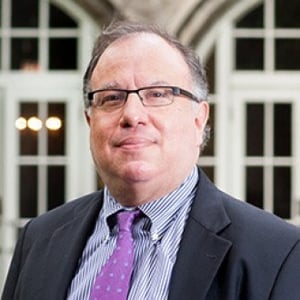
Harold Washington Professor of Law, Northwestern University Pritzker School of Law
Daniel B. Rodriguez, the Harold Washington Professor at the Law School, served as dean of the Law School from January 2012 through August 2018.
His principal academic work is in the areas of administrative law, local government law, statutory interpretation, federal and state constitutional law, and the law-business-technology interface.
Formerly, Professor Rodriguez served as Minerva House Drysdale Regents Chair in Law at the University of Texas-Austin; as a Research Fellow at Rice University’s Baker Institute for Public Policy; as Dean and Warren Distinguished Professor of Law at the University of San Diego School of Law; and, as a Professor of Law at University of California, Berkeley School of Law. He has also served as a visiting professor at several top law schools, including Stanford, Harvard, Columbia, University of Southern California, and Virginia.
Professor Rodriguez was the 2014 President of the Association of American Law Schools (AALS) and is currently serving as chair of the council of the American Bar Association Center for Innovation, a council member of the American Law Institute, and as an advisor to ROSS Intelligence, Inc.
Rodriguez received his law degree, with honors, from Harvard Law School and his undergraduate degree from California State University of Long Beach.
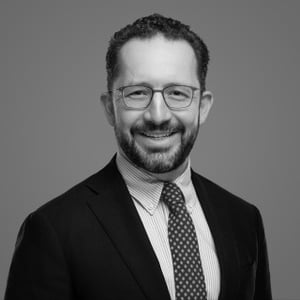
Executive Director, Alliance For Consumers; President & CEO, American Juris Link
O.H. Skinner is the President & CEO of American Juris Link, a nonprofit dedicated to accelerating nonprofit litigation to advance freedom, liberty, and the rule of law. O.H. has a long track record in facilitating strategic nonprofit litigation in his role as the Executive Director at Alliance For Consumers as well as from his time serving Arizona Attorney General Mark Brnovich in senior positions, including as Arizona Solicitor General. O.H. is a graduate of the University of Pennsylvania and Harvard Law School. Prior to joining the Arizona Attorney General's Office, O.H. practiced at WilmerHale and Ropes & Gray in Boston, and clerked for the Hon. J.L. Edmondson of the United States Court of Appeals for the Eleventh Circuit. In 2023, O.H. was a Wasserstein Public Interest Fellow at Harvard Law School, where he counseled students as a Harvard-identified “outstanding public interest attorney.”
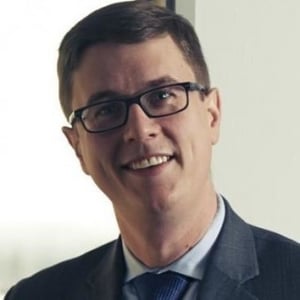
Solicitor General, West Virginia
Michael Williams is the Solicitor General for the State of West Virginia. In that role, Michael represents the State in appeals before state and federal courts, including the U.S. Supreme Court. Michael also coordinates strategic affirmative litigation on the State’s behalf, including litigation against the federal government.
Before joining the Attorney General’s Office, Michael co-led the complex briefing and appeals group at a Michigan boutique firm, representing Fortune 50 companies and others in actions across the country. He also practiced in the litigation groups of two Washington, D.C. firms and clerked with the Appellate Division of the U.S. Attorney’s Office for the District of Maine.
Michael’s work has been honored with a Best Brief Award from the National Associationof Attorneys General and a Leader in the Law Award from Michigan Lawyers Weekly. He often speaks and writes on appellate-related issues.
Michael clerked twice in the Fourth Circuit: once with then-Chief Judge Deborah Chasanow of the U.S. District Court for the District of Maryland and later with Judge G. Steven Agee of the U.S. Court of Appeals for the Fourth Circuit. He attended George Washington University Law School and Bates College.

Vice President, Edwin Meese III Institute for the Rule of Law, Advancing American Freedom
John G. Malcolm oversees Advancing American Freedom’s work to increase understanding of the Constitution and the rule of law as Vice President of the organization’s Edwin Meese III Institute for the Rule of Law. Malcolm brings to the challenge a wealth of legal expertise and experience in both the public and private sectors.
Prior to joining Advancing American Freedom in 2025, Malcolm was the Vice President of the Institute for Constitutional Government and the Director of the Meese Center for Legal and Judicial Studies at the Heritage Foundation. Prior to joining Heritage in 2012, Malcolm was general counsel at the U.S. Commission on International Religious Freedom, as well as a distinguished practitioner in residence at Pepperdine Law School. From 2004 to 2009, Malcolm was executive vice president and director of worldwide anti-piracy operations for the Motion Picture Association.
Malcolm served as a deputy assistant attorney general in the Department of Justice’s Criminal Division from 2001 to 2004, where he oversaw sections on computer crime and intellectual property, domestic security, child exploitation and obscenity, and special investigations. Immediately prior to that, he was a founding partner in the Atlanta law firm of Malcolm & Schroeder, LLP.
From 1990 to 1997, Malcolm was an assistant U.S. attorney in Atlanta, assigned to the fraud and public corruption section, and also an associate independent counsel, investigating fraud and abuse in the Department of Housing and Urban Development. He was honored with the Director’s Award for Superior Performance for his work in connection with the successful prosecution of Walter Leroy Moody Jr., who assassinated an 11th Circuit judge and the head of the Savannah chapter of the NAACP.
A graduate of Harvard Law School and Columbia College, Malcolm began his career as a law clerk to a federal district court judge and a federal appellate court judge, and as an associate at the Atlanta-based law firm of Sutherland, Asbill & Brennan (new Eversheds Sutherland).
Malcolm, who resides in Washington, D.C., serves on the Board of Trustees of the Washington National Opera and is a Senate-confirmed member of the Board of Directors of the Legal Services Corporation, the largest funder of civil legal aid in the United States.
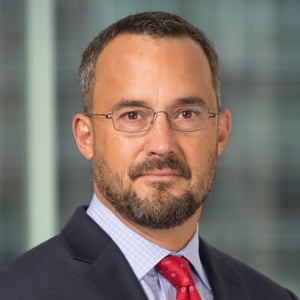
Senior Vice President for Legal Studies, Cato Institute
Clark Neily is senior vice president for legal studies at the Cato Institute. His areas of interest include constitutional law, overcriminalization, civil forfeiture, police accountability, and gun rights. Neily is the author of Terms of Engagement: How Our Courts Should Enforce the Constitution’s Promise of Limited Government. His writing has appeared in the Wall Street Journal, Forbes, and National Review Online, as well as various law reviews, including the Harvard Journal of Law and Public Policy, George Mason Law Review, Georgetown Journal of Law and Public Policy, NYU Journal of Law and Liberty, and Texas Review of Law and Politics. Neily is a frequent guest speaker and lecturer for the Federalist Society, Institute for Humane Studies, and American Constitution Society.
Before joining Cato in 2017, Neily was a senior attorney and constitutional litigator at the Institute for Justice and director of the Institute’s Center for Judicial Engagement. He is also an adjunct professor at the University of Texas School of Law, where he teaches constitutional litigation and public-interest law.
Neily served as co-counsel in District of Columbia v. Heller, the historic case in which the Supreme Court held for the first time that the Second Amendment protects an individual right to own a gun for self-defense.
Neily began his legal career as a law clerk to Judge Royce Lamberth on the U.S. District Court for the District of Columbia. After that he spent four years in the trial department of the Dallas-based firm Thompson & Knight. Neily received his undergraduate and law degrees from the University of Texas, where he was Chief Articles Editor of the Texas Law Review.
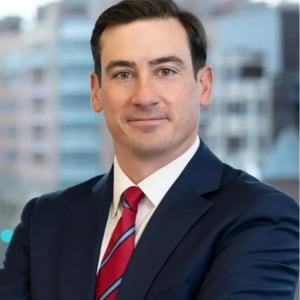
Partner, Vinson & Elkins, and former U.S. Attorney for the Eastern District of Virginia
Zachary (“Zach”) Terwilliger, the former Senate confirmed United States Attorney for the Eastern District of Virginia, has extensive experience in all manner of federal investigations and trials. Those frontline skills combine with his mastery of involved management roles overseeing operational programs, setting policy parameters, and managing teams to accomplish strategic objectives. He gained this experience over a decades-long career in public service where he advanced from an office intern to serve as the presidentially appointed and Senate confirmed United States Attorney. He rounds out his Washington experience by having served as Associate Deputy Attorney General and Chief of staff to the Deputy Attorney General, whose office manages the entire Department of Justice and its various agencies, and as counsel to the Chair of the Senate Judiciary Committee.
In a testament to his professionalism, he was the sole and unanimous recommendation of Virginia’s two Democratic Senators to serve as U.S. Attorney. Following this recommendation, the President’s nomination, and confirmation by the entire U.S. Senate, Zach was sworn in as the then youngest U.S. Attorney in the country.
Zach’s knowledge of how the Justice Department and federal enforcement agencies function in both civil and criminal matters, particularly in regards to discretionary decision making, provides him with unique insights necessary to effectively assist companies and individuals facing federal enforcement matters, including allegations of domestic and international criminal and civil violations. Zach is skilled in navigating internal and government investigations, allegations of bribery under the Foreign Corrupt Practices Act, complex criminal grand jury investigations, criminal antitrust matters, and Congressional inquiries and select committee investigations, among other complex white collar issues.
As U.S. Attorney for the Eastern District of Virginia, Zach supervised a team of over 300 lawyers and support staff. He also managed multiple key corporate resolutions, and significantly enhanced the District’s white-collar footprint through collaboration with DOJ’s Fraud Section, as well as with other enforcement entities like the newly created Special Inspector General for Pandemic Recovery and the Procurement Collusion Strike Force. He is also a veteran litigator with years of investigative and in-court experience in trials, pre-trial proceedings, and appeals.

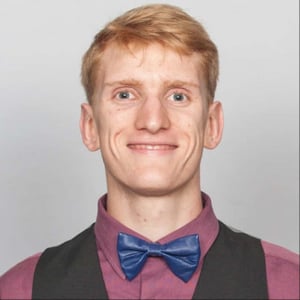
Panel 3: Making a Federal Case of It: Tennessee's Chief Law and Civil Rights Enforcers Speak
2026 Tennessee Chapters Conference
Nashville, TNPanel 2: How Appealing: Our Constitutions as Seen from the Second-Highest Bench
2026 Tennessee Chapters Conference
Nashville, TNPanel 1: Matter of First Impression: The Constitution on the Front Lines
2026 Tennessee Chapters Conference
Nashville, TNEuclid at 100: The Past, Present, and Future of Zoning in America
Lessons From John Adams: Defending Unpopular Clients from the Founding Era to the Present
The Founders Gave Us the Tools Series
Comfort Care or Hastened Death? Assisted Suicide and the Medicare Hospice Benefit
Alexander Raikin, Jeffrey A. Singer, Daniel E. Troy
Assisted suicide is a contested issue in American law and medicine, raising questions over individual...
Comfort Care or Hastened Death? Assisted Suicide and the Medicare Hospice Benefit
Alexander Raikin, Jeffrey A. Singer, Daniel E. Troy
Assisted suicide is a contested issue in American law and medicine, raising questions over individual...
From Pork Producers to Suncor: Extraterritoriality and Our Constitutional Structure
Michael S. Greve, Jennifer Perkins, Daniel B. Rodriguez, O.H. Skinner, Michael R. Williams
How far can states go in regulating conduct that has effects outside their borders?At the...
The Climate Litigation Swindle: A Conversation with Heather Mac Donald
Orange County Lawyer Chapter
Irvine, CAPardon Me: When Congressional Witnesses Plead the Fifth
John G. Malcolm, Clark Neily, G. Zachary Terwilliger
Congressional committees frequently use their subpoena power to compel witnesses to appear before them and...