Euclid at 100: The Past, Present, and Future of Zoning in America
Event Video




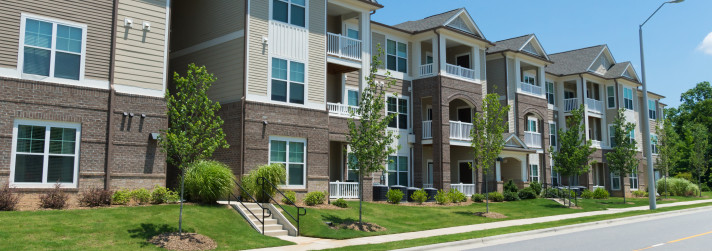
This year marks the 100th anniversary of the Supreme Court's decision in Village of Euclid v. Ambler Realty Co., the landmark decision that paved the way for ubiquitous zoning and land-use regulation by local governments across America. Under Euclid, where the Court infamously analogized an apartment building in the midst of single-family houses to “a pig in a parlor,” cities and towns could permissibly divide and regulate land by its use under their police power as they saw fit, so long as the zoning rules were reasonably related to protecting public health, safety, welfare, or morals.
But even though the Court — just two years after Euclid in Nectow v. City of Cambridge — struck down a zoning ordinance because it failed to “bear a substantial relation to the public health, safety, morals, or general welfare," local governments persisted in passing, and courts continued to routinely uphold, racially-discriminatory zoning laws under Euclid under the guise of protecting public welfare and economic well-being. Despite Euclid’s age and the dismantling of race-based zoning, Euclid remains the center of attention and debate, especially regarding whether zoning regulation unduly infringes upon private property rights, and therefore, demands higher and more thorough judicial scrutiny.
Join our panel of experts for a lively discussion reflecting on Euclid’s effects on land use and housing over the past century and what the future may hold.
Featuring:
- Robert Thomas, Director of Property Rights Litigation, Pacific Legal Foundation
- Prof. Michael Allan Wolf, Richard E. Nelson Eminent Scholar Chair in Local Government Professor of Law, University of Florida Levin College of Law
- (Moderator) Isaiah McKinney, Judicial Law Clerk, U.S. District Court
*******
As always, the Federalist Society takes no position on particular legal or public policy issues; all expressions of opinion are those of the speaker.