

President & General Counsel, ExploraMed
At the ExploraMed incubator, Earl "Eb" Bright has many years of technology development, company formation and financing experience. He is a founder of several companies, a patent attorney and has served on the executive management teams of many start-up companies in multiple capacities (Acclarent, Neotract, Vibrynt, Moximed, Nuelle, Willow).
He is a co-founder of and serves on the Alliance for U.S. Startups & Inventors for Jobs (USIJ) Advisory Committee. He is a former member of the United States Patent Public Advisory Committee. Previously, Eb was Director of Intellectual Property West Coast Operations at Guidant Corporation where he directed a 9 member team involved in litigation and the strategic development of over 1,300 patent and trademark applications related to the Vascular Intervention, Cardiac Surgery and Endovascular Solutions divisions as well as handling legal issues for Guidant Japan and the Compass Group, the unit responsible for Guidant’s venture capital and merger and acquisition activities.
Eb is an inventor on fourteen U.S. issued patents with others currently pending. He holds M.B.A.s from Columbia University and University of California, Berkeley, and Juris Doctorate and B.S. in Mechanical Engineering degrees from the University of Oklahoma.
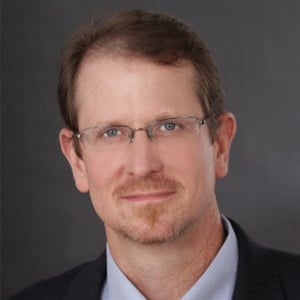
Executive Director, High Tech Inventors Alliance
David W. Jones is the Executive Director of the High Tech Inventors Alliance. Prior to HTIA, David was Assistant General Counsel for Patent Policy at Microsoft, where he spent more than a decade handling both domestic and international patent issues. He previously held multiple positions on Capitol Hill, most recently as antitrust and IP counsel to Senator Orrin Hatch on the Senate Judiciary Committee. David clerked for Chief Judge Sharon Prost on the Federal Circuit and Judge Will Garwood on the Fifth Circuit and is a graduate of the University of Virginia School of Law.
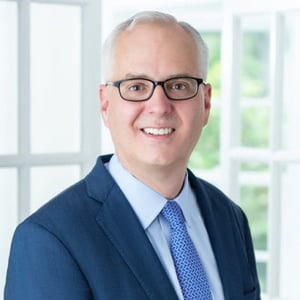
Principal, Clear IP, LLC
Joseph Matal is the Principal at Clear IP, LLC.
Joe has served as both the U.S. Patent and Trademark’s Acting Director and Acting Solicitor. As Acting Solicitor, he defended the agency in intellectual property cases before the U.S. Court of Appeals for the Federal Circuit and U.S. Supreme Court. In his role in the Solicitor’s Office, he participated in briefing almost every major case involving PTAB trials that has come before the Federal Circuit, including cases that have defined the Board’s powers and the evidence that it may consider, the content of final decisions, and the burdens and scope of motions to amend. Recent cases include Uniloc v. Hulu, Thryv v. Click-to-Call, and Aqua Products v. Matal. Previously, Joe served in senior legal roles for more than a decade for the U.S. Senate Judiciary Committee. In that capacity, he negotiated and drafted many of the key provisions of the America Invents Act.
In his roles at the USPTO, Joe briefed and argued numerous appeals of patent and trademark decisions before the Federal Circuit; oversaw the management of the USPTO and its 13,000 employees; and advised the U.S. Solicitor General’s Office in key IP cases before the Supreme Court.
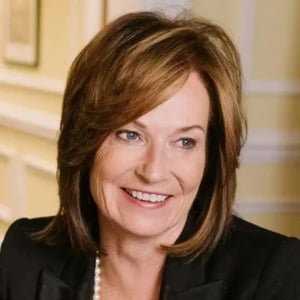
U.S. Court of Appeals For the Federal Circuit (Ret.)
Judge Kathleen (Kate) O’Malley (Ret.) was a Federal Judge for over 27 years. She was appointed to the District Court in 1994 at the age of 37 and was elevated to the Court of Appeals for the Federal Circuit (CAFC) in 2010. Judge O’Malley is the only former District Court judge to be appointed to the CAFC. The CAFC is the only Court of Appeals in the country that handles appeals of patent cases, presiding over appeals from all fora in which such matters originate—District Courts, the Court of Claims, the Patent Trial and Appeal Board, the Patent Trial and Trademark Office, and the International Trade Commission. She also has substantial experience with other intellectual property (IP) issues—Copyright, Trademark, Trade Secret, and the intersection of IP and antitrust—and with other areas of federal law, including securities fraud, tax matters, and mass torts.
Judge O’Malley lectures regularly on various IP topics, including the importance of IP to innovation and the importance of innovation to the economy. Judge O’Malley has received numerous awards over these years. For her contributions to the development of IP law alone, she has received the following: the Sedona Conference Lifetime Achievement Award, the New Jersey Intellectual Property Law Association Jefferson Medal, the New York Intellectual Property Law Association Outstanding Public Service Award, and the Intellectual Property Owners Association’s 2020 Distinguished IP Professional Award and was named to the Globe Business Media Group’s IP Hall of Fame. The Kathleen M. O’Malley Inn of Court was recently chartered in Cleveland, Ohio, as a tribute to Judge O’Malley’s service.
Judge O’Malley is the only U.S. representative on the World Intellectual Property Organization’s (WIPO) judicial advisory council, participates in WIPO’s project relating to the ethical and IP implications of artificial intelligence (AI) and, at the invitation of the Queen’s College of London, served on a committee to establish an IP court system in the Ukraine and to train the judges thereon. Judge O’Malley is currently a Senior Adviser to the Renewing American Innovation Project at the Center for Strategic and International Studies. She has also trained judges, lawyers, and stakeholders on the U.S. IP system in over a dozen countries around the world.
In addition to her judicial duties, Judge O’Malley has been involved in numerous projects relating to the intersection of science and the law and the education of the judiciary on how best to handle and understand such issues. At the invitation of the National Academies of Sciences, Engineering and Technology and the Federal Judicial Center, Judge O’Malley served on the Committee on the Development of the Third Edition of the Reference Manual on Scientific Evidence and recently co-chaired a planning committee for a workshop on Emerging Areas of Sciences, Engineering, Medicine, and the Courts that explored, among other cutting edge scientific questions, legal questions relating to climate change, the ethical and IP implications of AI, implicit bias, computer science, and engineering.
Before joining the bench, Judge O’Malley served as Chief Counsel and First Assistant to the Ohio Attorney General. She also was in private practice, litigating complex commercial matters at Jones Day and Porter Wright in Ohio. Judge O’Malley began her legal career as a law clerk to the Honorable Nathaniel R. Jones on the Sixth Circuit Court of Appeals. She received her A.B. in Economics and History from Kenyon College and earned her JD from Case Western Reserve University School of Law.
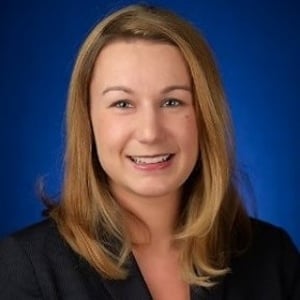
Chief Policy Officer and Counsel, The Council for Innovation Promotion
Jamie Simpson is Chief Policy Officer and Counsel for The Council for Innovation Promotion (c4IP), which is a bipartisan coalition dedicated to promoting strong and effective intellectual property rights that drive innovation, boost economic competitiveness, and improve lives everywhere.
Simpson has almost 20 years of experience in policy and a specific focus on IP-related issues. She previously served as Chief Counsel on the House Judiciary Subcommittee on Courts, IP, and the Internet; Counsel to the Senate Judiciary Committee while on detail from the U.S. Patent and Trademark Office; and Associate Solicitor at the USPTO.
A graduate of Harvard Law School and, previously, a law clerk at the United States Court of Appeals for the Federal Circuit, Simpson has extensive expertise in intellectual property law and policy, as well as an earlier background of working on patent litigation and licensing disputes.
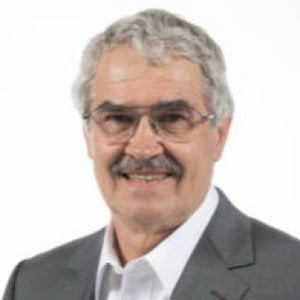
R. B. Price and Isabelle Wade & Paul C. Lyda Professor Emeritus of Law, University of Missouri School of Law
Carl H. Esbeck is R.B. Price Professor and Isabelle Wade & Paul C. Lyda Professor of Law emeritus at the University of Missouri. After attending Cornell University School of Law where he served as an editor on the Cornell Law Review, he held a judicial clerkship with the Honorable Howard C. Bratton, chief judge of the U.S. District Court in New Mexico.
Professor Esbeck publishes widely in the area of religious liberty and church-state relations. He is recognized as the progenitor of "Charitable Choice," an integral part of the 1996 Federal Welfare Reform Act, later made a part of the faith-based initiative and equal-treatment regulations under presidents George W. Bush and Barack Obama. In addition, he has taken the lead in recognizing that the modern Supreme Court has applied the Establishment Clause not as a personal right, but as a structural limit on the government's authority in disputes involving church governance. While on leave from 1999 to 2002, Professor Esbeck directed the Center for Law & Religious Freedom (CLRF) and later served as Senior Counsel to the Deputy Attorney General at the U.S. Department of Justice. While directing the CLRF, Professor Esbeck was a central part of the congressional advocacy behind the Religious Land Use and Institutionalized Persons Act of 2000 (RLUIPA). While at the Department of Justice one of his duties was to direct a task force to remove barriers to the equal-treatment of faith-based organizations applying for social service grants. He is the author of Disestablishment and Religious Dissent: Church-State Relations in the New American States, 1776 - 1833 (U. of MO Press, 2019).
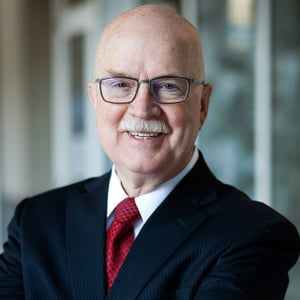
Partner, First & Fourteenth PLLC
For over 35 years, Martin Nussbaum has advised and advocated for dioceses, churches, denominations, religious hospitals, schools, monasteries, Chabad houses, ashrams, and other ministries. He is a nationally recognized expert on religious institution law and religious freedom. His advocacy and advice has been welcomed by religious leaders across the country.
Over his career, Martin has earned a national reputation for his expertise on the First Amendment and various other religious freedom protections. He employs strategic litigation that seeks to protect those rights. He has advocated for religious institutions in cases before the U.S. Supreme Court and in state and federal courts across the country. He also advocates for religious institutions before legislatures and in administrative proceedings, and serves as outside general counsel to numerous national and regional ministries.
Martin has served as a trial, appellate, and amicus counsel in landmark First Amendment and Religious Freedom Restoration Act cases in the U.S. Supreme Court and in state and federal courts.
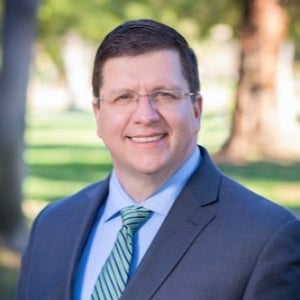
Vice President and Senior Counsel, The Becket Fund for Religious Liberty
Eric Rassbach is Vice President and Senior Counsel at the Becket Fund for Religious Liberty, where he has served since 2003. He has briefed over 90 cases at the United States Supreme Court and has led or been a part of Becket litigation teams in each of Becket’s pathbreaking victories there, including Hosanna-Tabor, Hobby Lobby, Holt v. Hobbs, Zubik v. Burwell, Agudath Israel of America v. Cuomo, and Fulton v. Philadelphia. In 2020, Eric argued Our Lady of Guadalupe School v. Morrissey-Berru to the Supreme Court, garnering a 7-2 win for his Catholic school clients. Eric has also briefed and argued cases in federal appeals courts and state supreme courts across the nation. Eric has also represented clients in appeals to the European Court of Human Rights in Strasbourg, France and in the highest courts of several other countries.
Eric believes passionately in the right of all people to the full measure of religious liberty and has represented members of almost every religious group present in the United States, including Buddhists, Christians, Hindus, Jains, Jews, Muslims, Native Americans, Santeros, and Sikhs, as well as many governmental entities targeted for accommodating religion.
Eric frequently comments on church-state issues in the media, including the New York Times, the Washington Post, the Wall Street Journal, and other major press outlets. He has published legal scholarship in the Harvard Law Review Forum, the Tennessee Law Review, the Illinois Law Review, the Cato Supreme Court Review, and other legal journals, and often speaks to law school audiences.
Before joining Becket, Eric worked at Baker Botts LLP in Houston, where he worked in international project finance. He also served as a law clerk to United States District Court Judge Lee Rosenthal in Houston, Texas.
Eric graduated from Haverford College with a degree in Comparative Literature, is a member of Fitzwilliam College, University of Cambridge, and is a graduate of Harvard Law School. Eric was a 2012-2013 Wasserstein Public Interest Fellow at Harvard Law School. He is Visiting Professor and Executive Director of The Hugh and Hazel Darling Foundation Religious Liberty Clinic at Pepperdine University Caruso School of Law in Malibu, where he leads students in litigating cases in American courts. He is also an Associated Scholar with the Centre for Religious Freedom at Jagiellonian University in Kraków, Poland. Eric is admitted in Texas, DC, California, and Ireland.
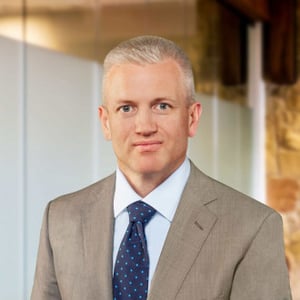
Executive General Counsel, First Liberty Institute
Hiram Sasser is Executive General Counsel for First Liberty Institute, where he oversees First Liberty’s litigation and media efforts. Sasser’s practice focuses on First Amendment and other constitutional and civil rights issues relating to religious liberty. Sasser served as co-counsel in seven victories before the United States Supreme Court, including Groff v. DeJoy (landmark case overturning the “de minimis cost” test for Title VII in place almost 50 years), Kennedy v. Bremerton (landmark case overturning 50 years of Establishment Clause precedent), Carson v. Makin (overturning 40 years of Maine’s discrimination against parents choosing faith-based schools), American Legion v. American Humanist Association (landmark case ending Establishment Clause attacks on veterans’ memorials with religious imagery), Klein v. Oregon Bureau of Labor and Industries (granted, vacated, and remanded (twice) in religious wedding service case), and Sause v. Bauer (summary reversal revoking qualified immunity for police who ordered a citizen not to pray in her own home).
In addition to his legal duties, Sasser develops, coordinates, and implements successful media strategies on behalf of his clients. This includes numerous appearances on ABC, NBC, CBS, Fox News, CNN, and the BBC as well as being heard on various radio stations throughout the United States, Asia, Africa, and Europe.
In 2016, Sasser took a leave of absence to serve a temporary assignment as the Chief of Staff for the Attorney General of Texas. He currently serves as an Adjunct Professor of Law at both The University of Texas at Austin School of Law (teaching Religious Liberty) and Oklahoma City University School of Law (teaching Civil Rights Procedure).
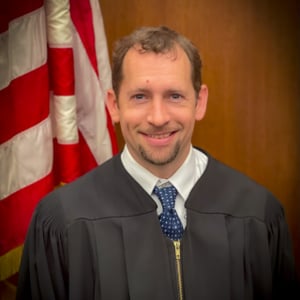
District Judge, United States District Court for the Northern District of Texas
Judge Brantley Starr was appointed to United States District Court for the Northern District of Texas in August 2019. Before his appointment, Judge Starr was the Deputy First Assistant Attorney General of Texas. Prior to that appointment, he served as Deputy Attorney General for Legal Counsel. From 2011 to 2015, Judge Starr served as career staff attorney to Texas Supreme Court Justice Eva Guzman. From 2008 to 2011, he practiced at King & Spalding, LLP. He served in the Office of the Solicitor General from 2006 to 2008. Prior to that, Judge Starr clerked for then-Justice Don Willett on the Texas Supreme Court after serving at the Office of the Attorney General. Judge Starr received his law degree from the University of Texas School of Law and his bachelor of arts degree from Abilene Christian University in 2001. Judge Starr has taught the Origins of the Constitution Class at the University of Texas law, Texas A&M law, and SMU law.
R. B. Price and Isabelle Wade & Paul C. Lyda Professor Emeritus of Law, University of Missouri School of Law
Carl H. Esbeck is R.B. Price Professor and Isabelle Wade & Paul C. Lyda Professor of Law emeritus at the University of Missouri. After attending Cornell University School of Law where he served as an editor on the Cornell Law Review, he held a judicial clerkship with the Honorable Howard C. Bratton, chief judge of the U.S. District Court in New Mexico.
Professor Esbeck publishes widely in the area of religious liberty and church-state relations. He is recognized as the progenitor of "Charitable Choice," an integral part of the 1996 Federal Welfare Reform Act, later made a part of the faith-based initiative and equal-treatment regulations under presidents George W. Bush and Barack Obama. In addition, he has taken the lead in recognizing that the modern Supreme Court has applied the Establishment Clause not as a personal right, but as a structural limit on the government's authority in disputes involving church governance. While on leave from 1999 to 2002, Professor Esbeck directed the Center for Law & Religious Freedom (CLRF) and later served as Senior Counsel to the Deputy Attorney General at the U.S. Department of Justice. While directing the CLRF, Professor Esbeck was a central part of the congressional advocacy behind the Religious Land Use and Institutionalized Persons Act of 2000 (RLUIPA). While at the Department of Justice one of his duties was to direct a task force to remove barriers to the equal-treatment of faith-based organizations applying for social service grants. He is the author of Disestablishment and Religious Dissent: Church-State Relations in the New American States, 1776 - 1833 (U. of MO Press, 2019).
Partner, First & Fourteenth PLLC
For over 35 years, Martin Nussbaum has advised and advocated for dioceses, churches, denominations, religious hospitals, schools, monasteries, Chabad houses, ashrams, and other ministries. He is a nationally recognized expert on religious institution law and religious freedom. His advocacy and advice has been welcomed by religious leaders across the country.
Over his career, Martin has earned a national reputation for his expertise on the First Amendment and various other religious freedom protections. He employs strategic litigation that seeks to protect those rights. He has advocated for religious institutions in cases before the U.S. Supreme Court and in state and federal courts across the country. He also advocates for religious institutions before legislatures and in administrative proceedings, and serves as outside general counsel to numerous national and regional ministries.
Martin has served as a trial, appellate, and amicus counsel in landmark First Amendment and Religious Freedom Restoration Act cases in the U.S. Supreme Court and in state and federal courts.
Vice President and Senior Counsel, The Becket Fund for Religious Liberty
Eric Rassbach is Vice President and Senior Counsel at the Becket Fund for Religious Liberty, where he has served since 2003. He has briefed over 90 cases at the United States Supreme Court and has led or been a part of Becket litigation teams in each of Becket’s pathbreaking victories there, including Hosanna-Tabor, Hobby Lobby, Holt v. Hobbs, Zubik v. Burwell, Agudath Israel of America v. Cuomo, and Fulton v. Philadelphia. In 2020, Eric argued Our Lady of Guadalupe School v. Morrissey-Berru to the Supreme Court, garnering a 7-2 win for his Catholic school clients. Eric has also briefed and argued cases in federal appeals courts and state supreme courts across the nation. Eric has also represented clients in appeals to the European Court of Human Rights in Strasbourg, France and in the highest courts of several other countries.
Eric believes passionately in the right of all people to the full measure of religious liberty and has represented members of almost every religious group present in the United States, including Buddhists, Christians, Hindus, Jains, Jews, Muslims, Native Americans, Santeros, and Sikhs, as well as many governmental entities targeted for accommodating religion.
Eric frequently comments on church-state issues in the media, including the New York Times, the Washington Post, the Wall Street Journal, and other major press outlets. He has published legal scholarship in the Harvard Law Review Forum, the Tennessee Law Review, the Illinois Law Review, the Cato Supreme Court Review, and other legal journals, and often speaks to law school audiences.
Before joining Becket, Eric worked at Baker Botts LLP in Houston, where he worked in international project finance. He also served as a law clerk to United States District Court Judge Lee Rosenthal in Houston, Texas.
Eric graduated from Haverford College with a degree in Comparative Literature, is a member of Fitzwilliam College, University of Cambridge, and is a graduate of Harvard Law School. Eric was a 2012-2013 Wasserstein Public Interest Fellow at Harvard Law School. He is Visiting Professor and Executive Director of The Hugh and Hazel Darling Foundation Religious Liberty Clinic at Pepperdine University Caruso School of Law in Malibu, where he leads students in litigating cases in American courts. He is also an Associated Scholar with the Centre for Religious Freedom at Jagiellonian University in Kraków, Poland. Eric is admitted in Texas, DC, California, and Ireland.
Executive General Counsel, First Liberty Institute
Hiram Sasser is Executive General Counsel for First Liberty Institute, where he oversees First Liberty’s litigation and media efforts. Sasser’s practice focuses on First Amendment and other constitutional and civil rights issues relating to religious liberty. Sasser served as co-counsel in seven victories before the United States Supreme Court, including Groff v. DeJoy (landmark case overturning the “de minimis cost” test for Title VII in place almost 50 years), Kennedy v. Bremerton (landmark case overturning 50 years of Establishment Clause precedent), Carson v. Makin (overturning 40 years of Maine’s discrimination against parents choosing faith-based schools), American Legion v. American Humanist Association (landmark case ending Establishment Clause attacks on veterans’ memorials with religious imagery), Klein v. Oregon Bureau of Labor and Industries (granted, vacated, and remanded (twice) in religious wedding service case), and Sause v. Bauer (summary reversal revoking qualified immunity for police who ordered a citizen not to pray in her own home).
In addition to his legal duties, Sasser develops, coordinates, and implements successful media strategies on behalf of his clients. This includes numerous appearances on ABC, NBC, CBS, Fox News, CNN, and the BBC as well as being heard on various radio stations throughout the United States, Asia, Africa, and Europe.
In 2016, Sasser took a leave of absence to serve a temporary assignment as the Chief of Staff for the Attorney General of Texas. He currently serves as an Adjunct Professor of Law at both The University of Texas at Austin School of Law (teaching Religious Liberty) and Oklahoma City University School of Law (teaching Civil Rights Procedure).
District Judge, United States District Court for the Northern District of Texas
Judge Brantley Starr was appointed to United States District Court for the Northern District of Texas in August 2019. Before his appointment, Judge Starr was the Deputy First Assistant Attorney General of Texas. Prior to that appointment, he served as Deputy Attorney General for Legal Counsel. From 2011 to 2015, Judge Starr served as career staff attorney to Texas Supreme Court Justice Eva Guzman. From 2008 to 2011, he practiced at King & Spalding, LLP. He served in the Office of the Solicitor General from 2006 to 2008. Prior to that, Judge Starr clerked for then-Justice Don Willett on the Texas Supreme Court after serving at the Office of the Attorney General. Judge Starr received his law degree from the University of Texas School of Law and his bachelor of arts degree from Abilene Christian University in 2001. Judge Starr has taught the Origins of the Constitution Class at the University of Texas law, Texas A&M law, and SMU law.
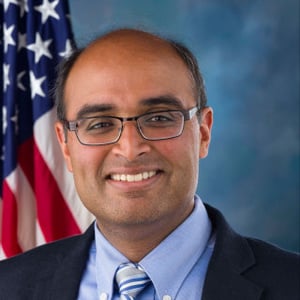
Consultant, American Edge Project and U.S. Chamber of Commerce
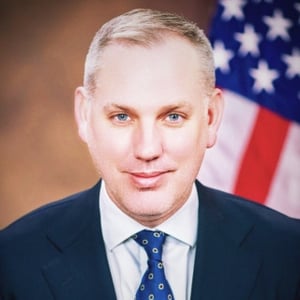
Chair, Public Policy and Legislative Affairs Practice, Cuneo Gilbert & LaDuca, LLP
Slade Bond is the Chair of the firm’s Public Policy and Legislative Affairs practice. With more than a decade of experience in Congress and the Department of Justice, Slade leverages his deep expertise in legislative strategy and high-stake congressional investigations to counsel clients on a range of matters, including antitrust, competition policy, privacy, consumer protection, and access to justice.
Slade most recently served at the Department of Justice under Attorney General Merrick B. Garland as the Principal Deputy Assistant Attorney General in the Office of Legislative Affairs. He managed several of the Department’s top legislative priorities, and counseled the Department’s most senior officials on the Department’s policy positions, confirmations, and hearings.
Prior to that, Slade served in Congress as the Chief Counsel of the House Antitrust Subcommittee, where he led its historic digital markets investigation, and oversaw the enactment of 19 laws in four years. He has deep expertise in congressional investigations, hearing preparation, and the legislative process.
Slade has lectured on antitrust law and congressional oversight, including at Stanford Law School, the Yale School of Management, and Vanderbilt Law School. He received his LL.M. from the George Washington University Law School, J.D. from the University of Kansas School of Law, and B.A. from the University of Mary Washington.
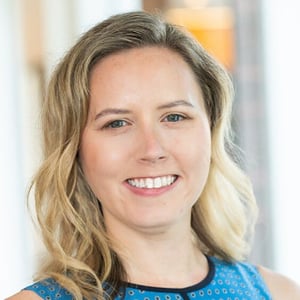
Senior Fellow, Technology Policy, Cato Institute
Jennifer’s research focuses on the intersection of emerging technology and law with a particular interest in the interactions between technology and the administrative state. Her work covers topics including judicial deference, liability protection for Internet platforms, autonomous vehicles and other disruptive transportation technologies, the regulation of data privacy, and the benefits of technology and innovation. Her work has appeared in USA Today, the Chicago Tribune, the New York Daily News, the Sacramento Bee, the Washington Times, Real Clear Policy, and U.S. News and World Report. Jennifer has a JD from the University of Alabama School of Law and a BA in political science at Wellesley College.
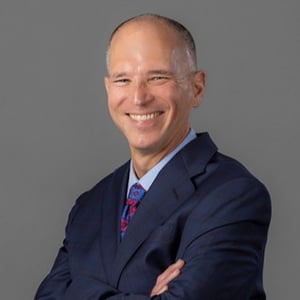
George Mason University Foundation Professor of Law, Antonin Scalia Law School, George Mason University
TODD J. ZYWICKI is George Mason University Foundation Professor of Law at Antonin Scalia Law School at George Mason University and Research Fellow of the George Mason Law and Economics Center. During the Fall 2023 semester he served as the Visiting Scholar in Conservative Thought and Policy for the Bruce Benson Center for the Study of Western Civilization at the University of Colorado-Boulder. From 2020-2021 he was Chair of the Consumer Financial Protection Bureau Taskforce on Federal Consumer Financial Law. In 2021 he was inducted to the American College of Consumer Financial Services Lawyers. He is also a Senior Fellow of the F.A. Hayek Program for the Advanced Study of Politics, Philosophy, and Economics at George Mason University and a former Senior Fellow of the Cato Institute. From 2015-2017 he was Executive Director of the George Mason Law and Economics Center. He served as Co-Editor of the Supreme Court Economic Review from 2006-2017. From 2003-2004, Professor Zywicki served as the Director of the Office of Policy Planning at the Federal Trade Commission. He has also taught at Vanderbilt University Law School, Georgetown University Law Center, Boston College Law School, Mississippi College School of Law, and China University of Political Science and Law.
Professor Zywicki clerked for Judge Jerry E. Smith of the U.S. Court of Appeals for the Fifth Circuit and worked as an associate at Alston & Bird in Atlanta, Georgia, where he practiced bankruptcy and commercial law. He received his J.D. from the University of Virginia, where he was executive editor of the Virginia Tax Review and John M. Olin Scholar in Law and Economics. Professor Zywicki also received an M.A. in Economics from Clemson University and an A.B. cum Laude with high honors in his major from Dartmouth College.
Professor Zywicki is also a Lone Mountain Fellow of the Property and Environment Research Center, a Fellow of the International Centre for Economic Research in Turin, Italy, and a former Senior Fellow of the Goldwater Institute. During the Fall 2008 Semester Professor Zywicki was the Searle Fellow of the George Mason University School of Law and was a 2008-09 W. Glenn Campbell and Rita Ricardo-Campbell National Fellow and the Arch W. Shaw National Fellow at the Hoover Institution on War, Revolution and Peace. He has lectured and consulted with government officials around the world, including Iceland, Italy, Japan, and Guatemala. In 2006 Professor Zywicki served as a Member of the United States Department of Justice Study Group on “Identifying Fraud, Abuse and Errors in the United States Bankruptcy System.”
Professor Zywicki is the author of more than 130 articles in leading law reviews and peer-reviewed economics journals. He is one of the Top 10 most-cited law professors in the field of Commercial Law and one of the Top 25 law professors on Twitter as measured by engagement levels. He is one of the Top 50 Most Downloaded Law Authors at the Social Science Research Network. He has testified multiple times before Congress on issues of consumer bankruptcy law and consumer credit and is a frequent commentator on legal issues in the print and broadcast media, including the Wall Street Journal, New York Times, The Washington Post, The Washington Times, Nightline, The Newshour with Jim Lehrer, Neil Cavuto Show, Fox & Friends, Smerconish, Fox News @ Night with Shannon Bream, Fox Business, CNN, CNBC, Bloomberg News, BBC, The Diane Rehm Show, Lou Dobbs Show, Jerry Doyle Show, and The Laura Ingraham Show.
Professor Zywicki is former Chairman and a current member of the Board of Directors of the Competitive Enterprise Institute, and is a member of the Board of Directors of the Institute for Humane Studies, Bill of Rights Institute, the Executive Committee for the Federalist Society's Financial Institutions and E-Commerce Practice Group, the Board of Trustees of the Foundation for Research on Economics and the Environment. He formerly served on the Governing Board and the Advisory Council for the Financial Services Research Program at George Washington University School of Business. He is currently the Chair of the Academic Advisory Council for the following organizations: The Bill of Rights Institute, the film “We the People in IMAX,” and the McCormick-Tribune Foundation “Freedom Museum” in Chicago, Illinois. He is a member of the Board of Visitors of Ralston College and was a member of the Board of Trustees of Yorktown University. From 2005-2009 he served as an elected Alumni Trustee of the Dartmouth College Board of Trustees.
Consultant, American Edge Project and U.S. Chamber of Commerce
Chair, Public Policy and Legislative Affairs Practice, Cuneo Gilbert & LaDuca, LLP
Slade Bond is the Chair of the firm’s Public Policy and Legislative Affairs practice. With more than a decade of experience in Congress and the Department of Justice, Slade leverages his deep expertise in legislative strategy and high-stake congressional investigations to counsel clients on a range of matters, including antitrust, competition policy, privacy, consumer protection, and access to justice.
Slade most recently served at the Department of Justice under Attorney General Merrick B. Garland as the Principal Deputy Assistant Attorney General in the Office of Legislative Affairs. He managed several of the Department’s top legislative priorities, and counseled the Department’s most senior officials on the Department’s policy positions, confirmations, and hearings.
Prior to that, Slade served in Congress as the Chief Counsel of the House Antitrust Subcommittee, where he led its historic digital markets investigation, and oversaw the enactment of 19 laws in four years. He has deep expertise in congressional investigations, hearing preparation, and the legislative process.
Slade has lectured on antitrust law and congressional oversight, including at Stanford Law School, the Yale School of Management, and Vanderbilt Law School. He received his LL.M. from the George Washington University Law School, J.D. from the University of Kansas School of Law, and B.A. from the University of Mary Washington.
Senior Fellow, Technology Policy, Cato Institute
Jennifer’s research focuses on the intersection of emerging technology and law with a particular interest in the interactions between technology and the administrative state. Her work covers topics including judicial deference, liability protection for Internet platforms, autonomous vehicles and other disruptive transportation technologies, the regulation of data privacy, and the benefits of technology and innovation. Her work has appeared in USA Today, the Chicago Tribune, the New York Daily News, the Sacramento Bee, the Washington Times, Real Clear Policy, and U.S. News and World Report. Jennifer has a JD from the University of Alabama School of Law and a BA in political science at Wellesley College.
George Mason University Foundation Professor of Law, Antonin Scalia Law School, George Mason University
TODD J. ZYWICKI is George Mason University Foundation Professor of Law at Antonin Scalia Law School at George Mason University and Research Fellow of the George Mason Law and Economics Center. During the Fall 2023 semester he served as the Visiting Scholar in Conservative Thought and Policy for the Bruce Benson Center for the Study of Western Civilization at the University of Colorado-Boulder. From 2020-2021 he was Chair of the Consumer Financial Protection Bureau Taskforce on Federal Consumer Financial Law. In 2021 he was inducted to the American College of Consumer Financial Services Lawyers. He is also a Senior Fellow of the F.A. Hayek Program for the Advanced Study of Politics, Philosophy, and Economics at George Mason University and a former Senior Fellow of the Cato Institute. From 2015-2017 he was Executive Director of the George Mason Law and Economics Center. He served as Co-Editor of the Supreme Court Economic Review from 2006-2017. From 2003-2004, Professor Zywicki served as the Director of the Office of Policy Planning at the Federal Trade Commission. He has also taught at Vanderbilt University Law School, Georgetown University Law Center, Boston College Law School, Mississippi College School of Law, and China University of Political Science and Law.
Professor Zywicki clerked for Judge Jerry E. Smith of the U.S. Court of Appeals for the Fifth Circuit and worked as an associate at Alston & Bird in Atlanta, Georgia, where he practiced bankruptcy and commercial law. He received his J.D. from the University of Virginia, where he was executive editor of the Virginia Tax Review and John M. Olin Scholar in Law and Economics. Professor Zywicki also received an M.A. in Economics from Clemson University and an A.B. cum Laude with high honors in his major from Dartmouth College.
Professor Zywicki is also a Lone Mountain Fellow of the Property and Environment Research Center, a Fellow of the International Centre for Economic Research in Turin, Italy, and a former Senior Fellow of the Goldwater Institute. During the Fall 2008 Semester Professor Zywicki was the Searle Fellow of the George Mason University School of Law and was a 2008-09 W. Glenn Campbell and Rita Ricardo-Campbell National Fellow and the Arch W. Shaw National Fellow at the Hoover Institution on War, Revolution and Peace. He has lectured and consulted with government officials around the world, including Iceland, Italy, Japan, and Guatemala. In 2006 Professor Zywicki served as a Member of the United States Department of Justice Study Group on “Identifying Fraud, Abuse and Errors in the United States Bankruptcy System.”
Professor Zywicki is the author of more than 130 articles in leading law reviews and peer-reviewed economics journals. He is one of the Top 10 most-cited law professors in the field of Commercial Law and one of the Top 25 law professors on Twitter as measured by engagement levels. He is one of the Top 50 Most Downloaded Law Authors at the Social Science Research Network. He has testified multiple times before Congress on issues of consumer bankruptcy law and consumer credit and is a frequent commentator on legal issues in the print and broadcast media, including the Wall Street Journal, New York Times, The Washington Post, The Washington Times, Nightline, The Newshour with Jim Lehrer, Neil Cavuto Show, Fox & Friends, Smerconish, Fox News @ Night with Shannon Bream, Fox Business, CNN, CNBC, Bloomberg News, BBC, The Diane Rehm Show, Lou Dobbs Show, Jerry Doyle Show, and The Laura Ingraham Show.
Professor Zywicki is former Chairman and a current member of the Board of Directors of the Competitive Enterprise Institute, and is a member of the Board of Directors of the Institute for Humane Studies, Bill of Rights Institute, the Executive Committee for the Federalist Society's Financial Institutions and E-Commerce Practice Group, the Board of Trustees of the Foundation for Research on Economics and the Environment. He formerly served on the Governing Board and the Advisory Council for the Financial Services Research Program at George Washington University School of Business. He is currently the Chair of the Academic Advisory Council for the following organizations: The Bill of Rights Institute, the film “We the People in IMAX,” and the McCormick-Tribune Foundation “Freedom Museum” in Chicago, Illinois. He is a member of the Board of Visitors of Ralston College and was a member of the Board of Trustees of Yorktown University. From 2005-2009 he served as an elected Alumni Trustee of the Dartmouth College Board of Trustees.
President & General Counsel, ExploraMed
At the ExploraMed incubator, Earl "Eb" Bright has many years of technology development, company formation and financing experience. He is a founder of several companies, a patent attorney and has served on the executive management teams of many start-up companies in multiple capacities (Acclarent, Neotract, Vibrynt, Moximed, Nuelle, Willow).
He is a co-founder of and serves on the Alliance for U.S. Startups & Inventors for Jobs (USIJ) Advisory Committee. He is a former member of the United States Patent Public Advisory Committee. Previously, Eb was Director of Intellectual Property West Coast Operations at Guidant Corporation where he directed a 9 member team involved in litigation and the strategic development of over 1,300 patent and trademark applications related to the Vascular Intervention, Cardiac Surgery and Endovascular Solutions divisions as well as handling legal issues for Guidant Japan and the Compass Group, the unit responsible for Guidant’s venture capital and merger and acquisition activities.
Eb is an inventor on fourteen U.S. issued patents with others currently pending. He holds M.B.A.s from Columbia University and University of California, Berkeley, and Juris Doctorate and B.S. in Mechanical Engineering degrees from the University of Oklahoma.
Executive Director, High Tech Inventors Alliance
David W. Jones is the Executive Director of the High Tech Inventors Alliance. Prior to HTIA, David was Assistant General Counsel for Patent Policy at Microsoft, where he spent more than a decade handling both domestic and international patent issues. He previously held multiple positions on Capitol Hill, most recently as antitrust and IP counsel to Senator Orrin Hatch on the Senate Judiciary Committee. David clerked for Chief Judge Sharon Prost on the Federal Circuit and Judge Will Garwood on the Fifth Circuit and is a graduate of the University of Virginia School of Law.
Principal, Clear IP, LLC
Joseph Matal is the Principal at Clear IP, LLC.
Joe has served as both the U.S. Patent and Trademark’s Acting Director and Acting Solicitor. As Acting Solicitor, he defended the agency in intellectual property cases before the U.S. Court of Appeals for the Federal Circuit and U.S. Supreme Court. In his role in the Solicitor’s Office, he participated in briefing almost every major case involving PTAB trials that has come before the Federal Circuit, including cases that have defined the Board’s powers and the evidence that it may consider, the content of final decisions, and the burdens and scope of motions to amend. Recent cases include Uniloc v. Hulu, Thryv v. Click-to-Call, and Aqua Products v. Matal. Previously, Joe served in senior legal roles for more than a decade for the U.S. Senate Judiciary Committee. In that capacity, he negotiated and drafted many of the key provisions of the America Invents Act.
In his roles at the USPTO, Joe briefed and argued numerous appeals of patent and trademark decisions before the Federal Circuit; oversaw the management of the USPTO and its 13,000 employees; and advised the U.S. Solicitor General’s Office in key IP cases before the Supreme Court.
U.S. Court of Appeals For the Federal Circuit (Ret.)
Judge Kathleen (Kate) O’Malley (Ret.) was a Federal Judge for over 27 years. She was appointed to the District Court in 1994 at the age of 37 and was elevated to the Court of Appeals for the Federal Circuit (CAFC) in 2010. Judge O’Malley is the only former District Court judge to be appointed to the CAFC. The CAFC is the only Court of Appeals in the country that handles appeals of patent cases, presiding over appeals from all fora in which such matters originate—District Courts, the Court of Claims, the Patent Trial and Appeal Board, the Patent Trial and Trademark Office, and the International Trade Commission. She also has substantial experience with other intellectual property (IP) issues—Copyright, Trademark, Trade Secret, and the intersection of IP and antitrust—and with other areas of federal law, including securities fraud, tax matters, and mass torts.
Judge O’Malley lectures regularly on various IP topics, including the importance of IP to innovation and the importance of innovation to the economy. Judge O’Malley has received numerous awards over these years. For her contributions to the development of IP law alone, she has received the following: the Sedona Conference Lifetime Achievement Award, the New Jersey Intellectual Property Law Association Jefferson Medal, the New York Intellectual Property Law Association Outstanding Public Service Award, and the Intellectual Property Owners Association’s 2020 Distinguished IP Professional Award and was named to the Globe Business Media Group’s IP Hall of Fame. The Kathleen M. O’Malley Inn of Court was recently chartered in Cleveland, Ohio, as a tribute to Judge O’Malley’s service.
Judge O’Malley is the only U.S. representative on the World Intellectual Property Organization’s (WIPO) judicial advisory council, participates in WIPO’s project relating to the ethical and IP implications of artificial intelligence (AI) and, at the invitation of the Queen’s College of London, served on a committee to establish an IP court system in the Ukraine and to train the judges thereon. Judge O’Malley is currently a Senior Adviser to the Renewing American Innovation Project at the Center for Strategic and International Studies. She has also trained judges, lawyers, and stakeholders on the U.S. IP system in over a dozen countries around the world.
In addition to her judicial duties, Judge O’Malley has been involved in numerous projects relating to the intersection of science and the law and the education of the judiciary on how best to handle and understand such issues. At the invitation of the National Academies of Sciences, Engineering and Technology and the Federal Judicial Center, Judge O’Malley served on the Committee on the Development of the Third Edition of the Reference Manual on Scientific Evidence and recently co-chaired a planning committee for a workshop on Emerging Areas of Sciences, Engineering, Medicine, and the Courts that explored, among other cutting edge scientific questions, legal questions relating to climate change, the ethical and IP implications of AI, implicit bias, computer science, and engineering.
Before joining the bench, Judge O’Malley served as Chief Counsel and First Assistant to the Ohio Attorney General. She also was in private practice, litigating complex commercial matters at Jones Day and Porter Wright in Ohio. Judge O’Malley began her legal career as a law clerk to the Honorable Nathaniel R. Jones on the Sixth Circuit Court of Appeals. She received her A.B. in Economics and History from Kenyon College and earned her JD from Case Western Reserve University School of Law.
Chief Policy Officer and Counsel, The Council for Innovation Promotion
Jamie Simpson is Chief Policy Officer and Counsel for The Council for Innovation Promotion (c4IP), which is a bipartisan coalition dedicated to promoting strong and effective intellectual property rights that drive innovation, boost economic competitiveness, and improve lives everywhere.
Simpson has almost 20 years of experience in policy and a specific focus on IP-related issues. She previously served as Chief Counsel on the House Judiciary Subcommittee on Courts, IP, and the Internet; Counsel to the Senate Judiciary Committee while on detail from the U.S. Patent and Trademark Office; and Associate Solicitor at the USPTO.
A graduate of Harvard Law School and, previously, a law clerk at the United States Court of Appeals for the Federal Circuit, Simpson has extensive expertise in intellectual property law and policy, as well as an earlier background of working on patent litigation and licensing disputes.
R. B. Price and Isabelle Wade & Paul C. Lyda Professor Emeritus of Law, University of Missouri School of Law
Carl H. Esbeck is R.B. Price Professor and Isabelle Wade & Paul C. Lyda Professor of Law emeritus at the University of Missouri. After attending Cornell University School of Law where he served as an editor on the Cornell Law Review, he held a judicial clerkship with the Honorable Howard C. Bratton, chief judge of the U.S. District Court in New Mexico.
Professor Esbeck publishes widely in the area of religious liberty and church-state relations. He is recognized as the progenitor of "Charitable Choice," an integral part of the 1996 Federal Welfare Reform Act, later made a part of the faith-based initiative and equal-treatment regulations under presidents George W. Bush and Barack Obama. In addition, he has taken the lead in recognizing that the modern Supreme Court has applied the Establishment Clause not as a personal right, but as a structural limit on the government's authority in disputes involving church governance. While on leave from 1999 to 2002, Professor Esbeck directed the Center for Law & Religious Freedom (CLRF) and later served as Senior Counsel to the Deputy Attorney General at the U.S. Department of Justice. While directing the CLRF, Professor Esbeck was a central part of the congressional advocacy behind the Religious Land Use and Institutionalized Persons Act of 2000 (RLUIPA). While at the Department of Justice one of his duties was to direct a task force to remove barriers to the equal-treatment of faith-based organizations applying for social service grants. He is the author of Disestablishment and Religious Dissent: Church-State Relations in the New American States, 1776 - 1833 (U. of MO Press, 2019).
Partner, First & Fourteenth PLLC
For over 35 years, Martin Nussbaum has advised and advocated for dioceses, churches, denominations, religious hospitals, schools, monasteries, Chabad houses, ashrams, and other ministries. He is a nationally recognized expert on religious institution law and religious freedom. His advocacy and advice has been welcomed by religious leaders across the country.
Over his career, Martin has earned a national reputation for his expertise on the First Amendment and various other religious freedom protections. He employs strategic litigation that seeks to protect those rights. He has advocated for religious institutions in cases before the U.S. Supreme Court and in state and federal courts across the country. He also advocates for religious institutions before legislatures and in administrative proceedings, and serves as outside general counsel to numerous national and regional ministries.
Martin has served as a trial, appellate, and amicus counsel in landmark First Amendment and Religious Freedom Restoration Act cases in the U.S. Supreme Court and in state and federal courts.
Vice President and Senior Counsel, The Becket Fund for Religious Liberty
Eric Rassbach is Vice President and Senior Counsel at the Becket Fund for Religious Liberty, where he has served since 2003. He has briefed over 90 cases at the United States Supreme Court and has led or been a part of Becket litigation teams in each of Becket’s pathbreaking victories there, including Hosanna-Tabor, Hobby Lobby, Holt v. Hobbs, Zubik v. Burwell, Agudath Israel of America v. Cuomo, and Fulton v. Philadelphia. In 2020, Eric argued Our Lady of Guadalupe School v. Morrissey-Berru to the Supreme Court, garnering a 7-2 win for his Catholic school clients. Eric has also briefed and argued cases in federal appeals courts and state supreme courts across the nation. Eric has also represented clients in appeals to the European Court of Human Rights in Strasbourg, France and in the highest courts of several other countries.
Eric believes passionately in the right of all people to the full measure of religious liberty and has represented members of almost every religious group present in the United States, including Buddhists, Christians, Hindus, Jains, Jews, Muslims, Native Americans, Santeros, and Sikhs, as well as many governmental entities targeted for accommodating religion.
Eric frequently comments on church-state issues in the media, including the New York Times, the Washington Post, the Wall Street Journal, and other major press outlets. He has published legal scholarship in the Harvard Law Review Forum, the Tennessee Law Review, the Illinois Law Review, the Cato Supreme Court Review, and other legal journals, and often speaks to law school audiences.
Before joining Becket, Eric worked at Baker Botts LLP in Houston, where he worked in international project finance. He also served as a law clerk to United States District Court Judge Lee Rosenthal in Houston, Texas.
Eric graduated from Haverford College with a degree in Comparative Literature, is a member of Fitzwilliam College, University of Cambridge, and is a graduate of Harvard Law School. Eric was a 2012-2013 Wasserstein Public Interest Fellow at Harvard Law School. He is Visiting Professor and Executive Director of The Hugh and Hazel Darling Foundation Religious Liberty Clinic at Pepperdine University Caruso School of Law in Malibu, where he leads students in litigating cases in American courts. He is also an Associated Scholar with the Centre for Religious Freedom at Jagiellonian University in Kraków, Poland. Eric is admitted in Texas, DC, California, and Ireland.
Executive General Counsel, First Liberty Institute
Hiram Sasser is Executive General Counsel for First Liberty Institute, where he oversees First Liberty’s litigation and media efforts. Sasser’s practice focuses on First Amendment and other constitutional and civil rights issues relating to religious liberty. Sasser served as co-counsel in seven victories before the United States Supreme Court, including Groff v. DeJoy (landmark case overturning the “de minimis cost” test for Title VII in place almost 50 years), Kennedy v. Bremerton (landmark case overturning 50 years of Establishment Clause precedent), Carson v. Makin (overturning 40 years of Maine’s discrimination against parents choosing faith-based schools), American Legion v. American Humanist Association (landmark case ending Establishment Clause attacks on veterans’ memorials with religious imagery), Klein v. Oregon Bureau of Labor and Industries (granted, vacated, and remanded (twice) in religious wedding service case), and Sause v. Bauer (summary reversal revoking qualified immunity for police who ordered a citizen not to pray in her own home).
In addition to his legal duties, Sasser develops, coordinates, and implements successful media strategies on behalf of his clients. This includes numerous appearances on ABC, NBC, CBS, Fox News, CNN, and the BBC as well as being heard on various radio stations throughout the United States, Asia, Africa, and Europe.
In 2016, Sasser took a leave of absence to serve a temporary assignment as the Chief of Staff for the Attorney General of Texas. He currently serves as an Adjunct Professor of Law at both The University of Texas at Austin School of Law (teaching Religious Liberty) and Oklahoma City University School of Law (teaching Civil Rights Procedure).
District Judge, United States District Court for the Northern District of Texas
Judge Brantley Starr was appointed to United States District Court for the Northern District of Texas in August 2019. Before his appointment, Judge Starr was the Deputy First Assistant Attorney General of Texas. Prior to that appointment, he served as Deputy Attorney General for Legal Counsel. From 2011 to 2015, Judge Starr served as career staff attorney to Texas Supreme Court Justice Eva Guzman. From 2008 to 2011, he practiced at King & Spalding, LLP. He served in the Office of the Solicitor General from 2006 to 2008. Prior to that, Judge Starr clerked for then-Justice Don Willett on the Texas Supreme Court after serving at the Office of the Attorney General. Judge Starr received his law degree from the University of Texas School of Law and his bachelor of arts degree from Abilene Christian University in 2001. Judge Starr has taught the Origins of the Constitution Class at the University of Texas law, Texas A&M law, and SMU law.
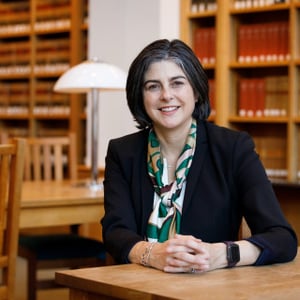
Co-Director of the Center for Law & the Human Person and Assistant Professor of Law, The Catholic University of America Columbus School of Law
Elizabeth R. Kirk is an Assistant Professor of Law and Co-Director of the Center for Law and the Human Person at the Columbus School of Law at the Catholic University of America. Her scholarship focuses on law and the family, including issues such as parental rights, reproductive technologies, abortion jurisprudence, child welfare, and adoption. She previously served as Director and Kowalski Chair of Catholic Thought at the Institute for Faith and Culture at the St. Lawrence Catholic Campus Center at the University of Kansas, and as Associate Director of the Notre Dame Center for Ethics and Culture. Her work has been published by the Institute for Family Studies, Humanum, Public Discourse, First Things, the Texas Review of Law & Politics, and the Notre Dame Journal of Law, Ethics, and Public Policy (forthcoming).
Consultant, American Edge Project and U.S. Chamber of Commerce
Chair, Public Policy and Legislative Affairs Practice, Cuneo Gilbert & LaDuca, LLP
Slade Bond is the Chair of the firm’s Public Policy and Legislative Affairs practice. With more than a decade of experience in Congress and the Department of Justice, Slade leverages his deep expertise in legislative strategy and high-stake congressional investigations to counsel clients on a range of matters, including antitrust, competition policy, privacy, consumer protection, and access to justice.
Slade most recently served at the Department of Justice under Attorney General Merrick B. Garland as the Principal Deputy Assistant Attorney General in the Office of Legislative Affairs. He managed several of the Department’s top legislative priorities, and counseled the Department’s most senior officials on the Department’s policy positions, confirmations, and hearings.
Prior to that, Slade served in Congress as the Chief Counsel of the House Antitrust Subcommittee, where he led its historic digital markets investigation, and oversaw the enactment of 19 laws in four years. He has deep expertise in congressional investigations, hearing preparation, and the legislative process.
Slade has lectured on antitrust law and congressional oversight, including at Stanford Law School, the Yale School of Management, and Vanderbilt Law School. He received his LL.M. from the George Washington University Law School, J.D. from the University of Kansas School of Law, and B.A. from the University of Mary Washington.
Senior Fellow, Technology Policy, Cato Institute
Jennifer’s research focuses on the intersection of emerging technology and law with a particular interest in the interactions between technology and the administrative state. Her work covers topics including judicial deference, liability protection for Internet platforms, autonomous vehicles and other disruptive transportation technologies, the regulation of data privacy, and the benefits of technology and innovation. Her work has appeared in USA Today, the Chicago Tribune, the New York Daily News, the Sacramento Bee, the Washington Times, Real Clear Policy, and U.S. News and World Report. Jennifer has a JD from the University of Alabama School of Law and a BA in political science at Wellesley College.
George Mason University Foundation Professor of Law, Antonin Scalia Law School, George Mason University
TODD J. ZYWICKI is George Mason University Foundation Professor of Law at Antonin Scalia Law School at George Mason University and Research Fellow of the George Mason Law and Economics Center. During the Fall 2023 semester he served as the Visiting Scholar in Conservative Thought and Policy for the Bruce Benson Center for the Study of Western Civilization at the University of Colorado-Boulder. From 2020-2021 he was Chair of the Consumer Financial Protection Bureau Taskforce on Federal Consumer Financial Law. In 2021 he was inducted to the American College of Consumer Financial Services Lawyers. He is also a Senior Fellow of the F.A. Hayek Program for the Advanced Study of Politics, Philosophy, and Economics at George Mason University and a former Senior Fellow of the Cato Institute. From 2015-2017 he was Executive Director of the George Mason Law and Economics Center. He served as Co-Editor of the Supreme Court Economic Review from 2006-2017. From 2003-2004, Professor Zywicki served as the Director of the Office of Policy Planning at the Federal Trade Commission. He has also taught at Vanderbilt University Law School, Georgetown University Law Center, Boston College Law School, Mississippi College School of Law, and China University of Political Science and Law.
Professor Zywicki clerked for Judge Jerry E. Smith of the U.S. Court of Appeals for the Fifth Circuit and worked as an associate at Alston & Bird in Atlanta, Georgia, where he practiced bankruptcy and commercial law. He received his J.D. from the University of Virginia, where he was executive editor of the Virginia Tax Review and John M. Olin Scholar in Law and Economics. Professor Zywicki also received an M.A. in Economics from Clemson University and an A.B. cum Laude with high honors in his major from Dartmouth College.
Professor Zywicki is also a Lone Mountain Fellow of the Property and Environment Research Center, a Fellow of the International Centre for Economic Research in Turin, Italy, and a former Senior Fellow of the Goldwater Institute. During the Fall 2008 Semester Professor Zywicki was the Searle Fellow of the George Mason University School of Law and was a 2008-09 W. Glenn Campbell and Rita Ricardo-Campbell National Fellow and the Arch W. Shaw National Fellow at the Hoover Institution on War, Revolution and Peace. He has lectured and consulted with government officials around the world, including Iceland, Italy, Japan, and Guatemala. In 2006 Professor Zywicki served as a Member of the United States Department of Justice Study Group on “Identifying Fraud, Abuse and Errors in the United States Bankruptcy System.”
Professor Zywicki is the author of more than 130 articles in leading law reviews and peer-reviewed economics journals. He is one of the Top 10 most-cited law professors in the field of Commercial Law and one of the Top 25 law professors on Twitter as measured by engagement levels. He is one of the Top 50 Most Downloaded Law Authors at the Social Science Research Network. He has testified multiple times before Congress on issues of consumer bankruptcy law and consumer credit and is a frequent commentator on legal issues in the print and broadcast media, including the Wall Street Journal, New York Times, The Washington Post, The Washington Times, Nightline, The Newshour with Jim Lehrer, Neil Cavuto Show, Fox & Friends, Smerconish, Fox News @ Night with Shannon Bream, Fox Business, CNN, CNBC, Bloomberg News, BBC, The Diane Rehm Show, Lou Dobbs Show, Jerry Doyle Show, and The Laura Ingraham Show.
Professor Zywicki is former Chairman and a current member of the Board of Directors of the Competitive Enterprise Institute, and is a member of the Board of Directors of the Institute for Humane Studies, Bill of Rights Institute, the Executive Committee for the Federalist Society's Financial Institutions and E-Commerce Practice Group, the Board of Trustees of the Foundation for Research on Economics and the Environment. He formerly served on the Governing Board and the Advisory Council for the Financial Services Research Program at George Washington University School of Business. He is currently the Chair of the Academic Advisory Council for the following organizations: The Bill of Rights Institute, the film “We the People in IMAX,” and the McCormick-Tribune Foundation “Freedom Museum” in Chicago, Illinois. He is a member of the Board of Visitors of Ralston College and was a member of the Board of Trustees of Yorktown University. From 2005-2009 he served as an elected Alumni Trustee of the Dartmouth College Board of Trustees.

The Patent Eligibility Reform Act: Clarifying Patent Eligibility for the U.S. Patent System?
Earl Bright, David Jones, Joseph Matal, Kathleen M. O'Malley, Jamie Simpson
Join the Federalist Society for a discussion on the Patent Eligibility Restoration Act (PERA), legislation...
The Patent Eligibility Reform Act: Clarifying Patent Eligibility for the U.S. Patent System?
Current Issues in Church Autonomy Doctrine: Categorical Immunity, Collateral Order Doctrine, and Neutral Principles of Law
Carl H. Esbeck, L. Martin Nussbaum, Eric Rassbach, Hiram Sasser, Brantley Starr
The United States Supreme Court first acknowledged what would become the church autonomy doctrine, also...
Current Issues in Church Autonomy Doctrine: Categorical Immunity, Collateral Order Doctrine, and Neutral Principles of Law
Carl H. Esbeck, L. Martin Nussbaum, Eric Rassbach, Hiram Sasser, Brantley Starr
The United States Supreme Court first acknowledged what would become the church autonomy doctrine, also...
Current Issues in Church Autonomy Doctrine: Categorical Immunity, Collateral Order Doctrine, and Neutral Principles of Law
Challenges in Contemporary American Law on the Family and Natural Rights Featuring Professor Elizabeth Kirk
Kansas City Lawyers Chapter
Kansas City, MOLitigation Update: FTC v. Meta
Asheesh Agarwal, Slade Bond, Jennifer Huddleston, Todd J. Zywicki
The outcome of FTC v. Meta could reshape the social media landscape as well as...
Litigation Update: FTC v. Meta
Asheesh Agarwal, Slade Bond, Jennifer Huddleston, Todd J. Zywicki
The outcome of FTC v. Meta could reshape the social media landscape as well as...
Litigation Update: FTC v. Meta
Topics
SCOTUS Accepts Opportunity to Curb State Court Intrusion into National Defense Contractor Activity
A slew of more than forty lawsuits brought by local parishes in myriad Louisiana state...