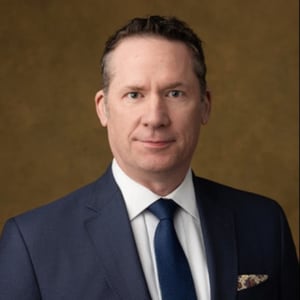
Associate Professor of Politics, Hillsdale College
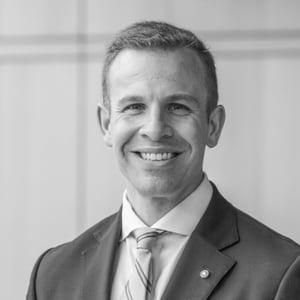
Higher education is one of the few remaining environments where human beings can be at leisure to read, think, and study. Hillsdale College is one of the few remaining places in higher education where students are actively encouraged and required to engage in those activities. This opportunity to be at leisure to think about the most fundamental and pressing questions of modern life is precious and transformative.
As a first-year undergraduate at a liberal arts college, my own life was changed over several evenings of reading in the library about the history of the French Revolution. It was in that moment that I realized the importance of the perennial and perplexing questions in which we engage in the liberal arts setting. I switched my major to political science, history, and philosophy, and have never looked back.
In my graduate studies, I focused extensively on political theory, but my current thinking and research are directed to understanding the political institutions that determine how politics works in America. I am especially interested in understanding the modern administrative state, Congress, and political parties. We must grapple with the interaction of these institutions, and how they relate to the basic principles of American constitutionalism, if we want to preserve and restore constitutional government in the United States.
In my teaching, I aim to engage students in a common enterprise, where we think together and discuss fundamental questions. My goal is not to instruct, but to educate students. That requires active and thoughtful engagement rather than passively receiving information. I am blessed to be at a place like Hillsdale where the students are drawn to this model of education and thrive in such an environment.
Assistant Attorney General & Senior Trial Counsel to the Criminal Bureau, Massachusetts Attorney General
Former CEO, Vascular Solutions
Howard Root is the recently-retired Chief Executive Officer of Vascular Solutions, Inc., a company he founded in 1997, took public in 2000, and grew into a worldwide medical device company that he sold to Teleflex for $1 billion in February 2017. Over the company’s 20 years, Howard led Vascular Solutions in inventing, developing and launching over 100 new medical devices that are used daily to improve the lives of patients suffering from cardiovascular disease. In 2014, Vascular Solutions and Howard were indicted on felony charges alleging the company’s salespeople had promoted off-label an FDA-cleared medical device that made up only 0.1% of the company’s sales and never harmed a single patient. After surviving an arduous legal process, with 121 attorneys charging $25 million in legal fees, in February 2016 the jury returned a verdict of not guilty on all charges, even though the defense didn’t call a single witness to testify in the four-week trial.
Professor of Law, Antonin Scalia Law School, George Mason University
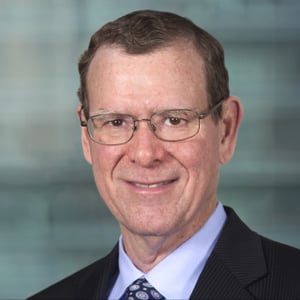
Eric R. Claeys is Professor of Law at the Antonin Scalia Law School, George Mason University. He has written widely in the fields of property, private law, and constitutional law. Professor Claeys’s current research interests focus on flourishing- and labor-based natural rights justifications for property—in American property theory, in intellectual property, and in contemporary regulation of shale gas exploration and hydraulic fracturing. He is a member of the American Law Institute, he serves on the ALI’s Members’ Consultative Group for the first Restatement of Copyright, and he also serves as an adviser to the Restatement (Fourth) of the Law of Property.
Professor Claeys received his JD from the University of Southern California Gould School of Law. He received his AB from Princeton University, and he is a former visiting fellow and current member of Princeton’s Politics Department’s James Madison Program in American Ideals and Institutions. After law school, Professor Claeys clerked for the Hon. Melvin Brunetti, U.S. Court of Appeals for the Ninth Circuit, and the Hon. William H. Rehnquist, Chief Justice of the United States.
Professor Claeys’s main teaching interests include Property, Torts, Jurisprudence, and Intellectual Property. In recent years, he has also taught Water Law, Remedies, Estates and Trusts, Trade Secrecy, Constitutional Law, Torts, and Oil and Gas law. Spring 2018, he is teaching Torts and Jurisprudence as a Visiting Professor at Harvard Law School.
Appellate Counsel, Constitutional Accountability Center
Brian Frazelle is Constitutional Accountability Center’s Appellate Counsel. Before joining CAC, Mr. Frazelle was an Attorney-Advisor at the Privacy and Civil Liberties Oversight Board, an independent, bipartisan agency within the executive branch. Hired as the Board’s first employee in 2013, he helped review the legality, constitutionality, and policy implications of federal antiterrorism measures in order to ensure the adequate protection of civil liberties and privacy; he also contributed to public reports issued by the Board that have influenced recent debates and reforms concerning the government’s surveillance powers. Earlier in his career, Mr. Frazelle was the Supreme Court Assistance Project Fellow at Public Citizen Litigation Group, where he was the lead author of numerous briefs successfully opposing Supreme Court review as well as a merits-stage amicus brief on which the Court’s majority opinion relied. Mr. Frazelle served as a law clerk for Judge Paul L. Friedman of the United States District Court for the District of Columbia. He is a graduate of Yale Law School, where he was a senior editor for the Yale Law Journal. He received his undergraduate degree from the University of Mary Washington and holds a master’s degree in English from the University of North Carolina at Chapel Hill.
Assistant Attorney General, Alabama Attorney General's Office
Laura has been with the Alabama Attorney General’s Office since 2012, where she litigates the defense of state statutes that have been challenged in state or federal court. She was named a Supreme Court Fellow by the National Association of Attorneys General for October Term 2016, for which she wrote the States’ amicus brief in Lee v. United States.
Senior Fellow, Stand Together Trust
Vikrant Reddy is a senior fellow at Stand Together Trust, specializing in the area of criminal justice reform. Reddy previously served as a senior policy analyst at the Texas Public Policy Foundation (TPPF), where he managed the launch of TPPF’s national Right on Crime initiative in 2010. He has worked as a research assistant at the Cato Institute, as a judicial clerk to the Hon. Gina M. Benavides in Texas, and as an attorney in private practice. He is a member of the State Bar of Texas, and he serves on the Executive Committee of the Criminal Law Practice Group of the Federalist Society. He is also an appointee to the U.S. Commission on Civil Rights Texas State Advisory Committee.
Reddy’s research and scholarly opinions have appeared in a range of national media outlets, including USA Today, National Review, The Federalist, and others.
Reddy earned his law degree from the Southern Methodist University School of Law. He received his undergraduate degree from the University of Texas at Austin.
Associate Professor of Politics, Hillsdale College
Higher education is one of the few remaining environments where human beings can be at leisure to read, think, and study. Hillsdale College is one of the few remaining places in higher education where students are actively encouraged and required to engage in those activities. This opportunity to be at leisure to think about the most fundamental and pressing questions of modern life is precious and transformative.
As a first-year undergraduate at a liberal arts college, my own life was changed over several evenings of reading in the library about the history of the French Revolution. It was in that moment that I realized the importance of the perennial and perplexing questions in which we engage in the liberal arts setting. I switched my major to political science, history, and philosophy, and have never looked back.
In my graduate studies, I focused extensively on political theory, but my current thinking and research are directed to understanding the political institutions that determine how politics works in America. I am especially interested in understanding the modern administrative state, Congress, and political parties. We must grapple with the interaction of these institutions, and how they relate to the basic principles of American constitutionalism, if we want to preserve and restore constitutional government in the United States.
In my teaching, I aim to engage students in a common enterprise, where we think together and discuss fundamental questions. My goal is not to instruct, but to educate students. That requires active and thoughtful engagement rather than passively receiving information. I am blessed to be at a place like Hillsdale where the students are drawn to this model of education and thrive in such an environment.
Senior Assistant Attorney General, Office of the Attorney General of the Commonwealth of Virginia
Associate Professor of Law and Director, Program on Economics & Privacy, Antonin Scalia Law School, George Mason University
Associate Professor of Law James C. Cooper brings over a decade of public and private sector experience to his research and teaching. He served as Deputy and Acting Director of the Federal Trade Commission’s Office of Policy Planning, Advisor to Federal Trade Commissioner William Kovacic, and an associate in the antitrust group of Crowell and Moring, LLP. His research on vertical restraints, price discrimination, behavioral economics and antitrust, and privacy policy have appeared in top journals and are widely cited.
Professor Cooper has a BA from the University of South Carolina, received his PhD in economics from Emory University, and his law degree (magna cum laude) from Antonin Scalia Law School, George Mason University, where he was a Levy Fellow and a member of the George Mason Law Review.
He teaches Economics for Lawyers, Advanced Seminar on Law & Economics, and Digital Information Policy Seminar.
Senior Counsel, Crowell & Moring LLP
Lisa Kimmel is a senior counsel in Crowell & Moring's Antitrust Group. She resides in the firm's Washington, D.C. office. Lisa's practice covers merger and civil nonmerger antitrust investigations and antitrust counseling. Lisa also advocates for clients on competition policy matters before federal and state antitrust agencies, focusing in particular on the technology and digital commerce sectors.
Lisa joined Crowell & Moring in 2015 from the Federal Trade Commission (FTC), where she worked for nearly five years as an attorney advisor on antitrust and competition policy matters for Commissioner and later, Chairwoman, Edith Ramirez. During her time at the FTC, Lisa advised the chairwoman on antitrust enforcement and policy matters across a broad range of sectors, and was her lead advisor on antitrust enforcement and competition policy matters in the technology sector, including matters related to industry standards and the acquisition or assertion of intellectual property rights. Before joining the FTC, Lisa practiced with the antitrust group at an AmLaw 100 firm, where she worked in the firm's San Francisco and Washington, D.C. offices.
Lisa’s recent private practice experience includes:
Lisa earned her J.D. and a Ph.D. in economics from the University of California, Berkeley. She is an active member of the ABA Antitrust Section, where she is vice-chair of the Media & Technology Committee, past editor of the Unilateral Conduct Committee newsletter, and co-editor of a forthcoming revision to the Handbook on Antitrust Aspects of Standard Setting. Lisa is a member of the MLex Antitrust Advisory Board and speaks and writes regularly on antitrust issues involving the technology sector and intellectual property rights.
Admitted to practice: California, District of Columbia
Partner, Antitrust and Competition, Wilson Sonsini Goodrich & Rosati
Maureen Ohlhausen is a partner in the Washington, D.C., office of Wilson Sonsini Goodrich & Rosati, where she advises industry-leading clients on complex antitrust and litigation matters, with a focus on high-profile cases. Sought after for her depth of experience on antitrust and Federal Trade Commission (FTC)-related issues, Maureen is known for her relationships with officials in the U.S. and abroad.
After finishing law school and clerking at the U.S. Court of Appeals for the D.C. Circuit, Maureen joined the FTC in 1997. She held a series of roles at the agency over the next 12 years, rising to the position of Director of the FTC Office of Policy Planning, where she led the agency’s work on e-commerce and headed the FTC’s Internet Access Task Force, which produced an influential report analyzing competition and consumer protection legal issues in the broadband and internet sectors. She then went into private practice at a leading telecommunications law firm, where she headed the FTC practice group.
In 2012, Maureen was confirmed by the Senate as a Commissioner of the FTC and was appointed Acting Chairman in January 2017, a role she held until May 2018. As Acting Chairman, Maureen directed all aspects of the agency’s antitrust work, including merger review, conduct enforcement, and all consumer protection enforcement, with an emphasis on privacy and technology issues. Under her leadership, the FTC won several influential merger challenges in court and reached a number of key digital privacy settlements.
To date, Maureen is the only FTC Commissioner to have received the Robert Pitofsky Lifetime Achievement Award in recognition of her contributions to the FTC.
Following the end of her term at the FTC, and immediately prior to joining Wilson Sonsini, Maureen was chair of the global antitrust and competition practice at Baker Botts, based in that firm’s Washington, D.C., office.
A recognized thought leader, Maureen is a frequent author and speaker, and is often quoted by leading print and broadcast media on antitrust, FTC, and privacy and data security matters. She has published dozens of articles on antitrust, privacy, intellectual property, regulation, FTC litigation, telecommunications, and international law issues in prestigious publications. During her tenure at the FTC and in private practice, she testified more than two dozen times before Congress, including before the Senate Commerce Committee and the House Energy and Commerce Antitrust Sub-Committee. She also testified before the Antitrust Modernization Commission.
Partner, Axinn, Veltrop & Harkrider LLP
Koren Wong-Ervin is a recognized thought leader on competition issues who has testified before Congress on domestic and international issues in antitrust policy. She has more than eighteen years of experience in government, private practice, and as in-house counsel, including representing defendants and plaintiffs in high-stakes litigations and representing companies in domestic and foreign investigations. While at the Federal Trade Commission (FTC), Koren served as an Attorney Advisor to Commissioner Joshua Wright and Counsel for Intellectual Property & International Antitrust.
The combination of Koren's experience representing defendants—along with her experience at the FTC and as a former plaintiffs class action attorney—gives her insights into the thinking on both sides of cases, including complex multi-district litigations, allowing her to develop both effective offensive and defensive strategies. On top of this, her in-house experience as the Director of Antitrust Litigation & Policy at a major technology company gives her a first-hand understanding of how companies work and unique insight into the needs of clients. Koren also has a deep understanding of economics, as evidenced by the fact that she has trained over 500 foreign judges and enforcers on a variety of economic topics.
Koren’s scholarship has been cited by courts and the Department of Justice. She has authored over sixty articles, including on vertical mergers and restraints, acquisitions of potential competitors, consummated mergers, multisided platforms, the intersection of antitrust and intellectual property, incremental innovations or “product hopping,” optimal penalties, extraterritoriality, methodologies for calculating patent infringement damages, and international due process and convergence. She has spoken at over 200 domestic and international events.
Former CEO, Vascular Solutions
Howard Root is the recently-retired Chief Executive Officer of Vascular Solutions, Inc., a company he founded in 1997, took public in 2000, and grew into a worldwide medical device company that he sold to Teleflex for $1 billion in February 2017. Over the company’s 20 years, Howard led Vascular Solutions in inventing, developing and launching over 100 new medical devices that are used daily to improve the lives of patients suffering from cardiovascular disease. In 2014, Vascular Solutions and Howard were indicted on felony charges alleging the company’s salespeople had promoted off-label an FDA-cleared medical device that made up only 0.1% of the company’s sales and never harmed a single patient. After surviving an arduous legal process, with 121 attorneys charging $25 million in legal fees, in February 2016 the jury returned a verdict of not guilty on all charges, even though the defense didn’t call a single witness to testify in the four-week trial.
Appellate Counsel, Constitutional Accountability Center
Brian Frazelle is Constitutional Accountability Center’s Appellate Counsel. Before joining CAC, Mr. Frazelle was an Attorney-Advisor at the Privacy and Civil Liberties Oversight Board, an independent, bipartisan agency within the executive branch. Hired as the Board’s first employee in 2013, he helped review the legality, constitutionality, and policy implications of federal antiterrorism measures in order to ensure the adequate protection of civil liberties and privacy; he also contributed to public reports issued by the Board that have influenced recent debates and reforms concerning the government’s surveillance powers. Earlier in his career, Mr. Frazelle was the Supreme Court Assistance Project Fellow at Public Citizen Litigation Group, where he was the lead author of numerous briefs successfully opposing Supreme Court review as well as a merits-stage amicus brief on which the Court’s majority opinion relied. Mr. Frazelle served as a law clerk for Judge Paul L. Friedman of the United States District Court for the District of Columbia. He is a graduate of Yale Law School, where he was a senior editor for the Yale Law Journal. He received his undergraduate degree from the University of Mary Washington and holds a master’s degree in English from the University of North Carolina at Chapel Hill.
Assistant Attorney General, Alabama Attorney General's Office
Laura has been with the Alabama Attorney General’s Office since 2012, where she litigates the defense of state statutes that have been challenged in state or federal court. She was named a Supreme Court Fellow by the National Association of Attorneys General for October Term 2016, for which she wrote the States’ amicus brief in Lee v. United States.
Bureaucracy in America
Joseph Postell
Administrative agencies, and extensive regulation of the economy, have always existed in America. But from...
Deep Dive Episode 9 – Bureaucracy in America
Regulatory Transparency Project Teleforum
TeleforumLuis v. United States: The Distinction That Makes All the Difference
Dean A. Mazzone
Note from the Editor: This article discusses the Supreme Court’s 2016 decision in Luis v. United...
Occupational Licensing, Antitrust, and Innovation
Regulatory Transparency Project Event
Washington, DCCardiac Arrest: A Cautionary Tale
Howard Root
Howard Root started Vascular Solutions, a medical device company, from scratch. Fifteen years later, his...
Deep Dive Episode 8 – Cardiac Arrest: A Cautionary Tale
Regulatory Transparency Project Teleforum
TeleforumRegulatory Takings Law: Penn Central v. City of New York
Eric R. Claeys
Why is a state or local government more likely to prevail against a landowner in...
Lee v. US: Effectiveness of Counsel - Podcast
Brian R. Frazelle, Laura Howell
Jae Lee lived in the United States as a legal permanent resident since 1982. In...
Maslenjak v. United States - Post-Decision SCOTUScast
Vikrant P. Reddy
On June 22, 2017, the Supreme Court decided Maslenjak v. United States. At the close...
Lee v. US: Effectiveness of Counsel
Teleforum