
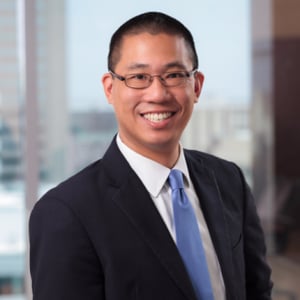
Chair, Issues & Appeals, Hunton Andrews Kurth LLP
The former Solicitor General of West Virginia, Mr. Lin has been on the front lines of many precedent-setting cases in appellate courts across the country, including in a US Supreme Court victory that George Will called “the court’s most severe rebuke of a president” since the Truman administration. Having argued more than 60 appeals, he brings to clients a well-honed ability to identify the most persuasive issues for appeal and a practiced understanding of how best to frame complex legal questions in appellate courts.
With experience in the private sector and multiple branches of government, Mr. Lin’s practice has spanned a wide range of issues, including major questions of constitutional and administrative law at the federal and state levels. On behalf of more than two dozen states, he won a stay from the US Supreme Court of the EPA’s Clean Power Plan. Described by the New York Times as an “unprecedented” order, the stay was the first time the Supreme Court had ever put a regulation on hold before review by a federal appeals court. In that same case, Elbert argued before the en banc DC Circuit in an historic proceeding that one commenter quoted in E&E News compared to “the NBA All-Star Game.” At the state level, Elbert led the effort that persuaded the West Virginia Supreme Court of Appeals to overturn an injunction of the state’s right-to-work law.
In 2013, Mr. Lin was appointed the Solicitor General of West Virginia. During his four-and-a-half year tenure, he served as a member of the Attorney General’s senior management team, oversaw all civil and criminal appeals, and argued nearly two dozen cases in federal and state appellate courts. He authored more than twenty-five briefs in the US Supreme Court and more than forty-five formal Opinions of the Attorney General.
Earlier in his career, Mr. Lin served as a trial attorney in the Federal Programs Branch of the US Department of Justice’s Civil Division, where he received a Special Service Award. He has also been a law clerk at all three levels of the federal judiciary: for Justice Clarence Thomas on the US Supreme Court; for Judge William H. Pryor Jr. on the US Court of Appeals for the Eleventh Circuit; and for Senior Judge Robert E. Keeton on the US District Court for the District of Massachusetts.
Mr. Lin speaks regularly on a wide variety of topics, including constitutional law, administrative law, environmental law, state and federal relations, the US Supreme Court, and appellate practice. He has testified before Congress, and has spoken at the national conventions of the American Bar Association, the Association of Corporate Counsel, the National Asian Pacific American Bar Association, the Federalist Society, Americans for Prosperity, and the American Legislative Exchange Council. He is an elected member of the American Law Institute, a public member of the Administrative Conference of the United States, and a fellow of the American Academy of Appellate Lawyers.
Mr. Lin is admitted to practice in the following federal courts: the Supreme Court of the United States; the First, Second, Third, Fourth, Fifth, Sixth, Seventh, Eighth, Ninth, Eleventh, D.C., and Federal Circuits; the District of Massachusetts; the Northern and Southern Districts of West Virginia; and the Eastern and Western Districts of Virginia.

Senior Vice President, Strand Consult
Roslyn Layton, PhD is a leading international expert on technology policy. She is Senior Vice President of Strand Consult, an independent consultancy serving the global mobile telecom industry. She is also a Visiting Researcher at Aalborg University Copenhagen where she earned a doctoral thesis on network neutrality by measuring the outcome of the policy across 53 countries over 5 years. She served on the Presidential Transition Team for the Federal Communications Commission (FCC), and her work was critical to the FCC’s defense for the Restoring Internet Freedom Order. She has testified to the United States Senate and House on multiple topics including spectrum, broadband, mobile mergers, competition, and privacy. She founded the think tank China Tech Threat to study the problems of technology produced by the People’s Republic of China. She serves as the Program Chair for the Telecom Policy Research Conference, the leading interdisciplinary academic gathering. Her recent paper on rural broadband describes the empirical case for policy reform to recover network infrastructure costs from streaming video entertainment providers. She is a Senior Contributor to Forbes.
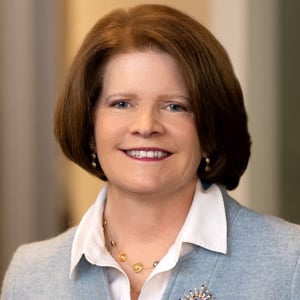
Partner, Antitrust and Competition, Wilson Sonsini Goodrich & Rosati
Maureen Ohlhausen is a partner in the Washington, D.C., office of Wilson Sonsini Goodrich & Rosati, where she advises industry-leading clients on complex antitrust and litigation matters, with a focus on high-profile cases. Sought after for her depth of experience on antitrust and Federal Trade Commission (FTC)-related issues, Maureen is known for her relationships with officials in the U.S. and abroad.
After finishing law school and clerking at the U.S. Court of Appeals for the D.C. Circuit, Maureen joined the FTC in 1997. She held a series of roles at the agency over the next 12 years, rising to the position of Director of the FTC Office of Policy Planning, where she led the agency’s work on e-commerce and headed the FTC’s Internet Access Task Force, which produced an influential report analyzing competition and consumer protection legal issues in the broadband and internet sectors. She then went into private practice at a leading telecommunications law firm, where she headed the FTC practice group.
In 2012, Maureen was confirmed by the Senate as a Commissioner of the FTC and was appointed Acting Chairman in January 2017, a role she held until May 2018. As Acting Chairman, Maureen directed all aspects of the agency’s antitrust work, including merger review, conduct enforcement, and all consumer protection enforcement, with an emphasis on privacy and technology issues. Under her leadership, the FTC won several influential merger challenges in court and reached a number of key digital privacy settlements.
To date, Maureen is the only FTC Commissioner to have received the Robert Pitofsky Lifetime Achievement Award in recognition of her contributions to the FTC.
Following the end of her term at the FTC, and immediately prior to joining Wilson Sonsini, Maureen was chair of the global antitrust and competition practice at Baker Botts, based in that firm’s Washington, D.C., office.
A recognized thought leader, Maureen is a frequent author and speaker, and is often quoted by leading print and broadcast media on antitrust, FTC, and privacy and data security matters. She has published dozens of articles on antitrust, privacy, intellectual property, regulation, FTC litigation, telecommunications, and international law issues in prestigious publications. During her tenure at the FTC and in private practice, she testified more than two dozen times before Congress, including before the Senate Commerce Committee and the House Energy and Commerce Antitrust Sub-Committee. She also testified before the Antitrust Modernization Commission.
Partner, Steptoe & Johnson LLP
Jonathan B. Sallet provides counsel and litigation strategy on matters involving antitrust law, communications law, and broader issues of competition policy. In addition to his years in private practice, Mr. Sallet recently served as general counsel of the Federal Communications Commission (FCC) and as deputy assistant attorney general in the Antitrust Division of the US Department of Justice (DOJ). In the Clinton Administration, he served in the US Department of Commerce (DOC), focusing on technology-policy issues. Mr. Sallet's demonstrated experience enables him to authoritatively advise clients on merger and non-merger antitrust matters, and to effectively represent clients in connection with antitrust investigations and/or litigation. He is a recognized thought leader and has published numerous publications concerning competition, innovation, and technology.
Most recently, in the DOJ's Antitrust Division, Mr. Sallet had responsibility for specific merger and conduct investigations and litigation matters across a variety of industries. He served as the Division's senior decision maker on select cases and oversaw ongoing district court and appellate litigation. As general counsel of the FCC, Mr. Sallet led the defense of the 2015 Open Internet Order and oversaw the FCC's review of major telecommunications mergers. He also handled a large variety of communications law issues reviewed by the Office of General Counsel, including privacy and cybersecurity matters. In recognition of his experience in administrative law and regulatory issues, President Obama appointed Mr. Sallet to the governing council of the Administrative Conference of the United States. At the DOC, Mr. Sallet served as assistant to the secretary and director of the Office of Policy & Strategic Planning, heading the Administration's first educational technology working group under the National Economic Council.
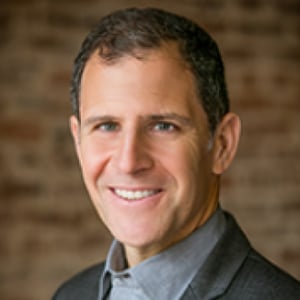
President & CEO, USTelecom
Jonathan Spalter is president and CEO of USTelecom, the nation's premier telecommunications industry trade association, representing broadband service providers, manufacturers and suppliers in the new world of internet-based communications and entertainment.
Spalter joined USTelecom in January 2017, bringing a blend of public policy, entrepreneurial and executive experience. Prior to joining USTelecom, he served as chair of Mobile Future, the national wireless technology association. He has a long track record leading innovative technology companies in the U.S., Asia/Pacific, and Europe and has also held key leadership positions in the executive branch of government.
Spalter was confirmed by the U.S. Senate as Associate Director of the United States Information Agency and also managed the agency's global technology resources as Chief Information Officer. He served at the White House as a Director on the National Security Council and as Vice President Al Gore's chief international affairs spokesperson and speechwriter. He also was a policy aide to the Undersecretary of Defense for Policy at the Pentagon.
In the private sector, Spalter's executive roles included serving as CEO of Snocap, the digital content services company founded by the creators of Napster. He also was CEO of Atmedica Worldwide, the online healthcare affiliate of the Fortune 100 telecommunications and media company Vivendi Universal, where he also served as Executive Vice President for Business Development and Strategy at its internet subsidiary VivendiNet; and as the group's Senior Vice President for global public policy.
Spalter is a graduate of Harvard College and Cambridge University and has served as advisor to and board member of cutting-edge technology companies, financial institutions, and not-for-profit organizations in Silicon Valley and beyond. He and his wife Carrie Goux, the Vice President of Communications at GreatSchools, have four children.
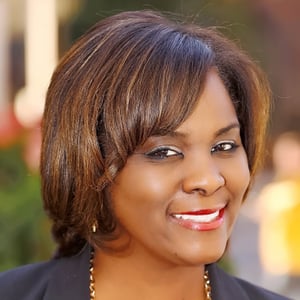
Fellow, Governance Studies, Center for Technology Innovation, The Brookings Institution
Dr. Nicol Turner-Lee is a fellow in the program's Center for Technology Innovation and a contributor to TechTank. She comes to Brookings from the Multicultural Media, Telecom and Internet Council (MMTC), a national non-for-profit organization dedicated to promoting and preserving equal opportunity and civil rights in the mass media, telecommunications, and broadband industries, where she served as vice president and chief research and policy officer. In this role, she led the design and implementation of their research, policy, and advocacy agendas. Her most recent White Papers at MMTC included, “A Lifeline to High-Speed Internet Access: An Economic Analysis of Administrative Costs and the Impact on Consumers" (March 2016), “Guarding Against Data Discrimination in the Internet of Everything" (September 2015), “Refocusing Broadband Policy: The New Opportunity Agenda for People of Color" (November 2013).
Prior to joining MMTC, Dr. Turner-Lee was vice president and the first director of the Media and Technology Institute at the Joint Center for Political and Economic Studies, the nation's leading think tank on issues related to African Americans and other people of color. In this role, she led the technology research agenda that was focused on advancing digital equity and inclusion for historically disadvantaged populations. Her most notable work was her development of the first national minority broadband adoption study in 2009 that was later cited in the congressionally mandated Federal Communications Commission's National Broadband Plan. Her other publications there included, “Minorities, Mobile Broadband, and the Management of Chronic Diseases" (April 2012), co-authored with Dr. Brian Smedley and Joseph Miller; “Place Matters: The Debate over Broadband Availability" (2011); and, “Increasing Civic Engagement in the Digital Age" (2010) which was published by the Federal Communications Commission Law Journal.
In addition to these and other publications, Dr. Turner-Lee has been cited in the New York Times, Washington Post, San Francisco Chronicle, Communications Daily, Multichannel News, Washington Informer, among other print and online publications. She is also a widely sought expert and speaker on issues related to communications policies in media and at conferences, and she has testified before Congress. Dr. Turner-Lee was a two-time Digital Research Program Scholar as part of Time Warner Cable's Cable Research Program in Communications and recipient of countless recognitions, including the presentation of the Lifetime Achievement Award from the Rainbow PUSH Coalition (2015) and one of the Most Inspiring Women in Media from the Alliance of Women in Media (2014).
At the Center for Technology Innovation, Dr. Turner-Lee researches public policy designed to enable equitable access to technology across the U.S. and to harness its power to create change in communities across the world. Dr. Turner-Lee's research also explores global and domestic broadband deployment, regulatory, and internet governance issues. She is also an expert on the intersection of race, wealth, and technology within the context of civic engagement, criminal justice, and economic development.
Dr. Turner-Lee graduated from Colgate University magna cum laude and has a M.A. and Ph.D. in Sociology from Northwestern University. She also holds a Certificate in Nonprofit Management from the University of Illinois-Chicago. Dr. Turner-Lee is a Visiting Scholar at the Center for Gender Equity in Science and Technology at Arizona State University. She also serves on the U.S. State Department's Advisory Committee on International Communications and Information Policy (ACICIP). In her free time, Dr. Turner-Lee is active on the boards of various nonprofit organizations, including the Telecommunications Policy Research Conference (TPRC), the Washington Literacy Center, and STEM4US, which is committed to advancing diversity in the technology fields.
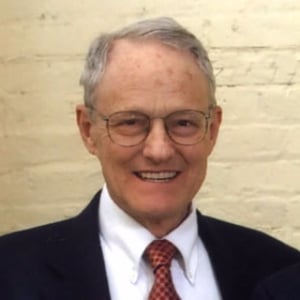
U.S. Court of Appeals, D.C. Circuit
Judge Williams practiced law in New York City (at the firm of Debevoise Plimpton and as an Assistant U.S. Attorney) and then taught law at the University of Colorado Law School from 1969 to 1986, with visiting years at UCLA, SMU, and the University of Chicago (where he was also a fellow in law and economics). He was appointed to the U.S. Court of Appeals for the D.C. Circuit in 1986. His most recent book is a biography of Vasily Maklakov, The Reformer: How One Liberal Fought to Preempt the Russian Revolution (Encounter Books, 2017).
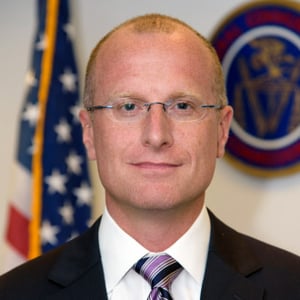
Chairman, Federal Communications Commission
Brendan Carr is the Chairman of the Federal Communications Commission. He previously served as the senior Republican Commissioner and as the FCC’s General Counsel. Nominated by both President Trump and President Biden, Carr has been confirmed unanimously by the Senate three times.
Described by Axios as “the FCC’s 5G crusader,” Carr has led the FCC’s work to modernize its infrastructure rules and accelerate the buildout of high-speed networks. His reforms cut billions of dollars in red tape, enabled the private sector to construct high-speed networks in communities across the country, and extended America’s global leadership in 5G.
Chairman Carr is also focused on expanding America’s skilled workforce—the tower climbers and construction crews needed to build next-gen networks. His jobs initiative promotes community colleges and apprenticeships as a pipeline for good-paying 5G jobs. He is recognizing America’s talented tower crews through a series of “5G Ready” Hard Hat presentations.
Chairman Carr leads a groundbreaking telehealth initiative at the FCC. The Connected Care Pilot Program supports the delivery of high-quality care to low-income Americans and veterans.
Chairman Carr’s time outside of Washington helps inform his approach to the job. He regularly hits the road to hear directly from community members and learn how changes in federal policies could help improve their lives.
Chairman Carr brings nearly 20 years of private and public sector experience in communications and tech policy to his position. Before joining the FCC as a staffer back in 2012, he worked as an attorney at Wiley Rein LLP in the firm’s appellate, litigation, and telecom practices. Previously, Chairman Carr clerked on the U.S. Court of Appeals for the Fourth Circuit for Judge Dennis Shedd. After attending Georgetown University for his undergrad, Chairman Carr earned his J.D. magna cum laude from the Catholic University of America’s Columbus School of Law where he served as an editor of the Catholic University Law Review.
Senior Vice President, Strand Consult
Roslyn Layton, PhD is a leading international expert on technology policy. She is Senior Vice President of Strand Consult, an independent consultancy serving the global mobile telecom industry. She is also a Visiting Researcher at Aalborg University Copenhagen where she earned a doctoral thesis on network neutrality by measuring the outcome of the policy across 53 countries over 5 years. She served on the Presidential Transition Team for the Federal Communications Commission (FCC), and her work was critical to the FCC’s defense for the Restoring Internet Freedom Order. She has testified to the United States Senate and House on multiple topics including spectrum, broadband, mobile mergers, competition, and privacy. She founded the think tank China Tech Threat to study the problems of technology produced by the People’s Republic of China. She serves as the Program Chair for the Telecom Policy Research Conference, the leading interdisciplinary academic gathering. Her recent paper on rural broadband describes the empirical case for policy reform to recover network infrastructure costs from streaming video entertainment providers. She is a Senior Contributor to Forbes.
Partner, Antitrust and Competition, Wilson Sonsini Goodrich & Rosati
Maureen Ohlhausen is a partner in the Washington, D.C., office of Wilson Sonsini Goodrich & Rosati, where she advises industry-leading clients on complex antitrust and litigation matters, with a focus on high-profile cases. Sought after for her depth of experience on antitrust and Federal Trade Commission (FTC)-related issues, Maureen is known for her relationships with officials in the U.S. and abroad.
After finishing law school and clerking at the U.S. Court of Appeals for the D.C. Circuit, Maureen joined the FTC in 1997. She held a series of roles at the agency over the next 12 years, rising to the position of Director of the FTC Office of Policy Planning, where she led the agency’s work on e-commerce and headed the FTC’s Internet Access Task Force, which produced an influential report analyzing competition and consumer protection legal issues in the broadband and internet sectors. She then went into private practice at a leading telecommunications law firm, where she headed the FTC practice group.
In 2012, Maureen was confirmed by the Senate as a Commissioner of the FTC and was appointed Acting Chairman in January 2017, a role she held until May 2018. As Acting Chairman, Maureen directed all aspects of the agency’s antitrust work, including merger review, conduct enforcement, and all consumer protection enforcement, with an emphasis on privacy and technology issues. Under her leadership, the FTC won several influential merger challenges in court and reached a number of key digital privacy settlements.
To date, Maureen is the only FTC Commissioner to have received the Robert Pitofsky Lifetime Achievement Award in recognition of her contributions to the FTC.
Following the end of her term at the FTC, and immediately prior to joining Wilson Sonsini, Maureen was chair of the global antitrust and competition practice at Baker Botts, based in that firm’s Washington, D.C., office.
A recognized thought leader, Maureen is a frequent author and speaker, and is often quoted by leading print and broadcast media on antitrust, FTC, and privacy and data security matters. She has published dozens of articles on antitrust, privacy, intellectual property, regulation, FTC litigation, telecommunications, and international law issues in prestigious publications. During her tenure at the FTC and in private practice, she testified more than two dozen times before Congress, including before the Senate Commerce Committee and the House Energy and Commerce Antitrust Sub-Committee. She also testified before the Antitrust Modernization Commission.
Partner, Steptoe & Johnson LLP
Jonathan B. Sallet provides counsel and litigation strategy on matters involving antitrust law, communications law, and broader issues of competition policy. In addition to his years in private practice, Mr. Sallet recently served as general counsel of the Federal Communications Commission (FCC) and as deputy assistant attorney general in the Antitrust Division of the US Department of Justice (DOJ). In the Clinton Administration, he served in the US Department of Commerce (DOC), focusing on technology-policy issues. Mr. Sallet's demonstrated experience enables him to authoritatively advise clients on merger and non-merger antitrust matters, and to effectively represent clients in connection with antitrust investigations and/or litigation. He is a recognized thought leader and has published numerous publications concerning competition, innovation, and technology.
Most recently, in the DOJ's Antitrust Division, Mr. Sallet had responsibility for specific merger and conduct investigations and litigation matters across a variety of industries. He served as the Division's senior decision maker on select cases and oversaw ongoing district court and appellate litigation. As general counsel of the FCC, Mr. Sallet led the defense of the 2015 Open Internet Order and oversaw the FCC's review of major telecommunications mergers. He also handled a large variety of communications law issues reviewed by the Office of General Counsel, including privacy and cybersecurity matters. In recognition of his experience in administrative law and regulatory issues, President Obama appointed Mr. Sallet to the governing council of the Administrative Conference of the United States. At the DOC, Mr. Sallet served as assistant to the secretary and director of the Office of Policy & Strategic Planning, heading the Administration's first educational technology working group under the National Economic Council.
President & CEO, USTelecom
Jonathan Spalter is president and CEO of USTelecom, the nation's premier telecommunications industry trade association, representing broadband service providers, manufacturers and suppliers in the new world of internet-based communications and entertainment.
Spalter joined USTelecom in January 2017, bringing a blend of public policy, entrepreneurial and executive experience. Prior to joining USTelecom, he served as chair of Mobile Future, the national wireless technology association. He has a long track record leading innovative technology companies in the U.S., Asia/Pacific, and Europe and has also held key leadership positions in the executive branch of government.
Spalter was confirmed by the U.S. Senate as Associate Director of the United States Information Agency and also managed the agency's global technology resources as Chief Information Officer. He served at the White House as a Director on the National Security Council and as Vice President Al Gore's chief international affairs spokesperson and speechwriter. He also was a policy aide to the Undersecretary of Defense for Policy at the Pentagon.
In the private sector, Spalter's executive roles included serving as CEO of Snocap, the digital content services company founded by the creators of Napster. He also was CEO of Atmedica Worldwide, the online healthcare affiliate of the Fortune 100 telecommunications and media company Vivendi Universal, where he also served as Executive Vice President for Business Development and Strategy at its internet subsidiary VivendiNet; and as the group's Senior Vice President for global public policy.
Spalter is a graduate of Harvard College and Cambridge University and has served as advisor to and board member of cutting-edge technology companies, financial institutions, and not-for-profit organizations in Silicon Valley and beyond. He and his wife Carrie Goux, the Vice President of Communications at GreatSchools, have four children.
Fellow, Governance Studies, Center for Technology Innovation, The Brookings Institution
Dr. Nicol Turner-Lee is a fellow in the program's Center for Technology Innovation and a contributor to TechTank. She comes to Brookings from the Multicultural Media, Telecom and Internet Council (MMTC), a national non-for-profit organization dedicated to promoting and preserving equal opportunity and civil rights in the mass media, telecommunications, and broadband industries, where she served as vice president and chief research and policy officer. In this role, she led the design and implementation of their research, policy, and advocacy agendas. Her most recent White Papers at MMTC included, “A Lifeline to High-Speed Internet Access: An Economic Analysis of Administrative Costs and the Impact on Consumers" (March 2016), “Guarding Against Data Discrimination in the Internet of Everything" (September 2015), “Refocusing Broadband Policy: The New Opportunity Agenda for People of Color" (November 2013).
Prior to joining MMTC, Dr. Turner-Lee was vice president and the first director of the Media and Technology Institute at the Joint Center for Political and Economic Studies, the nation's leading think tank on issues related to African Americans and other people of color. In this role, she led the technology research agenda that was focused on advancing digital equity and inclusion for historically disadvantaged populations. Her most notable work was her development of the first national minority broadband adoption study in 2009 that was later cited in the congressionally mandated Federal Communications Commission's National Broadband Plan. Her other publications there included, “Minorities, Mobile Broadband, and the Management of Chronic Diseases" (April 2012), co-authored with Dr. Brian Smedley and Joseph Miller; “Place Matters: The Debate over Broadband Availability" (2011); and, “Increasing Civic Engagement in the Digital Age" (2010) which was published by the Federal Communications Commission Law Journal.
In addition to these and other publications, Dr. Turner-Lee has been cited in the New York Times, Washington Post, San Francisco Chronicle, Communications Daily, Multichannel News, Washington Informer, among other print and online publications. She is also a widely sought expert and speaker on issues related to communications policies in media and at conferences, and she has testified before Congress. Dr. Turner-Lee was a two-time Digital Research Program Scholar as part of Time Warner Cable's Cable Research Program in Communications and recipient of countless recognitions, including the presentation of the Lifetime Achievement Award from the Rainbow PUSH Coalition (2015) and one of the Most Inspiring Women in Media from the Alliance of Women in Media (2014).
At the Center for Technology Innovation, Dr. Turner-Lee researches public policy designed to enable equitable access to technology across the U.S. and to harness its power to create change in communities across the world. Dr. Turner-Lee's research also explores global and domestic broadband deployment, regulatory, and internet governance issues. She is also an expert on the intersection of race, wealth, and technology within the context of civic engagement, criminal justice, and economic development.
Dr. Turner-Lee graduated from Colgate University magna cum laude and has a M.A. and Ph.D. in Sociology from Northwestern University. She also holds a Certificate in Nonprofit Management from the University of Illinois-Chicago. Dr. Turner-Lee is a Visiting Scholar at the Center for Gender Equity in Science and Technology at Arizona State University. She also serves on the U.S. State Department's Advisory Committee on International Communications and Information Policy (ACICIP). In her free time, Dr. Turner-Lee is active on the boards of various nonprofit organizations, including the Telecommunications Policy Research Conference (TPRC), the Washington Literacy Center, and STEM4US, which is committed to advancing diversity in the technology fields.
U.S. Court of Appeals, D.C. Circuit
Judge Williams practiced law in New York City (at the firm of Debevoise Plimpton and as an Assistant U.S. Attorney) and then taught law at the University of Colorado Law School from 1969 to 1986, with visiting years at UCLA, SMU, and the University of Chicago (where he was also a fellow in law and economics). He was appointed to the U.S. Court of Appeals for the D.C. Circuit in 1986. His most recent book is a biography of Vasily Maklakov, The Reformer: How One Liberal Fought to Preempt the Russian Revolution (Encounter Books, 2017).
Chairman, Federal Communications Commission
Brendan Carr is the Chairman of the Federal Communications Commission. He previously served as the senior Republican Commissioner and as the FCC’s General Counsel. Nominated by both President Trump and President Biden, Carr has been confirmed unanimously by the Senate three times.
Described by Axios as “the FCC’s 5G crusader,” Carr has led the FCC’s work to modernize its infrastructure rules and accelerate the buildout of high-speed networks. His reforms cut billions of dollars in red tape, enabled the private sector to construct high-speed networks in communities across the country, and extended America’s global leadership in 5G.
Chairman Carr is also focused on expanding America’s skilled workforce—the tower climbers and construction crews needed to build next-gen networks. His jobs initiative promotes community colleges and apprenticeships as a pipeline for good-paying 5G jobs. He is recognizing America’s talented tower crews through a series of “5G Ready” Hard Hat presentations.
Chairman Carr leads a groundbreaking telehealth initiative at the FCC. The Connected Care Pilot Program supports the delivery of high-quality care to low-income Americans and veterans.
Chairman Carr’s time outside of Washington helps inform his approach to the job. He regularly hits the road to hear directly from community members and learn how changes in federal policies could help improve their lives.
Chairman Carr brings nearly 20 years of private and public sector experience in communications and tech policy to his position. Before joining the FCC as a staffer back in 2012, he worked as an attorney at Wiley Rein LLP in the firm’s appellate, litigation, and telecom practices. Previously, Chairman Carr clerked on the U.S. Court of Appeals for the Fourth Circuit for Judge Dennis Shedd. After attending Georgetown University for his undergrad, Chairman Carr earned his J.D. magna cum laude from the Catholic University of America’s Columbus School of Law where he served as an editor of the Catholic University Law Review.
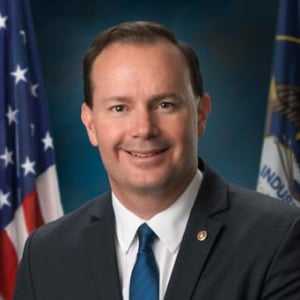
United States Senator, Utah
Elected in 2010 as Utah's 16th Senator, Mike Lee has spent his career defending the basic liberties of Americans and Utahns as a tireless advocate for our founding constitutional principles.
Senator Lee acquired a deep respect for the Constitution early on. His father, Rex Lee, who served as the Solicitor General under President Ronald Reagan, would often discuss varied aspects of judicial and constitutional doctrine around the kitchen table, from Due Process to the uses of Executive Plenary Power. He attended most of his father's arguments before the U.S. Supreme Court, giving him a unique, hands-on experience and understanding of government up close.
Lee graduated from Brigham Young University with a Bachelor of Science in Political Science, and served as BYU's Student Body President in his senior year. He graduated from BYU's Law School in 1997 and went on to serve as law clerk to Judge Dee Benson of the U.S. District Court for the District of Utah, and then with future Supreme Court Justice Judge Samuel A. Alito, Jr. on the U.S. Court of Appeals for the Third Circuit.
Lee spent several years as an attorney with the law firm Sidley & Austin specializing in appellate and Supreme Court litigation, and then served as an Assistant U.S. Attorney in Salt Lake City arguing cases before the U.S. Court of Appeals for the Tenth Circuit.
Lee served the state of Utah as Governor Jon Huntsman's General Counsel and was later honored to reunite with Justice Alito, now on the Supreme Court, for a one-year clerkship. He returned to private practice in 2007.
Throughout his career, Lee earned a reputation as an outstanding practitioner of the law based on his sound judgment, abilities in the courtroom, and thorough understanding of the Constitution.
Today, Lee fights to preserve America's proud founding document in the United States Senate. He advocates efforts to support constitutionally limited government, fiscal responsibility, individual liberty, and economic prosperity.
Lee is a member of the Judiciary Committee, and serves as Chairman of the Antitrust, Competition Policy and Consumer Rights Subcommittee protecting business competition and personal freedom.
He also oversees issues critical to Utah as the Chairman of the Water and Power Subcommittee of the Energy and Natural Resources Committee. He serves on the Commerce Committee and the Joint Economic Committee, as well.
In the 114th Congress, Lee also began his tenure as Chairman of the Senate Steering Committee, where he works with his Republican colleagues in the Senate to introduce bold and innovative solutions to issues facing the American people.
Lee and his wife Sharon live in Alpine, Utah, with their three children. He is a member of The Church of Jesus Christ of Latter-day Saints and served a two-year mission for the Church in the Texas Rio Grande Valley.
Chair, Issues & Appeals, Hunton Andrews Kurth LLP
The former Solicitor General of West Virginia, Mr. Lin has been on the front lines of many precedent-setting cases in appellate courts across the country, including in a US Supreme Court victory that George Will called “the court’s most severe rebuke of a president” since the Truman administration. Having argued more than 60 appeals, he brings to clients a well-honed ability to identify the most persuasive issues for appeal and a practiced understanding of how best to frame complex legal questions in appellate courts.
With experience in the private sector and multiple branches of government, Mr. Lin’s practice has spanned a wide range of issues, including major questions of constitutional and administrative law at the federal and state levels. On behalf of more than two dozen states, he won a stay from the US Supreme Court of the EPA’s Clean Power Plan. Described by the New York Times as an “unprecedented” order, the stay was the first time the Supreme Court had ever put a regulation on hold before review by a federal appeals court. In that same case, Elbert argued before the en banc DC Circuit in an historic proceeding that one commenter quoted in E&E News compared to “the NBA All-Star Game.” At the state level, Elbert led the effort that persuaded the West Virginia Supreme Court of Appeals to overturn an injunction of the state’s right-to-work law.
In 2013, Mr. Lin was appointed the Solicitor General of West Virginia. During his four-and-a-half year tenure, he served as a member of the Attorney General’s senior management team, oversaw all civil and criminal appeals, and argued nearly two dozen cases in federal and state appellate courts. He authored more than twenty-five briefs in the US Supreme Court and more than forty-five formal Opinions of the Attorney General.
Earlier in his career, Mr. Lin served as a trial attorney in the Federal Programs Branch of the US Department of Justice’s Civil Division, where he received a Special Service Award. He has also been a law clerk at all three levels of the federal judiciary: for Justice Clarence Thomas on the US Supreme Court; for Judge William H. Pryor Jr. on the US Court of Appeals for the Eleventh Circuit; and for Senior Judge Robert E. Keeton on the US District Court for the District of Massachusetts.
Mr. Lin speaks regularly on a wide variety of topics, including constitutional law, administrative law, environmental law, state and federal relations, the US Supreme Court, and appellate practice. He has testified before Congress, and has spoken at the national conventions of the American Bar Association, the Association of Corporate Counsel, the National Asian Pacific American Bar Association, the Federalist Society, Americans for Prosperity, and the American Legislative Exchange Council. He is an elected member of the American Law Institute, a public member of the Administrative Conference of the United States, and a fellow of the American Academy of Appellate Lawyers.
Mr. Lin is admitted to practice in the following federal courts: the Supreme Court of the United States; the First, Second, Third, Fourth, Fifth, Sixth, Seventh, Eighth, Ninth, Eleventh, D.C., and Federal Circuits; the District of Massachusetts; the Northern and Southern Districts of West Virginia; and the Eastern and Western Districts of Virginia.
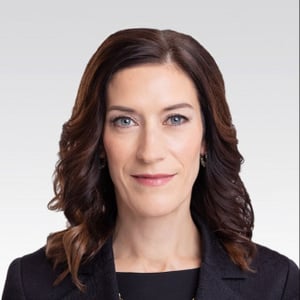
Executive Vice President of Global Governance, Chief Legal Officer and Corporate Secretary, Walmart Inc.
Rachel Brand is Walmart’s executive vice president of global governance, chief legal officer, and corporate secretary. She oversees the company’s global legal, compliance, ethics, corporate governance, digital citizenship, aviation, investigative, and corporate security functions, including Walmart’s Emergency Operations Center.
Immediately before joining Walmart, Rachel served as the United States Associate Attorney General and holds the distinction of being the first woman to serve in this role. She had previously served in the U.S. Department of Justice as the Assistant Attorney General for the Office of Legal Policy during President George W. Bush’s administration. Her other government service includes an appointment by President Obama to serve as a Member of the U.S. Privacy and Civil Liberties Oversight Board, service as an Associate Counsel to the President at the White House, and judicial clerkships with Justice Charles Fried of the Supreme Judicial Court of Massachusetts and Justice Anthony Kennedy at the Supreme Court of the United States. In the private sector, Rachel was a lawyer in private practice at two law firms in Washington, D.C. and served as the Vice President and Chief Counsel for Regulatory Litigation at the U.S. Chamber of Commerce Litigation Center.
Rachel serves on the board of directors for the Walmart Foundation and is the executive sponsor for Walmart’s Tribal Voices Associate Resource Group. Outside of Walmart, she serves on the board of directors for the International Justice Mission and is a member of The American Law Institute.
Rachel earned her Bachelor of Arts degree from the University of Minnesota-Morris and her J.D. from Harvard Law School.

Courthouse Steps: Christie v. National Collegiate Athletic Association
Elbert Lin
On Monday, December 4, 2017, the Supreme Court will hear oral argument in Christie v. National...
Topics
The Issue of Occupational Speech in Masterpiece & NILF
It is not often that the Supreme Court takes two cases addressing an ever more...
Topics
The Sky is Not Falling: FCC Plan to Free the Internet Will Foster Needed Investment and Innovation
Below is an opinion piece contributed to the Washington Examiner by GW Law Federalist Society...
Written Out of History: The Forgotten Founders Who Fought Big Government
Practice Groups Podcast
TeleforumTopics
Don't Cry for me, Arizona
December 7 marks the seventy-sixth anniversary of the Japanese attack on Pearl Harbor, an act...
Courthouse Steps: Christie v. National Collegiate Athletic Association
Federalism & Separation of Powers Practice Group and Regulatory Transparency Project Teleforum
TeleforumDiscussion with Associate AG Brand
DC Young Lawyers Chapter
Washington, DCTopics
Who’s The (Acting) Boss? Judge Timothy Kelly Rules That Mulvaney Is Acting CFPB Director
Yesterday afternoon Judge Timothy Kelly, U.S. District Court for the District of Columbia, ruled that Mick...
The Regulatory State of the Internet
Roslyn Layton, Maureen K. Ohlhausen, Jonathan B. Sallet, Jonathan Spalter, Nicol Turner-Lee, Stephen F. Williams, Brendan Carr
The Internet has dynamically changed the way we live. It touches every sector of the...
The Regulatory State of the Internet
Roslyn Layton, Maureen K. Ohlhausen, Jonathan B. Sallet, Jonathan Spalter, Nicol Turner-Lee, Stephen F. Williams, Brendan Carr
The Internet has dynamically changed the way we live. It touches every sector of the...