

Senior Counsel, First Liberty Institute
Stephanie N. Taub serves as Senior Counsel with First Liberty Institute, focusing on litigation, appellate advocacy, and legal education.
While at First Liberty, her article on the rights of faith-based organizations under Title VII of the Civil Rights Act of 1964 has been published in the Texas Review of Law and Politics. She has also authored pieces published in National Review, the Daily Signal, the Washington Times, the Des Moines Register, and the New York Daily News. In 2017, Taub was named one of 15 recipients of the James Wilson Fellowship in natural law.
Before joining First Liberty, Taub worked as a law clerk to the Honorable Reed O’Connor in the U.S. District Court of the Northern District of Texas.
Taub is a Harvard Law School graduate in the class of 2014 and a Blackstone Fellow in the class of 2012. During law school, she served as Co-President of the HLS Christian Fellowship and Managing Technical Editor of the Harvard Human Rights Journal. Taub spent her law school summers defending religious liberty in public interest law firms and clerking in the Texas Office of Solicitor General.
For her undergraduate studies at the University of Southern California, Taub graduated summa cum laude, majoring in Business Administration with a minor in Philosophy.
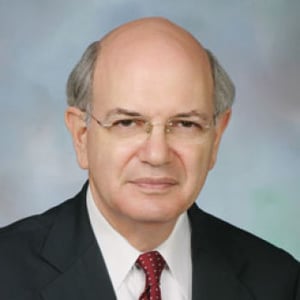
Former Congressman, Vice-President, U.S. Association of Former Members of Congress
The Honorable Martin Frost served in the U.S. House of Representatives from 1979-2005.
With 26 years of legislative experience, he is regarded as a preeminent political analyst among his peers. He held numerous leadership positions in his party and is also considered to be one of its top strategists, an innovative lawmaker who is able to craft bipartisan legislation, and a strong fundraiser for fellow Democrats. He is also the co-author, with Congressman Tom Davis (V-RA) of The PARTISAN DIVIDE: Congress in Crisis, which looks at how to solve the gridlock in Washington. In his presentations, Martin Frost addresses our current political climate, what to expect from Congress after the election, and what it takes to achieve bi-partisan cooperation.n, and what it takes to achieve bi-partisan cooperation.
Early in his political career, Frost served six years on the House Budget Committee and was chairman of the Health Task Force from 1985–1988. During the 1996 and 1998 elections, Frost was the chair of the Democratic Congressional Campaign Committee, a position he utilized to help his party gain 14 seats in the House. In 1999, he earned the distinguished role of chairman of the House Democratic Caucus, the party’s third-highest leadership role. During his last term, Frost held noteworthy positions as the ranking member of the House Rules Committee and highest ranking Southerner in the House Democratic Leadership. He was also the senior southern democrat in the House and the dean of the Texas congressional delegation.
Frost earned his bachelor’s degree in journalism and history from the University of Missouri-Columbia. Following his graduation from Georgetown Law School, he practiced in Dallas until his election in 1978. In 2005, Frost was a fellow at the Institute of Politics at the John F. Kennedy School of Government at Harvard, and in 2006, the Woodrow Wilson International Center for Scholars named him a public policy scholar.
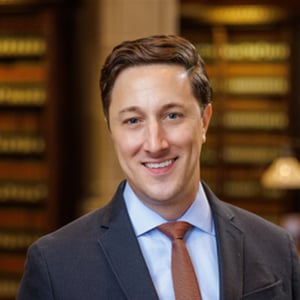
Professor of Law, Notre Dame Law School
Professor Derek Muller is a nationally-recognized scholar in the field of election law. His research focuses on the role of states in the administration of federal elections, the constitutional contours of voting rights and election administration, the limits of judicial power in the domain of elections, and the Electoral College.
He has published more than two dozen academic works, and his op-eds have appeared in the New York Times, the Los Angeles Times, and the Wall Street Journal. He has testified before Congress, and he is a contributor at the Election Law Blog. He is a co-author on a Federal Courts casebook published by Carolina Academic Press. He is also the co-reporter on a new Restatement of the Law, Election Litigation, an effort led by the American Law Institute.
Professor Muller teaches Election Law, Civil Procedure, and Evidence.
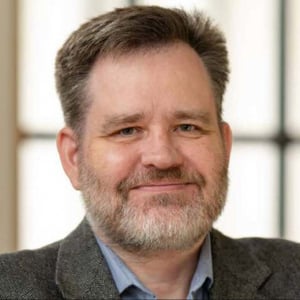
David Boies Professor of Law, Yale Law School

Executive Vice President, Chief Legal Officer, Gates Corporation
Matthew R. A. Heiman joined the Company in May 2026 and has served as the Company’s Chief Legal Officer and Corporate Secretary since June 2026. As Chief Legal Officer, Mr. Heiman is responsible for all legal functions for Gates, including securities and corporate governance, M&A, litigation, commercial, regulatory, compliance, patents and trademarks, real estate, employment and labor, sustainability and environmental matters. Prior to joining Gates, Mr. Heiman held senior legal leadership roles at Waystar, where he served as Chief Legal & Administrative Officer from 2023 to 2025 and as General Counsel and Corporate Secretary from 2020 to 2023. Prior to that, he was with Johnson Controls, where he served as Vice President, Corporate Secretary, and Associate General Counsel. Mr. Heiman has been a Senior Fellow for the National Security Institute at George Mason University’s Antonin Scalia School of Law since 2018.
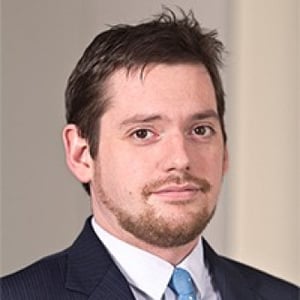
Senior Fellow, Cato Institute
Julian Sanchez is a senior fellow at the Cato Institute and studies issues at the busy intersection of technology, privacy, and civil liberties, with a particular focus on national security and intelligence surveillance. Before joining Cato, Sanchez served as the Washington editor for the technology news site Ars Technica, where he covered surveillance, intellectual property, and telecom policy. He has also worked as a writer for The Economist’s blog Democracy in America and as an editor for Reason magazine, where he remains a contributing editor.
Sanchez has written on privacy and technology for a wide array of national publications, ranging from the National Review to The Nation, and is a founding editor of the policy blog Just Security. He studied philosophy and political science at New York University.
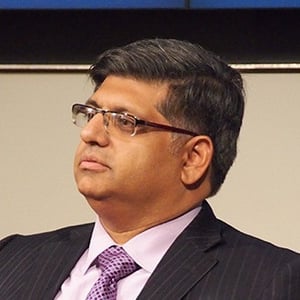
Attorney & former Senior Policy Advisor, Department of Homeland Security
Faisal is a lawyer living in Vermont with his children. Faisal is a former Republican who served in the George W Bush Administration Senior Policy Advisor to the Under at the Department of Homeland Security. Prior to that, Faisal worked at the White House Office of Homeland Security and then later the Homeland Security Council as associate counsel. Prior to his appointment at the White House, Faisal served as the Deputy General Counsel for Policy at the Office of Personnel Management. Faisal Gill also served in the United States Navy Judge Advocate General’s Corps.
He has a BA and JD from American University in Washington, DC.
It was reported that Faisal was one of the prominent Muslim Americans that NSA was spying on.
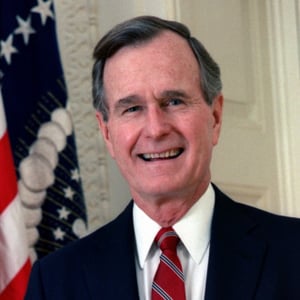
41st President of the United States
George Herbert Walker Bush was vice president of the United States (1981–89) and the 41st president of the United States (1989–93).

Clayton J. and Henry R. Barber Professor of Law, Northwestern University Pritzker School of Law and Co-Chairman, Board of Directors, The Federalist Society
STEVEN GOW CALABRESI is the Clayton J. & Henry R. Barber Professor at Northwestern Pritzker School of Law. He has also co-taught in the Fall semester at Yale Law School from 2013 to the present. Calabresi clerked for Justice Antonin Scalia and Judges Robert H. Bork and Ralph K. Winter. He was a Special Assistant to Attorney General Meese from 1985 to 1987 and worked with Ken Cribb as his deputy in 1987 on the second floor of the West Wing of the Reagan White House. Calabresi has written books on presidential power and comparative constitutional law and the origins of judicial review. He and Gary Lawson are the co-editors of a casebook on U.S. Constitutional Law, and Calabresi is also the co-editor of a casebook on comparative constitutional law. He has written over seventy law review articles since 1990.

Founding Partner, Boyden Gray & Associates
Ambassador C. Boyden Gray is the founding partner of Boyden Gray & Associates, a law and strategy firm in Washington, D.C., focused on constitutional and regulatory issues.
Mr. Gray worked in the White House for twelve years, first as counsel to the Vice President during the Reagan administration and then as White House Counsel to President George H.W. Bush. In the Reagan administration, he was Counsel to the Presidential Task Force on Regulatory Relief, for which he wrote the original Executive Order 12291 requiring cost-benefit analysis and White House review of regulations (later renumbered as current EO 12866). In the George H.W. Bush Administration, Mr. Gray was in charge of judicial selection and was also instrumental in the enactment of the Clean Air Act Amendments of 1990, the Energy Policy Act of 1992, and a cap-and-trade system for acid rain emissions. In 1993, he received the Presidential Citizens Medal. Under President George W. Bush, Mr. Gray was U.S. Ambassador to the European Union and U.S. Special Envoy to Europe for Eurasian Energy.
Mr. Gray practiced law for 25 years at the law firm of Wilmer, Cutler & Pickering and was chairman of the Administrative Law and Regulatory Practice Section of the American Bar Association from 2000 to 2002. Early in his career, Mr. Gray helped to develop the Business Roundtable and served as its first counsel. He is an adjunct professor at Antonin Scalia Law School and a former adjunct professor at NYU Law School (teaching energy and environmental law). Mr. Gray is on the Board of Directors of the Atlantic Council, the Federalist Society, Reason Foundation, and the Trust for the National Mall.
Mr. Gray earned his A.B. magna cum laude from Harvard, where he was an editor of the Crimson, and his J.D. with high honors from the University of North Carolina at Chapel Hill, where he was editor-in-chief of the Law Review. Mr. Gray served in the United States Marine Corps, and after law school, he clerked for Earl Warren, Chief Justice of the United States Supreme Court.
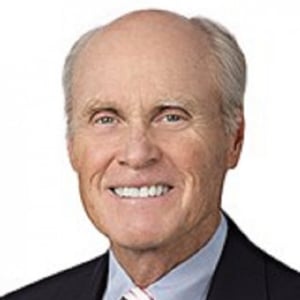
Former United States Assistant Attorney General, Civil Rights Division, United States Department of Justice
William Bradford served as the United States Assistant Attorney General for the Civil Rights Division from 1981 to 1988.
Reynolds was Senior Counsel in BakerBotts Antitrust and Competition division. He graduated with a LL.B. from Vanderbilt University Law School in 1967 where he was Order of the Coif and Editor-in-Chief of the Vanderbilt Law Review. In 1964, he received a B.A. from Yale University.
Reynolds passed away on September 14, 2019, in Seabrook Island, South Carolina at age 77.
41st President of the United States
George Herbert Walker Bush was vice president of the United States (1981–89) and the 41st president of the United States (1989–93).
Clayton J. and Henry R. Barber Professor of Law, Northwestern University Pritzker School of Law and Co-Chairman, Board of Directors, The Federalist Society
STEVEN GOW CALABRESI is the Clayton J. & Henry R. Barber Professor at Northwestern Pritzker School of Law. He has also co-taught in the Fall semester at Yale Law School from 2013 to the present. Calabresi clerked for Justice Antonin Scalia and Judges Robert H. Bork and Ralph K. Winter. He was a Special Assistant to Attorney General Meese from 1985 to 1987 and worked with Ken Cribb as his deputy in 1987 on the second floor of the West Wing of the Reagan White House. Calabresi has written books on presidential power and comparative constitutional law and the origins of judicial review. He and Gary Lawson are the co-editors of a casebook on U.S. Constitutional Law, and Calabresi is also the co-editor of a casebook on comparative constitutional law. He has written over seventy law review articles since 1990.
Founding Partner, Boyden Gray & Associates
Ambassador C. Boyden Gray is the founding partner of Boyden Gray & Associates, a law and strategy firm in Washington, D.C., focused on constitutional and regulatory issues.
Mr. Gray worked in the White House for twelve years, first as counsel to the Vice President during the Reagan administration and then as White House Counsel to President George H.W. Bush. In the Reagan administration, he was Counsel to the Presidential Task Force on Regulatory Relief, for which he wrote the original Executive Order 12291 requiring cost-benefit analysis and White House review of regulations (later renumbered as current EO 12866). In the George H.W. Bush Administration, Mr. Gray was in charge of judicial selection and was also instrumental in the enactment of the Clean Air Act Amendments of 1990, the Energy Policy Act of 1992, and a cap-and-trade system for acid rain emissions. In 1993, he received the Presidential Citizens Medal. Under President George W. Bush, Mr. Gray was U.S. Ambassador to the European Union and U.S. Special Envoy to Europe for Eurasian Energy.
Mr. Gray practiced law for 25 years at the law firm of Wilmer, Cutler & Pickering and was chairman of the Administrative Law and Regulatory Practice Section of the American Bar Association from 2000 to 2002. Early in his career, Mr. Gray helped to develop the Business Roundtable and served as its first counsel. He is an adjunct professor at Antonin Scalia Law School and a former adjunct professor at NYU Law School (teaching energy and environmental law). Mr. Gray is on the Board of Directors of the Atlantic Council, the Federalist Society, Reason Foundation, and the Trust for the National Mall.
Mr. Gray earned his A.B. magna cum laude from Harvard, where he was an editor of the Crimson, and his J.D. with high honors from the University of North Carolina at Chapel Hill, where he was editor-in-chief of the Law Review. Mr. Gray served in the United States Marine Corps, and after law school, he clerked for Earl Warren, Chief Justice of the United States Supreme Court.
Former United States Assistant Attorney General, Civil Rights Division, United States Department of Justice
William Bradford served as the United States Assistant Attorney General for the Civil Rights Division from 1981 to 1988.
Reynolds was Senior Counsel in BakerBotts Antitrust and Competition division. He graduated with a LL.B. from Vanderbilt University Law School in 1967 where he was Order of the Coif and Editor-in-Chief of the Vanderbilt Law Review. In 1964, he received a B.A. from Yale University.
Reynolds passed away on September 14, 2019, in Seabrook Island, South Carolina at age 77.
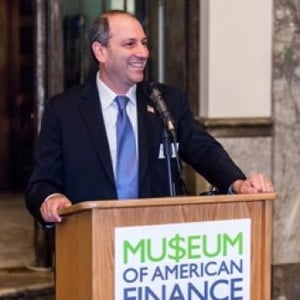
President/CEO, Museum of American Finance
David Cowen, the Museum's President/CEO, has over 20 years experience as a trader on Wall Street, including in the foreign exchange groups at Bankers Trust and Deutsche Bank. The founder of Quasar Capital Partners, a macro hedge fund, Mr. Cowen holds a BA in American history from Columbia College, an MBA from the Wharton School of Business, and an MA and Ph.D. in American history from NYU. He has written extensively on US financial history and is the co-author of Alexander Hamilton on Finance, Credit, and Debt (Columbia University Press, 2018) and Financial Founding Fathers: The Men Who Made America Rich (University of Chicago Press, 2006). He is a founding co-chair of the International Federation of Finance Museums (IFFM) and has served on the Smithsonian Affiliates Advisory Council and the Federal Reserve Board's Centennial Advisory Council.
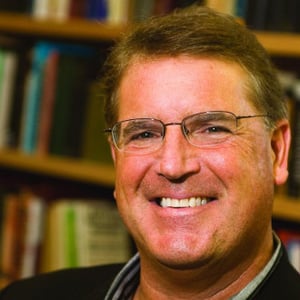
Professor of Economics, Loyola University Maryland
Thomas DiLorenzo is professor of economics at Loyola University Maryland and a member of the senior faculty of the Mises Institute. He is the author of The Real Lincoln; How Capitalism Saved America; Lincoln Unmasked; Hamilton's Curse; Organized Crime: The Unvarnished Truth About Government; and The Problem with Socialism.
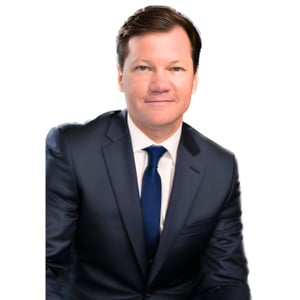
Shareholder, Lawson Huck Gonzalez, PLLC
Jason Gonzalez is an experienced appellate and litigation attorney and regularly consults on executive branch government affairs. He represents businesses and state agencies in state and federal courts in contracts, government procurements, insurance disputes, class actions, tort defense, banking, finance, professional licenses, and elections matters.
Recently, Jason advocated for business association clients in two amicus briefs filed before the Florida Supreme Court, supporting the adoption of the federal summary judgment standard, a development widely viewed as the most significant Florida civil justice system reform in the modern era. In 2019, Florida Politics reported that Jason was representing parties in more pending civil cases at the Florida Supreme Court than any other attorney in the State.
Over the course of his career, Jason has been at the forefront of emerging legal developments, helping to shape Florida’s justice system.
Jason has served on the Florida Supreme Court Nominating Commission, as Chairman of the First District Court of Appeal Judicial Nominating Commission and Chairman of the Second Judicial Circuit Judicial Nominating Commission, as well as two terms as General Counsel and former Executive Board Member of the Republican Party of Florida. Prior to co-founding Lawson Huck Gonzalez, Jason served as General Counsel to the Florida Governor.
In 2010, Jason served as lead counsel for Transocean Ltd. in its Florida Panhandle litigation and regulatory matters immediately following the explosion and sinking of the Deepwater Horizon. Over a two-year period, Jason successfully obtained orders dismissing or removing every one of the more than 70 individual and class action lawsuits filed against Transocean in Florida.
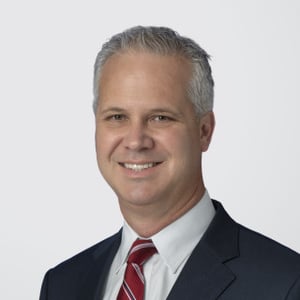
Partner, Hunton Andrews Kurth
Mr. Leopold is a Partner with the law firm of Hunton Andrews Kurth in Washington, DC. He is the former Senate-confirmed general counsel of the U.S. EPA from 2018-2020, and he previously was a litigator at the U.S. Department of Justice, Environment and Natural Resources Division form 2007-2013. As EPA General Counsel, he counseled on the development and defense of EPA’s most significant rulemakings, including the Affordable Clean Energy Rule, the Navigable Waters Protection Rule, and the Safe Affordable Fuel‐Efficient (SAFE) Vehicles Rule, as well as several pesticide actions. He was personally involved in defending EPA in litigation, including the County of Maui v. Hawaii Wildlife Fund in the U.S. Supreme Court. Mr. Leopold’s prior government service also includes working in Florida as general counsel of the Florida Department of Environmental Protection. He now represents clients in regulatory advocacy before federal agencies, litigates federal environmental actions, and defends clients with EPA enforcement issues.

NY v. HHS and the Challenge of Protecting Conscience Rights in Healthcare
Stephanie Taub
Note from the Editor: The Federalist Society takes no positions on particular legal and public...
Should We Change the Size of Congress? [Article I Initiative]
Martin Frost, Derek T. Muller, Keith E. Whittington
How are Congressional seats allotted to the various states? Why has the total number of...
Government Surveillance: Security v. Liberty?
Matthew R. A. Heiman, Julian Sanchez, Faisal Gill
Modern surveillance activities by the United States government have taken place since World War I...
Opening Address by Vice President George H.W. Bush [Archive Collection]
George H.W. Bush, Steven G. Calabresi, C. Boyden Gray, Wm. Bradford Reynolds
On January 30th, 1987, The Federalist Society hosted its first annual National Lawyers Convention. The...
Opening Address by Vice President George H.W. Bush [Archive Collection]
George H.W. Bush, Steven G. Calabresi, C. Boyden Gray, Wm. Bradford Reynolds
On January 30th, 1987, The Federalist Society hosted its first annual National Lawyers Convention. The...
Recent Developments from the EPA
2020 Annual Florida Chapters Conference
Lake Buena Vista, FLTopics
Protecting the U.S. Judicial System from A Politicized Interpol
The modern history of Interpol began with an airplane hijacking and an argument about...
Topics
The Controversy about the ERA Amendment Process
It seems likely that another constitutional controversy will soon emerge. Next year, the Virginia Legislature...
Hamilton v. Jefferson: The Central Bank Debate [POLICYbrief]
David Cowen, Thomas J. DiLorenzo
In 1791, two great minds clashed over an issue of constitutional and historical significance. Alexander...
Topics
Why Rudy Giuliani Matters . . . and It Has Nothing to Do with Ukraine
Rudy Giuliani is a tragic figure. His painful appearances on Fox News and CNN in 2019...