
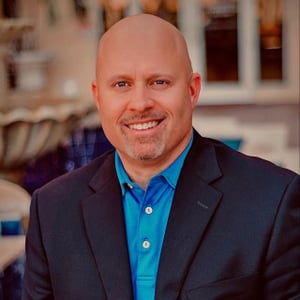
General Counsel and Chief Compliance Officer, Arete Advisors, LLC
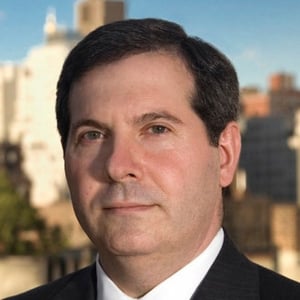
Partner, DeMarco Law, PLLC
Joseph V. DeMarco is a partner at DeMarco Law, PLLC where he focuses on counseling clients on complex issues involving information privacy and security, theft of intellectual property, computer intrusions, on-line fraud, and the lawful use of new technology. His years of experience in private practice and in government handling the most difficult cybercrime investigations handled by the United States Attorney’s Office have made him one of the nation’s most sought-after lawyers on Internet crime and the law relating to emerging technologies. In addition to his counsel practice, Mr. DeMarco serves as an Arbitrator, resolving complex commercial and high-technology disputes between businesses. He is on the National Panel of Neutrals of the American Arbitration Association (AAA) and Federal Arbitration, Inc. (FedArb).
From 1997 to 2007, Mr. DeMarco served an Assistant United States Attorney for the Southern District of New York, where he founded and headed the Computer Hacking and Intellectual Property (CHIPs) Program, a group of five prosecutors dedicated to investigating and prosecuting violations of federal cybercrime laws and intellectual property offenses. Under his leadership, CHIPs prosecutions grew from a trickle in 1997 to a top priority of the United States Attorney’s Office, encompassing all forms of criminal activity affecting e-commerce and critical infrastructures including computer hacking crimes; transmission of Internet worms and viruses; electronic theft of trade secrets; illegal use of “spyware”; web-based frauds; unlawful Internet gambling; and criminal copyright and trademark infringement offenses. As a recognized thought leader in the field, Mr. DeMarco was frequently asked to counsel prosecutors and law enforcement agents regarding novel investigative and surveillance techniques and methodologies, and regularly provided advice to the United States Attorney concerning the Office’s most sensitive computer-related investigations. In 2001, Mr. DeMarco also served as a visiting Trial Attorney at the Department of Justice Computer Crimes and Intellectual Property Section in Washington, D.C., where he focused his work on Internet privacy, gaming, and theft of intellectual property.
Since 2002, Mr. DeMarco has served as an Adjunct Professor at Columbia Law School, where he teaches the upper-class Internet and Computer Crimes seminar. He has been invited to speak throughout the world on cybercrime, e-commerce, and IP enforcement. He has lectured on the subject of cybercrime at Harvard Law School, the Practicing Law Institute, the National Advocacy Center, and at the FBI Academy in Quantico, Virginia, and has served as an instructor on cybercrime to judges attending the New York State Judicial Institute.
Prior to joining the United States Attorney’s Office, Mr. DeMarco was a litigation associate at Cravath, Swaine & Moore in New York City, where he concentrated his work on intellectual property, antitrust, and securities law issues for various high-technology clients. Prior to that, Mr. DeMarco served as law clerk to the Honorable J. Daniel Mahoney, United States Circuit Judge for the Second Circuit Court of Appeals.
Mr. DeMarco holds a J.D. magna cum laude from New York University School of Law. At NYU he was a member of the NYU Law Review. He received his B.S.F.S. summa cum laude from the Edmund A. Walsh School of Foreign Service at Georgetown University.

Executive Vice President & Head of Litigation, Thomas More Society
Peter Breen serves as Executive Vice President and Head of Litigation at Thomas More Society, leading the firm's litigation team in federal and state courts across the country. Before joining TMS, he left private practice in Chicago to pursue full-time public service. Peter also served two terms in the Illinois House of Representatives, rising to Republican Floor Leader. He holds a B.E. in Electrical Engineering from Vanderbilt University and a J.D. from the University of Notre Dame Law School. He and his wife Margie have two sons.
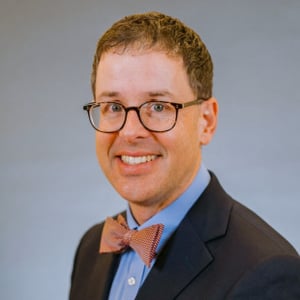
Senior Counsel and VP, Appellate Advocacy, Alliance Defending Freedom
John Bursch is senior counsel and vice president of appellate advocacy with Alliance Defending Freedom. Bursch has argued 12 U.S. Supreme Court cases and more than 30 state supreme court cases since 2011, and a recent study concluded that among all frequent Supreme Court advocates who did not work for the federal government, he had the 3rd highest success rate for persuading justices to adopt his legal position.
Bursch served as solicitor general for the state of Michigan from 2011-2013. He has argued multiple Michigan Supreme Court cases in eight of the last ten terms and has successfully litigated hundreds of matters nationwide, including six with at least $1 billion at stake. As part of his private firm, Bursch Law PLLC, he has represented Fortune 500 companies, foreign and domestic governments, top public officials, and industry associations in high-profile cases, primarily on appeal. He was inducted into the American Academy of Appellate Lawyers and serves as a member of the American Law Institute. His work has resulted in repeated listings in Michigan Super Lawyers and Best Lawyers.
Before entering private practice, Bursch served as a law clerk to the Honorable James B. Loken on the U.S. Court of Appeals for the 8th Circuit. He received his J.D. magna cum laude in 1997 from the University of Minnesota Law School, where he served as Chief Note & Comment Editor for the Minnesota Law Review. Prior to that, he attended Western Michigan University, where he received degrees in mathematics and music performance summa cum laude.
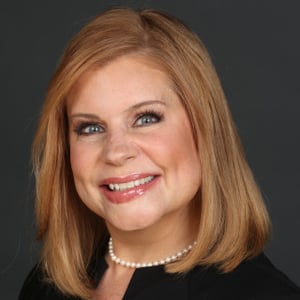
Vice President & Senior Legal Fellow, Defending Education
Sarah Parshall Perry is vice president and senior legal fellow at Defending Education.
Before coming to Defending Education, Sarah served as a Senior Legal Fellow for the Edwin Meese III Center for Legal and Judicial Studies, part of the Institute for Constitutional Government at Heritage, where her work centered on civil rights and the proper role of the courts.
Sarah joined Heritage after serving as Senior Counsel to the Assistant Secretary for Civil Rights at the U.S. Department of Education where she focused on policy reform, technical guidance, and the Office for Civil Rights’ (OCR) annual report to Congress. While at OCR, she was appointed by the Acting Assistant Secretary to co-chair the Employment Engagement, Diversity, & Inclusion Council and, in coordination with the Deputy Assistant Secretary for Enforcement oversee the hiring of dozens of attorneys for OCR’s 12 regional offices nationwide. Prior to her tenure at the Department of Education, she spent six years at the Family Research Council in Washington, D.C. where she was Senior Fellow for Education Reform and later, became the regular substitute host for the “Washington Watch” radio show. Her work at the Family Research Council also included the building and oversight of multiple policy coalitions geared toward the fight against antisemitism in academia, curbing tech censorship, and protecting religious liberty.
Before joining FRC, Sarah was in-house counsel and director of development for a Baltimore advertising agency, providing management of all new business transactions from pitch to contract execution for the multi-million-dollar enterprise. She began her practice at the litigation firm of Simms Showers, LLP where her work included Title VII employment discrimination, maritime/admiralty, and False Claims Act (“Qui Tam”) law. Sarah has a law degree from the University of Virginia School of Law, where she was an editor of the Virginia Journal of International Law, a recipient of the American Jurisprudence award, a Phi Delta Phi honor society member, and a student practitioner in the appellate litigation clinic where she argued before the 4th Circuit Court of Appeals. She holds a B.S. in Journalism with honors from Liberty University.
Her commentary and analysis have appeared in media outlets across the country, including the AP, BBC, Fox News, NPR, The Hill, Washington Post, Washington Times, and the New York Times. She is the mother of three children, and the author of just as many books on the trials and triumphs of parenting children on the autism spectrum. Sarah is a member of the Kirkpatrick Society at the American Enterprise Institute, and makes her home north of Baltimore, Maryland.
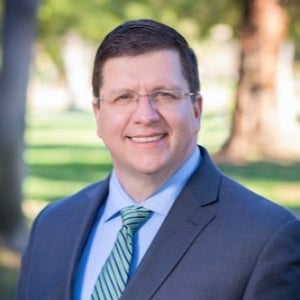
Vice President and Senior Counsel, The Becket Fund for Religious Liberty
Eric Rassbach is Vice President and Senior Counsel at the Becket Fund for Religious Liberty, where he has served since 2003. He has briefed over 90 cases at the United States Supreme Court and has led or been a part of Becket litigation teams in each of Becket’s pathbreaking victories there, including Hosanna-Tabor, Hobby Lobby, Holt v. Hobbs, Zubik v. Burwell, Agudath Israel of America v. Cuomo, and Fulton v. Philadelphia. In 2020, Eric argued Our Lady of Guadalupe School v. Morrissey-Berru to the Supreme Court, garnering a 7-2 win for his Catholic school clients. Eric has also briefed and argued cases in federal appeals courts and state supreme courts across the nation. Eric has also represented clients in appeals to the European Court of Human Rights in Strasbourg, France and in the highest courts of several other countries.
Eric believes passionately in the right of all people to the full measure of religious liberty and has represented members of almost every religious group present in the United States, including Buddhists, Christians, Hindus, Jains, Jews, Muslims, Native Americans, Santeros, and Sikhs, as well as many governmental entities targeted for accommodating religion.
Eric frequently comments on church-state issues in the media, including the New York Times, the Washington Post, the Wall Street Journal, and other major press outlets. He has published legal scholarship in the Harvard Law Review Forum, the Tennessee Law Review, the Illinois Law Review, the Cato Supreme Court Review, and other legal journals, and often speaks to law school audiences.
Before joining Becket, Eric worked at Baker Botts LLP in Houston, where he worked in international project finance. He also served as a law clerk to United States District Court Judge Lee Rosenthal in Houston, Texas.
Eric graduated from Haverford College with a degree in Comparative Literature, is a member of Fitzwilliam College, University of Cambridge, and is a graduate of Harvard Law School. Eric was a 2012-2013 Wasserstein Public Interest Fellow at Harvard Law School. He is Visiting Professor and Executive Director of The Hugh and Hazel Darling Foundation Religious Liberty Clinic at Pepperdine University Caruso School of Law in Malibu, where he leads students in litigating cases in American courts. He is also an Associated Scholar with the Centre for Religious Freedom at Jagiellonian University in Kraków, Poland. Eric is admitted in Texas, DC, California, and Ireland.
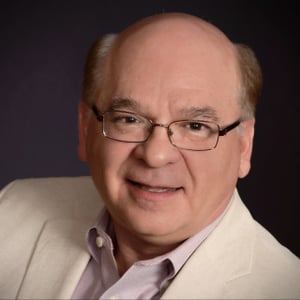
E.I. White Chair and Distinguished Professor of Law and Kauffman Professor of Entrepreneurship and Innovation, Syracuse University College of Law
Professor Robin Paul Malloy is the E.I. White Chair and Distinguished Professor of Law, and the Kauffman Professor of Entrepreneurship and Innovation. He is a leading expert on property, real estate transactions, land use law and zoning, and on law, markets, and marketization. He has pioneered work on land use and disability law. He is also recognized as a leading legal scholar on the jurisprudence of Adam Smith. Several of his works on market theory and law are translated into Chinese, Spanish, and Japanese. Professor Malloy has published twenty books (four with Cambridge University Press) and over 30 scholarly articles, in addition to numerous book chapters and essays. His latest book is titled Law and the Invisible Hand; A Theory of Adam Smith’s Jurisprudence (Cambridge 2021). He is a series editor on collections for Cambridge University Press, Routledge, and Edward Elgar. Malloy’s casebook on Real Estate Transactions (with Smith, now in its 6th edition) is the leading book on the subject and is used at law schools across the country. His casebook on Land Use Law and Zoning is now in its second edition (with Malagrino). Malloy has been the Sun Life Research Fellow at Oxford University, U.K.; the Dickenson Dees Fellow at University of Durham, U.K.; and for three consecutive summers served as a teaching fellow in China (Beijing and Shanghai) with the Committee on Legal Education Exchange with China. He currently serves on the International Advisory Board for the Law and Economics Program at St. Gallens University, Switzerland, and is a member of the Turin School of Local Regulation, Turin, Italy.
Malloy is the founding president of the Association for Law, Property, and Society. He currently serves on the Board of the Veterans Health Research Institute of CNY. He served on the Board of the National Italian American Bar Association for 20 years and was Vice Chair of the Zoning Board of Appeal for the Town of DeWitt, NY for 10 years. He has also served on numerous committees of the Association of American Law Schools.

Professor of Economics, Trinity University
I am an enthusiastic teacher, and I bring my passion for learning in the classroom. In my research, I work in the history of economic thought, specializing in the 18th century. My focus is on Adam Smith, David Hume, monetary theories, and the Scottish Enlightenment.
I analyze how self-interest interacts with other motivational drives, with systematic biases, and with the surrounding institutional environment. I also explore the links between the Scottish Enlightenment and the results from behavioral economics, evolutionary biology, and neuroeconomics.
I regularly publish in History of Political Economy (HOPE), The Journal of the History of Economic Thought (JHET), and History of Economic Ideas (HEI). I wrote the Routledge Guidebook of Smith's Wealth of Nations (2020).
The European Society for the History of Economic Thought awarded my HOPE 2008 "The Adam Smith Problem in Reverse: Self-Interest in Adam Smith's Wealth of Nations, and Theory of Moral Sentiments" the prize of Best Article of Year (2009). I was the book review editor for the Journal of the History of Economic Thought, the vice-president of the History of Economics Society, and i am the current president of the International Adam Smith Society and the current president of the History of Economics Society.

Executive Vice President, The Federalist Society
Dean Reuter is Executive Vice President at the Federalist Society for Law and Public Policy Studies. He has served in two federal government agency Offices of the Inspector General, as Counsel to the Inspector General and Deputy Inspector General, responsible for policing the use of federal funds granted and contracted through those agencies. As such, he helped conduct and oversee criminal investigations across the country. He is the principal author of the non-fiction book, The Hidden Nazi: The Untold Story of America's Deal with the Devil, and editor of Liberty’s Nemesis: The Unchecked Expansion of the State and Confronting Terror: 9/11 and the Future of American National Security. He was appointed by the President and served as Vice-Chairman of the Board of Directors of the Corporation for National and Community Service, and recently served as an appointee on the U.S. Commission on Presidential Scholars. He is a graduate of Hood College (BA with Honors) and the University of Maryland School of Law.
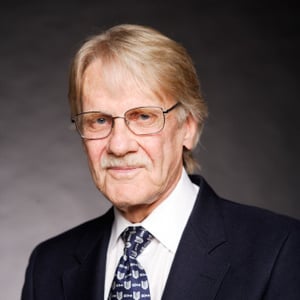
Professor Emeritus, George Mason University
Vernon L. Smith, often called the "father of experimental economics", is a leading scholar celebrated for transforming economics into an experimental science. He was awarded the Nobel Prize in Economic Sciences in 2002 for his pioneering work in using laboratory experiments to test economic theories, particularly regarding market mechanisms and price formation.
Smith served as Professor of Economics and Law from 2001 to 2008 at George Mason University. He founded the Interdisciplinary Center for Economic Science (ICES) at Mason, and served as a fellow of the Mercatus Center. He remains a Professor Emeritus at Mason, where a building on the Arlington campus is named in his honor.
Currently, Smith is a professor at Chapman University within the Argyros School of Business and Economics and the Fowler School of Law. At Chapman, he established the Economic Science Institute, a research center dedicated to the continued study of experimental methods in economics and across other disciplines.
An alum of Caltech (B.S.), the University of Kansas (M.A.), and Harvard University (Ph.D.), Smith has held previous appointments at universities including Purdue, Brown, and the University of Arizona.

Tazewell Taylor Professor of Law and William H. Cabell Research Professor, William & Mary Law School
Jonathan H. Adler joined the William & Mary law faculty as the Tazwell Taylor Professor of Law and William H. Cabell Research Professor in 2025. Prior to joining the faculty, he was the inaugural Johan Verheij Memorial Professor of Law and the founding Director of the Coleman P. Burke Center for Environmental Law at the Case Western Reserve University School of Law.
Professor Adler is the author or editor of seven books, including Climate Liberalism: Perspectives on Liberty, Property and Pollution (Palgrave, 2023), Marijuana Federalism: Uncle Sam and Mary Jane (Brookings Institution Press, 2020), Business and the Roberts Court (Oxford University Press, 2016) and Rebuilding the Ark: New Perspectives on Endangered Species Act Reform (AEI Press, 2011).
His articles have appeared in publications ranging from the Harvard Environmental Law Review and Yale Journal on Regulation to the Wall Street Journal, New York Times, and Washington Post. He has testified before Congress a dozen times, and his work has been cited in the U.S. Supreme Court. A 2024 study identified Professor Adler as the seventh most cited legal academic in administrative and environmental law from 2019 to 2023.
Professor Adler is a contributing editor to Civitas Outlook and a regular contributor to the popular legal blog, The Volokh Conspiracy. A regular commentator on constitutional and regulatory issues, he has appeared on numerous radio and television programs, ranging from the PBS Newshour and National Public Radio to the Fox News Channel and Entertainment Tonight.
Professor Adler is a senior fellow at the Property & Environment Research Center in Bozeman, Montana. In 2018, Professor Adler was elected to membership in the American Law Institute and helped co-found the organization Checks and Balances. In 2024, Professor Adler was appointed a public member of the Administrative Conference of the United States.
Professor Adler clerked for the Honorable David B. Sentelle on the U.S. Court of Appeals for the District of Columbia Circuit.
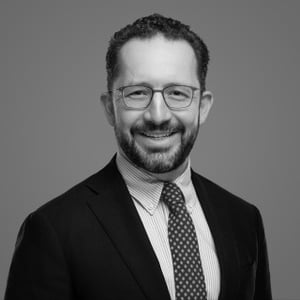
Executive Director, Alliance For Consumers; President & CEO, American Juris Link
O.H. Skinner is the President & CEO of American Juris Link, a nonprofit dedicated to accelerating nonprofit litigation to advance freedom, liberty, and the rule of law. O.H. has a long track record in facilitating strategic nonprofit litigation in his role as the Executive Director at Alliance For Consumers as well as from his time serving Arizona Attorney General Mark Brnovich in senior positions, including as Arizona Solicitor General. O.H. is a graduate of the University of Pennsylvania and Harvard Law School. Prior to joining the Arizona Attorney General's Office, O.H. practiced at WilmerHale and Ropes & Gray in Boston, and clerked for the Hon. J.L. Edmondson of the United States Court of Appeals for the Eleventh Circuit. In 2023, O.H. was a Wasserstein Public Interest Fellow at Harvard Law School, where he counseled students as a Harvard-identified “outstanding public interest attorney.”
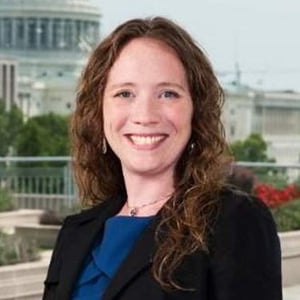
Partner, Luther Strange & Associates
Annie Donaldson Talley is Partner at Luther Strange and Associates. She recently departed the White House after serving as Deputy Assistant to the President and Deputy Counsel to the President. Over the past four years, she provided outside counsel to the Donald J. Trump for President campaign; helped stand up and manage the White House Counsel’s Office; interfaced with agencies across the federal government; and advised the President of the United States, White House Counsel, Chief of Staff and other senior staff across the Executive Office of the President on a broad range of issues from regulatory reform to executive nominations to the day-to-day issues facing the Administration.
Prior to her White House service, Annie Donaldson Talley counseled clients in the non-profit, for-profit, political, and government sectors, as well as high-profile individuals in private practice at Jones Day and Patton Boggs. She provided strategic counseling to clients structuring their affairs to ensure compliance with a web of state and federal laws and represented clients in complex, multi-faceted investigations, leading teams navigating issues of intense public scrutiny.
Annie Donaldson Talley is also a veteran of three presidential campaigns and served in state government. She holds a B.A., summa cum laude, from the University of Alabama and a J.D. from Harvard Law School, where she served on the Harvard Law Review. She lives in Montgomery, Alabama with her husband, Brett.

Solicitor General, West Virginia
Michael Williams is the Solicitor General for the State of West Virginia. In that role, Michael represents the State in appeals before state and federal courts, including the U.S. Supreme Court. Michael also coordinates strategic affirmative litigation on the State’s behalf, including litigation against the federal government.
Before joining the Attorney General’s Office, Michael co-led the complex briefing and appeals group at a Michigan boutique firm, representing Fortune 50 companies and others in actions across the country. He also practiced in the litigation groups of two Washington, D.C. firms and clerked with the Appellate Division of the U.S. Attorney’s Office for the District of Maine.
Michael’s work has been honored with a Best Brief Award from the National Associationof Attorneys General and a Leader in the Law Award from Michigan Lawyers Weekly. He often speaks and writes on appellate-related issues.
Michael clerked twice in the Fourth Circuit: once with then-Chief Judge Deborah Chasanow of the U.S. District Court for the District of Maryland and later with Judge G. Steven Agee of the U.S. Court of Appeals for the Fourth Circuit. He attended George Washington University Law School and Bates College.

Executive Director, Committee for Justice
Ashley Baker is Executive Director of the Committee for Justice and founder of the Alliance on Antitrust coalition. Her work focuses on antitrust law, technology regulation, administrative-agency authority, the Supreme Court, and judicial nominations. She closely follows the Federal Trade Commission and the Department of Justice’s Antitrust Division, with particular attention to merger review, agency procedure, and the effects of regulation on American innovation and competitiveness. She is also founder of the Alliance on Antitrust Coalition.
Ashley has testified before the United States Senate on antitrust law. Her writing has appeared in Fox News, USA Today, The Boston Globe, The Hill, RealClearPolitics, The American Spectator, and other national publications. She also provides policy analysis through congressional testimony and correspondence, regulatory comments, and public commentary.
Ashley serves on the Federalist Society’s Regulatory Transparency Project and Antitrust and Consumer Protection Practice Group Executive Committee. She is also active in the Republican National Lawyers Association and has spoken on the Supreme Court and the federal judiciary. An authority on the judicial-confirmation process, she worked closely on the successful confirmation efforts for Justices Neil Gorsuch and Brett Kavanaugh, as well as multiple federal appellate judges.

Associate Attorney, Gibson Dunn
Logan Billman is an associate in the Washington, D.C. office of Gibson Dunn and a member of the firm’s Litigation Department. His practice focuses on antitrust and competition law, including merger investigations and conduct matters before the Federal Trade Commission, the U.S. Department of Justice Antitrust Division, and state attorneys general. Logan represents clients in complex private and government antitrust litigation and has significant experience in FTC merger challenges, including litigating and counseling clients through all phases of agency enforcement proceedings. His practice spans strategic counseling, investigative compliance, and trial advocacy in high-stakes competition matters. Logan received his J.D. from Georgetown University Law Center, magna cum laude and Order of the Coif, where he served as Managing Editor of the Georgetown Journal of Law & Public Policy. During law school, he interned with the U.S. Department of Justice Antitrust Division and the Federal Trade Commission. He earned a B.A. in Economics from American University.
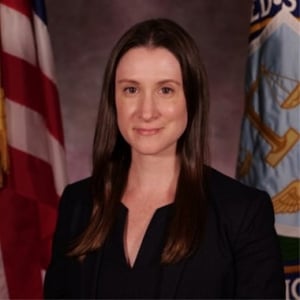
Senior Advisor for Competition and International Affairs, Office of Chairman Andrew N. Ferguson, FTC

Partner and Co-Founder, Simonsen Sussman LLP
Shaoul is a Partner and Co-Founder of Simonsen Sussman LLP and a seasoned antitrust practitioner with extensive experience in private and government practice.
Most recently, Shaoul served as the Associate Director for Litigation in the Bureau of Competition at the Federal Trade Commission. During his tenure, he oversaw the Bureau’s expansive litigation portfolio, focusing on strategic case development and successful outcomes. During his time in the Bureau’s Front Office, Shaoul worked on several high-profile and complex cases including the Kroger-Albertsons merger challenge, which addressed consolidation in the retail grocery sector, and the FTC’s lawsuit to unwind Illumina's acquisition of Grail in the Fifth Circuit, the first successful challenge to a vertical merger in 40 years. Additionally, Shaoul played an instrumental role in the FTC’s landmark monopolization case against Meta.
Apart from his litigation work at FTC, Shaoul played a pivotal role in shaping the FTC and DOJ 2023 Merger Guidelines, which introduced new measures aimed at addressing market consolidation and modernizing merger enforcement standards to reflect contemporary market realities and economics. Shaoul led the efforts to reform the premerger notification process under the Hart-Scott-Rodino (HSR) Act. These reforms, which came into effect in 2025, included significant updates to streamline filing procedures, improve transparency, and strengthen regulatory oversight to ensure compliance with evolving antitrust laws. Shaoul also led the drafting of several amicus briefs filed by the U.S. government in landmark antitrust cases, including the FTC’s amicus brief during the remedy phase of the Epic v. Google case, which was cited favorably by the court.
Shaoul previously served as Attorney Advisor to former FTC Chair Lina Khan. Prior to his roles at the FTC, Shaoul was in private practice and served as a legal fellow at the Institute for Local Self-Reliance. Shaoul holds a J.D. from Fordham University and a B.A. from Bard College Berlin.
Shaoul serves on the board of the American Economic Liberties Project and as a Senior Advisor at Columbia Law School, where he focuses on academic antitrust research, exploring innovative approaches to competition policy, and modern market dynamics.
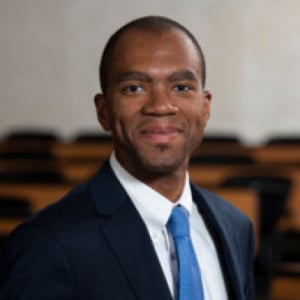
Associate Professor, Widener Law Commonwealth
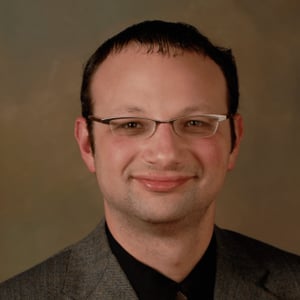
Chief Policy Counsel, Council on Criminal Justice and Senior Advisor, Right on Crime
Marc A. Levin is the Chief Policy Counsel for the Council on Criminal Justice (counciloncj.org) and Senior Advisor for Right on Crime.
An attorney and accomplished author on legal and public policy issues, Marc began the Foundation’s criminal justice program in 2005. This work contributed to nationally praised policy changes that have been followed by dramatic declines in crime and incarceration in Texas. Building on this success, in 2010, Levin developed the concept for the Right on Crime initiative, a TPPF project in partnership with Prison Fellowship and the American Conservative Union Foundation. Right on Crime has become the national clearinghouse for conservative criminal justice reforms and has contributed to the adoption of policies in dozens of states that fight crime, support victims, and protect taxpayers.
In 2014, Levin was named one of the “Politico 50” in the magazine’s annual “list of thinkers, doers, and dreamers who really matter in this age of gridlock and dysfunction.”
Marc has testified on criminal justice policy on four occasions before Congress and has testified before legislatures in states including Texas, Nevada, Kansas, Wisconsin, and California. He also has met personally with leaders such as U.S. Presidents, Speakers of the House, and the Justice Commtitee of the United Kingdom Parliament to share his ideas on criminal justice reform. In 2007, he was honored in a resolution unanimously passed by the Texas House of Representatives that stated, “Mr. Levin’s intellect is unparalleled and his research is impeccable.”
Since 2005, Marc has published dozens of policy papers on topics such as sentencing, probation, parole, reentry, and overcriminalization which are available on the TPPF website. Levin’s articles on law and public policy have been featured in publications such as the Wall Street Journal, USA Today, Texas Review of Law & Politics, National Law Journal, New York Daily News, Jerusalem Post, Toronto Star, Atlanta Journal-Constitution, Philadelphia Inquirer, San Francisco Chronicle, Washington Times, Los Angeles Daily Journal, Charlotte Observer, Dallas Morning News, Houston Chronicle, Austin American-Statesman, San Antonio Express-News and Reason Magazine.
In 1999, Marc graduated with honors from the University of Texas with a B.A. in Plan II Honors and Government. In 2002, Marc received his J.D. with honors from the University of Texas School of Law. Marc was a Charles G. Koch Summer Fellow in 1996. He served as a law clerk to Judge Will Garwood on the U.S. Court of Appeals for the Fifth Circuit and Staff Attorney at the Texas Supreme Court.
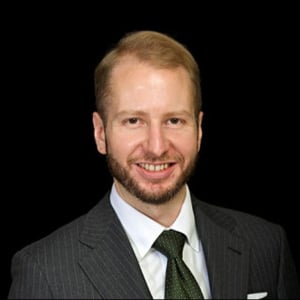
Partner, Cooper & Kirk PLLC
John Ohlendorf has extensive experience with every aspect of litigation, from arguing discovery disputes and cross-examining trial witnesses to working on appeals at all levels of the state and federal judicial systems. Mr. Ohlendorf has written dozens of briefs in the United States Supreme Court and has argued numerous cases, including appeals in both state and federal court. While much of his career has focused on appellate advocacy, he has also developed deep experience litigating at the trial-court level, consistent with the Firm’s frequent approach of handling a matter over its entire lifespan, from the filing of the complaint to proceedings in the Supreme Court.
Mr. Ohlendorf’s litigation experience is wide-ranging, but it includes a particular focus on constitutional law and suits against the government. He has litigated multiple claims involving the separation of powers, the Appointments Clause, freedom of speech, the Second Amendment, the Due Process Clause, the Equal Protection Clause, and the Takings Clause. He has been heavily involved in over thirty matters defending the right to keep and bear arms, and he was Counsel of Record on an amicus brief in New York State Rifle & Pistol Association v. Bruen, a recent Supreme Court case involving the Second Amendment right to carry a firearm, that was singled out by Justice Kavanaugh during the oral argument as very helpful to his consideration of the case. Mr. Ohlendorf has also litigated many cases involving administrative law and government contracts.
Before coming to Cooper & Kirk, Mr. Ohlendorf clerked for Judge Raymond Gruender of the United States Court of Appeals for the Eighth Circuit, taught at Northwestern University School of Law as an Olin-Searle-Smith Fellow, and then at Georgetown University Law Center as a Visiting Lecturer and Fellow at the Georgetown Center for the Constitution. His articles have been published in the Notre Dame Law Review, the Harvard Journal of Law and Public Policy, National Affairs (with Joel Alicea), the Georgia Law Review, and the Maine Law Review. He received a J.D. from Harvard Law School, magna cum laude, in 2010, where he was an Editor for the Harvard Journal of Law and Public Policy, and graduated with a B.A. from Bethany Lutheran College, summa cum laude, in 2007.
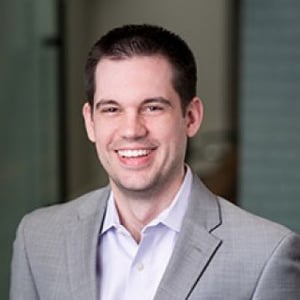
Executive Director, Consumers’ Research
Will Hild is the Executive Director of Consumers’ Research. Will has a decade of non-profit, legal and public policy experience. Prior to joining CR, Will served as the Deputy Director of the Regulatory Transparency Project. Before that, he worked at the Philanthropy Roundtable as the Director of External Affairs for the Culture of Freedom Initiative, and as the Chief Operating Officer of that Initiative when it grew to become a separate organization. He helped co-found the public interest law firm, Cause of Action, and served as the firm’s acting communications director for nearly a year.
Will received his J.D. from Georgetown University Law Center, and a B.A. in Political Science from the University of Florida. He is licensed to practice law in the Commonwealth of Virginia.
Will resides in Bethesda, MD, with his wife Cheryl, a practicing OB/GYN, and their son Liam.
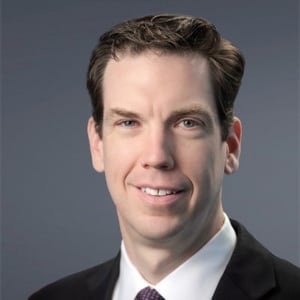
Partner, Fusion Law, PLLC
Paul is the founding partner of Fusion Law, PLLC. He has extensive experience with state, federal, and global regulators building coalitions and implementing policies to promote innovation in financial services. He is responsible for designing and implementing the first state (Arizona) and federal (CFPB) FinTech sandboxes in the United States. He also designed the CFPB no-action letter and trial disclosure policies. He helped found the first global regulatory innovation coalition (Global Financial Innovation Network) and led the founding of the first U.S. regulatory innovation coalition (American Consumer Financial Innovation Network). He served on the Financial Stability Oversight Council subcommittee on digital assets. He also has drafted state-level laws on blockchain and utility tokens.
Paul also has significant enforcement and litigation experience. He led many multi-state consumer protection enforcement matters as Civil Litigation Division Chief at the Arizona Attorney General’s Office.
Prior to his government service, Paul practiced law in the areas of securities litigation and transactional work for approximately six years at two well-known law firms. He also clerked on the U.S. Court of Appeals for the Fourth Circuit.
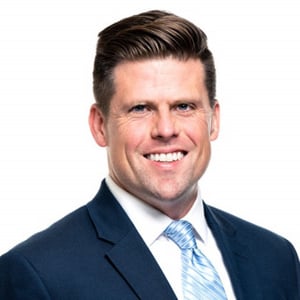
First Assistant Attorney General, Texas
Brent Webster was appointed by Ken Paxton to be First Assistant Attorney General in 2020. As second in command to Ken Paxton, Brent’s job is to implement Paxton’s policy and litigation initiatives and manage the day-to-day operation of the Office of the Attorney General, which employs approximately 4200 Texans.
Since his appointment in October 2020, Brent has led a multi-pronged initiative at Ken Paxton’s request to (1) serve as the primary check on the federal governments overreach, (2) ensure that Texas is deterring wrongful conduct in the state through civil enforcement mechanisms, and (3) instill a trial-focused, litigation-first mentality across the agency to foster better results for Texas when involved in litigation. Brent has led Ken Paxton’s litigation against the federal government in 106 lawsuits, with a staggering win rate above 75%, he has doubled the average annual recovery through civil enforcement, amounting to over $426 million dollars in his first fiscal year and $548 million in his second fiscal year, and he has led an agency-wide initiative to empower OAG lawyers to aggressively pursue the State’s interests in court, whether against liberal municipalities, rogue school districts, or anyone else who violates the law in Texas. Most recently, Brent was the lead negotiator at mediation for the historic 1.4-billion-dollar settlement against Meta for the State of Texas.
Prior to joining the Attorney General's Office, Webster served in a variety of leadership roles including First Assistant District Attorney in Williamson County, Texas, Chief Operations Officer and General Counsel at an Austin start-up, and Senior Counsel at a litigation law firm. While serving as a Criminal Prosecutor for 10 years in Williamson he was awarded the “Crime Victim Advocate Hall of Fame Award” for outstanding service to crime victims.
Webster received his undergraduate education at Southwestern University in Georgetown, Texas graduating in 2003, and received his legal education at University of Houston Law Center in 2005. He is licensed to practice law by the state of Texas and is admitted to practice before the U.S. Supreme Court, and the federal district courts in the Western, Southern, and Northern districts of Texas.
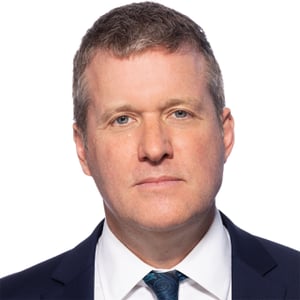
Senior Research Fellow, Border Security and Immigration Center, The Heritage Foundation
Simon Hankinson is a Senior Research Fellow in the Border Security and Immigration Center at The Heritage Foundation.
From 1999–2022, he was a Foreign Service Officer serving in India, Fiji, Ghana, Slovakia, Togo, Washington, D.C., Marseille, and Nairobi. Prior to entering the State Department, Hankinson worked as a lawyer in London, and then taught history, English, and drama at a private school in Miami.
Hankinson holds a master’s degree in modern history from St. Andrews, Scotland, a degree from the College of Law in London, and a master’s degree in international security affairs from the National Defense University in Washington, D.C.
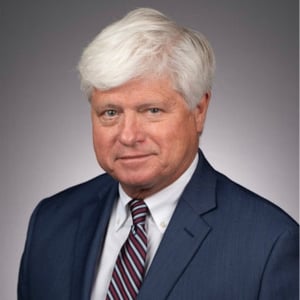
Immigration Law and Policy Fellow, Cornell Law School
Randel Johnson has worked on employment and immigration law and policy issues for over twenty-five years, bringing a broad perspective from working in the executive agencies, on Capitol Hill, and in the private sector. Deeply involved in past efforts on comprehensive immigration reform, including testifying in both the U.S. House of Representatives and the U.S. Senate, his experience includes working as the senior vice president at the U.S. Chamber of Commerce, labor counsel to the House Education and Labor Committee, and special assistant to the solicitor of labor at the U.S. Department of Labor. He was also a partner at the law firm of Seyfarth Shaw and most recently a judge on the Administrative Review Board at the Labor Department.
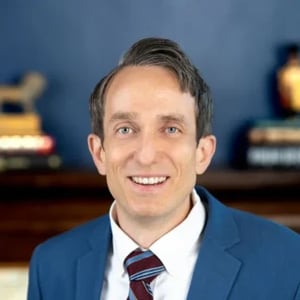
Senior Counsel, America First Legal Foundation
James Rogers is Senior Counsel at America First Legal Foundation, where he litigates in a number of areas, including border security, election integrity, parental rights, and administrative and constitutional law. Before joining America First Legal, from 2021 to 2022, he was Senior Litigation Counsel at the Solicitor General’s Office of the Arizona Attorney General’s Office. While there, he spearheaded lawsuits against the Biden Administration’s destructive open borders policies and its COVID19 vaccine mandates. From 2015 to 2021, James was a Foreign Service Officer at the U.S. Department of State, where he worked in the Office of the Assistant Legal Advisor for Consular Affairs, at the U.S. Consulate in Porto Alegre, Brazil, and at the U.S. Embassy in Windhoek, Namibia.
Prior to joining the Department of State, he was a commercial litigation partner at Osborn Maledon, a Phoenix-based firm with a #1 litigation ranking from Chambers and Partners. James earned a J.D. from Harvard Law School in 2009, an L.L.M. in International Law from the University of Cambridge in 2008, and a B.A., with honors, in International Studies from Brigham Young University in 2005. He is a sixth-generation Arizonan and lives in Mesa, Arizona, with his four children.
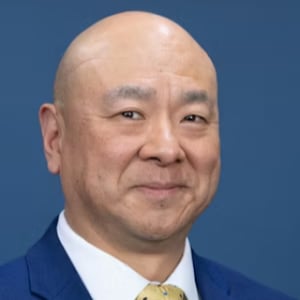
Vice President, Immigration Policy, U.S. Chamber of Commerce
Patrick Shen is vice president for Immigration Policy at the U.S. Chamber of Commerce. He helps Chamber member companies develop sensible, pro-growth immigration policies and advocates for such policies on our members’ behalf before Congress and the executive branch.
Before joining the Chamber, Shen was an immigration lawyer for over 30 years in the government and private sector. Most recently, he was a partner at a leading global business immigration law firm where he advised multinational companies on worksite compliance and represented employers from all sectors in government enforcement actions.
Earlier in his career, Shen was confirmed unanimously by the U.S. Senate as Special Counsel for Immigration-related Unfair Employment Practices in the Justice Department. He previously served as the policy and planning director of U.S. Immigration and Customs Enforcement (ICE) and the chief immigration counsel for the Senate Judiciary Committee.
Shen began his government career as a trial attorney for the former Immigration and Naturalization Service (INS), the U.S. Attorney’s Office for the Eastern District of New York, and the Justice Department’s Civil Division in Washington, D.C.
Shen received his undergraduate and law degrees from Brigham Young University. He was an adjunct professor at American University’s Washington College of Law and a sports reporter in Taiwan before attending law school. He became a certified emergency medical technician (EMT) shortly after September 11, 2001, and still volunteers with his local fire department in Maryland.

Partner, Holland & Hart
Chris provides strategic counsel when companies and individuals face government audits or investigations of their immigration practices. With nearly three decades of experience, he brings extensive experience and government relationships to help clients prepare for such audits and investigations and to defend them when regulators show up.
Often working with clients in times of crisis, Chris’s goal is to alleviate anxiety and put them at ease. Whether counseling a company about responding to a subpoena or defending it in a government investigation or raid, clients appreciate his pragmatic, straight forward counsel and clear plans of action.
Chris and his team work closely with in house legal and human resources departments to provide training and to help them develop effective compliance policies and internal audit and remediation plans. When significant legal concerns arise, he helps teams conduct internal investigations and formulate the best path forward to protect the interests of the company.
Chris also works with executives, operational leaders, and talent management teams to help position a company for success with effective, compliant global mobility programs. With expertise maneuvering within the complex US immigration process, he helps a wide range of companies secure employment-based non-immigrant (e.g., E, H, L, O, P, TN, etc.) and immigrant (first, second, and third preference categories) visas.
Chris also works with organizations seeking to do business outside of the United States, working closely with in-house and outside counsel to assess legal risks and develop solutions to overcome challenges with doing business abroad.
Chris’s fluency in Spanish is a value-add to clients.
Chris rejoins Holland & Hart from Ogletree Deakins where he was an equity shareholder and managed the firm’s Denver immigration practice.
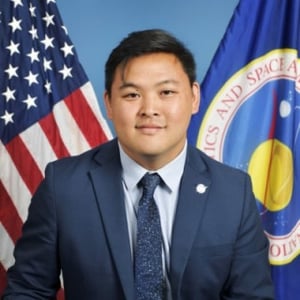
Executive Assistant United States Attorney
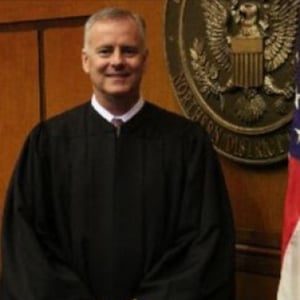
U.S. District Court for the Northern District of Texas
Reed Charles O'Connor is a federal judge on the United States District Court for the Northern District of Texas. He joined the court in 2007 after being nominated by President George W. Bush.
A native of Houston, Texas, O'Connor graduated from the University of Houston with his bachelor's degree in 1986 and from South Texas College of Law with his J.D. in 1989.
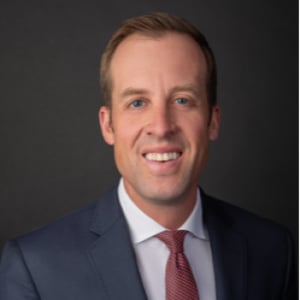
United States Attorney, Northern District of Texas
Ryan R. Raybould was named the United States Attorney for the Northern District of Texas on November 17, 2025, by United States Attorney General Pam Bondi.
His appointment followed President Donald Trump’s nomination of Mr. Raybould on October 21, 2025, to serve a four-year term in this role. The President’s nomination of Mr. Raybould is currently pending United States Senate confirmation.
Mr. Raybould is now the chief federal law enforcement officer for the district, which covers 96,000 square miles and a population of approximately eight million, including those in Dallas, Fort Worth, Amarillo, Lubbock, Abilene, San Angelo, Wichita Falls, and surrounding areas. Mr. Raybould oversees roughly 220 attorneys and staff across five division offices and is responsible for all federal criminal prosecutions and civil litigation involving the United States government in the region.
Before his tenure as U.S. Attorney for the Northern District of Texas, Mr. Raybould was a litigation partner at Kirkland & Ellis in the Government, Regulatory, and Internal Investigations Practice Group.
Mr. Raybould previously served as a federal prosecutor with the Department of Justice for almost seven years, including as Deputy Chief of the White Collar and Public Corruption Unit in the United States Attorney’s Office for the Northern District of Texas. As a federal prosecutor, Mr. Raybould investigated and tried cases involving public corruption, tax fraud, securities fraud, cybercrime, national security, violent crime, money laundering and other white-collar crimes.
Mr. Raybould also served as Chief Counsel to former Assistant Majority Leader and U.S. Senator John Cornyn. As Chief Counsel to Senator Cornyn, Mr. Raybould helped draft and negotiate numerous pieces of legislation that became law on national security, government accountability and drug diversion control. Mr. Raybould also advised Sen. Cornyn’s work on the Judiciary Committee and the Senate Caucus on International Narcotics Control.
After receiving his J.D. from Notre Dame Law School, Mr. Raybould clerked for Chief United States District Judge Reed O'Connor of the Northern District of Texas. Mr. Raybould is a graduate of Yale University.

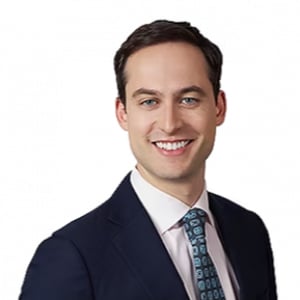
Cybercrime and AI: Emerging Dangers and Opportunities
Mark Cluse, Joseph V. DeMarco
Presented by the In-House Counsel Networkand DeMarco Law, PLLC Few topics dominate the news...
Are Secret Gender Transition Policies Unconstitutional? Mirabelli v. Bonta and the New Frontier in Parental Rights
Peter Breen, John J. Bursch, Sarah Parshall Perry, Eric Rassbach
Parental rights advocates celebrate the recent victory in Mirabelli v. Bonta, where the Supreme Court granted...
Why Adam Smith Still Matters: 250 Years of The Wealth of Nations
Robin P. Malloy, Maria P. Paganelli, Dean Reuter, Vernon L. Smith
Published in the same pivotal year as the Declaration of Independence, An Inquiry into the...
Suncor Energy v. Boulder County: Federalism, Judicial Power, and the Future of Climate Litigation
Jonathan H. Adler, O.H. Skinner, Annie Donaldson Talley, Michael R. Williams
In Suncor Energy, Inc., v. Commissioners of Boulder County, the Supreme Court will consider whether...
The FTC’s Pre-Merger Notification Rule on Appeal
Ashley Baker, Logan Billman, Maxwell Gottschall, Jana Seidl, Shaoul Sussman
The Federal Trade Commission’s recent overhaul of the Hart-Scott-Rodino Act (HSR) premerger notification rule represents...
Courthouse Steps Oral Argument: United States v. Hemani
F. Lee Francis, Marc Levin, John Ohlendorf
On March 2, 2026, the Supreme Court will hear oral argument in United States v. Hemani....
The End of ESG Collusion? A Conversation on the Vanguard Case
Will Hild, Paul N. Watkins, Brent Webster
This week, investment fund manager The Vanguard Group committed to ending its ESG-driven investment initiatives, ceasing...
What are the Challenges That Immigration Policy Poses for Businesses?
Simon Hankinson, Randel K. Johnson, James Rogers, Patrick Shen, Chris L. Thomas
Immigration policy has significant impacts on businesses, and the debate over wise immigration policy includes...
POSTPONED: Critical Issues in U.S.-China Space Law and Policy
San Antoio Lawyer Chapter
San Antonio, TXMeet NDTX’s New U.S. Attorney: A Conversation with Ryan Raybould
Dallas Lawyer Chapter
Dallas, TX