
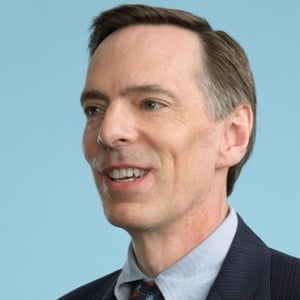
Partner, Pillsbury Winthrop Shaw Pittman LLP
Richard Blaylock’s practice covers financing, M&A, licensing, collaboration and partnering arrangements, and intellectual property counseling for start-up and established companies whose value derives from innovative technology.
Richard is well-versed in a wide array of technologies, including those germane to both life sciences (pharmaceuticals, biologics, and diagnostics) as well as high technology (software, robotics, wireless, novel materials, and pollution control). He has counseled companies across a wide range of technologies with respect to company formation, licensing, partnering and collaborations, financing and intellectual property strategy, as well as patent, license, trademark, trade secrets and unfair competition disputes.
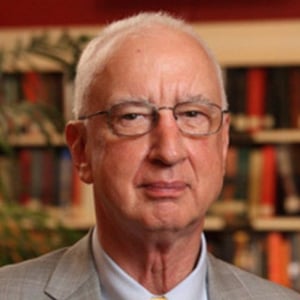
Former Chief Judge, United States Court of Appeals for the Federal Circuit
Judge Michel served for more than 22 years on the Federal Circuit, retiring on May 31, 2010. From December 25, 2004 until his retirement, he also discharged the duties of Chief Judge of this national court, serving simultaneously on the U.S. Judicial Conference -- the Judiciary's governing body -- and by appointment of the Chief Justice on its seven-judge Executive Committee.
He judged several thousand appeals and authored more than 800 opinions, one third concerning intellectual property law. Intellectual Asset Management magazine inducted him into its Hall of Fame and he was designated one of the 50 most influential leaders in intellectual property law in the world. His contributions were also recognized by lifetime achievement and similar awards by the American Intellectual Property Law Association (AIPLA); Intellectual Property Owners Education Foundation (IPO); the American Bar Association's Intellectual Property Section; Managing Intellectual Property magazine; the Sedona Conference; the Patent and Trademark Office Society (PTOS); the New York, Chicago, Philadelphia, and Los Angeles Intellectual Property Law Associations; and the William C. Connor, the Giles S. Rich, and the Richard Linn Intellectual Property American Inns of Court. In 2010 the Los Angeles IP Inn was renamed in his honor as the Paul R. Michel IP Inn.
Judge Michel received the Jefferson Medal, the Eli Whitney Award, and the Katz-Kiley Prize as well as Honorary Doctor of Law degrees from the Catholic University of America and the John Marshall Law School. He is a lifetime Member of Honore of FICPI, the international association of private practitioners of intellectual property law. Williams College granted him the Kellogg Award for "outstanding leadership in law and public service."
Judge Michel has written numerous articles on patent law and advocacy, taught related courses and master classes at George Washington University, the University of Akron, and John Marshall law schools, serving as well on their IP advisory boards and on counterpart boards at the universities of California (Berkley), Washington, and Maryland. He co-authored a casebook, Patent Litigation and Strategy (West, 1999) and an August 2010 editorial in the New York Times on strengthening the patent system to promote prosperity and create new jobs.
A frequent speaker at conferences and law schools during his judicial tenure and since, he retired from a lifetime appointment to be free to speak out on the national need for better patent policy and protection of intellectual property and the vital, unmet resource needs of the courts, the PTO, the International Trade Commission, and other IP-related agencies. He was appointed Distinguished Scholar in Residence by IPO, following his retirement. Judge Michel also consults for law firms and their clients in intellectual property litigations, conducting moot courts, mock trials, case evaluations, editing briefs, advising on strategy and providing mediation and arbitration services.
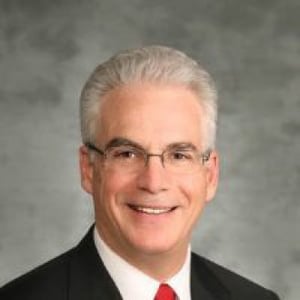
Dinsmore & Shohl LLP, Partner
Brian is chair of Dinsmore’s IP Transactions and Licensing Group. He is a past president of the Licensing Executives Society (USA and Canada), Inc. (LES), the leading professional society devoted to commercial transactions and licensing of intangible property. He continues to serve LES as senior vice president for public policy. He has extensive experience in a wide variety of commercial transactions involving intangible property, and is known for creative licensing strategies to promote collaboration and resolve IP-related disputes.
He is a registered patent attorney with more than 30 years of experience before the U.S. Patent and Trademark Office and in structuring global IP portfolios and strategies. He has extensive experience in contested proceedings before the USPTO Patent Trial and Appeal Board (interferences, Inter Partes Reviews and Post Grant Reviews), as well as contested matters in federal courts and the International Trade Commission. His wide-ranging experience affords a broad, informed perspective and facilitates creative approaches to intellectual property management, licensing, and enforcement.
In addition to his leadership of LES, Brian served on the LES Board of Directors 2007 – 2018. In his ongoing role as senior vice president for public policy he is responsible for coordinating the society’s public policy positions, amicus briefs, and congressional outreach. He works with legislators, the executive branch, and the courts toward consistent, reliable, and prudent IP laws and policies that advance innovation and economic development. He has also served LES as trustee for education, and has long served as an author, editor, and faculty member of LES educational programs focusing on best practices in IP licensing.
He is also active in the global society, LES International (LESI). Among his various roles in LESI, he has served as co-chair of the External Relations Committee, coordinating public policy and advocacy for effective IP laws and policies among the 33 regional LES societies, and with various non-governmental organizations such as WIPO and EPO. In 2019, he received the LES International President’s Service Recognition Award.
Brian also serves as Chair of the Board of Directors of the Bayh Dole Coalition, a 501(c)(4) corporation dedicated to promoting and preserving the Bayh Dole Act. He is a member of the Founding Board of Directors of the United States Intellectual Property Alliance (USIPA), an organization dedicated to raising public awareness of, and appreciation for, the role of IP in fostering innovation for the public good; and he has served on the DC Bar Intellectual Property Section Steering Committee (2013 – 2016).
In 2016, Brian testified before the U.S. Senate Committee on Small Business and Entrepreneurship on the effects of the America Invents Act on small business and entrepreneurs in a hearing entitled “An Examination of Changes to the U.S. Patent System & Impacts on America's Small Businesses.”
With his longstanding and diverse patent practice, in both private practice and in-house, Brian advises corporate leaders and entrepreneurs in effective IP procurement practices, and in maximizing value from IP assets. He has been retained as a testifying witness in IP and licensing disputes by the U.S. Department of Justice, the U.S. Department of the Treasury, and by various private enterprises.
Brian has been acknowledged by IAM magazine as among its “IAM Strategy 300”, the world’s leading IP strategists, and among “The World's Leading Patent and Technology Licensing Lawyers.”
He earned B.S. and M.S. degrees from the Department of Chemistry, Rochester Institute of Technology, Rochester, NY; and Juris Doctor from Syracuse University, College of Law, Syracuse, NY (1986).
Brian has served his alma mater as president of the RIT Alumni Association 2005 – 2009; and now serves on the RIT Board of Trustees as a member of its Executive Committee, chair of its Student Life Committee, and vice-chair of its Committee on Trustees. In 2013, Brian was awarded RIT’s Outstanding Alumnus Award, and in 2005 he was awarded the Distinguished Alumnus Award by RIT’s College of Science.
Deputy General Counsel and Vice President for Intellectual Property, Biotechnology Industry Organization
Hans Sauer is Deputy General Counsel for Intellectual Property for the Biotechnology Industry Organization, a major trade association representing over 1,100 biotechnology companies from the medical, agricultural, environmental and industrial sectors in the United States and 31 other countries. At BIO, Dr. Sauer advises the organization’s board of directors, amicus committee, and various staff committees on patent and other intellectual property-related matters. Prior to taking his current position at BIO in 2006, he was Chief Patent Counsel for MGI Pharma, Inc. in Bloomington MN, and Senior Patent Counsel for Guilford Pharmaceuticals Inc. in Baltimore, MD. Hans has 18 years of in-house experience in the biotechnology industry, first as a research scientist and later as a lawyer. His scientific work was in the area of age-related neurological disorders; after becoming a lawyer he worked on several drug development programs, being responsible for patent prosecution and portfolio oversight, clinical trial health information privacy, and sales and marketing legal compliance. He did his postdoc at Genentech in South San Francisco, and holds a M.S. degree from the University of Ulm in his native Germany; a Ph.D. in Neuroscience from the University of Lund, Sweden; and a J.D. degree from Georgetown University, where he serves as adjunct professor.
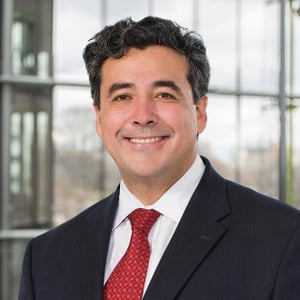
Partner-in-Charge Washington, Jones Day
Noel Francisco served as the 47th Solicitor General of the United States in the Trump Administration, from 2017 to 2020. He has argued some of the most important cases the Supreme Court has heard in recent years on a wide array of issues.
For example, as Solicitor General, he argued Trump v. Hawaii, where he successfully defended the president's orders restricting travel from countries deemed to present security risks; Janus v. AFSCME, which upheld the First Amendment rights of public employees who decline to join labor unions; Kisor v. Wilkie, which adopted his argument that the "Auer deference doctrine" should be significantly curtailed but retained in its core applications; Apple Inc. v. Pepper, which addressed whether Apple's App Store customers had standing to sue the company for antitrust violations; Knick v. Township of Scott, which held that property owners could sue state and local governments in federal court to vindicate Fifth Amendment takings claims; and Seila Law LLC v. CFPB, which invalidated restrictions on the president's authority to remove the director of the Consumer Financial Protection Bureau.
He also spearheaded the government's general strategy to seek emergency relief in the appellate courts and the Supreme Court when lower courts issued nationwide injunctions against important government programs.
Noel's service as Solicitor General built on his previous tenure at Jones Day, during which he argued McDonnell v. United States, which reversed the federal bribery conviction of the governor of Virginia; NLRB v. Noel Canning, which limited the president's constitutional recess appointments power; and Zubik v. Burwell, which challenged federal insurance coverage regulations that violated Catholic organizations' religious beliefs.
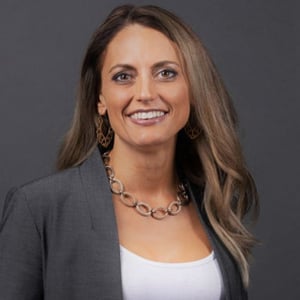
Judge, U.S. Court of Appeals for the Third Circuit
Hon. Jennifer Mascott served as Associate Professor of Law and Director of the Separation of Powers Institute at The Catholic University of America’s Columbus School of Law before her appointment to the federal bench. On July 16, 2025, President Donald J. Trump nominated her to the U.S. Court of Appeals for the Third Circuit (Delaware), and she was confirmed on October 9, 2025.
Prior to her confirmation, Judge Mascott wrote extensively in administrative and constitutional law, statutory interpretation, and the separation of powers. Her scholarship—published in leading journals including the Stanford Law Review, Notre Dame Law Review, and Supreme Court Review—was cited by the U.S. Supreme Court and multiple federal courts. She also contributed Supreme Court commentary for NBC Universal.
Before joining Catholic Law, she was an Assistant Professor and Co-Director of The C. Boyden Gray Center at George Mason University’s Antonin Scalia Law School. In 2022 she became co-author of Beermann, Cass & Diver’s Administrative Law: Cases and Materials (9th ed.). In 2023 she received the Justice Joseph Story Award for excellence in scholarship, teaching, and advancing the rule of law.
Judge Mascott also served as a Council Member of the ABA’s Administrative Law Section and as a Public Member of the Administrative Conference of the United States. She frequently testified before Congress on executive power, regulatory reform, and judicial jurisdiction, and participated in multiple Supreme Court confirmation hearings.
From 2019 to 2021, she took leave from academia to serve as Deputy Assistant Attorney General in the Department of Justice’s Office of Legal Counsel and later as Associate Deputy Attorney General, where she argued federal cases and assisted with Justice Amy Coney Barrett’s confirmation. Earlier in her career, she clerked for Justice Clarence Thomas and for then-Judge Brett M. Kavanaugh on the D.C. Circuit.
Judge Mascott earned her J.D. summa cum laude from the George Washington University Law School and her B.A. from the same institution.
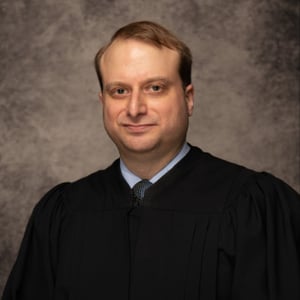
Judge, United States Court of Appeals, Second Circuit
Judge Menashi was appointed to the U.S. Court of Appeals for the Second Circuit on November 14, 2019. Previously, he served as special assistant and associate counsel to the President in the White House and as acting general counsel at the U.S. Department of Education. He was assistant professor of law at Scalia Law School, George Mason University, where he taught administrative law and civil procedure, and a research fellow at New York University School of Law and Georgetown University Law Center. He was also a partner at Kirkland & Ellis LLP in New York, where he practiced appellate and commercial litigation, and served as a law clerk to Justice Samuel Alito on the Supreme Court of the United States and to Judge Douglas Ginsburg on the U.S. Court of Appeals for the District of Columbia Circuit. He graduated from Stanford Law School, where he was elected to Order of the Coif and served as senior articles editor of the Stanford Law Review, and from Dartmouth College, where he was elected to Phi Beta Kappa.
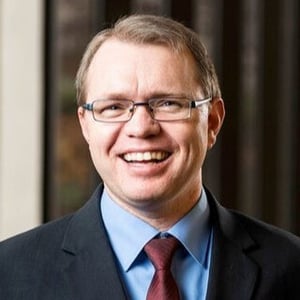
Charles I. Francis Professorship in Law, University of Texas at Austin School of Law
Professor Aaron Nielson lectures and writes in the areas of administrative law, civil procedure, and federal courts. Before joining the faculty, he served as Solicitor General of Texas and represented Texas before the U.S. Supreme Court and the Texas Supreme Court, as well as overseeing all appellate litigation for the State. Earlier in his career, he was a professor at Brigham Young University and an appellate and antitrust partner in the Washington, D.C. office of Kirkland & Ellis LLP. He also clerked for Justice Samuel A. Alito, Jr. of the U.S. Supreme Court, Judge Janice Rogers Brown of the U.S. Court of Appeals for the D.C. Circuit, and Judge Jerry E. Smith of the U.S. Court of Appeals for the Fifth Circuit.
As Solicitor General, Professor Nielson successfully defended against a First Amendment challenge Texas’s law requiring online pornographers to institute age verification. In 2020, the U.S. Supreme Court appointed him to defend the constitutionality of a federal agency. He currently serves as a Senior Fellow of the Administrative Conference of the United States after completing a six-year term as an appointed public member and chair of the Conference’s Administration & Management Committee.
Nielson’s research focuses on administrative law, federal litigation, and the separation of powers. He has published (or soon will publish) in the Harvard Law Review, Columbia Law Review, University of Chicago Law Review, University of Pennsylvania Law Review, Duke Law Journal, Georgetown Law Journal, Cornell Law Review, and Northwestern University Law Review, among others. Nielson has been recognized for teaching for teaching and scholarship and in 2021 received the Federalist Society’s Joseph Story Award, which recognizes a young academic for excellence in legal scholarship, a commitment to teaching, and a concern for students, and who has made a significant public impact in a manner that advances the rule of law in a free society. He is also an elected member of the American Law Institute.
Professor Nielson received his J.D. magna cum laude from Harvard Law School and an LL.M from the University of Cambridge, where he focused his studies on the institutions that regulate global competition and commerce. He received his undergraduate degree summa cum laude from the University of Pennsylvania, majoring in economics and political science.
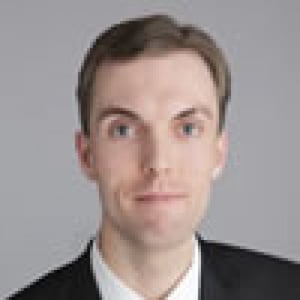
Partner, Gibson Dunn
Lucas C. Townsend is a litigation partner in the Washington, D.C. office of Gibson, Dunn & Crutcher. He is a member of the firm’s Appellate and Constitutional Law and Intellectual Property practice groups.
Mr. Townsend has litigated a wide range of appellate and trial matters in federal and state court. Mr. Townsend’s appellate practice includes representing corporate clients in high-stakes commercial disputes, litigating cutting-edge legal issues before the Supreme Court of the United States, and representing pro bono clients before the courts of appeals. Mr. Townsend’s intellectual property practice includes representing pharmaceutical, internet, and other technology companies in patent and trademark disputes. In addition, Mr. Townsend regularly represents clients in litigation under the Administrative Procedure Act and provides counseling on accounting regulation.
Representative matters include serving as appellate counsel for the world’s largest social networking website and drafting successful briefing in a significant noninfringement appeal; briefing appeals on behalf of pharmaceutical patent holders in Hatch-Waxman Act litigation; drafting successful briefing for a documentary filmmaker’s First Amendment challenge to Colorado’s campaign finance laws; briefing appeals from final judgments in a landmark securities-fraud class action; representing a national hospital network in appellate litigation resulting in a $60 million reduction in a punitive damages award; representing broadcasters in litigation against the Federal Communications Commission under the Administrative Procedure Act; representing a for-profit education company in an enforcement action brought by the Consumer Financial Protection Bureau; and briefing numerous matters in the Supreme Court of the United States involving class certification, antitrust, employment, and constitutional issues.
Before joining the firm, Mr. Townsend served as a law clerk to the Honorable Samuel A. Alito, Jr. of the Supreme Court of the United States, the Honorable Maryanne Trump Barry of the United States Court of Appeals for the Third Circuit, and the Honorable Harold A. Ackerman of the United States District Court for the District of New Jersey. Mr. Townsend also served as an Attorney Adviser in the United States Department of Justice, National Security Division, from 2007 to 2009.
Mr. Townsend graduated magna cum laude from the Seton Hall University School of Law, where he was Executive Editor of the Seton Hall Law Review. He received an undergraduate degree in biochemistry from Cornell University.
Mr. Townsend is admitted to practice in the District of Columbia, New York, and New Jersey.
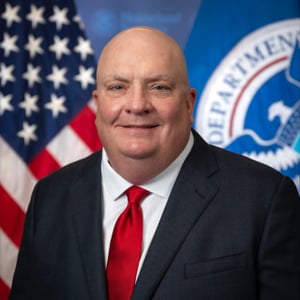
Acting Assistant Commissioner of Customs and Border Protection, Office of Professional Responsibility, U.S. Department of Homeland Security
Brian M. Fish is currently the Senior Advisor to the General Counsel at the Department of Homeland Security where he works on immigration and law enforcement issues. Previously, he was a trial attorney with the United States Immigration and Customs Enforcement, where he represented the Department of Homeland Security in removal hearings before the U.S. Immigration Court. Additionally, he was a Special Assistant United States Attorney and a Baltimore City homicide prosecutor. He is a member of the Federalist Society's Criminal Law & Procedure Practice Group Executive Committee and the President of its Baltimore Lawyers Chapter. He earned his B.A. from LaSalle University in 1992 and his J.D. from Loyola University New Orleans School of Law in 1998.
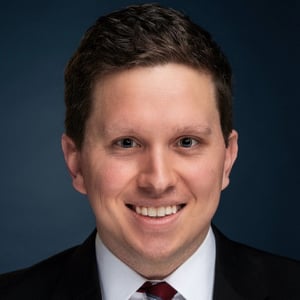
Deputy Counsel, Wisconsin Institute for Law & Liberty (WILL)
Anthony LoCoco is deputy counsel at the Wisconsin Institute for Law & Liberty, where he litigates in defense of individual liberties and the rule of law. Before joining WILL, Anthony served as law clerk to the Honorable Annette Kingsland Ziegler of the Wisconsin Supreme Court for two terms. He is an officer in the Milwaukee Chapter of The Federalist Society.
Anthony is a graduate of Harvard Law School and holds a B.A., summa cum laude, in economics from the University of Dallas. He resides outside Milwaukee with his wife and three children.
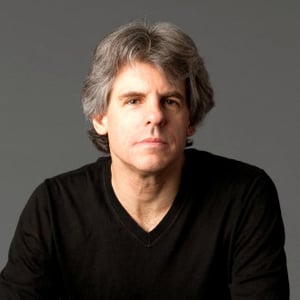
Carmack Waterhouse Professor of Health Law, Policy, and Ethics; Co-Director, Georgetown-Johns Hopkins Joint Program in Law and Public Health, Georgetown University
M. Gregg Bloche, M.D., J.D., is Professor of Law at Georgetown University and author of The Hippocratic Myth: Why Doctors Are Under Pressure to Ration Care, Practice Politics, and Compromise Their Promise to Heal. He is a nationally and internationally recognized expert on health law and policy. Bloche’s writing has appeared in a wide range of venues, including the New England Journal of Medicine, Health Affairs and the Journal of the American Medical Association; leading law reviews; and the New York Times, Washington Post, & other media outlets. He has also been a frequent commentator in national broadcast media. He was a health care advisor to President Obama’s 2008 campaign, as well as the presidential transition, and he spoke frequently for the campaign as a “surrogate.” Bloche has held teaching and research appointments at the University of Chicago, UCLA, and Columbia law schools, as well as the Brookings Institution, and the Harvard School of Public Health. He is a graduate of the law and medical schools at Yale, and he completed a residency in psychiatry at Columbia-Presbyterian Medical Center in New York. His awards and honors include a Guggenheim Fellowship and a Robert Wood Johnson Investigator Award in Health Policy Research. Bloche serves on several editorial boards and has advised governments and non-profits in the U.S. and abroad on a wide range of health policy issues. He lives in Washington, D.C.
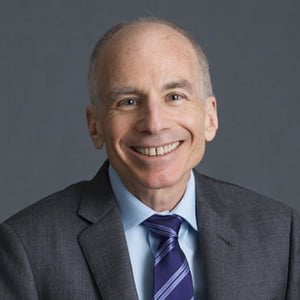
University Professor, Founding Linda D. & Timothy J. O’Neill Professor of Global Health Law, Faculty Director of O’Neill Institute for National & Global Health Law, Georgetown University, Director, World Health Organization Collaborating Center on Public Health Law & Human Rights
Lawrence O. Gostin is University Professor, Georgetown University’s highest academic rank conferred by the University President. Prof. Gostin directs the O’Neill Institute for National and Global Health Law and is the Founding O’Neill Chair in Global Health Law. He served as Associate Dean for Research at Georgetown Law from 2004 to 2008. He is Professor of Medicine at Georgetown University and Professor of Public Health at the Johns Hopkins University.
Prof. Gostin is the Director of the World Health Organization Collaborating Center on National and Global Health Law. The WHO Director-General has appointed Prof. Gostin to high-level positions, including the International Health Regulations (IHR) Roster of Experts and the Expert Advisory Panel on Mental Health. He served on the Director-General’s Advisory Committee on Reforming the World Health Organization, as well as numerous WHO expert advisory committees, including on the Pandemic Influenza Preparedness Framework, smallpox, genomic sequencing data, migrant health, and NCD prevention. He served on the WHO/Global Fund Blue Ribbon Expert Panel: The Equitable Access Initiative to develop a global health equity framework. He co-chairs the Lancet Commission on Global Health Law.
Professor Gostin served on two global commissions to report on the lessons learned from the 2015 West Africa Ebola epidemic. He was also senior advisor to the United Nations Secretary General’s post-Ebola Commission. He also served on the drafting team for the G-7 Summit in Tokyo 2016, focusing on global health security and Universal Health Coverage.
Prof. Gostin holds multiple international academic professorial appointments, including at Oxford University, the University of Witwatersrand (South Africa), and Melbourne University. Prof. Gostin served on the Governing Board of Directors of the Consortium of Universities for Global Health.
Prof. Gostin holds editorial appointments in leading academic journals throughout the world. He is the Legal and Global Health Correspondent for the Journal of the American Medical Association. He is also Founding Editor-in-Chief of Laws (an international open access law journal). He was formally the Editor-in-Chief of the Journal of Law, Medicine & Ethics.
Prof. Gostin holds four honorary degrees. In 1994, the Chancellor of the State University of New York conferred an Honorary Doctor of Laws Degree. In 2006, Her Majesty Queen Elizabeth II and the Vice Chancellor awarded Cardiff University’s (Wales) highest honor, an Honorary Fellow. In 2007, the Royal Institute of Public Health (United Kingdom) appointed Prof. Gostin as a Fellow of the Royal Society of Public Health (FRSPH). In 2012, the Chancellor of the University of Sydney – on the nomination of the Deans of the Law and Medical Schools – conferred a Doctor of Laws (honoris causa), presided by two Justices of Australia’s highest court—Justices Kirby and Haydon.
Prof. Gostin is an elected lifetime Member of the National Academy of Medicine/ National Academy of Sciences. He has served on the National Academy’s Board on Health Sciences Policy, the Board on Population Health, the Human Subjects Review Board, and the Committee on Science, Technology, and Law. He currently serves on the National Academies of Sciences Engineering, and Medicine, Board on Global Health. Gostin chaired the National Academy’s Committee on Global Solutions to Falsified, Substandard, and Counterfeit Medicines. He has chaired National Academy Committees on national preparedness for mass disasters, health informational privacy, public health genomics, and human subject research on prisoners.
Prof. Gostin is also a Member of the Council on Foreign Relations and Fellow of the Hastings Center. In 2016, President Obama appointed Prof. Gostin to a six-year term on the President’s National Cancer Advisory Board to advise the nation on cancer prevention, research, and policy. He also serves on the National Institutes of Health Director’s Advisory Committee on the ethics of public/private partnerships to end the opioid crisis.
Prof. Gostin has led major law reform initiatives in the U.S., including drafting the Model Emergency Health Powers Act (MEHPA) to combat bioterrorism (following the post-9/11 anthrax attacks) and the “Turning Point” Model State Public Health Act. He also spearheaded the World Health Organization and International Development Law Organization’s major report, Advancing the Right to Health: The Vital Role of Law.
Prof. Gostin’s proposal for a Framework Convention on Global Health – an international treaty ensuring the right to health – is now part of a global campaign, endorsed by the UN Secretary-General and Director of UNAIDS.
In the United Kingdom, Lawrence Gostin was the Legal Director of the National Association for Mental Health, Director of the National Council of Civil Liberties (the UK equivalent of the ACLU), and a Fellow at Oxford University. He helped draft the Mental Health Act (England and Wales) and brought landmark cases before the European Court of Human Rights.
Prof. Gostin’s books include: Public Health Law: Power, Duty, Restraint (University of California Press, 3rd ed., 2016); Public Health Law and Ethics: A Reader (University of California Press, 3rd ed., 2018); Human Rights in Global Health: Rights-Based Governance for a Globalizing World (Oxford University Press, 2018); Law and the Health System (Foundation Press, 2014); Principles of Mental Health Law & Practice (Oxford University Press, 2010).
Gostin’s classic text, Global Health Law (Harvard University Press, 2014) is read throughout the world—translated and published in both simplified and traditional Chinese, and in Spanish. Paul Farmer, Partners in Health, says of his book: Global Health Law is “more than the definitive book on a dynamic field. Gostin harnesses the power of international law and human rights as tools to close unconscionable health inequities — the injustices that burden marginalized populations throughout the world. Gostin presents a forceful vision, one that deserves a wide embrace.”
In a 2012 systematic empirical analysis of legal scholarship, independent researchers ranked Prof. Gostin 1st in the nation in productivity among all law professors, and 11th in in impact and influence. A 2017 and 2018 systematic empirical analysis ranked Prof. Gostin 1st in the nation for citations in health law.
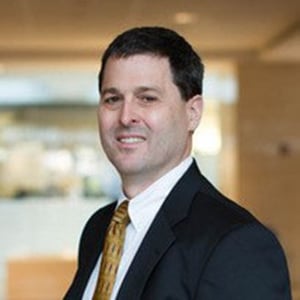
Scott K. Ginsburg Professor of Health Law & Policy, Georgetown University
David A. Hyman, M.D., J.D., is the Scott K. Ginsburg Professor of Health Law & Policy at Georgetown University. Professor Hyman focuses his research and writing on the regulation and financing of health care. He teaches or has taught health care regulation, civil procedure, insurance, medical malpractice, law & economics, professional responsibility, and tax policy.
While serving as Special Counsel to the Federal Trade Commission, Professor Hyman was principal author and project leader for the first joint report ever issued by the Federal Trade Commission and Department of Justice, “Improving Health Care: A Dose of Competition” (2004). He is also the author of Medicare Meets Mephistopheles, which was selected by the U.S. Chamber of Commerce/National Chamber Foundation as one of the top ten books of 2007, and the co-author (with Charles Silver) of Overcharged: Why Americans Pay Too Much for Health Care (2018). He has published widely in student-edited law reviews and peer-reviewed medical, health policy, law, and economics journals.
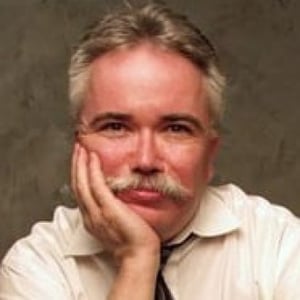
Professor from Practice, Georgetown University
Since 2001, Professor Westmoreland has taught at Georgetown about health law, about federal budgets, and about legislation. Prior to that, he was the senior policy fellow at the Federal Legislation Clinic.
He has worked extensively on public health and health finance policy. He has served as Counsel to the Subcommittee on Health and the Environment in the U.S. House of Representatives and later as the Director of the Medicaid program at HHS. Outside of government, he served as counsel to the Advisory Committee on Tobacco Policy and Public Health and as an advisor to both the Henry J. Kaiser Family Foundation and the Elizabeth Glaser Pediatric AIDS Foundation. He has been the recipient of a Robert Wood Johnson Foundation Investigator in Health Policy Award, working on budget process and health policy.
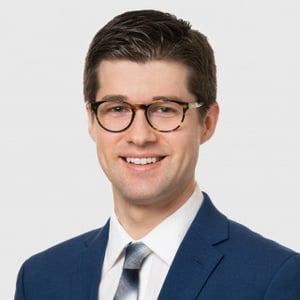
Director, Americas Program, Center for Strategic and International Studies
Ryan C. Berg is director of the Americas Program and head of the Future of Venezuela Initiative at the Center for Strategic and International Studies. He is also an adjunct professor at the Catholic University of America and a course coordinator at the United States Foreign Service Institute. His research focuses on U.S.-Latin America relations, strategic competition and defense policy, authoritarian regimes, armed conflict and transnational organized crime, and trade and development issues. Previously, Dr. Berg was a research fellow at the American Enterprise Institute, where he helped lead its Latin America Studies Program, as well as visiting research fellow at the University of Oxford’s Changing Character of War Programme. Dr. Berg was a Fulbright scholar in Brazil and is a Council on Foreign Relations Term Member. He has been published in a variety of peer-reviewed academic and policy-oriented journals, including The Lancet, Migration and Development, the SAIS Review of International Affairs, and the Georgetown Security Studies Review. His articles have appeared in Foreign Affairs, Foreign Policy, CNN.com, Los Angeles Times, and World Politics Review, among other outlets. He routinely testifies before the Senate Foreign Relations Committee and the House Foreign Affairs Committee. Dr. Berg obtained a PhD and an MPhil in political science and an MSc in global governance and diplomacy from the University of Oxford, where he was a Senior Hulme Fellow. Earlier, he obtained a BA in government and theology from Georgetown University. He is fluent in Spanish and Portuguese and is conversational in Slovenian.
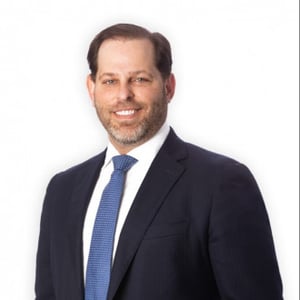
Partner, SFS Law
Michael Nadler counsels and defends corporations and individuals on a broad range of regulatory, criminal, and civil matters, including claims involving the Foreign Corrupt Practices Act (FCPA), money laundering, healthcare fraud, securities law violations, and white-collar criminal defense.
Prior to joining Stumphauzer, Foslid, Sloman, Ross & Kolaya, Michael was a federal prosecutor for almost ten years in the Southern District of Florida. Michael has extensive courtroom and trial experience. During his time at the United States Attorney’s Office, he successfully tried over twenty-five federal jury trials and argued before the United States Court of Appeals for the Eleventh Circuit.
While at the United States Attorney’s Office, Michael specialized in prosecutions and investigations involving sophisticated international and domestic money laundering and FCPA cases. Michael was selected to be part of a newly-created group targeting money laundering and foreign corruption. His cases covered the world. ranging from cases involving corrupt officials in Venezuela, the Middle East, Africa, and Europe. and extending to large scale financial investigations involving European banks and foreign nationals. He was lead prosecutor in some of the highest profile, largest money laundering and FCPA prosecutions in the history of South Florida. In one case alone, Michael’s prosecution of the former treasurer of Venezuela resulted in a one billion-dollar forfeiture, one of the largest forfeiture amounts ever ordered.
As an Assistant U.S. Attorney, Michael also led hundreds of complex investigations and prosecutions against individuals and corporations for violations of federal health care statutes, large scale narcotics trafficking, firearms offenses, murder for hire, tax fraud, aggravated identity theft, securities fraud and elder fraud.
Throughout his time at the U.S. Attorney’s office Michael travelled extensively throughout South America and Europe. He built partnerships and relationships with numerous law enforcement agencies both domestic and international, officials and foreign lawyers. Michael participated in several summits whose participants included officials from Lichtenstein, Italy, Bulgaria, Spain, Portugal, Argentina, Luxemburg, Switzerland, Colombia, Panama, Mexico, Honduras, Equator and Guatemala on bilateral efforts to combat organized transnational crime involving money laundering, foreign corruption and narco- trafficking. Michael has also lectured federal law enforcement agencies on complex money laundering investigations and weapons of mass destruction.
Prior to his service with the federal government, Michael served as an Assistant Miami-Dade County Attorney at the Miami-Dade County Attorney’s Office. As an Assistant County Attorney, Michael was the trial attorney on a wide variety of civil cases and trials in federal and state court, including tort cases, medical malpractice, section 1983 civil rights cases and employment cases where he represented numerous County departments, including the Miami Dade Fire Department, Building Department, and the Port of Miami. Michael drafted appellate briefs and conducted several successful oral arguments before the United States Court of Appeals for the Eleventh Circuit and the Florida Third District Court of Appeal.
Earlier in his career, Michael worked in the financial and securities litigation group in Sidley Austin LLP’s Chicago office. As an associate there, he built a reputation for successfully representing clients on white collar investigations involving securities violations and accountant liability.
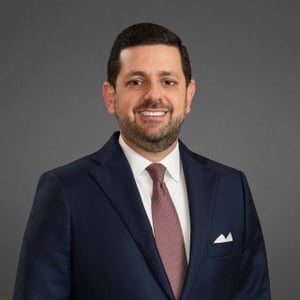
Of Counsel, DLA Piper LLP (US)
Harout J. Samra – a Board Certified Specialist in International Law – focuses his practice on international dispute resolution and arbitration matters, including international civil litigation in US courts.
Harout has represented clients from both the public and private sectors, including foreign governments, public officials and clients from a variety of industries. He has experience in international arbitrations administered under the International Chamber of Commerce (ICC), International Centre for Dispute Resolution (ICDR), United Nations Commission on International Trade Law (UNCITRAL), China International Economic and Trade Arbitration Commission (CIETAC), Bogota Chamber of Commerce, Madrid Court of Arbitration and International Centre for Settlement of Investment Disputes (ICSID) arbitration rules.
Harout currently serves as a member of the Florida Supreme Court Judicial Nominating Commission, by appointment of Governor Ron DeSantis. He previously served, by appointment of Governor Rick Scott, as a member of the Florida Third District Court of Appeal Judicial Nominating Commission, and was elected as Chair of the Commission from 2018-2019.

Deep Dive Episode 177 – Patents and Pandemics: Innovation Policy and the Patent Waiver Petition at the WTO
A Regulatory Transparency Project Teleforum
Topics
Justice Thomas on Controlling the Tech Giants
How to control the tech giants—Facebook, Twitter, and YouTube—has continued to raise concerns about both...
A Conversation with Noel Francisco I Former Solicitor General of the United States
Chicago Student Chapter
Chicago, ILState Court Docket Watch: State of Wisconsin v. Halverson
Anthony LoCoco
Note from the Editor: The Federalist Society takes no positions on particular legal and public...
Deep Dive Episode 173 – The State of Healthcare Policy: from COVID-19 to Medicare for All
M. Gregg Bloche, Lawrence Gostin, David Hyman, Timothy M. Westmoreland
On Friday, April 16, 2021, the Federalist Society’s Georgetown Student Chapter hosted a webinar featuring...
Alito at 15: A Panel Discussion Honoring Justice Alito's 15 Years on the Court
New Jersey Lawyers Chapter - Online Event
Alito at 15: A Panel Discussion Honoring Justice Alito's 15 Years on the Court
New Jersey Lawyers Chapter - Online Event
Courthouse Steps Oral Argument Teleforum: United States v. Palomar-Santiago
TeleforumTopics
Countering Extremism in the Military Must Avoid Extremes
On March 24, 2021, the House Armed Services Committee in full invited me to testify...
International Corruption and the Venezuela Indictments: The Case of Alex Saab
Ryan C. Berg, Michael Nadler, Harout J. Samra
One year ago, the United States Department of Justice announced a series of indictments against...