

Senior Research Fellow (Wolfson College); Fellow (Lauterpacht Centre for International Law), Faculty of Law, University of Cambridge
Over twenty years' experience as legal adviser, advocate, and strategist in complex multi-jurisdiction matters across several substantive fields, including public international law, international investment protection, trade law, and law of the sea. Academic writings on international arbitration, international organizations, use of force, State immunity, State succession, recognition of States, artificial intelligence, law & technology.

Stevenson Bernard Professor, George Washington University Law School
The Honorable F. Scott Kieff is the Stevenson Bernard Professor at George Washington University Law School and a Visiting Fellow at Stanford University’s Hoover Institution.
He served as Commissioner of the U.S. International Trade Commission from 2013-2017. He also served during the Bush, Obama, and Trump Administrations in the part-time leadership of the national security defense-intelligence community.
He was previously a professor of law and medicine at Washington University in Saint Louis and a Senior Fellow at Hoover. A former law clerk to U.S. Circuit Judge Giles S. Rich, he is a graduate of Penn Law School and MIT, where he studied molecular biology and microeconomics. He was elected to the European Academy of Sciences and Arts in 2012 and the Academia Europaea in 2024.
His private sector work through Kieff Strategies LLC (www.kieffstrategies.com) provides neutral services including mediation and compliance, and expert services including crisis management, advising, and testimony.
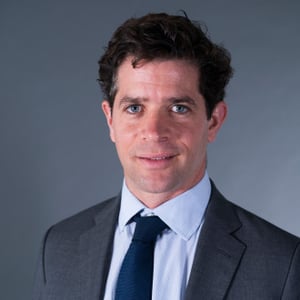
Senior Fellow, Brookings Institution
Dr. Meltzer is a senior fellow at the Brookings Institution in Washington D.C., where he is an expert on international trade law and policy issues, including digital trade, emerging technologies and AI. At Brookings, Meltzer leads the Digital Economy and Trade Project and co-leads the Forum for Cooperation on AI. Meltzer has testified before the U.S. Congress, the U.S. International Trade Commission and the European Parliament on trade issues. He has been an expert witness in litigation on data flows and privacy issues in the EU and a consultant to the World Bank on trade and privacy matters. He is also a member of Australia’s National Data Advisory Council. Meltzer teaches digital trade law at Melbourne University Law School and at the University of Toronto Law School, where he is an adjunct professor. Meltzer also teaches ecommerce and digital trade at the UK Foreign, Commonwealth and Development Office diplomatic academy. Before joining Brookings, Meltzer was posted as a diplomat at the Australian Embassy in Washington D.C. and prior to that was an international trade negotiator in Australia’s Department of Foreign Affairs and Trade. Meltzer has appeared in print and news media, including the Economist, the New York Times, the Washington Post, CNN, Bloomberg, MSNBC, CBS, Fox, the Asahi Shimbun and China Daily. Meltzer holds an S.J.D. and LL.M. from the University of Michigan Law School in Ann Arbor and law and commerce degrees from Monash University in Melbourne, Australia.
CoFounder, RightsClick
Steven’s extensive background in IP law and policy began as an attorney for the U.S. Senate Judiciary Committee, after which, he served as senior counsel for Policy and International Affairs at the U.S. Copyright Office and then as Chief Intellectual Property Counsel for the Global Intellectual Property Center of the U.S. Chamber of Commerce. Before co-founding RightsClick, he started the IP consultancy Sentinel Worldwide, and teaches copyright law at George Washington University Law School.

Judge, United States Court of Appeals, Sixth Circuit
Judge Readler earned his undergraduate and law degrees from the University of Michigan. After graduating, he served as a law clerk to Judge Alan Norris of the United States Court of Appeals for the Sixth Circuit. Judge Readler then began practicing law in the Columbus office of the international law firm Jones Day, eventually spending ten years as a partner in the firm’s Issues and Appeals Practice Group. While at Jones Day, Judge Readler appeared in state and federal trial and appellate courts around the country, most frequently the Supreme Court of Ohio and the Sixth Circuit. Judge Readler also successfully argued before the United States Supreme Court in McQuiggin v. Perkins on behalf of an inmate claiming actual innocence. His other pro bono representations include representing capital defendants before the Tenth Circuit and the Supreme Court of Ohio, as well as representing defendants sentenced to life in prison before the Sixth Circuit. While at Jones Day, Judge Readler traveled to Nairobi with Lawyers Without Borders to train Kenyan lawyers in prosecuting domestic violence cases, and he was also a recipient of the American Marshall Memorial Fellowship awarded by the German Marshall Fund of the United States. Following his career in private practice, Judge Readler served as Acting Assistant Attorney General for the Civil Division of the United States Department of Justice from 2017 to 2019. In that role, Judge Readler led and supervised over 1,000 lawyers in the Department’s largest litigating division, briefing and arguing several cases on behalf of the United States in federal courts across the country, including high-profile cases significant to the Administration and the Department. In March 2019, Judge Readler was confirmed to serve as a Circuit Judge on the Sixth Circuit. He resides in Columbus.
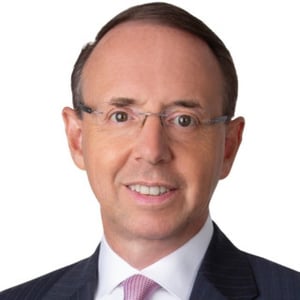
Partner, King & Spalding LLP
Rod J. Rosenstein is a partner in King & Spalding’s Special Matters & Government Investigations practice. Drawing upon three decades of experience as a federal prosecutor and a senior government official, Rod helps clients resolve complex regulatory and litigation challenges, including government investigations, crisis management, internal investigations, national security, compliance and monitoring.
Rod served in senior leadership positions at the U.S. Department of Justice during the administrations of Presidents George W. Bush, Barack Obama and Donald Trump, including as Deputy Attorney General (2017 to 2019) and United States Attorney for Maryland (2005 to 2017).
As the second-highest ranking official at the Department of Justice, Rod was responsible for overseeing 115,000 employees in the Department’s litigating divisions, law enforcement agencies and United States Attorney’s Offices, and for formulating and implementing federal enforcement policies. He led the revision of policies concerning corporate criminal prosecutions and parallel domestic and foreign investigations, Foreign Corrupt Practices Act matters, and health care fraud cases. He also reviewed significant proposed criminal and civil enforcement actions, proposed False Claims Act settlements and related matters, and proposals to appoint corporate monitors. Rod also acted on national security matters subject to review by the Committee on Foreign Investment in the United States (CFIUS). Additionally, Rod led the interagency Task Force on Market Integrity and Consumer Fraud and developed a strategy to combat cybercrime as head of the Department’s Cyber-Digital Task Force.
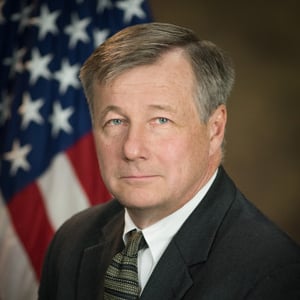
United States Attorney, Northern District of Texas
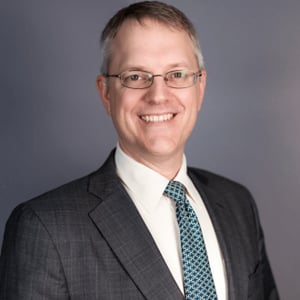
President and General Counsel, New Civil Liberties Alliance
NCLA’s President and General Counsel, Mark Chenoweth, has observed the administrative state up close and personal from perches in all four branches of the federal government. Mark served as the first chief of staff to Congressman Mike Pompeo, as legal counsel to Commissioner Anne Northup at the U.S. Consumer Product Safety Commission, as an attorney advisor in the Office of Legal Policy at the U.S. Department of Justice, and as a law clerk to the Hon. Danny J. Boggs on the U.S. Court of Appeals for the Sixth Circuit.
Mark has worked in several different roles in the private sector as well. He began his legal career in D.C. as a regulatory associate at Wilmer, Cutler & Pickering. He then returned to his home state of Kansas to serve as in-house counsel for Koch Industries. Most recently he spent over four years as general counsel of the Washington Legal Foundation.
Mark is a graduate of Yale College and the University of Chicago Law School, where he co-founded the Institute for Justice Clinic on Entrepreneurship and became a Tony Patiño Fellow. Mark has been widely quoted and/or published in newspapers and websites including the New York Times, San Francisco Chronicle, New Hampshire Union Leader, and Metropolitan Corporate Counsel. He has also had recurring op-eds in the Los Angeles Daily Journal, and at Forbes.com.
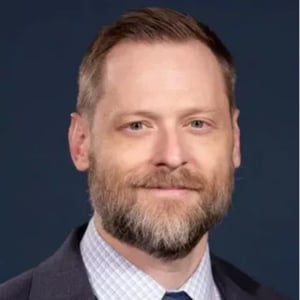
Litigation Director, Center for Individual Rights
Caleb Kruckenberg is CIR’s Litigation Director.
Caleb previously worked as a prosecutor, a public defender, a lobbyist for a national advocacy organization and, most recently, an impact litigator protecting the separation of powers at both the Pacific Legal Foundation and the New Civil Liberties Alliance. He has won major victories against numerous federal agencies, including the U.S. Department of Justice, Department of Labor, Bureau of Alcohol Tobacco and Firearms, and the Securities and Exchange Commission. He is also proud to have sued every U.S. attorney general, eight so far, since he has been litigating against the government on behalf of liberty-minded clients. Caleb has also argued more than 20 times in the U.S. Courts of Appeals, winning cases in 8 of the 12 regional circuit courts.
He graduated cum laude from Temple University Beasley School of Law in Philadelphia, where he was the lead articles editor for the Temple Law Review. Caleb also attended the Pennsylvania Academy of the Fine Arts, where he studied figurative painting.
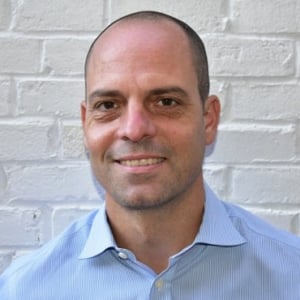
Partner, Klaros Group
Jonah Crane is an experienced advisor to financial technology companies with innovative products or business models. Jonah provides creative advice on business and product strategy, regulatory and compliance risk, and regulatory engagement. He excels where business model and product innovations don't fit easily within existing regulatory frameworks, and has helped companies such as Plaid and Monzo navigate complex regulatory frameworks. Jonah has also helped financial regulators around the World develop policy frameworks to facilitate innovation and financial inclusion, and led the drafting of the first comprehensive code of conduct for trading digital assets. Jonah served as a Senior Advisor and Deputy Assistant Secretary in the U.S. Treasury Department from 2013-2017, with responsibility for financial stability and regulatory coordination. Prior to that, Jonah was an advisor to U.S. Senator Chuck Schumer on financial regulatory policy, including the Dodd-Frank Act and JOBS Act. Jonah was previously a mergers and acquisitions lawyer at Milbank LLP in New York City.
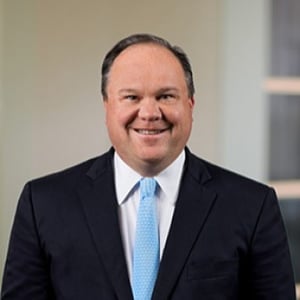
Counsel, BakerHostetler
Kevin Edgar’s extensive career in public policy, strategy, financial services and the macro-political process spans from work in the New York Stock Exchange to the United States House of Representatives. Kevin joined the firm after working for more than a decade on Capitol Hill, first as a senior counsel and then Chief Counsel of the House Financial Services Committee. He served on the Committee staff during the financial crisis and the enactment of the Dodd-Frank Wall Street Reform and Consumer Protection Act (P.L. 111-203). Kevin communicates public policy goals, analyzes and develops regulatory and legislative initiatives. He possesses a deep understanding of legislative and regulatory processes, and how government agencies interact with one another. Utilizing his substantial comprehension of financial laws and regulations, Kevin provides strategic advice and advises clients on compliance measures and industry best practices. Additionally, his market intel and broad network enable him to counsel clients on how the Congress and regulatory agencies can impact corporate governance, lending, investing, innovation and growth. With over 20 years of experience, Kevin brings a wealth of industry and public policy insight to his clients’ matters.
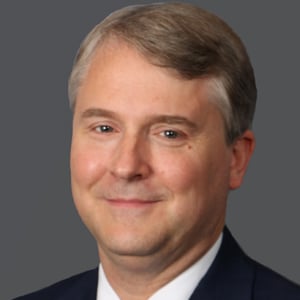
Partner, Mayer Brown
Andrew Olmem is a partner in Mayer Brown’s Washington DC office and a member of its Public Policy, Regulatory & Government Affairs, and Financial Services Regulatory & Enforcement practices. His practice focuses on complex financial services regulatory and public policy matters.
Andrew previously served as the Deputy Assistant to the President for Economic Policy and Deputy Director of the National Economic Council (NEC), where he oversaw the development and coordination of the administrations’ domestic economic policies, including for financial services, technology, telecom, energy, and infrastructure.
Earlier, he also served as the Republican Chief Counsel and Deputy Staff Director at the U.S. Senate Committee on Banking, Housing and Urban Affairs. Andrew began his legal career practicing corporate and securities law at Mayer Brown in New York City. Prior to attending law school, he served as an Assistant Economist at the Federal Reserve Bank of Richmond.
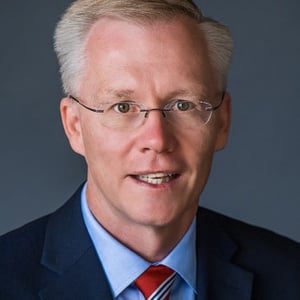
Executive Director, Milken Institute Center for Financial Markets
Michael S. Piwowar is the executive director of the Milken Institute Center for Financial Markets. Dr. Piwowar served as a Commissioner at the U.S. Securities and Exchange Commission from August 15, 2013 to July 6, 2018. He was first appointed to the SEC by President Barack Obama and was designated Acting Chairman of the Commission by President Donald Trump from January 23, 2017 to May 4, 2017. He was previously the Republican chief economist for the U.S. Senate Committee on Banking, Housing, and Urban Affairs under Senators Mike Crapo (R-ID) and Richard Shelby (R-AL) and served as the lead Republican economist on the four SEC-related titles of the Dodd-Frank Act and the JOBS Act. During the financial crisis and its immediate aftermath, Dr. Piwowar served in a one-year fixed-term position at the White House as a senior economist at the President’s Council of Economic Advisers (CEA) in both the George W. Bush and Barack Obama Administrations. Before joining the White House, Dr. Piwowar worked as a Principal at the Securities Litigation and Consulting Group (SLCG). He received a B.A. in Foreign Service and International Politics from the Pennsylvania State University, an M.B.A. from Georgetown University, and a Ph.D. in Finance from the Pennsylvania State University.
Senior Research Fellow (Wolfson College); Fellow (Lauterpacht Centre for International Law), Faculty of Law, University of Cambridge
Over twenty years' experience as legal adviser, advocate, and strategist in complex multi-jurisdiction matters across several substantive fields, including public international law, international investment protection, trade law, and law of the sea. Academic writings on international arbitration, international organizations, use of force, State immunity, State succession, recognition of States, artificial intelligence, law & technology.
Stevenson Bernard Professor, George Washington University Law School
The Honorable F. Scott Kieff is the Stevenson Bernard Professor at George Washington University Law School and a Visiting Fellow at Stanford University’s Hoover Institution.
He served as Commissioner of the U.S. International Trade Commission from 2013-2017. He also served during the Bush, Obama, and Trump Administrations in the part-time leadership of the national security defense-intelligence community.
He was previously a professor of law and medicine at Washington University in Saint Louis and a Senior Fellow at Hoover. A former law clerk to U.S. Circuit Judge Giles S. Rich, he is a graduate of Penn Law School and MIT, where he studied molecular biology and microeconomics. He was elected to the European Academy of Sciences and Arts in 2012 and the Academia Europaea in 2024.
His private sector work through Kieff Strategies LLC (www.kieffstrategies.com) provides neutral services including mediation and compliance, and expert services including crisis management, advising, and testimony.
Senior Fellow, Brookings Institution
Dr. Meltzer is a senior fellow at the Brookings Institution in Washington D.C., where he is an expert on international trade law and policy issues, including digital trade, emerging technologies and AI. At Brookings, Meltzer leads the Digital Economy and Trade Project and co-leads the Forum for Cooperation on AI. Meltzer has testified before the U.S. Congress, the U.S. International Trade Commission and the European Parliament on trade issues. He has been an expert witness in litigation on data flows and privacy issues in the EU and a consultant to the World Bank on trade and privacy matters. He is also a member of Australia’s National Data Advisory Council. Meltzer teaches digital trade law at Melbourne University Law School and at the University of Toronto Law School, where he is an adjunct professor. Meltzer also teaches ecommerce and digital trade at the UK Foreign, Commonwealth and Development Office diplomatic academy. Before joining Brookings, Meltzer was posted as a diplomat at the Australian Embassy in Washington D.C. and prior to that was an international trade negotiator in Australia’s Department of Foreign Affairs and Trade. Meltzer has appeared in print and news media, including the Economist, the New York Times, the Washington Post, CNN, Bloomberg, MSNBC, CBS, Fox, the Asahi Shimbun and China Daily. Meltzer holds an S.J.D. and LL.M. from the University of Michigan Law School in Ann Arbor and law and commerce degrees from Monash University in Melbourne, Australia.
CoFounder, RightsClick
Steven’s extensive background in IP law and policy began as an attorney for the U.S. Senate Judiciary Committee, after which, he served as senior counsel for Policy and International Affairs at the U.S. Copyright Office and then as Chief Intellectual Property Counsel for the Global Intellectual Property Center of the U.S. Chamber of Commerce. Before co-founding RightsClick, he started the IP consultancy Sentinel Worldwide, and teaches copyright law at George Washington University Law School.
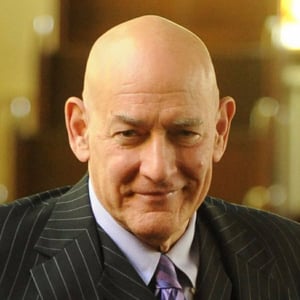
Raoul Berger Professor of Legal History at Northwestern University School of Law
Stephen Presser is a leading American legal historian and expert on shareholder liability for corporate debts. He is frequently an invited witness before committees of the U.S. Senate and House of Representatives on issues of constitutional law. He holds a joint appointment with the J. L. Kellogg Graduate School of Management and also teaches in Northwestern's history department.

Founder, President, and General Counsel, Wisconsin Institute for Law & Liberty
Rick Esenberg is the founder and current President and General Counsel of the Wisconsin Institute for Law & Liberty, a rapidly expanding law and policy organization headquartered in Milwaukee. Under Rick’s leadership, WILL has grown into one of the more active state-based think tanks and litigation centers in the country. Rick is a frequent litigator in state and federal courts and nationally recognized scholar and commentator on constitutional law, particularly the First Amendment’s guarantees of freedom of speech and religion. He is one of the leading experts on the Wisconsin Constitution and a frequent advocate before the Wisconsin Supreme Court. Rick’s work seeks to advance the rule of law and individual liberty, formed by a robust civil society that forms individual and community character, preserving the wisdom of the past and an openness to the future.
Rick’s commentary has been featured in such outlets as the Wall Street Journal, National Review, Weekly Standard, Real Clear Politics, Milwaukee Journal Sentinel and Washington Examiner. Formerly on the faculty of Marquette University Law School, his scholarship has appeared in such publications as the Harvard Law Review, Harvard Journal of Law & Public Policy, Wake Forest Law Review and William & Mary Bill of Rights Journal. Back when they were a thing, he operated a blog called Shark and Shepherd where he tried to suggest something about the duality of man – “the Jungian thing.”
Rick holds a J.D., magna cum laude, from Harvard Law School, where he was an editor of the Harvard Law Review, and a B.A., summa cum laude, in political science from the University of Wisconsin-Milwaukee. In addition to service on the Marquette Faculty, he was formerly a litigation partner at Foley & Lardner and General Counsel of an international manufacturing firm headquartered in Wisconsin. He lives in Mequon Wisconsin with his wife Karen, golden retrievers Cooper and Riley and more books than he can find places for.

Trade and Its Cross-Cutting Equities: New Horizons, New Challenges
Intellectual Property and International & National Security Law Practice Groups
Trade and Its Cross-Cutting Equities: New Horizons, New Challenges
Thomas D. Grant, F. Scott Kieff, Joshua Meltzer, Steven M. Tepp
The Trump Administration re-focused U.S. trade policy on the interests of several sectors of the...
The U.S Department of Justice During this Time of Transition
Indianapolis Lawyers Chapter Event
Indianapolis, INLitigation Update: Brown v. Becerra
TeleforumTopics
Don’t Fear Volatility in Cryptocurrency Prices; Fear Regulations that Will Harm America’s Crypto Lead
After a massive runup since the beginning of the year, the cryptocurrency market finally experienced...
If the Framers Despaired, Should We?
Stephen B. Presser
A review of Fears of a Setting Sun: The Disillusionment of America’s Founders, by Dennis...
Topics
Remembering a Time When Broadband Policy Was Bipartisan
Last week, the House Energy and Commerce Committee held a hearing entitled Broadband Equity: Addressing...
Panel 1: Did Dodd-Frank Live Up to Its Promise?
Sponsored by the Financial Services & E-Commerce Practice Group
Litigation Update: Wisconsin Equal Protection and Race Based Scholarships
Rick M. Esenberg
A biracial Wisconsin couple—Konkanok Rabieba and Richard Freihoefer—is suing the state of Wisconsin over its Minority Grant...
Topics
GEDMatch and the Fourth Amendment: No Warrant Required
He murdered 13 people, raped at least 50 women, and committed burglaries all across California...