
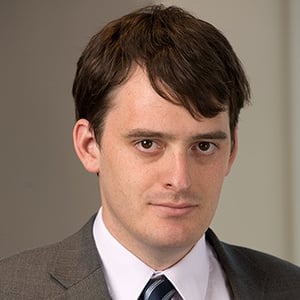
Head of Tech & Innovation, Centre for Policy Studies
Matthew Feeney is Head of Tech & Innovation at Centre for Policy Studies. Before joining CPS, Matthew was the director of Cato Institute’s Project on Emerging Technologies. His writing has appeared in The New York Times, The Washington Post, City A.M., and others. He received both his BA and MA in philosophy from the University of Reading.
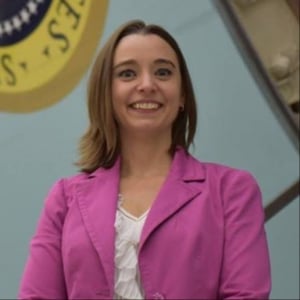
Senior Director for National Security Programs, DataRobot
Jennifer Hay currently serves as the Senior Director for National Security Programs at DataRobot. DataRobot is an end-to-end enterprise AI platform that automates and accelerates machine learning. At DataRobot, Jennifer manages the policy development and outreach efforts at the intersection of national security and AI technology. Jennifer also supports delivery projects to several Department of Defense and Intelligence Community customers, as well as with the participants in DataRobot’s AI for Good initiative.
Prior to joining DataRobot, Jennifer spent two decades working in various roles within the Department of Defense and the White House, including positions on the National Security Council staff, the immediate office of the Deputy Secretary of Defense, the Office of the Under Secretary of Defense for Intelligence, and the Defense Intelligence Agency.
Jennifer is a graduate of The George Washington University with an MA in International Affairs and Pepperdine University with a BA in Political Science.
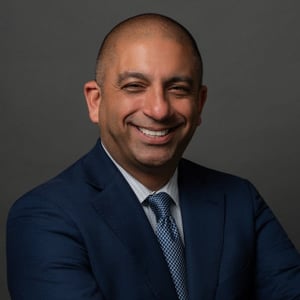
Founder and Executive Director, National Security Institute; Assistant Professor of Law, Antonin Scalia Law School, George Mason University
Jamil N. Jaffer is the Founder and Executive Director of the National Security Institute at the Antonin Scalia Law School at George Mason University where he also serves as an Assistant Professor of Law, Director of the National Security Law and Policy Program, and Director of the Cyber, Intelligence, and National Security LLM Program. Jamil also teaches classes on counterterrorism, intelligence, surveillance, cybersecurity, and other national security matters, as well as a summer course held abroad with U.S. Supreme Court Justice Neil M. Gorsuch. Jamil is also affiliated with Stanford University’s Center for International Security and Cooperation and previously served as a Visiting Fellow at the Hoover Institution from 2016 to 2019.
Jamil is also a Venture Partner with Paladin Capital Group, where he assists the firm with investments across the full range of its themes and theses, including a focus on dual-use national security technologies. Jamil also serves on the board of directors of RangeForce, a cybersecurity training and readiness platform startup and Tozny, a digital identity startup, and on the advisory boards of U.S. Strategic Metals, North America’s largest primary producer of cobalt, a critical mineral used in EV batteries, aerospace, and other national security applications; and Constella Intelligence, a deep and dark web intelligence startup. Jamil also serves as an advisor to Beacon Global Strategies, a strategic advisory firm and Duco, a technology platform startup that connects corporations with geopolitical and international business experts. Jamil is also the managing director of Trigraph Caveat Capital, a private investment vehicle.
Among other things, Jamil currently serves on the Board of Directors for the Greater Washington Board of Trade, the Board of Advisors for the Global Cyber Alliance, and the Advisory Board of the Foundation for the Defense of Democracies’ Center on Cyber and Tech Innovation, the Executive Committee of the Reagan Institute Strategy Group. Jamil is also a Fellow at the Academy for Judaic, Christian, and Islamic Studies, an advisor to the Concordia Summit, and is a member of the Board of Directors for the Center for Intelligence Policy, the Board of Directors of Speech First, and the Executive Committee of the International Law and National Security Practice Group of the Federalist Society.
Immediately prior to his current positions, from 2015-2021, Jamil served as a senior business leader at IronNet Cybersecurity, helping take the company from a bootstrapped first-year technology products startup through two rounds of venture capital fundraising, growing from 40 employees to over 300, and through its listing on New York Stock Exchange. In his role as IronNet's Senior Vice President for Strategy, Partnerships & Corporate Development, Jamil worked directly for the co-CEOs of the company, Gen (ret.) Keith B. Alexander, the former Director of the National Security Agency and Founding Commander of U.S. Cyber Command, and Bill Welch, the former COO of Zscaler and Duo; in that role, Jamil led all of the company’s strategic and technology partnership efforts, including developing go-to-market and technology integration plans with some of the largest cloud platforms and cybersecurity companies in the market, evaluating potential acquisition targets, and developing overall corporate strategy and thought leadership around collective security and collaborative defense in the cyber arena.
Prior to his time at IronNet, Jamil served on the leadership team of the Senate Foreign Relations Committee as Chief Counsel and Senior Advisor under Chairman Bob Corker (R-TN), where he worked on key national security and foreign policy issues, including leading the drafting of the proposed Authorization for the Use of Military Force against ISIS in 2014 and 2015, the AUMF against Syria in 2013, and revisions to the 9/11 AUMF against al Qaeda. Jamil was also the lead architect of the Iran Nuclear Agreement Review Act and two sanctions laws against Russia for its first intervention in Ukraine.
Prior to joining SFRC, Jamil served as Senior Counsel to the House Permanent Select Committee on Intelligence under Chairman Mike Rogers (R-MI) where he led the committee’s oversight of NSA surveillance, NRO intelligence issues, and NGA analytic and collection matters, as well as intelligence community-wide counterterrorism issues. Jamil was also the lead architect of the Cyber Intelligence Sharing and Protection Act, the nation’s first cyber threat intelligence sharing legislation that was signed into law in 2015.
In the Bush Administration, Jamil served in the White House as an Associate Counsel to the President, handling Defense Department, State Department, and intelligence community matters, and serving as one of the White House Counsel’s primary representatives to the National Security Council Deputies Committee.
Prior to the White House, Jamil served on the leadership team of the Justice Department’s National Security Division as Counsel to the Assistant Attorney General for National Security, where he focused on counterterrorism and intelligence matters. At NSD, Jamil helped lead the division’s work on In re: Directives, the first ever two-party litigated matter in the FISA Court and the second case before the FISA Court of Review in its 30-year history. Jamil also led NSD’s efforts on the President’s Comprehensive National Cybersecurity Initiative (CNCI), including the drafting of NSPD-54/HSPD-23, and related classified matters, and advised the National Security Agency (NSA) and U.S. Cyber Command’s predecessor organization, the Joint Function Component Command for Network Warfare (JFCC-NW), on matters related to cyber intelligence collection and offensive cyber activities. For his work on these matters, Jamil was awarded the Assistant Attorney General’s Award for Special Initiative and was among the group of lawyers awarded the Director of National Intelligence’s 2008 Legal Award (Team of the Year – Cyber Legal).
Jamil also served in other positions in the Justice Department, including in the Office of Legal Policy, where he worked on the confirmations of Chief Justice John G. Roberts, Jr. and Justice Samuel A. Alito, Jr. to the United States Supreme Court.
Jamil also served as a lawyer in private practice at Kellogg Huber, a Washington, DC-based litigation boutique, as a policy advisor to Congressman Bob Goodlatte (R-VA), and as a staff member or senior advisor on a number of political campaigns, including two presidential campaigns and a presidential transition team. While in law school, Jamil was a member of the University of Chicago Law Review, managing editor of the Chicago Journal of International Law, and National Symposium Editor of the Harvard Journal of Law & Public Policy. Following law school, Jamil served as a law clerk to Judge Edith H. Jones of the United States Court of Appeals for the Fifth Circuit and, later in his career, as a law clerk to then-Judge Neil M. Gorsuch when he first joined the United States Court of Appeals for the Tenth Circuit as well as a law clerk to Justice Neil Gorsuch when he joined the U.S. Supreme Court.
Jamil has published multiple op-eds and academic articles on national security, foreign policy, cybersecurity, counterterrorism, encryption, and intelligence matters, and is the co-author of a book chapter with former NSA Director Gen. (Ret.) Keith B. Alexander on national security and the press in National Security, Leaks, and the Freedom of the Press: The Pentagon Papers Fifty Years On (2021) and a book chapter with former CIA Director Gen. (ret.) Mike Hayden on ISIS, al Qaeda, and other international terrorist groups in Choosing to Lead: American Foreign Policy for a Disordered World (2015). Jamil has also written book chapters on cybersecurity and surveillance, as well as op-eds and policy papers with former Attorney General Michael B. Mukasey, former National Counterterrorism Center Director Matt Olsen, and Congressman Mike Waltz (R-FL), among others.
Jamil has previously taught graduate-level courses in intelligence law and policy at George Washington University’s Elliott School of International Affairs and the National Intelligence University, served an outside advisor to the Cyberspace Solarium Commission, and has recently testified before committees of the U.S. Senate and House of Representatives on China, cybersecurity, counterterrorism, and other national security matters. Jamil has also recently appeared on a range of national television and radio outlets including CNN, Fox News, Fox Business, MSNBC, Bloomberg, PBS, Voice of America, and National Public Radio, and in various print and online publications, including the Wall Street Journal, New York Times, and the Washington Post on a range of national security matters including cybersecurity, counterterrorism, surveillance, encryption, privacy, and foreign policy issues.
Jamil holds degrees from UCLA (BA, cum laude), the University of Chicago Law School (JD, with honors), and the United States Naval War College (MA, with distinction).
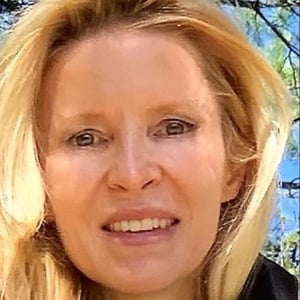
Adjunct Lecturer, The Bush School of Government & Public Service, Texas A&M University
Margaret Peterlin has transitioned across industries and organizations, having served as a Senior Vice President at AT&T following her senior leader position at the U.S. Department of State as Chief of Staff to Secretary Rex Tillerson. Previously, she was as a global executive at Mars, Inc, co-led a large, federal agency, worked for both the Speaker, and the Majority Leader, of the House of Representatives, clerked for a U.S. Court of Appeals Judge, and served as a commissioned officer in the U.S. Navy. Having served in all three branches of the federal government, and in two, global companies, she is now spending time in academia.
Professor of International Relations, Stanford University
Stephen D. Krasner is the Graham H. Stuart Professor of International Relations at Stanford, and a Senior Fellow at the Freeman Spogli Institute, the Hoover Institution, and at SIEPR.
From February 2005 to April 2007 he was Director of the Policy Planning Staff at the Department of State. In 2002 he served as Director for Governance and Development at the National Security Council. He is a member of the Board of Directors of the United States Institute of Peace, and was a member of the Foreign Policy Advisory Board of the Department of State from 2012 to 2014. He received his B.A. from Cornell in 1963, M.A. from Columbia in 1967, and Ph.D. from Harvard in 1972.
Before coming to Stanford in 1981 he taught at Harvard and UCLA. He was the Chair of the Political Science Department from 1984 until 1991, Senior Associate Dean for the Social Sciences from 2010-2013, and Deputy Director of the Freeman Spogli Institute from 2007 to 2013. He edited International Organization from 1986 to 1992. His writings have dealt primarily with the political determinants of international economic relations, American foreign policy, and sovereignty. He is currently investigating the impact of external actors on domestic authority structures in weak states.
He was a fellow at the Center for Advanced Studies in the Behavioral Science in 1987-88 and at the Wissenschaftskolleg zu Berlin 2000-2001. He has been a Marcator Fellow at the Free University Berlin since 2014. Professor Krasner is a Fellow of the American Academy of Arts and Sciences and a Member of the Council on Foreign Relations.

Professor Emeritus of Law, Antonin Scalia Law School, George Mason University
Jeremy A. Rabkin is a Professor Emeritus of Law at the Antonin Scalia Law School, George Mason University. Before joining the faculty in June 2007, he was for over two decades a professor in the Department of Government at Cornell University. Professor Rabkin serves on the board of directors of the Center for Individual Rights, a public interest law firm based in Washington, D.C. Previously he was a board member of the U.S. Institute of Peace and the board of academic advisors of the American Enterprise Institute.
Professor Rabkin’s books include Law Without Nations? (Princeton University Press, 2005). He authored “If You Need a Friend, Don’t Call a Cosmopolitan,” a chapter in Varieties of Sovereignty and Citizenship (Sigal R. Ben-Porath & Rogers M. Smith eds., University of Pennsylvania Press, 2012). His articles have appeared in major law reviews and political science journals and his journalistic contributions in a range of magazines and newspapers, including the Washington Post and the Wall Street Journal.
Warren Distinguished Professor of Law, University of San Diego School of Law
Michael D. Ramsey is Warren Distinguished Professor of Law at the University of San Diego School of Law, where he teaches and writes in the areas of Constitutional Law, Foreign Relations Law and International Law. He is the author of The Constitution’s Text in Foreign Affairs (Harvard University Press), co-editor of International Law in the U.S. Supreme Court: Continuity and Change (Cambridge University Press), and co-author of two casebooks, Transnational Law and Practice (2d ed., Aspen) and International Business Transactions: A Problem-Oriented Coursebook (14th ed., West). His scholarly articles have appeared in publications such as the Yale Law Journal, the University of Chicago Law Review, the Georgetown Law Journal and the American Journal of International Law. He received his B.A. magna cum laude from Dartmouth College and his J.D. summa cum laude from Stanford Law School. Prior to teaching, he served as a judicial clerk for Judge J. Clifford Wallace of the United States Court of Appeals for the Ninth Circuit and for Justice Antonin Scalia of the United States Supreme Court, and practiced law with the law firm of Latham & Watkins, where he specialized in international finance and investment. He has taught as a visiting professor at the University of California, San Diego, in the Department of Political Science and at the University of Paris – Sorbonne, in the Department of Comparative Law.
Counsel, Latham & Watkins LLP
Joshua Wu, former Deputy Assistant Attorney General (DAAG) for Appellate and Review in the Tax Division of the US Department of Justice (DOJ), counsels and advocates for companies and high net worth individuals on all aspects of tax controversies and litigation.
Mr. Wu advises on issues ranging from tax accounting disputes, to corporate and partnership transactional issues, international questions, employee benefits matters, and tax exempt controversies. He brings a unique knowledge base and skillset to his clients, drawing on his experience both in senior leadership roles in the DOJ’s Tax Division and in private practice.
Most recently, when Mr. Wu served as DAAG, he oversaw virtually all appeals in civil federal tax cases throughout the country and managed a 40-lawyer team. He also represented the United States in appellate oral arguments, evaluated and approved significant civil settlement offers, and furnished advice to the Tax Division’s trial sections in complex tax cases.
Mr. Wu previously served as DAAG for Policy and Planning, where he led the Office of Management and Administration (OMA) at DOJ. In that role, he led the operational functions of the Tax Division, and led the Office of Legislation and Policy, which works with the Department of Treasury, the IRS, and other agencies on legislative, regulatory, and policy initiatives. Prior to his government service, Mr. Wu was a partner at a large international law firm. He also worked as an associate at Latham.

Professor Emeritus, Paul M. Hebert Law Center, Louisiana State University
In memoriam
Dr. John Baker is Professor Emeritus of Law, and previously the Dale E. Bennett Professor of Law, at Louisiana State University Law School. He is currently Visiting Professor at Peking University School of Transnational Law (via Zoom) and has been Visiting Professor at The Center for the Constitution, Georgetown Law School (2013-2020). He has also been a Visiting Fellow at Oriel College, the University of Oxford (2012-2014) and taught at Blackfriars Hall, Oxford in 2014. Dr. Baker has also been an adjunct Fellow at the Heritage Foundation (Spring, 2008) and a Distinguished Scholar at the Catholic University of America Law School (2011-12). He has taught at Tulane Law School, George Mason Law School, Pepperdine Law School, New York Law School, Hong Kong University, and the University of Dallas, School of Management and also taught and/or lectured in 17 foreign countries. Notable among his foreign visits are the
following: Visiting Professor at the University of Lyon III (France) (1999-2011); Visiting Professor at the Universidad de los Andes, Chile (2012), as a Fulbright Specialist (2006); and a Fulbright Scholar at various universities in the Philippines. Dr. Baker received his J.D., with honors, from the University of Michigan Law School and his B.A., magna cum laude, from the University of Dallas. He also earned a Ph.D. in Political Thought from the University of London. Baker has taught over a dozen different subjects, mostly courses in public law. His main areas of interest are Constitutional Law (particularly federalism and separation of powers), Criminal Law, Anti-Terrorism Law, International Law, Health Care Law, Mediation, and Comparative Law.
In addition to law review articles and book chapters, Dr. Baker’s academic publications include Hall's Criminal Law: Cases and Materials (with Benson, Force and George; 5th ed. Michie, 1993); An Introduction to the Law of the United States (ed. with Levasseur; University Press of America, 1992). He has also published on Forbes.com, FoxNews.com, in The Washington Times, and a number of times in The Wall Street Journal. He argues in federal court, including two oral arguments in the U.S. Supreme Court. For many years, he co-taught courses for the Federalist Society on separation of powers with the late Supreme Court Justice Antonin Scalia. In September 2016, he co-taught a Supreme Court seminar in China with Justice Samuel Alito. Following law school, he served as a law clerk in federal district court and as an assistant district attorney in New Orleans before joining LSU in 1975. While a professor, he has been as a consultant to USAID, USIA (since rolled into the State Department), the Justice Department, the U.S. Senate Judiciary Subcommittee on Separation of Powers, and the Office of Planning in the White House. He served on an ABA Task Force which issued the report, The Federalization of Crime (1998) and later as a consultant to the “Bi-Partisan Task Force on the Over- federalization of Crime” (2012-2014) created by the U.S. House Judiciary Subcommittee on Crime. Dr. Baker was a co-founder of the first iteration (1995) of Stratfor Inc., a global intelligence agency. He co-authored its first book: The Intelligence Edge (with Friedman, Friedman and Chapman; Crown Books/Random House 1997). In 2022, he began a short, weekly video podcast available on YouTube and Rumble, The Baker Brief.
Professor Emeritus, Paul M. Hebert Law Center, Louisiana State University
In memoriam
Dr. John Baker is Professor Emeritus of Law, and previously the Dale E. Bennett Professor of Law, at Louisiana State University Law School. He is currently Visiting Professor at Peking University School of Transnational Law (via Zoom) and has been Visiting Professor at The Center for the Constitution, Georgetown Law School (2013-2020). He has also been a Visiting Fellow at Oriel College, the University of Oxford (2012-2014) and taught at Blackfriars Hall, Oxford in 2014. Dr. Baker has also been an adjunct Fellow at the Heritage Foundation (Spring, 2008) and a Distinguished Scholar at the Catholic University of America Law School (2011-12). He has taught at Tulane Law School, George Mason Law School, Pepperdine Law School, New York Law School, Hong Kong University, and the University of Dallas, School of Management and also taught and/or lectured in 17 foreign countries. Notable among his foreign visits are the
following: Visiting Professor at the University of Lyon III (France) (1999-2011); Visiting Professor at the Universidad de los Andes, Chile (2012), as a Fulbright Specialist (2006); and a Fulbright Scholar at various universities in the Philippines. Dr. Baker received his J.D., with honors, from the University of Michigan Law School and his B.A., magna cum laude, from the University of Dallas. He also earned a Ph.D. in Political Thought from the University of London. Baker has taught over a dozen different subjects, mostly courses in public law. His main areas of interest are Constitutional Law (particularly federalism and separation of powers), Criminal Law, Anti-Terrorism Law, International Law, Health Care Law, Mediation, and Comparative Law.
In addition to law review articles and book chapters, Dr. Baker’s academic publications include Hall's Criminal Law: Cases and Materials (with Benson, Force and George; 5th ed. Michie, 1993); An Introduction to the Law of the United States (ed. with Levasseur; University Press of America, 1992). He has also published on Forbes.com, FoxNews.com, in The Washington Times, and a number of times in The Wall Street Journal. He argues in federal court, including two oral arguments in the U.S. Supreme Court. For many years, he co-taught courses for the Federalist Society on separation of powers with the late Supreme Court Justice Antonin Scalia. In September 2016, he co-taught a Supreme Court seminar in China with Justice Samuel Alito. Following law school, he served as a law clerk in federal district court and as an assistant district attorney in New Orleans before joining LSU in 1975. While a professor, he has been as a consultant to USAID, USIA (since rolled into the State Department), the Justice Department, the U.S. Senate Judiciary Subcommittee on Separation of Powers, and the Office of Planning in the White House. He served on an ABA Task Force which issued the report, The Federalization of Crime (1998) and later as a consultant to the “Bi-Partisan Task Force on the Over- federalization of Crime” (2012-2014) created by the U.S. House Judiciary Subcommittee on Crime. Dr. Baker was a co-founder of the first iteration (1995) of Stratfor Inc., a global intelligence agency. He co-authored its first book: The Intelligence Edge (with Friedman, Friedman and Chapman; Crown Books/Random House 1997). In 2022, he began a short, weekly video podcast available on YouTube and Rumble, The Baker Brief.
Trial Attorney, Civil Rights Division, United States Department of Justice (incoming)
Adam Griffin is a graduate of the University of North Carolina School of Law. During law school, he served as a research assistant to Professor Stephen E. Sachs and UNC Law Dean Martin Brinkley. After law school, he spent two years litigating for liberty at the Institute for Justice as an inaugural Law and Liberty Fellow. He served as a law clerk to Chief Judge Richard E. Myers in the United States District Court for the Eastern District of North Carolina, and is now a separation-of-powers attorney at Pacific Legal Foundation.
Professor Emeritus, Paul M. Hebert Law Center, Louisiana State University
In memoriam
Dr. John Baker is Professor Emeritus of Law, and previously the Dale E. Bennett Professor of Law, at Louisiana State University Law School. He is currently Visiting Professor at Peking University School of Transnational Law (via Zoom) and has been Visiting Professor at The Center for the Constitution, Georgetown Law School (2013-2020). He has also been a Visiting Fellow at Oriel College, the University of Oxford (2012-2014) and taught at Blackfriars Hall, Oxford in 2014. Dr. Baker has also been an adjunct Fellow at the Heritage Foundation (Spring, 2008) and a Distinguished Scholar at the Catholic University of America Law School (2011-12). He has taught at Tulane Law School, George Mason Law School, Pepperdine Law School, New York Law School, Hong Kong University, and the University of Dallas, School of Management and also taught and/or lectured in 17 foreign countries. Notable among his foreign visits are the
following: Visiting Professor at the University of Lyon III (France) (1999-2011); Visiting Professor at the Universidad de los Andes, Chile (2012), as a Fulbright Specialist (2006); and a Fulbright Scholar at various universities in the Philippines. Dr. Baker received his J.D., with honors, from the University of Michigan Law School and his B.A., magna cum laude, from the University of Dallas. He also earned a Ph.D. in Political Thought from the University of London. Baker has taught over a dozen different subjects, mostly courses in public law. His main areas of interest are Constitutional Law (particularly federalism and separation of powers), Criminal Law, Anti-Terrorism Law, International Law, Health Care Law, Mediation, and Comparative Law.
In addition to law review articles and book chapters, Dr. Baker’s academic publications include Hall's Criminal Law: Cases and Materials (with Benson, Force and George; 5th ed. Michie, 1993); An Introduction to the Law of the United States (ed. with Levasseur; University Press of America, 1992). He has also published on Forbes.com, FoxNews.com, in The Washington Times, and a number of times in The Wall Street Journal. He argues in federal court, including two oral arguments in the U.S. Supreme Court. For many years, he co-taught courses for the Federalist Society on separation of powers with the late Supreme Court Justice Antonin Scalia. In September 2016, he co-taught a Supreme Court seminar in China with Justice Samuel Alito. Following law school, he served as a law clerk in federal district court and as an assistant district attorney in New Orleans before joining LSU in 1975. While a professor, he has been as a consultant to USAID, USIA (since rolled into the State Department), the Justice Department, the U.S. Senate Judiciary Subcommittee on Separation of Powers, and the Office of Planning in the White House. He served on an ABA Task Force which issued the report, The Federalization of Crime (1998) and later as a consultant to the “Bi-Partisan Task Force on the Over- federalization of Crime” (2012-2014) created by the U.S. House Judiciary Subcommittee on Crime. Dr. Baker was a co-founder of the first iteration (1995) of Stratfor Inc., a global intelligence agency. He co-authored its first book: The Intelligence Edge (with Friedman, Friedman and Chapman; Crown Books/Random House 1997). In 2022, he began a short, weekly video podcast available on YouTube and Rumble, The Baker Brief.
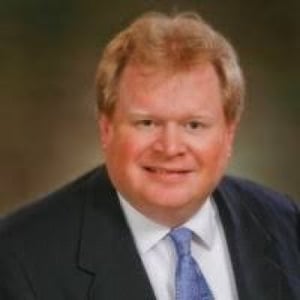
Principal Attorney, Woodring Law Firm
Mr. Daniel Woodring has lived in Florida for almost 30 years, but was born in Philadelphia, Pennsylvania. In Florida, he has lived and worked in Pensacola, Clearwater, Jacksonville, Gainesville and Tallahassee. His wife Jean, who is also an attorney, was born in Miami, and grew up in Ft. Myers. They have a son and a daughter.
Mr. Woodring is recognized as a Florida Super Lawyer, an honor given to fewer than 5% of Florida Attorneys, and holds an Avvo “Superb” rating. Mr. Woodring also has an AV Preeminent® Peer Reviewrating. AV®, AV Preeminent® are registered certification marks of Reed Elsevier Properties Inc., used in accordance with the Martindale-Hubbell certification procedures, standards and policies, and the ratings are explained at www.martindale.com/ratings.
Mr. Woodring is a member of the Florida and Georgia Bars, and is admitted to practice before the Florida Federal Southern, Middle and Northern District Courts, the Eleventh Circuit Court of Appeals and the U.S. Supreme Court. He has worked at the trial level on cases in many of Florida’s 20 judicial circuits, in addition to cases in state administrative tribunals. He has argued cases at the Florida Supreme Court and Florida District Courts of Appeal, and has briefed cases at the U.S. Supreme Court.
He graduated from the University of Florida, College of Law with a Juris Doctorate, Cum Laude, and received his B.A. degree from Clearwater Christian College, Summa Cum Laude.
After law school, Mr. Woodring was in private practice doing general civil and appellate work. He then left for a two year appellate clerkship at the First District Court of Appeal. During his time at the court, he worked on cases including, but not limited to: criminal; family law; administrative law; workers’ compensation; business and civil law; constitutional law.
Mr. Woodring next worked as a counsel in the Executive Office of the Governor, Office of the General Counsel. During his time in Governor Bush’s Legal Office he had diverse responsibilities, including oversight and strategic litigation management of significant legal matters at numerous Governor’s agencies, including the Department of Education, Department of Management Services, Department of Business and Professional Regulation, Department of Health, Agency for Health Care Administration, Department of Children and Families, Department of Community Affairs, Department of Elder affairs, Agency for Workforce Innovation, Department of Transportation, and the Department of State.
He was also legally responsible for topics as disparate as emergency operations; advising the Governor on the selection of judges; implementation of civil service reform; reform of workers’ compensation; budget and appropriation matters; Indian gaming law; and legally advising the Florida Cabinet sitting in its many capacities, such as the Florida Land and Water Adjudicatory Commission.
Mr. Daniel Woodring was then offered the opportunity to be General Counsel for the Florida Department of Education, which encompassed Pre-K though 12th grade, community colleges(now State colleges) and the Florida University System. He was also the first General Counsel for the Florida Board of Governors, when that Board was constitutionally created to manage the State University System.
During almost five years at the Department of Education, Mr. Woodring advised and litigated on matters including, but not limited to: constitutional challenges to Florida’s education programs, including Opportunity Scholarships and the charter school approval and appeal process; doing away with race as a preference in university admissions and state contracting; teacher and professional discipline cases; union, labor and employment matters; state procurement and bid protest proceedings; administrative rule challenges and rule making proceedings; IDEA and Section 504 proceedings; public records, government in the sunshine and ethical matters; contract negotiations and disputes.
Since 2007, Mr. Woodring has been back in private practice as the principal of the Woodring Law Firm, located in Tallahassee, Florida, but with a statewide practice, including Pensacola, Jacksonville, Gainesville, Tampa Bay, Orlando, West Palm Beach, Ft. Myers, Ft. Lauderdale, and Miami. He concentrates his practice on appeals; constitutional cases in both state and federal court; education law matters, including charter school represention; Business litigation; and state administrative matters, including state procurement, regulation and licensing, rule challenges and proposed rule making, although he also handles cases in many other areas.
Please look at the individual practice areas on the left menu for more information.
Mr. Woodring is a member of the Appellate, Administrative, and Governmental Lawyer sections of the Florida Bar and served as Chair of the Education Law Committee of the Florida Bar.
Professor of International Relations, Stanford University
Stephen D. Krasner is the Graham H. Stuart Professor of International Relations at Stanford, and a Senior Fellow at the Freeman Spogli Institute, the Hoover Institution, and at SIEPR.
From February 2005 to April 2007 he was Director of the Policy Planning Staff at the Department of State. In 2002 he served as Director for Governance and Development at the National Security Council. He is a member of the Board of Directors of the United States Institute of Peace, and was a member of the Foreign Policy Advisory Board of the Department of State from 2012 to 2014. He received his B.A. from Cornell in 1963, M.A. from Columbia in 1967, and Ph.D. from Harvard in 1972.
Before coming to Stanford in 1981 he taught at Harvard and UCLA. He was the Chair of the Political Science Department from 1984 until 1991, Senior Associate Dean for the Social Sciences from 2010-2013, and Deputy Director of the Freeman Spogli Institute from 2007 to 2013. He edited International Organization from 1986 to 1992. His writings have dealt primarily with the political determinants of international economic relations, American foreign policy, and sovereignty. He is currently investigating the impact of external actors on domestic authority structures in weak states.
He was a fellow at the Center for Advanced Studies in the Behavioral Science in 1987-88 and at the Wissenschaftskolleg zu Berlin 2000-2001. He has been a Marcator Fellow at the Free University Berlin since 2014. Professor Krasner is a Fellow of the American Academy of Arts and Sciences and a Member of the Council on Foreign Relations.
Professor Emeritus of Law, Antonin Scalia Law School, George Mason University
Jeremy A. Rabkin is a Professor Emeritus of Law at the Antonin Scalia Law School, George Mason University. Before joining the faculty in June 2007, he was for over two decades a professor in the Department of Government at Cornell University. Professor Rabkin serves on the board of directors of the Center for Individual Rights, a public interest law firm based in Washington, D.C. Previously he was a board member of the U.S. Institute of Peace and the board of academic advisors of the American Enterprise Institute.
Professor Rabkin’s books include Law Without Nations? (Princeton University Press, 2005). He authored “If You Need a Friend, Don’t Call a Cosmopolitan,” a chapter in Varieties of Sovereignty and Citizenship (Sigal R. Ben-Porath & Rogers M. Smith eds., University of Pennsylvania Press, 2012). His articles have appeared in major law reviews and political science journals and his journalistic contributions in a range of magazines and newspapers, including the Washington Post and the Wall Street Journal.
Warren Distinguished Professor of Law, University of San Diego School of Law
Michael D. Ramsey is Warren Distinguished Professor of Law at the University of San Diego School of Law, where he teaches and writes in the areas of Constitutional Law, Foreign Relations Law and International Law. He is the author of The Constitution’s Text in Foreign Affairs (Harvard University Press), co-editor of International Law in the U.S. Supreme Court: Continuity and Change (Cambridge University Press), and co-author of two casebooks, Transnational Law and Practice (2d ed., Aspen) and International Business Transactions: A Problem-Oriented Coursebook (14th ed., West). His scholarly articles have appeared in publications such as the Yale Law Journal, the University of Chicago Law Review, the Georgetown Law Journal and the American Journal of International Law. He received his B.A. magna cum laude from Dartmouth College and his J.D. summa cum laude from Stanford Law School. Prior to teaching, he served as a judicial clerk for Judge J. Clifford Wallace of the United States Court of Appeals for the Ninth Circuit and for Justice Antonin Scalia of the United States Supreme Court, and practiced law with the law firm of Latham & Watkins, where he specialized in international finance and investment. He has taught as a visiting professor at the University of California, San Diego, in the Department of Political Science and at the University of Paris – Sorbonne, in the Department of Comparative Law.
Counsel, Latham & Watkins LLP
Joshua Wu, former Deputy Assistant Attorney General (DAAG) for Appellate and Review in the Tax Division of the US Department of Justice (DOJ), counsels and advocates for companies and high net worth individuals on all aspects of tax controversies and litigation.
Mr. Wu advises on issues ranging from tax accounting disputes, to corporate and partnership transactional issues, international questions, employee benefits matters, and tax exempt controversies. He brings a unique knowledge base and skillset to his clients, drawing on his experience both in senior leadership roles in the DOJ’s Tax Division and in private practice.
Most recently, when Mr. Wu served as DAAG, he oversaw virtually all appeals in civil federal tax cases throughout the country and managed a 40-lawyer team. He also represented the United States in appellate oral arguments, evaluated and approved significant civil settlement offers, and furnished advice to the Tax Division’s trial sections in complex tax cases.
Mr. Wu previously served as DAAG for Policy and Planning, where he led the Office of Management and Administration (OMA) at DOJ. In that role, he led the operational functions of the Tax Division, and led the Office of Legislation and Policy, which works with the Department of Treasury, the IRS, and other agencies on legislative, regulatory, and policy initiatives. Prior to his government service, Mr. Wu was a partner at a large international law firm. He also worked as an associate at Latham.
Professor Emeritus, Paul M. Hebert Law Center, Louisiana State University
In memoriam
Dr. John Baker is Professor Emeritus of Law, and previously the Dale E. Bennett Professor of Law, at Louisiana State University Law School. He is currently Visiting Professor at Peking University School of Transnational Law (via Zoom) and has been Visiting Professor at The Center for the Constitution, Georgetown Law School (2013-2020). He has also been a Visiting Fellow at Oriel College, the University of Oxford (2012-2014) and taught at Blackfriars Hall, Oxford in 2014. Dr. Baker has also been an adjunct Fellow at the Heritage Foundation (Spring, 2008) and a Distinguished Scholar at the Catholic University of America Law School (2011-12). He has taught at Tulane Law School, George Mason Law School, Pepperdine Law School, New York Law School, Hong Kong University, and the University of Dallas, School of Management and also taught and/or lectured in 17 foreign countries. Notable among his foreign visits are the
following: Visiting Professor at the University of Lyon III (France) (1999-2011); Visiting Professor at the Universidad de los Andes, Chile (2012), as a Fulbright Specialist (2006); and a Fulbright Scholar at various universities in the Philippines. Dr. Baker received his J.D., with honors, from the University of Michigan Law School and his B.A., magna cum laude, from the University of Dallas. He also earned a Ph.D. in Political Thought from the University of London. Baker has taught over a dozen different subjects, mostly courses in public law. His main areas of interest are Constitutional Law (particularly federalism and separation of powers), Criminal Law, Anti-Terrorism Law, International Law, Health Care Law, Mediation, and Comparative Law.
In addition to law review articles and book chapters, Dr. Baker’s academic publications include Hall's Criminal Law: Cases and Materials (with Benson, Force and George; 5th ed. Michie, 1993); An Introduction to the Law of the United States (ed. with Levasseur; University Press of America, 1992). He has also published on Forbes.com, FoxNews.com, in The Washington Times, and a number of times in The Wall Street Journal. He argues in federal court, including two oral arguments in the U.S. Supreme Court. For many years, he co-taught courses for the Federalist Society on separation of powers with the late Supreme Court Justice Antonin Scalia. In September 2016, he co-taught a Supreme Court seminar in China with Justice Samuel Alito. Following law school, he served as a law clerk in federal district court and as an assistant district attorney in New Orleans before joining LSU in 1975. While a professor, he has been as a consultant to USAID, USIA (since rolled into the State Department), the Justice Department, the U.S. Senate Judiciary Subcommittee on Separation of Powers, and the Office of Planning in the White House. He served on an ABA Task Force which issued the report, The Federalization of Crime (1998) and later as a consultant to the “Bi-Partisan Task Force on the Over- federalization of Crime” (2012-2014) created by the U.S. House Judiciary Subcommittee on Crime. Dr. Baker was a co-founder of the first iteration (1995) of Stratfor Inc., a global intelligence agency. He co-authored its first book: The Intelligence Edge (with Friedman, Friedman and Chapman; Crown Books/Random House 1997). In 2022, he began a short, weekly video podcast available on YouTube and Rumble, The Baker Brief.

President Biden's Executive Order on Foreign-Controlled Apps
Matthew Feeney, Jennifer Hay, Jamil N. Jaffer, Margaret A. Peterlin
In June, President Biden revoked a Trump-era executive order that sought to ban TikTok and...
Taxation by International Consent?
Stephen Krasner, Jeremy A. Rabkin, Michael D. Ramsey, Joshua Wu
Finance ministers from leading industrial states have been trying, this summer, to work out an...
Reasoned Argument Book Club: The Declaration of Independence [Session 2]
The Declaration of Independence: How much of the Declaration is still largely believed?
Reasoned Argument Book Club: The Declaration of Independence [Session 2]
John S. Baker
REASONED ARGUMENT: THE COUNTER TO CANCEL CULTURE American Argument Prior to, During, and Following theFederalist-Antifederalist...
Back to School: Know Your Rights; Know Your Options
Polk County Lawyers Chapter
Winter Haven, FLTopics
The Arrival of the Federal Computer Commission?
Should “Big Tech” be required to contribute to the Universal Service Fund (USF) in order...
Taxation by International Consent?
TeleforumReasoned Argument Book Club: Introduction [Session 1]
Do we live in a Democracy, a Republic, or a blended Democratic Republic?
Reasoned Argument Book Club: Introduction [Session 1]
John S. Baker
Session 1 Readings:Our Republican Constitution, pp. 18-28.Novus Ordo Seclorum, pp. 1-8. REASONED ARGUMENT: THE COUNTER...
Protecting Economic Liberty in the Federal Courts: Theory, Precedent, Practice
Adam F. Griffin
The 14th Amendment meaningfully protects economic liberty. While this protection was originally housed in the...