
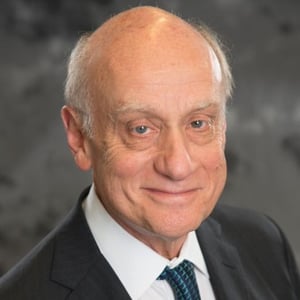
Partner, Capitol Counsel LLC
Martin B. Gold is a partner with Capitol Counsel LLC. In service to our clients, he brings over 40 years of experience, both on Senate staff and in private practice. He is a recognized authority on matters of congressional rules and parliamentary strategies.
Gold is the author of “Senate Procedure and Practice,” a widely consulted primer on Senate Floor procedure, now in its third edition (2013). He frequently advises in offices of Senators and serves on the adjunct faculty at George Washington University. Before domestic business, professional and academic audiences, he often speaks about Congress as well as political and public policy developments.
Gold has been a guest lecturer at Tsinghua University and the Beijing Foreign Studies University, Moscow State University, the Moscow State Institute of International Relations, the State Parliament of Ukraine, and the Federation Council of the Russian Federal Assembly. He published in China “The Grand Institution: A Profile of the United States Senate.” (2011)
Between 1972 to 1982, Gold worked in senior staff positions at the Senate, culminating as counsel to Senate Majority Leader Howard H. Baker, Jr. (R-TN). Gold began his career as a legal assistant to Senator Mark O. Hatfield (R-OR) and later served as republican staff director and counsel to the Senate Rules Committee and as a professional staff member on the Senate Select Committee on Intelligence. In 2003, Gold was floor adviser and counsel to Senate Majority Leader Bill Frist (R-TN).
Gold was president of the lobbying firm Gold and Liebengood, which he co-founded in 1984. He joined the government relations firm, Johnson, Smith, Dover, Kitzmiller & Stewart, Inc. in 1995. Later, Gold co-founded The Legislative Strategies Group, a leading government affairs practice.
In 2004, Gold became a partner at Covington & Burling LLC, one of the nation’s most prominent law firms. While co-chair of Covington’s government affairs practice, Gold was instrumental in securing adoption of congressional resolutions expressing regret for the Chinese exclusion laws. For this pro bono project, he was awarded the Champion of Justice Award by the Chinese American Citizens Alliance. In 2012, he authored “Forbidden Citizens: Chinese Exclusion and the U.S. Congress: A Legislative History.” His book was awarded the Benjamin Franklin Gold Medal by the Independent Book Publishers of America and was named an Honor Book by the Asian and Pacific American Librarians Association. At the end of 2016, Gold published “A Legislative History of the Taiwan Relations Act; Bridging the Strait.”
In 2006, President George W. Bush appointed Gold to serve as a member of the United States Commission for the Preservation of America’s Heritage Abroad. On the commission, Gold commemorated the work of D. Ho Feng Shan, a Chinese diplomat who, while serving as a consular officer in Austria, issued visas to Shanghai to save several thousand Jews from Nazi persecution. In 2008, the Senate adopted a resolution honoring Dr. Ho’s selfless heroism.
Gold is a member of the Cosmos Club in Washington, D.C. He was elected in 2000 in recognition for excellence in the field of political science.
Gold is a graduate of the Washington College of Law at The American University and serves on the Board of the Friends of the Law Library of the Library of Congress.
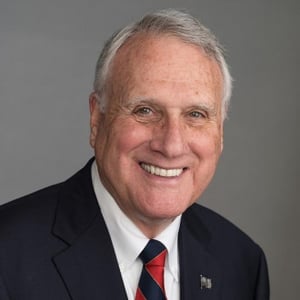
Senior Advisor, Covington & Burling
Senator Jon Kyl advises companies on domestic and international policies that influence U.S. and multi-national businesses and assists corporate clients on tax, health care, national security, and intellectual property matters, among others.
Jon served in the U.S. Senate from 1995 to 2013, retiring as the second-highest ranking Republican senator. He returned to the Senate in September 2018 after being appointed to succeed the late John McCain, and retired again at the end of 2018.
During Jon’s 26 years in Congress, he built a reputation for mastering the complexities of legislative policy and coalition building, first in the House of Representatives and then in the Senate. In 2010, Time magazine called him one of the 100 most influential people in the world, noting his "encyclopedic knowledge of domestic and foreign policy, and his hard work and leadership" and his "power to persuade."
Jon sat on the powerful Senate Finance Committee and was the ranking Republican on the Senate Judiciary Committee’s Subcommittee on Crime and Terrorism. A member of the Republican Leadership for well over a decade, Jon chaired the Senate Republican Policy Committee and the Senate Republican Conference, before becoming Senate Republican Whip. In filling Senator McCain’s seat, he served on the Armed Services and Homeland Security Committees.

Partner, Sidley Austin
Peter Roskam, a former six-term U.S. Representative from Illinois, provides strategic counsel and guidance to clients whose business needs involve law, government, media and public policy. He also serves on the firm’s COVID-19 Task Force. Peter held some of the most significant positions in the U.S. House of Representatives during his tenure (2007–2019). In addition to serving in the House Leadership as the Chief Deputy Whip, he chaired three major subcommittees of the House Ways and Means Committee. As Chairman of the Subcommittee on Tax Policy, he was a chief architect of the historic 2017 overhaul of the nation’s tax code. As Chairman of Subcommittee on Health, he began the “Medicare Red Tape Relief Project,” led a series of hearings addressing the opioid crisis and authored several bills to make opioid addiction treatment more accessible. In addition, as the Chairman of the Subcommittee on Oversight, he spearheaded efforts to increase supervision of the Internal Revenue Service and championed efforts to overhaul the IRS’s civil asset forfeiture program.
Peter also served on the House Financial Services Committee, including the Capital Markets, Insurance and Government Sponsored Enterprises Subcommittee and the Domestic and International Monetary Policy, Trade and Technology Subcommittee. He was a member of the Select Committee on Events surrounding the 2012 Terrorist Attack in Benghazi, Libya.
He chaired the U.S. House Democracy Partnership, a bipartisan commission supporting emerging democracies abroad and co-chaired the Korea Caucus, the India Caucus, the Bipartisan Task Force to Combat Anti-Semitism and the Republican Israel Caucus.
Before his work on Capitol Hill in Washington, Peter represented Chicago’s western suburbs for 13 years in the Illinois House of Representatives and the Illinois State Senate where he developed a close working relationship with then-state Sen. Barack Obama. During his tenure in the state legislature he also was in the private practice of law in Illinois.
Partner, Capitol Counsel LLC
Martin B. Gold is a partner with Capitol Counsel LLC. In service to our clients, he brings over 40 years of experience, both on Senate staff and in private practice. He is a recognized authority on matters of congressional rules and parliamentary strategies.
Gold is the author of “Senate Procedure and Practice,” a widely consulted primer on Senate Floor procedure, now in its third edition (2013). He frequently advises in offices of Senators and serves on the adjunct faculty at George Washington University. Before domestic business, professional and academic audiences, he often speaks about Congress as well as political and public policy developments.
Gold has been a guest lecturer at Tsinghua University and the Beijing Foreign Studies University, Moscow State University, the Moscow State Institute of International Relations, the State Parliament of Ukraine, and the Federation Council of the Russian Federal Assembly. He published in China “The Grand Institution: A Profile of the United States Senate.” (2011)
Between 1972 to 1982, Gold worked in senior staff positions at the Senate, culminating as counsel to Senate Majority Leader Howard H. Baker, Jr. (R-TN). Gold began his career as a legal assistant to Senator Mark O. Hatfield (R-OR) and later served as republican staff director and counsel to the Senate Rules Committee and as a professional staff member on the Senate Select Committee on Intelligence. In 2003, Gold was floor adviser and counsel to Senate Majority Leader Bill Frist (R-TN).
Gold was president of the lobbying firm Gold and Liebengood, which he co-founded in 1984. He joined the government relations firm, Johnson, Smith, Dover, Kitzmiller & Stewart, Inc. in 1995. Later, Gold co-founded The Legislative Strategies Group, a leading government affairs practice.
In 2004, Gold became a partner at Covington & Burling LLC, one of the nation’s most prominent law firms. While co-chair of Covington’s government affairs practice, Gold was instrumental in securing adoption of congressional resolutions expressing regret for the Chinese exclusion laws. For this pro bono project, he was awarded the Champion of Justice Award by the Chinese American Citizens Alliance. In 2012, he authored “Forbidden Citizens: Chinese Exclusion and the U.S. Congress: A Legislative History.” His book was awarded the Benjamin Franklin Gold Medal by the Independent Book Publishers of America and was named an Honor Book by the Asian and Pacific American Librarians Association. At the end of 2016, Gold published “A Legislative History of the Taiwan Relations Act; Bridging the Strait.”
In 2006, President George W. Bush appointed Gold to serve as a member of the United States Commission for the Preservation of America’s Heritage Abroad. On the commission, Gold commemorated the work of D. Ho Feng Shan, a Chinese diplomat who, while serving as a consular officer in Austria, issued visas to Shanghai to save several thousand Jews from Nazi persecution. In 2008, the Senate adopted a resolution honoring Dr. Ho’s selfless heroism.
Gold is a member of the Cosmos Club in Washington, D.C. He was elected in 2000 in recognition for excellence in the field of political science.
Gold is a graduate of the Washington College of Law at The American University and serves on the Board of the Friends of the Law Library of the Library of Congress.
Senior Advisor, Covington & Burling
Senator Jon Kyl advises companies on domestic and international policies that influence U.S. and multi-national businesses and assists corporate clients on tax, health care, national security, and intellectual property matters, among others.
Jon served in the U.S. Senate from 1995 to 2013, retiring as the second-highest ranking Republican senator. He returned to the Senate in September 2018 after being appointed to succeed the late John McCain, and retired again at the end of 2018.
During Jon’s 26 years in Congress, he built a reputation for mastering the complexities of legislative policy and coalition building, first in the House of Representatives and then in the Senate. In 2010, Time magazine called him one of the 100 most influential people in the world, noting his "encyclopedic knowledge of domestic and foreign policy, and his hard work and leadership" and his "power to persuade."
Jon sat on the powerful Senate Finance Committee and was the ranking Republican on the Senate Judiciary Committee’s Subcommittee on Crime and Terrorism. A member of the Republican Leadership for well over a decade, Jon chaired the Senate Republican Policy Committee and the Senate Republican Conference, before becoming Senate Republican Whip. In filling Senator McCain’s seat, he served on the Armed Services and Homeland Security Committees.
Partner, Sidley Austin
Peter Roskam, a former six-term U.S. Representative from Illinois, provides strategic counsel and guidance to clients whose business needs involve law, government, media and public policy. He also serves on the firm’s COVID-19 Task Force. Peter held some of the most significant positions in the U.S. House of Representatives during his tenure (2007–2019). In addition to serving in the House Leadership as the Chief Deputy Whip, he chaired three major subcommittees of the House Ways and Means Committee. As Chairman of the Subcommittee on Tax Policy, he was a chief architect of the historic 2017 overhaul of the nation’s tax code. As Chairman of Subcommittee on Health, he began the “Medicare Red Tape Relief Project,” led a series of hearings addressing the opioid crisis and authored several bills to make opioid addiction treatment more accessible. In addition, as the Chairman of the Subcommittee on Oversight, he spearheaded efforts to increase supervision of the Internal Revenue Service and championed efforts to overhaul the IRS’s civil asset forfeiture program.
Peter also served on the House Financial Services Committee, including the Capital Markets, Insurance and Government Sponsored Enterprises Subcommittee and the Domestic and International Monetary Policy, Trade and Technology Subcommittee. He was a member of the Select Committee on Events surrounding the 2012 Terrorist Attack in Benghazi, Libya.
He chaired the U.S. House Democracy Partnership, a bipartisan commission supporting emerging democracies abroad and co-chaired the Korea Caucus, the India Caucus, the Bipartisan Task Force to Combat Anti-Semitism and the Republican Israel Caucus.
Before his work on Capitol Hill in Washington, Peter represented Chicago’s western suburbs for 13 years in the Illinois House of Representatives and the Illinois State Senate where he developed a close working relationship with then-state Sen. Barack Obama. During his tenure in the state legislature he also was in the private practice of law in Illinois.

Senior Attorney, Institute of Justice
Kirby Thomas West is a senior attorney at the Institute for Justice, where she is also the co-director of IJ’s National Initiative to End Forfeiture Abuse. She joined IJ in 2018 and litigates cases defending property rights, free speech, and educational choice.
In her time at IJ, Kirby has launched challenges to unconstitutional civil forfeiture and impoundment schemes. She has also litigated educational choice cases, including as part of the IJ team that litigated Carson v. Makin, a landmark educational choice case decided in 2022.
In 2024, Kirby was a Wasserstein Public Interest Fellow at Harvard Law School.
Before joining IJ, Kirby Was an attorney at Baker Botts LLP, in Washington D.C. She clerked for Judge Dennis Shedd of the U.S. Court of Appeals for the Fourth Circuit.
Kirby received her law degree cum laude from Harvard Law School in 2015.
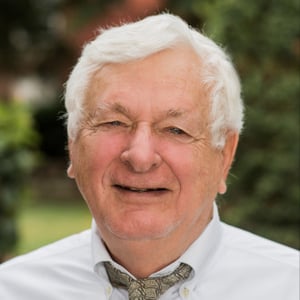
Lyle T. Alverson Professor of Law, George Washington University Law School
Professor Pierce is author of over twenty books and 130 articles on administrative law, government regulation, and the effects of various forms of government intervention on the performance of markets. His books and articles have been cited in hundreds of judicial opinions, including over a dozen opinions of the U.S. Supreme Court.
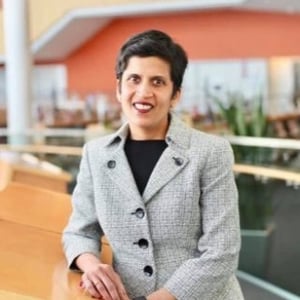
Associate Dean for Diversity, Equity, and Inclusion, Samuel Weiss Faculty Scholar and Clinical Professor of Law, and Director, Center for Immigrants' Rights Clinic, The Pennsylvania State University
Shoba Sivaprasad Wadhia is Associate Dean for Diversity, Equity, and Inclusion; the Samuel Weiss Faculty Scholar; and Clinical Professor of Law at Penn State Law in University Park. Her research focuses on the role of prosecutorial discretion in immigration law and the intersections of race, national security, and immigration. Her work has been published in numerous law journals, including Duke Law Journal, Emory Law Journal, Texas Law Review, Washington and Lee Law Review, Harvard Latino Law Review, Administrative Law Review, Howard Law Journal, Georgetown Immigration Law Journal, and Columbia Journal of Race and Law. Wadhia is the author of two award-winning books with New York University Press: Beyond Deportation: The Role of Prosecutorial Discretion in Immigration Cases (2015) and Banned: Immigration Enforcement in the Time of Trump (2019). She is also the author of Immigration and Nationality Law: Problems and Solutions, (w. Steve Yale-Loehr and Lenni Benson), published by Carolina Academic Press.
Wadhia’s scholarship has been cited in dozens of law journals and by numerous federal circuit courts, including Judge Richard Posner (article on deferred action), Judge Paul J. Watford (article on the role of discretion in speed deportation), and Judge Kim McLane Wardlaw (“See generally” citation to book Beyond Deportation), Judge Julius N. Richardson (co-authored article and Chevron deference and immigration), and Judge Andrew S. Oldham (co-authored article on Chevron deference and immigration). She serves as the inaugural Editor-In-Chief of the American Immigration Lawyers Association (AILA) Law Journal, a partnership between AILA and Fastcase. In 2019, she served as the Enlund Scholar In Residence at DePaul University School of Law. In 2019, Wadhia testified before Congress on the historical role of prosecutorial discretion and deferred action in immigration cases.
Wadhia has written or been quoted by numerous media outlets, including New York Times, USA Today, Los Angeles Times, Philadelphia Inquirer, The Hill, SCOTUS blog, blog of the Harvard Law Review, American Constitution Society, Yale Journal on Regulation’s Notice & Comment, and Immigration Law Professors Blog. She has also served as an expert witness, lead author, or co-counsel in connection with Deferred Action for Childhood Arrivals (DACA), the asylum ban, the travel ban, and prosecutorial discretion more generally.
At Penn State Law, Professor Wadhia teaches doctrinal courses in immigration and asylum and refugee law. She is also the founder/director of the Center for Immigrants’ Rights Clinic (CIRC), where she supervises students in three areas: 1) community outreach; 2) legal support in individual immigration cases; and 3) policy work for institutional clients. CIRC has earned a national reputation for its high-quality work product and impact in the community. 2018 marked the 10-year anniversary of CIRC. CIRC was honored with the Excellence in Legal Advocacy Award in 2017 by the American-Arab Anti-Discrimination Committee and named legal organization of the year in 2019 by the Pennsylvania Immigration Resource Center.
Prior to joining Penn State, Professor Wadhia was deputy director for legal affairs at the National Immigration Forum in Washington, D.C., where she provided legal and policy expertise on multiple legislative efforts, including the creation of the Department of Homeland Security, comprehensive immigration reform, immigration enforcement, and immigration policy post 9-11. Wadhia has also been an associate with the immigration law firm, Maggio Kattar of P.C. in Washington, D.C., where she represented individuals and families in asylum, deportation, family, and employment-based immigration.
Wadhia has received many awards for her scholarship, teaching, and service, including Pro Bono Attorney of the Year by the American-Arab Anti-Discrimination Committee in 2003, leadership awards by the Department of Homeland Security’s Office of Civil Rights and Civil Liberties and Office of the Inspector General in 2008, 2017 Honoree by the National Immigration Project, Arnold Addison Award for Town and Gown Relations by the Borough of State College in 2019, and the 2019 Elmer Friend Excellence in Teaching Award by the American Immigration Lawyers Association. In 2020, Wadhia received the university-wide Rosemary Schraer Mentoring Award and was named a Fastcase 50 Awardee, which honors 50 of “the law’s smartest, most courageous innovators, techies, visionaries, & leaders.”

Professor of Law, University of Michigan Law School
Christopher J. Walker is a Professor of Law at the University of Michigan. Prior to joining Michigan law faculty in 2022, he spent a decade teaching at The Ohio State University Moritz College of Law. He previously clerked for Justice Anthony Kennedy of the U.S. Supreme Court, worked on the Civil Appellate Staff at the U.S. Department of Justice, and served on the Senate Judiciary Committee staff for the Gorsuch Supreme Court confirmation. Professor Walker’s research focuses on administrative law, regulation, and law and policy at the agency level. Outside the law school, he chaired the American Bar Association’s Section of Administrative Law and Regulatory Practice in 2020-21 and served as one of forty Public Members of the Administrative Conference of the United States from 2016-2022, and he continues to serve in both organizations in various capacities. He also works of counsel at the U.S. Chamber Litigation Center. In 2022, he received the Federalist Society’s Joseph Story Award.
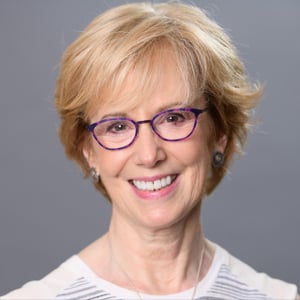
Director, GW Regulatory Studies Center & Distinguished Professor of Practice, Trachtenberg School of Public Policy & Public Administration, The George Washington University
Susan Dudley is the Founder and Director of the George Washington University Regulatory Studies Center, established in 2009 to raise awareness of regulations’ effects and improve regulatory policy through research, education, and outreach. She is also a distinguished professor of practice in the Trachtenberg School of Public Policy and Public Administration. She is past-president of the Society for Benefit Cost Analysis, a senior fellow of the Administrative Conference of the United States, and on the Regulatory Transparency Project Regulatory Practice Working Group. Her book, Regulation: A Primer, with Jerry Brito, is available on Amazon.com.
From April 2007 through January 2009, Professor Dudley served as the Presidentially-appointed Administrator of the Office of Information and Regulatory Affairs in the U.S. Office of Management and Budget and was responsible for the review of draft executive branch regulations under Executive Order 12866, the collection of federal-government-wide information under the Paperwork Reduction Act, the development and implementation of government-wide policies in the areas of information policy, privacy, and statistical policy, and international regulatory cooperation efforts.
Prior to OIRA, she directed the Regulatory Studies Program at the Mercatus Center at George Mason University, and taught courses on regulation at the George Mason University School of Law. Earlier in her career, Professor Dudley served as an economist at OIRA, as well as the Environmental Protection Agency and the Commodity Futures Trading Commission. She was also a consultant to government and private clients at Economists Incorporated. She holds a Master of Science degree from the Sloan School of Management at MIT and a Bachelor of Science degree (summa cum laude) in Resource Economics from the University of Massachusetts, Amherst.
Partner, Capitol Counsel LLC
Martin B. Gold is a partner with Capitol Counsel LLC. In service to our clients, he brings over 40 years of experience, both on Senate staff and in private practice. He is a recognized authority on matters of congressional rules and parliamentary strategies.
Gold is the author of “Senate Procedure and Practice,” a widely consulted primer on Senate Floor procedure, now in its third edition (2013). He frequently advises in offices of Senators and serves on the adjunct faculty at George Washington University. Before domestic business, professional and academic audiences, he often speaks about Congress as well as political and public policy developments.
Gold has been a guest lecturer at Tsinghua University and the Beijing Foreign Studies University, Moscow State University, the Moscow State Institute of International Relations, the State Parliament of Ukraine, and the Federation Council of the Russian Federal Assembly. He published in China “The Grand Institution: A Profile of the United States Senate.” (2011)
Between 1972 to 1982, Gold worked in senior staff positions at the Senate, culminating as counsel to Senate Majority Leader Howard H. Baker, Jr. (R-TN). Gold began his career as a legal assistant to Senator Mark O. Hatfield (R-OR) and later served as republican staff director and counsel to the Senate Rules Committee and as a professional staff member on the Senate Select Committee on Intelligence. In 2003, Gold was floor adviser and counsel to Senate Majority Leader Bill Frist (R-TN).
Gold was president of the lobbying firm Gold and Liebengood, which he co-founded in 1984. He joined the government relations firm, Johnson, Smith, Dover, Kitzmiller & Stewart, Inc. in 1995. Later, Gold co-founded The Legislative Strategies Group, a leading government affairs practice.
In 2004, Gold became a partner at Covington & Burling LLC, one of the nation’s most prominent law firms. While co-chair of Covington’s government affairs practice, Gold was instrumental in securing adoption of congressional resolutions expressing regret for the Chinese exclusion laws. For this pro bono project, he was awarded the Champion of Justice Award by the Chinese American Citizens Alliance. In 2012, he authored “Forbidden Citizens: Chinese Exclusion and the U.S. Congress: A Legislative History.” His book was awarded the Benjamin Franklin Gold Medal by the Independent Book Publishers of America and was named an Honor Book by the Asian and Pacific American Librarians Association. At the end of 2016, Gold published “A Legislative History of the Taiwan Relations Act; Bridging the Strait.”
In 2006, President George W. Bush appointed Gold to serve as a member of the United States Commission for the Preservation of America’s Heritage Abroad. On the commission, Gold commemorated the work of D. Ho Feng Shan, a Chinese diplomat who, while serving as a consular officer in Austria, issued visas to Shanghai to save several thousand Jews from Nazi persecution. In 2008, the Senate adopted a resolution honoring Dr. Ho’s selfless heroism.
Gold is a member of the Cosmos Club in Washington, D.C. He was elected in 2000 in recognition for excellence in the field of political science.
Gold is a graduate of the Washington College of Law at The American University and serves on the Board of the Friends of the Law Library of the Library of Congress.
Senior Advisor, Covington & Burling
Senator Jon Kyl advises companies on domestic and international policies that influence U.S. and multi-national businesses and assists corporate clients on tax, health care, national security, and intellectual property matters, among others.
Jon served in the U.S. Senate from 1995 to 2013, retiring as the second-highest ranking Republican senator. He returned to the Senate in September 2018 after being appointed to succeed the late John McCain, and retired again at the end of 2018.
During Jon’s 26 years in Congress, he built a reputation for mastering the complexities of legislative policy and coalition building, first in the House of Representatives and then in the Senate. In 2010, Time magazine called him one of the 100 most influential people in the world, noting his "encyclopedic knowledge of domestic and foreign policy, and his hard work and leadership" and his "power to persuade."
Jon sat on the powerful Senate Finance Committee and was the ranking Republican on the Senate Judiciary Committee’s Subcommittee on Crime and Terrorism. A member of the Republican Leadership for well over a decade, Jon chaired the Senate Republican Policy Committee and the Senate Republican Conference, before becoming Senate Republican Whip. In filling Senator McCain’s seat, he served on the Armed Services and Homeland Security Committees.
Partner, Sidley Austin
Peter Roskam, a former six-term U.S. Representative from Illinois, provides strategic counsel and guidance to clients whose business needs involve law, government, media and public policy. He also serves on the firm’s COVID-19 Task Force. Peter held some of the most significant positions in the U.S. House of Representatives during his tenure (2007–2019). In addition to serving in the House Leadership as the Chief Deputy Whip, he chaired three major subcommittees of the House Ways and Means Committee. As Chairman of the Subcommittee on Tax Policy, he was a chief architect of the historic 2017 overhaul of the nation’s tax code. As Chairman of Subcommittee on Health, he began the “Medicare Red Tape Relief Project,” led a series of hearings addressing the opioid crisis and authored several bills to make opioid addiction treatment more accessible. In addition, as the Chairman of the Subcommittee on Oversight, he spearheaded efforts to increase supervision of the Internal Revenue Service and championed efforts to overhaul the IRS’s civil asset forfeiture program.
Peter also served on the House Financial Services Committee, including the Capital Markets, Insurance and Government Sponsored Enterprises Subcommittee and the Domestic and International Monetary Policy, Trade and Technology Subcommittee. He was a member of the Select Committee on Events surrounding the 2012 Terrorist Attack in Benghazi, Libya.
He chaired the U.S. House Democracy Partnership, a bipartisan commission supporting emerging democracies abroad and co-chaired the Korea Caucus, the India Caucus, the Bipartisan Task Force to Combat Anti-Semitism and the Republican Israel Caucus.
Before his work on Capitol Hill in Washington, Peter represented Chicago’s western suburbs for 13 years in the Illinois House of Representatives and the Illinois State Senate where he developed a close working relationship with then-state Sen. Barack Obama. During his tenure in the state legislature he also was in the private practice of law in Illinois.

Partner, King & Spalding PLLC
Will Barnette is a partner in the Atlanta office of King & Spalding, where he is a member of the firm’s business litigation practice and class action defense group. During his 30-year career, Will has consistently led clients to successful outcomes in their most sensitive and high exposure class action, MDL, and related regulatory matters. From litigating high-stakes tobacco class actions at the turn of the century, to defending massive data breach litigation in the last decade, and winning several lucrative antitrust opt-out settlements more recently, Will has played a key role in much of the leading complex litigation of the era and led clients to tremendous success on both sides of the “v.” In particular, he has deep experience in litigating consumer, products, and antitrust class actions, commercial disputes, and managing internal investigations.
Prior to rejoining King & Spalding, where he worked earlier in his career, Will served as Associate General Counsel for The Home Depot and was a member of the company’s Legal Senior Leadership Team. As leader of The Home Depot’s commercial litigation team for more than ten years, he was responsible for the company’s most significant commercial and business litigation, which frequently challenged core aspects of the company’s business. During his 21-year tenure with The Home Depot, Will led the successful defense of several hundred class actions, created and led the company’s recovery litigation program, and successfully managed multiple high-profile investigations and favorably resolved significant related regulatory matters, including with the United States Department of Justice, the United States Environmental Protection Agency, and multi-state Attorney General groups.
A recognized thought leader in complex litigation, Will argued before the U.S. Supreme Court in the 2019 term—one of the few in-house counsel to do so. He received the Atlanta Business Chronicle’s Corporate Counsel Award for Advocacy in 2016 and has authored seven law review articles. His recent works, Misunderstanding Original Jurisdiction and There Is No Conservative Case for Class Actions, ranked among the top SSRN downloads in Federal Courts and Jurisdiction. He frequently lectures on class actions, MDL litigation, and internal investigations, and teaches Complex Litigation at the University of Tennessee Winston College of Law, where he earned the Harold C. Warner Outstanding Adjunct Professor Award in 2025.
Will chairs the Board of Georgians for Lawsuit Reform, which was instrumental in passing Georgia’s 2025 tort reform legislation. He also serves as Chair of the Class Actions Section for the State Bar of Georgia and is a former President of the Atlanta Legal Aid Society. Will played varsity college basketball at Sewanee.
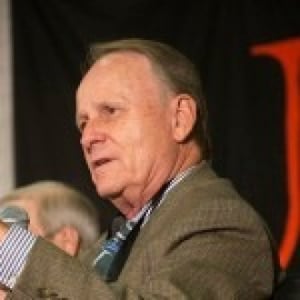
Professor Emeritus of Political Science and Professor Emeritus of Public Policy, Univ. of Maryland Baltimore County
George R. La Noue is Professor Emeritus of Political Science and Professor Emeritus of Public Policy at the University of Maryland Baltimore County. He has served as a trial expert in twenty cases involving public procurement preferences. For thirty years, he was Director of the Project on Civil Rights and Public Contracts at UMBC which recently contributed 289 public contracting disparity studies to the Library of Congress. He has been a consultant to nine governments and trial expert in thirty cases where the validity of disparity studies was at issue.
Prof. La Noue can be reached by email at glanoue@umbc.edu.
Director, GW Regulatory Studies Center & Distinguished Professor of Practice, Trachtenberg School of Public Policy & Public Administration, The George Washington University
Susan Dudley is the Founder and Director of the George Washington University Regulatory Studies Center, established in 2009 to raise awareness of regulations’ effects and improve regulatory policy through research, education, and outreach. She is also a distinguished professor of practice in the Trachtenberg School of Public Policy and Public Administration. She is past-president of the Society for Benefit Cost Analysis, a senior fellow of the Administrative Conference of the United States, and on the Regulatory Transparency Project Regulatory Practice Working Group. Her book, Regulation: A Primer, with Jerry Brito, is available on Amazon.com.
From April 2007 through January 2009, Professor Dudley served as the Presidentially-appointed Administrator of the Office of Information and Regulatory Affairs in the U.S. Office of Management and Budget and was responsible for the review of draft executive branch regulations under Executive Order 12866, the collection of federal-government-wide information under the Paperwork Reduction Act, the development and implementation of government-wide policies in the areas of information policy, privacy, and statistical policy, and international regulatory cooperation efforts.
Prior to OIRA, she directed the Regulatory Studies Program at the Mercatus Center at George Mason University, and taught courses on regulation at the George Mason University School of Law. Earlier in her career, Professor Dudley served as an economist at OIRA, as well as the Environmental Protection Agency and the Commodity Futures Trading Commission. She was also a consultant to government and private clients at Economists Incorporated. She holds a Master of Science degree from the Sloan School of Management at MIT and a Bachelor of Science degree (summa cum laude) in Resource Economics from the University of Massachusetts, Amherst.
Lyle T. Alverson Professor of Law, George Washington University Law School
Professor Pierce is author of over twenty books and 130 articles on administrative law, government regulation, and the effects of various forms of government intervention on the performance of markets. His books and articles have been cited in hundreds of judicial opinions, including over a dozen opinions of the U.S. Supreme Court.
Associate Dean for Diversity, Equity, and Inclusion, Samuel Weiss Faculty Scholar and Clinical Professor of Law, and Director, Center for Immigrants' Rights Clinic, The Pennsylvania State University
Shoba Sivaprasad Wadhia is Associate Dean for Diversity, Equity, and Inclusion; the Samuel Weiss Faculty Scholar; and Clinical Professor of Law at Penn State Law in University Park. Her research focuses on the role of prosecutorial discretion in immigration law and the intersections of race, national security, and immigration. Her work has been published in numerous law journals, including Duke Law Journal, Emory Law Journal, Texas Law Review, Washington and Lee Law Review, Harvard Latino Law Review, Administrative Law Review, Howard Law Journal, Georgetown Immigration Law Journal, and Columbia Journal of Race and Law. Wadhia is the author of two award-winning books with New York University Press: Beyond Deportation: The Role of Prosecutorial Discretion in Immigration Cases (2015) and Banned: Immigration Enforcement in the Time of Trump (2019). She is also the author of Immigration and Nationality Law: Problems and Solutions, (w. Steve Yale-Loehr and Lenni Benson), published by Carolina Academic Press.
Wadhia’s scholarship has been cited in dozens of law journals and by numerous federal circuit courts, including Judge Richard Posner (article on deferred action), Judge Paul J. Watford (article on the role of discretion in speed deportation), and Judge Kim McLane Wardlaw (“See generally” citation to book Beyond Deportation), Judge Julius N. Richardson (co-authored article and Chevron deference and immigration), and Judge Andrew S. Oldham (co-authored article on Chevron deference and immigration). She serves as the inaugural Editor-In-Chief of the American Immigration Lawyers Association (AILA) Law Journal, a partnership between AILA and Fastcase. In 2019, she served as the Enlund Scholar In Residence at DePaul University School of Law. In 2019, Wadhia testified before Congress on the historical role of prosecutorial discretion and deferred action in immigration cases.
Wadhia has written or been quoted by numerous media outlets, including New York Times, USA Today, Los Angeles Times, Philadelphia Inquirer, The Hill, SCOTUS blog, blog of the Harvard Law Review, American Constitution Society, Yale Journal on Regulation’s Notice & Comment, and Immigration Law Professors Blog. She has also served as an expert witness, lead author, or co-counsel in connection with Deferred Action for Childhood Arrivals (DACA), the asylum ban, the travel ban, and prosecutorial discretion more generally.
At Penn State Law, Professor Wadhia teaches doctrinal courses in immigration and asylum and refugee law. She is also the founder/director of the Center for Immigrants’ Rights Clinic (CIRC), where she supervises students in three areas: 1) community outreach; 2) legal support in individual immigration cases; and 3) policy work for institutional clients. CIRC has earned a national reputation for its high-quality work product and impact in the community. 2018 marked the 10-year anniversary of CIRC. CIRC was honored with the Excellence in Legal Advocacy Award in 2017 by the American-Arab Anti-Discrimination Committee and named legal organization of the year in 2019 by the Pennsylvania Immigration Resource Center.
Prior to joining Penn State, Professor Wadhia was deputy director for legal affairs at the National Immigration Forum in Washington, D.C., where she provided legal and policy expertise on multiple legislative efforts, including the creation of the Department of Homeland Security, comprehensive immigration reform, immigration enforcement, and immigration policy post 9-11. Wadhia has also been an associate with the immigration law firm, Maggio Kattar of P.C. in Washington, D.C., where she represented individuals and families in asylum, deportation, family, and employment-based immigration.
Wadhia has received many awards for her scholarship, teaching, and service, including Pro Bono Attorney of the Year by the American-Arab Anti-Discrimination Committee in 2003, leadership awards by the Department of Homeland Security’s Office of Civil Rights and Civil Liberties and Office of the Inspector General in 2008, 2017 Honoree by the National Immigration Project, Arnold Addison Award for Town and Gown Relations by the Borough of State College in 2019, and the 2019 Elmer Friend Excellence in Teaching Award by the American Immigration Lawyers Association. In 2020, Wadhia received the university-wide Rosemary Schraer Mentoring Award and was named a Fastcase 50 Awardee, which honors 50 of “the law’s smartest, most courageous innovators, techies, visionaries, & leaders.”
Professor of Law, University of Michigan Law School
Christopher J. Walker is a Professor of Law at the University of Michigan. Prior to joining Michigan law faculty in 2022, he spent a decade teaching at The Ohio State University Moritz College of Law. He previously clerked for Justice Anthony Kennedy of the U.S. Supreme Court, worked on the Civil Appellate Staff at the U.S. Department of Justice, and served on the Senate Judiciary Committee staff for the Gorsuch Supreme Court confirmation. Professor Walker’s research focuses on administrative law, regulation, and law and policy at the agency level. Outside the law school, he chaired the American Bar Association’s Section of Administrative Law and Regulatory Practice in 2020-21 and served as one of forty Public Members of the Administrative Conference of the United States from 2016-2022, and he continues to serve in both organizations in various capacities. He also works of counsel at the U.S. Chamber Litigation Center. In 2022, he received the Federalist Society’s Joseph Story Award.

Partner, Clement & Murphy, PLLC
Paul served as the 43rd Solicitor General of the United States from June 2005 until June 2008. Before his confirmation as Solicitor General, he served as Acting Solicitor General for nearly a year and as Principal Deputy Solicitor General for over three years.
Paul has argued over 100 cases before the United States Supreme Court, including McConnell v. FEC, Tennessee v. Lane, United States v. Booker, MGM v. Grokster, Hobby Lobby v. Burwell, Epic Systems Corp. v. Lewis, Rucho v. Common Cause, Facebook v. Duguid, and TransUnion v. Ramirez. Paul has argued more Supreme Court cases since 2000 than any lawyer in or out of government. He has also argued many important cases in the lower courts, including Walker v. Cheney, United States v. Moussaoui and NFL v. Brady.
Paul’s practice focuses on appellate matters, constitutional litigation and strategic counseling. He represents a broad array of clients in the Supreme Court and in federal and state appellate courts. Last year, for example, he successfully argued Supreme Court cases involving significant issues of energy regulation, statutory interpretation, state sovereign immunity and Article III standing, and successfully argued a trademark appeal in the Fourth Circuit, and a constitutional appeal before the en banc Eleventh Circuit.
Paul focuses on high-stakes appeals. In recent years, he successfully defended a $1.2 billion jury verdict for clients in a Tenth Circuit case, while securing the reversal of an over $2 billion jury verdict for another client in the Seventh Circuit and the approval of a nearly $1 billion dollar class action settlement in the Third Circuit. He has initiated major administrative law challenges and constitutional litigation against the federal government, such as the successful challenge to the HHS drug-pricing rule and threatened challenges that led to the withdrawal of the Treasury Department’s proposed cryptocurrency regulations. He also counsels clients on a variety of strategic legal questions, whether arising from pending legislation, government inquiries or ongoing litigation.
Paul has undertaken substantial pro bono engagements in the Supreme Court, such as twice successfully representing the defendant in Bond v. United States and successfully representing the Omaha Tribe in Nebraska v. Parker, the guardian ad litem in Adoptive Couple v. Baby Girl, the defendant in Sekhar v. United States, a high school football coach in Kennedy v. Bremerton, and the Little Sisters of the Poor. Paul’s pro bono representation also precipitated the federal government’s confession of error in United States v. Rojas.
Following law school, Paul clerked for Judge Laurence H. Silberman of the U.S. Court of Appeals for the D.C. Circuit and for Associate Justice Antonin Scalia of the U.S. Supreme Court. After his clerkships, he went on to serve as Chief Counsel of the U.S. Senate Subcommittee on the Constitution, Federalism and Property Rights.
Paul is a Distinguished Lecturer in Law at the Georgetown University Law Center, where he has taught in various capacities since 1998. He also serves as a Senior Fellow of the Law Center’s Supreme Court Institute. He is the Justice Joseph Story Distinguished Practitioner in Residence at the Gray Center at Scalia Law School.
Director, GW Regulatory Studies Center & Distinguished Professor of Practice, Trachtenberg School of Public Policy & Public Administration, The George Washington University
Susan Dudley is the Founder and Director of the George Washington University Regulatory Studies Center, established in 2009 to raise awareness of regulations’ effects and improve regulatory policy through research, education, and outreach. She is also a distinguished professor of practice in the Trachtenberg School of Public Policy and Public Administration. She is past-president of the Society for Benefit Cost Analysis, a senior fellow of the Administrative Conference of the United States, and on the Regulatory Transparency Project Regulatory Practice Working Group. Her book, Regulation: A Primer, with Jerry Brito, is available on Amazon.com.
From April 2007 through January 2009, Professor Dudley served as the Presidentially-appointed Administrator of the Office of Information and Regulatory Affairs in the U.S. Office of Management and Budget and was responsible for the review of draft executive branch regulations under Executive Order 12866, the collection of federal-government-wide information under the Paperwork Reduction Act, the development and implementation of government-wide policies in the areas of information policy, privacy, and statistical policy, and international regulatory cooperation efforts.
Prior to OIRA, she directed the Regulatory Studies Program at the Mercatus Center at George Mason University, and taught courses on regulation at the George Mason University School of Law. Earlier in her career, Professor Dudley served as an economist at OIRA, as well as the Environmental Protection Agency and the Commodity Futures Trading Commission. She was also a consultant to government and private clients at Economists Incorporated. She holds a Master of Science degree from the Sloan School of Management at MIT and a Bachelor of Science degree (summa cum laude) in Resource Economics from the University of Massachusetts, Amherst.
Lyle T. Alverson Professor of Law, George Washington University Law School
Professor Pierce is author of over twenty books and 130 articles on administrative law, government regulation, and the effects of various forms of government intervention on the performance of markets. His books and articles have been cited in hundreds of judicial opinions, including over a dozen opinions of the U.S. Supreme Court.
Associate Dean for Diversity, Equity, and Inclusion, Samuel Weiss Faculty Scholar and Clinical Professor of Law, and Director, Center for Immigrants' Rights Clinic, The Pennsylvania State University
Shoba Sivaprasad Wadhia is Associate Dean for Diversity, Equity, and Inclusion; the Samuel Weiss Faculty Scholar; and Clinical Professor of Law at Penn State Law in University Park. Her research focuses on the role of prosecutorial discretion in immigration law and the intersections of race, national security, and immigration. Her work has been published in numerous law journals, including Duke Law Journal, Emory Law Journal, Texas Law Review, Washington and Lee Law Review, Harvard Latino Law Review, Administrative Law Review, Howard Law Journal, Georgetown Immigration Law Journal, and Columbia Journal of Race and Law. Wadhia is the author of two award-winning books with New York University Press: Beyond Deportation: The Role of Prosecutorial Discretion in Immigration Cases (2015) and Banned: Immigration Enforcement in the Time of Trump (2019). She is also the author of Immigration and Nationality Law: Problems and Solutions, (w. Steve Yale-Loehr and Lenni Benson), published by Carolina Academic Press.
Wadhia’s scholarship has been cited in dozens of law journals and by numerous federal circuit courts, including Judge Richard Posner (article on deferred action), Judge Paul J. Watford (article on the role of discretion in speed deportation), and Judge Kim McLane Wardlaw (“See generally” citation to book Beyond Deportation), Judge Julius N. Richardson (co-authored article and Chevron deference and immigration), and Judge Andrew S. Oldham (co-authored article on Chevron deference and immigration). She serves as the inaugural Editor-In-Chief of the American Immigration Lawyers Association (AILA) Law Journal, a partnership between AILA and Fastcase. In 2019, she served as the Enlund Scholar In Residence at DePaul University School of Law. In 2019, Wadhia testified before Congress on the historical role of prosecutorial discretion and deferred action in immigration cases.
Wadhia has written or been quoted by numerous media outlets, including New York Times, USA Today, Los Angeles Times, Philadelphia Inquirer, The Hill, SCOTUS blog, blog of the Harvard Law Review, American Constitution Society, Yale Journal on Regulation’s Notice & Comment, and Immigration Law Professors Blog. She has also served as an expert witness, lead author, or co-counsel in connection with Deferred Action for Childhood Arrivals (DACA), the asylum ban, the travel ban, and prosecutorial discretion more generally.
At Penn State Law, Professor Wadhia teaches doctrinal courses in immigration and asylum and refugee law. She is also the founder/director of the Center for Immigrants’ Rights Clinic (CIRC), where she supervises students in three areas: 1) community outreach; 2) legal support in individual immigration cases; and 3) policy work for institutional clients. CIRC has earned a national reputation for its high-quality work product and impact in the community. 2018 marked the 10-year anniversary of CIRC. CIRC was honored with the Excellence in Legal Advocacy Award in 2017 by the American-Arab Anti-Discrimination Committee and named legal organization of the year in 2019 by the Pennsylvania Immigration Resource Center.
Prior to joining Penn State, Professor Wadhia was deputy director for legal affairs at the National Immigration Forum in Washington, D.C., where she provided legal and policy expertise on multiple legislative efforts, including the creation of the Department of Homeland Security, comprehensive immigration reform, immigration enforcement, and immigration policy post 9-11. Wadhia has also been an associate with the immigration law firm, Maggio Kattar of P.C. in Washington, D.C., where she represented individuals and families in asylum, deportation, family, and employment-based immigration.
Wadhia has received many awards for her scholarship, teaching, and service, including Pro Bono Attorney of the Year by the American-Arab Anti-Discrimination Committee in 2003, leadership awards by the Department of Homeland Security’s Office of Civil Rights and Civil Liberties and Office of the Inspector General in 2008, 2017 Honoree by the National Immigration Project, Arnold Addison Award for Town and Gown Relations by the Borough of State College in 2019, and the 2019 Elmer Friend Excellence in Teaching Award by the American Immigration Lawyers Association. In 2020, Wadhia received the university-wide Rosemary Schraer Mentoring Award and was named a Fastcase 50 Awardee, which honors 50 of “the law’s smartest, most courageous innovators, techies, visionaries, & leaders.”
Professor of Law, University of Michigan Law School
Christopher J. Walker is a Professor of Law at the University of Michigan. Prior to joining Michigan law faculty in 2022, he spent a decade teaching at The Ohio State University Moritz College of Law. He previously clerked for Justice Anthony Kennedy of the U.S. Supreme Court, worked on the Civil Appellate Staff at the U.S. Department of Justice, and served on the Senate Judiciary Committee staff for the Gorsuch Supreme Court confirmation. Professor Walker’s research focuses on administrative law, regulation, and law and policy at the agency level. Outside the law school, he chaired the American Bar Association’s Section of Administrative Law and Regulatory Practice in 2020-21 and served as one of forty Public Members of the Administrative Conference of the United States from 2016-2022, and he continues to serve in both organizations in various capacities. He also works of counsel at the U.S. Chamber Litigation Center. In 2022, he received the Federalist Society’s Joseph Story Award.

The U.S. Senate Filibuster: A Feature of or Impediment to Democracy?
Martin B. Gold, Jon Kyl, Peter Roskam
Then-Senator Biden said in 2005 that “American citizens have benefited from the Senate’s check on...
The U.S. Senate Filibuster: A Feature of or Impediment to Democracy?
Martin B. Gold, Jon Kyl, Peter Roskam
Then-Senator Biden said in 2005 that “American citizens have benefited from the Senate’s check on...
Learning to Change: New Takes on Education Reform
Kirby Thomas West
A Review of: The Choice We Face: How Segregation, Race, and Power Have Shaped America’s...
Deep Dive Episode 188 – Immigration Policymaking in the Biden Administration
Richard J. Pierce, Shoba Sivaprasad Wadhia, Christopher J. Walker, Susan E. Dudley
Motivated in part by Congress’s failure to modernize immigration policy in the United States, Presidents...
Necessary & Proper Episode 69: The U.S. Senate Filibuster – A Feature of or Impediment to Democracy?
Martin B. Gold, Jon Kyl, Peter Roskam
Then-Senator Biden said in 2005 that “American citizens have benefited from the Senate’s check on...
There Is No Conservative Case for Class Actions
William P. Barnette
A review of The Conservative Case for Class Actions, by Brian T. Fitzpatrick (Chicago), https://press.uchicago.edu/ucp/books/book/chicago/C/bo43233299.html (Read...
18th Annual Supreme Court Round-up with Hon. Paul D. Clement
Philadelphia Lawyers Chapter - In-Person Event
Philadelphia, PAThe Race Card in ARPA’s Food Supply Deck
George R. La Noue
It is an old aphorism that a prudent person should not watch the making of...
Immigration Policymaking in the Biden Administration
A Regulatory Transparency Project Webinar
Immigration Policymaking in the Biden Administration
Susan E. Dudley, Richard J. Pierce, Shoba Sivaprasad Wadhia, Christopher J. Walker
Motivated in part by Congress’s failure to modernize immigration policy in the United States, Presidents...