
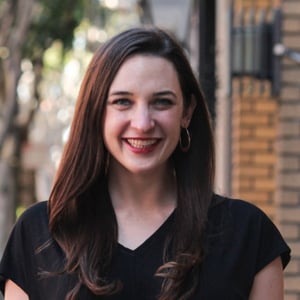
General Counsel, Strive
Before joining Strive, Alexandra served as the Director of Regulatory Affairs at River Financial, where she handled all regulatory and government matters and served as product counsel. Prior to her time at River, Alexandra worked at the U.S. Department of Treasury, first in the General Counsel’s office and then as the youngest-ever Executive Secretary, where she worked directly with Secretary Mnuchin. Alexandra previously worked as an associate in the Washington, D.C. office of Akin Gump. She clerked for then-Justice Allison Eid on the Colorado Supreme Court and Judge Jennifer Elrod on the U.S. Court of Appeals for the Fifth Circuit. She holds a J.D. from the University of Texas and a B.A. from The King’s College.

Alton C. and Cecile Cunningham Craig Professor of Law, The University of Alabama School of Law
Julie Andersen Hill is the Alton C. and Cecile Cunningham Craig Professor of Law at the University of Alabama School of Law where she teaches banking and commercial law. Her scholarly work focuses on the unwritten rules of banking regulation. She often examines how regulators respond to financial innovation. Before entering the legal academy, Professor Hill practiced law in the Washington, D.C. office of Skadden, Arps, Slate, Meagher & Flom LLP. As part of the litigation group, she represented large financial institutions in government investigations. She also clerked for Judge Wade Brorby on the United States Court of Appeals for the Tenth Circuit. Professor Hill earned her undergraduate degree in economics summa cum laude from Southern Utah University and her J.D. summa cum laude from the J. Reuben Clark Law School at Brigham Young University.
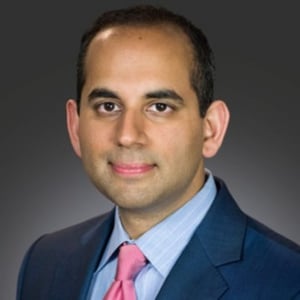
General Counsel, TRM Labs
Sujit Raman joined Sidley Austin after nearly a dozen years as a federal prosecutor, culminating in his service as Associate Deputy Attorney General at the U.S. Department of Justice (DOJ). In that role, he personally advised the Attorney General and Deputy Attorney General in their oversight of the nation’s cyber-related criminal and national security investigations and prosecutions. Sujit also led DOJ’s policy formulation in a number of critical areas, including cybersecurity, cross-border data transfers and protection, 5G/supply chain security, and emerging technologies such as facial recognition, cryptocurrency, and encryption. He brings clients a deep understanding of substantive and procedural issues involved in white collar defense, corporate internal investigations, cyber/data protection, and national security matters.
Sujit was a lead U.S. representative in high-profile international data-sharing negotiations with the United Kingdom, Australia, and the European Union. He also coordinated DOJ’s response to the Schrems II decision of the EU Court of Justice and, from 2018–2020, chaired the Attorney General’s Cyber-Digital Task Force, leading formulation of DOJ’s policy and operational response to transnational cybercrime, nation-state-sponsored malign cyber activity, and online foreign influence operations. Sujit was instrumental in drafting the legislation for the Clarifying Lawful Overseas Use of Data (CLOUD) Act and led the team that worked with industry and Capitol Hill to secure the legislation’s bipartisan passage.
In addition to his extensive experience in cybersecurity, data protection, and national security issues, Sujit served for over eight years as an Assistant United States Attorney in Maryland where he led numerous complex white collar fraud and public corruption investigations, and tried six cases to jury verdict. He also served as the office’s chief of appeals, supervising the appellate work of over 80 federal prosecutors across the spectrum of federal criminal law, arguing 20 cases in the federal court of appeals, and personally litigating matters of first impression in areas as diverse as export control and economic sanctions compliance; the RICO statute; the border search doctrine and the third-party doctrine as they apply to electronic evidence; and other leading issues at the intersection of law, technology, and privacy.
Sujit is a sought-after speaker and thinker on international regulatory and geopolitical issues and has appeared in national media and testified before the U.S. Senate on these topics. His professional achievements and service to the legal community have earned him public recognition, including the “Attorney General’s Award for Distinguished Service” (2018), the National Asian Pacific American Bar Association “Best Lawyers Under 40” Award (2015), the National South Asian Bar Association “Cornerstone Award” (2015), and the U.S. Secret Service “Director’s Award” (2013).
A term member of the Council on Foreign Relations, Sujit is a graduate of Harvard College, Harvard Law School, and the University of Bristol (UK), where he studied as a Marshall Scholar and served as head coach of the women’s varsity rowing program.

Counsel, Davis Polk & Wardwell LLP
Andrew B Samuel is Counsel in the Financial Institutions Group at Davis Polk & Wardwell LLP and currently working in the Global Regulatory Policy team at Coinbase on secondment. He has extensive experience helping financial institutions to navigate the regulatory landscape and is now at the cutting edge of policy development in crypto. He has previously worked in the Bank of England's Financial Stability Division and contributed to academic publications on financial stability and resolution planning. He holds a J.D. from Columbia Law School and a B.A. cum laude from Yale College.

Senior Fellow and Director, Center for Monetary and Financial Alternatives, Cato Institute
George Selgin is a senior fellow and director of the Center for Monetary and Financial Alternatives at the Cato Institute and Professor Emeritus of Economics at the University of Georgia. He is the author of The Theory of Free Banking (Rowman & Littlefield, 1988), Bank Deregulation and Monetary Order (Routledge, 1996), Good Money: Birmingham Button Makers, the Royal Mint, and the Beginnings of Modern Coinage (University of Michigan Press, 2008), Money: Free and Unfree (The Cato Institute, 2015), Less Than Zero: The Case for a Falling Price Level in a Growing Economy (The Cato Institute, 2018), and Floored! How a Misguided Fed Experiment Deepened and Prolonged the Great Recession (The Cato Institute 2018). Selgin holds a B.A. in economics and zoology from Drew University, and a Ph.D. in economics from New York University.
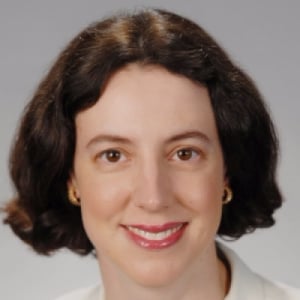
Donald Phillip Rothschild Research Professor, George Washington University Law School
Renée Lettow Lerner is Donald Phillip Rothschild Research Professor of Law at George Washington University Law School.
Professor Lerner works in the fields of U.S. and English legal history, civil and criminal procedure, and comparative law. She advises judges, lawyers, and government officials from the United States and countries in Europe, Latin America, and Asia about the differences between adversarial and nonadversarial legal systems.
She writes extensively about the history of American juries. Her work includes not only scholarly articles, but also online publications intended for a broader audience of legal professionals and the public. In many different settings, she has debated the role of juries with other academics and with lawyers. She has a book forthcoming with Oxford University Press in the Very Short Introduction Series entitled “The Jury.” She is also working on a book about the American civil jury, from the colonial period to the present.
She is the author, with John Langbein and Bruce Smith, of the book History of the Common Law: The Development of Anglo-American Legal Institutions (2009).
Her recent writings include a book review of Amalia D. Kessler’s Inventing American Exceptionalism: The Origins of American Adversarial Legal Culture, 1800-1877, 67 J. Legal Ed. 888 (2018); “How the Creation of Appellate Courts in England and the United States Limited Judicial Comment on Evidence to the Jury,” 40 Journal of the Legal Profession 215 (2016); “The Troublesome Inheritance of Americans in Magna Carta and Trial by Jury,” in Magna Carta and its Modern Legacy 77-98 (Robert Hazell and James Melton eds., Cambridge University Press 2015); and “The Failure of Originalism in Preserving Constitutional Rights to Civil Jury Trial,” 22 William & Mary Bill of Rights Journal 811 (2014).
Professor Lerner received an A.B. summa cum laude in history from Princeton University. She was a Rhodes Scholar at Oxford University, where she studied English legal history. At Yale Law School, she was Articles Editor of the Yale Law Journal. She served as a law clerk to Justice Anthony M. Kennedy of the U.S. Supreme Court and to Judge Stephen F. Williams of the U.S. Court of Appeals for the District of Columbia Circuit. From 2003 to 2005, she served as Deputy Assistant Attorney General in the Office of Legal Counsel at the U.S. Department of Justice.
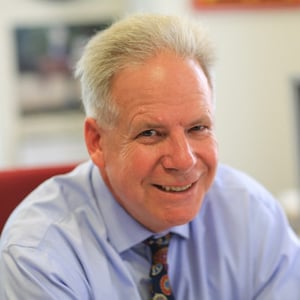
Professor & Chair, History, Language & Global Culture, Suffolk University
General Counsel, Strive
Before joining Strive, Alexandra served as the Director of Regulatory Affairs at River Financial, where she handled all regulatory and government matters and served as product counsel. Prior to her time at River, Alexandra worked at the U.S. Department of Treasury, first in the General Counsel’s office and then as the youngest-ever Executive Secretary, where she worked directly with Secretary Mnuchin. Alexandra previously worked as an associate in the Washington, D.C. office of Akin Gump. She clerked for then-Justice Allison Eid on the Colorado Supreme Court and Judge Jennifer Elrod on the U.S. Court of Appeals for the Fifth Circuit. She holds a J.D. from the University of Texas and a B.A. from The King’s College.
Alton C. and Cecile Cunningham Craig Professor of Law, The University of Alabama School of Law
Julie Andersen Hill is the Alton C. and Cecile Cunningham Craig Professor of Law at the University of Alabama School of Law where she teaches banking and commercial law. Her scholarly work focuses on the unwritten rules of banking regulation. She often examines how regulators respond to financial innovation. Before entering the legal academy, Professor Hill practiced law in the Washington, D.C. office of Skadden, Arps, Slate, Meagher & Flom LLP. As part of the litigation group, she represented large financial institutions in government investigations. She also clerked for Judge Wade Brorby on the United States Court of Appeals for the Tenth Circuit. Professor Hill earned her undergraduate degree in economics summa cum laude from Southern Utah University and her J.D. summa cum laude from the J. Reuben Clark Law School at Brigham Young University.
General Counsel, TRM Labs
Sujit Raman joined Sidley Austin after nearly a dozen years as a federal prosecutor, culminating in his service as Associate Deputy Attorney General at the U.S. Department of Justice (DOJ). In that role, he personally advised the Attorney General and Deputy Attorney General in their oversight of the nation’s cyber-related criminal and national security investigations and prosecutions. Sujit also led DOJ’s policy formulation in a number of critical areas, including cybersecurity, cross-border data transfers and protection, 5G/supply chain security, and emerging technologies such as facial recognition, cryptocurrency, and encryption. He brings clients a deep understanding of substantive and procedural issues involved in white collar defense, corporate internal investigations, cyber/data protection, and national security matters.
Sujit was a lead U.S. representative in high-profile international data-sharing negotiations with the United Kingdom, Australia, and the European Union. He also coordinated DOJ’s response to the Schrems II decision of the EU Court of Justice and, from 2018–2020, chaired the Attorney General’s Cyber-Digital Task Force, leading formulation of DOJ’s policy and operational response to transnational cybercrime, nation-state-sponsored malign cyber activity, and online foreign influence operations. Sujit was instrumental in drafting the legislation for the Clarifying Lawful Overseas Use of Data (CLOUD) Act and led the team that worked with industry and Capitol Hill to secure the legislation’s bipartisan passage.
In addition to his extensive experience in cybersecurity, data protection, and national security issues, Sujit served for over eight years as an Assistant United States Attorney in Maryland where he led numerous complex white collar fraud and public corruption investigations, and tried six cases to jury verdict. He also served as the office’s chief of appeals, supervising the appellate work of over 80 federal prosecutors across the spectrum of federal criminal law, arguing 20 cases in the federal court of appeals, and personally litigating matters of first impression in areas as diverse as export control and economic sanctions compliance; the RICO statute; the border search doctrine and the third-party doctrine as they apply to electronic evidence; and other leading issues at the intersection of law, technology, and privacy.
Sujit is a sought-after speaker and thinker on international regulatory and geopolitical issues and has appeared in national media and testified before the U.S. Senate on these topics. His professional achievements and service to the legal community have earned him public recognition, including the “Attorney General’s Award for Distinguished Service” (2018), the National Asian Pacific American Bar Association “Best Lawyers Under 40” Award (2015), the National South Asian Bar Association “Cornerstone Award” (2015), and the U.S. Secret Service “Director’s Award” (2013).
A term member of the Council on Foreign Relations, Sujit is a graduate of Harvard College, Harvard Law School, and the University of Bristol (UK), where he studied as a Marshall Scholar and served as head coach of the women’s varsity rowing program.
Counsel, Davis Polk & Wardwell LLP
Andrew B Samuel is Counsel in the Financial Institutions Group at Davis Polk & Wardwell LLP and currently working in the Global Regulatory Policy team at Coinbase on secondment. He has extensive experience helping financial institutions to navigate the regulatory landscape and is now at the cutting edge of policy development in crypto. He has previously worked in the Bank of England's Financial Stability Division and contributed to academic publications on financial stability and resolution planning. He holds a J.D. from Columbia Law School and a B.A. cum laude from Yale College.
Senior Fellow and Director, Center for Monetary and Financial Alternatives, Cato Institute
George Selgin is a senior fellow and director of the Center for Monetary and Financial Alternatives at the Cato Institute and Professor Emeritus of Economics at the University of Georgia. He is the author of The Theory of Free Banking (Rowman & Littlefield, 1988), Bank Deregulation and Monetary Order (Routledge, 1996), Good Money: Birmingham Button Makers, the Royal Mint, and the Beginnings of Modern Coinage (University of Michigan Press, 2008), Money: Free and Unfree (The Cato Institute, 2015), Less Than Zero: The Case for a Falling Price Level in a Growing Economy (The Cato Institute, 2018), and Floored! How a Misguided Fed Experiment Deepened and Prolonged the Great Recession (The Cato Institute 2018). Selgin holds a B.A. in economics and zoology from Drew University, and a Ph.D. in economics from New York University.
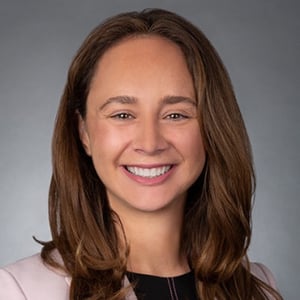
Partner, Kirkland & Ellis LLP
Elyse Dorsey is a partner in the Washington, D.C., office of Kirkland & Ellis LLP. Elyse's practice encompasses a wide array of antitrust and competition matters across the globe. She is uniquely situated to advise clients in domestic and international competition matters, given her combination of government and private practice experience.
Elyse has a focus in cutting edge competition issues, as well as privacy, data security, and consumer protection matters. She has represented clients across levels of government, from state agencies to the U.S. Supreme Court. Prior to joining Kirkland, Elyse served as Counsel to the Assistant Attorney General at the U.S. Department of Justice's Antitrust Division. Her work at the Antitrust Division covered a spectrum of legal and policy matters, including IP and technology issues, the Division's appellate and amicus brief programs, and its international and competition policy efforts. Elyse joined the Division from the U.S. Federal Trade Commission, where she served as Attorney Advisor to Commission Noah Joshua Phillips. While at the Commission, she advised on key cases, matters, and policies affecting industries across the economy--from digital and tech to pharmaceuticals and hospitals and more.
Elyse is a recognized thought leader in the antitrust and competition communities. She has been a frequent nominee and recipient of antitrust writing awards for her scholarship in this space. She has also served as an adjunct professor at George Mason University's Scalia Law School for several years, helping to launch their Antitrust LL.M. program; and she previously served as a visiting scholar at the University of Virginia.
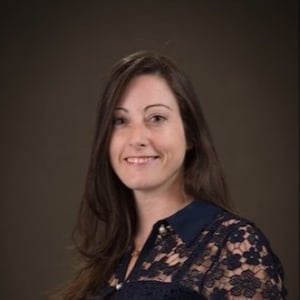
Partner, Cuneo Gilbert & Deluca, LLP
Amanda Lewis joined Cuneo Gilbert & Deluca, LLP from the Federal Trade Commission, where she worked as an attorney in the Bureau of Competition since 2012. While at the FTC, she served for over two and a half years as a Counsel-Detailee to the Antitrust Subcommittee of the House Judiciary Committee. In this role, she worked extensively on the House Subcommittee’s Investigation of Competition in Digital Markets, for which she led the portion of the investigation related to Amazon.
Amanda was one of the primary authors of the Majority Staff Report and Recommendations and helped draft the bills currently making their way through Congress to rein in Big Tech. In addition, she took the lead on health care for the Subcommittee, overseeing several hearings related to competition in the healthcare sector and a successful, bipartisan markup of four healthcare antitrust bills, resulting in all four bills being reported out of Committee on a unanimous, bipartisan basis and the enactment of two bills into law, including the CREATES Act and the Competitive Health Insurance Reform Act.
At the FTC, as an attorney in the Mergers IV division, she worked on the Staples/Office Depot and Sysco/U.S. Foods litigation teams, as well as numerous other merger and conduct investigations.
Prior to the FTC, Amanda was an associate at Cravath, Swaine & Moore and a law clerk for Judge Lawrence McKenna of the Southern District of New York. She received her B.A. from New York University in 2002 and her J.D. from Columbia Law School in 2008.
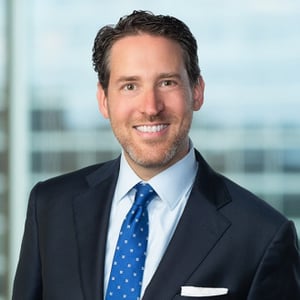
Partner, Morrison & Foerster
David Shaw is a partner in Morrison & Foerster’s Global Antitrust Law Practice group, where he draws upon his extensive experience across merger clearance litigation, cartel representations, counseling, and State Attorney General antitrust enforcement to guide clients through government-facing antitrust matters.
Most recently, David was the Deputy Chief of Staff and Counsel to the Assistant Attorney General in the Antitrust Division of the Department of Justice (DOJ). In this role, he advised and assisted the head of the Antitrust Division on law and policy related to the Division and managed relationships with state attorneys general across all Division matters, including directly handling relationships in the highest stakes and most sensitive matters facing the Division.
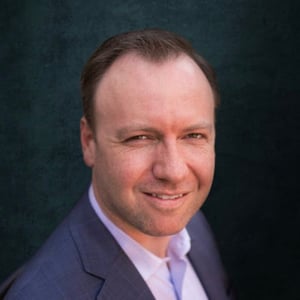
Chief Legal Officer and Policy Director, Cicero Institute
Jonathan Wolfson is the Chief Legal Officer and Policy Director at the Cicero Institute. Before joining Cicero, he led the Policy Office at the U.S. Department of Labor where he managed DOL's deregulatory efforts and oversaw DOL's internal policy development think tank. He previously was a litigator and regulatory attorney at an international law firm representing clients before state and federal courts across the country. Following law school he served as a law clerk to The Honorable Edith Brown Clement of the U.S. Court of Appeals for the Fifth Circuit. Before law school, Jonathan was a policy analyst at the White House Council of Economic Advisers.
Jonathan received an A.B. in Economics from Washington University in St. Louis and a J.D. from the University of Virginia School of Law, where he was an Olin Law and Economic Fellow and won the John M. Olin Prize for best original law and economics research.

Topics
Originalism’s Still Around, No Matter What Adrian Vermeule Says
I was taken aback when I read Adrian Vermeule’s recent Washington Post op-ed, which alleges...
Panel 2: Cryptocurrency: Money, Property, Speech, or Something Else? A discussion of current and potential regulatory frameworks.
Alexandra Gaiser, Julie Hill, Sujit Raman, Andrew B. Samuel, George Selgin
Featuring: Prof. Julie Hill, Professor of Law, The University of Alabama School of Law Sujit...
Panel 2: Cryptocurrency: Money, Property, Speech, or Something Else? A discussion of current and potential regulatory frameworks.
Second Annual Florida Young Lawyers Summit
Tampa, FLTopics
The Evolution of Lawyer Discipline
In today’s highly polarized political environment, lawyers find themselves in the crosshairs. Representing high profile,...
Son of Liberty, Man of Law: John Adams and the Boston Massacre Trial
Renée Lettow Lerner, Serena Zabin, Robert Allison
Watch our newest film “Son of Liberty, Man of Law: John Adams and the Boston...
Topics
Arkansas State Conference NAACP v. Arkansas Board of Apportionment: Textualism in Action in a Voting Rights Act Case
On February 17, 2022, in Arkansas State Conference NAACP v. Arkansas Board of Apportionment, the...
Topics
The Biden Administration’s Post-Dobbs, Post-Roe Response
On June 24, 2022, in a landmark decision in Dobbs v. Jackson Women’s Health Organization,...
Topics
A Tendentious Report on Housing Discrimination from the New York Advisory Committee to the U.S. Commission on Civil Rights
Background: In 1957, Congress created the U.S. Commission on Civil Rights (the Commission). An independent,...
Biden’s Antitrust Agenda: Mission Creep or Mission Achieved?
TeleforumTopics
Religious Liberty Update on Congressional and Executive Branch Actions
Congress On June 16, 2022, Reps. Jim Banks of Indiana and Doug LaMalfa of California...