
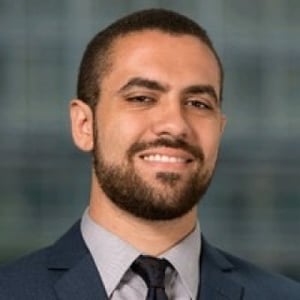
Director of Legal Policy, Firearms Policy Coalition
Matthew Larosiere is the policy director for the Firearms Policy Coalition. He writes on the subject of the 2nd Amendment, gun law, taxation, and gun violence. His work has been featured in National Review, Cato Blog, Fox Nation, Forbes, Wall Street Journal and more. Matt hosts the gun law myth-buster YouTube channel Fudd Busters.
Matthew graduated cum laude from the University of Alabama with a J.D. and Master of Laws in Taxation. During law school, he served as the president of the Federalist Society and the ethics opinion editor of the Journal of the Legal Profession. He holds a B.S. in Business Management from the University of Central Florida.
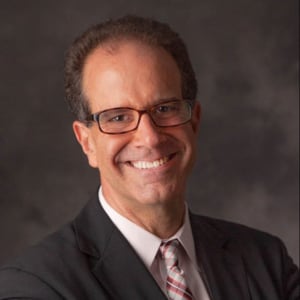
Wayne Fisher Research Professor, Professor of Law, South Texas College of Law Houston
Professor Dru Stevenson is a Wayne Fisher Research Professor and Professor of Law at South Texas College of Law Houston. He joined the faculty at South Texas College of Law Houston in 2003, and teaches Administrative Law/Regulation, Professional Responsibility, Nonprofit Incorporation, Legislation, and the Law & Economics seminar. He graduated Magna Cum Laude from the University of Connecticut School of Law, where he served as an editor of the Connecticut Law Review. After receiving his J.D., he practiced as a Legal Aid lawyer in Connecticut for three years. He earned his Master of Laws (LL.M.) from the Yale Law School in 2002, and became an Assistant Attorney General for the State of Connecticut until leaving to accept his position at South Texas College of Law Houston. Professor Stevenson’s publications cover topics ranging from criminal law to civil procedure, with an emphasis on the intersection of law with economics and linguistic theory. His articles have been cited in leading academic journals and treatises, by federal and state appellate courts, and in recent briefs to the U.S. Supreme Court. Professor Stevenson’s current research focus is firearm law and policy.
Director of Legal Policy, Firearms Policy Coalition
Matthew Larosiere is the policy director for the Firearms Policy Coalition. He writes on the subject of the 2nd Amendment, gun law, taxation, and gun violence. His work has been featured in National Review, Cato Blog, Fox Nation, Forbes, Wall Street Journal and more. Matt hosts the gun law myth-buster YouTube channel Fudd Busters.
Matthew graduated cum laude from the University of Alabama with a J.D. and Master of Laws in Taxation. During law school, he served as the president of the Federalist Society and the ethics opinion editor of the Journal of the Legal Profession. He holds a B.S. in Business Management from the University of Central Florida.
Wayne Fisher Research Professor, Professor of Law, South Texas College of Law Houston
Professor Dru Stevenson is a Wayne Fisher Research Professor and Professor of Law at South Texas College of Law Houston. He joined the faculty at South Texas College of Law Houston in 2003, and teaches Administrative Law/Regulation, Professional Responsibility, Nonprofit Incorporation, Legislation, and the Law & Economics seminar. He graduated Magna Cum Laude from the University of Connecticut School of Law, where he served as an editor of the Connecticut Law Review. After receiving his J.D., he practiced as a Legal Aid lawyer in Connecticut for three years. He earned his Master of Laws (LL.M.) from the Yale Law School in 2002, and became an Assistant Attorney General for the State of Connecticut until leaving to accept his position at South Texas College of Law Houston. Professor Stevenson’s publications cover topics ranging from criminal law to civil procedure, with an emphasis on the intersection of law with economics and linguistic theory. His articles have been cited in leading academic journals and treatises, by federal and state appellate courts, and in recent briefs to the U.S. Supreme Court. Professor Stevenson’s current research focus is firearm law and policy.
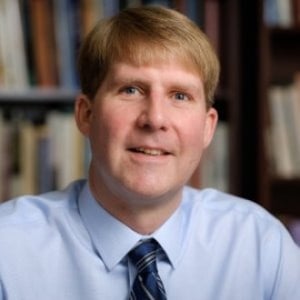
Professor of Politics, Wake Forest University
John Dinan, author of "State Constitutional Politics: Governing by Amendment in the American States," can comment on mid-term elections and the state constitutional amendments appearing on the ballot. From voter identification to redistricting, Dinan can place particular amendments in nationwide and historical perspective. Based on his research, he can also address the arguments and issues that routinely surface in campaigns supporting and opposing various amendments. He is also prepared to comment on federal and state policies in areas ranging from the Affordable Care Act to legislative redistricting to voter-registration rules. Dinan closely follows U.S. and North Carolina political races, including gubernatorial and congressional races. Dinan teaches courses on campaigns and elections, state politics and congress and policymaking. He frequently provides commentary for news outlets across the country and his research was cited by the U.S. Supreme Court in Arizona State Legislature v. Arizona Independent Redistricting Commission (2015). He is also the author of "The American State Constitutional Tradition" and an annual review of state constitutional developments in the 50 states, as well as numerous articles on state and federal politics.
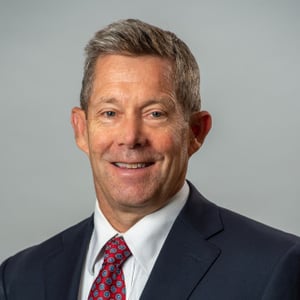
Chief Judge, United States Court of Appeals, Sixth Circuit
JEFFREY S. SUTTON is the Chief Judge of the United States Court of Appeals for the Sixth Circuit. He has served as Chair of the Federal Judicial Conference Committee on Rules of Practice and Procedure, Chair of the Advisory Committee on Appellate Rules, and Chair of the Supreme Court Fellows Commission. He currently serves as Chair of the Executive Committee of the Judicial Conference of the United States. Since 1993, Chief Judge Sutton has been an adjunct professor at The Ohio State University College of Law, where he teaches seminars on State Constitutional Law, the United States Supreme Court, and Appellate Advocacy. He also teaches a class on State Constitutional Law at Harvard Law School. Among other publications, he is the author of Who Decides? States as Laboratories of Constitutional Experimentation and 51 Imperfect Solutions: States and the Making of American Constitutional Law. He is the co-author of a casebook, State Constitutional Law: The Modern Experience, as well as The Law of Judicial Precedent. He is also the co-editor of The Essential Scalia: On the Constitution, the Courts, and the Rule of Law. In 2006, Chief Judge Sutton was elected to the American Law Institute, and in 2017 he was elected to its Council.
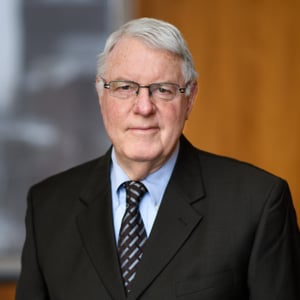
Distinguished Professor of Law, Rutgers Law School
Robert F. Williams is an expert in state constitutional law and is the Director of the Center for State Constitutional Studies at Rutgers. He’s authored numerous articles and books, participated in a wide range of litigation and lectured to state judges and lawyers on subjects involving state constitutional law.

Of Counsel, Spencer Fane LLP
Anthony J. “A.J.” Ferate has built a multi-faceted background in the areas of the law, policy, energy, campaigns and elections, and defense over the last 20 years.
Through recent representation as Vice President of Regulatory Affairs for the Oklahoma Independent Petroleum Association (“OIPA”), A.J. held responsibilities over government efforts outside of the legislative branch on matters as broad as water, electric generation, commodity marketing, land matters, and seismicity. A.J. also maintained responsibility for legal matters at OIPA, including amicus briefing in appellate matters. A.J.’s extensive experience also includes management of public policy strategy for a Fortune 500 company.
For the past eleven years, A.J. has volunteered as General Counsel and spokesman for the Oklahoma Republican Party and has represented a number of elected officials, including U.S. Senator James Lankford, former statewide elected officials, a number of state legislators, and members of Congress.
Additionally, A.J. has assisted elected officials serve their constituents in all branches of government. Early in his career, A.J. held legislative aide duties in the Nebraska Legislature, then went on to work for former Nebraska Treasurer David Heineman. A.J. gained experience in the judiciary while serving Judge Gary L. Lumpkin at the Oklahoma Court of Criminal Appeals, the highest criminal appellate court in Oklahoma. Following this service, A.J. began work with Denise A. Bode of the Oklahoma Corporation Commission, assisting her in her duties regulating 70 percent of Oklahoma’s economy, including oil and gas and electric utilities.
A.J. honorably served ten years as an intelligence analyst for the United States Naval Reserve, including time at the Office of Naval Intelligence in the greater Washington DC area.
Opinion pieces authored or ghostwritten by A.J. have been published in the Seattle Times, Politico, Law360, The Oklahoman, Tulsa World and The Journal Record. A.J. has also been interviewed by national and international newspapers, and has also appeared on national radio programs including NPR’s The Diane Rehm Show and On Point with Tom Ashbrook.
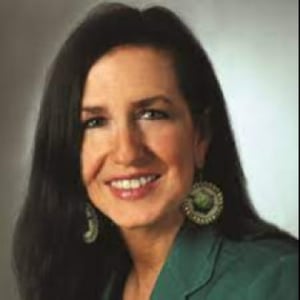
Shareholder, Greenberg Traurig
Jennifer Weddle is the Co-Chair of Greenberg Traurig's American Indian Law Practice and has wide-ranging experience in complex regulatory and jurisdictional issues, with a focus in Indian law, handling a variety of matters for tribal and non-tribal clients. She has a dynamic, inter-disciplinary practice that centers on providing strategies for resolving complex jurisdictional problems. Much of her practice focuses in the areas of tribal economic development and natural resources development. Jennifer also has U.S. Supreme Court experience, including serving as one of the attorneys for the respondent in Nevada v. Hicks (2001) and representing the petitioners in Ute Mountain Ute Tribe v. Padilla (2012) and Grand Canyon Skywalk Development, LLC v. Grand Canyon Resort Corporation (2013) and cert stage amici in Saginaw-Chippewa Tribe v. NLRB (2016) and United States v. Cooley (2020) and amici on the merits in Lewis v. Clarke (2017), U.S. v. Washington (2018), Carpenter v. Murphy (2018), McGirt v. Oklahoma (2020), and United States v. Cooley (2021).
Jennifer's work also includes negotiations for mineral leasing employment matters and representation before federal agencies. She has also been involved in civil litigation, working on numerous complex federal, state and tribal litigation matters, including class action tort litigation and large commercial disputes. Her transactional experience includes oil and gas renewables projects throughout the west, as well as Endangered Species Act work. Jennifer frequently assists tribes, banks and non-bank entities with financing and regulatory matters with Indian law components. Jennifer has wide-ranging project siting experience, including the application of NEPA, NHPA, and other environmental laws on tribal and public lands, including with respect to large linear multi-state energy and infrastructure projects. Jennifer has deep transactional, regulatory and litigation experience involving very complex matters with both legal and policy components.
Jennifer is past President of the National Native American Bar Association and past two-term Chair of the Federal Bar Association Indian Law Section. She currently serves as the Tenth Circuit Representative on the American Bar Association Standing Committee on the Federal Judiciary, a role she has held since 2018, spanning the evaluations for more than two dozen federal judicial nominees at every level of the federal courts. She is a ’00 graduate of Harvard Law School and a ’97 graduate of the University of Michigan (Classical Languages and Literature).
Of Counsel, Spencer Fane LLP
Anthony J. “A.J.” Ferate has built a multi-faceted background in the areas of the law, policy, energy, campaigns and elections, and defense over the last 20 years.
Through recent representation as Vice President of Regulatory Affairs for the Oklahoma Independent Petroleum Association (“OIPA”), A.J. held responsibilities over government efforts outside of the legislative branch on matters as broad as water, electric generation, commodity marketing, land matters, and seismicity. A.J. also maintained responsibility for legal matters at OIPA, including amicus briefing in appellate matters. A.J.’s extensive experience also includes management of public policy strategy for a Fortune 500 company.
For the past eleven years, A.J. has volunteered as General Counsel and spokesman for the Oklahoma Republican Party and has represented a number of elected officials, including U.S. Senator James Lankford, former statewide elected officials, a number of state legislators, and members of Congress.
Additionally, A.J. has assisted elected officials serve their constituents in all branches of government. Early in his career, A.J. held legislative aide duties in the Nebraska Legislature, then went on to work for former Nebraska Treasurer David Heineman. A.J. gained experience in the judiciary while serving Judge Gary L. Lumpkin at the Oklahoma Court of Criminal Appeals, the highest criminal appellate court in Oklahoma. Following this service, A.J. began work with Denise A. Bode of the Oklahoma Corporation Commission, assisting her in her duties regulating 70 percent of Oklahoma’s economy, including oil and gas and electric utilities.
A.J. honorably served ten years as an intelligence analyst for the United States Naval Reserve, including time at the Office of Naval Intelligence in the greater Washington DC area.
Opinion pieces authored or ghostwritten by A.J. have been published in the Seattle Times, Politico, Law360, The Oklahoman, Tulsa World and The Journal Record. A.J. has also been interviewed by national and international newspapers, and has also appeared on national radio programs including NPR’s The Diane Rehm Show and On Point with Tom Ashbrook.
Shareholder, Greenberg Traurig
Jennifer Weddle is the Co-Chair of Greenberg Traurig's American Indian Law Practice and has wide-ranging experience in complex regulatory and jurisdictional issues, with a focus in Indian law, handling a variety of matters for tribal and non-tribal clients. She has a dynamic, inter-disciplinary practice that centers on providing strategies for resolving complex jurisdictional problems. Much of her practice focuses in the areas of tribal economic development and natural resources development. Jennifer also has U.S. Supreme Court experience, including serving as one of the attorneys for the respondent in Nevada v. Hicks (2001) and representing the petitioners in Ute Mountain Ute Tribe v. Padilla (2012) and Grand Canyon Skywalk Development, LLC v. Grand Canyon Resort Corporation (2013) and cert stage amici in Saginaw-Chippewa Tribe v. NLRB (2016) and United States v. Cooley (2020) and amici on the merits in Lewis v. Clarke (2017), U.S. v. Washington (2018), Carpenter v. Murphy (2018), McGirt v. Oklahoma (2020), and United States v. Cooley (2021).
Jennifer's work also includes negotiations for mineral leasing employment matters and representation before federal agencies. She has also been involved in civil litigation, working on numerous complex federal, state and tribal litigation matters, including class action tort litigation and large commercial disputes. Her transactional experience includes oil and gas renewables projects throughout the west, as well as Endangered Species Act work. Jennifer frequently assists tribes, banks and non-bank entities with financing and regulatory matters with Indian law components. Jennifer has wide-ranging project siting experience, including the application of NEPA, NHPA, and other environmental laws on tribal and public lands, including with respect to large linear multi-state energy and infrastructure projects. Jennifer has deep transactional, regulatory and litigation experience involving very complex matters with both legal and policy components.
Jennifer is past President of the National Native American Bar Association and past two-term Chair of the Federal Bar Association Indian Law Section. She currently serves as the Tenth Circuit Representative on the American Bar Association Standing Committee on the Federal Judiciary, a role she has held since 2018, spanning the evaluations for more than two dozen federal judicial nominees at every level of the federal courts. She is a ’00 graduate of Harvard Law School and a ’97 graduate of the University of Michigan (Classical Languages and Literature).
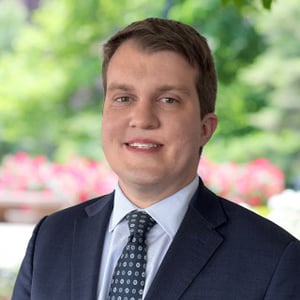
Attorney, EdChoice
Bryan Cleveland is an Attorney with EdChoice Legal Advocates, where he represents parents in defending school choice programs as part of EdChoice's partnership with the Institute for Justice.
Before joining EdChoice, Mr. Cleveland was the General Counsel for the Oklahoma State Department of Education, where he helped a newly elected state superintendent advance school choice and parental rights in Oklahoma. Prior to that role, he was the Deputy Solicitor General for the State of Oklahoma, where he handled the State’s most pressing cases in federal and state district courts and on appeal. He also previously was a law clerk for Judge Steve Grasz of the U.S. Court of Appeals for the Eighth Circuit, a law clerk for Judge Henry Morgan in the Eastern District of Virginia, and an associate at a top law firm in Washington, D.C.
He received a bachelor’s degree from Biola University and a law degree from Harvard Law School, where he was Editor-in-Chief of the Harvard Journal of Law & Technology. Before law school, he advised a member of Congress on legislation and communications.
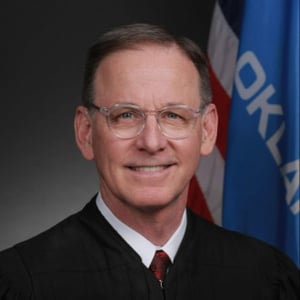
Vice-Chief Justice, Oklahoma Supreme Court
Justice Kane was appointed to the Oklahoma Supreme Court in September of 2019 by Governor Kevin Stitt. His tenure as Vice Chief Justice began in January of 2021. Prior to his service on the Supreme Court, he had been appointed by Governor Brad Henry as the Osage County District Judge in 2005. He was reelected in 2006, 2010, 2014, and 2018.
Kane is the former Presiding Judge for the eight-county Northeast Judicial Administrative District (2019), and he is a former President (2013-2014) of the Oklahoma Judicial Conference (the State’s official Judicial Association). As a trial judge, Kane had also served as the Presiding Judge on the Oklahoma Court on the Judiciary. As a trial judge, Kane was recognized by CASA in 2015 as the judge of the year.
Kane is a third-generation Osage County attorney, having been admitted to practice in 1987. He had the privilege of practicing law with his grandfather (Matthew J. Kane) and his father (Matt Kane, Jr.) during their lifetimes in Pawhuska and Skiatook. Kane has been the president of the Osage County Bar Association, and is a Fellow of the Oklahoma Bar Association. Prior to the creation of an Indigent Defense System, Kane accepted appointments to represent citizens accused of crime who were financially unable to hire their own attorney. He later served as a part-time assistant D.A. Prior to taking the District Court bench, Kane was also an Administrative Law Judge for the Dept. of Human Services- Child Support Division.
Vice Chief Justice Kane is the great-grandson of Oklahoma Supreme Court Chief Justice Matthew John Kane. The original Justice Kane was a member of the Oklahoma Constitutional Convention, and was an integral participant of the writing of Oklahoma’s Constitution. John’s great-grandmother is the late Mabelle Kennedy, former Assistant Secretary of the United States Treasury in the Truman administration.
Vice Chief Justice Kane’s wife, Cyndi, is an author, public speaker, entrepreneur, and home school mom. The Kanes have 4 children.

Senior Fellow and Director of Constitutional Studies, Manhattan Institute
Ilya Shapiro is a senior fellow and director of constitutional studies at the Manhattan Institute and a contributing editor of City Journal. Previously he was executive director and senior lecturer at the Georgetown Center for the Constitution, and before that a vice president of the Cato Institute.
Shapiro is the author of Lawless: The Miseducation of America’s Elites (2025) and Supreme Disorder: Judicial Nominations and the Politics of America’s Highest Court (2020), coauthor of Religious Liberties for Corporations? (2014), and editor of 11 volumes of the Cato Supreme Court Review (2008-18). He has contributed to a variety of academic, popular, and professional publications, including the Wall Street Journal, Harvard Journal of Law & Public Policy, Washington Post, Los Angeles Times, USA Today, National Review, and Newsweek. He also regularly provides commentary for various media outlets, writes the Shapiro’s Gavel newsletter on Substack, and once appeared on the Colbert Report.
Shapiro has testified many times before Congress and state legislatures and has filed more than 500 amicus curiae “friend of the court” briefs in the Supreme Court. He lectures regularly on behalf of the Federalist Society, is a member of the board of fellows of the Jewish Policy Center, was an inaugural Washington Fellow at the National Review Institute, and has been an adjunct law professor at the George Washington University and University of Mississippi. He is also the chairman of the board of advisers of the Mississippi Justice Institute, a barrister in the Edward Coke Appellate Inn of Court, and a former member of the Virginia Advisory Committee to the U.S. Commission on Civil Rights.
Earlier in his career, Shapiro was a special assistant/adviser to the Multi-National Force in Iraq on rule-of-law issues and practiced at Patton Boggs and Cleary Gottlieb. Before entering private practice, he clerked for Judge E. Grady Jolly of the U.S. Court of Appeals for the Fifth Circuit. He holds an AB from Princeton University, an MSc from the London School of Economics, and a JD from the University of Chicago Law School.
Director of Legal Policy, Firearms Policy Coalition
Matthew Larosiere is the policy director for the Firearms Policy Coalition. He writes on the subject of the 2nd Amendment, gun law, taxation, and gun violence. His work has been featured in National Review, Cato Blog, Fox Nation, Forbes, Wall Street Journal and more. Matt hosts the gun law myth-buster YouTube channel Fudd Busters.
Matthew graduated cum laude from the University of Alabama with a J.D. and Master of Laws in Taxation. During law school, he served as the president of the Federalist Society and the ethics opinion editor of the Journal of the Legal Profession. He holds a B.S. in Business Management from the University of Central Florida.
Wayne Fisher Research Professor, Professor of Law, South Texas College of Law Houston
Professor Dru Stevenson is a Wayne Fisher Research Professor and Professor of Law at South Texas College of Law Houston. He joined the faculty at South Texas College of Law Houston in 2003, and teaches Administrative Law/Regulation, Professional Responsibility, Nonprofit Incorporation, Legislation, and the Law & Economics seminar. He graduated Magna Cum Laude from the University of Connecticut School of Law, where he served as an editor of the Connecticut Law Review. After receiving his J.D., he practiced as a Legal Aid lawyer in Connecticut for three years. He earned his Master of Laws (LL.M.) from the Yale Law School in 2002, and became an Assistant Attorney General for the State of Connecticut until leaving to accept his position at South Texas College of Law Houston. Professor Stevenson’s publications cover topics ranging from criminal law to civil procedure, with an emphasis on the intersection of law with economics and linguistic theory. His articles have been cited in leading academic journals and treatises, by federal and state appellate courts, and in recent briefs to the U.S. Supreme Court. Professor Stevenson’s current research focus is firearm law and policy.
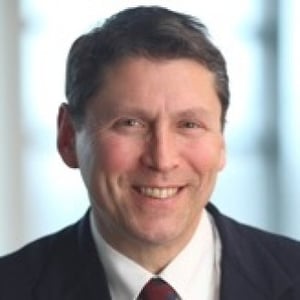
Emeritus Professor of Telecommunications and Law, Penn State University
Rob Frieden serves as an educator, researcher, grant seeker and consultant in the law, regulation, and business of broadband networks, cybersecurity, electronic commerce, intellectual property, the Internet of Things, privacy, regulatory reform, satellites, and spectrum management.
He currently serves as a 2022 Wilson Center Fellow and holds the rank of Emeritus Professor of Telecommunications and Law at Penn State University. Professor Frieden has published 4 books, written over 100 articles in law and telecommunications policy journals and frequently provides insights on current topics in telecommunications law and policy for media, conference attendees, and consultancy clients throughout the world.
Professor Frieden holds a B.A., with distinction, from the University of Pennsylvania (1977) and a J.D. from the University of Virginia (1980).
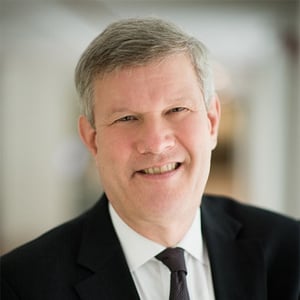
Senior Fellow and Director, Center for the Economics of the Internet, Hudson Institute
Harold Furchtgott-Roth is a senior fellow and director of the Center for the Economics of the Internet at Hudson Institute.
Mr. Furchtgott-Roth founded Furchtgott-Roth Economic Enterprises in 2003. He frequently comments on issues related to the communications sector of the economy. From 2001 to 2003, he was a visiting fellow at the American Enterprise Institute where he published A Tough Act to Follow, chronicling the difficulties implementing the Telecommunications Act of 1996.
From 1997 through 2001, Mr. Furchtgott-Roth served as a commissioner of the Federal Communications Commission. In that capacity, he served on the Joint Board on Universal Service. He is one of the few economists to have served as a federal regulatory commissioner, and the only one to have served on the Federal Communications Commission.
Before his appointment to the FCC, he was chief economist for the House Committee on Commerce and a principal staff member on the Telecommunications Act of 1996. Earlier in his career, he was a senior economist with Economists Incorporated and a research analyst with the Center for Naval Analyses.
Mr. Furchtgott-Roth is a member of the Washington Legal Foundation’s Legal Policy Advisory Board. He is the coauthor of three books: Cable TV: Regulation or Competition, with R.W. Crandall; Economics of A Disaster: The Exxon Valdez Oil Spill, with B.M. Owen et al; and International Trade in Computer Software, with S.E. Siwek.
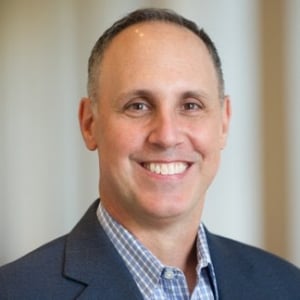
Sr. VP of Industry Affairs and Business Development, NTCA – The Rural Broadband Association
Michael Romano oversees NTCA’s public policy, government affairs and business development initiatives, as well as the educational and community-focused mission of the Foundation for Rural Service. Before joining NTCA, Mike was of counsel with Bingham McCutchen, LLP (now Morgan Lewis), served as the founding vice president and general counsel of GTT Communications and held a variety of positions with America Online and Level 3 Communications.
Mike has a Bachelor of Arts degree in American history from Middlebury College, and a Juris Doctor degree from Georgetown University Law Center.
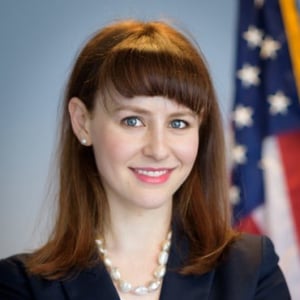
Policy Director, Telecommunications, U.S. Senate Committee on Commerce, Science, & Transportation
Arielle Roth serves as Policy Director, Telecommunications for Ranking Member Ted Cruz on the Senate Committee on Commerce, Science, and Transportation. Prior to joining the committee, Roth spent almost a decade working on federal communications and broadband policy, including in senior roles at the Federal Communications Commission and as Wireline Legal Advisor to former Commissioner Michael O’Rielly. Her previous congressional experience includes serving as Legislative Counsel to U.S. Senator Roy Blunt and as Counsel on Detail to the House Committee on Energy and Commerce. Before entering government, Roth was a Legal Fellow with the Hudson Institute's Center for the Economics of the Internet. Roth holds degrees from the University of Toronto and the McGill University Faculty of Law. She lives in D.C. with her husband Yaakov and their five children.

The Future of Homemade Firearms: The Legal and Political Implications of ATF Final Rule 2021R-05F
Matthew Larosiere, Dru Stevenson
Americans have been privately manufacturing and assembling firearms since before this country’s founding. Now, thanks...
The Future of Homemade Firearms: The Legal and Political Implications of ATF Final Rule 2021R-05F
Matthew Larosiere, Dru Stevenson
Americans have been privately manufacturing and assembling firearms since before this country’s founding. Now, thanks...
9th Annual Supreme Court Round Up
Tulsa Lawyers Chapter
Tulsa, OKPennsylvania’s Populist Constitution | The Drafting of America’s First Constitutions
John Dinan, Jeffrey S. Sutton, Robert F. Williams
As one of the most radically democratic constitutions in American history, the Pennsylvania Constitution of...
The Future of Homemade Firearms: The Legal and Political Implications of ATF Final Rule 2021R-05F
TeleforumCourthouse Steps Decisions: Denezpi and Ysleta
Anthony J. Ferate, Jennifer H. Weddle
On June 13 and 15, 2022, the Supreme Court decided Denezpi v. United States and...
Courthouse Steps Decisions: Denezpi and Ysleta
Anthony J. Ferate, Jennifer H. Weddle
On June 13 and 15, 2022, the Supreme Court decided Denezpi v. United States and...
Topics
Department of Education Proposes Title IX Rule with Opportunity for Public Comment
In line with the Biden administration’s equity and gender identity policy priorities, the Department of...
Topics
What May Be Lurking in the Future of Environmental Law After West Virginia v. EPA
In West Virginia v. EPA, decided in June, the Supreme Court struck down EPA’s attempt...
Consumers' Research v. FCC and the Legality of the Universal Service Fund Contribution Regime
Teleforum