
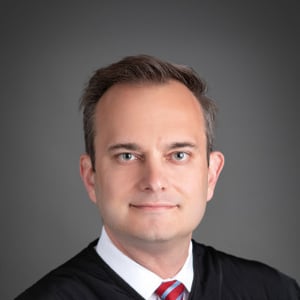
United States Magistrate Judge, Eastern District of North Carolina
Robert T. Numbers, II serves as a United States Magistrate Judge in the United States District Court for the Eastern District of North Carolina.
Judge Numbers received degrees in Political Science and Economics, with honors, from Wake Forest University. After completing his undergraduate work, Judge Numbers obtained his law degree from the University of Notre Dame where he served on the Notre Dame Law Review.
Upon his graduation from law school, Judge Numbers joined the Winston-Salem office of a large, regional law firm. From 2005 until 2010, Judge Numbers’ practice focused on civil rights claims against local municipalities and government contractors. In 2010, Judge Numbers joined the firm’s Raleigh office and concentrated his practice on complex business litigation in state and federal courts.
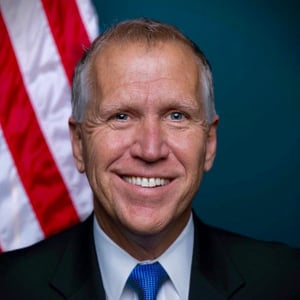
U.S. Senator, United States Senate
Thom was born into a working-class family with his father and mother and five siblings. During his childhood, his family was frequently forced to relocate depending on where his parents could find work. After graduating from high school, Thom was unable to afford college, so he took a job as a warehouse records clerk earning minimum wage. He knows firsthand how difficult it is to raise a family while attending school at night, struggling to make ends meet.
Through hard work and dedication, Thom quickly moved up the corporate ladder, earning his degree at 36 and becoming a top-level executive at PricewaterhouseCoopers and IBM. Thom’s 29-year private sector career in technology and management consulting provided him with a deep understanding of policy-making and the management of complex organizations.
Fueled by a desire to make a difference in his local community, Thom’s involvement in public service began by serving as the PTA president of his daughter’s high school and as a member of the Town of Cornelius Board of Commissioners. In 2006, he was elected to the North Carolina House of Representatives and was selected by his peers to serve as Speaker of the House from 2011 to 2014. As Speaker, Thom played an instrumental role in enacting job-creating policies and reforming North Carolina’s tax and regulatory codes. Thom was elected as U.S. Senator in 2014 and he has focused on pragmatic solutions and delivering results for North Carolina.
Thom lives with his wife Susan in Huntersville, North Carolina, and they are the proud parents of two grown children and two granddaughters.

Partner, Steptoe & Johnson LLP
Stewart Baker is a partner in the law firm of Steptoe & Johnson in Washington, D.C. From 2005 to 2009, he was the first Assistant Secretary for Policy at the Department of Homeland Security. His law practice covers cybersecurity, data protection, homeland security, and travel and foreign investment regulation; he has been awarded one patent.
Mr. Baker has been General Counsel of the National Security Agency and General Counsel of the commission that investigated WMD intelligence failures prior to the Iraq war. He is the author of Skating on Stilts, a book on terrorism, cybersecurity, and other technology issues; he also hosts the weekly Cyberlaw Podcast.
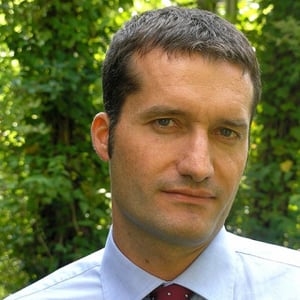
Professor of International and European Law, University Grenoble Alpes
Theodore Christakis is Professor of International and European Law at University Grenoble Alpes, Director of Research for Europe with the Cross-Border Data Forum, and a former Distinguished Visiting Fellow at the New York University Cybersecurity Centre. He is also Chair on the Legal and Regulatory Implications of Artificial Intelligence with the Multidisciplinary Institute on AI (ai-regulation.com), Director of the Centre for International Security and European Studies, and Co-Director of the Grenoble Alpes Data Institute. He is a honorary member of the Institut Universitaire de France.
At the national level, he has exercised responsibilities on digital issues as an active member of the French National Committee for Digital Ethics (created in December 2019 at the request of the French Prime Minister) and as a past member of the French National Digital Council, an independent advisory commission of the French government (2018-2020).
He has published or co-edited 11 books, he is author or co-author of more than 90 academic articles and book chapters, and he has been invited to give lectures and present his work at conferences, workshops, and seminars on over a hundred occasions in more than 31 different countries.
As an international expert he has advised governments, international organisations, and private companies on issues concerning international and European law, cybersecurity, artificial intelligence, and data protection law. He also has experience working as external Data Protection Officer (GDPR compliance) for tech companies.
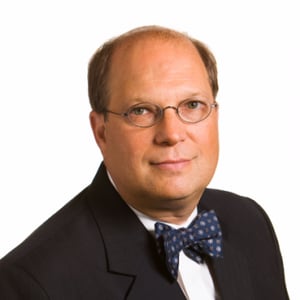
Professorial Lecturer in Law, The George Washington University
Paul Rosenzweig is an accomplished writer and speaker with a national reputation in cyber security and homeland security. He is the founder of Red Branch Consulting PLLC, a homeland security consulting company. He is also a Senior Advisor to The Chertoff Group. Mr. Rosenzweig formerly served as Deputy Assistant Secretary for Policy in the Department of Homeland Security.
He is a Professorial Lecturer in Law at George Washington University, and a Senior Fellow in the Tech, Law & Security Program at the American University, Washington College of Law. He serves as an advisor to and former member of the American Bar Association Standing Committee on Law and National Security, and a Contributing Editor of the Lawfare blog. He is a member of the ABA Cybersecurity Legal Task Force and of the United States Court of Appeals for the District of Columbia Circuit Advisory Committee on Admissions and Grievances. He serves, as well, as a Hearing Committee Member of the District of Columbia Board of Professional Responsibility. In 2011 he was a Carnegie Fellow in National Security Journalism at the Medill School of Journalism, Northwestern University.
Mr. Rosenzweig is a cum laude graduate of the University of Chicago Law School. He has an M.S. in Chemical Oceanography from the Scripps Institution of Oceanography, University of California at San Diego and a B.A from Haverford College. Following graduation from law school he served as a law clerk to the Honorable R. Lanier Anderson, III of the United States Court of Appeals for the Eleventh Circuit.
He is the author of Cyber Warfare: How Conflicts in Cyberspace are Challenging America and Changing the World and of three video lecture series from The Great Courses, Thinking About Cybersecurity: From Cyber Crime to Cyber Warfare; The Surveillance State: Big Data, Freedom, and You; and Investigating American Presidents.
He is the co-author (with James Jay Carafano) of Winning the Long War: Lessons from the Cold War for Defeating Terrorism and Preserving Freedom and co-editor (with Jill D. Rhodes and Robert S. Litt) of the Cybersecurity Handbook (3rd ed.). He is also co-editor (with Timothy McNulty and Ellen Shearer) of two books, Whistleblowers, Leaks and the Media: The First Amendment and National Security, and National Security Law in the News: A Guide for Journalists, Scholars, and Policymakers. Mr. Rosenzweig is a member of the Literary Society of Washington.
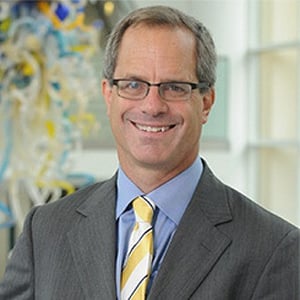
Elizabeth and Thomas Holder Chair, Scheller College of Business, Georgia Institute of Technology
Peter Swire has been a leading privacy and cyberlaw scholar, government leader, and practitioner since the rise of the Internet in the 1990’s. He came to the Georgia Institute of Technology in 2013, where he is the Elizabeth and Tommy Holder Chair in the Scheller College of Business, and Professor in the School of Cybersecurity and Privacy. He is senior counsel with the law firm of Alston & Bird LLP.
Swire served as one of five members of President Obama’s Review Group on Intelligence and Communications Technology. Prior to that, he was co-chair of the global Do Not Track process for the World Wide Web Consortium. He is a Senior Fellow with the Future of Privacy Forum, and has served on the National Academy of Sciences & Engineering Forum on Cyber Resilience.
Under President Clinton, Swire was the Chief Counselor for Privacy, in the U.S. Office of Management and Budget, the first person to have U.S. government-wide responsibility for privacy policy. Under President Obama, he was Special Assistant to the President for Economic Policy.
Partner, Steptoe & Johnson LLP
Stewart Baker is a partner in the law firm of Steptoe & Johnson in Washington, D.C. From 2005 to 2009, he was the first Assistant Secretary for Policy at the Department of Homeland Security. His law practice covers cybersecurity, data protection, homeland security, and travel and foreign investment regulation; he has been awarded one patent.
Mr. Baker has been General Counsel of the National Security Agency and General Counsel of the commission that investigated WMD intelligence failures prior to the Iraq war. He is the author of Skating on Stilts, a book on terrorism, cybersecurity, and other technology issues; he also hosts the weekly Cyberlaw Podcast.
Professor of International and European Law, University Grenoble Alpes
Theodore Christakis is Professor of International and European Law at University Grenoble Alpes, Director of Research for Europe with the Cross-Border Data Forum, and a former Distinguished Visiting Fellow at the New York University Cybersecurity Centre. He is also Chair on the Legal and Regulatory Implications of Artificial Intelligence with the Multidisciplinary Institute on AI (ai-regulation.com), Director of the Centre for International Security and European Studies, and Co-Director of the Grenoble Alpes Data Institute. He is a honorary member of the Institut Universitaire de France.
At the national level, he has exercised responsibilities on digital issues as an active member of the French National Committee for Digital Ethics (created in December 2019 at the request of the French Prime Minister) and as a past member of the French National Digital Council, an independent advisory commission of the French government (2018-2020).
He has published or co-edited 11 books, he is author or co-author of more than 90 academic articles and book chapters, and he has been invited to give lectures and present his work at conferences, workshops, and seminars on over a hundred occasions in more than 31 different countries.
As an international expert he has advised governments, international organisations, and private companies on issues concerning international and European law, cybersecurity, artificial intelligence, and data protection law. He also has experience working as external Data Protection Officer (GDPR compliance) for tech companies.
Professorial Lecturer in Law, The George Washington University
Paul Rosenzweig is an accomplished writer and speaker with a national reputation in cyber security and homeland security. He is the founder of Red Branch Consulting PLLC, a homeland security consulting company. He is also a Senior Advisor to The Chertoff Group. Mr. Rosenzweig formerly served as Deputy Assistant Secretary for Policy in the Department of Homeland Security.
He is a Professorial Lecturer in Law at George Washington University, and a Senior Fellow in the Tech, Law & Security Program at the American University, Washington College of Law. He serves as an advisor to and former member of the American Bar Association Standing Committee on Law and National Security, and a Contributing Editor of the Lawfare blog. He is a member of the ABA Cybersecurity Legal Task Force and of the United States Court of Appeals for the District of Columbia Circuit Advisory Committee on Admissions and Grievances. He serves, as well, as a Hearing Committee Member of the District of Columbia Board of Professional Responsibility. In 2011 he was a Carnegie Fellow in National Security Journalism at the Medill School of Journalism, Northwestern University.
Mr. Rosenzweig is a cum laude graduate of the University of Chicago Law School. He has an M.S. in Chemical Oceanography from the Scripps Institution of Oceanography, University of California at San Diego and a B.A from Haverford College. Following graduation from law school he served as a law clerk to the Honorable R. Lanier Anderson, III of the United States Court of Appeals for the Eleventh Circuit.
He is the author of Cyber Warfare: How Conflicts in Cyberspace are Challenging America and Changing the World and of three video lecture series from The Great Courses, Thinking About Cybersecurity: From Cyber Crime to Cyber Warfare; The Surveillance State: Big Data, Freedom, and You; and Investigating American Presidents.
He is the co-author (with James Jay Carafano) of Winning the Long War: Lessons from the Cold War for Defeating Terrorism and Preserving Freedom and co-editor (with Jill D. Rhodes and Robert S. Litt) of the Cybersecurity Handbook (3rd ed.). He is also co-editor (with Timothy McNulty and Ellen Shearer) of two books, Whistleblowers, Leaks and the Media: The First Amendment and National Security, and National Security Law in the News: A Guide for Journalists, Scholars, and Policymakers. Mr. Rosenzweig is a member of the Literary Society of Washington.
Elizabeth and Thomas Holder Chair, Scheller College of Business, Georgia Institute of Technology
Peter Swire has been a leading privacy and cyberlaw scholar, government leader, and practitioner since the rise of the Internet in the 1990’s. He came to the Georgia Institute of Technology in 2013, where he is the Elizabeth and Tommy Holder Chair in the Scheller College of Business, and Professor in the School of Cybersecurity and Privacy. He is senior counsel with the law firm of Alston & Bird LLP.
Swire served as one of five members of President Obama’s Review Group on Intelligence and Communications Technology. Prior to that, he was co-chair of the global Do Not Track process for the World Wide Web Consortium. He is a Senior Fellow with the Future of Privacy Forum, and has served on the National Academy of Sciences & Engineering Forum on Cyber Resilience.
Under President Clinton, Swire was the Chief Counselor for Privacy, in the U.S. Office of Management and Budget, the first person to have U.S. government-wide responsibility for privacy policy. Under President Obama, he was Special Assistant to the President for Economic Policy.
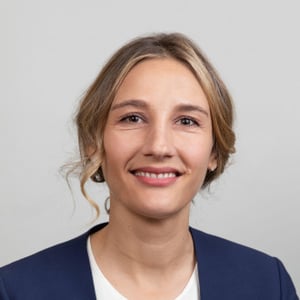
Attorney, Institute for Justice
Anya Bidwell (née Cherkasova) leads IJ’s Project on Immunity and Accountability (“PIA”). Through this project, Anya works to promote judicial engagement and ensure that government officials are held to account when they violate individuals’ constitutional rights. Anya also serves as an adviser on the American Law Institute’s Restatement of the Law, Constitutional Torts project.
One of Anya’s PIA cases—Gonzalez v. Trevino—was heard by the United States Supreme Court on March 20, 2024. She argued the case for the petitioner, with the goal of convincing the Justices that retaliatory arrests not involving on-the-spot decisions by police officers should be actionable under the First Amendment regardless of probable cause. The decision is expected in June.
This was Anya’s third appearance before the U.S. Supreme Court. She second-chaired Brownback v. King (an excessive force case) and Tennessee Wine & Spirits Retailers Association v. Thomas (a commerce clause case) in November 2020 and January 2019 respectfully.
Before joining IJ, Anya worked for a top national law firm, handling cases in trial and appellate courts. She earned her J.D. with honors from the University of Texas. Two years prior to entering law school, Anya received a master’s degree in Global Policy Studies, also from the University of Texas, and wrote a thesis on asymmetric warfare.
Anya spent her childhood in Ukraine and Kyrgyzstan. At 16, she left her family behind and came to America on a university scholarship. Her upbringing motivated her to study law and become an advocate for a strong, independent judiciary.
Anya’s work has been featured in numerous publications, including the Washington Post, the Wall Street Journal, the New York Times, USA Today, and the Guardian. She is also the host of live recordings of our Short Circuit podcast and a co-producer of our documentary-style podcast Bound by Oath.
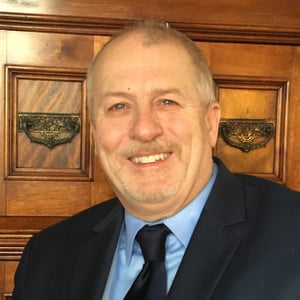
Founder, President, and General Counsel, Wisconsin Institute for Law & Liberty
Rick Esenberg is the founder and current President and General Counsel of the Wisconsin Institute for Law & Liberty, a rapidly expanding law and policy organization headquartered in Milwaukee. Under Rick’s leadership, WILL has grown into one of the more active state-based think tanks and litigation centers in the country. Rick is a frequent litigator in state and federal courts and nationally recognized scholar and commentator on constitutional law, particularly the First Amendment’s guarantees of freedom of speech and religion. He is one of the leading experts on the Wisconsin Constitution and a frequent advocate before the Wisconsin Supreme Court. Rick’s work seeks to advance the rule of law and individual liberty, formed by a robust civil society that forms individual and community character, preserving the wisdom of the past and an openness to the future.
Rick’s commentary has been featured in such outlets as the Wall Street Journal, National Review, Weekly Standard, Real Clear Politics, Milwaukee Journal Sentinel and Washington Examiner. Formerly on the faculty of Marquette University Law School, his scholarship has appeared in such publications as the Harvard Law Review, Harvard Journal of Law & Public Policy, Wake Forest Law Review and William & Mary Bill of Rights Journal. Back when they were a thing, he operated a blog called Shark and Shepherd where he tried to suggest something about the duality of man – “the Jungian thing.”
Rick holds a J.D., magna cum laude, from Harvard Law School, where he was an editor of the Harvard Law Review, and a B.A., summa cum laude, in political science from the University of Wisconsin-Milwaukee. In addition to service on the Marquette Faculty, he was formerly a litigation partner at Foley & Lardner and General Counsel of an international manufacturing firm headquartered in Wisconsin. He lives in Mequon Wisconsin with his wife Karen, golden retrievers Cooper and Riley and more books than he can find places for.
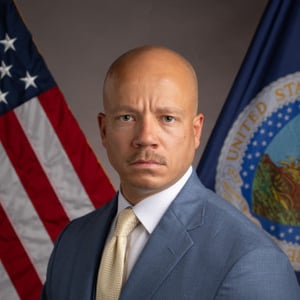
Assistant Secretary for Civil Rights, U.S. Department of Agriculture
Devon Westhill is the Assistant Secretary for Civil Rights at the U.S. Department of Agriculture. The U.S. Senate confirmed President Donald Trump’s nomination of Westhill on October 7, 2025.
Westhill returns to the USDA where he previously headed the civil rights office as Deputy Assistant Secretary in President Trump’s first term. His previous government appointments also include service at the U.S. Department of Labor, liaison to the Administrative Conference of the U.S., and liaison to the White House Initiative on Historically Black Colleges and Universities. Prior to returning to government service, Westhill was President and General Counsel of a nonprofit civil rights organization.
Westhill has testified on civil rights matters before Congress, federal agencies, and as an expert witness in federal court. He has spoken hundreds of times at college campuses, conferences, and on radio and TV programs, and he is frequently quoted in print publications, and his writing has appeared in numerous national outlets. A U.S. Navy veteran, Westhill earned his BA from the University of North Carolina at Chapel Hill and his JD from the University of Florida.
Founder, President, and General Counsel, Wisconsin Institute for Law & Liberty
Rick Esenberg is the founder and current President and General Counsel of the Wisconsin Institute for Law & Liberty, a rapidly expanding law and policy organization headquartered in Milwaukee. Under Rick’s leadership, WILL has grown into one of the more active state-based think tanks and litigation centers in the country. Rick is a frequent litigator in state and federal courts and nationally recognized scholar and commentator on constitutional law, particularly the First Amendment’s guarantees of freedom of speech and religion. He is one of the leading experts on the Wisconsin Constitution and a frequent advocate before the Wisconsin Supreme Court. Rick’s work seeks to advance the rule of law and individual liberty, formed by a robust civil society that forms individual and community character, preserving the wisdom of the past and an openness to the future.
Rick’s commentary has been featured in such outlets as the Wall Street Journal, National Review, Weekly Standard, Real Clear Politics, Milwaukee Journal Sentinel and Washington Examiner. Formerly on the faculty of Marquette University Law School, his scholarship has appeared in such publications as the Harvard Law Review, Harvard Journal of Law & Public Policy, Wake Forest Law Review and William & Mary Bill of Rights Journal. Back when they were a thing, he operated a blog called Shark and Shepherd where he tried to suggest something about the duality of man – “the Jungian thing.”
Rick holds a J.D., magna cum laude, from Harvard Law School, where he was an editor of the Harvard Law Review, and a B.A., summa cum laude, in political science from the University of Wisconsin-Milwaukee. In addition to service on the Marquette Faculty, he was formerly a litigation partner at Foley & Lardner and General Counsel of an international manufacturing firm headquartered in Wisconsin. He lives in Mequon Wisconsin with his wife Karen, golden retrievers Cooper and Riley and more books than he can find places for.
Assistant Secretary for Civil Rights, U.S. Department of Agriculture
Devon Westhill is the Assistant Secretary for Civil Rights at the U.S. Department of Agriculture. The U.S. Senate confirmed President Donald Trump’s nomination of Westhill on October 7, 2025.
Westhill returns to the USDA where he previously headed the civil rights office as Deputy Assistant Secretary in President Trump’s first term. His previous government appointments also include service at the U.S. Department of Labor, liaison to the Administrative Conference of the U.S., and liaison to the White House Initiative on Historically Black Colleges and Universities. Prior to returning to government service, Westhill was President and General Counsel of a nonprofit civil rights organization.
Westhill has testified on civil rights matters before Congress, federal agencies, and as an expert witness in federal court. He has spoken hundreds of times at college campuses, conferences, and on radio and TV programs, and he is frequently quoted in print publications, and his writing has appeared in numerous national outlets. A U.S. Navy veteran, Westhill earned his BA from the University of North Carolina at Chapel Hill and his JD from the University of Florida.
Senior Fellow in Constitutional Jurisprudence, Independence Institute
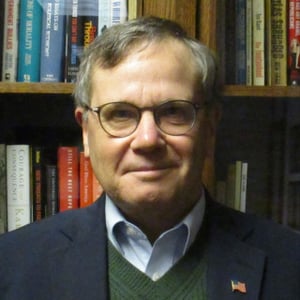
Professor Robert G. Natelson is a constitutional scholar and author.
Rob’s constitutional scholarship has been cited repeatedly by justices and parties at the U.S. Supreme Court—as well as by federal appeals courts, and at least 18 state supreme courts.
Rob’s research into the Constitution’s original meaning has carried him to libraries throughout the United States and in Britain, including four months at Oxford University. His books and articles span many different parts of the Constitution, including groundbreaking studies of the Necessary and Proper Clause, the Indian Commerce Clause, federalism, Founding-Era interpretation, regulation of elections, and the amendment process of Article V. He created the first-ever online bibliography for 18th century materials used in constitutional research. He is a contributing author to the Encyclopedia of the Supreme Court of the United States (on Magna Carta). He contributed eight essays to the third edition of the Heritage Guide to the Constitution: five on the amendment procedure and one each on the Guarantee Clause, the Postal Clause, and the Recess Appointments Clause.
U.S. Supreme Court justices have relied explicitly on Rob’s research in 41 citations in 13 separate cases.

Fireside Chat
Inaugural North Carolina Chapters Conference
Raleigh, NCInaugural North Carolina Chapters Conference
North Carolina Lawyers Chapters
Raleigh, NCTopics
Title IX NPRM: Due Process and Potential Challenges
The U.S. Department of Education’s (ED) proposed rulemaking (NPRM) pursuant to Title IX’s anti-sex discrimination...
A Discussion on the US-EU Trans-Atlantic Data Privacy Framework
Stewart A. Baker, Theodore Christakis, Paul Rosenzweig, Peter Swire
The US-EU Trans-Atlantic Data Privacy Framework, announced in March of this year, is a new...
A Discussion on the US-EU Trans-Atlantic Data Privacy Framework
A Regulatory Transparency Project Webinar
TeleforumState Court Docket Watch: In re: D.D.
Anya Bidwell
Hard cases make bad law.[1] In re: D.D.[2]—a Maryland policing case involving the odor of...
Topics
Religious Liberty Update on Congressional and Executive Branch Actions
Congress NEW LAW 1. On August 16, President Biden signed the “Inflation Reduction Act of...
Litigation Update: Faust v. Vilsack - Race Discrimination in the American Rescue Plan
Rick M. Esenberg, Devon Westhill
The Wisconsin Institute for Law & Liberty (WILL) filed a lawsuit in federal court challenging...
Litigation Update: Faust v. Vilsack - Race Discrimination in the American Rescue Plan
Rick M. Esenberg, Devon Westhill
The Wisconsin Institute for Law & Liberty (WILL) filed a lawsuit in federal court challenging...
The Original Understanding of the Indian Commerce Clause: An Update
Robert G. Natelson
The Congress shall have Power . . . To regulate Commerce with foreign Nations, and...