
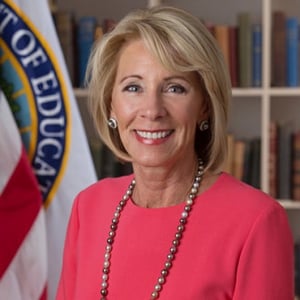
Former United States Secretary of Education
Betsy DeVos is the former U.S. secretary of education from 2017-2021. She was confirmed by the U.S. Senate on February 7, 2017 after being nominated by President Donald J. Trump.
Secretary DeVos has been involved in education policy for nearly three decades as an advocate for children and a voice for parents. She is especially passionate about reforms that help underserved children gain access to a quality education.
DeVos' interest in education was sparked at an early age by her mother, a public school teacher. It grew when she sent her own children to school and was confronted with the reality that not every child in America is granted an equal opportunity to receive a great education. DeVos saw firsthand the work leaders in her hometown were doing to increase educational opportunities for students and choices for parents, and she has been involved in the fight to provide better educational options across the nation ever since.
For 15 years, DeVos served as an in-school mentor for at-risk children in the Grand Rapids (Michigan) Public Schools. Her interactions there with students, families and teachers, according to DeVos, "changed my life and my perspective about education forever."
A leader in the movement to empower parents, DeVos has worked to support the creation of new educational choices for students in 25 states and the District of Columbia.
As secretary, DeVos will work with President Trump to advance equal opportunities for quality education for all students. DeVos firmly believes that neither the ZIP code in which a child lives nor a child's household income should be the principal determinant of his or her opportunity to receive a world-class education. As secretary, she will advocate for returning control of education to states and localities, giving parents greater power to choose the educational settings that are best for their children and ensuring that higher education puts students on the path to successful careers.
Prior to her confirmation, DeVos served as chairman of The Windquest Group, an enterprise and investment management firm. In addition to her leadership in the education arena, DeVos has also served on the boards of numerous national and local charitable and civic organizations, including the Kennedy Center for the Performing Arts, Kids Hope USA, ArtPrize, Mars Hill Bible Church and the Kendall College of Art and Design.
DeVos is a graduate of Calvin College in Grand Rapids, Michigan, where she earned a Bachelor of Arts degree. She is married to entrepreneur, philanthropist and community activist Dick DeVos, and together they have four children and six grandchildren.
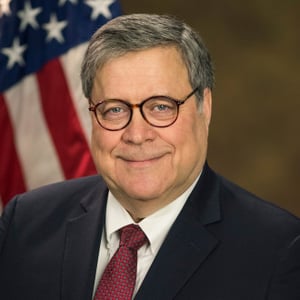
Former United States Attorney General
William P. Barr was born on May 23, 1950 in New York City. Mr. Barr received his A.B. in government from Columbia University in 1971 and his M.A. in government and Chinese studies in 1973. From 1973 to 1977, he served in the Central Intelligence Agency before receiving his J.D. with highest honors from George Washington University Law School in 1977.
In 1978, Mr. Barr served as a law clerk under Judge Malcolm Wilkey of the U.S. Court of Appeals for the District of Columbia Circuit. Following his clerkship, Mr. Barr joined the Washington, D.C. office of the law firm of Shaw, Pittman, Potts & Trowbridge as an associate. He left the firm to work in the White House under President Ronald Reagan from 1982 to 1983 on the domestic policy staff, then returned to the law firm and became a partner in 1985.
Under President George H.W. Bush, Mr. Barr served as the Deputy Attorney General from 1990 to 1991; the Assistant Attorney General of the Office of Legal Counsel from 1989 to 1990; and the 77th Attorney General of the United States from 1991 to 1993. While serving at the Department, Mr. Barr helped create programs and strategies to reduce violent crime and was responsible for establishing new enforcement policies in a number of areas including financial institutions, civil rights, and antitrust merger guidelines. Mr. Barr also led the Department’s response to the Savings & Loan crisis; oversaw the investigation of the Pan Am 103 bombing; directed the successful response to the Talladega prison uprising and hostage taking; and coordinated counter-terrorism activities during the First Gulf War.
From 1994 to 2000, Mr. Barr served as Executive Vice President and General Counsel for GTE Corporation. Mr. Barr then served as Executive Vice President and General Counsel of Verizon from 2000 to 2008. At both GTE and Verizon, Mr. Barr led the legal, regulatory, and government affairs activities of the companies.
After retiring from Verizon in 2008, Mr. Barr advised major corporations on government enforcement matters, as well as regulatory litigation. Mr. Barr served as Of Counsel at Kirkland & Ellis LLP in 2009 and rejoined the firm in 2017.
President Donald Trump announced his intention to nominate Mr. Barr on December 7, 2018, and he was confirmed as the 85th Attorney General of the United States by the U.S. Senate on February 14, 2019. U.S. Supreme Court Chief Justice John Roberts administered the oath of office. Mr. Barr joins John Crittenden (1841 and 1850-1853) as one of only two people in U.S. history to serve twice as Attorney General.
Former United States Secretary of Education
Betsy DeVos is the former U.S. secretary of education from 2017-2021. She was confirmed by the U.S. Senate on February 7, 2017 after being nominated by President Donald J. Trump.
Secretary DeVos has been involved in education policy for nearly three decades as an advocate for children and a voice for parents. She is especially passionate about reforms that help underserved children gain access to a quality education.
DeVos' interest in education was sparked at an early age by her mother, a public school teacher. It grew when she sent her own children to school and was confronted with the reality that not every child in America is granted an equal opportunity to receive a great education. DeVos saw firsthand the work leaders in her hometown were doing to increase educational opportunities for students and choices for parents, and she has been involved in the fight to provide better educational options across the nation ever since.
For 15 years, DeVos served as an in-school mentor for at-risk children in the Grand Rapids (Michigan) Public Schools. Her interactions there with students, families and teachers, according to DeVos, "changed my life and my perspective about education forever."
A leader in the movement to empower parents, DeVos has worked to support the creation of new educational choices for students in 25 states and the District of Columbia.
As secretary, DeVos will work with President Trump to advance equal opportunities for quality education for all students. DeVos firmly believes that neither the ZIP code in which a child lives nor a child's household income should be the principal determinant of his or her opportunity to receive a world-class education. As secretary, she will advocate for returning control of education to states and localities, giving parents greater power to choose the educational settings that are best for their children and ensuring that higher education puts students on the path to successful careers.
Prior to her confirmation, DeVos served as chairman of The Windquest Group, an enterprise and investment management firm. In addition to her leadership in the education arena, DeVos has also served on the boards of numerous national and local charitable and civic organizations, including the Kennedy Center for the Performing Arts, Kids Hope USA, ArtPrize, Mars Hill Bible Church and the Kendall College of Art and Design.
DeVos is a graduate of Calvin College in Grand Rapids, Michigan, where she earned a Bachelor of Arts degree. She is married to entrepreneur, philanthropist and community activist Dick DeVos, and together they have four children and six grandchildren.
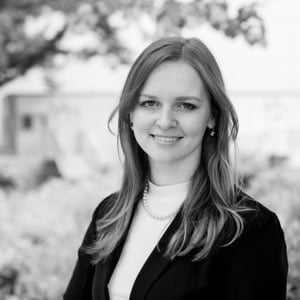
Amicus Attorney, The Foundation for Individual Rights and Expression
Abby joined FIRE after her tenure at the Becket Fund for Religious Liberty, where she litigated First Amendment student group cases from coast to coast. She also worked at a trial litigation boutique in southern California. Abby has filed briefs on the First Amendment in state and federal court at the trial and appellate court levels, including before the U.S. Supreme Court.
Abby received her B.S. in economics and her B.A. in Chinese language and literature from the University of Pittsburgh, where she graduated summa cum laude. During college, she also spent a year at Tsinghua University as a Boren Fellow. She later received her J.D. from the University of Chicago Law School, where she won the 2018 Hinton Moot Court Competition. After law school, Abby clerked for the Honorable Michael B. Brennan on the Seventh Circuit Court of Appeals in Milwaukee, Wisconsin. She is admitted to practice in New York and California, as well as several federal appellate courts and the U.S. Supreme Court.
Abby lives outside Dallas, Texas, with her husband and family. They enjoy reading together, volunteering with their local church, and continuing to fix their leaky pool.
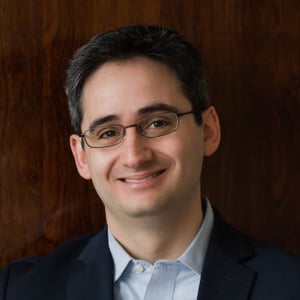
Chief Economist, American Compass
Oren Cass is the chief economist at American Compass and author of The Once and Future Worker: A Vision for the Renewal of Work in America (2018). He is a contributing editor for the Financial Times and a contributing opinion writer for the New York Times.
From 2005 to 2015, Oren worked as a management consultant in Bain & Company’s Boston and Delhi offices. During this period, he also earned his J.D. magna cum laude from Harvard Law School, where he was elected vice president and treasurer of the Harvard Law Review and oversaw the journal’s budget and operations. While still in law school, Oren also became Domestic Policy Director for Governor Mitt Romney’s 2012 presidential campaign, editing and producing the campaign’s “jobs book” and developing its domestic policy strategy, proposals, and research. He joined the Manhattan Institute as a senior fellow in 2015 and became a prolific scholar, publishing more than 15 reports for MI and editing its popular “Issues 2016” and “Issues 2020” series, testifying before seven congressional committees and speaking on dozens of college campuses. He founded American Compass at the start of 2020.
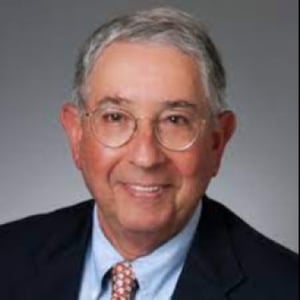
Distinguished Senior Fellow and President Emeritus, Thomas B. Fordham Institute
Chester E. Finn, Jr., scholar, educator and public servant, has devoted his career to improving education in the United States. At Fordham, he is now Distinguished Senior Fellow and President Emeritus. He’s also a Senior Fellow at Stanford's Hoover Institution.
Finn served as Fordham’s President from 1997 to 2014, after many earlier roles in education, academe and government. From 1999 until 2002, he was John M. Olin Fellow at the Manhattan Institute and previously at Hudson Institute. In 1992-94, he served as founding partner and senior scholar with the Edison Project. He was Professor of Education and Public Policy at Vanderbilt University from 1981 until 2002. From 1985 to 1988, he served as Assistant Secretary for Research and Improvement and Counselor to the Secretary at the U.S. Department of Education. Earlier positions include Staff Assistant to the President of the United States; Special Assistant to the Governor of Massachusetts; Counsel to the U.S. Ambassador to India; Research Associate at the Brookings Institution; and Legislative Director for Senator Daniel P. Moynihan.
For more than four decades, Finn has been in the forefront of the national debate about school reform. His participation in seminars, conferences, and hearings has taken him to colleges, education and civic groups, and government organizations throughout the world.
Finn has served on numerous boards, including the National Assessment Governing Board (which he chaired) and the Maryland State Board of Education (where he was vice-chair) and currently serves on the National Council on Teacher Quality, the Core Knowledge Foundation, CVPath Institute and the Civics & Civic Engagement Advisory Commission for America 250.
A native of Ohio, he holds an undergraduate degree in U.S. history, a master's degree in social studies teaching, and a doctorate in education policy, all from Harvard University. He and his wife, Renu Virmani, a physician, have two grown children and three wonderful granddaughters. They live in Chevy Chase, Maryland.
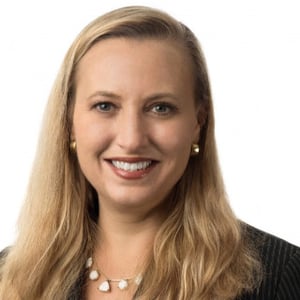
Principal, EducationCounsel, LLC
Bethany Little is a Principal at EducationCounsel, LLC where she supports foundations, education associations and other nonprofits with support in advancing improvements in education outcomes from early childhood through higher education. Little has spent twenty years working in government and non-profit organizations, including the White House, where she was education advisor to President Clinton and Vice President Gore on the Domestic Policy Council, and the U.S. Department of Education. In the U.S. Senate, she served as Chief Education Counsel to the Health, Education, Labor, and Pensions (HELP) Committee under two chairmen, Senators Edward Kennedy and Tom Harkin, and as a legislative aide to Senator Patty Murray. In the non-profit arena, Little was Managing Partner at America Achieves, where she led many of the organization's most critical priorities, including their support for state and local superintendents, the Global Learning Network and their parent engagement initiative. She has also served as an advocate for disadvantaged children as the vice president for policy and advocacy at the Alliance for Excellent Education and the director of government relations for the Children’s Defense Fund. She serves on the boards of the National Center for Teacher Residencies, Veterans Education Success, and Cesar Chavez Public Charter Schools for Public Policy.
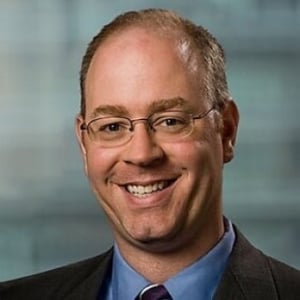
Director, Center for Educational Freedom, The Cato Institute
Neal McCluskey is the director of Cato’s Center for Educational Freedom. He is the author of the book Feds in the Classroom: How Big Government Corrupts, Cripples, and Compromises American Education and is coeditor of several volumes, including School Choice Myths: Setting the Record Straight on Education Freedom and Unprofitable Schooling: Examining Causes of, and Fixes for, America’s Broken Ivory Tower. McCluskey also maintains Cato’s Public Schooling Battle Map, an interactive database of values and identity‐based conflicts in public schools, and oversees Cato’s Private Schooling Status Tracker.
McCluskey is on the editorial board of the Journal of School Choice and the editorial advisory board of The Line, a journal promoting civil discourse in K–12 policy debates. His writings have appeared in such publications as the Wall Street Journal, the Washington Post, and Forbes, and he has appeared on numerous television and radio programs.
Prior to arriving at Cato, McCluskey was a policy analyst at the Center for Education Reform, taught high‐school English, covered municipal government and education as a freelance reporter, and served in the U.S. Army.
McCluskey holds an undergraduate degree from Georgetown University, where he double majored in government and English, has a master’s degree in political science from Rutgers University, Newark, and holds a PhD in public policy from George Mason University.
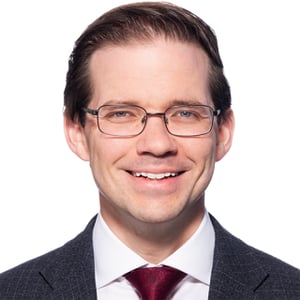
Of Counsel, Covington & Burling LLP
The Honorable Paul J. Ray is currently Of Counsel at Covington & Burling LLP where he advises clients on regulatory opportunities and challenges and helps them formulate and execute advocacy strategies for their regulatory policy priorities before the executive branch and Congress.
During the first Trump Administration, Paul held various senior positions at the Office of Information and Regulatory Affairs (OIRA) within the White House’s Office of Management and Budget, including as acting, and then Senate-confirmed, head of the office. As OIRA Administrator (the "regulations czar"), Paul supervised the review of hundreds of regulations from across the government, drafted numerous executive orders governing the regulatory process, and led the Administration’s regulatory reform effort. As a result of this experience, Paul is well-positioned to help clients understand and achieve regulatory policy priorities in the context of the government’s regulatory agenda and ongoing reform efforts.
Most recently, Paul was also the Director of the Roe Institute for Economic Policy Studies at The Heritage Foundation. In that role, he supervised the formulation of the Foundation’s economic and regulatory policy recommendations and provided technical assistance to congressional committees and staff regarding legislative changes to the regulatory process. In addition to his role at The Heritage Foundation, Paul also served as a Senior Advisor at a strategic advisory firm. Before his time in government, Paul practiced law at a law firm in Washington, specializing in administrative law matters.
Prior to his role at the White House, Paul was Counselor to the Secretary at the U.S. Department of Labor. There he led departmental efforts in high-profile rulemakings and helped formulate the Department’s legal positions and strategy.
Paul served as a law clerk to Supreme Court Justice Samuel Alito and as a law clerk to the Honorable Debra Livingston of the U.S. Court of Appeals for the Second Circuit.
Paul is a thought leader in the conservative legal movement and is a frequent commentator and speaker on regulatory policy and reform matters, including at law schools, professional gatherings, and other venues. He is the Chairman of Innovations in Peacebuilding International and the Regulatory Process Working Group of the Federalist Society’s Regulatory Transparency Project and a public member of the Administrative Conference of the United States. Paul is also an adjunct lecturer at the Hillsdale College School of Government.
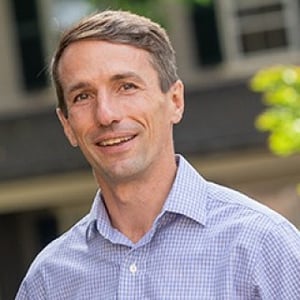
Academic Dean and Professor, Harvard Graduate School of Education
Martin West is the academic dean and professor of education at the Harvard Graduate School of Education and a faculty research fellow at the National Bureau of Economic Research. He is also deputy director of the Harvard Kennedy School's Program on Education Policy and Governance and executive editor of Education Next, a journal of opinion and research on education policy. West studies the politics of K-12 education in the United States and how education policies affect student learning and non-cognitive development. His current projects include studies of public opinion on education policy, the effects of charter school attendance and on cognitive and non-cognitive skills, data use in schools, and the influence of relative pay on teacher quality. In 2013-14, West worked as senior education policy advisor to the ranking member of the U.S. Senate Committee on Health, Education, Labor, and Pensions. He previously taught at Brown University and was a research fellow at the Brookings Institution, where he is now a nonresident senior fellow.
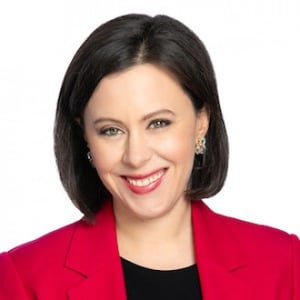
Executive Vice President and Senior Policy Advisor, Stephens, Inc.
Mary Kissel is Executive Vice President and Senior Policy Advisor at Stephens Inc., where she provides advice on geopolitical risk and macroeconomic trends to Stephens clients and the Stephens management team. Previously, she served as Senior Advisor to Secretary of State Michael R. Pompeo from October 2018 to January 2021. Prior to joining the State Department, she had a long and distinguished career on The Wall Street Journal editorial board, including stints as chief foreign policy commentator in New York City and Asia-Pacific editorial page editor, based in Hong Kong. Ms. Kissel hosts the Nixon Seminar on Conservative Realism and National Security, is a member of the Council on Foreign Relations, and serves on the boards of the American Australian Council, The Marathon Initiative, and RXO, Inc. She is a graduate of Harvard University and the Johns Hopkins School of Advanced International Studies.
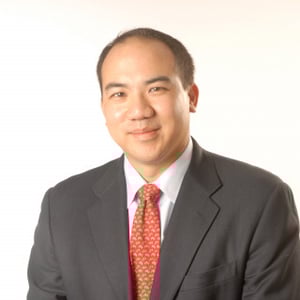
Maurice A. Deane Distinguished Professor of Constitutional Law and Faculty Director of International Programs, Hofstra University School of Law
Professor Ku’s primary research interest is the relationship of international law to constitutional law. He has also conducted academic research on a wide range of topics including international dispute resolution, international criminal law, and China’s relationship with international law. He teaches courses such as U.S. constitutional law, U.S. foreign affairs law, transnational law, and international trade and business law. Since 2014, he has served as the faculty director of international programs, overseeing Hofstra Law’s study abroad, exchange and LL.M. programs. Professor Ku also teaches Constitutional Law in our online degree programs: Master of Laws in American Law and Master of Arts in American Legal Studies. He has also been selected as the John DeWitt Gregory Research Scholar and as a Hofstra Law Research Fellow. He is a member of the American Law Institute.
He is the co-author, with John Yoo, of Taming Globalization: International Law, the U.S. Constitution, and the New World Order (Oxford University Press 2012). He also has published more than 40 law review articles, book chapters and symposia essays. He has given dozens of academic lectures and workshops at major universities and conferences in the United States, Europe and Asia.
He co-founded the leading international law weblog Opinio Juris, which is read daily by thousands worldwide. His essays and op-eds have been published in major news publications such as the Wall Street Journal, the Los Angeles Times, and the NYTimes.com. He has been frequently interviewed for television news programs and quoted in print and electronic media. He has also signed or submitted amicus briefs to national and international courts and served as an expert witness in both domestic and international proceedings.
Before joining the Hofstra Law faculty, Professor Ku served as a law clerk to the Honorable Jerry E. Smith of the U.S. Court of Appeals for the Fifth Circuit and as an Olin Fellow and Lecturer in Law at the University of Virginia Law School. Professor Ku also practiced as an associate at the New York City law firm of Debevoise & Plimpton, specializing in litigation and arbitration arising out of international disputes. He has been a visiting professor at the College of William & Mary Marshall- Wythe School of Law in Williamsburg, Virginia; a Fulbright Distinguished Lecturer in Law at East China University of Political Science and Law in Shanghai, China; and a Taiwan Fellow at National Taiwan University in Taipei, Taiwan. He is a member of the New York Bar and a graduate of Yale College and Yale Law School.

Senior Director for Research, Institute for Indo-Pacific Security
Michael Mazza is the senior director for research at the Institute for Indo-Pacific Security. Mike analyzes U.S. policy in the Indo-Pacific region, cross-Strait relations, and Asian security issues. He is concurrently a senior non-resident fellow at the Global Taiwan Institute and previously spent 15 years at the American Enterprise Institute, where he contributed to studies on American grand strategy in Asia, US defense strategy in the Asia-Pacific, and Taiwanese defense strategy. His published work includes pieces in The Wall Street Journal Asia, the Los Angeles Times, Foreign Affairs, and Foreign Policy.
Mike has a master’s degree from the Johns Hopkins University Paul H. Nitze School of Advanced International Studies and a bachelor’s degree from Cornell University. He previously lived and studied in China.

Professor Emeritus of Law, Antonin Scalia Law School, George Mason University
Jeremy A. Rabkin is a Professor Emeritus of Law at the Antonin Scalia Law School, George Mason University. Before joining the faculty in June 2007, he was for over two decades a professor in the Department of Government at Cornell University. Professor Rabkin serves on the board of directors of the Center for Individual Rights, a public interest law firm based in Washington, D.C. Previously he was a board member of the U.S. Institute of Peace and the board of academic advisors of the American Enterprise Institute.
Professor Rabkin’s books include Law Without Nations? (Princeton University Press, 2005). He authored “If You Need a Friend, Don’t Call a Cosmopolitan,” a chapter in Varieties of Sovereignty and Citizenship (Sigal R. Ben-Porath & Rogers M. Smith eds., University of Pennsylvania Press, 2012). His articles have appeared in major law reviews and political science journals and his journalistic contributions in a range of magazines and newspapers, including the Washington Post and the Wall Street Journal.
Executive Vice President and Senior Policy Advisor, Stephens, Inc.
Mary Kissel is Executive Vice President and Senior Policy Advisor at Stephens Inc., where she provides advice on geopolitical risk and macroeconomic trends to Stephens clients and the Stephens management team. Previously, she served as Senior Advisor to Secretary of State Michael R. Pompeo from October 2018 to January 2021. Prior to joining the State Department, she had a long and distinguished career on The Wall Street Journal editorial board, including stints as chief foreign policy commentator in New York City and Asia-Pacific editorial page editor, based in Hong Kong. Ms. Kissel hosts the Nixon Seminar on Conservative Realism and National Security, is a member of the Council on Foreign Relations, and serves on the boards of the American Australian Council, The Marathon Initiative, and RXO, Inc. She is a graduate of Harvard University and the Johns Hopkins School of Advanced International Studies.
Maurice A. Deane Distinguished Professor of Constitutional Law and Faculty Director of International Programs, Hofstra University School of Law
Professor Ku’s primary research interest is the relationship of international law to constitutional law. He has also conducted academic research on a wide range of topics including international dispute resolution, international criminal law, and China’s relationship with international law. He teaches courses such as U.S. constitutional law, U.S. foreign affairs law, transnational law, and international trade and business law. Since 2014, he has served as the faculty director of international programs, overseeing Hofstra Law’s study abroad, exchange and LL.M. programs. Professor Ku also teaches Constitutional Law in our online degree programs: Master of Laws in American Law and Master of Arts in American Legal Studies. He has also been selected as the John DeWitt Gregory Research Scholar and as a Hofstra Law Research Fellow. He is a member of the American Law Institute.
He is the co-author, with John Yoo, of Taming Globalization: International Law, the U.S. Constitution, and the New World Order (Oxford University Press 2012). He also has published more than 40 law review articles, book chapters and symposia essays. He has given dozens of academic lectures and workshops at major universities and conferences in the United States, Europe and Asia.
He co-founded the leading international law weblog Opinio Juris, which is read daily by thousands worldwide. His essays and op-eds have been published in major news publications such as the Wall Street Journal, the Los Angeles Times, and the NYTimes.com. He has been frequently interviewed for television news programs and quoted in print and electronic media. He has also signed or submitted amicus briefs to national and international courts and served as an expert witness in both domestic and international proceedings.
Before joining the Hofstra Law faculty, Professor Ku served as a law clerk to the Honorable Jerry E. Smith of the U.S. Court of Appeals for the Fifth Circuit and as an Olin Fellow and Lecturer in Law at the University of Virginia Law School. Professor Ku also practiced as an associate at the New York City law firm of Debevoise & Plimpton, specializing in litigation and arbitration arising out of international disputes. He has been a visiting professor at the College of William & Mary Marshall- Wythe School of Law in Williamsburg, Virginia; a Fulbright Distinguished Lecturer in Law at East China University of Political Science and Law in Shanghai, China; and a Taiwan Fellow at National Taiwan University in Taipei, Taiwan. He is a member of the New York Bar and a graduate of Yale College and Yale Law School.
Senior Director for Research, Institute for Indo-Pacific Security
Michael Mazza is the senior director for research at the Institute for Indo-Pacific Security. Mike analyzes U.S. policy in the Indo-Pacific region, cross-Strait relations, and Asian security issues. He is concurrently a senior non-resident fellow at the Global Taiwan Institute and previously spent 15 years at the American Enterprise Institute, where he contributed to studies on American grand strategy in Asia, US defense strategy in the Asia-Pacific, and Taiwanese defense strategy. His published work includes pieces in The Wall Street Journal Asia, the Los Angeles Times, Foreign Affairs, and Foreign Policy.
Mike has a master’s degree from the Johns Hopkins University Paul H. Nitze School of Advanced International Studies and a bachelor’s degree from Cornell University. He previously lived and studied in China.
Professor Emeritus of Law, Antonin Scalia Law School, George Mason University
Jeremy A. Rabkin is a Professor Emeritus of Law at the Antonin Scalia Law School, George Mason University. Before joining the faculty in June 2007, he was for over two decades a professor in the Department of Government at Cornell University. Professor Rabkin serves on the board of directors of the Center for Individual Rights, a public interest law firm based in Washington, D.C. Previously he was a board member of the U.S. Institute of Peace and the board of academic advisors of the American Enterprise Institute.
Professor Rabkin’s books include Law Without Nations? (Princeton University Press, 2005). He authored “If You Need a Friend, Don’t Call a Cosmopolitan,” a chapter in Varieties of Sovereignty and Citizenship (Sigal R. Ben-Porath & Rogers M. Smith eds., University of Pennsylvania Press, 2012). His articles have appeared in major law reviews and political science journals and his journalistic contributions in a range of magazines and newspapers, including the Washington Post and the Wall Street Journal.

Keynote Speech with Former Secretary of Education Betsy DeVos
Washington, DCKeynote Speech with Former Secretary of Education Betsy DeVos
Betsy DeVos
Featuring: Hon. Betsy DeVos, Former U.S. Secretary of Education
State Court Docket Watch: Planned Parenthood of the Heartland v. Reynolds
Abigail Smith
In Planned Parenthood of the Heartland, Inc. v. Reynolds (Planned Parenthood III),[1] the Supreme Court...
Topics
Remembrance of Ken Starr
The legal profession and the American people have lost a figure of towering intellect, patriotism,...
Luncheon Speech with Former Attorney General William Barr
Washington, DCTopics
Ken Starr: The Quiet Warrior
It was the summer of 2003. I was interning at the U.S. Solicitor General’s office...
Education: What Role for the Federal Government?
Oren Cass, Chester E. Finn, Bethany Little, Neal McCluskey, Paul J. Ray, Martin West
What role, if any, should the federal government play in education? What constitutional and policy...
Education Law & Policy Conference
Co-Sponsored by the Defense of Freedom Institute for Policy Studies
Washington, DCAnswering Threats to Taiwan Part I: Where Does Law Matter?
Mary Kissel, Julian Ku, Michael Mazza, Jeremy A. Rabkin
The government of Communist China has insisted – and the U.S. government has officially acknowledged...
Answering Threats to Taiwan Part I: Where Does Law Matter?
Mary Kissel, Julian Ku, Michael Mazza, Jeremy A. Rabkin
The government of Communist China has insisted – and the U.S. government has officially acknowledged...