
General Counsel, James Madison Center for Free Speech

Managing Partner, Statecraft
Kory Langhofer is the Managing Attorney at Statecraft PLLC, a law firm focusing on government and political law. His practice is concentrated in campaign finance, constitutional litigation, and political matters. He has previously worked as a federal prosecutor, as litigation counsel to the presidential campaigns for Mitt Romney and Donald Trump, and as general counsel for the 2016-2017 presidential transition team.
Kory received his A.B. in political science, summa cum laude, from the University of Illinois at Urbana-Champaign. He received his J.D. from Yale Law School, where he served as an Editor of The Yale Law Journal.

Partner, Womble Bond Dickinson
Press is a trial attorney who has litigated a wide variety of complex business cases, including class actions, in federal and state courts throughout the United States. He has represented international and national clients in numerous industries including pharmaceuticals, software, chemicals, telecom, and retail. He achieves success for his clients in litigation by being ready, willing and able to take those cases to trial.
Press is willing to roll up his sleeves to learn his clients’ business and to always seek results consistent with his clients’ business goals.
Press has been named by Business North Carolina as one of its Legal Elite in both Antitrust and Litigation, and, in 2015, was named to its Hall of Fame in Antitrust.
Press has taught Pre-Trial Litigation at Duke Law School and is a recognized authority on various legal issues related to complex litigation. He frequently lectures and writes on the subjects of Antitrust, Unfair Trade Practices, Trade Secrets, Litigation Practice, and Intellectual Property.
Attorney, Competitive Enterprise Institute
Devin Watkins is an attorney at the Competitive Enterprise Institute. Devin Watkins previously worked at the Cato Institute as a legal associate and interned at the Institute for Justice. At the Cato Institute, Watkins worked on a variety of Supreme Court cases, and one of the briefs he worked on was cited by the Court. His op-eds have appeared in National Review Online, The Hill, Time, and The Federalist among others.
Watkins holds a Juris Doctor cum laude from George Mason University's Antonin Scalia Law School, where he was the development editor on the Mason Law Review. Prior to his legal career Watkins was a senior software developer at Intel and WebMD. He graduated with a Bachelor of Science in Computer Science from Stevens Institute of Technology in Hoboken, New Jersey.
Watkins is a member of the Virginia State Bar, the District of Columbia Bar, the U.S. District Court for the District of Columbia Bar, and the U.S. Court of Appeals for the District of Columbia Circuit Bar.
General Counsel, James Madison Center for Free Speech
Managing Partner, Statecraft
Kory Langhofer is the Managing Attorney at Statecraft PLLC, a law firm focusing on government and political law. His practice is concentrated in campaign finance, constitutional litigation, and political matters. He has previously worked as a federal prosecutor, as litigation counsel to the presidential campaigns for Mitt Romney and Donald Trump, and as general counsel for the 2016-2017 presidential transition team.
Kory received his A.B. in political science, summa cum laude, from the University of Illinois at Urbana-Champaign. He received his J.D. from Yale Law School, where he served as an Editor of The Yale Law Journal.
Partner, Womble Bond Dickinson
Press is a trial attorney who has litigated a wide variety of complex business cases, including class actions, in federal and state courts throughout the United States. He has represented international and national clients in numerous industries including pharmaceuticals, software, chemicals, telecom, and retail. He achieves success for his clients in litigation by being ready, willing and able to take those cases to trial.
Press is willing to roll up his sleeves to learn his clients’ business and to always seek results consistent with his clients’ business goals.
Press has been named by Business North Carolina as one of its Legal Elite in both Antitrust and Litigation, and, in 2015, was named to its Hall of Fame in Antitrust.
Press has taught Pre-Trial Litigation at Duke Law School and is a recognized authority on various legal issues related to complex litigation. He frequently lectures and writes on the subjects of Antitrust, Unfair Trade Practices, Trade Secrets, Litigation Practice, and Intellectual Property.
Attorney, Competitive Enterprise Institute
Devin Watkins is an attorney at the Competitive Enterprise Institute. Devin Watkins previously worked at the Cato Institute as a legal associate and interned at the Institute for Justice. At the Cato Institute, Watkins worked on a variety of Supreme Court cases, and one of the briefs he worked on was cited by the Court. His op-eds have appeared in National Review Online, The Hill, Time, and The Federalist among others.
Watkins holds a Juris Doctor cum laude from George Mason University's Antonin Scalia Law School, where he was the development editor on the Mason Law Review. Prior to his legal career Watkins was a senior software developer at Intel and WebMD. He graduated with a Bachelor of Science in Computer Science from Stevens Institute of Technology in Hoboken, New Jersey.
Watkins is a member of the Virginia State Bar, the District of Columbia Bar, the U.S. District Court for the District of Columbia Bar, and the U.S. Court of Appeals for the District of Columbia Circuit Bar.
General Counsel, James Madison Center for Free Speech
Managing Partner, Statecraft
Kory Langhofer is the Managing Attorney at Statecraft PLLC, a law firm focusing on government and political law. His practice is concentrated in campaign finance, constitutional litigation, and political matters. He has previously worked as a federal prosecutor, as litigation counsel to the presidential campaigns for Mitt Romney and Donald Trump, and as general counsel for the 2016-2017 presidential transition team.
Kory received his A.B. in political science, summa cum laude, from the University of Illinois at Urbana-Champaign. He received his J.D. from Yale Law School, where he served as an Editor of The Yale Law Journal.
Partner, Womble Bond Dickinson
Press is a trial attorney who has litigated a wide variety of complex business cases, including class actions, in federal and state courts throughout the United States. He has represented international and national clients in numerous industries including pharmaceuticals, software, chemicals, telecom, and retail. He achieves success for his clients in litigation by being ready, willing and able to take those cases to trial.
Press is willing to roll up his sleeves to learn his clients’ business and to always seek results consistent with his clients’ business goals.
Press has been named by Business North Carolina as one of its Legal Elite in both Antitrust and Litigation, and, in 2015, was named to its Hall of Fame in Antitrust.
Press has taught Pre-Trial Litigation at Duke Law School and is a recognized authority on various legal issues related to complex litigation. He frequently lectures and writes on the subjects of Antitrust, Unfair Trade Practices, Trade Secrets, Litigation Practice, and Intellectual Property.
Attorney, Competitive Enterprise Institute
Devin Watkins is an attorney at the Competitive Enterprise Institute. Devin Watkins previously worked at the Cato Institute as a legal associate and interned at the Institute for Justice. At the Cato Institute, Watkins worked on a variety of Supreme Court cases, and one of the briefs he worked on was cited by the Court. His op-eds have appeared in National Review Online, The Hill, Time, and The Federalist among others.
Watkins holds a Juris Doctor cum laude from George Mason University's Antonin Scalia Law School, where he was the development editor on the Mason Law Review. Prior to his legal career Watkins was a senior software developer at Intel and WebMD. He graduated with a Bachelor of Science in Computer Science from Stevens Institute of Technology in Hoboken, New Jersey.
Watkins is a member of the Virginia State Bar, the District of Columbia Bar, the U.S. District Court for the District of Columbia Bar, and the U.S. Court of Appeals for the District of Columbia Circuit Bar.
Former United States Attorney General
William P. Barr was born on May 23, 1950 in New York City. Mr. Barr received his A.B. in government from Columbia University in 1971 and his M.A. in government and Chinese studies in 1973. From 1973 to 1977, he served in the Central Intelligence Agency before receiving his J.D. with highest honors from George Washington University Law School in 1977.
In 1978, Mr. Barr served as a law clerk under Judge Malcolm Wilkey of the U.S. Court of Appeals for the District of Columbia Circuit. Following his clerkship, Mr. Barr joined the Washington, D.C. office of the law firm of Shaw, Pittman, Potts & Trowbridge as an associate. He left the firm to work in the White House under President Ronald Reagan from 1982 to 1983 on the domestic policy staff, then returned to the law firm and became a partner in 1985.
Under President George H.W. Bush, Mr. Barr served as the Deputy Attorney General from 1990 to 1991; the Assistant Attorney General of the Office of Legal Counsel from 1989 to 1990; and the 77th Attorney General of the United States from 1991 to 1993. While serving at the Department, Mr. Barr helped create programs and strategies to reduce violent crime and was responsible for establishing new enforcement policies in a number of areas including financial institutions, civil rights, and antitrust merger guidelines. Mr. Barr also led the Department’s response to the Savings & Loan crisis; oversaw the investigation of the Pan Am 103 bombing; directed the successful response to the Talladega prison uprising and hostage taking; and coordinated counter-terrorism activities during the First Gulf War.
From 1994 to 2000, Mr. Barr served as Executive Vice President and General Counsel for GTE Corporation. Mr. Barr then served as Executive Vice President and General Counsel of Verizon from 2000 to 2008. At both GTE and Verizon, Mr. Barr led the legal, regulatory, and government affairs activities of the companies.
After retiring from Verizon in 2008, Mr. Barr advised major corporations on government enforcement matters, as well as regulatory litigation. Mr. Barr served as Of Counsel at Kirkland & Ellis LLP in 2009 and rejoined the firm in 2017.
President Donald Trump announced his intention to nominate Mr. Barr on December 7, 2018, and he was confirmed as the 85th Attorney General of the United States by the U.S. Senate on February 14, 2019. U.S. Supreme Court Chief Justice John Roberts administered the oath of office. Mr. Barr joins John Crittenden (1841 and 1850-1853) as one of only two people in U.S. history to serve twice as Attorney General.
Former United States Attorney General
William P. Barr was born on May 23, 1950 in New York City. Mr. Barr received his A.B. in government from Columbia University in 1971 and his M.A. in government and Chinese studies in 1973. From 1973 to 1977, he served in the Central Intelligence Agency before receiving his J.D. with highest honors from George Washington University Law School in 1977.
In 1978, Mr. Barr served as a law clerk under Judge Malcolm Wilkey of the U.S. Court of Appeals for the District of Columbia Circuit. Following his clerkship, Mr. Barr joined the Washington, D.C. office of the law firm of Shaw, Pittman, Potts & Trowbridge as an associate. He left the firm to work in the White House under President Ronald Reagan from 1982 to 1983 on the domestic policy staff, then returned to the law firm and became a partner in 1985.
Under President George H.W. Bush, Mr. Barr served as the Deputy Attorney General from 1990 to 1991; the Assistant Attorney General of the Office of Legal Counsel from 1989 to 1990; and the 77th Attorney General of the United States from 1991 to 1993. While serving at the Department, Mr. Barr helped create programs and strategies to reduce violent crime and was responsible for establishing new enforcement policies in a number of areas including financial institutions, civil rights, and antitrust merger guidelines. Mr. Barr also led the Department’s response to the Savings & Loan crisis; oversaw the investigation of the Pan Am 103 bombing; directed the successful response to the Talladega prison uprising and hostage taking; and coordinated counter-terrorism activities during the First Gulf War.
From 1994 to 2000, Mr. Barr served as Executive Vice President and General Counsel for GTE Corporation. Mr. Barr then served as Executive Vice President and General Counsel of Verizon from 2000 to 2008. At both GTE and Verizon, Mr. Barr led the legal, regulatory, and government affairs activities of the companies.
After retiring from Verizon in 2008, Mr. Barr advised major corporations on government enforcement matters, as well as regulatory litigation. Mr. Barr served as Of Counsel at Kirkland & Ellis LLP in 2009 and rejoined the firm in 2017.
President Donald Trump announced his intention to nominate Mr. Barr on December 7, 2018, and he was confirmed as the 85th Attorney General of the United States by the U.S. Senate on February 14, 2019. U.S. Supreme Court Chief Justice John Roberts administered the oath of office. Mr. Barr joins John Crittenden (1841 and 1850-1853) as one of only two people in U.S. history to serve twice as Attorney General.
Professor of Philosophy & Church-Studies at Baylor University
Francis J. Beckwith is Professor of Philosophy & Church-State Studies at Baylor University, where he also serves as Associate Director of Graduate Studies in Philosophy. Writing and teaching in the areas of law and religion, jurisprudence, and politics, his over one dozen books include Taking Rites Seriously: Law, Politics, and the Reasonableness of Faith (Cambridge University Press, 2015), A Second Look at First Things: A Case for Conservative Politics (St. Augustine Press, 2013), Politics for Christians: Statecraft as Soulcraft (InterVarsity Press, 2010), Defending Life: A Moral and Legal Case Against Abortion Choice (Cambridge University Press, 2007), and Relativism: Feet Firmly Planted in Mid-Air (Baker Books, 1998). His articles have appeared in a wide-range of journals including Harvard Journal of Law & Public Policy, American Journal of Jurisprudence, Journal of Law & Religion, Notre Dame Journal of Law, Ethics & Public Policy, Nevada Law Journal, International Philosophical Quarterly, Journal of Medicine & Philosophy, San Diego Law Review, Liberty University Law Review, Ratio Juris, Christian Bioethics, Journal of Law, Medicine & Ethics, Journal of Medical Ethics, Philosophia Christi, Catholic Social Science Review, Journal of Church & State, Hastings Constitutional Law Quarterly, Chapman Law Review, Journal of Social Philosophy, Human Life Review, and Social Theory and Practice.

Associate, Dechert LLP
Jenna C. Newmark focuses her practice in the area of complex litigation, with a focus on product liability and mass torts. Ms. Newmark has extensive experience handling litigation strategy, including all aspects of motion practice, discovery, expert work, trials and appeals. Ms. Newmark is particularly passionate about the intersection of law and science; and plays a key role in science teams, which are critical to the core defenses at issue in the cases she defends.
Her clients have included Fortune 500 companies located nationwide involved in mass tort and other types of litigations in state and federal court. Prior to joining the firm, Ms. Newmark was an associate at another global law firm and represented clients in various complex litigation matters, including product liability matters.
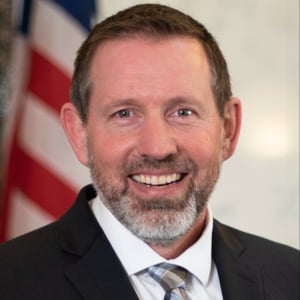
Judge, United States Court of Appeals, Ninth Circuit
Lawrence VanDyke serves as a circuit judge on the U.S. Court of Appeals for the Ninth Circuit. Prior to that appointment in January 2020, he served as a Deputy Assistant Attorney General in the Environment and Natural Resources Division of the United States Department of Justice. Before that, he served consecutively as the Solicitor General of two western states – Nevada and Montana. At the beginning of his legal career, he worked as an attorney in the Appellate and Constitutional Issues practice group at Gibson Dunn & Crutcher, LLP.
Judge VanDyke received his law degree magna cum laude from Harvard Law School, where he was an editor on the Harvard Law Review. He has engineering and theology undergraduate degrees and a masters degree in engineering management. He served as a law clerk to the Honorable Janice Rogers Brown of the United States Court of Appeals for the District of Columbia Circuit. Judge VanDyke and his wife Cheryl live in Reno, Nevada, and they have three children.
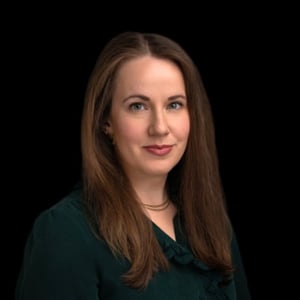
Partner, Cooper & Kirk
Megan M. Wold focuses her practice on legal issues and brief-writing in complex commercial matters, constitutional litigation, and administrative law disputes. She has argued cases in both state and federal court, drafted briefs at all levels of state and federal litigation, and regularly practices before the U.S. Supreme Court. She has represented Fortune 500 clients in international arbitrations, complex tort and fraud litigation, class actions, commercial property disputes, and complex multi-district litigation. She has frequently represented clients in regulatory disputes with state and federal agencies.
Ms. Wold previously served as a Simon Karas Fellow and Deputy Solicitor General in the Ohio Attorney General’s Office. Ms. Wold has practiced as an associate at Bancroft PLLC and as a partner in the Washington, D.C. office of Kirkland & Ellis LLP.
Ms. Wold served as a law clerk to Justice Samuel A. Alito of the U.S. Supreme Court and to Judge Jeffrey Sutton of the U.S. Court of Appeals for the Sixth Circuit. She graduated from the University of Notre Dame School of Law in 2011 and is a member of the bars of Ohio and the District of Columbia. Ms. Wold graduated summa cum laude from Ohio Wesleyan University in 2008 with an undergraduate degree in international studies and religion. She was a member of Phi Beta Kappa and a recipient of the Meek Family Service Leadership Prize.
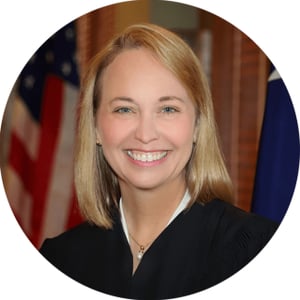
Justice, Texas Supreme Court
Justice Jane Bland has served on the Supreme Court of Texas since 2019. Before that, she served for six years as a state district judge in Houston and 15 years as a justice on the First Court of Appeals.
Justice Bland is the Court’s liaison to the Judicial Commission on Mental Health, the Texas Board of Legal Specialization, and the Texas Supreme Court Historical Society. She is the deputy liaison to the Court’s Rules Advisory Committee.
She earned her undergraduate and law degrees from the University of Texas. In law school, she was Vice-Chancellor, an editor of the Texas Law Review, and a member of the Order of the Coif. Following law school, Justice Bland clerked for the Honorable Thomas Gibbs Gee on the United States Court of Appeals for the Fifth Circuit.
Justice Bland is board-certified in civil appellate law and civil trial law. She began her practice at Baker Botts, where she handled trial and appellate matters. Before her appointment to the Court, she was a partner at Vinson & Elkins in Houston. She is a member of the American Law Institute.
Throughout her career, Justice Bland has been recognized for her work to improve our state’s judiciary. In 2010, Chief Justice John Roberts presented her with the William H. Rehnquist Award, given to a state court judge who exemplifies the highest level of judicial excellence, integrity, fairness, and professional ethics. The Texas Association of Civil Trial and Appellate Specialists has recognized her as the judge of the year four times. She has received several President’s Awards for her work with the Houston Bar Association and the Houston Young Lawyers Association.
Justice Bland previously chaired the board of Houston Volunteer Lawyers and the Oversight Committee for the Texas Pattern Jury Charges. She served on the Court’s Commission to Expand Civil Legal Services and the Board of Legal Specialization’s Civil Appellate Law Advisory Commission. She is a senior trustee of the UT Law School Foundation.
Justice Bland and her husband, Doug, have two children.
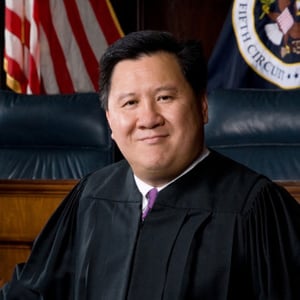
Judge, United States Court of Appeals, Fifth Circuit
James C. Ho is a Circuit Judge on the U.S. Court of Appeals for the Fifth Circuit. Before taking the bench on January 4, 2018, he was a partner and co-chair of the national Appellate and Constitutional Law practice group of Gibson, Dunn & Crutcher LLP.
As an appellate litigator for over a decade, including three years as the Solicitor General of Texas, Judge Ho presented 50 oral arguments in federal and state courts nationwide. He won numerous appeals, including three merits cases at the U.S. Supreme Court. He was routinely ranked among the nation’s leading lawyers by Benchmark, Chambers, Law360, The Legal 500, and The National Law Journal, among other publications. His work has been cited favorably by courts at every level of both the federal and state judiciaries. He won a Best Brief Award from the National Association of Attorneys General for every year that he served as solicitor general, and he is the only state solicitor general in history to be invited by the U.S. Supreme Court to express the views of a state.
Judge Ho has served in all three branches of the federal government. On the Senate Judiciary Committee, he served as chief counsel of the Subcommittees on the Constitution and Immigration under Senator John Cornyn. At the Justice Department, he served as Special Assistant to the Assistant Attorney General for Civil Rights and an attorney-advisor at the Office of Legal Counsel. He clerked for Judge Jerry E. Smith of the U.S. Court of Appeals for the Fifth Circuit and Justice Clarence Thomas of the U.S. Supreme Court.
His record of public service also includes appointments as vice chair of the Federal Judicial Evaluation Committee in Texas and co-chair of the National Asian Pacific American Bar Association Judiciary Committee, and as a member of the U.S. Magistrate Judge Merit Selection Panel for the Northern District of Texas, the U.S. delegation to the United Nations Committee on the Elimination of Racial Discrimination, and the Continuity of Government Commission.
In addition, Judge Ho has served as an Adjunct Professor of Law at the University of Texas School of Law, where he taught seminars on U.S. Supreme Court Litigation and Religious Liberty. He has authored numerous articles in respected law reviews nationwide, including an annual feature on exemplary judicial writing for The Green Bag Almanac & Reader. He previously served as senior editor of The Green Bag and as co-editor of Pub. L. Misc.
Judge Ho graduated from Stanford University with honors and a B.A. in Public Policy in 1995, and the University of Chicago Law School with high honors in 1999. Before law school, he was a legislative aide to California State Senator Quentin Kopp. He and his wife Allyson live in Dallas, Texas, with their twin daughter and son.
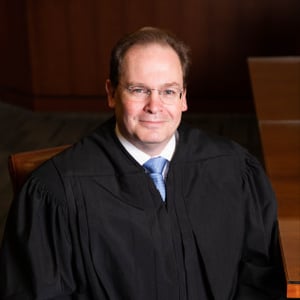
Judge, United States District Court for the Eastern District of Texas
Judge Sean Jordan is a federal district judge for the Eastern District of Texas, Sherman Division. Prior to taking the bench, Judge Jordan worked on complex civil litigation and appellate cases for twenty-five years in both government service and private practice. He has managed the appellate sections of two large law firms and also previously served as Principal Deputy Solicitor General in the Office of the Solicitor General of Texas.
Judge Jordan received his B.A., summa cum laude, from the University of Texas at Austin and his J.D., with honors, from the University of Texas School of Law. Prior to attending UT Austin, he served in the U.S. Army as an infantryman and paratrooper in the 82nd Airborne Division.
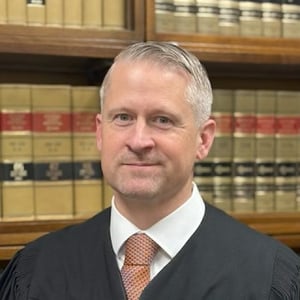
Judge, United States District Court, Northern District of Texas
Matthew J. Kacsmaryk serves as United States District Judge for the Northern District of Texas.
He previously served as (1) an Associate in the Dallas office of Baker Botts LLP, (2) an Assistant United States Attorney, and (3) Deputy General Counsel to FLI.
He is an Honors graduate of the University of Texas Law School.
In 2013, he earned the Attorney General’s Award for Excellence in Furthering the Interest of U.S. National Security.
In 2026, he was named Jurist of the Year by the Texas Review of Law & Politics, the conservative law review at the University of Texas.
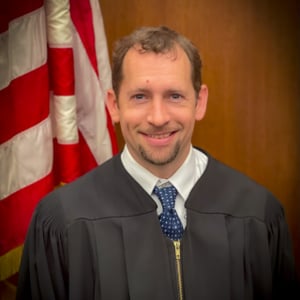
District Judge, United States District Court for the Northern District of Texas
Judge Brantley Starr was appointed to United States District Court for the Northern District of Texas in August 2019. Before his appointment, Judge Starr was the Deputy First Assistant Attorney General of Texas. Prior to that appointment, he served as Deputy Attorney General for Legal Counsel. From 2011 to 2015, Judge Starr served as career staff attorney to Texas Supreme Court Justice Eva Guzman. From 2008 to 2011, he practiced at King & Spalding, LLP. He served in the Office of the Solicitor General from 2006 to 2008. Prior to that, Judge Starr clerked for then-Justice Don Willett on the Texas Supreme Court after serving at the Office of the Attorney General. Judge Starr received his law degree from the University of Texas School of Law and his bachelor of arts degree from Abilene Christian University in 2001. Judge Starr has taught the Origins of the Constitution Class at the University of Texas law, Texas A&M law, and SMU law.
General Counsel, James Madison Center for Free Speech
Managing Partner, Statecraft
Kory Langhofer is the Managing Attorney at Statecraft PLLC, a law firm focusing on government and political law. His practice is concentrated in campaign finance, constitutional litigation, and political matters. He has previously worked as a federal prosecutor, as litigation counsel to the presidential campaigns for Mitt Romney and Donald Trump, and as general counsel for the 2016-2017 presidential transition team.
Kory received his A.B. in political science, summa cum laude, from the University of Illinois at Urbana-Champaign. He received his J.D. from Yale Law School, where he served as an Editor of The Yale Law Journal.
Partner, Womble Bond Dickinson
Press is a trial attorney who has litigated a wide variety of complex business cases, including class actions, in federal and state courts throughout the United States. He has represented international and national clients in numerous industries including pharmaceuticals, software, chemicals, telecom, and retail. He achieves success for his clients in litigation by being ready, willing and able to take those cases to trial.
Press is willing to roll up his sleeves to learn his clients’ business and to always seek results consistent with his clients’ business goals.
Press has been named by Business North Carolina as one of its Legal Elite in both Antitrust and Litigation, and, in 2015, was named to its Hall of Fame in Antitrust.
Press has taught Pre-Trial Litigation at Duke Law School and is a recognized authority on various legal issues related to complex litigation. He frequently lectures and writes on the subjects of Antitrust, Unfair Trade Practices, Trade Secrets, Litigation Practice, and Intellectual Property.
Attorney, Competitive Enterprise Institute
Devin Watkins is an attorney at the Competitive Enterprise Institute. Devin Watkins previously worked at the Cato Institute as a legal associate and interned at the Institute for Justice. At the Cato Institute, Watkins worked on a variety of Supreme Court cases, and one of the briefs he worked on was cited by the Court. His op-eds have appeared in National Review Online, The Hill, Time, and The Federalist among others.
Watkins holds a Juris Doctor cum laude from George Mason University's Antonin Scalia Law School, where he was the development editor on the Mason Law Review. Prior to his legal career Watkins was a senior software developer at Intel and WebMD. He graduated with a Bachelor of Science in Computer Science from Stevens Institute of Technology in Hoboken, New Jersey.
Watkins is a member of the Virginia State Bar, the District of Columbia Bar, the U.S. District Court for the District of Columbia Bar, and the U.S. Court of Appeals for the District of Columbia Circuit Bar.

Necessary & Proper Episode 77: Who Decides if January 6 Was an Insurrection Prohibiting the Election Of Participants?
James Bopp, Kory Langhofer, Pressly M. Millen, Devin Watkins
The Fourteenth Amendment prohibits anyone who has engaged in insurrection or rebellion against the United...
Who Decides if January 6 Was an Insurrection Prohibiting the Election Of Participants?
James Bopp, Kory Langhofer, Pressly M. Millen, Devin Watkins
The Fourteenth Amendment prohibits anyone who has engaged in insurrection or rebellion against the United...
Who Decides if January 6 Was an Insurrection Prohibiting the Election Of Participants?
James Bopp, Kory Langhofer, Pressly M. Millen, Devin Watkins
The Fourteenth Amendment prohibits anyone who has engaged in insurrection or rebellion against the United...
Topics
After Fifty Years of Clean Water Act Confusion, the Supreme Court Should, in Sackett v. EPA, Finally Apply a Reasonable Standard to Federal Government Regulation
The first case of the Supreme Court’s October 2022 term is Sackett v. EPA, No....
Life After Roe: The Supreme Court's Decision in Dobbs and the Future of Abortion in America
Co-sponsored by the Hale Institute
Moscow, IDLuncheon Speech with Former Attorney General William Barr
William P. Barr
Featuring: Hon. William Barr, Former Attorney General of the United States
Luncheon Speech with Former Attorney General William Barr
William P. Barr
Featuring: Hon. William Barr, Former Attorney General of the United States
UT Alumni on the Bench
Eighth Annual Texas Chapters Conference
Austin, TXWho Decides if January 6 Was an Insurrection Prohibiting the Election Of Participants?
TeleforumTopics
Ken Starr was a Christian first
This piece was originally published at Deseret News. Earlier this week, I had the bittersweet...