

Head of U.S. Policy and Strategic Advocacy, Electric Coin Company
Paul Brigner is the Head of U.S. Policy and Strategic Advocacy at the Electric Coin Company. He has served in senior level technology policy and government relations roles for the last eighteen years with another ten years of hands-on technical experience at the beginning his career after serving in the United States Army.
He holds an MBA from the McDonough School of Business at Georgetown University and a JD from the Georgetown University Law Center. He received a Bachelors degree from Stephen F. Austin State University where he was named the Outstanding Computer Science Graduate.

General Counsel, Espresso Systems
Michael Mosier is General Counsel at Espresso Systems, which is developing configurable privacy for digital assets with decentralized private computation. He served as Acting Director, Deputy Director, and the first Digital Innovation Officer of the U.S. Treasury’s Financial Crimes Enforcement Network (FinCEN). He also was Counselor (for Cybersecurity & Emerging Technology) to the Deputy Secretary of the Treasury.
Previously, Michael was Chief Technical Counsel at Chainalysis; an Associate Director of Treasury’s Office of Foreign Assets Control; a Deputy Chief at the Department of Justice’s Money Laundering Section; and White House National Security Council Director for Transnational Organized Crime. He began his public service with the Manhattan District Attorney’s Office and has been an adjunct professor at Georgetown University Law Center.
Professor of Legal Studies and Business Ethics at the Wharton School, University of Pennsylvania
Kevin Werbach is a professor of Legal Studies and Business Ethics at the Wharton School, University of Pennsylvania, and formerly Counsel for New Technology Policy at the U.S. Federal Communications Commission, Werbach has spent the past two decades exploring major trends at the intersection of the Internet, digital media, and communications. He served on the Obama Administration's Presidential Transition Team and founded the Supernova Group, a technology consulting firm, which organized the CEO-level Supernova technology conference. He also created one of the most successful massive open online courses, with nearly half a million enrollments. He was named Wharton's first-ever Iron Prof in 2010.
Werbach has published four books, including The Blockchain and the New Architecture of Trust, For the Win: The Power of Gamification and Game Thinking in Business, Education, Government, and Social Impact, and After the Digital Tornado: Networks, Algorithms, Humanity.
Earlier in his career, he edited the influential technology newsletter Release 1.0, and helped develop the U.S. Government's Internet and e-commerce policies in the Clinton Administration
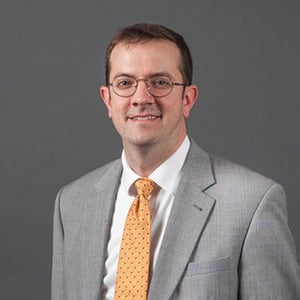
Associate Professor of Law, Antonin Scalia Law School, George Mason University
Associate Professor of Law J.W. Verret joined the Antonin Scalia Law School, George Mason University faculty in 2008. In 2013, he took leave for two years to serve as the Chief Economist and Senior Counsel for the U.S. House Committee on Financial Services. He received his JD and MA in Public Policy from Harvard Law School and the Harvard Kennedy School of Government, respectively, in 2006. While in law school, Professor Verret served an Olin Fellowship in Law and Economics at the Harvard Program on Corporate Governance under the guidance of Prof. Lucian Bebchuk.
Professor Verret then served as a law clerk for Vice-Chancellor John W. Noble of the Delaware Court of Chancery. Prior to joining the faculty at Scalia Law, Professor Verret was an associate in the SEC Enforcement Defense Practice Group at Skadden, Arps in Washington, D.C. He has written extensively on corporate law topics, including Delaware's Guidance, co-written with Chief Justice Myron T. Steele of the Delaware Supreme Court. His academic work has been featured in the Yale Journal on Regulation, The Business Lawyer, the Delaware Journal of Corporate Law, the Stanford Law Review, the University of Pennsylvania Journal of Business Law, and the Virginia Law and Business Review. Professor Verret was selected by the Northwestern Law School Searle Center on Law, Regulation, and Economic Growth for a 2009-2010 Searle-Kaufmann Research Fellowship.
Professor Verret is also a Senior Scholar at the Mercatus Center Working Group on Financial Markets, where he regularly briefs Congressional staff, members of Congress, SEC Commissioners and other financial regulatory agencies on financial regulation topics. He also directs the Corporate Federalism Initiative, where he obtains research grants for a network of students and faculty scholars who study the division between states and the federal government as sources of corporate law. Professor Verret has been invited to testify before various House and Senate Committees four times during the financial crisis of 2009 regarding all of the central provisions of the Obama Administration's 2009 financial regulatory reform proposals. For a full list of Professor Verret's C-Span appearances, including testimony before the U.S. House of Representatives and the U.S. Senate, see http://www.c-spanvideo.org/jwverret.
Professor Verret has been an invited panelist for various television appearances, including an interview on The NewsHour with Jim Lehrer. Professor Verret has been quoted in various media on financial regulation and corporate law topics, including the New York Times, CNN Money, the CNN Political Ticker, CNBC, ABC News, Investor's Business Daily, ESPN.com, The American Banker, The American Lawyer, The Huffington Post, CBS.com, and AP News. Professor Verret's op-eds have been featured in Forbes, The Chicago Tribune, The Orange County Register, and The Wall Street Journal. Professor Verret is also a regular guest contributor to three of the most noted corporate law and financial regulation law blogs: the Harvard Law School Corporate Governance and Financial Regulation Forum, Deallawyers.com, and The Conglomerate.
Executive Director, Coin Center
Jerry Brito is executive director of Coin Center, a non-profit research and advocacy center focused on the public policy issues facing cryptocurrency technologies such as Bitcoin.
Now, steel yourself for some serious signaling and credentialism:
Jerry lives in Annandale, Virginia, with his wife Kathleen, daughter Penny Lane, and their dog Jerkface.

Assistant Professor of Law, Willamette University
Professor Grey’s research focuses on the legal design and regulation of money and finance, including digital fiat currency, as well as broader issues of law and political economy. He teaches Contracts, Business Organizations, and Securities Regulation. He previously co-taught seminars on Fintech and Monies with Professor Robert Hockett at Cornell Law School, where he was a fellow with the Clarke Business Law Institute’s Program on the Law and Regulation of Financial Institutions and Markets, and facilitated a reading group on Law, Money, and Finance at Columbia Law School with Professor Jeffrey N. Gordon.

Lecturing Fellow, Duke University
Lee Reiners is a lecturing fellow at the Duke Financial Economics Center at Duke University. At Duke, Reiners has taught classes on FinTech Law and Policy, Cryptocurrency Law and Policy, Financial Regulatory Policy, Climate Change and Financial Markets, and Cybersecurity Law and Policy. Reiners is widely recognized for his unbiased commentary and analysis on cryptocurrency regulation, and he has testified three times on the subject before the U.S. Congress.
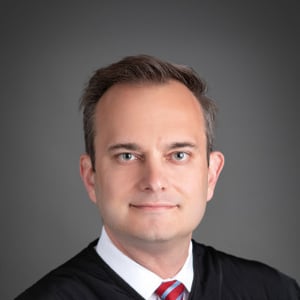
United States Magistrate Judge, Eastern District of North Carolina
Robert T. Numbers, II serves as a United States Magistrate Judge in the United States District Court for the Eastern District of North Carolina.
Judge Numbers received degrees in Political Science and Economics, with honors, from Wake Forest University. After completing his undergraduate work, Judge Numbers obtained his law degree from the University of Notre Dame where he served on the Notre Dame Law Review.
Upon his graduation from law school, Judge Numbers joined the Winston-Salem office of a large, regional law firm. From 2005 until 2010, Judge Numbers’ practice focused on civil rights claims against local municipalities and government contractors. In 2010, Judge Numbers joined the firm’s Raleigh office and concentrated his practice on complex business litigation in state and federal courts.
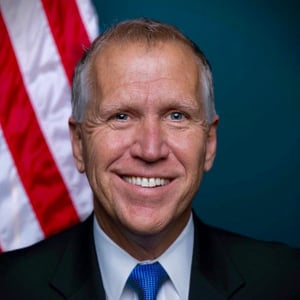
U.S. Senator, United States Senate
Thom was born into a working-class family with his father and mother and five siblings. During his childhood, his family was frequently forced to relocate depending on where his parents could find work. After graduating from high school, Thom was unable to afford college, so he took a job as a warehouse records clerk earning minimum wage. He knows firsthand how difficult it is to raise a family while attending school at night, struggling to make ends meet.
Through hard work and dedication, Thom quickly moved up the corporate ladder, earning his degree at 36 and becoming a top-level executive at PricewaterhouseCoopers and IBM. Thom’s 29-year private sector career in technology and management consulting provided him with a deep understanding of policy-making and the management of complex organizations.
Fueled by a desire to make a difference in his local community, Thom’s involvement in public service began by serving as the PTA president of his daughter’s high school and as a member of the Town of Cornelius Board of Commissioners. In 2006, he was elected to the North Carolina House of Representatives and was selected by his peers to serve as Speaker of the House from 2011 to 2014. As Speaker, Thom played an instrumental role in enacting job-creating policies and reforming North Carolina’s tax and regulatory codes. Thom was elected as U.S. Senator in 2014 and he has focused on pragmatic solutions and delivering results for North Carolina.
Thom lives with his wife Susan in Huntersville, North Carolina, and they are the proud parents of two grown children and two granddaughters.
United States Magistrate Judge, Eastern District of North Carolina
Robert T. Numbers, II serves as a United States Magistrate Judge in the United States District Court for the Eastern District of North Carolina.
Judge Numbers received degrees in Political Science and Economics, with honors, from Wake Forest University. After completing his undergraduate work, Judge Numbers obtained his law degree from the University of Notre Dame where he served on the Notre Dame Law Review.
Upon his graduation from law school, Judge Numbers joined the Winston-Salem office of a large, regional law firm. From 2005 until 2010, Judge Numbers’ practice focused on civil rights claims against local municipalities and government contractors. In 2010, Judge Numbers joined the firm’s Raleigh office and concentrated his practice on complex business litigation in state and federal courts.
U.S. Senator, United States Senate
Thom was born into a working-class family with his father and mother and five siblings. During his childhood, his family was frequently forced to relocate depending on where his parents could find work. After graduating from high school, Thom was unable to afford college, so he took a job as a warehouse records clerk earning minimum wage. He knows firsthand how difficult it is to raise a family while attending school at night, struggling to make ends meet.
Through hard work and dedication, Thom quickly moved up the corporate ladder, earning his degree at 36 and becoming a top-level executive at PricewaterhouseCoopers and IBM. Thom’s 29-year private sector career in technology and management consulting provided him with a deep understanding of policy-making and the management of complex organizations.
Fueled by a desire to make a difference in his local community, Thom’s involvement in public service began by serving as the PTA president of his daughter’s high school and as a member of the Town of Cornelius Board of Commissioners. In 2006, he was elected to the North Carolina House of Representatives and was selected by his peers to serve as Speaker of the House from 2011 to 2014. As Speaker, Thom played an instrumental role in enacting job-creating policies and reforming North Carolina’s tax and regulatory codes. Thom was elected as U.S. Senator in 2014 and he has focused on pragmatic solutions and delivering results for North Carolina.
Thom lives with his wife Susan in Huntersville, North Carolina, and they are the proud parents of two grown children and two granddaughters.
Head of U.S. Policy and Strategic Advocacy, Electric Coin Company
Paul Brigner is the Head of U.S. Policy and Strategic Advocacy at the Electric Coin Company. He has served in senior level technology policy and government relations roles for the last eighteen years with another ten years of hands-on technical experience at the beginning his career after serving in the United States Army.
He holds an MBA from the McDonough School of Business at Georgetown University and a JD from the Georgetown University Law Center. He received a Bachelors degree from Stephen F. Austin State University where he was named the Outstanding Computer Science Graduate.
General Counsel, Espresso Systems
Michael Mosier is General Counsel at Espresso Systems, which is developing configurable privacy for digital assets with decentralized private computation. He served as Acting Director, Deputy Director, and the first Digital Innovation Officer of the U.S. Treasury’s Financial Crimes Enforcement Network (FinCEN). He also was Counselor (for Cybersecurity & Emerging Technology) to the Deputy Secretary of the Treasury.
Previously, Michael was Chief Technical Counsel at Chainalysis; an Associate Director of Treasury’s Office of Foreign Assets Control; a Deputy Chief at the Department of Justice’s Money Laundering Section; and White House National Security Council Director for Transnational Organized Crime. He began his public service with the Manhattan District Attorney’s Office and has been an adjunct professor at Georgetown University Law Center.
Professor of Legal Studies and Business Ethics at the Wharton School, University of Pennsylvania
Kevin Werbach is a professor of Legal Studies and Business Ethics at the Wharton School, University of Pennsylvania, and formerly Counsel for New Technology Policy at the U.S. Federal Communications Commission, Werbach has spent the past two decades exploring major trends at the intersection of the Internet, digital media, and communications. He served on the Obama Administration's Presidential Transition Team and founded the Supernova Group, a technology consulting firm, which organized the CEO-level Supernova technology conference. He also created one of the most successful massive open online courses, with nearly half a million enrollments. He was named Wharton's first-ever Iron Prof in 2010.
Werbach has published four books, including The Blockchain and the New Architecture of Trust, For the Win: The Power of Gamification and Game Thinking in Business, Education, Government, and Social Impact, and After the Digital Tornado: Networks, Algorithms, Humanity.
Earlier in his career, he edited the influential technology newsletter Release 1.0, and helped develop the U.S. Government's Internet and e-commerce policies in the Clinton Administration
Associate Professor of Law, Antonin Scalia Law School, George Mason University
Associate Professor of Law J.W. Verret joined the Antonin Scalia Law School, George Mason University faculty in 2008. In 2013, he took leave for two years to serve as the Chief Economist and Senior Counsel for the U.S. House Committee on Financial Services. He received his JD and MA in Public Policy from Harvard Law School and the Harvard Kennedy School of Government, respectively, in 2006. While in law school, Professor Verret served an Olin Fellowship in Law and Economics at the Harvard Program on Corporate Governance under the guidance of Prof. Lucian Bebchuk.
Professor Verret then served as a law clerk for Vice-Chancellor John W. Noble of the Delaware Court of Chancery. Prior to joining the faculty at Scalia Law, Professor Verret was an associate in the SEC Enforcement Defense Practice Group at Skadden, Arps in Washington, D.C. He has written extensively on corporate law topics, including Delaware's Guidance, co-written with Chief Justice Myron T. Steele of the Delaware Supreme Court. His academic work has been featured in the Yale Journal on Regulation, The Business Lawyer, the Delaware Journal of Corporate Law, the Stanford Law Review, the University of Pennsylvania Journal of Business Law, and the Virginia Law and Business Review. Professor Verret was selected by the Northwestern Law School Searle Center on Law, Regulation, and Economic Growth for a 2009-2010 Searle-Kaufmann Research Fellowship.
Professor Verret is also a Senior Scholar at the Mercatus Center Working Group on Financial Markets, where he regularly briefs Congressional staff, members of Congress, SEC Commissioners and other financial regulatory agencies on financial regulation topics. He also directs the Corporate Federalism Initiative, where he obtains research grants for a network of students and faculty scholars who study the division between states and the federal government as sources of corporate law. Professor Verret has been invited to testify before various House and Senate Committees four times during the financial crisis of 2009 regarding all of the central provisions of the Obama Administration's 2009 financial regulatory reform proposals. For a full list of Professor Verret's C-Span appearances, including testimony before the U.S. House of Representatives and the U.S. Senate, see http://www.c-spanvideo.org/jwverret.
Professor Verret has been an invited panelist for various television appearances, including an interview on The NewsHour with Jim Lehrer. Professor Verret has been quoted in various media on financial regulation and corporate law topics, including the New York Times, CNN Money, the CNN Political Ticker, CNBC, ABC News, Investor's Business Daily, ESPN.com, The American Banker, The American Lawyer, The Huffington Post, CBS.com, and AP News. Professor Verret's op-eds have been featured in Forbes, The Chicago Tribune, The Orange County Register, and The Wall Street Journal. Professor Verret is also a regular guest contributor to three of the most noted corporate law and financial regulation law blogs: the Harvard Law School Corporate Governance and Financial Regulation Forum, Deallawyers.com, and The Conglomerate.

Richard and Frances Mallery Professor of Law and Faculty Director, Constitutional Law Center, Stanford Law School
Michael W. McConnell is the Richard and Frances Mallery Professor and Faculty Director of the Constitutional Law Center at Stanford Law School, and a Senior Fellow at the Hoover Institution. From 2002 to 2009, he served as a Circuit Judge on the United States Court of Appeals for the Tenth Circuit. He was nominated by President George W. Bush, a Republican, and confirmed by a Democratic Senate by unanimous consent. McConnell has previously held chaired professorships at the University of Chicago and the University of Utah, and visiting professorships at Harvard and NYU. He teaches courses on constitutional law, constitutional history, First Amendment, and interpretive theory. He has published widely in the fields of constitutional law and theory, especially church and state, equal protection, and separation of powers. His book, “The President Who Would Not Be King: Executive Power Under the Constitution,” was published by Princeton University Press in 2020, based on the Tanner Lectures in Human Values, which he delivered at Princeton in 2019. His latest book, co-authored with Nathan Chapman, “Agreeing to Disagree: How the Establishment Clause Protects Religious Diversity and Freedom of Conscience,” was published by Oxford University Press in mid-2023. McConnell has argued sixteen cases in the United States Supreme Court, most recently Carney v. Adams (2020). defending a provision of the Delaware Constitution requiring political balance on that state’s courts. More recently, he was co-counsel in Gonzalez v. Google. He earned his B.A. from Michigan State University and his J.D. from the University of Chicago, and has received honorary degrees from Notre Dame University and Michigan State. He served as law clerk to Supreme Court Justice William J. Brennan, Jr. and D.C. Circuit Chief Judge J. Skelly Wright. He has been Assistant General Counsel of the Office of Management & Budget, Assistant to the Solicitor General of the Department of Justice, and a member of the President’s Intelligence Oversight Board. He is Senior of Counsel to the law firm Wilson, Sonsini, Goodrich & Rosati, and is co-chair of Meta’s Oversight Review Board.
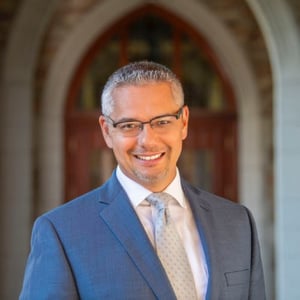
Tocqueville Associate Professor Department of Political Science and Concurrent Associate Professor of Law, University of Notre Dame Law School
Vincent Phillip Muñoz is the Tocqueville Associate Professor of Religion & Public Life in the Department of Political Science at the University of Notre Dame. He is the founding director of Notre Dame's undergraduate minor in Constitutional Studies and directs Notre Dame's Tocqueville Program for Inquiry into Religion and Public Life.
Muñoz writes and teaches across the fields of constitutional law, American politics, and political philosophy with a focus on religious liberty and the American Founding. His first book, God and the Founders: Madison, Washington, and Jefferson (Cambridge University Press, 2009) won the Hubert Morken Award from the American Political Science Association for the best publication on religion and politics in 2009 and 2010. His First Amendment church-state case reader, Religious Liberty and the American Supreme Court: The Essential Cases and Documents (Rowman & Littlefield) was first published in 2013 (revised edition, 2015) and is being used at Notre Dame and other leading universities.
Muñoz's current project is a scholarly monograph on the natural right of religious liberty and the original meaning of the First Amendment's Religion Clauses. Articles from that project have appeared in American Political Science Review, The Harvard Journal of Law and Public Policy, Notre Dame Law Review, American Political Thought, and the University of Pennsylvania's Journal of Constitutional Law.
Richard and Frances Mallery Professor of Law and Faculty Director, Constitutional Law Center, Stanford Law School
Michael W. McConnell is the Richard and Frances Mallery Professor and Faculty Director of the Constitutional Law Center at Stanford Law School, and a Senior Fellow at the Hoover Institution. From 2002 to 2009, he served as a Circuit Judge on the United States Court of Appeals for the Tenth Circuit. He was nominated by President George W. Bush, a Republican, and confirmed by a Democratic Senate by unanimous consent. McConnell has previously held chaired professorships at the University of Chicago and the University of Utah, and visiting professorships at Harvard and NYU. He teaches courses on constitutional law, constitutional history, First Amendment, and interpretive theory. He has published widely in the fields of constitutional law and theory, especially church and state, equal protection, and separation of powers. His book, “The President Who Would Not Be King: Executive Power Under the Constitution,” was published by Princeton University Press in 2020, based on the Tanner Lectures in Human Values, which he delivered at Princeton in 2019. His latest book, co-authored with Nathan Chapman, “Agreeing to Disagree: How the Establishment Clause Protects Religious Diversity and Freedom of Conscience,” was published by Oxford University Press in mid-2023. McConnell has argued sixteen cases in the United States Supreme Court, most recently Carney v. Adams (2020). defending a provision of the Delaware Constitution requiring political balance on that state’s courts. More recently, he was co-counsel in Gonzalez v. Google. He earned his B.A. from Michigan State University and his J.D. from the University of Chicago, and has received honorary degrees from Notre Dame University and Michigan State. He served as law clerk to Supreme Court Justice William J. Brennan, Jr. and D.C. Circuit Chief Judge J. Skelly Wright. He has been Assistant General Counsel of the Office of Management & Budget, Assistant to the Solicitor General of the Department of Justice, and a member of the President’s Intelligence Oversight Board. He is Senior of Counsel to the law firm Wilson, Sonsini, Goodrich & Rosati, and is co-chair of Meta’s Oversight Review Board.
Tocqueville Associate Professor Department of Political Science and Concurrent Associate Professor of Law, University of Notre Dame Law School
Vincent Phillip Muñoz is the Tocqueville Associate Professor of Religion & Public Life in the Department of Political Science at the University of Notre Dame. He is the founding director of Notre Dame's undergraduate minor in Constitutional Studies and directs Notre Dame's Tocqueville Program for Inquiry into Religion and Public Life.
Muñoz writes and teaches across the fields of constitutional law, American politics, and political philosophy with a focus on religious liberty and the American Founding. His first book, God and the Founders: Madison, Washington, and Jefferson (Cambridge University Press, 2009) won the Hubert Morken Award from the American Political Science Association for the best publication on religion and politics in 2009 and 2010. His First Amendment church-state case reader, Religious Liberty and the American Supreme Court: The Essential Cases and Documents (Rowman & Littlefield) was first published in 2013 (revised edition, 2015) and is being used at Notre Dame and other leading universities.
Muñoz's current project is a scholarly monograph on the natural right of religious liberty and the original meaning of the First Amendment's Religion Clauses. Articles from that project have appeared in American Political Science Review, The Harvard Journal of Law and Public Policy, Notre Dame Law Review, American Political Thought, and the University of Pennsylvania's Journal of Constitutional Law.
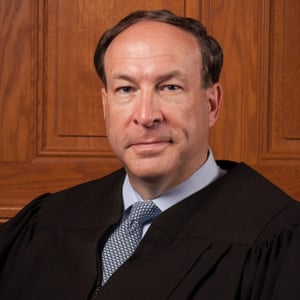
Judge, United States Court of Appeals, Seventh Circuit
Michael B. Brennan was confirmed and sworn in as a Circuit Judge for the U.S. Court of Appeals for the Seventh Circuit in May 2018.
He previously worked as a partner in the Milwaukee law firm of Gass Weber Mullins LLC, where he tried cases and handled appeals in federal and state courts, as a judge on the Milwaukee County Circuit, where he presided over a variety of criminal and civil calendars, and as an assistant district attorney in the Milwaukee County District Attorney’s office.
Brennan’s undergraduate degree is from the University of Notre Dame, and his law degree from Northwestern University School of Law, where he was an editor on the law review and the moot court champion. He served as a law clerk on the U.S. District Court for the Eastern District of Wisconsin and the U.S. Court of Appeals for the Seventh Circuit.
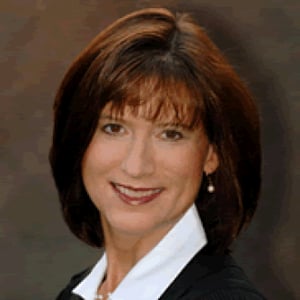
Judge, United States Court of Appeals, Seventh Circuit
Judge Sykes was nominated to the Seventh Circuit by President George W. Bush and confirmed by the Senate in 2004. Prior to her appointment to the federal bench, Judge Sykes served as a justice on the Wisconsin Supreme Court. Governor Tommy G. Thompson appointed her in September 1999 to fill a mid-term vacancy on the state supreme court, and she was elected to a full ten-year term in April 2000. From 1992-1999, Judge Sykes served on the state trial bench in Milwaukee County (elected in 1992 and re-elected in 1998). From 1985-1992, Judge Sykes practiced law with the Milwaukee firm of Whyte & Hirschboeck, S.C., and from 1984-1985, was a law clerk to Federal Judge Terence T. Evans.
Born and raised in the Milwaukee area, Judge Sykes earned a bachelor’s degree in journalism from Northwestern University in 1980 and a law degree from Marquette University Law School in 1984. Between college and law school, Judge Sykes worked as a reporter for The Milwaukee Journal.
Judge Sykes has two sons.
Head of U.S. Policy and Strategic Advocacy, Electric Coin Company
Paul Brigner is the Head of U.S. Policy and Strategic Advocacy at the Electric Coin Company. He has served in senior level technology policy and government relations roles for the last eighteen years with another ten years of hands-on technical experience at the beginning his career after serving in the United States Army.
He holds an MBA from the McDonough School of Business at Georgetown University and a JD from the Georgetown University Law Center. He received a Bachelors degree from Stephen F. Austin State University where he was named the Outstanding Computer Science Graduate.
General Counsel, Espresso Systems
Michael Mosier is General Counsel at Espresso Systems, which is developing configurable privacy for digital assets with decentralized private computation. He served as Acting Director, Deputy Director, and the first Digital Innovation Officer of the U.S. Treasury’s Financial Crimes Enforcement Network (FinCEN). He also was Counselor (for Cybersecurity & Emerging Technology) to the Deputy Secretary of the Treasury.
Previously, Michael was Chief Technical Counsel at Chainalysis; an Associate Director of Treasury’s Office of Foreign Assets Control; a Deputy Chief at the Department of Justice’s Money Laundering Section; and White House National Security Council Director for Transnational Organized Crime. He began his public service with the Manhattan District Attorney’s Office and has been an adjunct professor at Georgetown University Law Center.
Associate Professor of Law, Antonin Scalia Law School, George Mason University
Associate Professor of Law J.W. Verret joined the Antonin Scalia Law School, George Mason University faculty in 2008. In 2013, he took leave for two years to serve as the Chief Economist and Senior Counsel for the U.S. House Committee on Financial Services. He received his JD and MA in Public Policy from Harvard Law School and the Harvard Kennedy School of Government, respectively, in 2006. While in law school, Professor Verret served an Olin Fellowship in Law and Economics at the Harvard Program on Corporate Governance under the guidance of Prof. Lucian Bebchuk.
Professor Verret then served as a law clerk for Vice-Chancellor John W. Noble of the Delaware Court of Chancery. Prior to joining the faculty at Scalia Law, Professor Verret was an associate in the SEC Enforcement Defense Practice Group at Skadden, Arps in Washington, D.C. He has written extensively on corporate law topics, including Delaware's Guidance, co-written with Chief Justice Myron T. Steele of the Delaware Supreme Court. His academic work has been featured in the Yale Journal on Regulation, The Business Lawyer, the Delaware Journal of Corporate Law, the Stanford Law Review, the University of Pennsylvania Journal of Business Law, and the Virginia Law and Business Review. Professor Verret was selected by the Northwestern Law School Searle Center on Law, Regulation, and Economic Growth for a 2009-2010 Searle-Kaufmann Research Fellowship.
Professor Verret is also a Senior Scholar at the Mercatus Center Working Group on Financial Markets, where he regularly briefs Congressional staff, members of Congress, SEC Commissioners and other financial regulatory agencies on financial regulation topics. He also directs the Corporate Federalism Initiative, where he obtains research grants for a network of students and faculty scholars who study the division between states and the federal government as sources of corporate law. Professor Verret has been invited to testify before various House and Senate Committees four times during the financial crisis of 2009 regarding all of the central provisions of the Obama Administration's 2009 financial regulatory reform proposals. For a full list of Professor Verret's C-Span appearances, including testimony before the U.S. House of Representatives and the U.S. Senate, see http://www.c-spanvideo.org/jwverret.
Professor Verret has been an invited panelist for various television appearances, including an interview on The NewsHour with Jim Lehrer. Professor Verret has been quoted in various media on financial regulation and corporate law topics, including the New York Times, CNN Money, the CNN Political Ticker, CNBC, ABC News, Investor's Business Daily, ESPN.com, The American Banker, The American Lawyer, The Huffington Post, CBS.com, and AP News. Professor Verret's op-eds have been featured in Forbes, The Chicago Tribune, The Orange County Register, and The Wall Street Journal. Professor Verret is also a regular guest contributor to three of the most noted corporate law and financial regulation law blogs: the Harvard Law School Corporate Governance and Financial Regulation Forum, Deallawyers.com, and The Conglomerate.
Professor of Legal Studies and Business Ethics at the Wharton School, University of Pennsylvania
Kevin Werbach is a professor of Legal Studies and Business Ethics at the Wharton School, University of Pennsylvania, and formerly Counsel for New Technology Policy at the U.S. Federal Communications Commission, Werbach has spent the past two decades exploring major trends at the intersection of the Internet, digital media, and communications. He served on the Obama Administration's Presidential Transition Team and founded the Supernova Group, a technology consulting firm, which organized the CEO-level Supernova technology conference. He also created one of the most successful massive open online courses, with nearly half a million enrollments. He was named Wharton's first-ever Iron Prof in 2010.
Werbach has published four books, including The Blockchain and the New Architecture of Trust, For the Win: The Power of Gamification and Game Thinking in Business, Education, Government, and Social Impact, and After the Digital Tornado: Networks, Algorithms, Humanity.
Earlier in his career, he edited the influential technology newsletter Release 1.0, and helped develop the U.S. Government's Internet and e-commerce policies in the Clinton Administration




Topics
Valancourt Books v. Garland
On Oct 13, 2022, the DC Circuit Court of Appeals heard argument in a case...
Deep Dive Episode 243 - Is the Office of Foreign Assets Control's Sanctioning of Tornado Cash a Threat to the Future of Financial Privacy?
Paul Brigner, Michael Mosier, Kevin Werbach, J.W. Verret
Tornado Cash is an open source, decentralized cryptocurrency tumbler that was introduced in 2019. The...
Bitcoin Cowboys: Will Wyoming Become the Next Crypto Capital?
Jerry Brito, Rohan Grey, David Kinitsky, Caitlin Long, Stephen Mihm, Lee A. Reiners
“Bitcoin Cowboys: Will Wyoming Become the Next Crypto Capital” will premiere on the Federalist Society’s YouTube...
Fireside Chat
Robert T. Numbers, Thom Tillis
Featuring: Hon. Thom Tillis, United States Senator Moderator: Hon. Robert T. Numbers, United States Magistrate Judge
Fireside Chat
Robert T. Numbers, Thom Tillis
Featuring: Hon. Thom Tillis, United States Senator Moderator: Hon. Robert T. Numbers, United States Magistrate Judge
Is the Office of Foreign Assets Control's Sanctioning of Tornado Cash a Threat to the Future of Financial Privacy?
Paul Brigner, Michael Mosier, Kevin Werbach, J.W. Verret
Tornado Cash is an open source, decentralized cryptocurrency tumbler that was introduced in 2019. The...
2022 Judge Rudolph T. Randa Lecture and Award
Milwaukee Lawyers Chapter
Milwaukee, WIIs the Office of Foreign Assets Control's Sanctioning of Tornado Cash a Threat to the Future of Financial Privacy?
Talks with Authors: Vincent Phillip Munoz on Religious Liberty and the American Founding
Michael W. McConnell, Vincent Phillip Munoz
What did the American Founders mean when they declared religious liberty to be an “inherent,”...
Talks with Authors: Vincent Phillip Munoz on Religious Liberty and the American Founding
Michael W. McConnell, Vincent Phillip Munoz
What did the American Founders mean when they declared religious liberty to be an “inherent,”...