
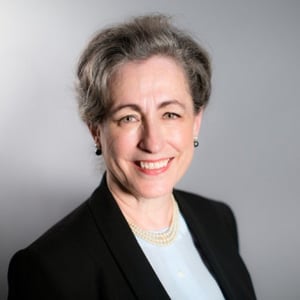
Senior Litigation Counsel, New Civil Liberties Alliance
Peggy Little, Senior Counsel at New Civil Liberties Alliance, a new public interest law firm challenging the administrative state founded in 2017 by Professor Philip Hamburger, has over three decades of experience as a trial and appellate litigator in complex, high-stakes regulatory, mass-tort, class-action, products liability, securities, commercial and civil rights litigation representing individuals and high-profile litigants including Fortune 50 companies, financial institutions, public companies, and universities in state and federal courts, including the United States Supreme Court.
Peggy is a graduate of Yale College and Yale Law School, where she was awarded the Potter Stewart Prize. She was a law clerk to the Hon. Ralph K. Winter on the U.S. Court of Appeals for the Second Circuit. Prior to starting her own trial and appellate law firm in 1997, where she was appellate consulting counsel to the New Haven firefighters in Ricci v.DeStefano, a landmark 2009 United States Supreme Court decision, Peggy was a partner at Tyler, Cooper & Alcorn in New Haven, Connecticut. From 2004 to early 2018, Peggy directed, part-time, the Federalist Society Pro Bono Center.
Peggy has participated in many national conferences and symposia addressing issues of current importance in constitutional law – specifically state and federal constitutional questions regarding the separation of powers and the first amendment – and regularly speaks, blogs and publishes on the topic of the unconstitutional exercise of governmental power. In May of 2017, she presented her paper, Pirates at the Parchment Gates, to a conference of state and federal judges at the Law and Economics Center at the Antonin Scalia Law School. Her work has been published by law reviews, legal publications, the Federalist Society, the Wall Street Journal, Law and Liberty and the Manhattan Institute.
Recent publications include: How the SEC silences its critics, The SEC should listen to Sen. Cotton, Lucia v. SEC, Opening Salvos in the Opioid Litigation Wars, Straight Dope on the Opioid Crisis
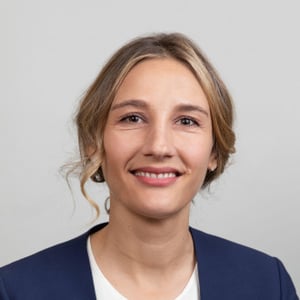
Attorney, Institute for Justice
Anya Bidwell (née Cherkasova) leads IJ’s Project on Immunity and Accountability (“PIA”). Through this project, Anya works to promote judicial engagement and ensure that government officials are held to account when they violate individuals’ constitutional rights. Anya also serves as an adviser on the American Law Institute’s Restatement of the Law, Constitutional Torts project.
One of Anya’s PIA cases—Gonzalez v. Trevino—was heard by the United States Supreme Court on March 20, 2024. She argued the case for the petitioner, with the goal of convincing the Justices that retaliatory arrests not involving on-the-spot decisions by police officers should be actionable under the First Amendment regardless of probable cause. The decision is expected in June.
This was Anya’s third appearance before the U.S. Supreme Court. She second-chaired Brownback v. King (an excessive force case) and Tennessee Wine & Spirits Retailers Association v. Thomas (a commerce clause case) in November 2020 and January 2019 respectfully.
Before joining IJ, Anya worked for a top national law firm, handling cases in trial and appellate courts. She earned her J.D. with honors from the University of Texas. Two years prior to entering law school, Anya received a master’s degree in Global Policy Studies, also from the University of Texas, and wrote a thesis on asymmetric warfare.
Anya spent her childhood in Ukraine and Kyrgyzstan. At 16, she left her family behind and came to America on a university scholarship. Her upbringing motivated her to study law and become an advocate for a strong, independent judiciary.
Anya’s work has been featured in numerous publications, including the Washington Post, the Wall Street Journal, the New York Times, USA Today, and the Guardian. She is also the host of live recordings of our Short Circuit podcast and a co-producer of our documentary-style podcast Bound by Oath.
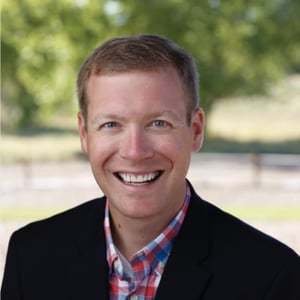
President, Center for American Rights
Daniel Suhr serves as president of the Center for American Rights, where he spends every day on the front lines of the fight to preserve our rights and liberties. The Center's mission is to advance free speech, free enterprise, and parental freedom in education through strategic, precedent-setting litigation.
Daniel formerly worked as policy director for Wisconsin Governor Scott Walker, as chief of staff for Wisconsin Lieutenant Governor Rebecca Kleefisch, and as a law clerk for Judge Diane Sykes of the U.S. Court of Appeals for the Seventh Circuit. He holds a B.A. and J.D. from Marquette University, and master’s degrees from Georgetown and the University of Missouri.
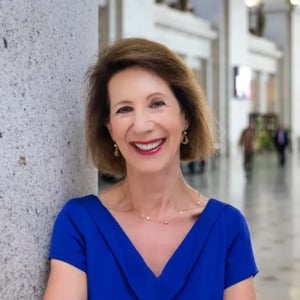
Director, Center for Energy, Climate, and Environment and The Herbert and Joyce Morgan Fellow in Energy and Environmental Policy, The Heritage Foundation
Diana Furchtgott-Roth is director of the Center for Energy, Climate, and Environment and the Herbert and Joyce Morgan Fellow in Energy and Environmental Policy at The Heritage Foundation. She is an Oxford-educated economist, a frequent guest on TV and radio shows, and a columnist for Forbes.
Diana worked in senior roles in the White House under Presidents Reagan, George H.W. Bush, and George W. Bush. She has served as Deputy Assistant Secretary for Research and Technology at the U.S. Department of Transportation; Acting Assistant Secretary for Economic Policy at the U.S. Department of Treasury; Chief Economist at the U.S. Department of Labor; Chief of Staff of the President’s Council of Economic Advisers; and Deputy Executive Secretary of the White House Domestic Policy Council.
Diana is the author or coauthor of six books and hundreds of articles on economic policy, including Regulating to Disaster: How Green Jobs Policies are Destroying America's Economy (Encounter Books, 2012). Her most recent book is United States Income, Wealth, Consumption, and Inequality (Oxford University Press, 2021). She received degrees in economics from Swarthmore College and Oxford University.
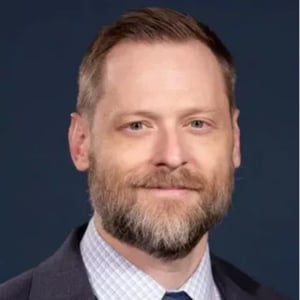
Litigation Director, Center for Individual Rights
Caleb Kruckenberg is CIR’s Litigation Director.
Caleb previously worked as a prosecutor, a public defender, a lobbyist for a national advocacy organization and, most recently, an impact litigator protecting the separation of powers at both the Pacific Legal Foundation and the New Civil Liberties Alliance. He has won major victories against numerous federal agencies, including the U.S. Department of Justice, Department of Labor, Bureau of Alcohol Tobacco and Firearms, and the Securities and Exchange Commission. He is also proud to have sued every U.S. attorney general, eight so far, since he has been litigating against the government on behalf of liberty-minded clients. Caleb has also argued more than 20 times in the U.S. Courts of Appeals, winning cases in 8 of the 12 regional circuit courts.
He graduated cum laude from Temple University Beasley School of Law in Philadelphia, where he was the lead articles editor for the Temple Law Review. Caleb also attended the Pennsylvania Academy of the Fine Arts, where he studied figurative painting.
Director, Center for Energy, Climate, and Environment and The Herbert and Joyce Morgan Fellow in Energy and Environmental Policy, The Heritage Foundation
Diana Furchtgott-Roth is director of the Center for Energy, Climate, and Environment and the Herbert and Joyce Morgan Fellow in Energy and Environmental Policy at The Heritage Foundation. She is an Oxford-educated economist, a frequent guest on TV and radio shows, and a columnist for Forbes.
Diana worked in senior roles in the White House under Presidents Reagan, George H.W. Bush, and George W. Bush. She has served as Deputy Assistant Secretary for Research and Technology at the U.S. Department of Transportation; Acting Assistant Secretary for Economic Policy at the U.S. Department of Treasury; Chief Economist at the U.S. Department of Labor; Chief of Staff of the President’s Council of Economic Advisers; and Deputy Executive Secretary of the White House Domestic Policy Council.
Diana is the author or coauthor of six books and hundreds of articles on economic policy, including Regulating to Disaster: How Green Jobs Policies are Destroying America's Economy (Encounter Books, 2012). Her most recent book is United States Income, Wealth, Consumption, and Inequality (Oxford University Press, 2021). She received degrees in economics from Swarthmore College and Oxford University.
Litigation Director, Center for Individual Rights
Caleb Kruckenberg is CIR’s Litigation Director.
Caleb previously worked as a prosecutor, a public defender, a lobbyist for a national advocacy organization and, most recently, an impact litigator protecting the separation of powers at both the Pacific Legal Foundation and the New Civil Liberties Alliance. He has won major victories against numerous federal agencies, including the U.S. Department of Justice, Department of Labor, Bureau of Alcohol Tobacco and Firearms, and the Securities and Exchange Commission. He is also proud to have sued every U.S. attorney general, eight so far, since he has been litigating against the government on behalf of liberty-minded clients. Caleb has also argued more than 20 times in the U.S. Courts of Appeals, winning cases in 8 of the 12 regional circuit courts.
He graduated cum laude from Temple University Beasley School of Law in Philadelphia, where he was the lead articles editor for the Temple Law Review. Caleb also attended the Pennsylvania Academy of the Fine Arts, where he studied figurative painting.

Partner, Briscoe Prows Kao Ivester & Bazel LLP
Tony Francois is experienced in Water and Real Property Law, Land Use and Zoning, Environmental Regulation, Natural Resources Development, Agricultural Law, and Constitutional Law. He has represented homeowners, builders, farmers and ranchers, trade associations, and water districts in administrative, civil, and criminal proceedings before state and federal administrative agencies and state and federal trial and appellate courts. He is a member of the California State Bar and the Northern, Eastern, and Central Districts of California and the Districts of New Mexico and North Dakota, and has litigated cases in federal courts in California, Oregon, Washington, Idaho, Montana, Nevada, Arizona, New Mexico, Colorado, North and South Dakota, Minnesota, Massachusetts, Maryland, South Carolina, and the District of Columbia, as well as the Sixth, Eighth, Ninth, and Tenth Circuit Courts of Appeals. He has appeared before the Supreme Courts of California, Idaho, Nevada, and the United States.
Prior to attending law school, he served as an infantry officer in the United States Army, and was stationed in the former West Germany during the fall of the Berlin Wall.
Tony was an Attorney at Pacific Legal Foundation from 2012 to 2021. He was a lobbyist for 10 years, first with California Farm Bureau Federation from 2003 to 2007, and then with KP Public Affairs from 2007 to 2012. He was an attorney at McQuaid, Bedford & Van Zandt in San Francisco from 1999 – 2003.
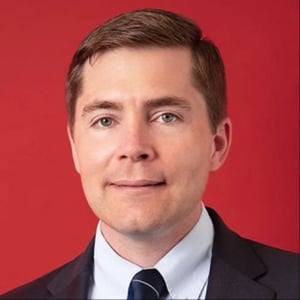
Senior Attorney, Pacific Legal Foundation
Damien Schiff is a senior attorney at Pacific Legal Foundation. He leads its environmental practice group, a unique initiative that draws broadly from PLF’s expertise and success in property rights and separation of powers litigation. Over the years, Damien has represented hundreds of landowners and property rights advocates to defend their liberties against heavy-handed and unwarranted environmental and land-use regulation. His litigation experience includes Sackett v. U.S. Environmental Protection Agency, a groundbreaking decision in which the U.S. Supreme Court upheld the right of landowners to challenge Clean Water Act compliance orders issued by EPA, and Contoski v. Norton, PLF’s successful effort to force the federal government to make good on its promise to delist the bald eagle from the Endangered Species Act.
Besides litigation, Damien has written academic articles on a variety of subjects, including the Endangered Species Act, the Clean Water Act, greenhouse gas torts, the duty to rescue, and international water law. He has appeared on a variety of television and radio programs and has been quoted in The New York Times, The Wall Street Journal, Harper’s Magazine, and The Economist, among other publications.
He obtained his law degree magna cum laude from the University of San Diego School of Law, and his undergraduate degree magna cum laude from Georgetown University. While at USD, he was a research assistant for Professor Bernard Siegan, a leading constitutional theorist and advocate for property rights and economic liberty. Immediately prior to joining PLF, Damien clerked for Judge (and former PLF attorney) Victor Wolski of the United States Court of Federal Claims. Damien credits the mentoring and examples of Professor Siegan and Judge Wolski for his decision to pursue a career in liberty-based public interest litigation.
Damien lives in Sacramento with his wife, two young sons, four chickens, and a cat named Princess. In his off hours he enjoys stamp collecting, Gregorian chant, and martinis—preferably at the same time.
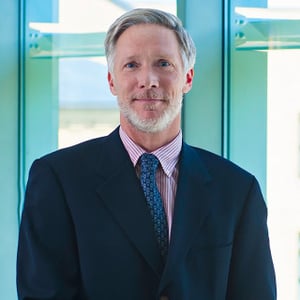
Director of the Program on Environmental and Energy Law, Assistant Dean of Adjunct Faculty Affairs, and Fellow in Environmental Law, American University Washington College of Law
William Snape has litigated a number of environmental and related cases in federal court, and argued Center for Biological Diversity v. Interior at the DC Circuit, which rejected the federal government’s plan for oil and gas drilling off the coast of Alaska in part because of climate change concerns. Snape is the author of numerous articles on natural resource issues, including the book Biodiversity and the Law published by Island Press. His public interest work currently focuses upon environmental justice advocacy at the state level, serving as board general counsel to the United States Climate Action Network, and litigating an active federal docket under the Freedom of Information Act (FOIA). In Summer 2020, Snape was named director of WCL’s Program on Environmental and Energy Law (PEEL).
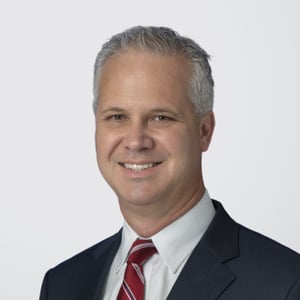
Partner, Hunton Andrews Kurth
Mr. Leopold is a Partner with the law firm of Hunton Andrews Kurth in Washington, DC. He is the former Senate-confirmed general counsel of the U.S. EPA from 2018-2020, and he previously was a litigator at the U.S. Department of Justice, Environment and Natural Resources Division form 2007-2013. As EPA General Counsel, he counseled on the development and defense of EPA’s most significant rulemakings, including the Affordable Clean Energy Rule, the Navigable Waters Protection Rule, and the Safe Affordable Fuel‐Efficient (SAFE) Vehicles Rule, as well as several pesticide actions. He was personally involved in defending EPA in litigation, including the County of Maui v. Hawaii Wildlife Fund in the U.S. Supreme Court. Mr. Leopold’s prior government service also includes working in Florida as general counsel of the Florida Department of Environmental Protection. He now represents clients in regulatory advocacy before federal agencies, litigates federal environmental actions, and defends clients with EPA enforcement issues.
Senior Litigation Counsel, New Civil Liberties Alliance
Peggy Little, Senior Counsel at New Civil Liberties Alliance, a new public interest law firm challenging the administrative state founded in 2017 by Professor Philip Hamburger, has over three decades of experience as a trial and appellate litigator in complex, high-stakes regulatory, mass-tort, class-action, products liability, securities, commercial and civil rights litigation representing individuals and high-profile litigants including Fortune 50 companies, financial institutions, public companies, and universities in state and federal courts, including the United States Supreme Court.
Peggy is a graduate of Yale College and Yale Law School, where she was awarded the Potter Stewart Prize. She was a law clerk to the Hon. Ralph K. Winter on the U.S. Court of Appeals for the Second Circuit. Prior to starting her own trial and appellate law firm in 1997, where she was appellate consulting counsel to the New Haven firefighters in Ricci v.DeStefano, a landmark 2009 United States Supreme Court decision, Peggy was a partner at Tyler, Cooper & Alcorn in New Haven, Connecticut. From 2004 to early 2018, Peggy directed, part-time, the Federalist Society Pro Bono Center.
Peggy has participated in many national conferences and symposia addressing issues of current importance in constitutional law – specifically state and federal constitutional questions regarding the separation of powers and the first amendment – and regularly speaks, blogs and publishes on the topic of the unconstitutional exercise of governmental power. In May of 2017, she presented her paper, Pirates at the Parchment Gates, to a conference of state and federal judges at the Law and Economics Center at the Antonin Scalia Law School. Her work has been published by law reviews, legal publications, the Federalist Society, the Wall Street Journal, Law and Liberty and the Manhattan Institute.
Recent publications include: How the SEC silences its critics, The SEC should listen to Sen. Cotton, Lucia v. SEC, Opening Salvos in the Opioid Litigation Wars, Straight Dope on the Opioid Crisis
Director, Center for Energy, Climate, and Environment and The Herbert and Joyce Morgan Fellow in Energy and Environmental Policy, The Heritage Foundation
Diana Furchtgott-Roth is director of the Center for Energy, Climate, and Environment and the Herbert and Joyce Morgan Fellow in Energy and Environmental Policy at The Heritage Foundation. She is an Oxford-educated economist, a frequent guest on TV and radio shows, and a columnist for Forbes.
Diana worked in senior roles in the White House under Presidents Reagan, George H.W. Bush, and George W. Bush. She has served as Deputy Assistant Secretary for Research and Technology at the U.S. Department of Transportation; Acting Assistant Secretary for Economic Policy at the U.S. Department of Treasury; Chief Economist at the U.S. Department of Labor; Chief of Staff of the President’s Council of Economic Advisers; and Deputy Executive Secretary of the White House Domestic Policy Council.
Diana is the author or coauthor of six books and hundreds of articles on economic policy, including Regulating to Disaster: How Green Jobs Policies are Destroying America's Economy (Encounter Books, 2012). Her most recent book is United States Income, Wealth, Consumption, and Inequality (Oxford University Press, 2021). She received degrees in economics from Swarthmore College and Oxford University.
Litigation Director, Center for Individual Rights
Caleb Kruckenberg is CIR’s Litigation Director.
Caleb previously worked as a prosecutor, a public defender, a lobbyist for a national advocacy organization and, most recently, an impact litigator protecting the separation of powers at both the Pacific Legal Foundation and the New Civil Liberties Alliance. He has won major victories against numerous federal agencies, including the U.S. Department of Justice, Department of Labor, Bureau of Alcohol Tobacco and Firearms, and the Securities and Exchange Commission. He is also proud to have sued every U.S. attorney general, eight so far, since he has been litigating against the government on behalf of liberty-minded clients. Caleb has also argued more than 20 times in the U.S. Courts of Appeals, winning cases in 8 of the 12 regional circuit courts.
He graduated cum laude from Temple University Beasley School of Law in Philadelphia, where he was the lead articles editor for the Temple Law Review. Caleb also attended the Pennsylvania Academy of the Fine Arts, where he studied figurative painting.

Courthouse Steps Oral Argument: SEC v. Cochran
Margaret A. Little
On November 7, 2022, the U.S. Supreme Court will hear oral argument in Michelle Cochran...
Courthouse Steps Oral Argument: SEC v. Cochran
State Court Docket Watch: Bauserman v. Unemployment Insurance Agency
Anya Bidwell
Late last term, the United States Supreme Court all but eliminated the ability of individuals...
State Court Docket Watch: People v. Parks
Daniel Suhr
Under Michigan law, adults who commit the offense of first-degree murder are subject to a...
Topics
Response to The Original Understanding of the Indian Commerce Clause: An Update
I thank the Federalist Society for the opportunity to briefly respond to Robert Natelson’s recent...
Litigation Update: Garrison v. U.S. Dept. of Ed.: A Challenge to Biden’s Student Loan Forgiveness
Diana Furchtgott-Roth, Caleb Kruckenberg
In August 2022, the Biden administration announced plans to cancel up to $20,000 in student...
Litigation Update: Garrison v. U.S. Dept. of Ed.: A Challenge to Biden’s Student Loan Forgiveness
Diana Furchtgott-Roth, Caleb Kruckenberg
In August 2022, the Biden administration announced plans to cancel up to $20,000 in student...
Litigation Update: Garrison v. U.S. Dept. of Ed.: A Challenge to Biden’s Student Loan Forgiveness
TeleforumSackett v. Environmental Protection Agency - Post-Argument SCOTUScast
Tony Francois, Damien Michael Schiff, William Snape, Matthew Z. Leopold
One of the longest-standing environmental law challenges is how to define the scope of waters...
Topics
Criminal Cases in SCOTUS’s October 2021-22 Terms: Introduction
This is the first in a series of posts on criminal cases and crime-related civil...