
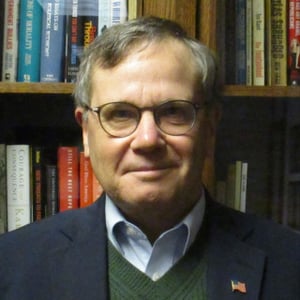
Senior Fellow in Constitutional Jurisprudence, Independence Institute
Professor Robert G. Natelson is a constitutional scholar and author.
Rob’s constitutional scholarship has been cited repeatedly by justices and parties at the U.S. Supreme Court—as well as by federal appeals courts, and at least 18 state supreme courts.
Rob’s research into the Constitution’s original meaning has carried him to libraries throughout the United States and in Britain, including four months at Oxford University. His books and articles span many different parts of the Constitution, including groundbreaking studies of the Necessary and Proper Clause, the Indian Commerce Clause, federalism, Founding-Era interpretation, regulation of elections, and the amendment process of Article V. He created the first-ever online bibliography for 18th century materials used in constitutional research. He is a contributing author to the Encyclopedia of the Supreme Court of the United States (on Magna Carta). He contributed eight essays to the third edition of the Heritage Guide to the Constitution: five on the amendment procedure and one each on the Guarantee Clause, the Postal Clause, and the Recess Appointments Clause.
U.S. Supreme Court justices have relied explicitly on Rob’s research in 41 citations in 13 separate cases.

Joshua Dunlap, a member of Pierce Atwood’s Litigation Group and Appellate & Amici team, focuses his practice on civil litigation at both the trial and appellate levels. He appears in federal as well as state court, representing clients in various commercial litigation matters.
Joshua regularly defends clients in complex litigation, including class actions and multidistrict litigation. Much of his practice has involved representing financial institutions, manufacturers, retailers, and other institutional clients in state and national consumer class actions involving various issues, including bank overdrafts, products liability, and electronic data breaches.
Joshua also represents clients before federal and state appeals courts, and has argued and won before the Maine Supreme Judicial Court. Joshua is a former federal court of appeals law clerk, having clerked for the Hon. Paul J. Kelly Jr. on the U.S. Court of Appeals for the Tenth Circuit. He has also acted as law clerk for two Special Masters appointed by the U.S. Supreme Court in original jurisdiction proceedings.

Senior Fellow in Economic Policy, Roe Institute for Economic Policy Studies, Institute for Economic Freedom and Opportunity, The Heritage Foundation
David R. Burton focuses on tax matters, securities law, entrepreneurship, financial privacy and regulatory and administrative law issues as The Heritage Foundation’s senior fellow in economic policy.
Mr. Burton was general counsel at the National Small Business Association for two years before joining Heritage’s Roe Institute for Economic Policy Studies in 2013. He previously was chief financial officer and general counsel of the start-up Alliance for Retirement Prosperity, a conservative alternative to AARP.
For 15 years, Mr. Burton was a partner in the Argus Group, a Virginia-based law, public policy and government relations firm. His career in financial and tax matters also includes the posts of vice president for finance and general counsel of New England Machinery, a multinational manufacturer of packaging equipment and testing instruments, and manager of the U.S. Chamber of Commerce’s Tax Policy Center.
Mr. Burton received a juris doctor degree from the University Of Maryland School Of Law. He also holds a Bachelor of Arts degree in Economics from the University of Chicago.
Born at the Patuxent River Naval Air Station in St. Mary’s County, Md., Mr. Burton grew up in Baltimore. He and his wife, Nancy, currently reside in Mason Neck, Va.

AEI Jeane Kirkpatrick Fellow, American Enterprise Institute
Clay R. Fuller is a Jeane Kirkpatrick fellow at the American Enterprise Institute, where he focuses on authoritarian survival, corruption, and the means through which dictators, terrorists, and criminals use free markets to restrict freedom, sow discord, and legitimize their actions. He also collects data on the use of special economic zones and sovereign wealth funds in nondemocratic countries.
Previously, Dr. Fuller taught international relations, American government, and modern dictatorships, among other courses, at the University of South Carolina, Western Carolina University, Midlands Technical College, and Texas State University.
Dr. Fuller has been published in peer-review journals. He is currently working on a book titled “The Economic Foundations of Authoritarian Rule.” His forthcoming studies include “The Who and the How of Authoritarian Rule” and “The Rise of Authoritarian Liberalism.”
Dr. Fuller has four degrees in political science: a Ph.D. and an M.A. from the University of South Carolina, another M.A. from Texas State University, and a B.A. from West Virginia State University.

President, Hoppe Strategies
After serving 29 years on Capitol Hill, Dave Hoppe returned to the private sector as president of Hoppe Strategies, a strategic planning, lobbying and political consulting firm.
Hoppe brings a wealth of experience to this job, having dealt with legislative development and strategy at the highest levels on Capitol Hill. He directed Whip offices in both the House and Senate, and led the Senate Majority Leader’s office during the Clinton and Bush 43 administrations. Both positions oversaw and coordinated the flow of legislation through Congress, and both required working with political personalities on both sides of the aisle as well as the White House, to achieve passage for each bill. Hoppe recently reprised this role for Sen. Jon Kyl in the Senate Whip Office.
Additionally, Hoppe was the lead staff member on such historic Constitutional and structural events as the power shift in the Senate (when one Senator changed his party affiliation, throwing into chaos the entire Senate committee structure and requiring extensive negotiations between both parties), and the Senate impeachment trial of President Clinton. These events give him a unique perspective on the interaction of political agendas with legislative outcomes.
Other Hill positions held by Hoppe include Chief of Staff to Rep. Jack Kemp during his presidential bid, and Chief of Staff to Sen. Dan Coats who was appointed to replace former Senator Dan Quayle. Sen. Coats was required to conduct two statewide campaigns in a 4-year period in order to confirm his Senate appointment and then to retain the seat, unusual demands which impacted the work of his Senate office. Early in his Hill career, Hoppe served as energy and environmental policy analyst for the Republican Study Committee.
Among the highlights of Hoppe’s years on House leadership staff were the passage of the Economic Recovery Tax Act of 1981 and the Omnibus Budget Reconciliation Act of 1981, both key elements of the first Reagan administration. During his tenure with Rep. Jack Kemp, the Tax Reform Act of 1986 was passed and signed into law. He was also involved with the Balanced Budget Act of 1997, the Economic Growth and Tax Relief Reconciliation Act of 2001, the Individuals with Disabilities Education Act of 1997, and numerous other issues including welfare reform, tax policies and education reform.
In 2003, Hoppe left the Hill to work for the public affairs firm Quinn Gillespie & Associates, serving as President of QGA 2007-2011, when he returned briefly to the Senate to direct the Whip office for Sen. Kyl. Currently Hoppe is a Senior Policy Advisor at Squire Patton Boggs, he also serves as a Senior Advisor to the Bipartisan Policy Center, and is an advisor to the Jack Kemp Foundation. He is an emeritus member of the Board for Easter Seals of DC, Maryland and Northern Virginia, was Chairman of the Government Affairs Committee for the National Down Syndrome Society, and serves on the national board of SourceAmerica and of the Coalition to Promote Self Determination, a group of organizations working to empower disabled individuals to achieve greater independence.
He holds a B.A. in Government from the University of Notre Dame, and an M.A. in International Relations from Johns Hopkins School of Advanced International Studies. He is married and has three children.

Laurence H. Silberman Chair in Constitutional Governance, American Enterprise Institute; Executive Director, Antonin Scalia Law School’s C. Boyden Gray Center for the Study of the Administrative State
Adam J. White is the Laurence H. Silberman Chair in Constitutional Governance and senior fellow at the American Enterprise Institute, where he focuses on the Supreme Court and the administrative state. He also directs the Antonin Scalia Law School’s C. Boyden Gray Center for the Study of the Administrative State.
He writes on regulation and constitutional government for a variety of publications. He practiced law in Washington, D.C., after clerking for the D.C. Circuit's Judge David Sentelle. He also has been chairman of the ABA's Administrative Law Section.
In 2021, he served on the Presidential Commission on the Supreme Court of the United States, where he criticized “Court packing” and other efforts to restructure the Supreme Court.
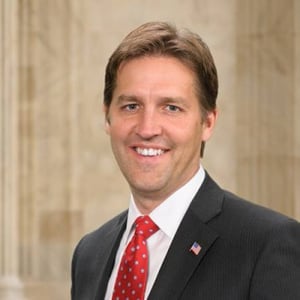
United States Senator, Nebraska
Ben Sasse is a United States Senator, representing the great state of Nebraska.
He was elected in a 2014 landslide, winning each of Nebraska's 93 counties, and securing the second-largest margin for a new senator in the history of the state. Living off of a rickety old campaign bus, he and his family campaigned tirelessly on a common-sense platform of restoring the Constitution to its rightful place and encouraging a more constructive politics where every public official works to make the American Dream achievable for every family. He believes in term limits and a humbler Washington, where the federal government does fewer things, but the more important things, more urgently, more transparently, and with less partisan screaming. Healthy lives are lived primarily in the private sector, and the vast majority of good policy is created at the state and local level -- and Washington should get better at talking honestly about these essential American realities.
A fifth-generation Nebraskan, Ben grew up walking beans and detasseling corn, experiences that taught him the value of hard work. A graduate of Fremont High School, he was recruited to wrestle at Harvard and then earned a PhD in American history at Yale. Ben comes to the Senate having spent the last five years as a college president. When he was recruited to take over the failing Midland University, Ben was just 37 years old, making him one of the youngest college presidents in the nation. The 130-year-old Lutheran college was on the verge of bankruptcy when he arrived, but became one of the fastest-growing higher education institutions in the country by the time of his departure.
Most of his career has been spent guiding companies and institutions through times of crisis with straight talk about the core issues. He has worked with the Boston Consulting Group and McKinsey and Company, as well as private equity firms and not-for-profit organizations, to tackle failing strategies across a broad array of sectors and nations.
Ben believes that we have a moral obligation to pass along a country as great and free and opportunity-filled to the next generation as we were blessed to inherit from our grandparents. This will require a more serious Congress, committed to reforming entitlements, telling the truth about fake federal budgets, modernizing national security for the age of global terror networks, and helping the next generation recover a sense of optimism about the American Dream for everyone of every race in every neighborhood.

Counting to Two Thirds: How Close Are We to a Convention for Proposing Amendments to the Constitution?
Robert G. Natelson
Note from the Editor: This article argues that, in aggregating applications from states to call...
Topics
Morrison v. Olson Oral Argument Rewind: Everything Old Is New Again
Historian-turned-politician Sen. Ben Sasse (NE) likes a good historical coincidence. And last week, on April...
Recapturing the Pursestrings: Congressional Budget Reform
Augusta, GATopics
Docket Watch: Maine Senate v. Secretary of State
In Maine Senate v. Secretary of State, the Maine Supreme Judicial Court (referred to as...
Maine Senate v. Secretary of State
Joshua D. Dunlap
In Maine Senate v. Secretary of State, the Maine Supreme Judicial Court (referred to as the...
Trump, Gorsuch, & The Administrative State
Topeka Lawyers Chapter
Topeka, KSClosing Address
Sixth Annual Executive Branch Review Conference
Washington, DCSixth Annual Executive Branch Review Conference
The Deregulatory Landscape
Washington, DCEvan Sayet on a Unified Theory of Liberalism
Orange County Lawyers Chapter
Irvine, CABeneficial Ownership
David R. Burton, Clay R. Fuller
Hearings have been held recently in both the House of Representatives and the U.S. Senate...