
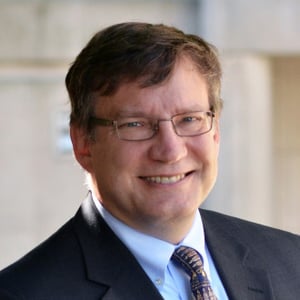
Chairman and Founder, Institute for Free Speech; Josiah H. Blackmore II/Shirley M. Nault Designated Professor of Law, Capital University Law School
Chairman and Founder, Institute for Free Speech; Josiah H. Blackmore II/Shirley M. Nault Designated Professor of Law, Capital University Law School
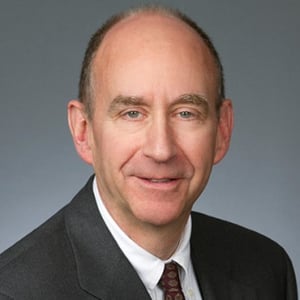
Partner, Kirkland & Ellis LLP
Neil Eggleston is a litigation partner in the Washington, D.C. office of Kirkland & Ellis LLP.
Neil has a distinguished record of public service, and has held a number of senior government roles. He was White House Counsel to President Obama from 2014 to 2017, and advised the president on all legal and constitutional issues across a broad spectrum of domestic and foreign policy matters. Neil’s practice focuses on enforcement defense including at the U.S. Department of Justice (DOJ), U.S. Securities and Exchange Commission (SEC), U.S. Attorney’s Offices, and other enforcement agencies.
Earlier in his career, Neil served as Associate Counsel to President Clinton from 1993 to 1994. Heals o served as Deputy Chief Counsel, U.S. House of Representatives Select Committee Investigating the Iran/Contra Affair (1987-1988); Assistant U.S. Attorney (1981-1987); and Chief Appellate Attorney for the Southern District of New York (1986-1987).
Neil served as a law clerk for the United States Court of Appeals for the Third Circuit (1978-1979) and for Chief Justice Warren E. Burger on the United States Supreme Court (1979-1980).
Neil teaches a seminar in Presidential Power at Harvard Law School in the spring of 2017, 2019, 2020, and 2021 and at Yale Law School in the spring of 2018. He also frequently lectures at American Bar Association and similar seminars.
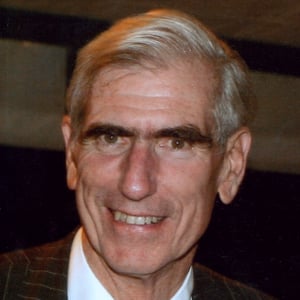
Founding Partner, Boyden Gray & Associates
Ambassador C. Boyden Gray is the founding partner of Boyden Gray & Associates, a law and strategy firm in Washington, D.C., focused on constitutional and regulatory issues.
Mr. Gray worked in the White House for twelve years, first as counsel to the Vice President during the Reagan administration and then as White House Counsel to President George H.W. Bush. In the Reagan administration, he was Counsel to the Presidential Task Force on Regulatory Relief, for which he wrote the original Executive Order 12291 requiring cost-benefit analysis and White House review of regulations (later renumbered as current EO 12866). In the George H.W. Bush Administration, Mr. Gray was in charge of judicial selection and was also instrumental in the enactment of the Clean Air Act Amendments of 1990, the Energy Policy Act of 1992, and a cap-and-trade system for acid rain emissions. In 1993, he received the Presidential Citizens Medal. Under President George W. Bush, Mr. Gray was U.S. Ambassador to the European Union and U.S. Special Envoy to Europe for Eurasian Energy.
Mr. Gray practiced law for 25 years at the law firm of Wilmer, Cutler & Pickering and was chairman of the Administrative Law and Regulatory Practice Section of the American Bar Association from 2000 to 2002. Early in his career, Mr. Gray helped to develop the Business Roundtable and served as its first counsel. He is an adjunct professor at Antonin Scalia Law School and a former adjunct professor at NYU Law School (teaching energy and environmental law). Mr. Gray is on the Board of Directors of the Atlantic Council, the Federalist Society, Reason Foundation, and the Trust for the National Mall.
Mr. Gray earned his A.B. magna cum laude from Harvard, where he was an editor of the Crimson, and his J.D. with high honors from the University of North Carolina at Chapel Hill, where he was editor-in-chief of the Law Review. Mr. Gray served in the United States Marine Corps, and after law school, he clerked for Earl Warren, Chief Justice of the United States Supreme Court.
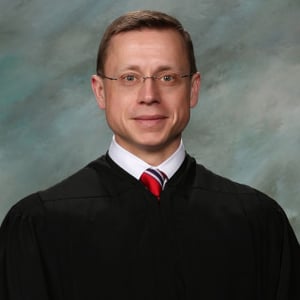
Judge, United States Court of Appeals, Fifth Circuit
Andrew Oldham is a Circuit Judge on the United States Court of Appeals for the Fifth Circuit. Before ascending to the bench, Judge Oldham served as General Counsel to Texas Governor Greg Abbott, where he advised the Governor on a range of issues under federal and state law and managed litigation in which the Governor was an interested party. Before that he served as Deputy Solicitor General for the State of Texas, where he represented Texas in federal courts across the country, including twice before the United States Supreme Court. Before moving to Texas, Judge Oldham was an attorney at Kellogg Hansen Todd Figel & Frederick in Washington, D.C. His practice focused on appellate litigation in federal courts of appeals throughout the country. Before entering private practice, Judge Oldham served as a law clerk to Justice Samuel A. Alito, Jr., at the Supreme Court of the United States and to Judge David B. Sentelle of the U.S. Court of Appeals for the District of Columbia Circuit. He also worked as an attorney-adviser in the Office of Legal Counsel at the U.S. Department of Justice from 2006 to 2008. Judge Oldham earned a B.A. from the University of Virginia with highest honors, a Truman Scholarship for graduate school, an M. Phil., first class (with distinction), from Cambridge University, and a J.D., magna cum laude, from Harvard Law School.
President, JCN
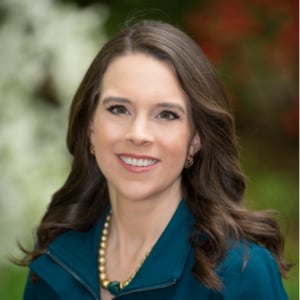
Carrie Campbell Severino is the president of the JCN, and co-author with Mollie Hemingway of the bestselling book Justice on Trial: The Kavanaugh Confirmation and the Future of the Court. As a go-to expert on the confirmation process, Mrs. Severino has been extensively quoted in the media. She regularly appears on television, including FOX, CNN, MSNBC, C-SPAN, and ABC’s This Week.
Severino writes and speaks on a wide range of judicial issues, including the constitutional limits on government, the federal nomination process, and state judicial selection. She has testified before Congress on constitutional questions and briefed Senators on judicial nominations, and regularly files briefs in high-profile Supreme Court cases. She was a law clerk to Supreme Court Justice Clarence Thomas and to Judge David B. Sentelle of the U.S. Court of Appeals for the D.C. Circuit, and is a graduate of Harvard Law School (J.D.), Duke University (B.A., Biology), and Michigan State University (M.A., Linguistics).
Raoul Berger Professor of Legal History at Northwestern University School of Law
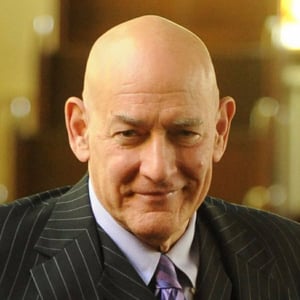
Stephen Presser is a leading American legal historian and expert on shareholder liability for corporate debts. He is frequently an invited witness before committees of the U.S. Senate and House of Representatives on issues of constitutional law. He holds a joint appointment with the J. L. Kellogg Graduate School of Management and also teaches in Northwestern's history department.

President, Corporate and External Affairs, Plaid
Jelena McWilliams is the former Managing Partner of the Washington, D.C. office of Cravath, Swaine, & Moore LLP and former Head of the Financial Institutions Group (FIG) Practice. She is a former Chairman of the Federal Deposit Insurance Corporation (FDIC). Ms. McWilliams focuses her practice on advising public and private companies, financial institutions, fintechs, and early-stage and venture companies on regulatory and corporate matters, as well as on mergers and acquisitions, IPO and other capital markets transactions.
While at the FDIC, Ms. McWilliams managed over 6,000 employees supervising approximately 5,000 banks, including through the COVID-19 pandemic. She participated in interagency negotiations, policy developments and joint agency rulemakings both as agency principal and as a voting member of the Financial Stability Oversight Council (FSOC). Ms. McWilliams chaired the Resolution Group at the Financial Stability Board (FSB); chaired and served on the Federal Financial Institutions Examination Council (FFIEC); and served on the Financial and Banking Information Infrastructure Committee (FBIIC). She testified before U.S. Congress on numerous occasions and engaged extensively with U.S. and international regulators, including the Basel Committee on Banking Supervision and the International Association of Deposit Insurers. She established the agency’s first office of innovation to implement technological advancements through supervisory channels and collaborative partnerships between banks and fintechs. Ms. McWilliams also spearheaded the agency’s effort to develop prudential banking policy on digital assets, including through a “crypto sprint” with the Office of the Currency Comptroller (OCC) and the Federal Reserve Board (FRB), and in collaboration with the President’s Working Group multiagency effort on stablecoins. She envisioned and created Mission Driven Bank Fund, a novel private/public partnership investment fund to support investments in low- and moderate-income communities served by the Minority Depository Institutions and Community Development Financial Institutions.
Ms. McWilliams is a frequent speaker on trends and topics in the financial services sector, including bank regulatory policy, governance trends, digital assets, fintechs and early-stage company regulatory policy. She is a member of the Economic Council of Washington, D.C., and serves on the Board of Trustees of the Southwestern Graduate School of Banking Foundation at Southern Methodist University.
Ms. McWilliams was born in Belgrade, Serbia. She received her B.A. with highest honors from the University of California, Berkeley in 1999 and her J.D. from the University of California, Berkeley, School of Law in 2002.
Partner, Mayer Brown
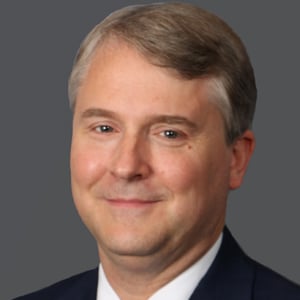
Andrew Olmem is a partner in Mayer Brown’s Washington DC office and a member of its Public Policy, Regulatory & Government Affairs, and Financial Services Regulatory & Enforcement practices. His practice focuses on complex financial services regulatory and public policy matters.
Andrew previously served as the Deputy Assistant to the President for Economic Policy and Deputy Director of the National Economic Council (NEC), where he oversaw the development and coordination of the administrations’ domestic economic policies, including for financial services, technology, telecom, energy, and infrastructure.
Earlier, he also served as the Republican Chief Counsel and Deputy Staff Director at the U.S. Senate Committee on Banking, Housing and Urban Affairs. Andrew began his legal career practicing corporate and securities law at Mayer Brown in New York City. Prior to attending law school, he served as an Assistant Economist at the Federal Reserve Bank of Richmond.
Chairman and Founder, Institute for Free Speech; Josiah H. Blackmore II/Shirley M. Nault Designated Professor of Law, Capital University Law School
Partner, Kirkland & Ellis LLP
Neil Eggleston is a litigation partner in the Washington, D.C. office of Kirkland & Ellis LLP.
Neil has a distinguished record of public service, and has held a number of senior government roles. He was White House Counsel to President Obama from 2014 to 2017, and advised the president on all legal and constitutional issues across a broad spectrum of domestic and foreign policy matters. Neil’s practice focuses on enforcement defense including at the U.S. Department of Justice (DOJ), U.S. Securities and Exchange Commission (SEC), U.S. Attorney’s Offices, and other enforcement agencies.
Earlier in his career, Neil served as Associate Counsel to President Clinton from 1993 to 1994. Heals o served as Deputy Chief Counsel, U.S. House of Representatives Select Committee Investigating the Iran/Contra Affair (1987-1988); Assistant U.S. Attorney (1981-1987); and Chief Appellate Attorney for the Southern District of New York (1986-1987).
Neil served as a law clerk for the United States Court of Appeals for the Third Circuit (1978-1979) and for Chief Justice Warren E. Burger on the United States Supreme Court (1979-1980).
Neil teaches a seminar in Presidential Power at Harvard Law School in the spring of 2017, 2019, 2020, and 2021 and at Yale Law School in the spring of 2018. He also frequently lectures at American Bar Association and similar seminars.
Founding Partner, Boyden Gray & Associates
Ambassador C. Boyden Gray is the founding partner of Boyden Gray & Associates, a law and strategy firm in Washington, D.C., focused on constitutional and regulatory issues.
Mr. Gray worked in the White House for twelve years, first as counsel to the Vice President during the Reagan administration and then as White House Counsel to President George H.W. Bush. In the Reagan administration, he was Counsel to the Presidential Task Force on Regulatory Relief, for which he wrote the original Executive Order 12291 requiring cost-benefit analysis and White House review of regulations (later renumbered as current EO 12866). In the George H.W. Bush Administration, Mr. Gray was in charge of judicial selection and was also instrumental in the enactment of the Clean Air Act Amendments of 1990, the Energy Policy Act of 1992, and a cap-and-trade system for acid rain emissions. In 1993, he received the Presidential Citizens Medal. Under President George W. Bush, Mr. Gray was U.S. Ambassador to the European Union and U.S. Special Envoy to Europe for Eurasian Energy.
Mr. Gray practiced law for 25 years at the law firm of Wilmer, Cutler & Pickering and was chairman of the Administrative Law and Regulatory Practice Section of the American Bar Association from 2000 to 2002. Early in his career, Mr. Gray helped to develop the Business Roundtable and served as its first counsel. He is an adjunct professor at Antonin Scalia Law School and a former adjunct professor at NYU Law School (teaching energy and environmental law). Mr. Gray is on the Board of Directors of the Atlantic Council, the Federalist Society, Reason Foundation, and the Trust for the National Mall.
Mr. Gray earned his A.B. magna cum laude from Harvard, where he was an editor of the Crimson, and his J.D. with high honors from the University of North Carolina at Chapel Hill, where he was editor-in-chief of the Law Review. Mr. Gray served in the United States Marine Corps, and after law school, he clerked for Earl Warren, Chief Justice of the United States Supreme Court.
Judge, United States Court of Appeals, Fifth Circuit
Andrew Oldham is a Circuit Judge on the United States Court of Appeals for the Fifth Circuit. Before ascending to the bench, Judge Oldham served as General Counsel to Texas Governor Greg Abbott, where he advised the Governor on a range of issues under federal and state law and managed litigation in which the Governor was an interested party. Before that he served as Deputy Solicitor General for the State of Texas, where he represented Texas in federal courts across the country, including twice before the United States Supreme Court. Before moving to Texas, Judge Oldham was an attorney at Kellogg Hansen Todd Figel & Frederick in Washington, D.C. His practice focused on appellate litigation in federal courts of appeals throughout the country. Before entering private practice, Judge Oldham served as a law clerk to Justice Samuel A. Alito, Jr., at the Supreme Court of the United States and to Judge David B. Sentelle of the U.S. Court of Appeals for the District of Columbia Circuit. He also worked as an attorney-adviser in the Office of Legal Counsel at the U.S. Department of Justice from 2006 to 2008. Judge Oldham earned a B.A. from the University of Virginia with highest honors, a Truman Scholarship for graduate school, an M. Phil., first class (with distinction), from Cambridge University, and a J.D., magna cum laude, from Harvard Law School.
President, JCN
Carrie Campbell Severino is the president of the JCN, and co-author with Mollie Hemingway of the bestselling book Justice on Trial: The Kavanaugh Confirmation and the Future of the Court. As a go-to expert on the confirmation process, Mrs. Severino has been extensively quoted in the media. She regularly appears on television, including FOX, CNN, MSNBC, C-SPAN, and ABC’s This Week.
Severino writes and speaks on a wide range of judicial issues, including the constitutional limits on government, the federal nomination process, and state judicial selection. She has testified before Congress on constitutional questions and briefed Senators on judicial nominations, and regularly files briefs in high-profile Supreme Court cases. She was a law clerk to Supreme Court Justice Clarence Thomas and to Judge David B. Sentelle of the U.S. Court of Appeals for the D.C. Circuit, and is a graduate of Harvard Law School (J.D.), Duke University (B.A., Biology), and Michigan State University (M.A., Linguistics).
President, Corporate and External Affairs, Plaid
Jelena McWilliams is the former Managing Partner of the Washington, D.C. office of Cravath, Swaine, & Moore LLP and former Head of the Financial Institutions Group (FIG) Practice. She is a former Chairman of the Federal Deposit Insurance Corporation (FDIC). Ms. McWilliams focuses her practice on advising public and private companies, financial institutions, fintechs, and early-stage and venture companies on regulatory and corporate matters, as well as on mergers and acquisitions, IPO and other capital markets transactions.
While at the FDIC, Ms. McWilliams managed over 6,000 employees supervising approximately 5,000 banks, including through the COVID-19 pandemic. She participated in interagency negotiations, policy developments and joint agency rulemakings both as agency principal and as a voting member of the Financial Stability Oversight Council (FSOC). Ms. McWilliams chaired the Resolution Group at the Financial Stability Board (FSB); chaired and served on the Federal Financial Institutions Examination Council (FFIEC); and served on the Financial and Banking Information Infrastructure Committee (FBIIC). She testified before U.S. Congress on numerous occasions and engaged extensively with U.S. and international regulators, including the Basel Committee on Banking Supervision and the International Association of Deposit Insurers. She established the agency’s first office of innovation to implement technological advancements through supervisory channels and collaborative partnerships between banks and fintechs. Ms. McWilliams also spearheaded the agency’s effort to develop prudential banking policy on digital assets, including through a “crypto sprint” with the Office of the Currency Comptroller (OCC) and the Federal Reserve Board (FRB), and in collaboration with the President’s Working Group multiagency effort on stablecoins. She envisioned and created Mission Driven Bank Fund, a novel private/public partnership investment fund to support investments in low- and moderate-income communities served by the Minority Depository Institutions and Community Development Financial Institutions.
Ms. McWilliams is a frequent speaker on trends and topics in the financial services sector, including bank regulatory policy, governance trends, digital assets, fintechs and early-stage company regulatory policy. She is a member of the Economic Council of Washington, D.C., and serves on the Board of Trustees of the Southwestern Graduate School of Banking Foundation at Southern Methodist University.
Ms. McWilliams was born in Belgrade, Serbia. She received her B.A. with highest honors from the University of California, Berkeley in 1999 and her J.D. from the University of California, Berkeley, School of Law in 2002.
Partner, Mayer Brown
Andrew Olmem is a partner in Mayer Brown’s Washington DC office and a member of its Public Policy, Regulatory & Government Affairs, and Financial Services Regulatory & Enforcement practices. His practice focuses on complex financial services regulatory and public policy matters.
Andrew previously served as the Deputy Assistant to the President for Economic Policy and Deputy Director of the National Economic Council (NEC), where he oversaw the development and coordination of the administrations’ domestic economic policies, including for financial services, technology, telecom, energy, and infrastructure.
Earlier, he also served as the Republican Chief Counsel and Deputy Staff Director at the U.S. Senate Committee on Banking, Housing and Urban Affairs. Andrew began his legal career practicing corporate and securities law at Mayer Brown in New York City. Prior to attending law school, he served as an Assistant Economist at the Federal Reserve Bank of Richmond.

Topics
The Equal Rights Amendment, Then and Now – Part I
In the Beginning In 2020, the United States marked the 100th anniversary of the addition...
Necessary & Proper Episode 68: H.R. 1, the For the People Act, Explained
Bradley A. Smith
The For the People Act was introduced in the House of Representatives in 2019 as H.R. 1,...
H.R. 1, the For the People Act, Explained
Bradley A. Smith
The For the People Act was introduced in the House of Representatives in 2019 as H.R. 1,...
Topics
Injunctions Highlight Challenge Targeting China’s Military-Civil Fusion Strategy
This spring, the U.S. District Court for the District of Columbia issued two preliminary injunctions...
H.R. 1, the For the People Act, Explained
TeleforumJudicial Nominations and Confirmations
Professional Responsibility and Litigation Practice Groups
Judicial Nominations and Confirmations
W. Neil Eggleston, C. Boyden Gray, Andrew Oldham, Carrie Campbell Severino
Whenever control of the White House turns over to a different political party, as it...
If the Framers Despaired, Should We?
Stephen B. Presser
A review of Fears of a Setting Sun: The Disillusionment of America’s Founders, by Dennis...
Keynote Speaker: Jelena McWilliams
Chairman, Federal Deposit Insurance Corporation
Keynote Speaker: Jelena McWilliams
Jelena McWilliams, Andrew Olmem
Jelena McWilliams was sworn in as the 21st Chairman of the FDIC on June 5,...