
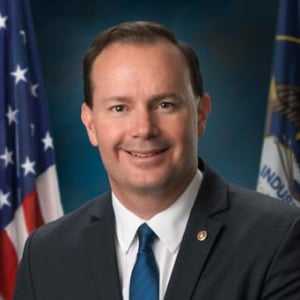
United States Senator, Utah
Elected in 2010 as Utah's 16th Senator, Mike Lee has spent his career defending the basic liberties of Americans and Utahns as a tireless advocate for our founding constitutional principles.
Senator Lee acquired a deep respect for the Constitution early on. His father, Rex Lee, who served as the Solicitor General under President Ronald Reagan, would often discuss varied aspects of judicial and constitutional doctrine around the kitchen table, from Due Process to the uses of Executive Plenary Power. He attended most of his father's arguments before the U.S. Supreme Court, giving him a unique, hands-on experience and understanding of government up close.
Lee graduated from Brigham Young University with a Bachelor of Science in Political Science, and served as BYU's Student Body President in his senior year. He graduated from BYU's Law School in 1997 and went on to serve as law clerk to Judge Dee Benson of the U.S. District Court for the District of Utah, and then with future Supreme Court Justice Judge Samuel A. Alito, Jr. on the U.S. Court of Appeals for the Third Circuit.
Lee spent several years as an attorney with the law firm Sidley & Austin specializing in appellate and Supreme Court litigation, and then served as an Assistant U.S. Attorney in Salt Lake City arguing cases before the U.S. Court of Appeals for the Tenth Circuit.
Lee served the state of Utah as Governor Jon Huntsman's General Counsel and was later honored to reunite with Justice Alito, now on the Supreme Court, for a one-year clerkship. He returned to private practice in 2007.
Throughout his career, Lee earned a reputation as an outstanding practitioner of the law based on his sound judgment, abilities in the courtroom, and thorough understanding of the Constitution.
Today, Lee fights to preserve America's proud founding document in the United States Senate. He advocates efforts to support constitutionally limited government, fiscal responsibility, individual liberty, and economic prosperity.
Lee is a member of the Judiciary Committee, and serves as Chairman of the Antitrust, Competition Policy and Consumer Rights Subcommittee protecting business competition and personal freedom.
He also oversees issues critical to Utah as the Chairman of the Water and Power Subcommittee of the Energy and Natural Resources Committee. He serves on the Commerce Committee and the Joint Economic Committee, as well.
In the 114th Congress, Lee also began his tenure as Chairman of the Senate Steering Committee, where he works with his Republican colleagues in the Senate to introduce bold and innovative solutions to issues facing the American people.
Lee and his wife Sharon live in Alpine, Utah, with their three children. He is a member of The Church of Jesus Christ of Latter-day Saints and served a two-year mission for the Church in the Texas Rio Grande Valley.
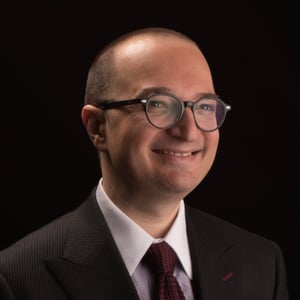
Professor of Law, University of Baltimore School of Law (on leave); Senior Counsel, U.S. Department of Justice
Professor Dolin’s scholarship centers on patent law with a specific focus on how the patent regime affects innovation, especially in bio-pharmaceutical areas. His work in these areas includes a number of scholarly articles, presentations, amicus briefs, and congressional testimony.
Dr. Dolin is currently on leave from his academic duties while he serves as Senior Counsel in the Civil Rights Division of the United States Department of Justice.
From January 2020 to January 2022, Professor Dolin served as a resident Associate Justice of the Supreme Court of the Republic of Palau. In this role, he (together with other members of the Court) heard appeals in civil, criminal, administrative, and constitutional law matters.
Prior to joining the University of Baltimore School of Law, Professor Dolin held visiting appointments in other law schools. He also served as a law clerk to the Hon. Pauline Newman, of the U.S. Court of Appeals for the Federal Circuit and the late Hon. H. Emory Widener Jr., of the U.S. Court of Appeals for the Fourth Circuit.
Rumors that he has a real Russian bear in his office are entirely true.
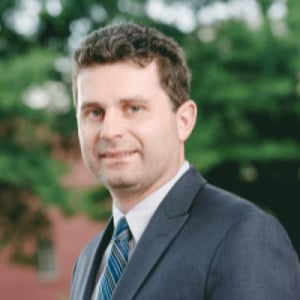
Associate Professor of Law, George Washington University Law School
Dmitry Karshtedt's primary research interest is in patent law. His legal scholarship has been published in the Vanderbilt Law Review, Washington University Law Review, and Iowa Law Review, among other outlets, and cited in three of the leading patent law casebooks, a casebook on intellectual property, and three treatises. Professor Karshtedt's academic work has won several awards, including the Samsung-Stanford Patent Prize and the scholarship grant for judicial clerks sponsored by the University of Houston Law Center Institute for Intellectual Property and Information Law.
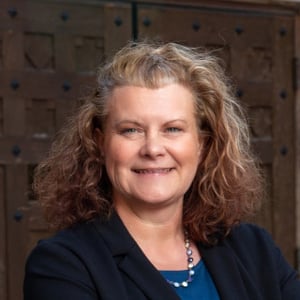
Associate Dean for Academic Affairs, Austin E. Owen Research Scholar & Professor of Law, The University of Richmond School of Law
Dean Kristen Jakobsen Osenga teaches and writes in the areas of patent law, antitrust, and legislation and regulation. Some of her recent scholarship focuses on standard development organizations, patent eligible subject matter, patent licensing firms, litigation and remedies for patent infringement, and patent law reform. She has written numerous law review articles on these and other topics, as well as book chapters and op eds on various aspects of patent law. Additionally, she has spoken on these issues at many academic conferences and bar events. Dean Osenga is Chief Policy Counselor for the Inventors Defense Alliance, as well as an active member of the Federal Circuit Bar Association and the American Intellectual Property Law Association.
Dean Osenga received a B.S. degree in Biomedical Engineering from the University of Iowa, an M.S. degree in Electrical Engineering from Southern Illinois University – Carbondale, and a J.D. from the University of Illinois College of Law, where she graduated magna cum laude. After law school, she practiced at the law firm of Finnegan, Henderson, Farabow, Garrett, & Dunner LLP, (now Finnegan) where she did patent prosecution and litigation. She then clerked for the Judge Richard Linn of the U.S. Court of Appeals for the Federal Circuit. After clerking, she entered academia, teaching first at Chicago-Kent College of Law and then at the University of Richmond, where she has been since 2006. She has also been a Visiting Professor at Emory University School of Law and at William & Mary School of Law.
United States Senator, Utah
Elected in 2010 as Utah's 16th Senator, Mike Lee has spent his career defending the basic liberties of Americans and Utahns as a tireless advocate for our founding constitutional principles.
Senator Lee acquired a deep respect for the Constitution early on. His father, Rex Lee, who served as the Solicitor General under President Ronald Reagan, would often discuss varied aspects of judicial and constitutional doctrine around the kitchen table, from Due Process to the uses of Executive Plenary Power. He attended most of his father's arguments before the U.S. Supreme Court, giving him a unique, hands-on experience and understanding of government up close.
Lee graduated from Brigham Young University with a Bachelor of Science in Political Science, and served as BYU's Student Body President in his senior year. He graduated from BYU's Law School in 1997 and went on to serve as law clerk to Judge Dee Benson of the U.S. District Court for the District of Utah, and then with future Supreme Court Justice Judge Samuel A. Alito, Jr. on the U.S. Court of Appeals for the Third Circuit.
Lee spent several years as an attorney with the law firm Sidley & Austin specializing in appellate and Supreme Court litigation, and then served as an Assistant U.S. Attorney in Salt Lake City arguing cases before the U.S. Court of Appeals for the Tenth Circuit.
Lee served the state of Utah as Governor Jon Huntsman's General Counsel and was later honored to reunite with Justice Alito, now on the Supreme Court, for a one-year clerkship. He returned to private practice in 2007.
Throughout his career, Lee earned a reputation as an outstanding practitioner of the law based on his sound judgment, abilities in the courtroom, and thorough understanding of the Constitution.
Today, Lee fights to preserve America's proud founding document in the United States Senate. He advocates efforts to support constitutionally limited government, fiscal responsibility, individual liberty, and economic prosperity.
Lee is a member of the Judiciary Committee, and serves as Chairman of the Antitrust, Competition Policy and Consumer Rights Subcommittee protecting business competition and personal freedom.
He also oversees issues critical to Utah as the Chairman of the Water and Power Subcommittee of the Energy and Natural Resources Committee. He serves on the Commerce Committee and the Joint Economic Committee, as well.
In the 114th Congress, Lee also began his tenure as Chairman of the Senate Steering Committee, where he works with his Republican colleagues in the Senate to introduce bold and innovative solutions to issues facing the American people.
Lee and his wife Sharon live in Alpine, Utah, with their three children. He is a member of The Church of Jesus Christ of Latter-day Saints and served a two-year mission for the Church in the Texas Rio Grande Valley.
Professor of Law, University of Baltimore School of Law (on leave); Senior Counsel, U.S. Department of Justice
Professor Dolin’s scholarship centers on patent law with a specific focus on how the patent regime affects innovation, especially in bio-pharmaceutical areas. His work in these areas includes a number of scholarly articles, presentations, amicus briefs, and congressional testimony.
Dr. Dolin is currently on leave from his academic duties while he serves as Senior Counsel in the Civil Rights Division of the United States Department of Justice.
From January 2020 to January 2022, Professor Dolin served as a resident Associate Justice of the Supreme Court of the Republic of Palau. In this role, he (together with other members of the Court) heard appeals in civil, criminal, administrative, and constitutional law matters.
Prior to joining the University of Baltimore School of Law, Professor Dolin held visiting appointments in other law schools. He also served as a law clerk to the Hon. Pauline Newman, of the U.S. Court of Appeals for the Federal Circuit and the late Hon. H. Emory Widener Jr., of the U.S. Court of Appeals for the Fourth Circuit.
Rumors that he has a real Russian bear in his office are entirely true.
Associate Professor of Law, George Washington University Law School
Dmitry Karshtedt's primary research interest is in patent law. His legal scholarship has been published in the Vanderbilt Law Review, Washington University Law Review, and Iowa Law Review, among other outlets, and cited in three of the leading patent law casebooks, a casebook on intellectual property, and three treatises. Professor Karshtedt's academic work has won several awards, including the Samsung-Stanford Patent Prize and the scholarship grant for judicial clerks sponsored by the University of Houston Law Center Institute for Intellectual Property and Information Law.
Associate Dean for Academic Affairs, Austin E. Owen Research Scholar & Professor of Law, The University of Richmond School of Law
Dean Kristen Jakobsen Osenga teaches and writes in the areas of patent law, antitrust, and legislation and regulation. Some of her recent scholarship focuses on standard development organizations, patent eligible subject matter, patent licensing firms, litigation and remedies for patent infringement, and patent law reform. She has written numerous law review articles on these and other topics, as well as book chapters and op eds on various aspects of patent law. Additionally, she has spoken on these issues at many academic conferences and bar events. Dean Osenga is Chief Policy Counselor for the Inventors Defense Alliance, as well as an active member of the Federal Circuit Bar Association and the American Intellectual Property Law Association.
Dean Osenga received a B.S. degree in Biomedical Engineering from the University of Iowa, an M.S. degree in Electrical Engineering from Southern Illinois University – Carbondale, and a J.D. from the University of Illinois College of Law, where she graduated magna cum laude. After law school, she practiced at the law firm of Finnegan, Henderson, Farabow, Garrett, & Dunner LLP, (now Finnegan) where she did patent prosecution and litigation. She then clerked for the Judge Richard Linn of the U.S. Court of Appeals for the Federal Circuit. After clerking, she entered academia, teaching first at Chicago-Kent College of Law and then at the University of Richmond, where she has been since 2006. She has also been a Visiting Professor at Emory University School of Law and at William & Mary School of Law.
Professor of Law, University of Baltimore School of Law (on leave); Senior Counsel, U.S. Department of Justice
Professor Dolin’s scholarship centers on patent law with a specific focus on how the patent regime affects innovation, especially in bio-pharmaceutical areas. His work in these areas includes a number of scholarly articles, presentations, amicus briefs, and congressional testimony.
Dr. Dolin is currently on leave from his academic duties while he serves as Senior Counsel in the Civil Rights Division of the United States Department of Justice.
From January 2020 to January 2022, Professor Dolin served as a resident Associate Justice of the Supreme Court of the Republic of Palau. In this role, he (together with other members of the Court) heard appeals in civil, criminal, administrative, and constitutional law matters.
Prior to joining the University of Baltimore School of Law, Professor Dolin held visiting appointments in other law schools. He also served as a law clerk to the Hon. Pauline Newman, of the U.S. Court of Appeals for the Federal Circuit and the late Hon. H. Emory Widener Jr., of the U.S. Court of Appeals for the Fourth Circuit.
Rumors that he has a real Russian bear in his office are entirely true.
Associate Professor of Law, George Washington University Law School
Dmitry Karshtedt's primary research interest is in patent law. His legal scholarship has been published in the Vanderbilt Law Review, Washington University Law Review, and Iowa Law Review, among other outlets, and cited in three of the leading patent law casebooks, a casebook on intellectual property, and three treatises. Professor Karshtedt's academic work has won several awards, including the Samsung-Stanford Patent Prize and the scholarship grant for judicial clerks sponsored by the University of Houston Law Center Institute for Intellectual Property and Information Law.
Associate Dean for Academic Affairs, Austin E. Owen Research Scholar & Professor of Law, The University of Richmond School of Law
Dean Kristen Jakobsen Osenga teaches and writes in the areas of patent law, antitrust, and legislation and regulation. Some of her recent scholarship focuses on standard development organizations, patent eligible subject matter, patent licensing firms, litigation and remedies for patent infringement, and patent law reform. She has written numerous law review articles on these and other topics, as well as book chapters and op eds on various aspects of patent law. Additionally, she has spoken on these issues at many academic conferences and bar events. Dean Osenga is Chief Policy Counselor for the Inventors Defense Alliance, as well as an active member of the Federal Circuit Bar Association and the American Intellectual Property Law Association.
Dean Osenga received a B.S. degree in Biomedical Engineering from the University of Iowa, an M.S. degree in Electrical Engineering from Southern Illinois University – Carbondale, and a J.D. from the University of Illinois College of Law, where she graduated magna cum laude. After law school, she practiced at the law firm of Finnegan, Henderson, Farabow, Garrett, & Dunner LLP, (now Finnegan) where she did patent prosecution and litigation. She then clerked for the Judge Richard Linn of the U.S. Court of Appeals for the Federal Circuit. After clerking, she entered academia, teaching first at Chicago-Kent College of Law and then at the University of Richmond, where she has been since 2006. She has also been a Visiting Professor at Emory University School of Law and at William & Mary School of Law.
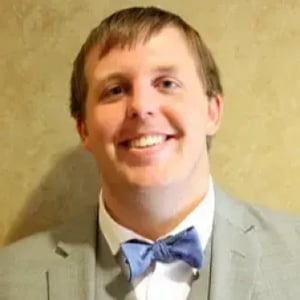
UC Foundation Assistant Professor, U.T. Chattanooga
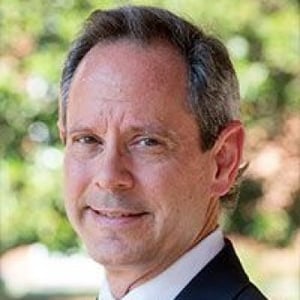
Professor, Christopher Newport University
Dr. Jeffry Morrison is Professor of American Studies at Christopher Newport University in Newport News, Virginia, and Director of Academics at the federal government’s James Madison Foundation in Alexandria, Virginia. He graduated with distinction from Boston College and from Georgetown University, where he earned the M.A. and Ph.D. in Government. Dr. Morrison has also held faculty positions at Princeton University, the U.S. Air Force Academy, Georgetown University, and Regent University. He has published as author or editor five books on American political culture, including The Political Philosophy of George Washington (Johns Hopkins University Press, 2009), and chapters, articles, and reviews in numerous scholarly publications in fields including history, political science, and religion. He has lectured at colleges and historic sites throughout the United States and in England (Hertford College, Oxford), and made media appearances on radio, in journalism, and on television (C-SPAN and the BBC).
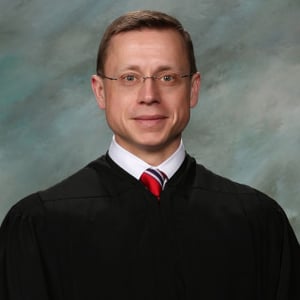
Judge, United States Court of Appeals, Fifth Circuit
Andrew Oldham is a Circuit Judge on the United States Court of Appeals for the Fifth Circuit. Before ascending to the bench, Judge Oldham served as General Counsel to Texas Governor Greg Abbott, where he advised the Governor on a range of issues under federal and state law and managed litigation in which the Governor was an interested party. Before that he served as Deputy Solicitor General for the State of Texas, where he represented Texas in federal courts across the country, including twice before the United States Supreme Court. Before moving to Texas, Judge Oldham was an attorney at Kellogg Hansen Todd Figel & Frederick in Washington, D.C. His practice focused on appellate litigation in federal courts of appeals throughout the country. Before entering private practice, Judge Oldham served as a law clerk to Justice Samuel A. Alito, Jr., at the Supreme Court of the United States and to Judge David B. Sentelle of the U.S. Court of Appeals for the District of Columbia Circuit. He also worked as an attorney-adviser in the Office of Legal Counsel at the U.S. Department of Justice from 2006 to 2008. Judge Oldham earned a B.A. from the University of Virginia with highest honors, a Truman Scholarship for graduate school, an M. Phil., first class (with distinction), from Cambridge University, and a J.D., magna cum laude, from Harvard Law School.
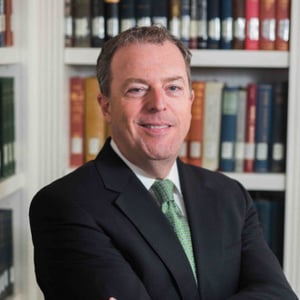
Vice President of Washington Operations and Dean of the Van Andel Graduate School of Government, Hillsdale College
Matthew Spalding is the Kirby Professor in Constitutional Government at Hillsdale College and the Dean of the Van Andel Graduate School of Government at Hillsdale College’s Washington, D.C., campus. As Vice President for Washington Operations, he also oversees the Allan P. Kirby, Jr. Center for Constitutional Studies and Citizenship and the academic and educational programs of Hillsdale in the nation’s capital.
He is the best-selling author of We Still Hold These Truths: Rediscovering Our Principles, Reclaiming Our Future, which details America’s core principles, shows how they have come under assault by modern progressive-liberalism, and lays out a strategy to recover them. Spalding is also executive editor of The Heritage Guide to the Constitution, a line-by-line analysis of each clause of the U.S. Constitution. His other books include A Sacred Union of Citizens: Washington’s Farewell Address and the American Character; Patriot Sage: George Washington and the American Political Tradition; and The Founders’ Almanac: A Practical Guide to the Notable Events, Greatest Leaders & Most Eloquent Words of the American Founding.
Prior to joining Hillsdale, Dr. Spalding was vice president of American Studies at The Heritage Foundation and founding director of its B. Kenneth Simon Center for Principles and Politics. He is a Fellow at the Claremont Institute for the Study of Statesmanship and Political Philosophy, and serves on the boards of the Steamboat Institute and the Philadelphia Society.
He received his B.A. from Claremont McKenna College and his M.A. and Ph.D. in government from the Claremont Graduate School. In addition to teaching at Hillsdale, he has taught at George Mason University, the Catholic University of America, and Claremont McKenna College. He and his wife Elizabeth, a Hillsdale alumna, reside with their two children in Arlington, Virginia.

Presentation of the Joseph Story Award & Keynote Address by Sen. Mike Lee
2021 National Student Symposium
Presentation of the Joseph Story Award & Keynote Address by Sen. Mike Lee
Mike S. Lee
The Joseph Story Award is given annually to a young academic (40 and under) who...
Deep Dive Episode 167 – Courthouse Steps Oral Argument: United States v. Arthrex Inc.
Gregory Dolin, Dmitry Karshtedt, Kristen Osenga
The U.S. Supreme Court heard oral arguments in United States v. Arthrex Inc. on March 1,...
Topics
Madison’s Last Veto
In 1796, Thomas Jefferson wrote a letter to James Madison, in part questioning whether Congress’s...
Courthouse Steps Oral Argument Webinar: United States v. Arthrex Inc.
Gregory Dolin, Dmitry Karshtedt, Kristen Osenga
The U.S. Supreme Court will hear oral argument in United States v. Arthrex Inc. on March...
Topics
Oral Arguments in Arthrex
On March 1, 2021, the Supreme Court heard oral argument on the question of when...
Courthouse Steps Oral Argument Webinar: United States v. Arthrex Inc.
TeleforumHow the Founders’ Natural Law Theory Illuminates the Original Meaning of Free Exercise
Kody Cooper
In Fulton v. City of Philadelphia, the Supreme Court will consider whether Philadelphia’s 2018 policy...
Topics
How to Research the Constitutionality of Impeaching Former Presidents
Recently I’ve pivoted from 38 years of writing books and law review articles to spending...
American Cincinnatus: George Washington Lays Down His Sword
Jeffry Morrison, Andrew Oldham, Matthew Spalding
Can you imagine Julius Caesar willingly turning back power? History is littered with examples of...