
David Bernhardt served as the 53rd Secretary of the U.S. Department of the Interior. He was confirmed by the U.S. Senate on April 11, 2019 and took office on the same day. He began working for the United States Department of the Interior in 2001, and served as the department's solicitor from 2006 to 2009 and deputy secretary from 2017 to 2019.
David currently serves as the Chair of the Center for American Freedom at America First Policy Institute.
Senior Legal Counsel, Pacific Legal Foundation
Before becoming an attorney, James had been a productive member of society working as an exploration geologist in the late 1970s throughout the southwestern United States. However, after several years of dealing with irrational government bureaucrats and environmental policies untethered from reality, James decided that what the world needs is more lawyers — if they are willing to fight for rationality in regulatory regimes, property rights, and liberty.
James attended the University of Arizona College of Law in Tucson, where he served as an editor for the Law Review and received a J.D. degree in 1983. He had previously received a Masters degree in geological sciences from Brown University and an undergraduate degree from Hamilton College in New York. James received the Professional Achievement Award from the University of Arizona Alumni Association in 2018.
James has worked with Pacific Legal Foundation since 1983, litigating cases from Alaska to Florida. He is a member of the Federalist Society’s Environmental Law and Property Rights Practice Group’s Executive Committee, a member of the American College of Real Estate Lawyers, and an honorary member of Owners Counsel of America, an organization comprised of eminent domain attorneys who represent property owners. The Owners Counsel awarded James its Crystal Eagle award in 2013. In 2022, James was awarded the Brigham-Kanner Property Rights Prize at the William & Mary College of Law. The prize is awarded annually to an individual whose work has advanced the cause of property rights and has contributed to the overall awareness of the important role property rights occupy in the broader scheme of individual liberty.
In 2001, James successfully argued a major property rights case, Palazzolo v. Rhode Island, before the United States Supreme Court, a case which affirmed that rights in regulated property do not disappear when land is bought and sold. He has written extensively on all aspects of property rights and environmental law and frequently speaks on these subjects throughout the nation.
When James is not suing the government he enjoys skiing faster than he should, bicycling, hiking, swimming, and spending quality time with his wife, family, and grandchild.
Mr. Burling’s book Nowhere to Live: The Hidden Story of America’s Housing Crisis is available now on Amazon.
James is a member of the bar only in the states of Alaska and California.

Associate Dean and William T. Schwartz Distinguished Professor of Law, University of Wyoming College of Law
Sam Kalen joined the University of Wyoming College of Law faculty in 2009, and he is the William T. Schwartz Distinguished Professor of Law and Associate Dean, as well as the founder and co-director of the School’s Center for Law and Energy Resources in the Rockies. Sam earned his B.A. from Clark University in Worcester, Mass., his J.D. from Washington University School of Law in St. Louis, and he spent a year studying legal history and constitutional thought in a PhD program at the University of Virginia. Before joining UW, Sam taught as a visitor or adjunct at a number of other law schools, he also served in the Solicitor’s Office at the Department of the Interior during the Clinton administration, and he practiced for many years with a Washington, D.C., law firm. Immediately after law school, he clerked at the Missouri Supreme Court.
Sam is passionate about teaching and writing in a variety of areas that impact environmental, public lands and natural resources, energy, and administrative law. He spent years practicing in each of these areas, including working with Indigenous Peoples and Tribal Nations, and attempts to explore these areas in both the classroom and in his scholarship. He is the author and co-author of numerous law review articles, including one that was cited and quoted in a Supreme Court opinion. His most recent law review article appeared in Maryland Law Review, on "Public Land Management’s Future Place: Envisioning a Paradigm Shift" (Vol 82, page 240, 2023). He also is a co-author of the American Bar Association’s Endangered Species Basic Practice Series book (2nd edition), a co-author of Natural Resources Law and Policy (3rd ed. Foundation Press), and a co-author Energy Follies: Missteps, Fiascos, and Successes of America’s Energy Policy (Cambridge U. Press 2018).
Sam alternates teaching a variety of courses, including Environmental Law, Administrative Law, Legislation, Legal History, Public Lands & Natural Resources, Energy Law, Energy & Climate Law & Policy, and Indian Law. He also has taught field courses, including courses exploring energy and natural resource issues in Wyoming, as well as a course on Public Lands and Natural Resources in Grand Teton National Park. Professor Kalen also has worked collaboratively with the University’s Haub School of Environment and Natural Resources.
Partner, Baker Botts LLP
Drawing from two decades of experience in senior government, in-house corporate, and private law firm roles, Jeff Wood helps clients with federal enforcement, compliance, litigation, permitting, and policy challenges primarily in the energy and environmental fields.
Prior to joining Baker Botts, Mr. Wood served for almost two years as the Acting Assistant Attorney General (AAG) for the Justice Department's Environment and Natural Resources Division (ENRD). In that capacity, Mr. Wood led ENRD and its more than 600 attorneys and staff representing EPA, Departments of the Interior, Energy, and Defense, and other agencies in civil and criminal enforcement and defensive environmental, energy, and natural resources litigation.
As the top official in ENRD, Mr. Wood managed a complex organization with an annual budget exceeding $200 million and a docket of more than 6,000 cases and matters. E&E News noted that “Wood maintains a strong relationship with ENRD's career staff” (Greenwire, Oct. 31, 2018). He previously served on the staff of the United States Senate Committee on Environment and Public Works.
At the Justice Department, Mr. Wood oversaw the Division's civil and criminal enforcement programs and was responsible for developing legal strategies and approving briefs in key cases including filings before the Supreme Court and Courts of Appeals in coordination with the Office of Solicitor General. In this role, Mr. Wood held the highest level security clearance and worked closely with top leadership at DOJ, EPA, the Interior Department, USDA, the Energy Department, Transportation Department, FERC, NRC and across the Executive Branch, including the White House.
With many years of both private law firm and in-house legal experience, Mr. Wood has handled complex environmental enforcement, regulatory, policy, and litigation matters for electric utilities, energy companies, maritime companies, mining companies, real estate developers, financial institutions, industrial companies and manufacturers, business coalitions, associations, small businesses, and individual property owners. Drawing from his experiences in-house, Mr. Wood brings a common-sense, cost-effective, client-focused approach to his work every day.
With a strong national reputation, Mr. Wood is a frequent speaker on environmental law and policy matters, with recent speeches and presentations at the Environmental Law Institute, Harvard Law School, Vanderbilt Law School, American University Law School, American Bar Association Environmental Law Conferences, the Texas Environmental SuperConference, Air Force Judge Advocate General School's Advanced Environmental Law Course, Baker Institute's Center for Energy Studies (Rice University), and many other venues. He frequently appears in national news to share insights on significant environmental law and policy issues, including recent quotes in the New York Times, Washington Post, Wall Street Journal, Bloomberg, Law360, and E&E News, among others.

Vice President of Law & Policy, Property and Environment Research Center
Jonathan Wood is vice president of law and policy at the Property and Environment Research Center (PERC). An attorney, Jonathan has litigated environmental and property-rights cases in the Supreme Court of the United States, federal and state appellate courts, and trial courts across the country. His writing has appeared in the Wall Street Journal, Washington Post, National Review, Reason, and other outlets. And his research has been published in journals such as Environmental Law Reporter, Yale Journal on Regulation Notice & Comment, Pace Environmental Law Review, and California Western Law Review.
Prior to coming to PERC, Jonathan was a senior attorney at Pacific Legal Foundation, where he litigated cases concerning the Endangered Species Act, Clean Water Act, and other federal environmental laws. He was co-counsel for forest landowners in Weyerhaeuser Co. v. U.S. Fish and Wildlife Service, in which the Supreme Court ruled unanimously that private land could not be arbitrarily regulated as critical habitat under the ESA. He also led a successful effort to reform regulation of threatened species to better align the incentives of private landowners with the interests of rare species.
Jonathan has testified before several congressional committees on wildlife conservation and endangered species topics. He has also appeared on national television and radio, including NPR’s All Things Considered, C-Span’s Washington Journal, Stossel, Fox News, and Hill.TV.
Jonathan has a law degree from the New York University School of Law, a masters degree in economic policy from the London School of Economics, and a bachelor’s degree in economics from the University of Texas. He is on the executive committee for the Federalist Society’s Environmental Law and Property Rights Practice Group and a steering committee member for the Environmental Law Institute’s Emerging Leaders Initiative.
Chief Counsel, House Natural Resources Committee

Senior Policy Advisor, Office of the Speaker
Emily currently holds the position of Senior Policy Advisor to Speaker of the House Kevin McCarthy, and previously served in the same role for Ranking Member Frank Lucas on the House Committee on Science, Space, and Technology. She also served as a subcommittee staff director on the same committee, and as the legislative director for Rep. Randy Neugebauer. Emily also currently serves as a U.S. Navy Reserve Officer.
Prior to her work on Capitol Hill, Emily held political appointee positions at the Department of Energy (2006-2007) and the Department of Defense (2007-2011), and served as the Federal Liaison for the State of Texas.
She holds a master’s degree in National Security and Strategic Studies from the United States Naval War College, a Graduate Certificate in Advanced International Affairs from Texas A&M University, and received her bachelor’s degree from the University of Virginia.
Emily is also the co-founder of The Honor Project, a Travis Manion Foundation service project to honor fallen servicemembers annually on Memorial Day.
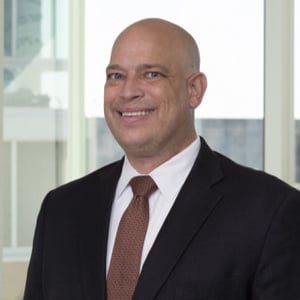
Counsel, Hunton Andrews Kurth
Jason counsels clients through complex natural resource litigation, compliance, and regulatory issues arising under a wide array of federal natural resource and energy statutes and regulations.
With over 20 years of experience in the environmental and natural resources space, Jason provides clients with strategic solutions to business and operational challenges set in motion by intricate natural resource laws. Particularly, those statutes and regulations surrounding federal public lands, extraction of mineral resources, environmental justice, and sensitive resource preservation and protection.
With a background in administrative law, as it relates to energy and mineral resource issues, Jason provides guidance on compliance with the Surface Mining Control and Reclamation Act (SMCRA), National Environmental Policy Act (NEPA), Endangered Species Act (ESA), Federal Oil and Gas Royalty Management Act (FOGRMA), the Mineral Leasing Act (MLA), and the Outer Continental Shelf Lands Act (OCSLA).
Jason’s understanding of regulations and the agencies that enforce them stems from his government experience. He served in several high-ranking positions at the Department of the Interior (DOI), including as the immediate former Chief Administrative Judge of the Interior Board of Land Appeals, former Deputy Solicitor for Energy & Mineral Resources, and former senior counselor for the Bureau of Land Management (BLM). Jason also served as a trial attorney at the Department of Justice (DOJ) in the Natural Resources Section of the Environment & Natural Resources Division for a decade, where he was lead attorney in defense of numerous challenges brought through the Administrative Procedure Act (APA), with a particular emphasis on cases brought under various natural resource and land management regulations. Jason deploys this experience when helping clients navigate federal agency programs, operations, and regulatory developments.
Jason addresses client matters in a holistic fashion while recognizing the unique factors and internal operations of federal agencies to develop strategic solutions for his clients. He is familiar with the regulatory frameworks utilized by the Bureau of Land Management (BLM), Office of Surface Mining, Reclamation, and Enforcement (OSM), Bureau of Ocean Energy Management (BOEM), Bureau of Safety and Environmental Enforcement (BSEE), Office of Natural Resources Revenue (ONRR), and Office of Hearings and Appeals (OHA).
After earning his Juris Doctor degree, Jason completed his Master of Laws in Environmental and Natural Resources Law at Lewis & Clark.
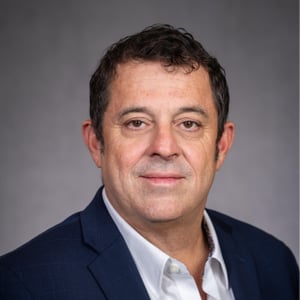
Senior Fellow for Law, Economics, and Technology, The Heritage Foundation; Professor, Florida International University
Mario Loyola is a Senior Fellow for Law, Economics, and Technology at The Heritage Foundation.
Loyola served in the Trump Administration as Associate Director for Regulatory Reform at the White House Council on Environmental Quality. In that role, he was one of the principal drafters of the One Federal Decision policy, which helped to streamline the permitting and environmental review of large infrastructure projects. While at CEQ, he was a member of the U.S. delegation to the USMCA free trade negotiations with Mexico and Canada, as well as the United Nations conference on biodiversity on the high seas. Loyola initially joined the White House in February 2017 as a Presidential Speechwriter, employing his expertise in many areas of foreign and domestic policy.
After beginning his career in M&A and corporate finance law, Loyola served in the Bush 43 Administration as a special assistant to the Undersecretary of Defense for Policy. He left that position to start writing on national defense issues in magazines such as National Review and The Weekly Standard, reporting from the front lines of the war on terrorism in Lebanon, Israel, and Iraq. He finished the Bush Administration as Foreign and Defense Counsel to the U.S. Senate Republican Policy Committee, then under the chairmanship of Senator Kay Bailey Hutchison of Texas. He subsequently moved to Texas and joined the Texas Public Policy Foundation, where he specialized in energy, environment, and federalism.
Loyola is a frequent contributor to The Wall Street Journal, National Review, and The Atlantic, among others. He teaches environmental and administrative law at Florida International University, where he is Founding Director of the Environmental Finance and Risk Management program in FIU’s prestigious Institute of Environment. He received a bachelor’s degree in European history from the University of Wisconsin–Madison and a J.D. from Washington University School of Law.
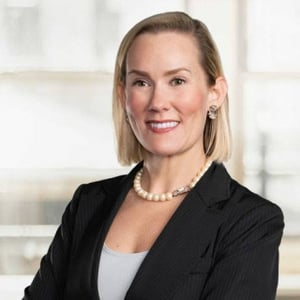
Senior Advisor, Burke Law Group
Anne Idsal Austin is an environmental health and safety attorney. Founder of Austin Legal & Public Affairs. Anne served in the highest ranks of state and federal government, where she shaped environmental and energy policy at the highest levels of government. She provides strategic counseling and policy guidance in the complex arenas of environmental and natural resources law. She handles complex environmental and natural resources litigation. Her experience includes air, water and waste governmental enforcement actions; citizen suits under RCRA, CERCLA, the Clean Water Act and the Clean Air Act; climate change litigation; toxic tort lawsuits involving chemical exposures, dust exposures and industrial accidents and toxic tort claims;.
Anne served as the principal deputy assistant administrator for the U.S. Environmental Protection Agency’s Office of Air & Radiation (OAR). In this role, she had a significant impact on U.S. clean air policy and regulation. Additionally, she served as the EPA Regional Administrator for Region 6, responsible for the implementation of federal environmental statutes and programs across Texas, Louisiana, Oklahoma, Arkansas, and New Mexico. Before serving in the federal government, Anne was the Chief Clerk and Deputy Land Commissioner for the Texas General Land Office and served as the general counsel for the Texas Commission on Environmental Quality.
Prior to joining Burke Law Group and founding Austin Legal & Public Affairs, Anne was environmental partner with an AMLAW100 firm, where she represented regulated clients to position them for success before state and federal regulatory agencies.
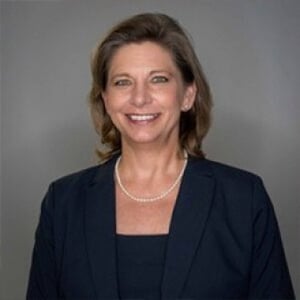
General Counsel, Senior Litigation Counsel, New Civil Liberties Alliance
Zhonette brings a quarter-century of litigation experience to NCLA. After a federal clerkship, she spent many years litigating at large law firms in Washington, D.C., and Denver, Colorado, before beginning public interest litigation in 2018.
Zhonette has litigated in state, federal, and international venues and in matters ranging from pro bono custody issues to multi-district and class action cases for Fortune 100 companies. Zhonette spent the first part of her career focused on high-stakes complex commercial litigation and white-collar defense. Since changing her legal practice to taming the Administrative State, Zhonette has focused on the Administrative Procedure Act, natural resources, takings issues and other constitutional claims.
Zhonette is a graduate of Georgetown University Law Center and is admitted to practice in the District of Columbia, the State of Colorado, the Commonwealth of Virginia, and various federal courts.
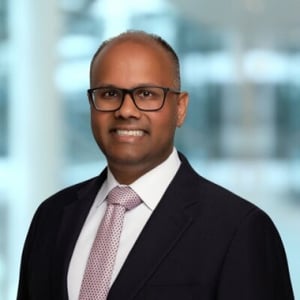
Partner, Holtzman Vogel Baran Torchinsky & Josefiak PLLC
Abhishek (Abhi) Kambli is a partner at Holtzman Vogel who represents clients in high-stakes appellate and complex litigation, constitutional challenges, and matters involving state attorneys general and federal agencies. He is one of a handful of lawyers nationally who has both led federal litigation from inside the Department of Justice and multi-state coalition work from a State Attorney General’s office—giving clients a 360-degree perspective on government enforcement, regulatory challenges, and constitutional advocacy.
Prior to joining Holtzman Vogel, Abhi served as Deputy Associate Attorney General at the United States Department of Justice, where he acted as lead counsel in high-priority matters for the Trump Administration, oversaw the Department’s civil components on behalf of the Associate Attorney General, advised the White House Counsel’s Office and federal agencies on litigation risk and strategy, and developed the Department’s national affirmative civil litigation strategy.
Earlier, he served as Deputy Attorney General and Division Chief of the Special Litigation and Constitutional Issues Division at the Kansas Attorney General’s Office, where he launched the division and led multi-state coalitions in trial and appellate courts nationwide, including the United States Supreme Court. He began his career as an Assistant United States Attorney in the Southern District of Indiana, prosecuting more than 100 federal cases from investigation through appeal.
Abhi is also a Lieutenant Colonel in the United States Air Force Judge Advocate General's Corps, having served on active duty and in the reserves since 2013. His military service includes criminal trials as both prosecutor and defense attorney, appellate representation before the Court of Appeals for the Armed Forces, and representation of a high-profile detainee before the Military Commissions at Guantánamo Bay.
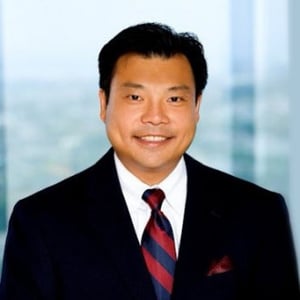
Attorney and Legal Commentator
John Shu is an attorney and legal commentator. His focus areas include constitutional law, securities & corporate law, antitrust law, administrative law, politics, and international affairs. Mr. Shu has lectured and published on a wide variety of issues.
Mr. Shu served President George H.W. Bush and President George W. Bush. He also served Judge Stanley Sporkin, U.S. District Court for the District of Columbia, who was Director of Enforcement at the U.S. Securities & Exchange Commission and General Counsel at the Central Intelligence Agency, and Judge Paul Roney, U.S. Court of Appeals for the Eleventh Circuit, who was Presiding Judge of the Foreign Intelligence Surveillance Court of Review.
Mr. Shu is a member of the National Committee on U.S. - China Relations, the Pacific Council on International Policy, and the Foreign Policy Association.
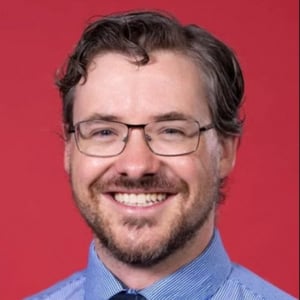
Senior Legal Fellow, Pacific Legal Foundation
Ethan Blevins is a senior legal fellow working primarily on equality and opportunity issues and property rights on PLF’s Constitutional Scholarship team. He previously worked as a staff attorney with PLF, mostly suing his favorite defendant, the City of Seattle. He earned a nickname from The Seattle Times as “the sharpest pin around to the council’s liberal bubble.” He’s had a lifelong dream to earn a superhero name, so he proudly accepts the teasing title of “The Pin” from his coworkers.
In addition to his legal work, Ethan has spoken and written on a variety of legal and policy issues. He has appeared on numerous radio and television programs, and his writings have appeared in The Wall Street Journal, The Seattle Times, The Salt Lake Tribune, The Hill, and other major publications.
Ethan’s introduction to liberty began as a teenager when he read Arthur Koestler’s chilling account of communism in Darkness at Noon. He was living in China at the time, and he saw firsthand the corruption and poverty wrought by dictatorship.
He felt inspired to dedicate his legal career to fighting for liberty after clerking for then-Justice Don Willett on the Texas Supreme Court, a judge known for his fierce commitment to constitutional rights (and his Twitter presence).
Ethan earned his law degree cum laude from Duke School of Law, as well as a master’s degree in international and comparative law. He writes poetry and fiction and has completed two fantasy novels, with several other books always in the works. He also enjoys mnemonics, comic books, gaming, and playing the ukulele. He lives in Bountiful, Utah, with his wife and four kids.
Ethan is a member of the bar only in the states of Montana, Utah and Washington.

Partner, Briscoe Prows Kao Ivester & Bazel LLP
Tony Francois is experienced in Water and Real Property Law, Land Use and Zoning, Environmental Regulation, Natural Resources Development, Agricultural Law, and Constitutional Law. He has represented homeowners, builders, farmers and ranchers, trade associations, and water districts in administrative, civil, and criminal proceedings before state and federal administrative agencies and state and federal trial and appellate courts. He is a member of the California State Bar and the Northern, Eastern, and Central Districts of California and the Districts of New Mexico and North Dakota, and has litigated cases in federal courts in California, Oregon, Washington, Idaho, Montana, Nevada, Arizona, New Mexico, Colorado, North and South Dakota, Minnesota, Massachusetts, Maryland, South Carolina, and the District of Columbia, as well as the Sixth, Eighth, Ninth, and Tenth Circuit Courts of Appeals. He has appeared before the Supreme Courts of California, Idaho, Nevada, and the United States.
Prior to attending law school, he served as an infantry officer in the United States Army, and was stationed in the former West Germany during the fall of the Berlin Wall.
Tony was an Attorney at Pacific Legal Foundation from 2012 to 2021. He was a lobbyist for 10 years, first with California Farm Bureau Federation from 2003 to 2007, and then with KP Public Affairs from 2007 to 2012. He was an attorney at McQuaid, Bedford & Van Zandt in San Francisco from 1999 – 2003.
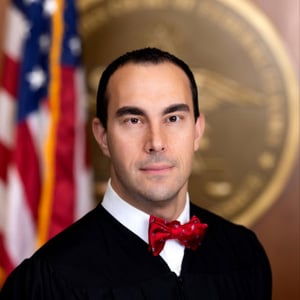
U.S. Court of Federal Claims and Jurist-In-Residence Professor of Law, The University of Akron School of Law
Judge Ryan T. Holte was sworn in as a judge on the United States Court of Federal Claims in July 2019. Prior to confirmation he served as the David L. Brennan Professor of Law and Director of the Center for Intellectual Property Law and Technology at The University of Akron School of Law (2017-2019) and an assistant professor of law at Southern Illinois University School of Law (2013-2017). Judge Holte has written and presented widely on patent law subjects and empirical legal studies of Federal Circuit and district court patent law cases. His most recent articles were published in the Iowa Law Review (2019), George Mason Law Review (2018), and Washington Law Review (2017).
In practice, Judge Holte served for six years as general counsel and partner of an electrical engineering technology company and is co-inventor of multiple patents related to Systems and Methods for Countering Satellite-Navigated Munitions. Prior to entering academia, Judge Holte practiced as a litigation attorney at the Federal Trade Commission and an associate in the Intellectual Property Practice Group at Jones Day. Prior to practice, he served as a law clerk to Judge Stanley F. Birch, Jr. on the United States Court of Appeals for the Eleventh Circuit and as a law clerk to Judge Loren A. Smith on the United States Court of Federal Claims.
Judge Holte received his JD from the University of California Davis School of Law and his BS, magna cum laude, in engineering from the California Maritime Academy where he was a First Class graduate of the Corps of Cadets Third Engineering Division and sailed as a U.S. Merchant Marine oiler.
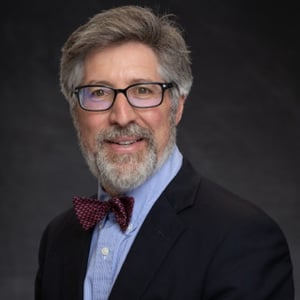
Associate Professor of Government, Hillsdale College, Washington, D.C. Campus
Richard Samuelson is an Associate Professor of Government at Hillsdale College’s Washington, D.C., campus. Dr. Samuelson is an historian of the American founding and of American politics and constitutional thought. He graduated from Bates College and received his MA and PhD in American history from the University of Virginia. Dr. Samuelson taught at California State University San Bernardino from 2007 to 2022. He was the 2009-2010 Garwood Visiting Fellow at Princeton University’s James Madison Program.
Dr. Samuelson has written extensively on John Adams and on the Adams family of Massachusetts, and on the constitutional politics of the founding more largely. His work also connects the founding with more contemporary issues, with a particular focus on religious liberty, and the challenge the modern American state, and contemporary civil rights laws present to religious liberty.
His essays and reviews have appeared in The Review of Politics, The William and Mary Quarterly, Commentary, The Claremont Review of Books, The Public Interest, National Review, and other publications. He has also contributed many essays and reviews to such online publications as Mosaic, Law and Liberty, Realclearpolitics, and other platforms.
Senior Legal Counsel, Pacific Legal Foundation
Before becoming an attorney, James had been a productive member of society working as an exploration geologist in the late 1970s throughout the southwestern United States. However, after several years of dealing with irrational government bureaucrats and environmental policies untethered from reality, James decided that what the world needs is more lawyers — if they are willing to fight for rationality in regulatory regimes, property rights, and liberty.
James attended the University of Arizona College of Law in Tucson, where he served as an editor for the Law Review and received a J.D. degree in 1983. He had previously received a Masters degree in geological sciences from Brown University and an undergraduate degree from Hamilton College in New York. James received the Professional Achievement Award from the University of Arizona Alumni Association in 2018.
James has worked with Pacific Legal Foundation since 1983, litigating cases from Alaska to Florida. He is a member of the Federalist Society’s Environmental Law and Property Rights Practice Group’s Executive Committee, a member of the American College of Real Estate Lawyers, and an honorary member of Owners Counsel of America, an organization comprised of eminent domain attorneys who represent property owners. The Owners Counsel awarded James its Crystal Eagle award in 2013. In 2022, James was awarded the Brigham-Kanner Property Rights Prize at the William & Mary College of Law. The prize is awarded annually to an individual whose work has advanced the cause of property rights and has contributed to the overall awareness of the important role property rights occupy in the broader scheme of individual liberty.
In 2001, James successfully argued a major property rights case, Palazzolo v. Rhode Island, before the United States Supreme Court, a case which affirmed that rights in regulated property do not disappear when land is bought and sold. He has written extensively on all aspects of property rights and environmental law and frequently speaks on these subjects throughout the nation.
When James is not suing the government he enjoys skiing faster than he should, bicycling, hiking, swimming, and spending quality time with his wife, family, and grandchild.
Mr. Burling’s book Nowhere to Live: The Hidden Story of America’s Housing Crisis is available now on Amazon.
James is a member of the bar only in the states of Alaska and California.
Associate Dean and William T. Schwartz Distinguished Professor of Law, University of Wyoming College of Law
Sam Kalen joined the University of Wyoming College of Law faculty in 2009, and he is the William T. Schwartz Distinguished Professor of Law and Associate Dean, as well as the founder and co-director of the School’s Center for Law and Energy Resources in the Rockies. Sam earned his B.A. from Clark University in Worcester, Mass., his J.D. from Washington University School of Law in St. Louis, and he spent a year studying legal history and constitutional thought in a PhD program at the University of Virginia. Before joining UW, Sam taught as a visitor or adjunct at a number of other law schools, he also served in the Solicitor’s Office at the Department of the Interior during the Clinton administration, and he practiced for many years with a Washington, D.C., law firm. Immediately after law school, he clerked at the Missouri Supreme Court.
Sam is passionate about teaching and writing in a variety of areas that impact environmental, public lands and natural resources, energy, and administrative law. He spent years practicing in each of these areas, including working with Indigenous Peoples and Tribal Nations, and attempts to explore these areas in both the classroom and in his scholarship. He is the author and co-author of numerous law review articles, including one that was cited and quoted in a Supreme Court opinion. His most recent law review article appeared in Maryland Law Review, on "Public Land Management’s Future Place: Envisioning a Paradigm Shift" (Vol 82, page 240, 2023). He also is a co-author of the American Bar Association’s Endangered Species Basic Practice Series book (2nd edition), a co-author of Natural Resources Law and Policy (3rd ed. Foundation Press), and a co-author Energy Follies: Missteps, Fiascos, and Successes of America’s Energy Policy (Cambridge U. Press 2018).
Sam alternates teaching a variety of courses, including Environmental Law, Administrative Law, Legislation, Legal History, Public Lands & Natural Resources, Energy Law, Energy & Climate Law & Policy, and Indian Law. He also has taught field courses, including courses exploring energy and natural resource issues in Wyoming, as well as a course on Public Lands and Natural Resources in Grand Teton National Park. Professor Kalen also has worked collaboratively with the University’s Haub School of Environment and Natural Resources.
Partner, Baker Botts LLP
Drawing from two decades of experience in senior government, in-house corporate, and private law firm roles, Jeff Wood helps clients with federal enforcement, compliance, litigation, permitting, and policy challenges primarily in the energy and environmental fields.
Prior to joining Baker Botts, Mr. Wood served for almost two years as the Acting Assistant Attorney General (AAG) for the Justice Department's Environment and Natural Resources Division (ENRD). In that capacity, Mr. Wood led ENRD and its more than 600 attorneys and staff representing EPA, Departments of the Interior, Energy, and Defense, and other agencies in civil and criminal enforcement and defensive environmental, energy, and natural resources litigation.
As the top official in ENRD, Mr. Wood managed a complex organization with an annual budget exceeding $200 million and a docket of more than 6,000 cases and matters. E&E News noted that “Wood maintains a strong relationship with ENRD's career staff” (Greenwire, Oct. 31, 2018). He previously served on the staff of the United States Senate Committee on Environment and Public Works.
At the Justice Department, Mr. Wood oversaw the Division's civil and criminal enforcement programs and was responsible for developing legal strategies and approving briefs in key cases including filings before the Supreme Court and Courts of Appeals in coordination with the Office of Solicitor General. In this role, Mr. Wood held the highest level security clearance and worked closely with top leadership at DOJ, EPA, the Interior Department, USDA, the Energy Department, Transportation Department, FERC, NRC and across the Executive Branch, including the White House.
With many years of both private law firm and in-house legal experience, Mr. Wood has handled complex environmental enforcement, regulatory, policy, and litigation matters for electric utilities, energy companies, maritime companies, mining companies, real estate developers, financial institutions, industrial companies and manufacturers, business coalitions, associations, small businesses, and individual property owners. Drawing from his experiences in-house, Mr. Wood brings a common-sense, cost-effective, client-focused approach to his work every day.
With a strong national reputation, Mr. Wood is a frequent speaker on environmental law and policy matters, with recent speeches and presentations at the Environmental Law Institute, Harvard Law School, Vanderbilt Law School, American University Law School, American Bar Association Environmental Law Conferences, the Texas Environmental SuperConference, Air Force Judge Advocate General School's Advanced Environmental Law Course, Baker Institute's Center for Energy Studies (Rice University), and many other venues. He frequently appears in national news to share insights on significant environmental law and policy issues, including recent quotes in the New York Times, Washington Post, Wall Street Journal, Bloomberg, Law360, and E&E News, among others.
Vice President of Law & Policy, Property and Environment Research Center
Jonathan Wood is vice president of law and policy at the Property and Environment Research Center (PERC). An attorney, Jonathan has litigated environmental and property-rights cases in the Supreme Court of the United States, federal and state appellate courts, and trial courts across the country. His writing has appeared in the Wall Street Journal, Washington Post, National Review, Reason, and other outlets. And his research has been published in journals such as Environmental Law Reporter, Yale Journal on Regulation Notice & Comment, Pace Environmental Law Review, and California Western Law Review.
Prior to coming to PERC, Jonathan was a senior attorney at Pacific Legal Foundation, where he litigated cases concerning the Endangered Species Act, Clean Water Act, and other federal environmental laws. He was co-counsel for forest landowners in Weyerhaeuser Co. v. U.S. Fish and Wildlife Service, in which the Supreme Court ruled unanimously that private land could not be arbitrarily regulated as critical habitat under the ESA. He also led a successful effort to reform regulation of threatened species to better align the incentives of private landowners with the interests of rare species.
Jonathan has testified before several congressional committees on wildlife conservation and endangered species topics. He has also appeared on national television and radio, including NPR’s All Things Considered, C-Span’s Washington Journal, Stossel, Fox News, and Hill.TV.
Jonathan has a law degree from the New York University School of Law, a masters degree in economic policy from the London School of Economics, and a bachelor’s degree in economics from the University of Texas. He is on the executive committee for the Federalist Society’s Environmental Law and Property Rights Practice Group and a steering committee member for the Environmental Law Institute’s Emerging Leaders Initiative.
Senior Legal Counsel, Pacific Legal Foundation
Before becoming an attorney, James had been a productive member of society working as an exploration geologist in the late 1970s throughout the southwestern United States. However, after several years of dealing with irrational government bureaucrats and environmental policies untethered from reality, James decided that what the world needs is more lawyers — if they are willing to fight for rationality in regulatory regimes, property rights, and liberty.
James attended the University of Arizona College of Law in Tucson, where he served as an editor for the Law Review and received a J.D. degree in 1983. He had previously received a Masters degree in geological sciences from Brown University and an undergraduate degree from Hamilton College in New York. James received the Professional Achievement Award from the University of Arizona Alumni Association in 2018.
James has worked with Pacific Legal Foundation since 1983, litigating cases from Alaska to Florida. He is a member of the Federalist Society’s Environmental Law and Property Rights Practice Group’s Executive Committee, a member of the American College of Real Estate Lawyers, and an honorary member of Owners Counsel of America, an organization comprised of eminent domain attorneys who represent property owners. The Owners Counsel awarded James its Crystal Eagle award in 2013. In 2022, James was awarded the Brigham-Kanner Property Rights Prize at the William & Mary College of Law. The prize is awarded annually to an individual whose work has advanced the cause of property rights and has contributed to the overall awareness of the important role property rights occupy in the broader scheme of individual liberty.
In 2001, James successfully argued a major property rights case, Palazzolo v. Rhode Island, before the United States Supreme Court, a case which affirmed that rights in regulated property do not disappear when land is bought and sold. He has written extensively on all aspects of property rights and environmental law and frequently speaks on these subjects throughout the nation.
When James is not suing the government he enjoys skiing faster than he should, bicycling, hiking, swimming, and spending quality time with his wife, family, and grandchild.
Mr. Burling’s book Nowhere to Live: The Hidden Story of America’s Housing Crisis is available now on Amazon.
James is a member of the bar only in the states of Alaska and California.
Associate Dean and William T. Schwartz Distinguished Professor of Law, University of Wyoming College of Law
Sam Kalen joined the University of Wyoming College of Law faculty in 2009, and he is the William T. Schwartz Distinguished Professor of Law and Associate Dean, as well as the founder and co-director of the School’s Center for Law and Energy Resources in the Rockies. Sam earned his B.A. from Clark University in Worcester, Mass., his J.D. from Washington University School of Law in St. Louis, and he spent a year studying legal history and constitutional thought in a PhD program at the University of Virginia. Before joining UW, Sam taught as a visitor or adjunct at a number of other law schools, he also served in the Solicitor’s Office at the Department of the Interior during the Clinton administration, and he practiced for many years with a Washington, D.C., law firm. Immediately after law school, he clerked at the Missouri Supreme Court.
Sam is passionate about teaching and writing in a variety of areas that impact environmental, public lands and natural resources, energy, and administrative law. He spent years practicing in each of these areas, including working with Indigenous Peoples and Tribal Nations, and attempts to explore these areas in both the classroom and in his scholarship. He is the author and co-author of numerous law review articles, including one that was cited and quoted in a Supreme Court opinion. His most recent law review article appeared in Maryland Law Review, on "Public Land Management’s Future Place: Envisioning a Paradigm Shift" (Vol 82, page 240, 2023). He also is a co-author of the American Bar Association’s Endangered Species Basic Practice Series book (2nd edition), a co-author of Natural Resources Law and Policy (3rd ed. Foundation Press), and a co-author Energy Follies: Missteps, Fiascos, and Successes of America’s Energy Policy (Cambridge U. Press 2018).
Sam alternates teaching a variety of courses, including Environmental Law, Administrative Law, Legislation, Legal History, Public Lands & Natural Resources, Energy Law, Energy & Climate Law & Policy, and Indian Law. He also has taught field courses, including courses exploring energy and natural resource issues in Wyoming, as well as a course on Public Lands and Natural Resources in Grand Teton National Park. Professor Kalen also has worked collaboratively with the University’s Haub School of Environment and Natural Resources.
Partner, Baker Botts LLP
Drawing from two decades of experience in senior government, in-house corporate, and private law firm roles, Jeff Wood helps clients with federal enforcement, compliance, litigation, permitting, and policy challenges primarily in the energy and environmental fields.
Prior to joining Baker Botts, Mr. Wood served for almost two years as the Acting Assistant Attorney General (AAG) for the Justice Department's Environment and Natural Resources Division (ENRD). In that capacity, Mr. Wood led ENRD and its more than 600 attorneys and staff representing EPA, Departments of the Interior, Energy, and Defense, and other agencies in civil and criminal enforcement and defensive environmental, energy, and natural resources litigation.
As the top official in ENRD, Mr. Wood managed a complex organization with an annual budget exceeding $200 million and a docket of more than 6,000 cases and matters. E&E News noted that “Wood maintains a strong relationship with ENRD's career staff” (Greenwire, Oct. 31, 2018). He previously served on the staff of the United States Senate Committee on Environment and Public Works.
At the Justice Department, Mr. Wood oversaw the Division's civil and criminal enforcement programs and was responsible for developing legal strategies and approving briefs in key cases including filings before the Supreme Court and Courts of Appeals in coordination with the Office of Solicitor General. In this role, Mr. Wood held the highest level security clearance and worked closely with top leadership at DOJ, EPA, the Interior Department, USDA, the Energy Department, Transportation Department, FERC, NRC and across the Executive Branch, including the White House.
With many years of both private law firm and in-house legal experience, Mr. Wood has handled complex environmental enforcement, regulatory, policy, and litigation matters for electric utilities, energy companies, maritime companies, mining companies, real estate developers, financial institutions, industrial companies and manufacturers, business coalitions, associations, small businesses, and individual property owners. Drawing from his experiences in-house, Mr. Wood brings a common-sense, cost-effective, client-focused approach to his work every day.
With a strong national reputation, Mr. Wood is a frequent speaker on environmental law and policy matters, with recent speeches and presentations at the Environmental Law Institute, Harvard Law School, Vanderbilt Law School, American University Law School, American Bar Association Environmental Law Conferences, the Texas Environmental SuperConference, Air Force Judge Advocate General School's Advanced Environmental Law Course, Baker Institute's Center for Energy Studies (Rice University), and many other venues. He frequently appears in national news to share insights on significant environmental law and policy issues, including recent quotes in the New York Times, Washington Post, Wall Street Journal, Bloomberg, Law360, and E&E News, among others.
Vice President of Law & Policy, Property and Environment Research Center
Jonathan Wood is vice president of law and policy at the Property and Environment Research Center (PERC). An attorney, Jonathan has litigated environmental and property-rights cases in the Supreme Court of the United States, federal and state appellate courts, and trial courts across the country. His writing has appeared in the Wall Street Journal, Washington Post, National Review, Reason, and other outlets. And his research has been published in journals such as Environmental Law Reporter, Yale Journal on Regulation Notice & Comment, Pace Environmental Law Review, and California Western Law Review.
Prior to coming to PERC, Jonathan was a senior attorney at Pacific Legal Foundation, where he litigated cases concerning the Endangered Species Act, Clean Water Act, and other federal environmental laws. He was co-counsel for forest landowners in Weyerhaeuser Co. v. U.S. Fish and Wildlife Service, in which the Supreme Court ruled unanimously that private land could not be arbitrarily regulated as critical habitat under the ESA. He also led a successful effort to reform regulation of threatened species to better align the incentives of private landowners with the interests of rare species.
Jonathan has testified before several congressional committees on wildlife conservation and endangered species topics. He has also appeared on national television and radio, including NPR’s All Things Considered, C-Span’s Washington Journal, Stossel, Fox News, and Hill.TV.
Jonathan has a law degree from the New York University School of Law, a masters degree in economic policy from the London School of Economics, and a bachelor’s degree in economics from the University of Texas. He is on the executive committee for the Federalist Society’s Environmental Law and Property Rights Practice Group and a steering committee member for the Environmental Law Institute’s Emerging Leaders Initiative.
Chief Counsel, House Natural Resources Committee
Senior Policy Advisor, Office of the Speaker
Emily currently holds the position of Senior Policy Advisor to Speaker of the House Kevin McCarthy, and previously served in the same role for Ranking Member Frank Lucas on the House Committee on Science, Space, and Technology. She also served as a subcommittee staff director on the same committee, and as the legislative director for Rep. Randy Neugebauer. Emily also currently serves as a U.S. Navy Reserve Officer.
Prior to her work on Capitol Hill, Emily held political appointee positions at the Department of Energy (2006-2007) and the Department of Defense (2007-2011), and served as the Federal Liaison for the State of Texas.
She holds a master’s degree in National Security and Strategic Studies from the United States Naval War College, a Graduate Certificate in Advanced International Affairs from Texas A&M University, and received her bachelor’s degree from the University of Virginia.
Emily is also the co-founder of The Honor Project, a Travis Manion Foundation service project to honor fallen servicemembers annually on Memorial Day.
Counsel, Hunton Andrews Kurth
Jason counsels clients through complex natural resource litigation, compliance, and regulatory issues arising under a wide array of federal natural resource and energy statutes and regulations.
With over 20 years of experience in the environmental and natural resources space, Jason provides clients with strategic solutions to business and operational challenges set in motion by intricate natural resource laws. Particularly, those statutes and regulations surrounding federal public lands, extraction of mineral resources, environmental justice, and sensitive resource preservation and protection.
With a background in administrative law, as it relates to energy and mineral resource issues, Jason provides guidance on compliance with the Surface Mining Control and Reclamation Act (SMCRA), National Environmental Policy Act (NEPA), Endangered Species Act (ESA), Federal Oil and Gas Royalty Management Act (FOGRMA), the Mineral Leasing Act (MLA), and the Outer Continental Shelf Lands Act (OCSLA).
Jason’s understanding of regulations and the agencies that enforce them stems from his government experience. He served in several high-ranking positions at the Department of the Interior (DOI), including as the immediate former Chief Administrative Judge of the Interior Board of Land Appeals, former Deputy Solicitor for Energy & Mineral Resources, and former senior counselor for the Bureau of Land Management (BLM). Jason also served as a trial attorney at the Department of Justice (DOJ) in the Natural Resources Section of the Environment & Natural Resources Division for a decade, where he was lead attorney in defense of numerous challenges brought through the Administrative Procedure Act (APA), with a particular emphasis on cases brought under various natural resource and land management regulations. Jason deploys this experience when helping clients navigate federal agency programs, operations, and regulatory developments.
Jason addresses client matters in a holistic fashion while recognizing the unique factors and internal operations of federal agencies to develop strategic solutions for his clients. He is familiar with the regulatory frameworks utilized by the Bureau of Land Management (BLM), Office of Surface Mining, Reclamation, and Enforcement (OSM), Bureau of Ocean Energy Management (BOEM), Bureau of Safety and Environmental Enforcement (BSEE), Office of Natural Resources Revenue (ONRR), and Office of Hearings and Appeals (OHA).
After earning his Juris Doctor degree, Jason completed his Master of Laws in Environmental and Natural Resources Law at Lewis & Clark.
Senior Fellow for Law, Economics, and Technology, The Heritage Foundation; Professor, Florida International University
Mario Loyola is a Senior Fellow for Law, Economics, and Technology at The Heritage Foundation.
Loyola served in the Trump Administration as Associate Director for Regulatory Reform at the White House Council on Environmental Quality. In that role, he was one of the principal drafters of the One Federal Decision policy, which helped to streamline the permitting and environmental review of large infrastructure projects. While at CEQ, he was a member of the U.S. delegation to the USMCA free trade negotiations with Mexico and Canada, as well as the United Nations conference on biodiversity on the high seas. Loyola initially joined the White House in February 2017 as a Presidential Speechwriter, employing his expertise in many areas of foreign and domestic policy.
After beginning his career in M&A and corporate finance law, Loyola served in the Bush 43 Administration as a special assistant to the Undersecretary of Defense for Policy. He left that position to start writing on national defense issues in magazines such as National Review and The Weekly Standard, reporting from the front lines of the war on terrorism in Lebanon, Israel, and Iraq. He finished the Bush Administration as Foreign and Defense Counsel to the U.S. Senate Republican Policy Committee, then under the chairmanship of Senator Kay Bailey Hutchison of Texas. He subsequently moved to Texas and joined the Texas Public Policy Foundation, where he specialized in energy, environment, and federalism.
Loyola is a frequent contributor to The Wall Street Journal, National Review, and The Atlantic, among others. He teaches environmental and administrative law at Florida International University, where he is Founding Director of the Environmental Finance and Risk Management program in FIU’s prestigious Institute of Environment. He received a bachelor’s degree in European history from the University of Wisconsin–Madison and a J.D. from Washington University School of Law.

Nevada's Land Squeeze: Federal Land Disposal Unlocks the Door to Development
Las Vegas Lawyer Chapter
Las Vegas, NVFriendly Fire: Cy Pres, Consent Decrees, and Trump v. IRS
Anne Austin, Zhonette M. Brown, Abhishek Kambli, John Shu
Controversy has swirled for years over litigation in which a plaintiff sues a friendly government...
Public Lands at the Founding
Ethan Blevins, Tony Francois, Ryan T. Holte, Richard Samuelson
In this Federalist Society America 250 series, experts analyze modern legal and policy debates through...
Panel 3: A Permit to Carry (Electricity): NEPA Litigation and Permitting Reform
CLE credit for this event is available at On-Demand CLE. The National Environmental Protection Act has...
Topics
Executive Action Review: The First 100 Days of Trump’s Environmental Policy
We are now more than 100 days into the second Donald Trump administration, and the...
The Public Lands Rule: Will A New “Conservation and Landscape Health” Paradigm for Federal Lands Survive Judicial Review?
James S. Burling, Sam Kalen, Jeffrey H. Wood, Jonathan Wood
The Bureau of Land Management (BLM) recently adopted comprehensive new land management regulations known as...
The Public Lands Rule: Will A New “Conservation and Landscape Health” Paradigm for Federal Lands Survive Judicial Review?
James S. Burling, Sam Kalen, Jeffrey H. Wood, Jonathan Wood
The Bureau of Land Management (BLM) recently adopted comprehensive new land management regulations known as...
The Public Lands Rule: Will A New “Conservation and Landscape Health” Paradigm for Federal Lands Survive Judicial Review?
Major Changes to Federal Permitting and the National Environmental Policy Act in the Debt Ceiling Compromise
Thomas Connally, Emily Domenech, Jason A. Hill, Mario Loyola
On June 3, President Biden signed into law H.R. 3746, the Fiscal Responsibility Act of...
Major Changes to Federal Permitting and the National Environmental Policy Act in the Debt Ceiling Compromise
Regulatory Transparency Project Webinar