
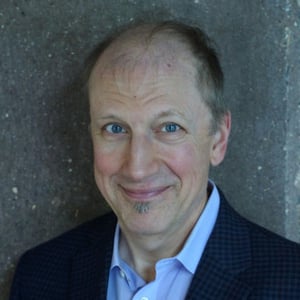
James L. Oberstar Professor of Law and Public Policy, University of St. Thomas School of Law
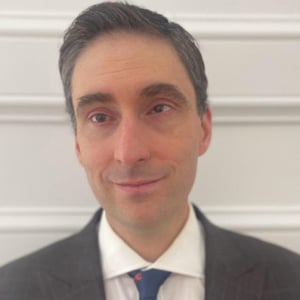
Senior Litigation Counsel, Washington Legal Foundation
Zac joined WLF in 2025 as Senior Litigation Counsel. In that role, he regularly represents WLF and other clients as counsel of record in cases before the U.S. Supreme Court and the federal appellate courts. Before arriving at WLF, Zac served as counsel to Commissioner Allen Dickerson of the Federal Election Commission. Zac also spent eight years litigating First Amendment cases as a staff attorney for the Institute for Free Speech, where he represented clients in federal and state cases across the country. He received his J.D. from George Mason University’s School of Law, where he participated in GMU’s Wiley Rein Supreme Court clinic.
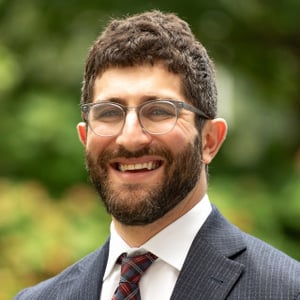
Associate Professor of Law, Temple University Beasley School of Law
Jacob Schuman is an Associate Professor at Temple University Beasley School of Law, where he teaches Constitutional Law, Evidence, and the Law of the Police. His scholarship focuses on the law of community supervision and has been published or is forthcoming in the Stanford Law Review, New York University Law Review, Michigan Law Review, Virginia Law Review, American Criminal Law Review, Philadelphia Inquirer, and New Republic.
Professor Schuman’s scholarship is regularly cited by courts, scholars, journalists, and advocates, including by federal judges on the Second, Fourth, and Seventh Circuit U.S. Courts of Appeals. It has also won plaudits across the ideological spectrum, from the American Constitution Society to the Federalist Society. He has filed amicus briefs based on his work on behalf of clients such as the National Association of Federal Defenders and the National Association of Criminal Defense Lawyers.
Prior to joining Temple Law, Professor Schuman served in the appellate unit of the Federal Community Defender Office in Philadelphia, where he represented indigent criminal defendants before the U.S. Court of Appeals for the Third Circuit. He also worked as a white-collar criminal defense lawyer in Washington, D.C. After graduating magna cum laude from Harvard Law School, he clerked for the Honorable Michael Boudin on the U.S. Court of Appeals for the First Circuit and the Honorable James Boasberg on the U.S. District Court for the District of Columbia.
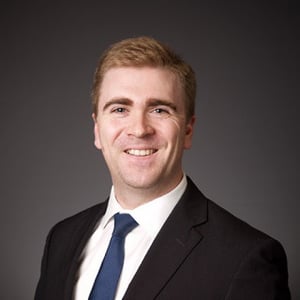
Legal Counsel, Center for Free Speech, Alliance Defending Freedom
Logan Spena serves as legal counsel for the Center for Free Speech at Alliance Defending Freedom, where he works to defend free speech and combat global censorship and coercion.
Before joining ADF, Spena served as Deputy Policy Director in the Missouri governor’s office where he oversaw the state’s regulatory reform efforts and worked to approve legislation on many issues including education, foster care, and protecting the unborn.
Spena graduated from the University of Virginia School of Law in 2016, where he served on the Editorial Board of the Virginia Law Review. Spena earned his B.A. in Government: Political Theory from Patrick Henry College in 2012. Spena is a member of the bars of Virginia and Missouri.
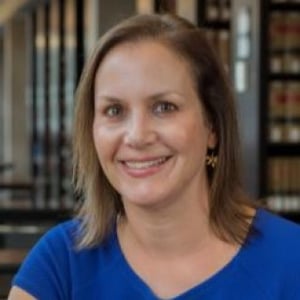
Director of Clinical and Experiential Learning, Clinical Professor of Law & Director of the Criminal and Juvenile Justice Clinic, University of Chicago Law School
Erica Zunkel is a Clinical Professor of Law and directs the Criminal and Juvenile Justice Clinic. Under Professor Zunkel’s supervision, law students represent indigent individuals in criminal trial courts, on appeal, and in post-conviction proceedings, and pursue policy and impact projects to effect system change. Professor Zunkel’s Excessive Sentences Project is an initiative that aims to free prisoners serving lengthy sentences through the use of second look mechanisms such as compassionate release, parole, and clemency. Zunkel and her clinic students have secured the early release of 17 individuals, resulting in hundreds of years in prison saved for their clients. In recognition of her post-conviction work, Zunkel received the 2024 Excellence in Pro Bono Service Award from the United States Northern District of Illinois District Court and the Federal Bar Association.
Zunkel’s case and research interests include post-conviction remedies for excessive sentences in the federal and state systems, mandatory minimums, and sentencing. In 2022, Illinois Governor J.B. Pritzker appointed Professor Zunkel to be a Commissioner on the Illinois Torture Inquiry and Relief Commission, which examines claims of police torture.
Before coming to the Law School in 2012, Professor Zunkel was a federal public defender in San Diego, California and a law clerk for U.S. District Court Judge Martha Vázquez in Santa Fe, New Mexico. She received her B.A. from Cornell University and her J.D. from the University of California-Berkeley School of Law.
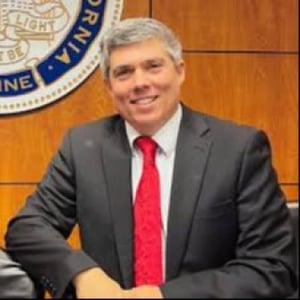
Partner, Friedland Cianfrani LLP
Joe has focused on IP litigation for his entire 25-year legal career. In that time, he has successfully represented clients in high-stakes intellectual property disputes at both the trial and appellate levels. Joe combines a strong technical background with a thorough understanding of his clients’ business goals and then tailors the legal strategy to achieve those goals.
Joe's practice primarily involves representing litigants in federal district court in patent and trademark cases, the Patent Trial and Appeal Board (PTAB), and before the United States Court of Appeals for the Federal Circuit, where he served as a law clerk to Judge Arthur Gajarsa. Joe has represented clients on more than 50 appeals and petitions for inter partes review involving computer peripherals, optics, electronics, software, pharmaceuticals, DNA sequencing, and medical devices.
Before founding Friedland Cianfrani, Joe was a partner at Knobbe Martens for two decades, where he served as the Chair of the firm’s Litigation Department and the co-chair of the appellate practice group. Joe is a leader in the intellectual property bar community and has served on the Board of Directors of the American Intellectual Property Association and has chaired the Association’s amicus and legislative committees. He has authored numerous amicus briefs for the AIPLA and other bar associations on a variety of intellectual property issues and is a frequent lecturer on intellectual property law and litigation strategy. Joe is also an active community leader and has coached local high school mock trial teams for the past several years.
Joe has also been consistently recognized with numerous awards as a “Rising Star,” "Super Lawyer," and "Best Lawyer," including Lawyer of the Year award by Best Lawyers in 2021.
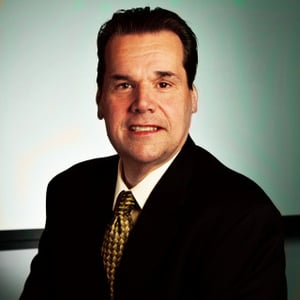
Partner, Patrick Doerr
Mr. Rando has represented clients in matters involving computer hardware and software, silicon chip manufacturing, biotechnology, medical devices, pharmaceuticals, chemical compounds, food additives, alternative energy, AI, autonomous vehicles, blockchain, consumer electronics, communications, internet, and e-commerce. He has appeared in courts across the country, including the Southern and Eastern Districts of New York and multiple U.S. Courts of Appeals.
As appellate counsel, Mr. Rando has served as counsel of record or co-counsel in more than 30 amicus briefs filed before the U.S. Supreme Court and Federal Circuit on issues of patent law, statutory interpretation, separation of powers, and constitutional law. Noteworthy filings include eBay Inc. v. MercExchange (2006), Oil States v. Greene’s Energy (2017), American Axle v. Neapco (2021), Amgen v. Sanofi (2023), and Cellect v. Vidal (2024).
Mr. Rando is a Fellow of the Academy of Court-Appointed Masters, having served by judicial appointment as Special Master in numerous complex patent cases, including multi-day Markman hearings and post-discovery proceedings. He also serves as a court-appointed Mediator and Neutral in both patent and commercial disputes.
He has played an active role in judicial and legislative engagement. Mr. Rando co-developed and conducted lecture series for the SDNY and EDNY Patent Pilot Program Judges and Clerks, covering the America Invents Act and Section 101 eligibility post-Alice and Mayo. He represented both the Federal Bar Association (FBA) and New York Intellectual Property Law Association (NYIPLA) at the Tillis/Coons Section 101 Patent Reform Roundtable, and submitted written testimony to the U.S. Senate Judiciary Committee in 2019.
Mr. Rando is a former president of the NYIPLA (2023–2024) and has held nearly every leadership position in the organization. He also served as Chair of the FBA’s Intellectual Property Law Section and was a founding member and president of the FBA’s EDNY Chapter. He is a founding member of the Association of Amicus Counsel, and an active contributor to the Federalist Society IP Practice Group Executive Committee.
He frequently lectures at CLE programs, universities, and legal associations on IP, constitutional law, and appellate advocacy. He has been quoted extensively in publications such as Law360, Bloomberg Law, WIPR, and National Law Journal. His scholarly publications include articles in The Federal Lawyer, Touro Law Review, and IPWatchdog.
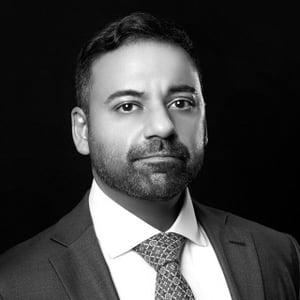
Partner, Kasowitz LLP
Amit R. Vora is Chair of Kasowitz LLP's Appellate & Constitutional Litigation practice group. He has extensive experience litigating before the U.S. Supreme Court and federal and state appellate courts nationwide. He represents companies and individuals in administrative, commercial, and patent disputes, and matters involving the First Amendment, separation of powers, due process, and other constitutional issues. For example, he represented former Attorney General Edwin Meese III and Professors Steven G. Calabresi and Garry S. Lawson as amici in SEC v. Jarkesy in the U.S. Supreme Court, SpaceX v. NLRB in the Fifth Circuit, and United States ex rel. Zafirov in the Eleventh Circuit.
Amit previously served as Assistant Solicitor General with the New York State Attorney General’s Office. Amit was also a Supervising Attorney and Teaching Fellow with Georgetown University Law Center’s Appellate Courts Immersion Clinic, and he clerked for Judge Edward C. Prado of the Fifth Circuit.
Amit is the author of several practice-oriented and scholarly pieces, including The Third Circuit’s Sun Valley Decision: An Illumination of Jarkesy’s Article III Implications, Washington Legal Foundation (2025); Constitutional Crowding and Article II, 85 Albany Law Review 857 (2022); and Defending an Under-21 Firearm Ban Under the Second Amendment, 71 Stanford Law Review Online 1 (2018).
Amit holds an LL.M. in appellate advocacy from Georgetown University Law Center, a J.D. from Harvard Law School, and a B.A. in cognitive science from Yale College.
Founder and Partner, Dowd Scheffel PLLC
Matthew Dowd focuses his skills on complex appellate and trial litigation, with an emphasis on patent and intellectual property issues. Through his years of practice, Mr. Dowd has successfully worked on numerous high-stakes and eclectic legal matters, focusing primarily on all stages of complex patent matters (AIA proceedings, litigation, prosecution, and counseling). Mr. Dowd's expertise and leadership are regularly consulted, as he is frequently asked to comment in the press on leading intellectual property issues.
Mr. Dowd has substantial experience with Hatch-Waxman litigation, including all stages of opinion analysis, litigation, and appeals. His technical background in medicinal chemistry is ideally suited for litigating pharmaceutical patents. He has represented clients in a range of trial forums for patent disputes, such as the Eastern District of Texas and the District of Delaware, as well as the Patent Trial and Appeal Board at the USPTO.
He has argued and briefed numerous appeals before the U.S. Court of Appeals for the Federal Circuit and other courts involving issues such as patent law, Hatch-Waxman, administrative law, Fifth Amendment takings, contract claims, government employment issues, and criminal law. In 2018, Mr. Dowd is co-counsel with the Hon. Richard Posner (ret.) of U.S. Court of Appeals for the Seventh Circuit in an appeal before the U.S. Court of Appeals for the Fourth Circuit.
In 2013, Mr. Dowd represented Nobel Laureate James Watson, co-discoverer of the DNA double helix, as amicus curiae in the groundbreaking 2013 Supreme Court gene patent case. Mr. Dowd has over 15 years of experience representing clients before the U.S. Patent and Trademark Office.
Mr. Dowd is also well-known for his successful pro bono representation in the "free-range kids" case. The case was widely reported in the national, local, and international news.
Mr. Dowd attended The George Washington University Law School, graduating with high honors and being awarded Order of the Coif. While attending law school and before, Mr. Dowd worked full-time as a registered patent agent at the renowned IP boutique Sterne, Kessler, Goldstein & Fox.
After law school, Mr. Dowd clerked for the Honorable Paul R. Michel, Chief Judge (ret.) of the U.S. Court of Appeals for the Federal Circuit. While a law clerk, Mr. Dowd gained an insider's perspective on the appellate process. Understanding the appellate process is critical to maximizing success at the earlier stages of a case.
Mr. Dowd is currently appointed as a Professorial Lecturer in Law at The George Washington University Law School. He teaches appellate advocacy and is the coach for the student moot court team for the AIPLA Giles Sutherland Rich Moot Court Competition.
Prior to his legal career, Mr. Dowd spent four years in a Ph.D. program in medical chemistry, studying organic chemistry, pharmacology, and pharmaceutical drug design. During his Ph.D. program, Mr. Dowd's research discovered a novel structure-activity relationship for nicotinic ligands with potential utility in treating Alzheimer's and Parkinson's diseases. Mr. Dowd attended The College of William and Mary, in Williamsburg, VA, and Regis High School in New York City.
Principal, Knowles Intellectual Property Strategies
Sherry M. Knowles is an intellectual property attorney with 30 years of experience in global corporate and private practice, and is a member of the inaugural class of the IPWatchdog Masters™ Hall of Fame.
Currently the Principal of Knowles Intellectual Property Strategies, Ms. Knowles was the Senior Vice President and Chief Patent Counsel at GlaxoSmithKline from 2006-2010, where she served as the worldwide head of patents for all litigation and transactional matters, and managed a global department of over 200 people in 12 offices. At GSK, Ms. Knowles was a member of the Scientific Advisory Board, the Technology Investment Board, the Product Management Board, the Legal Management Team and she led the Global Patents Executive Team.
Ms. Knowles played a key role in the case of GlaxoSmithKline and Tafas v. Dudas, 541 F. Supp. 2d 805 (E.D. Va. 2008). On October 9, 2007, GSK became the first and only company in the US to file a lawsuit to challenge the Final Rules published by the US Patent and Trademark Office on August 7, 2007. During the course of litigation, 20 amicus briefs were filed by parties in support of GSK and Dr. Tafas, including from the AIPLA, PhRMA, BIO, IPO, Washington Legal Foundation and CropLife America. The litigation concluded in October 2009, when David Kappos made the decision to withdraw the contested regulations and GSK agreed to join with the PTO in a motion to dismiss all litigation.
In 2008, Managing IP Magazine named Ms. Knowles one of the top 10 most influential people in Intellectual Property, referring to her as a “Patent Owner’s Advocate.” In 2010, the New Jersey Intellectual Property Lawyers Association awarded GSK, with Ms. Knowles as the representative, the Jefferson Medal for exceptional contribution to Intellectual Property. In 2010, Managing IP Magazine named the GSK Global Patent Team the “In-House IP Team of the Year” for 2009 for the constructive approach to IP in the developing world, the engagement with public policy in Europe and the successful resolution of the USPTO rules matter in the US.
In November 2011, Intellectual Asset Management Magazine listed Ms. Knowles among the top fifty key individuals, companies and institutions that have shaped the IP marketplace in the last eight years. Ms. Knowles is also listed in the IAM 250 “World’s Leading IP Strategists,” published by IAM Magazine in 2011, the IAM 300 “World’s Leading IP Strategists,” published by IAM Magazine in 2012, 2013, 2014, 2015, 2016 and 2017 as well as the IAM 1000 “World’s Leading Patent Professionals” in 2015, 2016 and 2017. She was also included in the list of Top 250 Women in IP by Managing IP Magazine in 2014, Managing IP’s 2016 and 2017 list of “IP Stars”.
Ms. Knowles was Chair of the IP Subcommittee of PhRMA in 2008, and Chair Emeritus of the PhRMA IP Subcommittees in 2009 and 2010. From 2006-2010, she was a member of InterPat, which is the association of Chief Patent Counsels of the major pharmaceutical companies, and from 2008-2010 was a member of the Executive Committee of InterPat. She was the Chair of the work stream on data exclusivity for InterPat from 2006-2010.
President & CEO, IPWatchdog, Inc.
Gene Quinn is a patent attorney and a leading commentator on patent law and innovation policy. Mr. Quinn has twice been named one of the top 50 most influential people in IP by Managing IP Magazine, in both 2014 and 2019. From 2017-2023, Mr. Quinn has also been recognized by IAM Magazine as one of the top 300 IP strategists in the world, and in 2021 he was recognized by IAM in their inaugural Strategy 300 Global Leaders list.
Mr. Quinn founded IPWatchdog.com in 1999, and he is currently President & CEO of IPWatchdog, Inc. According to IAM Magazine, Mr. Quinn “has reshaped the IP debate in the United States in a way that has forced policy makers to carefully consider the macroeconomic effects of IP law and its potential to drive innovation and economic activity.”
Regarded as an expert on software patentability and U.S. patent procedure, Mr. Quinn has advised inventors, entrepreneurs and start-up businesses throughout the U.S. and around the world. He consults with attorneys facing peculiar procedural issues at the Patent Office, advises investors and executives on patent law changes and pending litigation matters, and has represented patent practitioners before the Office of Enrollment & Discipline.
Mr. Quinn began his career as a litigator handling a variety of civil litigation matters, and he has been a patent attorney for nearly two decades. He has previously taught a variety of intellectual property courses at the law school level, teaching courses such as patent law, patent claim drafting, patent prosecution, copyright law, trademark law and introduction to intellectual property at Syracuse University College of Law, Temple University School of Law, The University of Toledo College of Law, the University of New Hampshire School of Law, the John Marshall Law School (Chicago) and Whittier Law School. Since 2000 Mr. Quinn has also taught the leading patent bar review course in the nation.
Mr. Quinn is admitted to practice law in New Hampshire, is a Registered Patent Attorney licensed to practice before the United States Patent Office and is also admitted to practice before the United States Court of Appeals for the Federal Circuit.
Managing Attorney, Rogitz & Associates
John M. Rogitz is an IAM 300 World-Leading IP Strategist and second-generation patent attorney that currently serves as Managing Attorney at Rogitz & Associates. He is also a member of the IPWatchdog Advisory Committee and an adjunct professor at Trinity Law School. In addition, John recently served on the Executive Committee of the IP Section of the California Lawyers Association (2023-2025) and co-founded CLA’s AI Interest Group.
As Managing Attorney at Rogitz & Associates, John manages the firm’s day-to-day operations and many of the firm’s clients. He is a registered patent attorney specializing in patent preparation and prosecution in a range of technologies including artificial intelligence, robotics, autonomous vehicles, extended reality, video games, Internet of things (IoT), blockchain, fintech, rules-based software, computer hardware, medical devices, and other electrical and mechanical inventions. His clients range from startups and independent inventors to Fortune 500 companies. Before joining Rogitz & Associates, John was engaged in civil litigation at the Watkins Firm, a San Diego-based law firm.
John teaches all types of IP at Trinity Law School and has also taught IP at the undergraduate level. He writes for IPWatchdog, America’s leading patent law publication, and has also been published by IP Today, IP Magazine, and others. John regularly speaks to trade groups like the National Association of Patent Practitioners and Licensing Executives Society. Prior to practicing law, John worked in industry as a web developer.
John received his J.D. in 2009 from California Western School of Law, where he was selected for the Dean’s List and served as President of the Student Intellectual Property Law Association. John studied physics at Loyola Marymount University where, among other activities, he wrote for the school newspaper and participated in various philanthropic endeavors.

Professor of Law, DePaul University College of Law
Joshua D. Sarnoff is a professor of law at DePaul University and a faculty member in and former director of the Center for Intellectual Property Law & Information Technology (CIPLIT®). He teaches patent law, advanced patent law, administrative law, law and climate change, and other intellectual property law courses. He was previously a professor at the Washington College of Law, American University, in the Glushko-Samuelson Intellectual Property Law Clinic, and at the University of Arizona College of Law. In academic year 2014-2015, Professor Sarnoff was a Thomas A. Edison Distinguished Scholar at the United States Patent and Trademark Office. He is a registered patent attorney and a member of the bars of Washington D.C. and California, a former member of the board of governors of the Federal Circuit Bar Association, and a member of the boards of directors and advisory boards of various nonprofit organizations. He has written numerous articles and book chapters on patent law and climate change and has been involved in a wide range of intellectual property legal and policy disputes. He has submitted testimony on domestic patent law reform bills, has filed numerous amicus briefs in the United States Supreme Court and in the U.S. Court of Appeals for the Federal Circuit on important patent law issues, has been a pro bono mediator for the Federal Circuit, and has been a consultant to the United Nations Conference on Trade and Development on international intellectual property, trade and environmental issues. Professor Sarnoff was formerly in the private practice of intellectual property, environmental, and food and drug law in Washington, D.C. He received his BS from MIT and JD from Stanford.

Laurence A. Tisch Professor of Law and Director, Classical Liberal Institute, New York University School of Law; Senior Fellow, The Civitas Institute, University of Texas at Austin
Richard A. Epstein is the inaugural Laurence A. Tisch Professor of Law at NYU School of Law. Prior to his joining the faculty, he was a visiting law professor at NYU from 2007 through 2009. He served as the Peter and Kirstin Bedford Senior Fellow at the Hoover Institution from 2000 to 2024. Since 2024 to the present he is a senior lecturer at the Civitas Institute at the University of Texas—Austin. Epstein is also the James Parker Hall Distinguished Service Professor of Law Emeritus and a senior lecturer at the University of Chicago. His initial law school appointment was at the University of Southern California from 1968 to 1972. Epstein received an LL.D., h.c. from the University of Ghent, 2003. He has been a member of the American Academy of Arts and Sciences since 1985 and was a Senior Fellow of the Center for Clinical Medical Ethics at the University of Chicago Division of Biological Sciences, also from 1983. to 2022 He served as editor of the Journal of Legal Studies from 1981 to 1991, and of the Journal of Law and Economics from 1991-2001. From 2001 to 2010 he was a director of the John M. Olin Program in Law and Economics at the University of Chicago.
His newest book, The Myth of Birthright Citizenship: What the Fourteenth Amendment Really Says was published in 2026 (Encounter Books). Prior to that he has published many books including, The Dubious Morality of the Modern Administrative State (Roman & Littlefield 2020).Earlier he published th Classical Liberal Constitution: The Uncertain Quest for Limited Government (Harvard 2014) iHis previous books include Design for Liberty: Private Property, Public Administration and the Rule of Law (Harvard 2011); The Case Against the Employee Free Choice Act (Hoover 2009); Supreme Neglect: How to Revive the Constitutional Protection of Property Rights (Oxford 2008); Antitrust Decrees in Theory and Practice: Why Less is More (AEI 2007); Overdose: How Excessive Government Regulation Stifles Pharmaceutical Innovation (Yale University Press. 2006); How Progressives Rewrote the Constitution (Cato 2006); Cases and Materials on Torts (Aspen Law & Business; 8th ed. 2004); Skepticism and Freedom: A Modern Case for Classical Liberalism (University of Chicago, 2003); Torts (Aspen Law & Business 1999); Principles for a Free Society: Reconciling Individual Liberty with the Common Good (Perseus Books, 1998): Mortal Peril: Our Inalienable Rights to Health Care (Addison-Wesley, 1997); Simple Rules for a Complex World (Harvard, 1995); Bargaining With the State (Princeton, 1993); Forbidden Grounds: The Case Against Employment Discrimination Laws (Harvard , 1992); Takings: Private Property and the Power of Eminent Domain (Harvard, 1985); and Modern Products Liability Law (Greenwood Press, 1980). He has also edited(with Catherine M. Sharkey) Cases and Materials on the Law of Torts (10th edition 2012).
Professor Epstein has written numerous articles on a wide range of legal and interdisciplinary subjects. He has taught courses in administrative law, antitrust law, civil procedure, communications, constitutional law, contracts, corporations, criminal law, employment discrimination law, environmental law, food and drug law health law and policy, legal history, labor law, property, real estate development and finance, jurisprudence, labor law; land use planning, patents, individual, estate and corporate taxation, Roman Law; torts, and workers' compensation.
Professor Epstein also writes a regular column for Civitas Institute, which also sponsors his podcast, The Libertarian with Charles C.W. Cooke, and Law Talk, with Cooke and John Yoo. He also does a podcast with John Batchelor. And appears regularly on the Freedom File with Judge Andrew Napolitano.

A Seat at the Sitting - November 2025
Thomas C. Berg, Zac Morgan, Jacob Schuman, Logan Spena, Erica Zunkel
Each month, a panel of constitutional experts convenes to discuss the Court’s upcoming docket sitting...
The Federal Circuit's Reliance on One-Word Affirmances Under Rule 36: Is it Lawful?
Joseph Cianfrani, Robert J. Rando, Amit R. Vora
The Federal Circuit’s first Chief Judge, the Honorable Howard T. Markey, announced, “In our Court...
Textualism and Patent Statutory Law – Patent Eligibility, ODP, and Upcoming Patent Reform in Congress
Matthew J. Dowd, Sherry Knowles, Gene Quinn, John M. Rogitz, Joshua Sarnoff
When it comes to patent eligibility and statutory construction, does “any” really mean “any?” In...
The Supreme Court Tackles Patent Reform: Inter Partes Review Under the AIA Undermines the Structural Protections Offered by Article III Courts
Richard A. Epstein
Note from the Editor: This article criticizes Justice Clarence Thomas’ opinion in Oil States. It...