
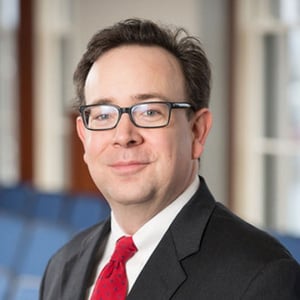
Professor of Law, Oklahoma City University School of Law
Professor O’Shea is a nationally recognized expert on firearms law and the Second Amendment. He is a co-author of the first law school casebook on the subject, Firearms Law and the Second Amendment: Regulation, Rights, and Policy, published in 2012. He serves as the Associate Director of OCU Law’s Center for State Constitutional Law and Government.
Professor O’Shea is an honors graduate of Harvard College and Harvard Law School. He also holds a master’s degree in philosophy from the University of Pittsburgh. Before coming to Oklahoma City University School of Law in 2006, he practiced commercial litigation in Chicago and in his hometown of Kansas City, Missouri. He also served as a law clerk to Chief Judge Danny J. Boggs of the U.S. Court of Appeals for the Sixth Circuit and to Judge John R. Gibson of the U.S. Court of Appeals for the Eighth Circuit.
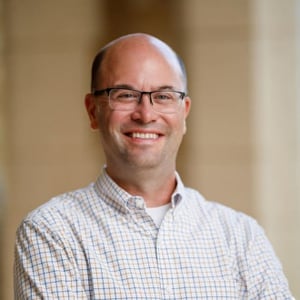
Paul J. Schierl Professor of Law, University of Notre Dame Law School
Professor Richard W. Garnett teaches and writes in the areas of constitutional law, criminal law, the First Amendment, and law and religion. He is a leading authority on questions and debates regarding religious freedom and church-state relations, and is the founding director of Notre Dame Law School’s Program on Church, State, and Society.
Garnett clerked for the late Chief Justice of the United States, William H. Rehnquist, and also for the late Chief Judge of the United States Court of Appeals for the Eighth Circuit, Richard S. Arnold. He earned his J.D. from Yale Law School in 1995 and his B.A., summa cum laude, from Duke University in 1990. He joined the faculty in 1999 after practicing law in Washington, D.C. with Miller, Cassidy, Larroca & Lewin.

Judge, United States Court of Appeals, Third Circuit
Judge Hardiman was appointed to the United States Court of Appeals for the Third Circuit on January 9, 2007 and was confirmed by the Senate (95-0) on March 15, 2007. Prior to becoming an appellate judge, Judge Hardiman served as a trial judge on the United States District Court for the Western District of Pennsylvania as of November 1, 2003. In 2008, Chief Justice John Roberts appointed Judge Hardiman to the Information Technology Committee of the Judicial Conference of the United States. Judge Hardiman was appointed Chairman of the IT Committee in 2013 and served in that capacity until September 2021. In 2021 he was appointed by the Director of the Administrative Office of the United States Courts to serve as Chair of the Judiciary IT Security Task Force, which completed its work in fall 2023. Chief Justice Roberts appointed Judge Hardiman to the Board of the Federal Judicial Center to serve from March 2020 until March 2024. As part of his work with the Center, Judge Hardiman now serves as Editor in Chief for the Manual for Complex Civil Litigation, Fifth.
Before entering judicial service, Judge Hardiman handled a wide variety of litigation matters in state and federal trial and appellate courts as a partner at Reed Smith LLP (1999-2003), a partner at Titus & McConomy LLP (1996-1999), and as an associate with its predecessor firm, Cindrich & Titus (1992-1996). Judge Hardiman began his legal career as an associate in the Washington, D.C. office of Skadden, Arps, Slate, Meagher & Flom (1990-1992).
A 1987 honors graduate of the University of Notre Dame, Judge Hardiman received his law degree in 1990 from the Georgetown University Law Center, where he served as a Notes and Comments Editor on the Georgetown Law Journal. In 2012, Judge Hardiman was elected as a member of the American Law Institute and was elected to its Council in 2019 and its Executive Committee in 2025. Judge Hardiman regularly teaches a seminar on Advanced Constitutional Law at Duquesne University School of Law and a one-week course entitled “Constitutional Law: the First and Second Amendments” at Georgetown University Law Center.
A native of Waltham, Massachusetts, Judge Hardiman has chambers in Pittsburgh, Pennsylvania. He and his wife Lori married in 1992 and have three children.
Professor of Constitutional Law, Pepperdine University School of Law
One of America's best known scholars and popular commentators on the law, Professor Douglas W. Kmiec holds the endowed chair in constitutional law at Pepperdine Law School. He came to this position after serving several years as dean and St. Thomas More Professor of Law at The Catholic University of America in Washington, D.C., and for nearly two decades, on the law faculty at the University of Notre Dame. As dean at Catholic University, Professor Kmiec did what many said would be impossible; he greatly increased academic quality and student selectivity at the same time he deepened the school's religious commitment. During his tenure, the law school moved into the upper tier of the U.S. News ranking from tier three. At Notre Dame, he was director of Notre Dame's Center on Law & Government, and the founder of its Journal of Law, Ethics & Public Policy. Beyond the university setting, Kmiec served Presidents Ronald Reagan and George Bush during 1985-89 as constitutional legal counsel (Assistant Attorney General, Office of Legal Counsel, U.S. Department of Justice).
A wide-ranging writer and engaging speaker, Professor Kmiec writes a syndicated column for the Catholic News Service, and for several years wrote a regular column in the Chicago Tribune. He is also a frequent contributor to the pages of the Los Angeles Times, Wall Street Journal, and other periodicals. He is the co-author (with legal historian Stephen Presser of Northwestern) of three books on the Constitution -- The American Constitutional Order; Individual Rights and the American Constitution and The History, Structure and Philosophy of the American Constitution. Another recent book, Cease-Fire on the Family (Crisis Books/Notre Dame) attracted scholarly and popular acclaim for proposing realistic ways for families to "end the culture war" by renewing personal virtue and civic responsibility within itself. He has also written The Attorney General's Lawyer (Praeger 1992), and several respected legal treatises.
Professor Kmiec's scholarly research spans legal and non-legal subjects, from the Constitution and the federal system, to land use and the organization of America society. He is a frequent guest on national news programs, such as Nightline, the Newshour, and NPR's Talk of the Nation, analyzing constitutional questions.
A White House Fellow (1982-83), Professor Kmiec is one of a few individuals who has received the Distinguished Service Award from two cabinet departments —the Department of Justice in 1987 and Housing and Urban Development in 1983. In 1988, he was awarded the Edmund J. Randolph Award by the attorney general. He has lectured on the U.S. Constitution in Asia as a Fulbright Distinguished Scholar.
An honors graduate of Northwestern, Professor Kmiec received his law degree from the University of Southern California, where he served on the Law Review and received the Legion Lex Commencement Prize for Legal Writing. He is a member of the bar of the U.S. Supreme Court and the state bars of Illinois and California.
B.A., with honors, Northwestern University, 1973
J.D., University of Southern California, 1976
Professor of Law, Oklahoma City University School of Law
Professor O’Shea is a nationally recognized expert on firearms law and the Second Amendment. He is a co-author of the first law school casebook on the subject, Firearms Law and the Second Amendment: Regulation, Rights, and Policy, published in 2012. He serves as the Associate Director of OCU Law’s Center for State Constitutional Law and Government.
Professor O’Shea is an honors graduate of Harvard College and Harvard Law School. He also holds a master’s degree in philosophy from the University of Pittsburgh. Before coming to Oklahoma City University School of Law in 2006, he practiced commercial litigation in Chicago and in his hometown of Kansas City, Missouri. He also served as a law clerk to Chief Judge Danny J. Boggs of the U.S. Court of Appeals for the Sixth Circuit and to Judge John R. Gibson of the U.S. Court of Appeals for the Eighth Circuit.
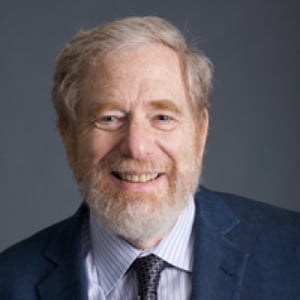
Carmack Waterhouse Professor of Constitutional Law, Georgetown Law
After graduating from Harvard Law School in 1971, Professor Seidman served as a law clerk for J. Skelly Wright of the D.C. Circuit and U.S. Supreme Court Justice Thurgood Marshall. He then was a staff attorney with the D.C. Public Defender Service until joining the Law Center faculty in 1976. He teaches a variety of courses in the fields of constitutional and criminal law. He is co-author of a constitutional law casebook and the author of many articles concerning criminal justice and constitutional law. His most recent books are Silence and Freedom (Stanford 2007), Our Unsettled Constitution: A New Defense of Constitutionalism and Judicial Review (Yale 2001) and Equal Protection of the Laws (Foundation 2002).
Counsel, The Judicial Confirmation Network
Wendy Long is legal counsel to the Judicial Confirmation Network. Until March 2005, she was a litigation partner in the New York office of Kirkland & Ellis LLP. Wendy was a law clerk to U.S. Supreme Court Justice Clarence Thomas and to Judge Ralph Winter of the U.S. Court of Appeals for the Second Circuit in New York. She is a graduate of Northwestern University School of Law, cum laude and Order of the Coif, where she was articles editor of the Northwestern University Law Review, and of Dartmouth College. She previously served as a press secretary in the U.S. Senate, for former U.S. Senator Bill Armstrong (R-Colo.) and former U.S. Senator Gordon Humphrey (R-N.H.).
Director, William E. and Carol G. Simon Center on Religion and t, The Witherspoon Institute
Matthew J. Franck is the Director of the William E. and Carol G. Simon Center on Religion and the Constitution at the Witherspoon Institute in Princeton, New Jersey. He is Professor Emeritus of Political Science at Radford University, in Virginia, where he taught constitutional law, American politics, and political philosophy from 1989 to 2010, and was Chairman of the Department of Political Science from 1995 to 2010. He is also a Visiting Lecturer in Politics at Princeton University.
Professor Franck earned his B.A. in political science from Virginia Wesleyan College, and his M.A. and Ph.D. in political science from Northern Illinois University. He has taught at Marquette University and Southern Illinois University, and was a Fulbright Professor of American Studies at the Graduate School of International Studies, Yonsei University, Seoul, Korea, in 1998, and a Visiting Fellow in the James Madison Program in American Ideals and Institutions at Princeton University, in 2008-09.
He is the author, editor of, or contributor to several books on religious freedom, constitutional law, the Supreme Court, and American politics, and has published essays and reviews in numerous academic journals, as well as many general-interest articles and commentaries in newspapers, magazines, and online, including the Washington Post, First Things, National Review, and Public Discourse, the daily online essay publication of the Witherspoon Institute.
Professor Franck is a regular blogger on National Review Online’s “Bench Memos” page and the “First Thoughts” page at First Things magazine, and has appeared numerous times on Bill Bennett’s “Morning in America” radio show, as well as on CNN, Fox News Channel, NPR, and Relevant Radio.
Partner, Goldstein & Russell PC
Thomas C. Goldstein has argued 28 cases before the Supreme Court, including matters involving federal patent law, class action practice, labor and employment, and disability law. In addition to practicing law, Tom teaches Supreme Court Litigation at Harvard Law School and taught at Stanford Law School as well from 2004-2012.
In the Supreme Court and elsewhere, Mr. Goldstein litigates and advises clients in a broad range of issues. For example, he regularly litigates and lectures on questions of federal patent law. Mr. Goldstein frequently advises clients, litigates, and consults on legislative matters relating to the First Amendment. And he regularly represents parties in questions relating to the game of poker, including its lawfulness as a matter of federal and state law. Tom's clients include plaintiffs, criminal defendants, and major corporations such as BG Group, Home Depot, Humana, IMS Health, Nike, PokerStars, POM Wonderful, and Pemex.
In addition to practicing law, Tom founded, and is the publisher of, SCOTUSblog, which in 2013 became the only weblog ever to receive the Peabody Award for excellence in electronic media. It also won the 2013 Society of Professional Journalists (Sigma Delta Chi) prize for deadline reporting for its coverage of the Supreme Court’s healthcare ruling. In 2010, it became the first blog to receive the American Bar Association’s Silver Gavel Award for fostering the American public’s understanding of law and the legal system.
Tom has been repeatedly recognized as a leading member of the bar. In 2010, The National Law Journal named him one of the 40 most influential lawyers of the decade; Tom notably was ten years younger than any other law firm partner listed. Legal Times named him one of the “90 Greatest Washington Lawyers of the Last 30 Years” and praised him for “transforming the practice” of law before the Supreme Court. He is also included in both of the National Law Journal’s most recent lists of the nation’s 100 most influential lawyers (2006 and 2013). He has been repeatedly recognized as one of the nation’s top appellate advocates. GQ Magazine named him one of the 50 most powerful people in Washington, D.C.
Tom is an elected Fellow of the American Academy of Appellate Lawyers, and a member of the American Law Institute. He is involved with a number of professional organizations. He serves as the vice chair of the Amicus Committee of the ABA’s Intellectual Property Section and previously served for two years on the ABA’s Standing Committee on Amicus Curiae Briefs. In those capacities, he has authored several Supreme Court amicus briefs for the ABA. In addition, Tom serves on the boards of advisors of the Washington Legal Foundation and the Georgetown University Supreme Court Institute.
Before founding Goldstein & Howe in 1999, Tom practiced law at Boies & Schiller, LLP and at Jones Day Reavis & Pogue. Tom left the firm he founded in 2006 to create the Supreme Court Practice at Akin, Gump, Strauss, Hauer & Feld, where he also was a partner and principal co-chair of the firmwide litigation practice. He returned to what is now Goldstein & Russell in 2011.
Tom clerked for the Honorable Patricia M. Wald of the U.S. Court of Appeals for the D.C. Circuit.
Associate Professor of Law, University of Colorado Law School
Scott Moss joined CU Law School in 2007 after six years as an attorney in New York City and three years as a professor at Marquette Law School, where he was the 2007 recipient of the James D. Ghiardi Faculty Award for Outstanding Teaching, Student Body Support, and Scholarship. In New York, Professor Moss was a law clerk to U.S. District Judge Constance Baker Motley and then a plaintiff's employment lawyer at Outten & Golden LLP, the largest plaintiff-side employment law practice in the country, where he litigated individual and class action cases of discrimination, harassment, and minimum/overtime wage violations. He also has argued and briefed appeals of employment cases and has undertaken pro bono projects such as First Amendment right-to-protest litigation with the New York Civil Liberties Union, low-income worker clinics in lower Manhattan, and court-sponsored mediations for pro se litigants. Professor Moss received his J.D. (magna cum laude) in 1998 from Harvard Law School, where he was a Senior Editor of the Harvard Civil Rights-Civil Liberties Law Review; his B.A. (Economics) and M.A. (Media Studies) are from Stanford University. Professor Moss's research interests have included employment law, discrimination, constitutional law, various civil procedure rules, and economic analysis of all of the preceding topics.
B.A., Stanford
M.A., Stanford
J.D., Harvard

Judge, United States Court of Appeals, Eighth Circuit
David Stras became a judge on the United States Court of Appeals for the Eighth Circuit on January 31, 2018. Before serving on the Eighth Circuit, Judge Stras was an Associate Justice of the Minnesota Supreme Court, a position he occupied from July 1, 2010 until his appointment to the Eighth Circuit.
Prior to becoming a judge, Stras was a member of the faculty of the University of Minnesota Law School from 2004 through 2010. He taught and wrote in the areas of federal courts and jurisdiction, constitutional law, criminal law, and law and politics.
Judge Stras received his Bachelor of Arts degree, with highest distinction, in 1995 and his Master of Business Administration in 1999, both from the University of Kansas. He also received his law degree from the University of Kansas School of Law in 1999, where he served as Editor-in-Chief of the Criminal Procedure Edition of the Kansas Law Review.
Following law school, Stras clerked for The Honorable Melvin Brunetti of the United States Court of Appeals for the Ninth Circuit and then for The Honorable J. Michael Luttig of the United States Court of Appeals for the Fourth Circuit.
From 2001 to 2002, he practiced white-collar criminal and appellate litigation with the Washington, D.C., office of Sidley Austin Brown & Wood. Following his year in practice, he clerked for The Honorable Clarence Thomas of the Supreme Court of the United States.
Distinguished Senior Fellow and Antonin Scalia Chair in Constitutional Studies, Ethics and Public Policy Center
Edward Whelan is a Distinguished Senior Fellow of the Ethics and Public Policy Center and holds EPPC’s Antonin Scalia Chair in Constitutional Studies. He is the longest-serving President in EPPC’s history, having held that position from March 2004 through January 2021.
Mr. Whelan directs EPPC’s program on The Constitution, the Courts, and the Culture. His areas of expertise include constitutional law and the judicial confirmation process. As a contributor to National Review Online’s Bench Memos blog, he has been a leading commentator on nominations to the Supreme Court and the lower courts and on issues of constitutional law. He has written essays and op-eds for leading newspapers—including the Wall Street Journal, the New York Times, and the Washington Post—opinion journals, and academic symposia and law reviews. The National Law Journal has named Mr. Whelan among its “Champions and Visionaries” in the practice of law in D.C.
Mr. Whelan is co-editor of three volumes of Supreme Court Justice Antonin Scalia’s work: Scalia Speaks: Reflections on Law, Faith, and Life Well Lived (Crown Forum, 2017), a New York Times bestselling collection of speeches by Justice Scalia; On Faith: Lessons from an American Believer (Crown Forum, 2019), a collection of Justice Scalia’s writings on faith and religion; and The Essential Scalia: On the Constitution, the Courts, and the Rule of Law (Crown Forum, 2020), a collection of Justice Scalia’s views on legal issues.
Mr. Whelan, a lawyer and a former law clerk to Justice Scalia, has served in positions of responsibility in all three branches of the federal government. From just before the terrorist attacks of September 11, 2001, until joining EPPC in 2004, Mr. Whelan was the Principal Deputy Assistant Attorney General for the Office of Legal Counsel in the U.S. Department of Justice. In that capacity, he advised the White House Counsel’s Office, the Attorney General and other senior DOJ officials, and departments and agencies throughout the executive branch on difficult and sensitive legal questions. Mr. Whelan previously served on Capitol Hill as General Counsel to the U.S. Senate Committee on the Judiciary. In addition to clerking for Justice Scalia, he was a law clerk to Judge J. Clifford Wallace of the U.S. Court of Appeals for the Ninth Circuit.
In 1981 Mr. Whelan graduated with honors from Harvard College and was inducted into Phi Beta Kappa. He received his J.D. magna cum laude in 1985 from Harvard Law School, where he was a member of the Board of Editors of the Harvard Law Review.
For more on Mr. Whelan’s background, see this interview.
Associate, Jones Day
Shay Dvoretzky specializes in appellate advocacy, complex motions in trial courts, and legal strategy. He has argued before numerous courts, including the U.S. Courts of Appeals for the Second, Sixth, Eighth, Ninth, Eleventh, and District of Columbia Circuits. He has represented Firm clients in the Supreme Court of the United States and in federal and state courts throughout the country. His practice has spanned a wide range of subject areas, including constitutional law, Title VII, ERISA, LMRA, the NLRA, election law and voting rights, intellectual property, securities fraud, RICO, administrative law, products liability, section 1983 claims, energy law, taxation, bankruptcy, and general commercial litigation.
Shay has particular experience in labor and employment law and employment class actions. For example, he has successfully argued appeals involving the vesting of retiree health benefits and the arbitrability of disputes over such benefits after a collective bargaining agreement expires, see Crown Cork & Seal Co. v. International Association of Machinists and Aerospace Workers, __ F.3d __, 2007 WL 2701208 (8th Cir. Sept. 18, 2007); ERISA's anti-cutback and merger rules, see McCay v. Siemens Corp., 2007 WL 2119827 (11th Cir. July 25, 2007); and the denial of certification of a 3,000-member class, see Love v. Johanns, 439 F.3d 723 (D.C. Cir. 2006).
In addition, Shay maintains an active pro bono practice and has represented indigent individuals in numerous cases. For example, in Turner v. Bagley, 401 F.3d 718 (6th Cir. 2005), which Shay argued before the Sixth Circuit, the court of appeals reversed the district court's judgment and granted Jones Day's client a writ of habeas corpus based on constitutional violations related to his state conviction.
Shay regularly speaks and writes on issues including appellate advocacy, the Supreme Court, and employment law. He also serves as the D.C. Circuit editor for the ABA Appellate Practice Journal, frequently judges moot courts for various organizations, and belongs to the Edward Coke Appellate Inn of Court.
Shay joined Jones Day following clerkships on the U.S. Court of Appeals for the Fourth Circuit and the Supreme Court of the United States. Before law school he worked for several years as a management consultant.
Law Clerk to Hon. J. Michael Luttig, U.S. Court of Appeals, Fourth Circuit (2000-2001) and Law Clerk to Hon. Antonin Scalia, Supreme Court of the United States (2001-2002)
Yale University (Phi Beta Kappa; Distinction in the Political Science Major; James Bennett Prize for Outstanding Senior Thesis; B.A. summa cum laude 1995; Coker Fellow; Olin Fellow; Yale Club Scholar; William Wang Prize in Corporate Law; Yale Law Journal; J.D. 2000)
Associate General Counsel, Black hills Corporatioon
Greg Sopkin has been practicing energy and telecommunications law for over fifteen years. Sopkin has handled complex transmission, rate, generation, and communications regulatory cases, often in a first-chair capacity. He was the Chairman of the Colorado PUC from January 2003 until January 2007. While Chairman, Sopkin presided over numerous Phase I and II electric rate cases as well as integrated resource planning cycles; investigated service outages; guided the redrafting of the Commission's electric, gas and transmission rules; implemented a renewable energy initiative; and oversaw transmission line disputes, the electric price response pilot program, high cost fund administration and the Qwest deregulation case.
Greg also has represented energy and telecommunications clients at Squire Sanders and Gorsuch Kirgis LLP and represented the Colorado PUC as an assistant attorney general in the Colorado Attorney General's office. He taught at the University of Colorado and has been a member of the National Association of Regulatory Utility Commissioners, serving on the telecommunications, energy and critical infrastructure committees; a member of the Federalist Society, serving on the telecommunications and electronic media practice group executive committee; and director of the Federation for Economically Rational Utility Policy. He received his J.D. in 1991 from the University of Colorado School of Law, where he was on the University of Colorado Law Review, and his BS, with high honors, in 1988 from the University of Illinois. Sopkin, his wife Rebecca and six children live in Lakewood, Colorado.
Judge, United States Court of Appeals, Eighth Circuit
Judge William Duane Benton is a federal judge on the United States Court of Appeals for the 8th Circuit. He joined the court in 2004 after being nominated by former President George W. Bush. Prior to his appointment, Judge Benton served as the chief justice of the Missouri Supreme Court. During his service on the court he received his masters of laws from the University of Virginia, completed the senior executives program at Harvard University’s John F Kennedy School of Government, and completed a post-graduate appellate judges course at New York University’s Institute of Judicial Administration.
Prior to serving on the Supreme Court of Missouri, Judge Benton was appointed by then-Governor John Ashcroft as director of the state’s department of revenue. Judge Benton also worked as a judge advocate general for the United States Navy, during which time he received his master’s degree in business administration and accountancy from the University of Memphis.
Judge Benton earned his law degree from Yale Law School and was the managing editor of the Yale Law Journal.

Supreme Court Preview: What Does the 2009-10 Term Hold?
The Sotomayor Nomination, Part II
Louis Michael Seidman, Wendy Long, Matthew J. Franck, Thomas C. Goldstein, Scott Moss, David R. Stras, Edward Whelan
On May 26, President Obama nominated Sonia Sotomayor to replace David Souter as an Associate...
SCOTUScast 5-27-09 featuring Shay Dvoretzky
Shay Dvoretzky
On Tuesday, March 31, 2009, the Supreme Court heard oral argument in Gross v. FBL...
Barwatch Bulletin for March 2009
ABA ONCE AGAIN PRE-VETTING JUDICIAL CANDIDATES On Tuesday, March 17, American Bar Association President H. Thomas...
The 2008 Election and the Federal Courts
Pittsburgh, PennsylvaniaLimbaugh Legacy Lecture
State Revanchism: Can the Latest Efforts to Regulate Voice over Internet Protocol be Stopped?
Gregory E. Sopkin
The last “war” fought over Voice over Internet Protocol (“VoIP”) occurred in 2003-2004, when the...
Supreme Court Preview: What Does the 2007-08 Term Hold?
Greenville, South CarolinaKansas Program
Implications of the Dred Scott Case for Appellate Review - Event Audio
Duane Benton
For the Kansas City Lawyers Chapter Third Thursday Luncheon, Judge Duane Benton of the United...