

Senior Transportation Policy Analyst, Reason Foundation
Marc Scribner is a senior transportation policy analyst at Reason Foundation.
Scribner's work focuses on a variety of public policy issues related to transportation, land use, and urban growth, including infrastructure investment and operations, transportation safety and security, risk and regulation, privatization and public finance, urban redevelopment and property rights, and emerging transportation technologies such as automated road vehicles and unmanned aircraft systems. He frequently advises policymakers on these matters at the federal, state, and local levels.
Scribner has testified before Congress at the invitation of both Democrats and Republicans on issues including highway revenue collection, traffic congestion management, and airport financing. He is a member of the Transportation Research Board's Standing Committee on Emerging Technology Law.
He has appeared on television and radio programs in outlets such as Fox Business Network, National Public Radio, and the Canadian Broadcasting Corporation, and has also written for numerous publications, including USA Today, The Washington Post, Wired, CNN.com, MSNBC.com, Forbes, and National Review. And his work has been featured by The Wall Street Journal, New York Times, Washington Post, Los Angeles Times, Scientific American, Congressional Quarterly, Washington Monthly, POLITICO, CNN, Bloomberg, BBC, C-SPAN, and other print, television, and radio outlets.
Scribner joined Reason Foundation after more than a decade at the Competitive Enterprise Institute, where he was a senior fellow in transportation policy. He received his undergraduate degree in economics and philosophy from George Washington University.

Senior Fellow, R Street Institute
Prior to R Street, Adam spent 12 years as a senior fellow at the Mercatus Center at George Mason University. Before the Mercatus Center, he served as the president of the Progress and Freedom Foundation. Adam has also worked for the Adam Smith Institute, the Heritage Foundation and the Cato Institute.
Adam has published 10 books on a wide range of topics, including online child safety, internet governance, intellectual property, telecommunications policy, media regulation and federalism.
In 2008, Adam received the Family Online Safety Institute’s “Award for Outstanding Achievement.”
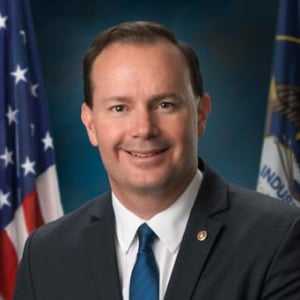
United States Senator, Utah
Elected in 2010 as Utah's 16th Senator, Mike Lee has spent his career defending the basic liberties of Americans and Utahns as a tireless advocate for our founding constitutional principles.
Senator Lee acquired a deep respect for the Constitution early on. His father, Rex Lee, who served as the Solicitor General under President Ronald Reagan, would often discuss varied aspects of judicial and constitutional doctrine around the kitchen table, from Due Process to the uses of Executive Plenary Power. He attended most of his father's arguments before the U.S. Supreme Court, giving him a unique, hands-on experience and understanding of government up close.
Lee graduated from Brigham Young University with a Bachelor of Science in Political Science, and served as BYU's Student Body President in his senior year. He graduated from BYU's Law School in 1997 and went on to serve as law clerk to Judge Dee Benson of the U.S. District Court for the District of Utah, and then with future Supreme Court Justice Judge Samuel A. Alito, Jr. on the U.S. Court of Appeals for the Third Circuit.
Lee spent several years as an attorney with the law firm Sidley & Austin specializing in appellate and Supreme Court litigation, and then served as an Assistant U.S. Attorney in Salt Lake City arguing cases before the U.S. Court of Appeals for the Tenth Circuit.
Lee served the state of Utah as Governor Jon Huntsman's General Counsel and was later honored to reunite with Justice Alito, now on the Supreme Court, for a one-year clerkship. He returned to private practice in 2007.
Throughout his career, Lee earned a reputation as an outstanding practitioner of the law based on his sound judgment, abilities in the courtroom, and thorough understanding of the Constitution.
Today, Lee fights to preserve America's proud founding document in the United States Senate. He advocates efforts to support constitutionally limited government, fiscal responsibility, individual liberty, and economic prosperity.
Lee is a member of the Judiciary Committee, and serves as Chairman of the Antitrust, Competition Policy and Consumer Rights Subcommittee protecting business competition and personal freedom.
He also oversees issues critical to Utah as the Chairman of the Water and Power Subcommittee of the Energy and Natural Resources Committee. He serves on the Commerce Committee and the Joint Economic Committee, as well.
In the 114th Congress, Lee also began his tenure as Chairman of the Senate Steering Committee, where he works with his Republican colleagues in the Senate to introduce bold and innovative solutions to issues facing the American people.
Lee and his wife Sharon live in Alpine, Utah, with their three children. He is a member of The Church of Jesus Christ of Latter-day Saints and served a two-year mission for the Church in the Texas Rio Grande Valley.

Former Acting Assistant Attorney General, United States Department of Justice; Partner, Winston & Strawn LLP
Jonathan “Jon” Brightbill is a trial and appellate lawyer in Winston’s Washington, D.C. office, and a partner in the firm’s Litigation and White Collar, Regulatory Defense, and Investigations Practices. He represents public and private companies, corporate officers, and other individuals across white collar, regulatory defense, and government and internal investigation matters and rulemaking challenges, as well as complex commercial disputes, citizen suits, and class actions. His commercial litigation experience encompasses business disputes, false advertising, consumer protection and fraud, FCA, and extensive class action defense work; antitrust and unfair competition matters; and intellectual property litigation, such as trademarks, patents, and trade secrets.
Jon served as the Nation’s lead environmental civil and criminal enforcement official and litigator, as Acting Assistant Attorney General for the Environment & Natural Resources Division (“ENRD”) of the U.S. Department of Justice (DOJ). Jon led ENRD’s 425 lawyers, overseeing 6,500 active matters and managing an annual budget of more than $150 million. Jon brings highly experienced executive leadership from among the most senior level of DOJ on white collar and regulatory enforcement, as well as on federal policymaking and rulemaking development and challenges. He speaks with authority on government decision-making processes, and the arguments and perspectives that move regulators and enforcers, best advising and positioning clients to deal with challenges.
Jon argued many of the government’s most significant cases during his time with the DOJ. This included the Navigable Waters Protection Rule and Clean Water Rule Repeal (10th Cir., district courts), the Affordable Clean Energy Rule and Clean Power Plan Repeal (D.C. Cir), defense of EPA actions on pesticide tolerances under FIFRA and the FDCA (9th Cir. en banc), among numerous others. Jon represented the United States in trial courts in both enforcement and defensive cases, including federal enforcement action against Jeffrey Lowe and the Tiger King Park, of Netflix fame, securing a first-of-its-kind injunction for violations of the Endangered Species Act and Animal Welfare Act. Jon directed the litigation and briefing of scores of additional federal cases nationwide, covering all of the major environmental and natural resources statutes, such as the Clean Air Act, the Clean Water Act, FIFRA (pesticides), FDCA (food safety), TSCA (toxics), CERCLA (land remediation), RCRA (waste), National Environmental Policy Act, Federal Land Policy and Management Act, and numerous other land- and resource-management statutes.
Jon has unmatched experience litigating legal and technical issues relating to climate change. He argued in the courts of appeals, including the D.C. Circuit, regarding the most significant climate change regulations by EPA, as well as the preemptive scope of the Clean Air Act. Jon also litigated climate change-related credit and trading schemes and international agreements in district court. During Jon’s time in leadership at ENRD, it successfully defeated one of the most wide-ranging lawsuits regarding climate change to date—obtaining a stay pending interlocutory appeal and dismissal just weeks before a scheduled three-month trial on federal government liability for climate change.
An accomplished trial lawyer, prior to working at DOJ, Jon was a partner in the Washington, D.C. office of another global law firm. He not only represents clients in court, but creatively counsels corporations on balancing business needs and realities with a broad range of litigation risks and compliance obligations. Jon is also an Adjunct Professor at Georgetown University Law Center. He served on the American Bar Association’s E-Discovery Working Group for Bankruptcy Practice, and was a frequent lecturer for District of Columbia Bar Association Continuing Legal Education Programs.
Jon served as an appellate clerk for the Honorable D. Brooks Smith, U.S. Court of Appeals for the Third Circuit, after graduating magna cum laude from the Georgetown University Law Center. He worked in state government as an Executive Policy Specialist for air, waste, land remediation, and radiation matters at the Pennsylvania Department of Environmental Protection.
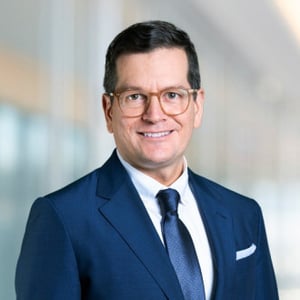
Partner, Covington & Burling LLP
Kevin Poloncarz co-chairs the Environmental and Energy Practice Group, Energy Industry Group and ESG Practice at Covington & Burling LLP.
Kevin is ranked by Chambers USA among the nation’s leading climate change attorneys and California’s leading environmental lawyers, with sources describing him as “a phenomenal” and “tremendous lawyer.”
He represents electric utilities, financial institutions, investors and companies in policy, litigation and transactional matters concerning power and carbon markets, carbon capture, utilization and storage (CCUS), sustainable aviation fuel, green and blue hydrogen and carbon offsets projects.
He also helps clients establish and communicate their ESG commitments and decarbonization objectives to investors, customers and other stakeholders.

Professor of Law, University of Minnesota Law School
Professor James W. Coleman is a scholar of energy law. He specializes in North American energy infrastructure, transport, and trade. He is also a nonresident senior fellow at the American Enterprise Institute focused on energy policy.
Professor Coleman has testified before Congress on steps to speed up energy infrastructure permits. He also worked with a team of experts as part of Alberta's Royalty Review to revise the Canadian province's management of its vast oil and gas resources.
Before joining Minnesota, Professor Coleman taught at Southern Methodist University's Dedman School of Law, the University of Calgary’s law and business schools, and Harvard Law School. Earlier, he practiced environmental and appellate law at Sidley Austin in Washington, D.C., and clerked for the Honorable Steven M. Colloton of the U.S. Court of Appeals for the Eighth Circuit.
Professor Coleman received two degrees from Harvard University—a J.D. (cum laude) and B.A. in biology (magna cum laude with highest honors in the field). As a result of his undergraduate thesis on butterfly genetics, which required fieldwork in Central Asia, a species of lycaenid butterfly was named after him—Agrodiaetus ripartii colemani.
Former Acting Assistant Attorney General, United States Department of Justice; Partner, Winston & Strawn LLP
Jonathan “Jon” Brightbill is a trial and appellate lawyer in Winston’s Washington, D.C. office, and a partner in the firm’s Litigation and White Collar, Regulatory Defense, and Investigations Practices. He represents public and private companies, corporate officers, and other individuals across white collar, regulatory defense, and government and internal investigation matters and rulemaking challenges, as well as complex commercial disputes, citizen suits, and class actions. His commercial litigation experience encompasses business disputes, false advertising, consumer protection and fraud, FCA, and extensive class action defense work; antitrust and unfair competition matters; and intellectual property litigation, such as trademarks, patents, and trade secrets.
Jon served as the Nation’s lead environmental civil and criminal enforcement official and litigator, as Acting Assistant Attorney General for the Environment & Natural Resources Division (“ENRD”) of the U.S. Department of Justice (DOJ). Jon led ENRD’s 425 lawyers, overseeing 6,500 active matters and managing an annual budget of more than $150 million. Jon brings highly experienced executive leadership from among the most senior level of DOJ on white collar and regulatory enforcement, as well as on federal policymaking and rulemaking development and challenges. He speaks with authority on government decision-making processes, and the arguments and perspectives that move regulators and enforcers, best advising and positioning clients to deal with challenges.
Jon argued many of the government’s most significant cases during his time with the DOJ. This included the Navigable Waters Protection Rule and Clean Water Rule Repeal (10th Cir., district courts), the Affordable Clean Energy Rule and Clean Power Plan Repeal (D.C. Cir), defense of EPA actions on pesticide tolerances under FIFRA and the FDCA (9th Cir. en banc), among numerous others. Jon represented the United States in trial courts in both enforcement and defensive cases, including federal enforcement action against Jeffrey Lowe and the Tiger King Park, of Netflix fame, securing a first-of-its-kind injunction for violations of the Endangered Species Act and Animal Welfare Act. Jon directed the litigation and briefing of scores of additional federal cases nationwide, covering all of the major environmental and natural resources statutes, such as the Clean Air Act, the Clean Water Act, FIFRA (pesticides), FDCA (food safety), TSCA (toxics), CERCLA (land remediation), RCRA (waste), National Environmental Policy Act, Federal Land Policy and Management Act, and numerous other land- and resource-management statutes.
Jon has unmatched experience litigating legal and technical issues relating to climate change. He argued in the courts of appeals, including the D.C. Circuit, regarding the most significant climate change regulations by EPA, as well as the preemptive scope of the Clean Air Act. Jon also litigated climate change-related credit and trading schemes and international agreements in district court. During Jon’s time in leadership at ENRD, it successfully defeated one of the most wide-ranging lawsuits regarding climate change to date—obtaining a stay pending interlocutory appeal and dismissal just weeks before a scheduled three-month trial on federal government liability for climate change.
An accomplished trial lawyer, prior to working at DOJ, Jon was a partner in the Washington, D.C. office of another global law firm. He not only represents clients in court, but creatively counsels corporations on balancing business needs and realities with a broad range of litigation risks and compliance obligations. Jon is also an Adjunct Professor at Georgetown University Law Center. He served on the American Bar Association’s E-Discovery Working Group for Bankruptcy Practice, and was a frequent lecturer for District of Columbia Bar Association Continuing Legal Education Programs.
Jon served as an appellate clerk for the Honorable D. Brooks Smith, U.S. Court of Appeals for the Third Circuit, after graduating magna cum laude from the Georgetown University Law Center. He worked in state government as an Executive Policy Specialist for air, waste, land remediation, and radiation matters at the Pennsylvania Department of Environmental Protection.
Professor of Law, University of Minnesota Law School
Professor James W. Coleman is a scholar of energy law. He specializes in North American energy infrastructure, transport, and trade. He is also a nonresident senior fellow at the American Enterprise Institute focused on energy policy.
Professor Coleman has testified before Congress on steps to speed up energy infrastructure permits. He also worked with a team of experts as part of Alberta's Royalty Review to revise the Canadian province's management of its vast oil and gas resources.
Before joining Minnesota, Professor Coleman taught at Southern Methodist University's Dedman School of Law, the University of Calgary’s law and business schools, and Harvard Law School. Earlier, he practiced environmental and appellate law at Sidley Austin in Washington, D.C., and clerked for the Honorable Steven M. Colloton of the U.S. Court of Appeals for the Eighth Circuit.
Professor Coleman received two degrees from Harvard University—a J.D. (cum laude) and B.A. in biology (magna cum laude with highest honors in the field). As a result of his undergraduate thesis on butterfly genetics, which required fieldwork in Central Asia, a species of lycaenid butterfly was named after him—Agrodiaetus ripartii colemani.
Partner, Covington & Burling LLP
Kevin Poloncarz co-chairs the Environmental and Energy Practice Group, Energy Industry Group and ESG Practice at Covington & Burling LLP.
Kevin is ranked by Chambers USA among the nation’s leading climate change attorneys and California’s leading environmental lawyers, with sources describing him as “a phenomenal” and “tremendous lawyer.”
He represents electric utilities, financial institutions, investors and companies in policy, litigation and transactional matters concerning power and carbon markets, carbon capture, utilization and storage (CCUS), sustainable aviation fuel, green and blue hydrogen and carbon offsets projects.
He also helps clients establish and communicate their ESG commitments and decarbonization objectives to investors, customers and other stakeholders.
Former Acting Assistant Attorney General, United States Department of Justice; Partner, Winston & Strawn LLP
Jonathan “Jon” Brightbill is a trial and appellate lawyer in Winston’s Washington, D.C. office, and a partner in the firm’s Litigation and White Collar, Regulatory Defense, and Investigations Practices. He represents public and private companies, corporate officers, and other individuals across white collar, regulatory defense, and government and internal investigation matters and rulemaking challenges, as well as complex commercial disputes, citizen suits, and class actions. His commercial litigation experience encompasses business disputes, false advertising, consumer protection and fraud, FCA, and extensive class action defense work; antitrust and unfair competition matters; and intellectual property litigation, such as trademarks, patents, and trade secrets.
Jon served as the Nation’s lead environmental civil and criminal enforcement official and litigator, as Acting Assistant Attorney General for the Environment & Natural Resources Division (“ENRD”) of the U.S. Department of Justice (DOJ). Jon led ENRD’s 425 lawyers, overseeing 6,500 active matters and managing an annual budget of more than $150 million. Jon brings highly experienced executive leadership from among the most senior level of DOJ on white collar and regulatory enforcement, as well as on federal policymaking and rulemaking development and challenges. He speaks with authority on government decision-making processes, and the arguments and perspectives that move regulators and enforcers, best advising and positioning clients to deal with challenges.
Jon argued many of the government’s most significant cases during his time with the DOJ. This included the Navigable Waters Protection Rule and Clean Water Rule Repeal (10th Cir., district courts), the Affordable Clean Energy Rule and Clean Power Plan Repeal (D.C. Cir), defense of EPA actions on pesticide tolerances under FIFRA and the FDCA (9th Cir. en banc), among numerous others. Jon represented the United States in trial courts in both enforcement and defensive cases, including federal enforcement action against Jeffrey Lowe and the Tiger King Park, of Netflix fame, securing a first-of-its-kind injunction for violations of the Endangered Species Act and Animal Welfare Act. Jon directed the litigation and briefing of scores of additional federal cases nationwide, covering all of the major environmental and natural resources statutes, such as the Clean Air Act, the Clean Water Act, FIFRA (pesticides), FDCA (food safety), TSCA (toxics), CERCLA (land remediation), RCRA (waste), National Environmental Policy Act, Federal Land Policy and Management Act, and numerous other land- and resource-management statutes.
Jon has unmatched experience litigating legal and technical issues relating to climate change. He argued in the courts of appeals, including the D.C. Circuit, regarding the most significant climate change regulations by EPA, as well as the preemptive scope of the Clean Air Act. Jon also litigated climate change-related credit and trading schemes and international agreements in district court. During Jon’s time in leadership at ENRD, it successfully defeated one of the most wide-ranging lawsuits regarding climate change to date—obtaining a stay pending interlocutory appeal and dismissal just weeks before a scheduled three-month trial on federal government liability for climate change.
An accomplished trial lawyer, prior to working at DOJ, Jon was a partner in the Washington, D.C. office of another global law firm. He not only represents clients in court, but creatively counsels corporations on balancing business needs and realities with a broad range of litigation risks and compliance obligations. Jon is also an Adjunct Professor at Georgetown University Law Center. He served on the American Bar Association’s E-Discovery Working Group for Bankruptcy Practice, and was a frequent lecturer for District of Columbia Bar Association Continuing Legal Education Programs.
Jon served as an appellate clerk for the Honorable D. Brooks Smith, U.S. Court of Appeals for the Third Circuit, after graduating magna cum laude from the Georgetown University Law Center. He worked in state government as an Executive Policy Specialist for air, waste, land remediation, and radiation matters at the Pennsylvania Department of Environmental Protection.
Professor of Law, University of Minnesota Law School
Professor James W. Coleman is a scholar of energy law. He specializes in North American energy infrastructure, transport, and trade. He is also a nonresident senior fellow at the American Enterprise Institute focused on energy policy.
Professor Coleman has testified before Congress on steps to speed up energy infrastructure permits. He also worked with a team of experts as part of Alberta's Royalty Review to revise the Canadian province's management of its vast oil and gas resources.
Before joining Minnesota, Professor Coleman taught at Southern Methodist University's Dedman School of Law, the University of Calgary’s law and business schools, and Harvard Law School. Earlier, he practiced environmental and appellate law at Sidley Austin in Washington, D.C., and clerked for the Honorable Steven M. Colloton of the U.S. Court of Appeals for the Eighth Circuit.
Professor Coleman received two degrees from Harvard University—a J.D. (cum laude) and B.A. in biology (magna cum laude with highest honors in the field). As a result of his undergraduate thesis on butterfly genetics, which required fieldwork in Central Asia, a species of lycaenid butterfly was named after him—Agrodiaetus ripartii colemani.
Partner, Covington & Burling LLP
Kevin Poloncarz co-chairs the Environmental and Energy Practice Group, Energy Industry Group and ESG Practice at Covington & Burling LLP.
Kevin is ranked by Chambers USA among the nation’s leading climate change attorneys and California’s leading environmental lawyers, with sources describing him as “a phenomenal” and “tremendous lawyer.”
He represents electric utilities, financial institutions, investors and companies in policy, litigation and transactional matters concerning power and carbon markets, carbon capture, utilization and storage (CCUS), sustainable aviation fuel, green and blue hydrogen and carbon offsets projects.
He also helps clients establish and communicate their ESG commitments and decarbonization objectives to investors, customers and other stakeholders.

Tech Roundup Episode 13 – Autonomous Vehicles: Where Are We Now?
Marc Scribner, Adam Thierer
Experts Marc Scribner and Adam Thierer join us to provide an update on autonomous vehicle...
Topics
GTMO - Twenty Years Later
Much of the national security community’s attention is understandably fixated these days on Russia and...
The Constitution Line by Line with Senator Mike Lee: Article I, Section 8 [Taxing, Spending, & Borrowing]
Mike S. Lee
In this episode of the Constitution Line By Line, Senator Mike Lee covers the first...
Topics
Going Rogue: The EEOC Quietly Uses FOIA To Penalize Employers For Adopting Lawful Employment Arbitration Programs
Anecdotal reports from employers around the country indicate that regional offices of the United States...
Topics
New Webinar: "FTC's Revolution Through Rulemaking"
In November, the Federalist Society’s Regulatory Transparency Project presented a panel discussion on the history...
Topics
FCC’s Indemnification Proposal Violates Nondelegation
As the space economy develops, the problem of orbital debris becomes more significant and more...
Topics
California Labor Laws, Interstate Carriers, and Federal Preemption
Three petitions, Virgin America v. Bernstein, Delta Air Lines v. Oman, and California Trucking Association...
Deep Dive Episode 205 – An Update on the Clean Power Plan Litigation
Jonathan Brightbill, Kevin Poloncarz, James W. Coleman
The Supreme Court is now hearing the most closely watched environmental case in decades, which...
An Update on the Clean Power Plan Litigation
Jonathan Brightbill, James W. Coleman, Kevin Poloncarz
The Supreme Court is now hearing the most closely watched environmental case in decades, which...
An Update on the Clean Power Plan Litigation
A Regulatory Transparency Project Webinar
Teleforum