

Vice President, Edwin Meese III Institute for the Rule of Law, Advancing American Freedom
John G. Malcolm oversees Advancing American Freedom’s work to increase understanding of the Constitution and the rule of law as Vice President of the organization’s Edwin Meese III Institute for the Rule of Law. Malcolm brings to the challenge a wealth of legal expertise and experience in both the public and private sectors.
Prior to joining Advancing American Freedom in 2025, Malcolm was the Vice President of the Institute for Constitutional Government and the Director of the Meese Center for Legal and Judicial Studies at the Heritage Foundation. Prior to joining Heritage in 2012, Malcolm was general counsel at the U.S. Commission on International Religious Freedom, as well as a distinguished practitioner in residence at Pepperdine Law School. From 2004 to 2009, Malcolm was executive vice president and director of worldwide anti-piracy operations for the Motion Picture Association.
Malcolm served as a deputy assistant attorney general in the Department of Justice’s Criminal Division from 2001 to 2004, where he oversaw sections on computer crime and intellectual property, domestic security, child exploitation and obscenity, and special investigations. Immediately prior to that, he was a founding partner in the Atlanta law firm of Malcolm & Schroeder, LLP.
From 1990 to 1997, Malcolm was an assistant U.S. attorney in Atlanta, assigned to the fraud and public corruption section, and also an associate independent counsel, investigating fraud and abuse in the Department of Housing and Urban Development. He was honored with the Director’s Award for Superior Performance for his work in connection with the successful prosecution of Walter Leroy Moody Jr., who assassinated an 11th Circuit judge and the head of the Savannah chapter of the NAACP.
A graduate of Harvard Law School and Columbia College, Malcolm began his career as a law clerk to a federal district court judge and a federal appellate court judge, and as an associate at the Atlanta-based law firm of Sutherland, Asbill & Brennan (new Eversheds Sutherland).
Malcolm, who resides in Washington, D.C., serves on the Board of Trustees of the Washington National Opera and is a Senate-confirmed member of the Board of Directors of the Legal Services Corporation, the largest funder of civil legal aid in the United States.

Senior Vice President for Legal Studies, Cato Institute
Clark Neily is senior vice president for legal studies at the Cato Institute. His areas of interest include constitutional law, overcriminalization, civil forfeiture, police accountability, and gun rights. Neily is the author of Terms of Engagement: How Our Courts Should Enforce the Constitution’s Promise of Limited Government. His writing has appeared in the Wall Street Journal, Forbes, and National Review Online, as well as various law reviews, including the Harvard Journal of Law and Public Policy, George Mason Law Review, Georgetown Journal of Law and Public Policy, NYU Journal of Law and Liberty, and Texas Review of Law and Politics. Neily is a frequent guest speaker and lecturer for the Federalist Society, Institute for Humane Studies, and American Constitution Society.
Before joining Cato in 2017, Neily was a senior attorney and constitutional litigator at the Institute for Justice and director of the Institute’s Center for Judicial Engagement. He is also an adjunct professor at the University of Texas School of Law, where he teaches constitutional litigation and public-interest law.
Neily served as co-counsel in District of Columbia v. Heller, the historic case in which the Supreme Court held for the first time that the Second Amendment protects an individual right to own a gun for self-defense.
Neily began his legal career as a law clerk to Judge Royce Lamberth on the U.S. District Court for the District of Columbia. After that he spent four years in the trial department of the Dallas-based firm Thompson & Knight. Neily received his undergraduate and law degrees from the University of Texas, where he was Chief Articles Editor of the Texas Law Review.
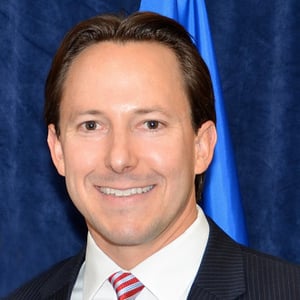
Deputy Chief Counsel of General Civil Section, United States Attorney's Office, Central District of California
Geoff Wilson is currently a Deputy Chief in the General Civil Section of the United States Attorney’s Office for the Central District of California. He is also a member of the Board of Directors for the National Association of Assistant United States Attorneys. Since joining the USAO in 2007, he has prosecuted and defended law enforcement in the tort and civil rights contexts and currently supervises and litigates cases in several areas including the Federal Tort Claims Act, employment, and constitutional torts. Geoff has received the Inspector General’s Award from the Department of Housing and Urban Development, the Executive Office for United States Attorneys Director’s Award for Superior Performance as an AUSA for the successful prosecution of a complex mortgage fraud scheme, and the Council of the Inspectors General Award for Excellence for combating mortgage fraud. Prior to becoming an AUSA he worked at Universal Pictures in Feature Film Business Affairs. He graduated in 2005 from Loyola Law School, where he was the Editor-in-Chief of the Loyola of Los Angeles Entertainment Law Review. He currently lives in Los Angeles with his wife and daughters.
Former Assistant United States Attorney at United States Attorney's Office
In February 2015, I entered private practice, concentrating on criminal law, forfeiture, and mediation services.
From 1985 until November 2013, I was an assistant United States attorney in the Northern District of Texas. I litigated civil and criminal forfeiture cases involving violations of federal laws on behalf of federal agencies (including the Drug Enforcement Administration, Federal Bureau of Investigation, Department of Homeland Security, Internal Revenue Service Bureau of Alcohol, Tobacco, Firearms, and Explosives, Secret Service, and Fish and Wildlife Service.
From July 2009 until January 2012, however, I served as the Asset Forfeiture/Money Laundering Coordinator on a detail to the Executive Office of United States Attorneys (EOUSA), United States Department of Justice, in Washington, D.C. In this capacity, I provided advice and assistance to EOUSA and 93 United States Attorney’s offices, on legal, logistical, and programmatic issues arising as part of the Department’s Asset Forfeiture/Money Laundering Program. I also served as a liaison between EOUSA and the Attorney General’s Advisory Committee, components of the Department of Justice (e.g., DEA, FBI, ATF) and Department of Treasury (e.g., IRS, SS, DHS) Asset Forfeiture Programs, and other agencies.
In both of these positions, I became familiar with federal forfeiture statutes, regulations, and cases, and agency forfeiture policies and procedures, as well as standard practices of agencies . Each year, I attended conferences on various substantive and procedural subjects related to forfeiture, including the annual Asset Forfeiture Chiefs and Experts Conference sponsored by the Department of Justice’s Asset Forfeiture/Money Laundering Section. Each month, I reviewed a summary of federal forfeiture case decisions prepared by renowned forfeiture expert Stefan Cassella. In addition, I regularly made presentations locally to various federal agencies on forfeiture topics.
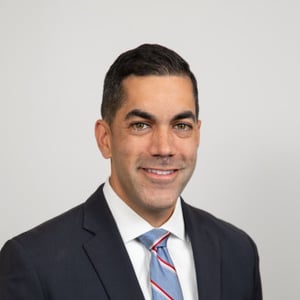
Managing Attorney, Institute for Justice
Arif Panju serves as a managing attorney with the Institute for Justice. He leads IJ’s Texas office and litigates cases involving free speech, property rights, economic liberty, and educational choice.
Arif is co-counsel in the case of Carson v. Makin in the U.S. Supreme Court. Carson is a challenge to Maine’s exclusion of religious educational options from the state’s school choice program.
Arif’s work has resulted in court victories in both federal and state court. He vindicated the free speech rights of tour guides in Billups v. City of Charleston. He secured a victory for economic liberty in Brantley v. Kuntz, freeing hairbraiding schools in Texas from onerous restrictions and paving the way for the abolishment of the state’s braiding license at the Texas Legislature. In Patel v. Texas Department of Licensing and Regulation, Arif helped secure a landmark victory in the Texas Supreme Court, establishing a new test for reviewing the constitutionality of economic regulations.
Arif’s work at IJ has been featured by outlets including The Wall Street Journal, New York Times, Washington Post, The Atlantic, Texas Tribune, and dozens more nationwide. His opinions and views on legal issues have been published in several outlets, including the Dallas Morning News, Austin American-Statesman, and USA Today. Arif sits on the board for the Freedom of Information Foundation of Texas.
Arif graduated law school with honors from Southern Methodist University. During law school he clerked on the United States Senate Committee on the Judiciary. Arif lives in Austin, Texas.
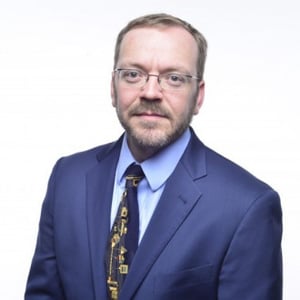
Vice President for Legal Affairs, Goldwater Institute
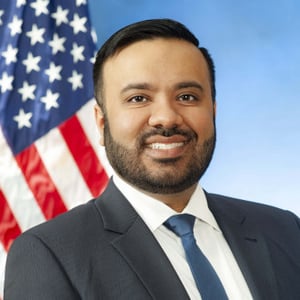
Of Counsel, Gibson, Dunn & Crutcher LLP
Prerak Shah is Of Counsel at Gibson, Dunn & Crutcher LLP. He was most recently the Acting United States Attorney for the Northern District of Texas, leading a team of approximately 120 Assistant U.S. Attorneys handling a wide range of cases, including securities fraud, health care fraud, the False Claims Act, computer crime, national security, tax fraud, money laundering, public corruption, and terrorism. Mr. Shah previously held several leadership positions at the Department of Justice, including Deputy Associate Attorney General in the office overseeing the work of the Antitrust, Civil, Civil Rights, Environment & Natural Resources, and Tax Divisions. Before joining the Justice Department, Mr. Shah served as Chief of Staff to Senator Ted Cruz and as a Chief Counsel on the Senate Judiciary Committee. He graduated from the University of Chicago Law School and clerked for the Honorable Jerry E. Smith of the U.S. Court of Appeals for the Fifth Circuit.
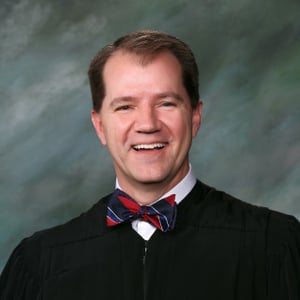
Judge, U.S. Court of Appeals, Fifth Circuit
Don Willett serves on the United States Court of Appeals for the Fifth Circuit. Before joining the federal bench, he served 13 years on the Supreme Court of Texas. His career spans decades of public service, including roles as legal counsel to a Texas Attorney General, a Texas Governor, a U.S. Attorney General, and the President of the United States. Raised by a heroic, widowed mom in a town of 32 people, Judge Willett is his family’s first college graduate. He earned a triple-major B.B.A. from Baylor University (where he serves on the Board of Regents) and three degrees from Duke University (where he served on the Board of Visitors): a J.D. with honors, an M.A. in political science, and an LL.M. in judicial studies. After law school, he clerked on the Fifth Circuit and practiced at Haynes and Boone before entering public service. Judge Willett writes and speaks widely on law, judging, and civic life. He serves on the Advisory Board of the School of Civic Leadership at the University of Texas at Austin, was the longtime editor-in-chief of Judicature: The Scholarly Journal for Judges, teaches at various law schools, and publishes in leading law journals and the popular press. He has received more than a dozen Green Bag honors for “exemplary legal writing,” was named Distinguished Jurist of the Year by the Texas Review of Law & Politics and is a member of the American Law Institute and a Life Fellow of the American, Texas, and Austin Bar Foundations. A former rodeo bull rider and professional drummer, Judge Willett was named “Tweeter Laureate of Texas” in 2015. He is the namesake of Don R. Willett Elementary School—home of mighty Willett Wranglers—located barely a mile from where the Willett family doublewide once stood. He and his radiant wife, Tiffany have three children—Jacob, Shane-David, and Geneviève—plus the family pup, Amicus.
Director of Policy & General Counsel, Texas Conservative Coalition Research Institute
Russell Withers is Director of Policy & General Counsel at the Texas Conservative Coalition Research Institute. He holds an undergraduate degree in Government and English from the University of Texas at Austin and a J.D. from Tulane University School of Law in New Orleans. Russell helped litigate constitutional claims as a clerk at the Institute for Justice, served as a policy consultant for the Greg Abbott campaign for Governor in 2014, and regularly assists members of the Texas Legislature on questions of public policy. He has testified before several committees in the Texas Legislature and authored numerous opinion editorials on Texas politics and public policy. His works have appeared in the Austin American Statesman, the Houston Chronicle, the Texas Tribune’s Trib Talk, and others. He has served as a moderator for panels at TCCRI Policy Summits covering issues such as health care, energy, and economic freedom. Russell is an active member in the Austin Lawyers Chapter of the Federalist Society and has organized events as well as presented and participated in them.
Former Assistant United States Attorney at United States Attorney's Office
In February 2015, I entered private practice, concentrating on criminal law, forfeiture, and mediation services.
From 1985 until November 2013, I was an assistant United States attorney in the Northern District of Texas. I litigated civil and criminal forfeiture cases involving violations of federal laws on behalf of federal agencies (including the Drug Enforcement Administration, Federal Bureau of Investigation, Department of Homeland Security, Internal Revenue Service Bureau of Alcohol, Tobacco, Firearms, and Explosives, Secret Service, and Fish and Wildlife Service.
From July 2009 until January 2012, however, I served as the Asset Forfeiture/Money Laundering Coordinator on a detail to the Executive Office of United States Attorneys (EOUSA), United States Department of Justice, in Washington, D.C. In this capacity, I provided advice and assistance to EOUSA and 93 United States Attorney’s offices, on legal, logistical, and programmatic issues arising as part of the Department’s Asset Forfeiture/Money Laundering Program. I also served as a liaison between EOUSA and the Attorney General’s Advisory Committee, components of the Department of Justice (e.g., DEA, FBI, ATF) and Department of Treasury (e.g., IRS, SS, DHS) Asset Forfeiture Programs, and other agencies.
In both of these positions, I became familiar with federal forfeiture statutes, regulations, and cases, and agency forfeiture policies and procedures, as well as standard practices of agencies . Each year, I attended conferences on various substantive and procedural subjects related to forfeiture, including the annual Asset Forfeiture Chiefs and Experts Conference sponsored by the Department of Justice’s Asset Forfeiture/Money Laundering Section. Each month, I reviewed a summary of federal forfeiture case decisions prepared by renowned forfeiture expert Stefan Cassella. In addition, I regularly made presentations locally to various federal agencies on forfeiture topics.
Managing Attorney, Institute for Justice
Arif Panju serves as a managing attorney with the Institute for Justice. He leads IJ’s Texas office and litigates cases involving free speech, property rights, economic liberty, and educational choice.
Arif is co-counsel in the case of Carson v. Makin in the U.S. Supreme Court. Carson is a challenge to Maine’s exclusion of religious educational options from the state’s school choice program.
Arif’s work has resulted in court victories in both federal and state court. He vindicated the free speech rights of tour guides in Billups v. City of Charleston. He secured a victory for economic liberty in Brantley v. Kuntz, freeing hairbraiding schools in Texas from onerous restrictions and paving the way for the abolishment of the state’s braiding license at the Texas Legislature. In Patel v. Texas Department of Licensing and Regulation, Arif helped secure a landmark victory in the Texas Supreme Court, establishing a new test for reviewing the constitutionality of economic regulations.
Arif’s work at IJ has been featured by outlets including The Wall Street Journal, New York Times, Washington Post, The Atlantic, Texas Tribune, and dozens more nationwide. His opinions and views on legal issues have been published in several outlets, including the Dallas Morning News, Austin American-Statesman, and USA Today. Arif sits on the board for the Freedom of Information Foundation of Texas.
Arif graduated law school with honors from Southern Methodist University. During law school he clerked on the United States Senate Committee on the Judiciary. Arif lives in Austin, Texas.
Vice President for Legal Affairs, Goldwater Institute
Of Counsel, Gibson, Dunn & Crutcher LLP
Prerak Shah is Of Counsel at Gibson, Dunn & Crutcher LLP. He was most recently the Acting United States Attorney for the Northern District of Texas, leading a team of approximately 120 Assistant U.S. Attorneys handling a wide range of cases, including securities fraud, health care fraud, the False Claims Act, computer crime, national security, tax fraud, money laundering, public corruption, and terrorism. Mr. Shah previously held several leadership positions at the Department of Justice, including Deputy Associate Attorney General in the office overseeing the work of the Antitrust, Civil, Civil Rights, Environment & Natural Resources, and Tax Divisions. Before joining the Justice Department, Mr. Shah served as Chief of Staff to Senator Ted Cruz and as a Chief Counsel on the Senate Judiciary Committee. He graduated from the University of Chicago Law School and clerked for the Honorable Jerry E. Smith of the U.S. Court of Appeals for the Fifth Circuit.
Judge, U.S. Court of Appeals, Fifth Circuit
Don Willett serves on the United States Court of Appeals for the Fifth Circuit. Before joining the federal bench, he served 13 years on the Supreme Court of Texas. His career spans decades of public service, including roles as legal counsel to a Texas Attorney General, a Texas Governor, a U.S. Attorney General, and the President of the United States. Raised by a heroic, widowed mom in a town of 32 people, Judge Willett is his family’s first college graduate. He earned a triple-major B.B.A. from Baylor University (where he serves on the Board of Regents) and three degrees from Duke University (where he served on the Board of Visitors): a J.D. with honors, an M.A. in political science, and an LL.M. in judicial studies. After law school, he clerked on the Fifth Circuit and practiced at Haynes and Boone before entering public service. Judge Willett writes and speaks widely on law, judging, and civic life. He serves on the Advisory Board of the School of Civic Leadership at the University of Texas at Austin, was the longtime editor-in-chief of Judicature: The Scholarly Journal for Judges, teaches at various law schools, and publishes in leading law journals and the popular press. He has received more than a dozen Green Bag honors for “exemplary legal writing,” was named Distinguished Jurist of the Year by the Texas Review of Law & Politics and is a member of the American Law Institute and a Life Fellow of the American, Texas, and Austin Bar Foundations. A former rodeo bull rider and professional drummer, Judge Willett was named “Tweeter Laureate of Texas” in 2015. He is the namesake of Don R. Willett Elementary School—home of mighty Willett Wranglers—located barely a mile from where the Willett family doublewide once stood. He and his radiant wife, Tiffany have three children—Jacob, Shane-David, and Geneviève—plus the family pup, Amicus.
Director of Policy & General Counsel, Texas Conservative Coalition Research Institute
Russell Withers is Director of Policy & General Counsel at the Texas Conservative Coalition Research Institute. He holds an undergraduate degree in Government and English from the University of Texas at Austin and a J.D. from Tulane University School of Law in New Orleans. Russell helped litigate constitutional claims as a clerk at the Institute for Justice, served as a policy consultant for the Greg Abbott campaign for Governor in 2014, and regularly assists members of the Texas Legislature on questions of public policy. He has testified before several committees in the Texas Legislature and authored numerous opinion editorials on Texas politics and public policy. His works have appeared in the Austin American Statesman, the Houston Chronicle, the Texas Tribune’s Trib Talk, and others. He has served as a moderator for panels at TCCRI Policy Summits covering issues such as health care, energy, and economic freedom. Russell is an active member in the Austin Lawyers Chapter of the Federalist Society and has organized events as well as presented and participated in them.
Vice President, Edwin Meese III Institute for the Rule of Law, Advancing American Freedom
John G. Malcolm oversees Advancing American Freedom’s work to increase understanding of the Constitution and the rule of law as Vice President of the organization’s Edwin Meese III Institute for the Rule of Law. Malcolm brings to the challenge a wealth of legal expertise and experience in both the public and private sectors.
Prior to joining Advancing American Freedom in 2025, Malcolm was the Vice President of the Institute for Constitutional Government and the Director of the Meese Center for Legal and Judicial Studies at the Heritage Foundation. Prior to joining Heritage in 2012, Malcolm was general counsel at the U.S. Commission on International Religious Freedom, as well as a distinguished practitioner in residence at Pepperdine Law School. From 2004 to 2009, Malcolm was executive vice president and director of worldwide anti-piracy operations for the Motion Picture Association.
Malcolm served as a deputy assistant attorney general in the Department of Justice’s Criminal Division from 2001 to 2004, where he oversaw sections on computer crime and intellectual property, domestic security, child exploitation and obscenity, and special investigations. Immediately prior to that, he was a founding partner in the Atlanta law firm of Malcolm & Schroeder, LLP.
From 1990 to 1997, Malcolm was an assistant U.S. attorney in Atlanta, assigned to the fraud and public corruption section, and also an associate independent counsel, investigating fraud and abuse in the Department of Housing and Urban Development. He was honored with the Director’s Award for Superior Performance for his work in connection with the successful prosecution of Walter Leroy Moody Jr., who assassinated an 11th Circuit judge and the head of the Savannah chapter of the NAACP.
A graduate of Harvard Law School and Columbia College, Malcolm began his career as a law clerk to a federal district court judge and a federal appellate court judge, and as an associate at the Atlanta-based law firm of Sutherland, Asbill & Brennan (new Eversheds Sutherland).
Malcolm, who resides in Washington, D.C., serves on the Board of Trustees of the Washington National Opera and is a Senate-confirmed member of the Board of Directors of the Legal Services Corporation, the largest funder of civil legal aid in the United States.
Senior Vice President for Legal Studies, Cato Institute
Clark Neily is senior vice president for legal studies at the Cato Institute. His areas of interest include constitutional law, overcriminalization, civil forfeiture, police accountability, and gun rights. Neily is the author of Terms of Engagement: How Our Courts Should Enforce the Constitution’s Promise of Limited Government. His writing has appeared in the Wall Street Journal, Forbes, and National Review Online, as well as various law reviews, including the Harvard Journal of Law and Public Policy, George Mason Law Review, Georgetown Journal of Law and Public Policy, NYU Journal of Law and Liberty, and Texas Review of Law and Politics. Neily is a frequent guest speaker and lecturer for the Federalist Society, Institute for Humane Studies, and American Constitution Society.
Before joining Cato in 2017, Neily was a senior attorney and constitutional litigator at the Institute for Justice and director of the Institute’s Center for Judicial Engagement. He is also an adjunct professor at the University of Texas School of Law, where he teaches constitutional litigation and public-interest law.
Neily served as co-counsel in District of Columbia v. Heller, the historic case in which the Supreme Court held for the first time that the Second Amendment protects an individual right to own a gun for self-defense.
Neily began his legal career as a law clerk to Judge Royce Lamberth on the U.S. District Court for the District of Columbia. After that he spent four years in the trial department of the Dallas-based firm Thompson & Knight. Neily received his undergraduate and law degrees from the University of Texas, where he was Chief Articles Editor of the Texas Law Review.
Deputy Chief Counsel of General Civil Section, United States Attorney's Office, Central District of California
Geoff Wilson is currently a Deputy Chief in the General Civil Section of the United States Attorney’s Office for the Central District of California. He is also a member of the Board of Directors for the National Association of Assistant United States Attorneys. Since joining the USAO in 2007, he has prosecuted and defended law enforcement in the tort and civil rights contexts and currently supervises and litigates cases in several areas including the Federal Tort Claims Act, employment, and constitutional torts. Geoff has received the Inspector General’s Award from the Department of Housing and Urban Development, the Executive Office for United States Attorneys Director’s Award for Superior Performance as an AUSA for the successful prosecution of a complex mortgage fraud scheme, and the Council of the Inspectors General Award for Excellence for combating mortgage fraud. Prior to becoming an AUSA he worked at Universal Pictures in Feature Film Business Affairs. He graduated in 2005 from Loyola Law School, where he was the Editor-in-Chief of the Loyola of Los Angeles Entertainment Law Review. He currently lives in Los Angeles with his wife and daughters.
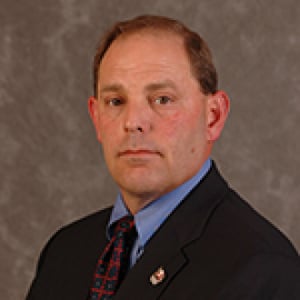
President, Fraternal Order of Police
Chuck Canterbury began serving as President of the Fraternal Order of Police in January 2003 after the death of President Steve Young. He has been reelected seven times.
President Canterbury joined the Fraternal Order of Police in 1984 when he, along with eleven other officers, chartered their Local Lodge. He served as Local Lodge President for 13 years, during which time he was instrumental in starting the Lodge Legal Defense Plan, purchasing the first lodge building, and starting the Lodge insurance program.
He went on to serve as State Lodge President from 1990 to 1998. During his tenure he was instrumental in establishing the State Lodge lobbying program, initiating the political endorsement program and implementing the State Lodge Legal Defense Plan. He led the effort to hire a full time Executive Director for the State Lodge to manage these programs.
He began his service on the Grand Lodge Executive Board in 1995 when he was elected to the first of three terms as the Second Vice President. In 2001, he was elected Vice President. During this time, he has worked to expand the police labor movement in the areas of our country who do not have collective bargaining rights. Improving the quality of life for police officers has been his foremost goal. During his tenure he has brought a best business practice model to the FOP.
President Canterbury retired in January 2004 from the Horry County Police Department, Conway, South Carolina, where he most recently had oversight of the Operations Bureau. He began his police career in 1978 and over his 26-year career he worked in the Patrol Division, the Criminal Investigations Division and served as the Training Division Supervisor, during which he was certified as an Instructor in basic law enforcement, firearms, chemical weapons, and pursuit driving.
He has been appointed by President George Bush to serve on the Medal of Valor Board and also serves on our Nation's Homeland Security Council. Chuck has also been appointed to the Congressional Badge of Bravery Awards committee. Chuck is also on the Board of Directors of the National Center for Missing and Exploited Children. He also serves as Treasurer of the International Council of Police Representatives Association. This group represents over 1.4 million of our world's law enforcement officers.
He earned a Bachelor of Arts degree from Coastal Carolina University.
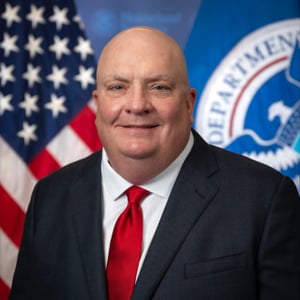
Acting Assistant Commissioner of Customs and Border Protection, Office of Professional Responsibility, U.S. Department of Homeland Security
Brian M. Fish is currently the Senior Advisor to the General Counsel at the Department of Homeland Security where he works on immigration and law enforcement issues. Previously, he was a trial attorney with the United States Immigration and Customs Enforcement, where he represented the Department of Homeland Security in removal hearings before the U.S. Immigration Court. Additionally, he was a Special Assistant United States Attorney and a Baltimore City homicide prosecutor. He is a member of the Federalist Society's Criminal Law & Procedure Practice Group Executive Committee and the President of its Baltimore Lawyers Chapter. He earned his B.A. from LaSalle University in 1992 and his J.D. from Loyola University New Orleans School of Law in 1998.

President, Leadership Conference on Civil and Human Rights
Vanita Gupta is the President of The Leadership Conference on Civil and Human Rights. She previously served as the acting Principal Deputy Assistant Attorney General for the Civil Rights Division and the top civil rights prosecutor for the United States Department of Justice. Before her work at the DOJ she was a civil rights lawyer and the Deputy Legal Director of the American Civil Liberties Union (ACLU), where she oversaw the ACLU's national criminal justice reform efforts. She is a graduate of Yale and New York University Law School.
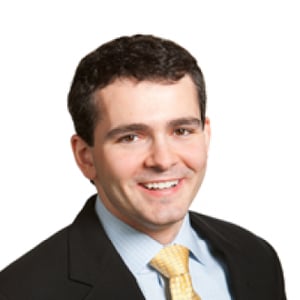
President, The Ethics and Public Policy Center
Ryan T. Anderson, Ph.D., is the President of the Ethics and Public Policy Center. In May 2025, Anderson was appointed by President Trump to the Religious Liberty Commission.
He is the author or co-author of five books, including the just-released Tearing Us Apart: How Abortion Harms Everything and Solves Nothing. Previous books include When Harry Became Sally: Responding to the Transgender Moment, Truth Overruled: The Future of Marriage and Religious Freedom, What Is Marriage? Man and Woman: A Defense, and Debating Religious Liberty and Discrimination. He is the co-editor of A Liberalism Safe for Catholicism? Perspectives from “The Review of Politics.”
Anderson’s research has been cited by two U.S. Supreme Court justices, Justice Samuel Alito and Justice Clarence Thomas, in two Supreme Court cases.
He received his bachelor of arts degree from Princeton University, graduating Phi Beta Kappa and magna cum laude, and he received his doctoral degree in political philosophy from the University of Notre Dame. His dissertation was titled: “Neither Liberal Nor Libertarian: A Natural Law Approach to Social Justice and Economic Rights.”
Anderson has made appearances on ABC, CNN, CNBC, MSNBC, and Fox News. His work has been published by the New York Times, the Washington Post, the Wall Street Journal, Oxford University Press, Cambridge University Press, the Harvard Journal of Law and Public Policy, the Harvard Health Policy Review, the Georgetown Journal of Law and Public Policy, First Things, the Claremont Review of Books, and National Review.
He is the John Paul II Teaching Fellow in Social Thought at the University of Dallas, a member of the James Madison Society at Princeton University, and a Fellow of the Institute for Human Ecology at the Catholic University of America, as well as the Founding Editor of Public Discourse, the online journal of the Witherspoon Institute of Princeton, New Jersey.
For 9 years he was the William E. Simon senior research fellow at The Heritage Foundation, and has served as an adjunct professor of philosophy and political science at Christendom College, and a Visiting Fellow at the Veritas Center at Franciscan University. He has also served as an assistant editor of First Things.
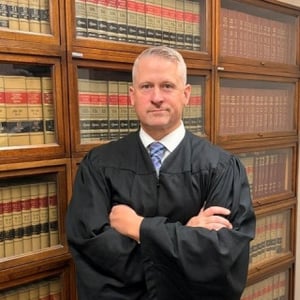
Judge, United States District Court, Northern District of Texas
Matthew J. Kacsmaryk serves as United States District Judge for the Northern District of Texas.
He previously served as (1) an Associate in the Dallas office of Baker Botts LLP, (2) an Assistant United States Attorney, and (3) Deputy General Counsel to FLI.
He is an Honors graduate of the University of Texas Law School.
In 2013, he earned the Attorney General’s Award for Excellence in Furthering the Interest of U.S. National Security.
In 2026, he was named Jurist of the Year by the Texas Review of Law & Politics, the conservative law review at the University of Texas.
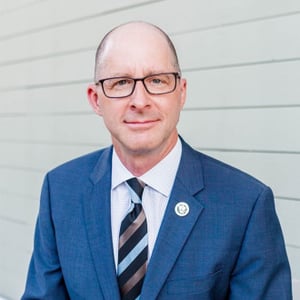
Judge, U.S. District Court for the Southern District of Texas
Hon. Charles Eskridge, Judge, United States District Court for the Southern District of Texas, Houston Division, was born in Cleveland, Ohio, and arrived in Houston, Texas, at the age of 11 with his parents in 1974.
Judge Eskridge received a B.S. from Trinity University and a J.D. from Pepperdine University School of Law. He served as a law clerk to Chief Judge Charles Clark of the United States Court of Appeals for the Fifth Circuit, as a law clerk to Justice Byron White of the Supreme Court of the United States, and as a special assistant to the Hon. Howard Holtzmann of the Iran/U.S. Claims Tribunal in The Hague.
From 1994 to 2019, Judge Eskridge was in private practice in Houston, Texas, litigating complex commercial disputes. He teaches Origins of the Federal Constitution at the University of Houston Law Center and has served as the Distinguished Visiting Practitioner of Law at the Pepperdine University School of Law.
President Donald J. Trump nominated him to the federal bench on May 3, 2019. Following confirmation by the Senate, Judge Eskridge took his seat on October 22, 2019.
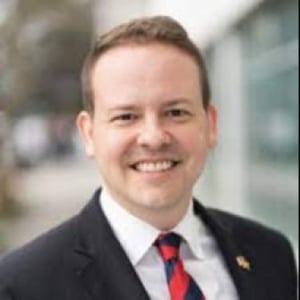
General Counsel, Department of Veterans Affairs
James Baehr was confirmed as General Counsel for the Department of Veterans Affairs in October, 2025.
Previously, Baehr was a Constitutional litigator and a founder of the Pelican Center for Justice. Before that, served as a Special Assistant to the President in the Domestic Policy Council in the White House. He coordinated and oversaw DPC’s policy portfolio across a number of agencies, including the Department of Veteran’s Affairs and the Department of Justice.
Baehr serves as a Major in the Marine Corps Reserves as the Reserve Regional Defense Counsel-East Coast. In 2018, he activated and deployed to the Middle East for Operation Inherent Resolve, where he worked on the Command Staff and earned the Defense Meritorious Service Medal.
In his civilian career, Baehr was a federal prosecutor at the U.S. Attorney’s Office in New Orleans, prosecuting over 100 defendants for felony-level violations in the Eastern District of Louisiana including narcotics, fraud, murder, and corruption. He previously clerked for Judge Edith Clement of the United States Fifth Circuit Court of Appeals.
Baehr’s first job after law school was as an active-duty Marine judge advocate defense counsel. He defended over 200 Marines in trials, presentencing trials, and administrative boards.
Baehr received his J.D. and a Masters in History from the University of Virginia in 2008. He graduated from Dartmouth College with honors in History and Government in 2005.

Special Agent, Federal Bureau of Investigation; Case Agent, Chasing the Dragon Project
SA Shane Dana is a Special Agent for the FBI. He is assigned to a Health Care Fraud Squad for the Washington Field Office where he has focused on prescription drug diversion for the past 12 years. SA Dana was the case agent for the production of the FBI/DEA documentary, Chasing the Dragon - Life of an Opiate Addict, which was released on February 4, 2016 (FBI.gov/Chasingthedragon). SA Dana has also supported the FBI as a SWAT operator for over 10 years. SA Dana holds a Masters in International Public Affairs from the University of Wisconsin - Madison; an MBA from Rollins College; and a BBA in Finance from the University of Wisconsin - Whitewater. Prior to joining the FBI, SA Dana worked for an institutional money management firm and he was a commissioned Army Infantry Officer, and served in the Wisconsin Army National Guard.
Legislative Counsel, United States Senate Judiciary Committee
Drew Hudson is a Legislative Counsel to Senator Jeff Sessions on the Senate Judiciary Committee, where he advises Senator Sessions on crime, drugs, and law enforcement issues. He holds a J.D. from the University of Alabama School of Law, where he was the Managing Editor of the Law & Psychology Review and a member of the moot court board. He also holds an M.A. in Government from Regent University, and a B.A. in History from Thomas Edison State College.

Prosecutorial Immunity
John G. Malcolm, Clark Neily, Geoffrey D. Wilson
Prosecutors cannot be sued for injuries caused by their own misconduct. For example, even if...
Prosecutorial Immunity
Criminal Law Procedure Practice Group Teleforum
TeleforumFederal Oversight of Local Police Departments
TeleforumThe Future of Religious Liberty
Dallas, TexasTexas and Regulation
Diane M. Kozub, Arif Panju, Timothy Sandefur, Prerak Shah, Don R. Willett, Russell Withers
The tension between economic liberty and the state’s power to regulate economic activity has long...
Texas and Regulation
Diane M. Kozub, Arif Panju, Timothy Sandefur, Prerak Shah, Don R. Willett, Russell Withers
The tension between economic liberty and the state’s power to regulate economic activity has long...
Magna Carta and The Path Forward to the Rule of Law
Dallas, TexasThe Opioid Epidemic: Problem and Prescription
TeleforumCountdown to the National Lawyers Convention: Prosecutors Run Amok?
The Countdown to the Convention series previews some of the outstanding panels and events at...
Civil Forfeiture: 3 Recent Cases (Part 3)
A continuation of our recent blog posts on civil forfeiture: United States v. Funds in the...