

Attorney General, Commonwealth of Kentucky
Daniel Cameron is the CEO of the 1792 Exchange, working to protect free exercise, free speech, and free enterprise and help American corporations return to the winning formula of producing great products and services, not pushing agendas.
Daniel previously served as the 51st Attorney General of Kentucky from 2019 to 2023. He was the first black American elected to a standalone statewide office in Kentucky’s history. Daniel then went on to win the Republican nomination for governor of Kentucky.
He grew up in Elizabethtown, Kentucky and attended the University of Louisville, where he played football for the Cardinals. After graduating from Brandeis School of Law, he clerked for a federal judge. Daniel later served as legal counsel to United States Senator Mitch McConnell.
Daniel and his wife are blessed with two sons: Theodore and Bennett. They reside in Louisville, Kentucky, a place they proudly call home.
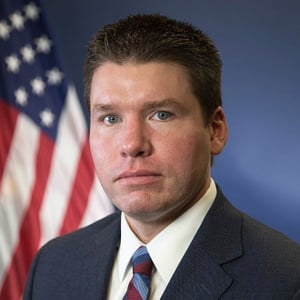
United States Attorney, Eastern District of Kentucky
Robert M. Duncan, Jr. is the United States Attorney for the Eastern District of Kentucky. He was nominated by President Donald Trump on August 3, 2017, and confirmed by the United States Senate on November 9, 2017.
Prior to his appointment, Duncan had served for more than a decade as an Assistant United States Attorney in the Eastern District of Kentucky. Beginning in 2011 and continuing until his appointment as United States Attorney, Duncan focused on the prosecution of Organized Crime Drug Enforcement Task Force cases, working with federal, state, and local law enforcement personnel to disrupt and dismantle complex drug trafficking and money laundering organizations operating in the District and elsewhere. From 2007 to 2013, Duncan served as coordinator of the office’s Project Safe Neighborhoods Program, a Department of Justice initiative to reduce gun and gang crime through education, community outreach, and prosecution.
General Counsel, Kentucky Justice & Public Safety Cabinet
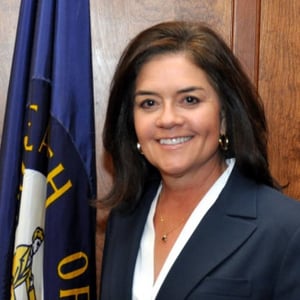
Fayette County Commonwealth's Attorney, 22nd Judicial District of Kentucky
Lou Anna Red Corn is in her 31st year as a prosecutor and is the Commonwealth’s Attorney for the 22nd Judicial Circuit of Kentucky, (Fayette County). Lou Anna was appointed by Governor Matt Bevin in 2016, to fill the vacancy created by the resignation of long-time Commonwealth’s Attorney Ray Larson.
Prior to her appointment, Lou Anna worked as an Assistant Fayette County Commonwealth’s Attorney for 30 years, serving as Larson’s Chief Deputy since 2006. Before becoming a prosecutor Lou Anna was an Assistant Public Advocate (public defender) in Eastern Kentucky, and worked briefly in civil practice.
Lou Anna is a career prosecutor. She has tried more than 225 felony cases, including 51 homicides. Some of the more notable cases include Shane Ragland for the sniper-style killing of UK football player Trent Diguiro; Leonard Neinabor, a Catholic priest who sexually abused parish children over several decades; and Donald Southworth for the murder of his wife Umi. Most recently, she prosecuted Mark Taylor for the kidnaping and murder of UK Chef Alex Johnson.
Lou Anna is an advocate for all victims of crime, but takes a special interest in child victim cases, especially child fatalities from inflicted head trauma, child sexual abuse and child exploitation through electronic solicitation and child pornography. Lou Anna help establish the Fayette County Child Sexual Abuse Multi Disciplinary Team (1989), which has remained a model for other teams statewide. She is also a founding and current board member of the Children’s Advocacy Center of the Bluegrass, Inc., having served as both treasurer and secretary.
Lou Anna received her Juris Doctorate and Bachelor of Arts Degrees from the University of Kentucky. She is married to attorney Luke Morgan, and they have two sons.
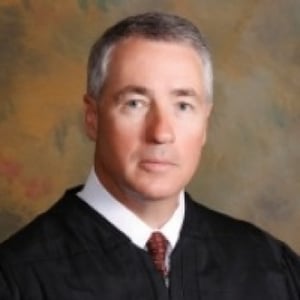
Chief Judge, United States District Court for the Eastern District of Kentucky
Judge Danny C. Reeves is a United States District Judge for the Eastern District of Kentucky, a position he has held since 2001. Prior to his appointment to the bench, Judge Reeves was a partner in the Lexington, Kentucky office of Bingham Greenebaum Doll LLP (formerly Greenebaum Doll & McDonald PLLC), where he practiced civil litigation from 1983 to 2001. Judge Reeves began his legal career as a law clerk to the Honorable Eugene E. Siler, Jr., then of the United States District Court for the Eastern and Western Districts of Kentucky from 1981 to 1983. He received his J.D. from Salmon P. Chase College of Law, Northern Kentucky University in 1981 and his B.A. from Eastern Kentucky University in 1978.
Attorney General, Commonwealth of Kentucky
Daniel Cameron is the CEO of the 1792 Exchange, working to protect free exercise, free speech, and free enterprise and help American corporations return to the winning formula of producing great products and services, not pushing agendas.
Daniel previously served as the 51st Attorney General of Kentucky from 2019 to 2023. He was the first black American elected to a standalone statewide office in Kentucky’s history. Daniel then went on to win the Republican nomination for governor of Kentucky.
He grew up in Elizabethtown, Kentucky and attended the University of Louisville, where he played football for the Cardinals. After graduating from Brandeis School of Law, he clerked for a federal judge. Daniel later served as legal counsel to United States Senator Mitch McConnell.
Daniel and his wife are blessed with two sons: Theodore and Bennett. They reside in Louisville, Kentucky, a place they proudly call home.
United States Attorney, Eastern District of Kentucky
Robert M. Duncan, Jr. is the United States Attorney for the Eastern District of Kentucky. He was nominated by President Donald Trump on August 3, 2017, and confirmed by the United States Senate on November 9, 2017.
Prior to his appointment, Duncan had served for more than a decade as an Assistant United States Attorney in the Eastern District of Kentucky. Beginning in 2011 and continuing until his appointment as United States Attorney, Duncan focused on the prosecution of Organized Crime Drug Enforcement Task Force cases, working with federal, state, and local law enforcement personnel to disrupt and dismantle complex drug trafficking and money laundering organizations operating in the District and elsewhere. From 2007 to 2013, Duncan served as coordinator of the office’s Project Safe Neighborhoods Program, a Department of Justice initiative to reduce gun and gang crime through education, community outreach, and prosecution.
General Counsel, Kentucky Justice & Public Safety Cabinet
Fayette County Commonwealth's Attorney, 22nd Judicial District of Kentucky
Lou Anna Red Corn is in her 31st year as a prosecutor and is the Commonwealth’s Attorney for the 22nd Judicial Circuit of Kentucky, (Fayette County). Lou Anna was appointed by Governor Matt Bevin in 2016, to fill the vacancy created by the resignation of long-time Commonwealth’s Attorney Ray Larson.
Prior to her appointment, Lou Anna worked as an Assistant Fayette County Commonwealth’s Attorney for 30 years, serving as Larson’s Chief Deputy since 2006. Before becoming a prosecutor Lou Anna was an Assistant Public Advocate (public defender) in Eastern Kentucky, and worked briefly in civil practice.
Lou Anna is a career prosecutor. She has tried more than 225 felony cases, including 51 homicides. Some of the more notable cases include Shane Ragland for the sniper-style killing of UK football player Trent Diguiro; Leonard Neinabor, a Catholic priest who sexually abused parish children over several decades; and Donald Southworth for the murder of his wife Umi. Most recently, she prosecuted Mark Taylor for the kidnaping and murder of UK Chef Alex Johnson.
Lou Anna is an advocate for all victims of crime, but takes a special interest in child victim cases, especially child fatalities from inflicted head trauma, child sexual abuse and child exploitation through electronic solicitation and child pornography. Lou Anna help establish the Fayette County Child Sexual Abuse Multi Disciplinary Team (1989), which has remained a model for other teams statewide. She is also a founding and current board member of the Children’s Advocacy Center of the Bluegrass, Inc., having served as both treasurer and secretary.
Lou Anna received her Juris Doctorate and Bachelor of Arts Degrees from the University of Kentucky. She is married to attorney Luke Morgan, and they have two sons.
Chief Judge, United States District Court for the Eastern District of Kentucky
Judge Danny C. Reeves is a United States District Judge for the Eastern District of Kentucky, a position he has held since 2001. Prior to his appointment to the bench, Judge Reeves was a partner in the Lexington, Kentucky office of Bingham Greenebaum Doll LLP (formerly Greenebaum Doll & McDonald PLLC), where he practiced civil litigation from 1983 to 2001. Judge Reeves began his legal career as a law clerk to the Honorable Eugene E. Siler, Jr., then of the United States District Court for the Eastern and Western Districts of Kentucky from 1981 to 1983. He received his J.D. from Salmon P. Chase College of Law, Northern Kentucky University in 1981 and his B.A. from Eastern Kentucky University in 1978.

Associate Deputy Attorney General, United States Department of Justice
Steve Cook currently serves as Associate Deputy Attorney General in the United States Department of Justice. In March of 2017, he was appointed to serve as the Deputy Attorney General’s point person on the Task Force for Crime Reduction and Public Safety—a task force created at the direction of the President to develop a nationwide strategy to reduce crime. He now serves as the Director of Law Enforcement Affairs for the U.S. Department of Justice. Prior to his current appointment, he served as the chief of the Criminal Division in the United States Attorney’s Office for the Eastern District of Tennessee where he had been an Assistant United States Attorney for 30 years. During those 30 years, he worked in the Organized Crime Drug Enforcement Task Force; the General Crimes Section handling white-collar crime, fraud, and public corruption; and was the deputy criminal chief in the Narcotics and Violent Crime Section. In those positions, he received dozens of awards and letters of commendation including the Directors Award for Superior Performance in connection with his work prosecuting violent gang members. He is also the immediate past president of the National Association of Assistant U.S. Attorneys.
Prior to coming to the United States Attorney’s Office, Mr. Cook clerked for a judge of the United States Court of Appeals for the Sixth Circuit and before that worked as a deputy sheriff and then as a police officer for seven years in Knoxville, Tennessee. Mr. Cook earned his Doctor of Jurisprudence from the University of Tennessee in 1984, with high honors, and was a member of the Tennessee Law Review.
Mr. Cook was chosen as one of The Politico’s 50 in 2017 for his work on national criminal justice issues. He has testified multiple times before Congress in connection with proposed criminal justice legislation including bills involving the Electronic Communications Privacy Act and sentencing reform. He has appeared as a guest on numerous radio and television programs with regional and national audiences (including the O’Reilly Factor and Sean Hannity Show) and has appeared as a frequent panelist on forums and discussion panels (including programs hosted by the Washington Post, Atlantic Magazine, and Hastings Law Journal).
Finally, Mr. Cook has served as a speaker or instructor at hundreds of events across the country ranging from events with international audiences to local police training.

Associate Professor of Law, Georgetown University Law Center
Shon Hopwood’s unusual legal journey began prior to him attending law school and included the U.S. Supreme Court granting two petitions for certiorari he prepared. Shon’s research and teaching interests include criminal law and procedure, civil rights, and the constitutional rights of prisoners. He received a J.D. as a Gates Public Service Law Scholar from the University of Washington School of Law. He served as a law clerk for Judge Janice Rogers Brown of the U.S. Court of Appeals for the District of Columbia Circuit. And his legal scholarship has been published in the Harvard Civil Rights-Civil Liberties, Fordham, and Washington Law Reviews, as well as the American Criminal Law Review and Georgetown Law Journal’s Annual Review of Criminal Procedure.
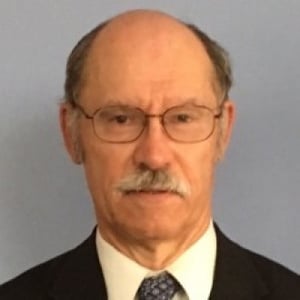
Professorial Lecturer in Law, George Washington University Law School
Theodore C. (Ted) Hirt was an attorney in the Department of Justice's Civil Division from August 1979 to March 2016. He was in its Federal Programs Branch from 1979 to 2008 (trial attorney, senior trial counsel, assistant director), and then in its Office of Immigration Litigation from 2008 to 2016 (trial attorney and senior litigation counsel). Among his responsibilities (September 2001 to March 2016) was being an advisor to the Assistant Attorneys General for the Civil Division, who serve ex officio on the Civil Rules Advisory Committee. Mr. Hirt’s areas of specialization include First Amendment issues, internet and telecommunications law, and electronic discovery. From 1976 to 1979, he was an associate at Fried, Frank, Harris, Shriver & Kampelman. From 1975 to 1976 he was an attorney in the Prehearing Division of the Michigan Court of Appeals.
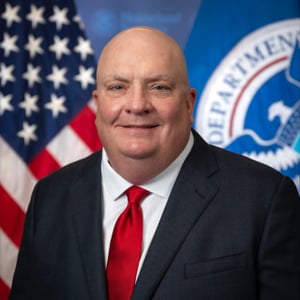
Acting Assistant Commissioner of Customs and Border Protection, Office of Professional Responsibility, U.S. Department of Homeland Security
Brian M. Fish is currently the Senior Advisor to the General Counsel at the Department of Homeland Security where he works on immigration and law enforcement issues. Previously, he was a trial attorney with the United States Immigration and Customs Enforcement, where he represented the Department of Homeland Security in removal hearings before the U.S. Immigration Court. Additionally, he was a Special Assistant United States Attorney and a Baltimore City homicide prosecutor. He is a member of the Federalist Society's Criminal Law & Procedure Practice Group Executive Committee and the President of its Baltimore Lawyers Chapter. He earned his B.A. from LaSalle University in 1992 and his J.D. from Loyola University New Orleans School of Law in 1998.

Director of Litigation, Immigration Reform Law Institute
Mr. Hajec joined the Immigration Reform Law Institute (IRLI) in 2017 as its Director of Litigation, and is responsible for overseeing IRLI’s public interest litigation. Previously, he has focused his career on constitutional and other civil rights law in the public interest, and has had an abiding concern about the many adverse effects of illegal and excessive legal immigration on American jobs and communities.
At IRLI, in addition to representing plaintiffs in immigration-related civil lawsuits, he has overseen the drafting and filing of nearly 100 briefs, mostly amicus curiae briefs in defense of the Trump administration’s immigration initiatives, which have been subjected to an unprecedented degree of legal assault by well-funded interest groups.
Prior to joining IRLI, Mr. Hajec was an attorney at the Center for Individual Rights (CIR), where he litigated a string of high-profile cases, including the defense of videographer James O’Keefe in suits brought by former ACORN employees, a class action suit on behalf of Asian American students discriminated against by the New York City public schools, and a case that resulted in the U.S. Court of Appeals for the Fifth Circuit’s striking down Texas’s psychologists licensing statute as an overbroad restriction on free speech.
Before CIR, Mr. Hajec was an officer in the Navy Judge Advocate General’s Corps, where he served as a defense counsel before courts-martial and then as Appellate Government Counsel, arguing over 100 appeals before the Navy-Marine Corps Court of Criminal Appeals and the Court of Appeals for the Armed Forces. He received the Navy Commendation Medal for his legal work, and also because of his poor handling of an emergency during a hurricane.
He received his law degree from the University of Pennsylvania Law School and his undergraduate degree, cum laude, from the University of Michigan. He has a Ph.D. in philosophy from the University of Miami, and studied philosophy and sociology at Oxford University.
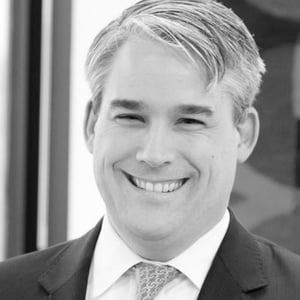
Partner, Klasko Immigration Law Partners, LLP
William A. Stock (Bill) is one of the country’s leading immigration lawyers. A founding member of Klasko Immigration Law Partners, LLP, he has practiced immigration law exclusively for over twenty years. His clients include small businesses, medium sized companies, and multinational corporations and their employees, as well as individual clients, investors and researchers.
Bill leads a team of thirty-two attorneys, senior and junior paralegals in obtaining employment-based immigration benefits for clients, such as nonimmigrant visa classification (H-1B, L-1, E-1 and E-2, TN and O-1); permanent residence or “green card” status through Labor Certification or as immigrants of Exceptional or Extraordinary Ability (EB-1, EB-2 and EB-3); investment-based immigration (EB-5); and unusual or complicated matters such as physician J-1 waivers, visas for entrepreneurs, and mandamus or APA review actions brought in federal court.
Bill served as President of the American Immigration Lawyers Association (AILA), the 16,000 member national organization of immigration lawyers in 2017. He has long been active in the association on both a national and state level and has served several terms on the Association’s Board of Governors. In 2000, he received the Association’s Joseph Minsky Award for outstanding accomplishments in immigration law.
Bill is a Senior Editor of AILA’s annual Immigration & Nationality Law Handbook, and is the co-author of the “J Visa Guidebook” from Lexis Publishing. He was an Adjunct Professor at the Villanova University School of Law. He has been included since 2004 in Best Lawyers in America (Woodward/ White Inc.); since 2006 in Chambers Global: The World’s Leading Lawyers for Business (Chambers and Partners), Who’s Who in American Law, and The International Who’s Who of Business Lawyers. Bill is also featured as a 20 top practitioner in the area of Immigration Law by Lawdragon.
A summa cum laude graduate of the University of St. Thomas (St. Paul, MN), (B.A.1990), he received his law degree from the University of Minnesota (J.D., magna cum laude, 1993) where he was a member of the Order of the Coif.
Attorney General, Commonwealth of Kentucky
Daniel Cameron is the CEO of the 1792 Exchange, working to protect free exercise, free speech, and free enterprise and help American corporations return to the winning formula of producing great products and services, not pushing agendas.
Daniel previously served as the 51st Attorney General of Kentucky from 2019 to 2023. He was the first black American elected to a standalone statewide office in Kentucky’s history. Daniel then went on to win the Republican nomination for governor of Kentucky.
He grew up in Elizabethtown, Kentucky and attended the University of Louisville, where he played football for the Cardinals. After graduating from Brandeis School of Law, he clerked for a federal judge. Daniel later served as legal counsel to United States Senator Mitch McConnell.
Daniel and his wife are blessed with two sons: Theodore and Bennett. They reside in Louisville, Kentucky, a place they proudly call home.
United States Attorney, Eastern District of Kentucky
Robert M. Duncan, Jr. is the United States Attorney for the Eastern District of Kentucky. He was nominated by President Donald Trump on August 3, 2017, and confirmed by the United States Senate on November 9, 2017.
Prior to his appointment, Duncan had served for more than a decade as an Assistant United States Attorney in the Eastern District of Kentucky. Beginning in 2011 and continuing until his appointment as United States Attorney, Duncan focused on the prosecution of Organized Crime Drug Enforcement Task Force cases, working with federal, state, and local law enforcement personnel to disrupt and dismantle complex drug trafficking and money laundering organizations operating in the District and elsewhere. From 2007 to 2013, Duncan served as coordinator of the office’s Project Safe Neighborhoods Program, a Department of Justice initiative to reduce gun and gang crime through education, community outreach, and prosecution.
General Counsel, Kentucky Justice & Public Safety Cabinet
Fayette County Commonwealth's Attorney, 22nd Judicial District of Kentucky
Lou Anna Red Corn is in her 31st year as a prosecutor and is the Commonwealth’s Attorney for the 22nd Judicial Circuit of Kentucky, (Fayette County). Lou Anna was appointed by Governor Matt Bevin in 2016, to fill the vacancy created by the resignation of long-time Commonwealth’s Attorney Ray Larson.
Prior to her appointment, Lou Anna worked as an Assistant Fayette County Commonwealth’s Attorney for 30 years, serving as Larson’s Chief Deputy since 2006. Before becoming a prosecutor Lou Anna was an Assistant Public Advocate (public defender) in Eastern Kentucky, and worked briefly in civil practice.
Lou Anna is a career prosecutor. She has tried more than 225 felony cases, including 51 homicides. Some of the more notable cases include Shane Ragland for the sniper-style killing of UK football player Trent Diguiro; Leonard Neinabor, a Catholic priest who sexually abused parish children over several decades; and Donald Southworth for the murder of his wife Umi. Most recently, she prosecuted Mark Taylor for the kidnaping and murder of UK Chef Alex Johnson.
Lou Anna is an advocate for all victims of crime, but takes a special interest in child victim cases, especially child fatalities from inflicted head trauma, child sexual abuse and child exploitation through electronic solicitation and child pornography. Lou Anna help establish the Fayette County Child Sexual Abuse Multi Disciplinary Team (1989), which has remained a model for other teams statewide. She is also a founding and current board member of the Children’s Advocacy Center of the Bluegrass, Inc., having served as both treasurer and secretary.
Lou Anna received her Juris Doctorate and Bachelor of Arts Degrees from the University of Kentucky. She is married to attorney Luke Morgan, and they have two sons.
Chief Judge, United States District Court for the Eastern District of Kentucky
Judge Danny C. Reeves is a United States District Judge for the Eastern District of Kentucky, a position he has held since 2001. Prior to his appointment to the bench, Judge Reeves was a partner in the Lexington, Kentucky office of Bingham Greenebaum Doll LLP (formerly Greenebaum Doll & McDonald PLLC), where he practiced civil litigation from 1983 to 2001. Judge Reeves began his legal career as a law clerk to the Honorable Eugene E. Siler, Jr., then of the United States District Court for the Eastern and Western Districts of Kentucky from 1981 to 1983. He received his J.D. from Salmon P. Chase College of Law, Northern Kentucky University in 1981 and his B.A. from Eastern Kentucky University in 1978.
Acting Assistant Commissioner of Customs and Border Protection, Office of Professional Responsibility, U.S. Department of Homeland Security
Brian M. Fish is currently the Senior Advisor to the General Counsel at the Department of Homeland Security where he works on immigration and law enforcement issues. Previously, he was a trial attorney with the United States Immigration and Customs Enforcement, where he represented the Department of Homeland Security in removal hearings before the U.S. Immigration Court. Additionally, he was a Special Assistant United States Attorney and a Baltimore City homicide prosecutor. He is a member of the Federalist Society's Criminal Law & Procedure Practice Group Executive Committee and the President of its Baltimore Lawyers Chapter. He earned his B.A. from LaSalle University in 1992 and his J.D. from Loyola University New Orleans School of Law in 1998.
Director of Litigation, Immigration Reform Law Institute
Mr. Hajec joined the Immigration Reform Law Institute (IRLI) in 2017 as its Director of Litigation, and is responsible for overseeing IRLI’s public interest litigation. Previously, he has focused his career on constitutional and other civil rights law in the public interest, and has had an abiding concern about the many adverse effects of illegal and excessive legal immigration on American jobs and communities.
At IRLI, in addition to representing plaintiffs in immigration-related civil lawsuits, he has overseen the drafting and filing of nearly 100 briefs, mostly amicus curiae briefs in defense of the Trump administration’s immigration initiatives, which have been subjected to an unprecedented degree of legal assault by well-funded interest groups.
Prior to joining IRLI, Mr. Hajec was an attorney at the Center for Individual Rights (CIR), where he litigated a string of high-profile cases, including the defense of videographer James O’Keefe in suits brought by former ACORN employees, a class action suit on behalf of Asian American students discriminated against by the New York City public schools, and a case that resulted in the U.S. Court of Appeals for the Fifth Circuit’s striking down Texas’s psychologists licensing statute as an overbroad restriction on free speech.
Before CIR, Mr. Hajec was an officer in the Navy Judge Advocate General’s Corps, where he served as a defense counsel before courts-martial and then as Appellate Government Counsel, arguing over 100 appeals before the Navy-Marine Corps Court of Criminal Appeals and the Court of Appeals for the Armed Forces. He received the Navy Commendation Medal for his legal work, and also because of his poor handling of an emergency during a hurricane.
He received his law degree from the University of Pennsylvania Law School and his undergraduate degree, cum laude, from the University of Michigan. He has a Ph.D. in philosophy from the University of Miami, and studied philosophy and sociology at Oxford University.
Partner, Klasko Immigration Law Partners, LLP
William A. Stock (Bill) is one of the country’s leading immigration lawyers. A founding member of Klasko Immigration Law Partners, LLP, he has practiced immigration law exclusively for over twenty years. His clients include small businesses, medium sized companies, and multinational corporations and their employees, as well as individual clients, investors and researchers.
Bill leads a team of thirty-two attorneys, senior and junior paralegals in obtaining employment-based immigration benefits for clients, such as nonimmigrant visa classification (H-1B, L-1, E-1 and E-2, TN and O-1); permanent residence or “green card” status through Labor Certification or as immigrants of Exceptional or Extraordinary Ability (EB-1, EB-2 and EB-3); investment-based immigration (EB-5); and unusual or complicated matters such as physician J-1 waivers, visas for entrepreneurs, and mandamus or APA review actions brought in federal court.
Bill served as President of the American Immigration Lawyers Association (AILA), the 16,000 member national organization of immigration lawyers in 2017. He has long been active in the association on both a national and state level and has served several terms on the Association’s Board of Governors. In 2000, he received the Association’s Joseph Minsky Award for outstanding accomplishments in immigration law.
Bill is a Senior Editor of AILA’s annual Immigration & Nationality Law Handbook, and is the co-author of the “J Visa Guidebook” from Lexis Publishing. He was an Adjunct Professor at the Villanova University School of Law. He has been included since 2004 in Best Lawyers in America (Woodward/ White Inc.); since 2006 in Chambers Global: The World’s Leading Lawyers for Business (Chambers and Partners), Who’s Who in American Law, and The International Who’s Who of Business Lawyers. Bill is also featured as a 20 top practitioner in the area of Immigration Law by Lawdragon.
A summa cum laude graduate of the University of St. Thomas (St. Paul, MN), (B.A.1990), he received his law degree from the University of Minnesota (J.D., magna cum laude, 1993) where he was a member of the Order of the Coif.

Criminal Justice Trends and Potential Reform
Daniel Cameron, Robert M. Duncan, Andrew G. English, Lou Anna Red Corn, Danny C. Reeves
On October 29, 2018, the Federalist Society's Kentucky lawyers chapters hosted the second annual Kentucky...
Criminal Justice Trends and Potential Reform
Daniel Cameron, Robert M. Duncan, Andrew G. English, Lou Anna Red Corn, Danny C. Reeves
On October 29, 2018, the Federalist Society's Kentucky lawyers chapters hosted the second annual Kentucky...
Criminal Justice Trends and Potential Reform
2018 Kentucky Chapters Conference
Frankfort, KYSentencing Reform in America: An Overview and Conversation [POLICYbrief]
Steven H. Cook, Shon R. Hopwood
The United States has five percent of the world’s population but twenty-five percent of the...
Can Americans Reconcile Our Constitutional System With an Expansive Administrative State?
Ted Hirt
A review of: Bureaucracy in America: The Administrative State’s Challenge to Constitutional Government, by Joseph...
Sanctuary Cities
Brian M. Fish, Christopher Hajec, William A. Stock
In 2015, 32-year old Kate Steinle was shot in San Francisco by an Illegal Immigrant....
Sanctuary Cities
Criminal Law & Procedure Practice Group Teleforum
TeleforumApril Luncheon with Hon. BJay Pak
Atlanta, GAThe Rule of Law
Sacramento Lawyers Chapter
Sacramento, CATopics
DOJ Ends Use of Civil Enforcement Authority to Enforce Agency Guidance Documents
Last November, Attorney General Sessions announced that the Department of Justice would no longer issue guidance...